Tourist Attractions in Tel Aviv
Rimmed by stretches of golden beach and renowned for its lively café culture and innovative dining scene, Tel Aviv is Israel's most cosmopolitan and youthful city.
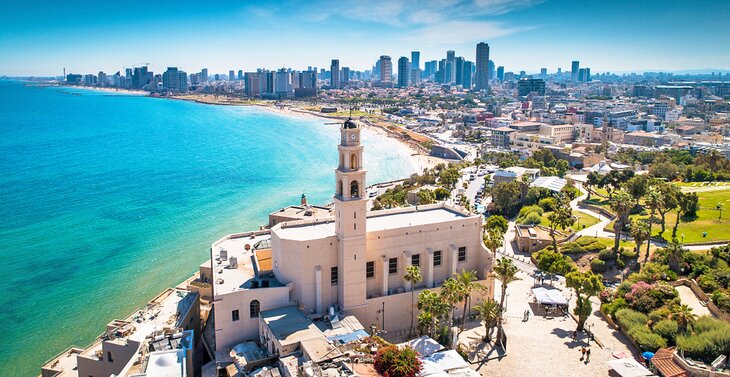
Soaking up the sun and sand, shopping in arty boutiques, and enjoying some serious foodie action are Tel Aviv's top things to do, and what the city lacks in major tourist attractions, it makes up for with its laid-back atmosphere.
Nicknamed "The White City," the town was awarded UNESCO World Heritage Status in 2003 in recognition of its fine examples of Bauhaus architecture (an early 20th-century Modernist style of building). There are also a number of art galleries and small, specialist museums for sightseeing off the beach.
For historic ambience, though, one of the best places to visit is Jaffa, just to the south. This well-preserved port town has a settlement history dating back thousands of years and today is home to excellent restaurants and cafés.
Plan your time here with our list of the top tourist attractions in Tel Aviv.
Tel Aviv Beaches
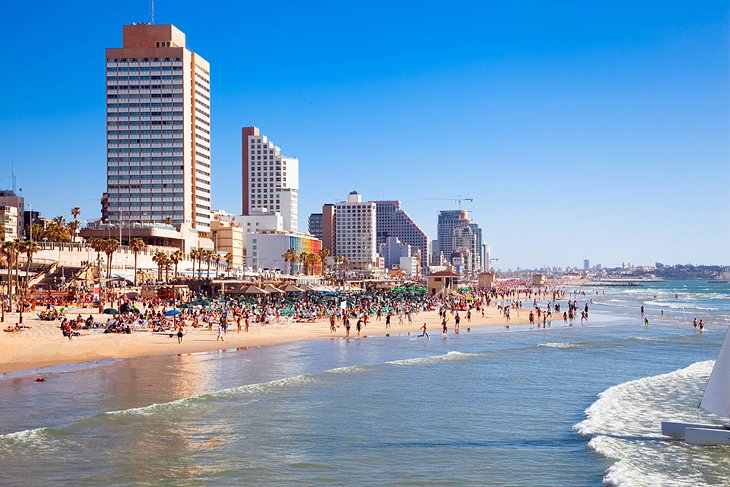
Tel Aviv is defined by its coastal position. The beaches attract tourists and locals alike. On weekends, Tel Aviv's strips of sand are crowded with sun-worshippers, posers, and people just chilling out.
The most popular sandy stretches are centrally located Gordon Beach, Frishman Beach, and Banana Beach, where you'll find excellent facilities such as freshwater showers, sun loungers, and sunshades for rent.
The Homat Hayam Promenade (also known as the Tayelet) is a paved boardwalk that runs along the beach from central Tel Aviv for two kilometers to Jaffa. This is prime evening promenading territory, as well as offering a scenic seafront walkway for those who want to stroll to Jaffa rather than take public transport.
The beachfront area is lined with plenty of cafés and restaurants, allowing an easy entire day at the beach.
Jaffa
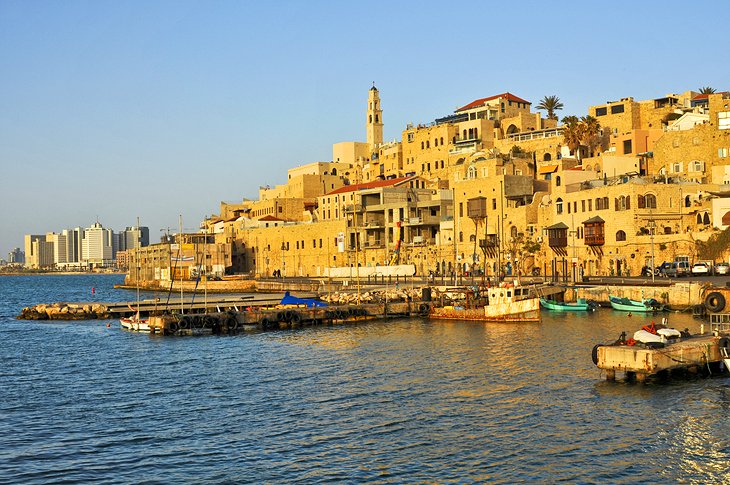
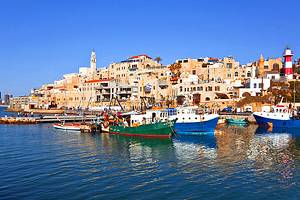
A two-kilometer walk south along the coast from downtown Tel Aviv brings you to the ancient port town of Jaffa, with its preserved Ottoman-era architecture and a handful of historic monuments that point to Jaffa's long history as one of the Mediterranean's most important ports over the centuries.
Today, most visitors are here to simply stroll around the central Old Jaffa area, with its flea market, restaurants, cafés, and artisan boutiques. It's particularly lively in the evening, when the old town throngs with diners.
To get a glimpse of Jaffa's history, head down to the old port area, then visit St. Peter's Church and Jaffa's Great Mosque.
Jaffa's Abrasha Park is also home to an excavation area that has revealed a section of the Hyksos period walls (dating from between the 18th to the 16th centuries BCE).
Compared to the big-city hustle of Tel Aviv, Jaffa is a wonderfully tranquil place for a stroll that, despite serious gentrification, still retains its old-fashioned charm.
- Read More: Tourist Attractions in Jaffa
Yemenite Quarter

One of Tel Aviv's most atmospheric neighborhoods, the Yemenite Quarter (Kerem HaTemaniem) is full of meandering alleyways lined by old-style architecture that has withstood the area's gentrification.
It was first settled by Yemenite Jews in the early 20th century, and the original feel of the closely-packed streets is still very much alive.
The neighborhood backs onto Tel Aviv's famed Carmel Market — busy, colorful, full of fresh produce, and Tel Aviv's answer to Jerusalem's famous Mahane Yehuda Market.
There are excellent dining opportunities both within and around the market area, and this district is best known for its cheap and cheerful dining options, dishing up plenty of Middle Eastern flavors, as well as its buzzing café culture. If you're hungry in Tel Aviv and want a cheap meal, this is the place to head.
Dizengoff Circle & Surrounds
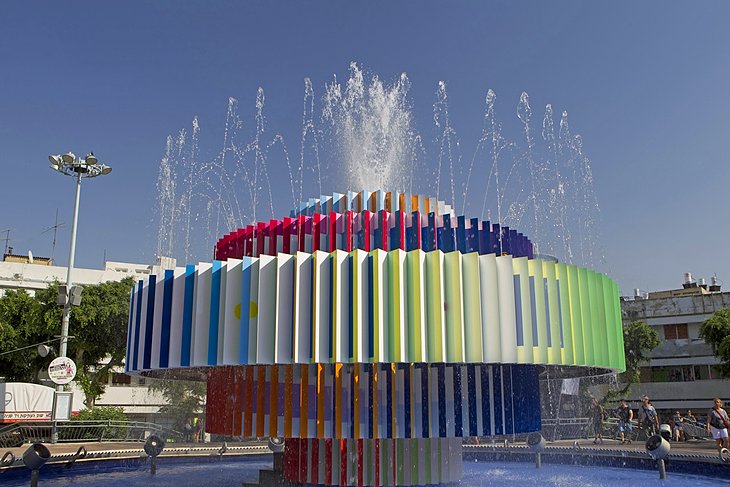
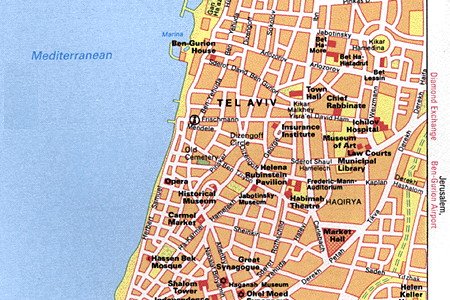
The hub of Tel Aviv is this central plaza, laid out on two levels with a raised area for pedestrians above the carriageway and topped by the peculiar modern-art Fire and Water Fountain designed by Israeli artist Yaacov Agam.
The plaza and the street running off it are named after Meir Dizengoff, Tel Aviv's first mayor after the city separated from Jaffa.
From the circle, Dizengoff Street runs southeast to Habima Square, Tel Aviv's cultural center and home to the Habima Theater built in 1935.
This is also where you'll find the excellent Helena Rubinstein Pavilion of Contemporary Art, which hosts a program of temporary art exhibits.
Just off Habima Square, on Berdyczewski Street, is one of Tel Aviv's best speciality museums. The Joseph Bau House Museum is set in the house where the famous Israeli artist and holocaust survivor lived and worked. Exhibits of his work, including animation films, paintings, and graphic art, are displayed throughout, and tours of the space are run by his daughters.
Address: Dizengoff Street, Central City
Tel Aviv Museum of Art
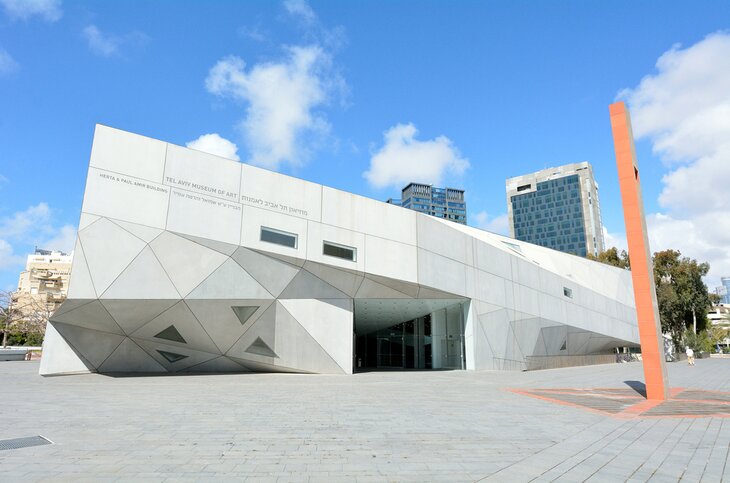
The city's major museum and a leading light in Israel's contemporary art scene, the Tel Aviv Museum of Art contains works by Degas, Monet, Van Gogh, Henry Moore, Picasso, Jackson Pollock, and the world's largest collection of work by Israeli artists.
A particular highlight is the collection of Alois Breyer early 20th century prints and architectural renderings of Ukrainian wooden synagogues, all of which were destroyed during World War II.
The ultra-modern building, with its sophisticated architecture, houses and highlights the artworks perfectly.
As well as the permanent collection, the museum hosts regular temporary exhibits and other events.
Address: 27 Shaul HaMelech Boulevard, Central City
Official site: www.tamuseum.org.il
Neve Tzedek Quarter
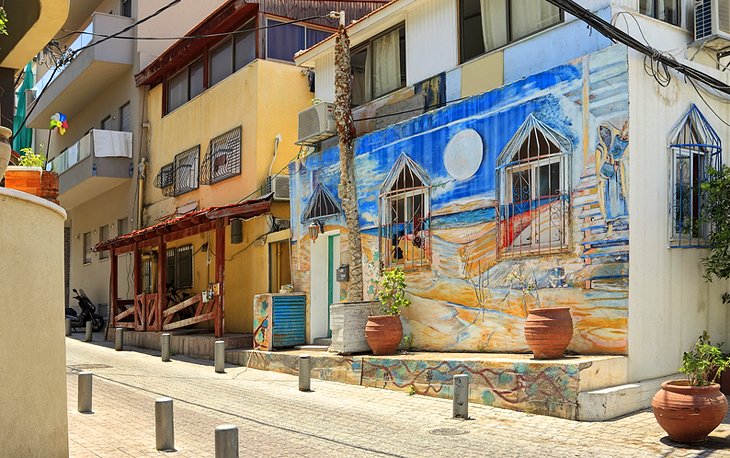
The funky Neve Tzedek Quarter is the city's oldest neighborhood, with European-Jewish settlers first building houses here in the 1880s.
These lovely old buildings have been well preserved, and many now house arty boutiques, cafés, and some of the city's hippest restaurants.
Snuggled within the quarter on Rochkach Street, you'll find two of its major points of interest: the Rockach House, home to a small sculpture gallery, and the Nachum Gutman Art Museum, which displays the artwork of this Israeli painter.
In the district's southwest corner is the old Ottoman railway station called the HaTachana. This has been restored and reopened as a rather stylish complex of cafés, restaurants, and designer boutiques.
Bialik Street
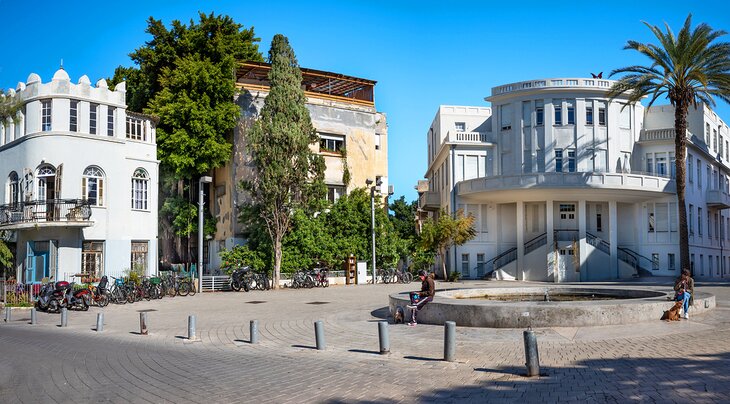
Little Bialik Street, just west of Meir Park in the central city, is home to some excellent examples of Tel Aviv's Bauhaus architecture.
At the northern end, Bialik Square is home to Tel Aviv's original Bauhaus-style town hall, now known as Beit Ha'ir. Various exhibits inside document the history of Tel Aviv.
Just south of the square is the distinctive Bialik House, which originally was the residence of poet Chaim Nachman Bialik and is now a tribute to his life and works.
Farther down the street is the house of artist Reuven Rubin. Again, this is now a museum dedicated to his work, full of paintings, as well as old photographs of Tel Aviv.
Namal: The Old Port Area
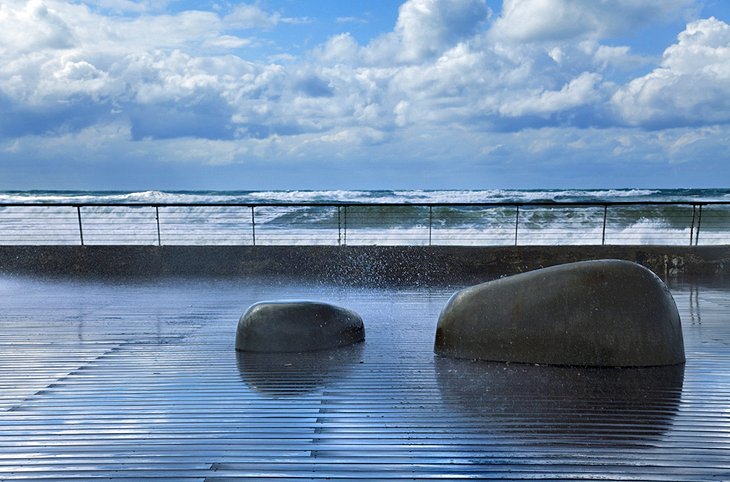
Tel Aviv's old port area (known as Namal) is located just off HaYarkon Street. It has been slickly rejuvenated and is now a hip waterfront hangout strip full of shops and cafés.
The boardwalk here is a favorite for promenading youngsters, while families flock to the area on weekends. The area is home to small private art galleries and an excellent indoor market.
During the weekends there are often free live music concerts and other events and family-friendly entertainment. This is a great place to come if you have kids in tow, as there's usually plenty to keep them occupied.
Official site: www.namal.co.il
Eretz Israel Museum
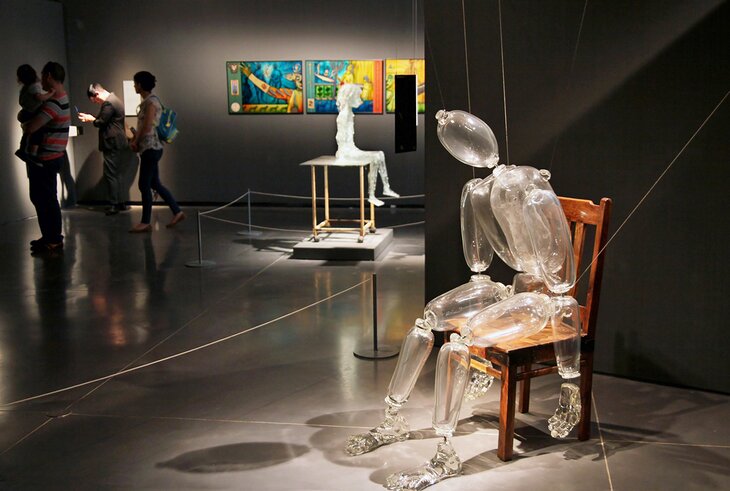
The Eretz Israel Museum (Land of Israel Museum) occupies a complex just north of Hayarkon Park.
The complex grounds include the Tell Qasile archaeological site and a planetarium, as well as various pavilion buildings with displays on ceramics, glass, the history of writing, science, ethnography, and folklore.
In the center of the complex is Tell Qasile where Israeli archaeologists have identified 12 settlement levels dating back to the 12th century BCE. Stratum XII and Stratum XI are attributed to the Philistines, while Stratum X dates from the 10th century when the kings of Israel had a port here.
Later strata show that the site was still occupied during the Hellenistic, Roman, and Byzantine eras and was only finally abandoned in favor of nearby Jaffa during the Islamic period.
Address: 2 Chaim Levanon Street, Tel Aviv
ANU (Museum of the Jewish People)
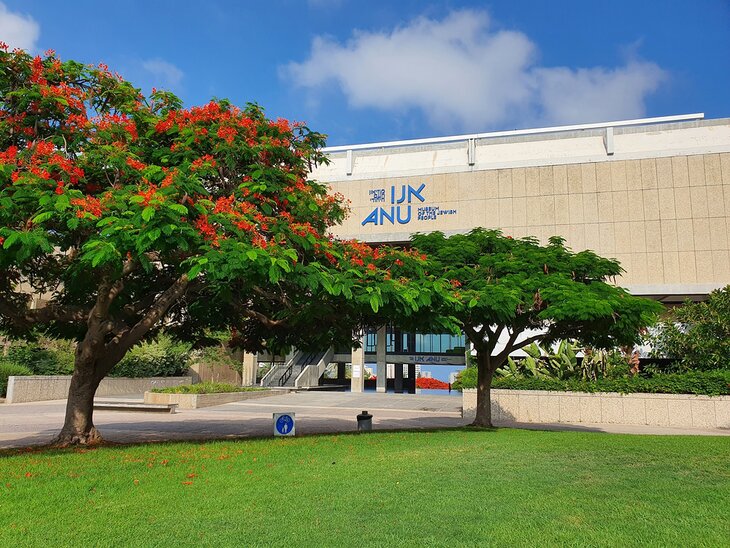
Now newly renewed and renamed, ANU (which used to also be known as Beit Hatefutsoth or the Diaspora Museum) illustrates the life and culture of the Jewish people across the world, throughout history.
The museum displays a wide variety of exhibits organized into themes that include synagogues and worship of Jewish communities throughout the world; Jewish humor; and prominent Jewish people throughout history, including famous musicians, writers, and actors.
Interactive displays and modern curation, film recordings, and models, document the world's Jewish population through the centuries.
There is also an excellent new children's section with interactive multimedia displays.
Complimentary guided tours are available three times per week but need to be booked beforehand.
Address: 2 Klausner Street, Tel Aviv
Official site: https://www.anumuseum.org.il/
Netanya
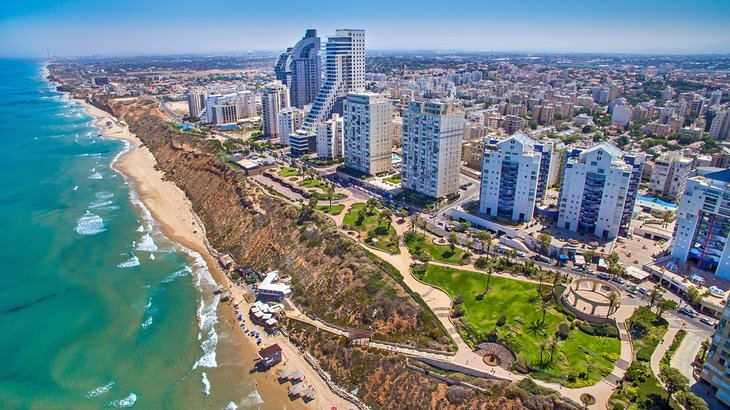
This popular seaside resort, 32 kilometers north of Tel Aviv, sits on a beautiful golden-sand beach that stretches for more than 10 kilometers.
The shoreline is the major attraction. Tel Aviv locals flock here during sunny weekends to chill out with friends and family.
Downtown is crammed with cafés and restaurants and really buzzes with energy during summer evenings. It's a quieter alternative to Tel Aviv if you don't fancy the big-city rush, and there are plenty of accommodation options here.
The Jewish Legion Museum (four kilometers north of the town center) documents the achievements of Jewish military units in the British army during World War I.
Lod
Although now known mainly for being home to Ben-Gurion International Airport, Lod has a rich history.
Founded by the tribe of Benjamin after the Israelite occupation of the Promised Land, Lod was later destroyed by the Assyrians during the 8th century BCE.
From the 4th century onwards, it was settled by Greeks who renamed it Lydda. During the Byzantine era, Lydda/Lod became an important Christian center, and St. Paul is said to have healed a bedridden man here before traveling on to Caesarea.
It's also one of the towns mentioned on the famous 6th century Madaba Map of the Holy Land in Madaba, Jordan.
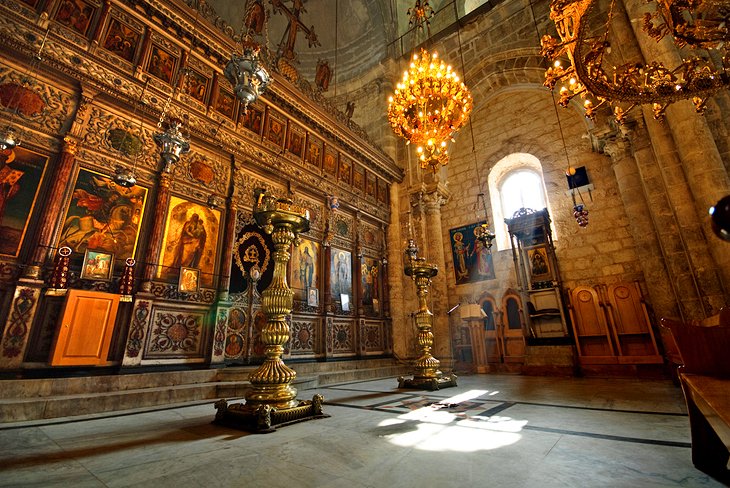
Today, you can visit Lod's Greek Orthodox Church of St. George, which was rebuilt in 1870 over the original Crusader-era chapel here.
Lod is 22 kilometers southeast of Tel Aviv.
Yitzhak Rabin Center
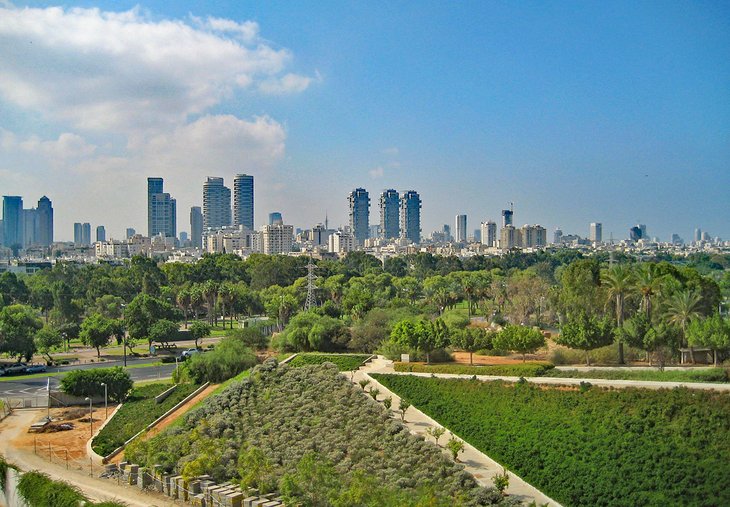
Neighboring the Eretz Israel Museum, the Yitzhak Rabin Center (named after the former prime minister of Israel) includes a wealth of information about Israel itself, and about Yitzhak Rabin, who was assassinated by Jewish terrorists after making peace with Jordan in 1995.
The museum's highly detailed exhibits include a multitude of archived films and photographs.
They take visitors through Israeli history from the early 20th century while focusing on the biography of Rabin from his early years, through his life as a soldier, and then in the government and as leader of the country, right up to his assassination.
Address: 8 Haim Levanon Street, Tel Aviv
Rothschild Boulevard
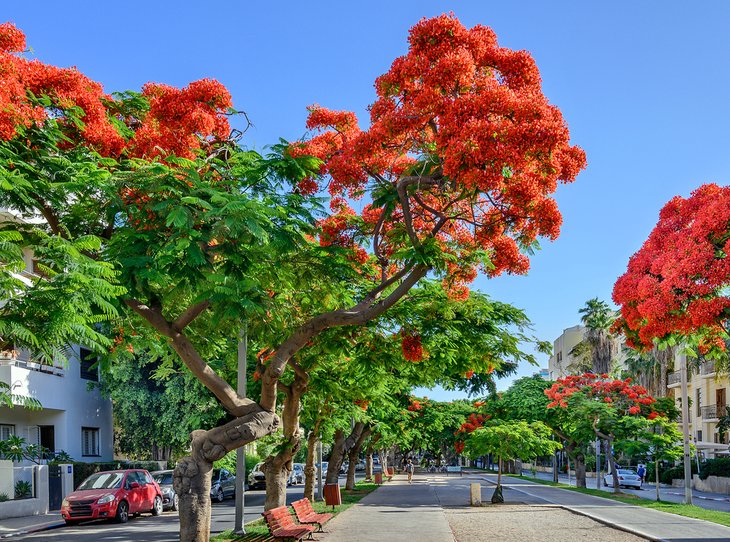
This central city street, which runs south from Habima Square, is home to some of Tel Aviv's finest Bauhaus architecture and is a great place for a stroll, particularly in the early evening.
Along the road are two museums where you can make stops between admiring the preserved buildings.
The Independence Hall (Beit Dizengoff) is the former residence of Tel Aviv's first mayor and is where David Ben-Gurion proclaimed the state of Israel on May 14th, 1948. Inside, a display of mementos from this event is exhibited.
Also along the road is the house once occupied by Haganah Commander Eliyahu Golomb, now home to the Haganah Museum, which documents the Haganah guerrilla force that actively attacked British Mandate rule. There are weaponry exhibits and information on the Haganah's activities inside.
Tel Aviv-Yafo, Israel - Climate Chart
| Average minimum and maximum temperatures for Tel Aviv-Yafo, Israel in °C | |||||||||||
| J | F | M | A | M | J | J | A | S | O | N | D |
| 24 2 | 27 2 | 31 3 | 36 6 | 38 9 | 36 13 | 34 16 | 33 17 | 34 15 | 33 11 | 31 6 | 26 3 |
| PlanetWare.com | |||||||||||
| Average monthly precipitation totals for Tel Aviv-Yafo, Israel in mm. | |||||||||||
| 140 | 89 | 61 | 20 | 3 | 0 | 0 | 0 | 0 | 28 | 74 | 145 |
| Average minimum and maximum temperatures for Tel Aviv-Yafo, Israel in °F | |||||||||||
| J | F | M | A | M | J | J | A | S | O | N | D |
| 74 34 | 80 36 | 87 37 | 95 42 | 99 47 | 97 55 | 92 60 | 91 62 | 92 59 | 92 50 | 87 43 | 79 36 |
| PlanetWare.com | |||||||||||
| Average monthly precipitation totals for Tel Aviv-Yafo, Israel in inches. | |||||||||||
| 5.5 | 3.5 | 2.4 | 0.8 | 0.1 | 0 | 0 | 0 | 0 | 1.1 | 2.9 | 5.7 |
History of Tel Aviv
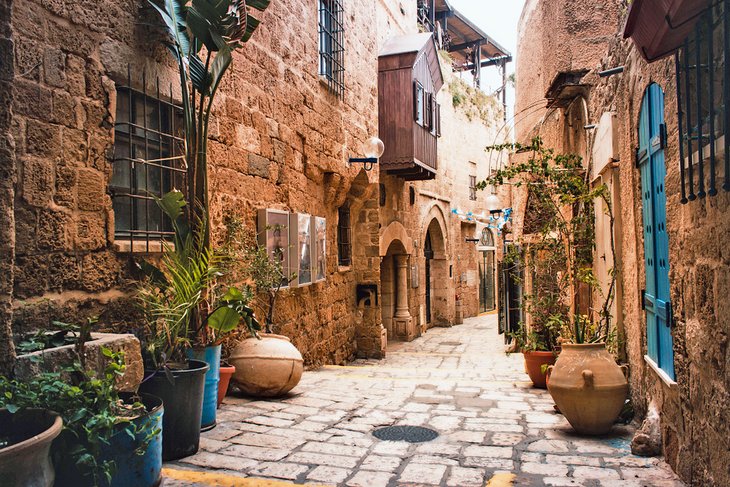
Although Tel Aviv itself is a modern town, Jaffa, just to the south, has been occupied for centuries.
Excavations in recent years have brought to light a wall dating from the Hyksos period (18th-16th centuries BCE), and archaeologists have also found a stone door with an inscription in the name of Egypt's Pharaoh Ramses II dating from the 13th century BCE.
Around 1200 BCE, Philistines settled in Jaffa and on Tell Qasile (north of the river Yarqon). Later (approximately 1000 BCE), the town was captured by David, and it's thought that his son Solomon imported cedar wood from Lebanon for the construction of the temple in Jerusalem through the port of Jaffa or the harbor near Tell Qasile.
In later centuries, however, the population of Jaffa was predominantly Phoenician, and from the 3rd century BCE, predominantly Greek. During the 1st century BCE, the port of Jaffa lost its leading place to the newly founded town of Caesarea.
The Christian era in Jaffa began with the visit of the apostle Peter (Acts 9,36-43), and it became the see of a bishop during the 4th century CE. In 636 CE, it was conquered by the Arabs, and during the 7th and 8th centuries enjoyed a period of prosperity under the Umayyad and Abbasid Caliphs.
The Crusaders destroyed the town in 1099 and then rebuilt the walls; thereafter the port was used by pilgrims visiting the Holy Land. The Crusader occupation came to an end, however, with the capture of the town by the Mameluke Sultan Baibars in 1267. Thereafter, for many centuries, Jaffa lay desolate.
From 1520, Palestine was ruled by the Ottomans, who in 1650 gave permission to Franciscan friars to build a church and pilgrim hospice at Jaffa.
In 1807, Mahmud, whose severity earned him the name of Abu Nebut ("Father of the Cudgel"), became Pasha of Gaza and made Jaffa his capital. Many monuments in Jaffa date from this time, including the Seraglio (now a museum), the nearby Hammam, the Mahmudiye Mosque, and the Abu Nebut Fountain.
A new period of development under European auspices began in the mid 19th century.
The "capitulations" in agreement with the Ottoman government ensured great influence for the European powers in Palestine. The French built hospitals and enlarged monasteries and churches. The Russians built a church dedicated to St. Peter at the "Tomb of Tabitha" on the hill of Abu Kabir. Farther north, the Jewish settlements of Neve Tzedek and Neve Shalom were established.
In 1892, French engineers built a railway line between Jaffa and Jerusalem. In 1909, immigrants from Russia founded the purely Jewish suburb of Ahuzat Bayit, with the Herzl Grammar School (on a site now occupied by the Shalom Tower). This marked the beginning of the modern town, which was named Tel Aviv in 1910. Following the intercommunal conflict of the Jaffa Riots in 1921, Tel Aviv broke away from Jaffa and became an independent city.
During the British Mandate (1920-48), wide new streets were cut through Jaffa's maze of alleys to make it easier to control disorder. By 1924, the town had a population of 35,000.
The United Nations plan for the partition of Palestine (1947) proposed that Jaffa (population 100,000, including 30,000 Jews) should remain Palestinian, and Tel Aviv (population 230,000) become Jewish.
In 1948, as the British Mandate was dissolved, Jewish forces capturing Jaffa. Much of the Palestinian population of Jaffa fled during the onslaught. On May 14th, 1948, David Ben-Gurion proclaimed the state of Israel in the former house of the first mayor of Tel Aviv, Meir Dizengoff.
In 1949, the old town of Jaffa was amalgamated with Tel Aviv under the name of Tel Aviv-Yafo.