Exploring Jerusalem's Armenian Quarter: A Visitor's Guide
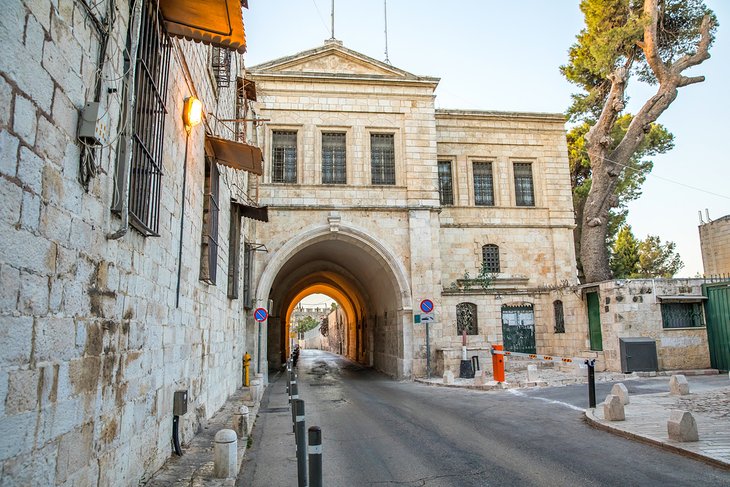
Jerusalem's Armenian community have played an important role in the city since the very early days of Christianity.
Although today, the number of Armenians living in Jerusalem has considerably shrunk and their influence has waned, their traditional Old City quarter remains an interesting district to explore.
There are fewer actual sights to see here than in other parts of the Old City. Instead, the main tourist attraction is simply strolling the narrow cobblestone lanes and soaking up the peaceful ambience, as this sector is the least-visited Old City neighborhood.
If you're interested in Jerusalem's churches, don't miss a visit here. The Armenian Quarter contains a couple of the city's oldest surviving chapels.
St. Mark's Chapel
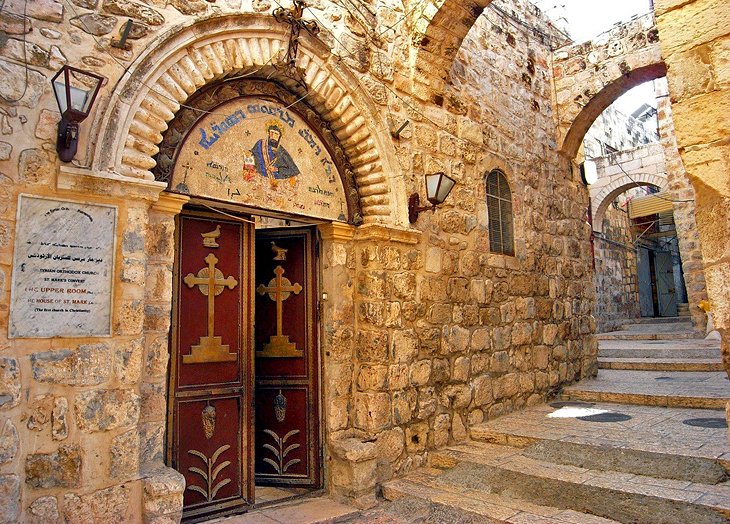
Traditionally believed to occupy the house site of St. Mark's mother (Mary of Jerusalem), where St. Peter took refuge after escaping the prison cell he'd been confined to by Herod Agrippa I, St. Mark's Chapel serves as a place of worship for Jerusalem's tiny Syriac Orthodox community.
More traditions point to this being the true site of the Last Supper and being built over the site where the Virgin Mary was baptised.
Whatever you believe, this is one of Jerusalem's oldest churches, dating from the 12th century, and its richly decorated interior is a major tourist attraction.
Just inside the church to the right is an inscription in Aramaic, and in the nave is an icon of the Virgin, which the monks ascribe to Luke the Evangelist (who is believed in the Eastern Church to have painted the earliest, and therefore most authentic, icon of the Virgin Mary).
There is also an ornately-carved patriarchal throne.
Address: Ararat Street, Jerusalem
St. James Cathedral
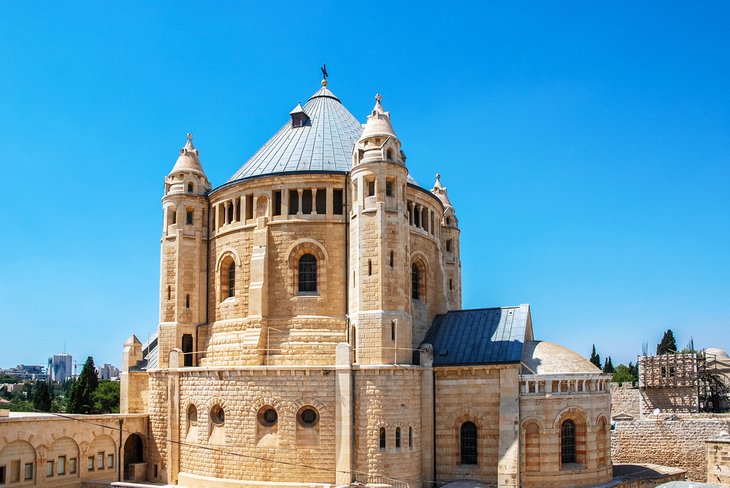
The Armenian Quarter's major church is St. James Cathedral. Historically, the current building dates back to the Crusades in the 12th century.
If you want to visit the ornate interior, you need to plan your visit to coincide with the church's daily 3pm service (the doors are normally opened at around 2.45), as it's only open during that time.
This church has associations with two Jameses who were saints.
A chapel to the left of the entrance is believed to mark the spot where St. James the Great (son of Zebedee) was beheaded in AD 44 on the orders of Herod Agrippa I. According to traditional accounts, his body was then transported by his disciples to Spain, where it later became the center of the cult of St. James (Santiago) in the city that bears his name, Santiago de Compostela.
Below the high altar is the tomb of the other St. James, the first bishop of Jerusalem who was stoned to death in AD 62.
On the south side of the church, a doorway leads into the Etchmiadzin Chapel in which stones from Sinai and Mount Tabor are preserved.
Address: Armenian Orthodox Patriarchate Road
Armenian Compound
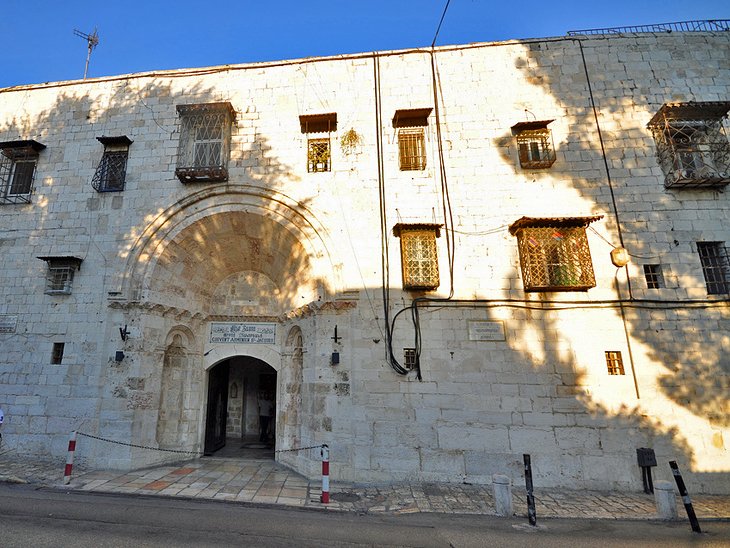
The fortress-like Armenian Compound is the seat of the patriarchate, a hospice, a monastery, and a residential area all rolled into one.
This is where refugees from Turkey arrived after the Armenian genocide, and the community living behind the gate here once numbered more than 1,000.
The museum documents the history of the Armenian people, including liturgical vestments and artwork through the centuries as well as approximately 4,000 illuminated manuscripts from the 10th to 17th centuries.
Address: Armenian Orthodox Patriarchate Street
Tips and Tactics: How to Make the Most of Your Visit to Jerusalem's Armenian Quarter
- If you're having trouble visiting the Armenian Compound (which doesn't keep official hours), enquire at the St. James Cathedral and make an appointment to visit.
- From central Jerusalem, take Egged Bus No. 20, which runs from the central bus station to Jaffa Gate.
- The nearest gate into the Old City's Armenian Quarter and its tourist attractions is the Jaffa Gate.