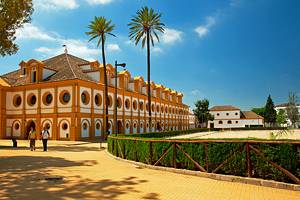
Attractions & Things to Do in Tangier
Tangier became famous in the mid-20th century as the louche destination for a European and American literary set. Today, the foreign writers and artists that partied here have long gone, and Tangier has revamped itself again into a thriving, modern city.
The major tourist attraction is Tangier's medina (old town), where the winding alleys hold small museums in restored mansions, historic monuments, and souqs. For atmosphere and photography, this area is one of the best places to visit in the city.
Tangier is also one of the best places to visit and base yourself while exploring the northern Atlantic Coast and the Mediterranean Coast. Some of the top things to do within day-tripping distance include exploring the Roman ruins of Lixus, the seafront panoramas at Cap Spartel, and visiting the Mediterranean Coast's Spanish enclave of Ceuta.
The busy port here has plenty of ferries heading to and from Spain, so Tangier is often the first taste of Morocco for overlanders. After disembarking, spend a couple of days here exploring the city before heading onwards farther south or east.
Help plan your stay with our list of the top attractions and things to do in Tangier.
Explore Tangier's Medina
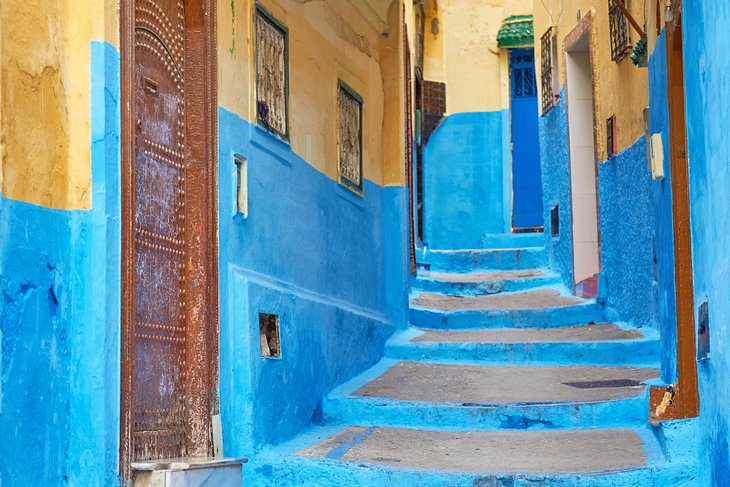
Tangier's medina (old city) tumbles down the cliff towards the ocean in a labyrinth of narrow alleyways.
The medina (and the adjoining kasbah at the medina's northwest end) will probably be the focus of your Tangier visit. A lot of Tangier's boutique hotel accommodation is based within the medina's 15th-century Portuguese-built walls, but if you're not staying inside, enter through the gate of Bab Fass, on the eastern end of the Ville Nouvelle's Grand Socco plaza.
During its fast-paced past, the medina was a playground for author Paul Bowles and America's legendary beatnik literary figures such as Jack Kerouac, Allen Ginsberg, and William Burroughs.
Today very little is left from this bohemian past, though make sure to sit down for a coffee or tea at Café Central in the medina's Petit Socco, which is one of the cafés Burroughs' used to hang out at.
The Petit Socco is the central vortex of medina life. This little square is where old men sit for hours drinking tea and playing backgammon. Do as they do, and beeline here whenever you need a break from alley exploring.
The medina is more about soaking up the atmosphere rather than specific sights, but just west of the Petit Socco on Rue Siaghine is the Church of the Immaculate Conception, built by the Spanish in 1880. East of the square is the Grand Mosque.
In the southeast corner of the medina is the American Legation Museum, once the US consulate building and the oldest American diplomatic post in the world. Morocco was the first country to recognize the newly independent USA and established its legation here in Tangier in 1821. The museum inside traces the history of the relationship between the US and Morocco, and the exhibits inside include George Washington's famous letter to Moulay Abdullah.
The Tomb of Tangier-born Ibn Battuta (Morocco's famed 14th-century traveler and writer) is found in the medina's northwest corner.
The medina is a great place for snacking, street food, and cheap local eats, particularly the area around the Petit Socco.
Visit Tangier's Kasbah
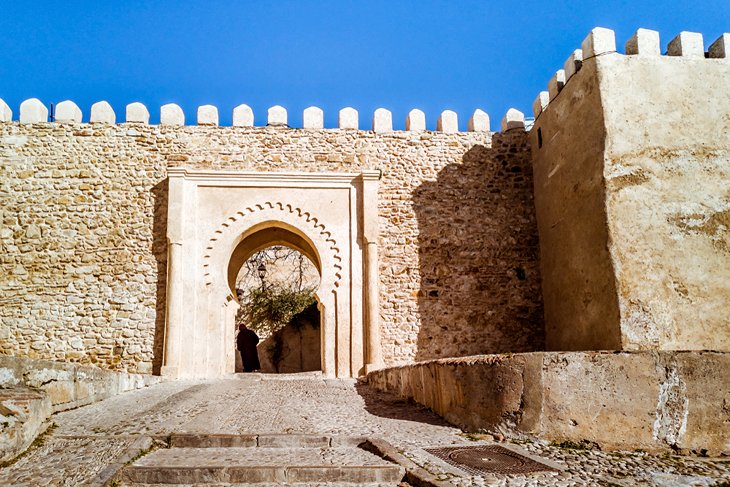
Tangier's Kasbah (a high-walled defensive fortress where the sultan once lived) takes up the northern section of the medina.
The main gate into the Kasbah (accessed from the northwest medina wall) opens onto a large courtyard, which leads to Dar el-Makhzen Palace, once the sultan's residence and today used as the Kasbah Museum.
The palace was built in the 17th century and enlarged by each reigning sultan. The carved wooden ceilings and marble courtyard showcase the intricacies of Moroccan craftwork.
The various cafés within the Kasbah, with views across the Mediterranean Sea below, offer some of Tangier's most scenic stops for mint tea and lunch.
Address: Porte de la Kasbah, Rue Tabor
Dive into Local History at the Kasbah Museum
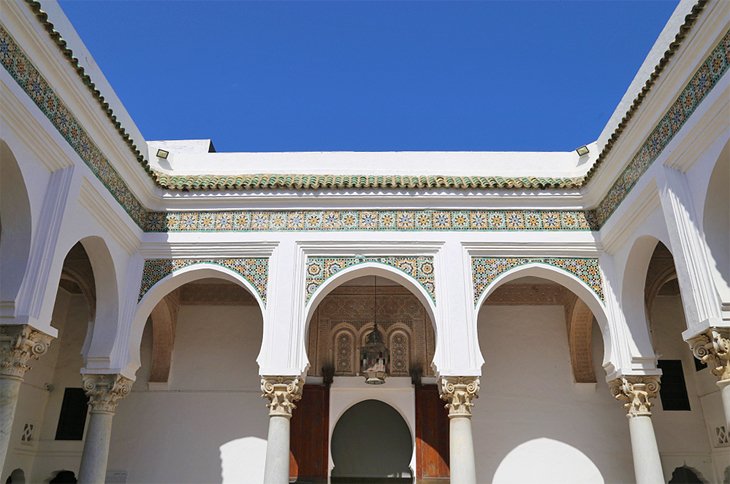
This excellent museum inside the Kasbah is based in the restored Dar el-Makhzen Palace. The museum brings together an amazing number of exhibits tracing Morocco's tumultuous and complicated history.
For history lovers, the Antiquities Collection is a must-visit, displaying mosaics and statuary from the country's prime ancient Roman sites such as Lixus and Volubilis, as well as exhibiting a life-size model of a Carthaginian tomb.
There are also displays explaining Tangier's history and a large section devoted to Moroccan arts.
The Fes Room is particularly interesting, containing silks and illustrated manuscripts, as well as centuries-old ceramics decorated from golden yellow to the famous Fes-blue.
Address: Rue Riad Sultan, Kasbah
Café Hop in Tangier's Ville Nouvelle
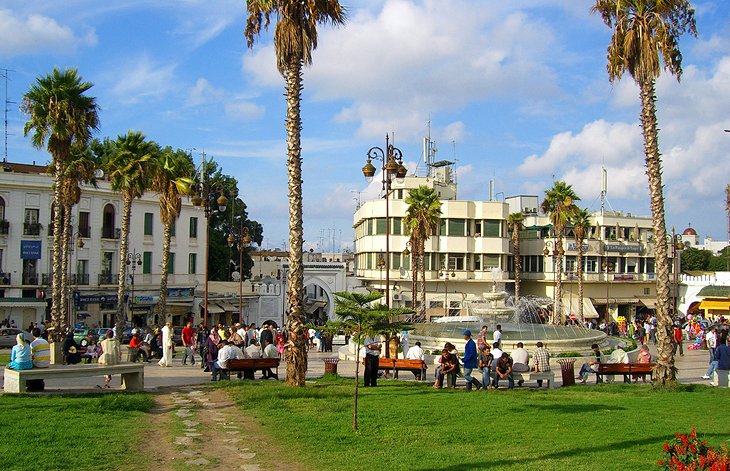
Tangier's ville nouvelle (new city) is a must for fans of late 19th- and early 20th-century architecture, as it features many fine buildings from this time period.
Here, you'll find the Terrasse des Paresseux (Terrace of the Idle, also known as Place Faro), where you can look out at the spectacular ocean view that has captivated so many European artists.
With the harbor before you, look across the water for the hazy silhouettes of Gibraltar and southern Spain in the distance.
After you've finished admiring the view, don't miss grabbing a table at the Gran Cafe de Paris, just west of the terrace, on Place de France, which is Tangier's most famous café and has been in business since 1927. A major part of Tangier's modern history, this was a major hang-out for the literary set who once made Tangier their home.
Heading north from the Gran Cafe de Paris, along Rue de la Liberte, you'll arrive at the Grand Socco (the main square) which marks the end of the new city and entry to the medina. This is where Tangier locals come to stroll, play, and sit in the surrounding cafés for hours.
Just to the square's north is the Mendoubia Gardens, a shady spot full of fig and dragon trees.
Admire the Sea Views at Cap Spartel & Rmilat Park
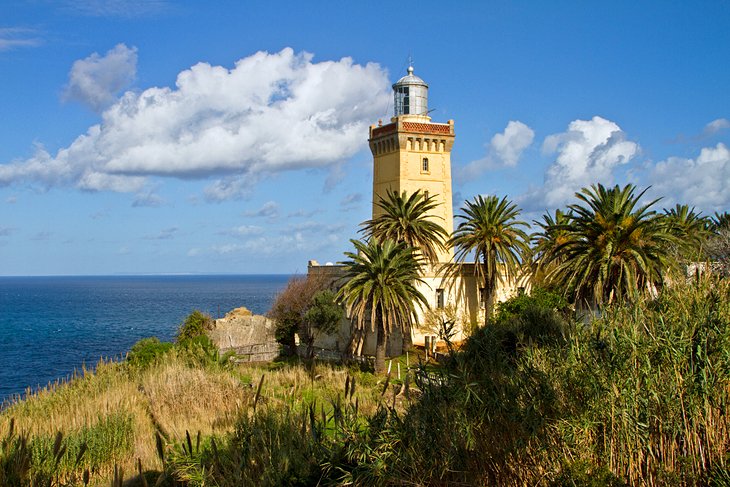
Geography fans won't want to miss this Tangier side trip. Cap Spartel, about 11 kilometers west of Tangier, marks Africa's northwest tip. The promontory projects into the water, marking the boundary of the Mediterranean Sea with the Atlantic Ocean.
This entire stretch of coast though is worthy of more exploration, particularly if you want to break up your city sightseeing with a gentle forest hike.
On your way to (or from) Cap Spartel, stop off at Rmilat Park on the western edge of Tangier, eight kilometers east of the cape. This 70-hectare ocean-front forest slope is home to a range of rambling walking trails that weave across the hill down to the cliffs that meet the sea.
The entire forest was once owned by Greek-American Ion Perdicaris (the park is also known as Perdicaris Park) who used it as his summer residence and planted a diverse range of flora here that still flourishes today and contributes to it being one of Morocco's most biodiverse gardens.
You'll easily spot eucalyptus, poplar, mimosa, and weeping willow trees lining the trails as well as pine and oak.
As well as hiking the trails and taking in the sea views, you can also visit the large villa Perdicaris built in 1877, and was later kidnapped by the Rif Mountain bandit Ahmed al-Raisuni in 1904 in the famous international incident which became known as the Perdicaris Affair. The villa has been restored into a museum.
For atmosphere, the best time to come to Cap Spartel is at sunset, when you can see dusk settle over the Atlantic. This is the busiest period though, as plenty of Tangier locals head out here for some fresh early evening air. For a quieter visit plan to head here in the morning.
The lighthouse here, at the tip of the promontory, is especially photogenic, and there's a great café next door where you can grab a coffee or a juice and take in the sea views.
Just below the promontory is the five-kilometer-long stretch of Achakkar Beach. At the beach's southern end are the Hercules Caves (Grottes d'Hercule) where, according to local myth, Hercules once lived.
Day Trip to Lixus & Larache
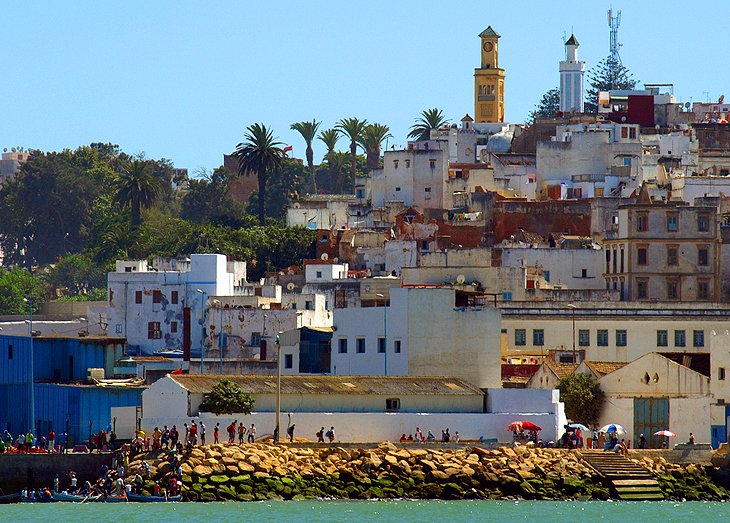
The seaside town of Larache, 88 kilometers south of Tangier, is the closest settlement to the Lixus archaeological site, where Greek legend tells that Hercules gathered the golden apples.
The site was a trading center for first the Phoenicians, then the Carthaginians, and finally the Romans, but its history is thought to be much older than these conquerors.
The ruins include a temple, theater, acropolis, and baths, and although the site is overgrown, it's highly atmospheric.
After visiting the site, head six kilometers west into Laroche itself, where the petite seafront medina with its blue and white alleys are home to remnants of the town's Hispano-Moorish architecture.
If you're heading down the coast, Laroche is a good stop-off point between Tangier and Rabat.
Day Trip into Spanish Territory at Ceuta
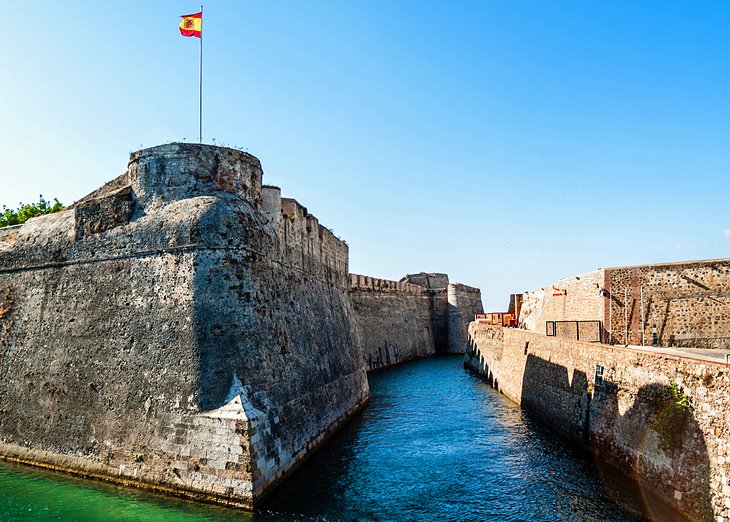
One of Spain's enclaves on the Moroccan coast, this outpost of Spanish culture, 79 kilometers east of Tangier, is a major transport hub, with ferries across the Mediterranean Sea to Algeciras.
The old fortifications (built by the Portuguese) around the San Felipe Moat are the town's main sight, but Ceuta also offers a handful of small but interesting museums and art galleries to visit, as well as historic architecture to view.
The contemporary art galleries of the Museo de los Muralles Reales and Museo de la Basilica Tardorromana, which is based in the excavated ruins of a basilica, are two of the most worthwhile.
Those with an interest in religious art and architecture should also visit Ceuta's main square, home to the interesting Cathedral Museum and the 15th-century Church of Our Lady of Africa.
You will need your passport to enter Ceuta, as you are officially entering Spain. If you're traveling east along the Mediterranean Coast, Ceuta is a worthwhile stop off between Tangier and Tetouan.
Enjoy the Sea Air on Tangier Beach
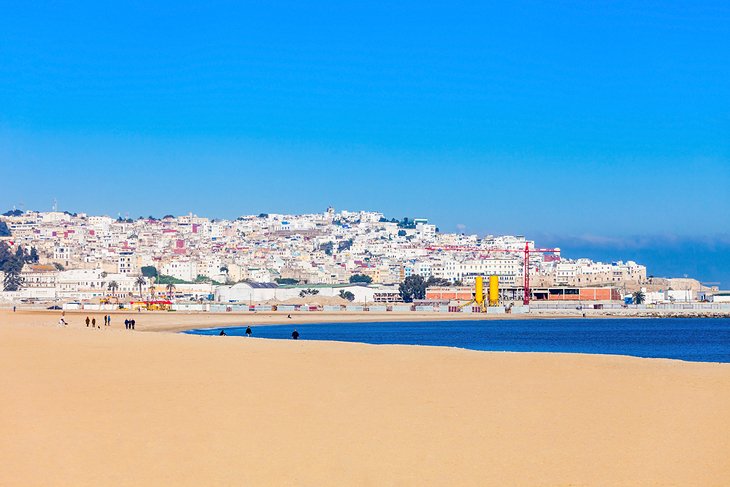
Tangier's beachside district is intrinsically linked to the city's mid-20th-century heyday, when the beautiful and louche literary residents of Tangier made this one of the world's most famous strips of sand.
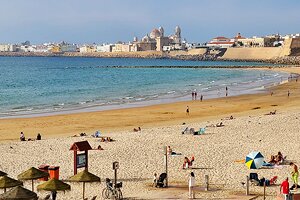
Its heyday is now long gone, but the beach area is still a good place for a stroll, with plenty of locals promenading and playing football along its length.
Swimming here is unfortunately not a good idea, as the water isn't very clean, but if you just want to get some sea air, stretch your legs, and take in a bit of local life, it's worth a visit.
To see the beach at its busiest, come at dusk, when you'll find local families and groups of friends enjoying the seafront's fresh breezes here.
Location: Off Avenue Mohammed VI
Day Trip to Asilah
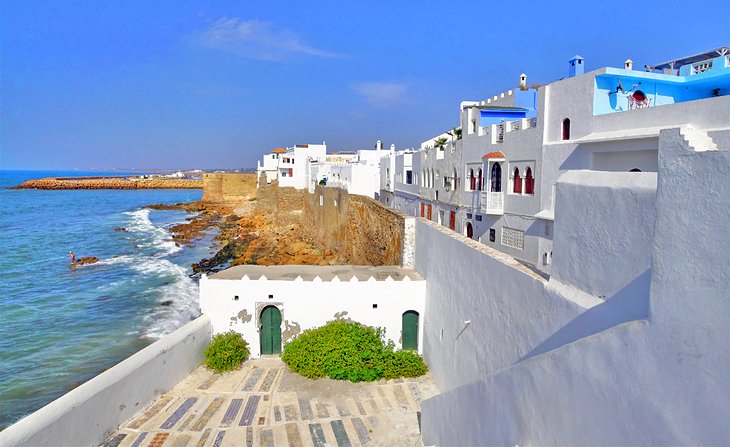
The little town of Asilah, about 40 kilometers from Tangier on the northwest tip of Morocco's Atlantic coast, has a history that stretches back to the Roman era.
More recently, it has been under the control of both Spain and Portugal. But the town's imposing ramparts, with surviving bastions and towers, now offer a setting for delightful seaside walks.
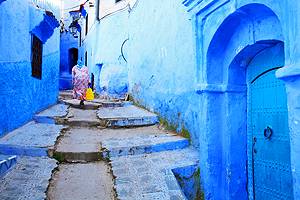
The Portuguese fortifications enclose an old town of pretty white-and-blue-washed houses with a distinctive Mediterranean feel.
The town is also famous for fried seafood dishes. Restaurants line the shore, making a great place to put your feet up while you sample some fish.
Visit St. Andrew's Church
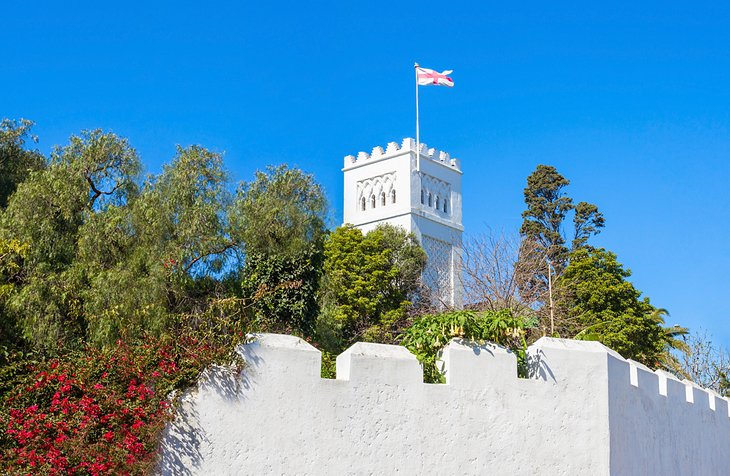
Tangier's Anglican church is one of the city's more relaxing spots and is a great place to visit if the hustle of the city is grinding you down.
The still functioning church (which has two morning services every Sunday) was built in 1905 and has a tranquil and rather stark interior, which incorporates traditional Moroccan architectural elements.
Outside, the small cemetery contains interesting tombstones from the early 20th century. Of particular note, writer and Tangier resident Walter Harris (author of Morocco That Was) is buried here.
Except on Sundays, the church is kept locked, but visitors can simply knock on the door, and the caretaker will open the church up for you to view.
Address: Rue d'Angleterre
Discover Spain's Other Enclave at Melilla
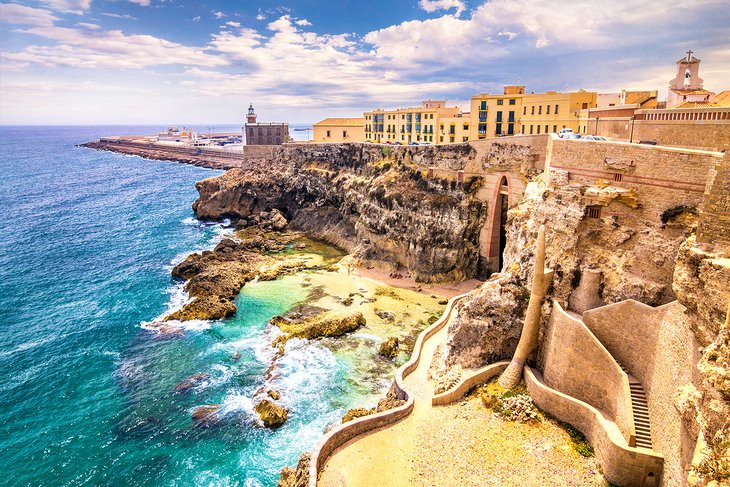
Along with Ceuta, Melilla is a Spanish enclave on Moroccan soil. Today it's a busy port town, with daily ferries to the Spanish ports of Malaga and Almeria, but Melilla's tourist attractions are also worth a day of your time if you're planning on traveling east along the Mediterranean Coast from Tangier.
Melilla's fortified old town (Melilla la Vieja) is the main focus of most of the town's sightseeing. Inside you'll find a handful of small museums; the cave and tunnel complex of Las Cuevas del Conventico, which were first excavated by the Phoenicians; and a 17th-century cathedral.
At nearby Three Fork's Cape, gaze out over the perfectly turquoise waters. From the lighthouse, you can see many small beaches and great blocks of anthracite rise out of the waters.
History of Tangier
According to Greek mythology Tangier, or Tingi, was founded by the giant Antaeus. Tingi is mentioned by Carthaginian travelers as early as 500 BC, and Phoenician sailors visited even earlier.
After the destruction of Carthage, Tingi was affiliated with the Berber kingdom of Mauretania. It then became an autonomous state under Roman protection, eventually becoming a Roman colony in the 3rd century AD during the reign of Diocletian, and ending as the capital of Mauretania Tingitana.
In the fifth century, Vandals conquered and occupied Tingi and from here swept across North Africa.
A century later, Tingi became part of the Byzantine Empire and gradually fell into obscurity until the city's capture by Moussa bin Nasser during the first years of the eighth century. The city's inhabitants were converted to Islam, but many Berber tribes joined the schismatic Kharijite rebellion and seized the port city in AD 739.
When Moulay Idriss I established his kingdom at Volubilis in AD 788, Tangier became a focal point in the struggle between the Idrisid dynasty and the Umayyads. This struggle continued until the Fatimid dynasty from Tunisia assumed power in AD 958.
Tangier came under the successive sway of the Almoravides and Almohades, after which the city fell under the influence of the Tunisian Hafsid dynasty before passing into the hands of the Merenids.
By the 14th century, Tangier became a major Mediterranean port frequented by European trading vessels bringing cloth, spices, metals, and hunting birds in exchange for leather, wool, carpets, cereals, and sugar.
After an unsuccessful attempt to seize Tangier in 1437, the Portuguese finally conquered and occupied the city in 1471, converting the great mosque into a cathedral.
For nearly three centuries, the town was passed back and forth between the Spanish, Portuguese, and finally the English, when it was given to Charles II as part of the dowry from Catherine of Braganza.
The English granted Tangier a charter, which made the city equal to English towns.
In 1679, Moulay Ismail made an unsuccessful attempt to seize the town but maintained a crippling blockade, which ultimately led to a British retreat.
Under Moulay Ismail, the city was reconstructed to some extent but gradually declined until, by 1810, the population was no more than 5,000.
Tangier began to revive from the mid-19th century, when European colonial governments fought for influence over Morocco.
More Related Articles on PlanetWare.com
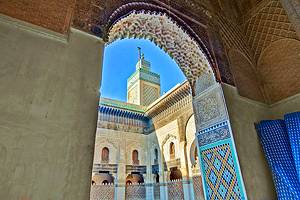
More Historic Medinas: The walled old towns of Morocco's cities and towns are one of the country's major historic highlights. Don't miss Marrakesh with its famous pink-toned medina full of souks, restored historic buildings, and home to the Djemaa El-Fna, and Fes, where strolling the labyrinthine, winding alleys of its high-walled medina are the major attraction of a visit. For a smaller, easier-to-get-around medina head to Meknes, which is one of Morocco's most easygoing towns.
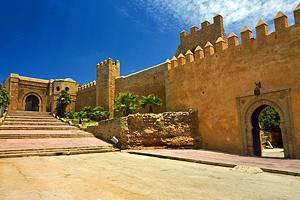
More Seaside Cities: For a taste of modern Morocco, head to bustling Casablanca, home to the huge and beautiful Hassan II Mosque dominating the seafront, or to the capital Rabat, where the medina fronts the Atlantic coast. For holiday sun, the city of Agadir is Morocco's hot spot and a favorite Summer destination for European tourists.