Agadir Attractions
Agadir is Morocco's main western seaport on the Atlantic Ocean. The name is a shortened version of "Agadir n Irir", a Berber word which means "a fortified granary".
Around A.D. 1500 the port was occupied by the Portuguese, who built a fortress and named their new colony Santa Cruz de Aguer. Surrounding Berber tribes declared a jihad against the Christian intruders and, under the command of Amir Mohammed Echeikh El Mehdi, the Saadian ruler, Agadir was captured, precipitating Portugal's withdrawal for most of Morocco's Atlantic coast.
The Saadian rulers of the Souss developed the region's agriculture and Agadir became a major trading port, from which Saharan products, including sugar cane, olive oil, gold and spices, were exported. The city's importance was displaced by that of Essouira during the reign of Sidi Mohamed ben Abdallah, who closed down its port facilities. This outstanding harbor serves as the point from which lead, manganese and zinc mined in the region are shipped abroad.
Fishing remains the main local industry along with canning (of fish products) and light metal industry. In 1911, Franco-German rivalry over Morocco reached a crisis point when Germany sent the warship Panther to protect its "interests" in Agadir, nearly sparking a major European war. This incident drove France to establish their protectorate in Morocco. Under French occupation, which began in 1913, Agadir once again became an important port city.
The French built a modern port facility in 1913 and enlarged the harbor in 1930 and again in 1954. After independence in 1956 the city continued as it had been for decades until 1960, when it was destroyed by two earthquakes which killed about 15,000 people. In the aftermath of the disaster, the government designated the area a future tourist resort and completely rebuilt the city according to modern specifications for this purpose.
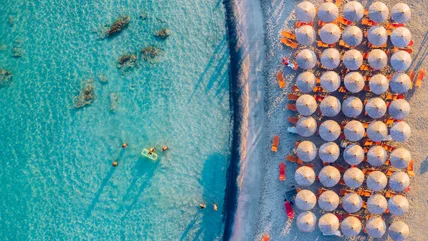
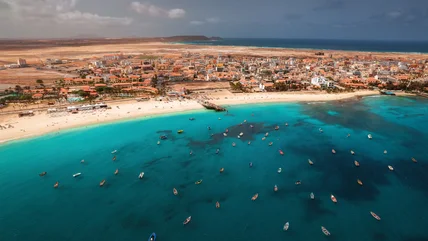
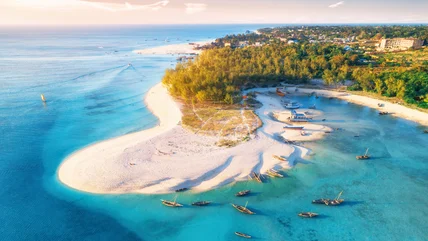
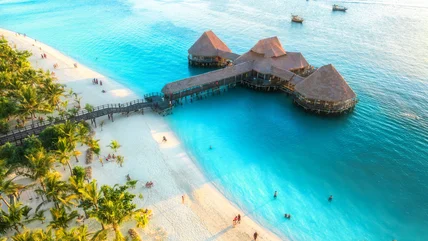
Today Agadir is indeed Morocco's most popular tourist destination with the country's best facilities and a beautiful white sand beach.
Around A.D. 1500 the port was occupied by the Portuguese, who built a fortress and named their new colony Santa Cruz de Aguer. Surrounding Berber tribes declared a jihad against the Christian intruders and, under the command of Amir Mohammed Echeikh El Mehdi, the Saadian ruler, Agadir was captured, precipitating Portugal's withdrawal for most of Morocco's Atlantic coast.
The Saadian rulers of the Souss developed the region's agriculture and Agadir became a major trading port, from which Saharan products, including sugar cane, olive oil, gold and spices, were exported. The city's importance was displaced by that of Essouira during the reign of Sidi Mohamed ben Abdallah, who closed down its port facilities. This outstanding harbor serves as the point from which lead, manganese and zinc mined in the region are shipped abroad.
Fishing remains the main local industry along with canning (of fish products) and light metal industry. In 1911, Franco-German rivalry over Morocco reached a crisis point when Germany sent the warship Panther to protect its "interests" in Agadir, nearly sparking a major European war. This incident drove France to establish their protectorate in Morocco. Under French occupation, which began in 1913, Agadir once again became an important port city.
The French built a modern port facility in 1913 and enlarged the harbor in 1930 and again in 1954. After independence in 1956 the city continued as it had been for decades until 1960, when it was destroyed by two earthquakes which killed about 15,000 people. In the aftermath of the disaster, the government designated the area a future tourist resort and completely rebuilt the city according to modern specifications for this purpose.
Today Agadir is indeed Morocco's most popular tourist destination with the country's best facilities and a beautiful white sand beach.
Skoura
The town of Skoura is located 38km east of Ouarzazte.
The Skoura souk is held on Monday and Thursday.
Hours
| Mon | Tue | Wed | Thu | Fri | Sat | Sun | |
|---|---|---|---|---|---|---|---|
| Open | Closed | Closed | Closed | Closed | Closed | ||
| Close |
Agadir Festival
The Agadir Festival takes place in December. The festival celebrates the culture and tradition of the locals, with lots of entertainment and events.
Bou Izacarne - Souk, Morocco
(Near Agadir)
The souk in Bou Izacarne is held on Friday. The souk or market is a characteristic feature of Moroccan life. It is a place for buying and selling. Very few visitors do not visit one at least once.
The majority of the Moroccan population is rural and each tribe has a certain number of souks that are usually held out in the open country or in a reserved enclosure. Souks are named after the day of the week on which they are held.
Hours
| Mon | Tue | Wed | Thu | Fri | Sat | Sun | |
|---|---|---|---|---|---|---|---|
| Open | Closed | Closed | Closed | Closed | Closed | Closed | |
| Close |
Cap Ghir
The town of Cap Ghir offers deep sea fishing, tennis courts, many swimming pools, and a beautiful stretch of ocean front shoreline.
Guelmim
Every Saturday at dawn, the largest dromedary market in Morocco begins. The "blue men", so called because they wear clothes made from indigo colored fabric, stage this event.
Imouzzer, Morocco
(Near Agadir)
The town of Imouzzer is known for its white houses, the Ida Ou Tanane (Berber tribe) and a beautiful palm grove.
Port
The Port of Agadir is the world biggest sardine fishing port. You can sample the daily catch at any of the many restaurants along the port.
Souk
The Agadir souk is held on Saturday and Sunday. The town is not the best place to buy things as most of the merchandise is brought in from elsewhere.
Hours
| Mon | Tue | Wed | Thu | Fri | Sat | Sun | |
|---|---|---|---|---|---|---|---|
| Open | Closed | Closed | Closed | Closed | Closed | ||
| Close |
Souss
The land at Souss is very fertile, therefore vegetation such as orange, banana and olive plantations grow in abundance.
Souss Massa
Near Agadir is Parc National de Souss-Massa. The park is known for its wildlife, including pink flamingos, ibis, duck, doves and heron. The landscape is one of sand dunes, beaches, and wetlands, located along the Atlantic coast.
Taliouine - Souk, Morocco
(Near Agadir)
The Taliouine souk is held on Mondays. The souk or market is a characteristic feature of Moroccan life. It is a place for buying and selling. Very few visitors do not visit one at least once.
The majority of the Moroccan population is rural and each tribe has a certain number of souks that are usually held out in the open country or in a reserved enclosure. Souks are named after the days of the week on which they are held.
Hours
| Mon | Tue | Wed | Thu | Fri | Sat | Sun | |
|---|---|---|---|---|---|---|---|
| Open | Closed | Closed | Closed | Closed | Closed | Closed | |
| Close |
Tiznit, Morocco
(Near Agadir)
Tiznit is located at the end of the Anti-Atlas mountain range. In Tiznit, the local people still dress in traditional costume. The main attraction is the jewelry souks which sells Berber jewelry.
Tiznit - Souk
The souk in Tiznit is held on Thursday.
Hours
| Mon | Tue | Wed | Thu | Fri | Sat | Sun | |
|---|---|---|---|---|---|---|---|
| Open | Closed | Closed | Closed | Closed | Closed | ||
| Close |
Read More