15 Top-Rated Tourist Attractions in Thessaloniki
Thessaloniki (also known as Salonica) offers the cosmopolitan culture and energy of a big city with the friendly ambience and charm of a smaller town. It's the perfect place to experience the real Greece without the crowds and congestion of Athens. Plus, the sea views are amazing.
This delightful city has an impressive multiethnic heritage, influenced by the different civilizations that have left their mark, including the Romans, Venetians, and Ottoman Turks. Visitors are awed by the ancient ruins, Byzantine churches, and the world-class archaeology museum, which is one of the top attractions in Greece.
Another highlight of visiting Thessaloniki is the delicious local cuisine. Traditional restaurants and casual tavernas tantalize diners with the region's finest culinary fare.
Thessaloniki is also famous for its music scene, and live band performances take place at venues throughout the city at almost any time of the year.
Learn about the best places to visit with our list of the top attractions and things to do in Thessaloniki.
See also: Where to Stay in Thessaloniki
- 1. Rotunda of Galerius (Saint George's Church)
- 2. The White Tower: Relic of the Ottoman-Era Ramparts
- 3. Church of Agios Dimitrios
- 4. Arch of Galerius
- 5. Archaeology Museum of Thessaloniki
- 6. Ano Poli (Upper Town)
- 7. Byzantine Walls (Ancient Ramparts)
- 8. Church of the Holy Apostles
- 9. Church of Saint Sophia
- 10. Church of Panagia Halkeon
- 11. Museum of the Macedonian Struggle
- 12. Villa Allatini
- 13. Day Trip to the Archeological Museum of Polygyros
- 14. Day Trip to Mount Olympus
- Where to Stay in Thessaloniki for Sightseeing
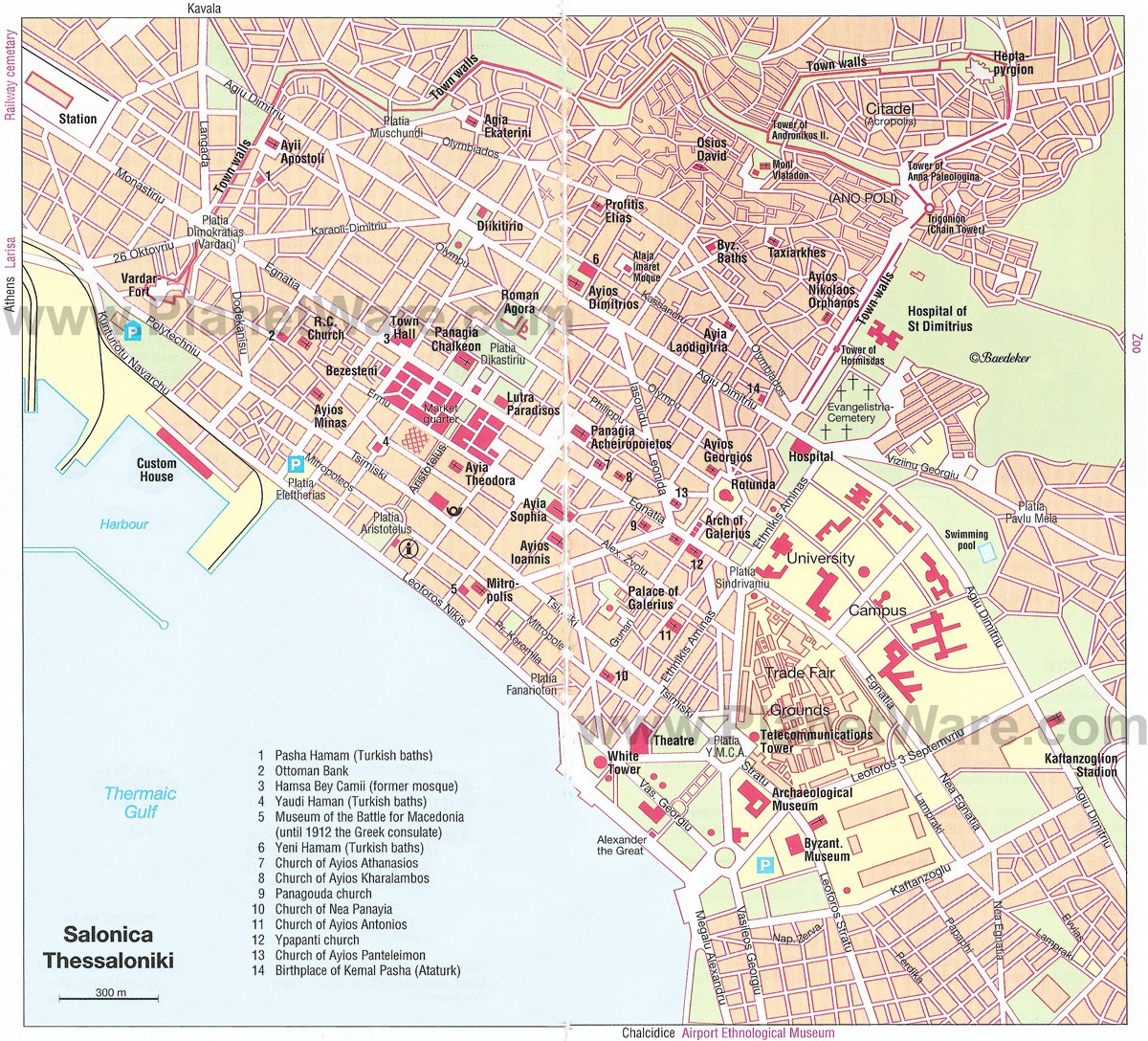
- Map of Attractions & Things to Do in Thessaloniki
- Salonica, Greece - Climate Chart
1. Rotunda of Galerius (Saint George's Church)
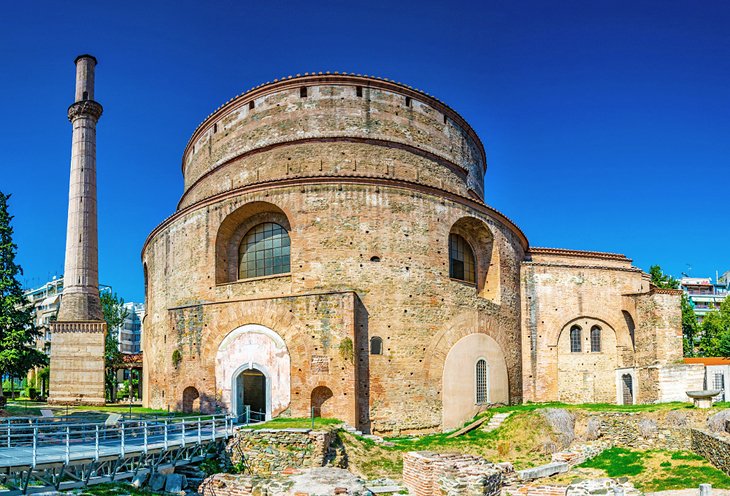
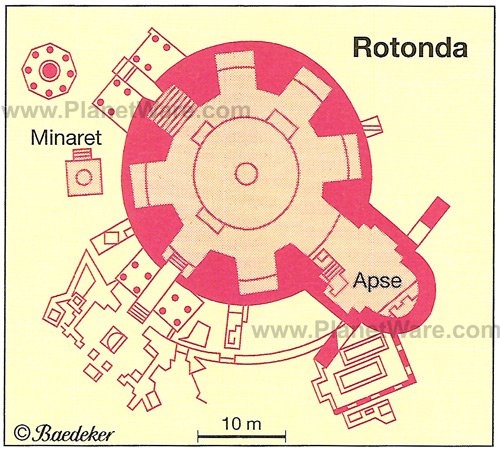
The Rotunda of Galerius is Thessaloniki's most magnificent ancient monument. Built in the early fourth century, it was most likely intended to be Roman emperor Galerius' mausoleum (although he was not buried here) and was part of the complex that included the Galerius Palace and the Arch of Galerius.
Emperor Theodosius the Great, who was baptized as a Christian in Thessaloniki, converted the mausoleum into a Christian church in the late fourth century. During the 10th to 12th centuries, the Rotunda was used as the Cathedral of Thessaloniki.
Under Ottoman rule, the building was converted to a mosque; the minaret is a relic of the Islamic era. After the liberation from the Turks in 1912, the Rotunda was transformed into the Church of Saint George (Áyios Yeóryios).
This grandiose sanctuary makes a breathtaking impression. More than 24 meters in diameter and 30 meters in height, the Rotunda features cylindrical domed architecture similar to the Pantheon in Rome.
Inside, gorgeous mosaics decorate the dome and the vaulted recesses. Designated on the UNESCO World Heritage List, the Rotunda's mosaics are considered masterpieces of Byzantine (early Christian) art. The mosaic in the center of the dome is missing, but below it are charming figures of angels and architectural facades on a gold background.
The Rotunda of Galerius houses a Sculpture Museum and also presents temporary exhibitions.
2. The White Tower: Relic of the Ottoman-Era Ramparts
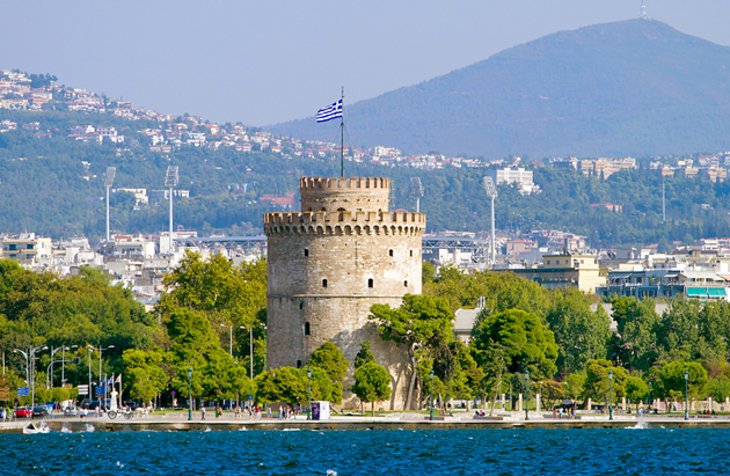
The most recognizable landmark of Thessaloniki, the White Tower can be reached by taking a scenic walk along a waterfront promenade. Built by the Ottoman Turks around 1530, this imposing tower was used mainly as a prison.
In a small public garden at the southern end of the promenade, the White Tower (Lefkós Pyrgos) was once part of the town's Ottoman-era ramparts. The circuit of fortification walls no longer remains completely intact; the White Tower is the only relic of the seaward defenses.
Today, tourists can visit the tower and ascend to the viewing platform on the top, which offers sensational views of the city and harbor.
The White Tower also houses the permanent collection of the Museum of Byzantine Culture. The museum's exhibits educate visitors about Byzantine history and art in Thessaloniki from around AD 300 until its capture by the Turks in 1430. The collection includes a wide range of artifacts such as early Christian coins, vases, mosaics, wall paintings, and liturgical objects.
The Museum of Byzantine Culture also hosts temporary exhibitions on modern Greek art and themed exhibitions related to modern Greek culture and history.
Visitors will appreciate the museum's café with shaded outdoor-patio seating and gift shop that sells books and souvenirs inspired by the antiquities and Byzantine art displayed at the museum.
Official site: https://mbp.gr/en
3. Church of Agios Dimitrios
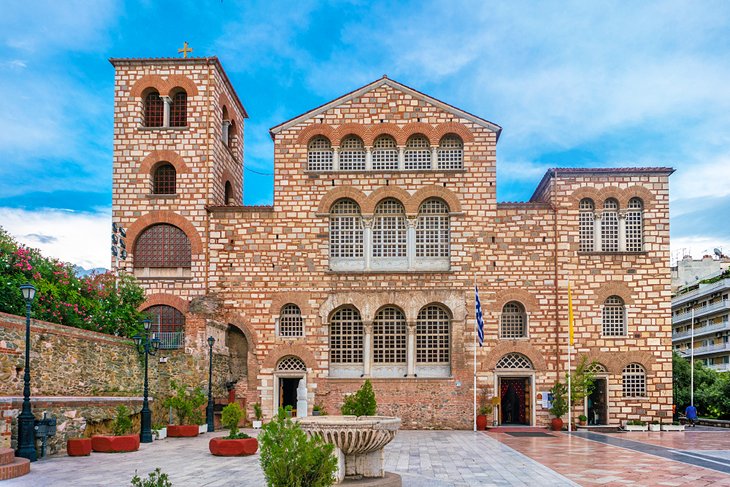
The Church of Agios Dimitrios is dedicated to the town's patron saint, Dimitrios, a Roman soldier who was executed at this site in the year 306. At that time, it was a Roman bathhouse, and the murder was ordered by Emperor Galerius who was ruthless in his persecution of Christians.
In the 4th century, a church was built on the site of Saint Dimitrious' martyrdom. For centuries, pilgrims from all over the Byzantine Empire came to venerate the saint's relics, which are preserved in a sarcophagus in front of the iconostasis.
In the 7th century, the original small church was replaced with a larger five-aisled basilica that still stands today.
Spiritual pilgrims and tourists alike marvel over the church's glorious interior. The richly embellished sanctuary is 43 meters long, the largest in Greece. Adornments include finely carved capitals on the varicolored marble columns, a dazzling chandelier in the central aisle, and exquisite gilded mosaics of the early Byzantine Empire that have been beautifully restored.
Today, the Church of Saint Demetrius (Agios Dimitrios) is the town's main church. Tourists may visit the church, which is open daily free of charge.
Address: 97 Agiou Dimitriou, Thessaloniki

4. Arch of Galerius
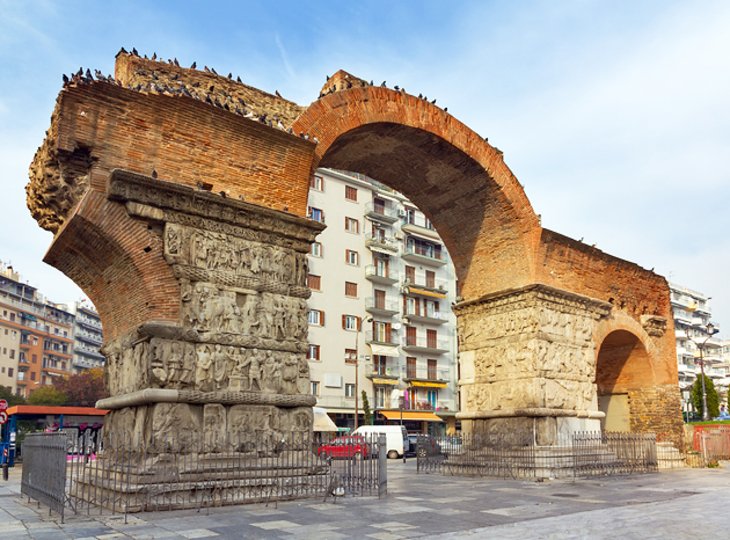
Walking from Egnatia Street towards Thessaloniki's city center, visitors will come across the Arch of Galerius (Apsída Galeríou), an ancient Roman monument dating to around AD 297.
This arch was the ancient town's main entrance gate. Of the original structure, three piers of the west side remain. Two of the surviving piers, linked by an arch, feature a marble facade decorated with elaborate reliefs.
The reliefs, separated by garlands, depict battle scenes from Emperor Galerius' Persian, Mesopotamian, and Armenian campaigns of the third and fourth centuries. These ornately carved reliefs are among the finest of their kind.
Be sure to notice the animated scenes on the south pier. Although badly weathered, the reliefs are much better preserved than contemporary reliefs on the Arch of Constantine in Rome, dating to AD 315.
5. Archaeology Museum of Thessaloniki
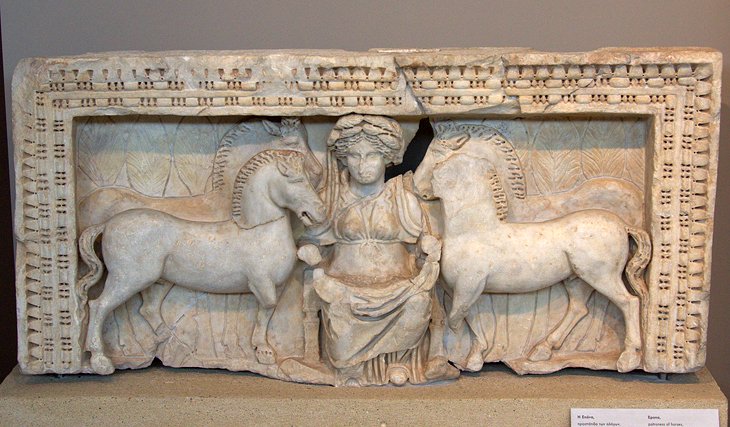
This renowned museum presents a superb collection of artifacts that were uncovered in Thessaloniki, as well as all over ancient Macedonia. The collection spans from prehistory to late antiquity. Be sure to see the sculptures from the Archaic to Late Roman era. Several rooms display architectural elements from an Ionic temple of the sixth century BC.
Other exhibits show excavation findings from a Neolithic settlement at Makriyalo in Pieria, artifacts from the ancient palace built by Emperor Galerius, and the reconstruction of a Macedonian tomb in Ayia Paraskevi.
A showcase in the lobby of the museum displays finds from a Neolithic site, accompanied by information about the progress of the excavation.
The museum is open daily from 8am until 8pm. Well designed to welcome visitors, the museum has a café with a pleasant outdoor terrace. There is also a gift shop that sells books about Ancient Greek culture, items inspired by antiquities, and replicas of Ancient Greek ceramics and jewelry.
Address: 6 Manolis Andronikos Street, Hanth Square, Thessaloniki
Official site: http://www.amth.gr/
6. Ano Poli (Upper Town)
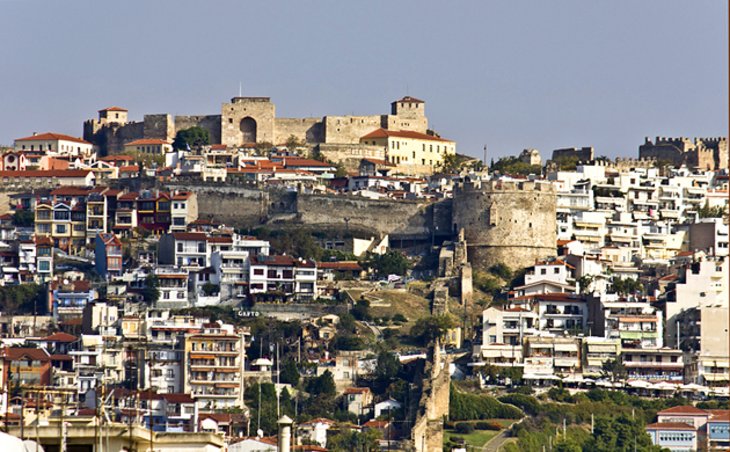
The Ano Poli is the historic old town, known as the Upper Town because of its hilltop location. The upper town can be reached from Odós Olympíados, the curving street that links the lower town on the north to the old town walls and citadel.
This atmospheric quarter is characterized by its steep, winding streets and pedestrian alleyways. Numerous fountains of the Ottoman era reveal the quarter's Turkish influence.
The Ano Poli has many noteworthy historic churches, including Saint Catherine's Church; the Church of the Prophet Elijah; the Church of the Taxiarchs (Archangels); the Church of the Holy Apostles; the Church of Agios Nikolaos Orfanos; and the must-see Church of Ósios Davíd, which was built in the fifth and sixth centuries and is renowned for its splendid mosaic depicting the prophet Ezekiel's vision.
7. Byzantine Walls (Ancient Ramparts)
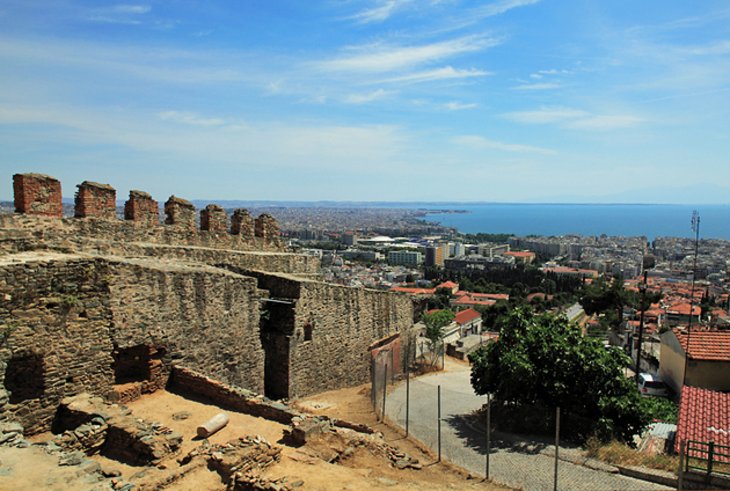
Soon after Thessaloniki was founded in 315 BC, the town was surrounded by defensive walls to withstand attacks by King Pyrrhus of Epirus in 285 and by the Celts in 279. Constantine the Great strengthened the fortifications, and under the Byzantine Empire, the walls were frequently enhanced.
In the 14th and 15th centuries, the Turkish authorities built additional defensive structures and towers, often using Venetian military engineers for the construction.
Until the 19th century, the old town was surrounded by a complete eight-kilometer-long circuit of walls. Unfortunately, the Ottoman government pulled down the ancient walls to modernize and "beautify" the town. However, recently the walls have been restored in sections.
A good starting-point for a tour of the Byzantine Walls is at the Evangelistria Cemetery north of the University campus. From there, walk outside the walls to the massive 15th-century round tower known as the Trigonion Tower (or Alysos Tower).
Beyond this is the Anna Palaiologina Gate, an entrance that leads into the Citadel, on the site of the ancient acropolis. On the highest point is a fortress, the Heptapyrgion ("Seven Towers"), a Byzantine-era fortress that was formerly used as a prison.
From the Citadel, tourists may continue westward along the walls, either inside or outside, to the Letaia Gate near the Church of the Holy Apostles and then down to Democracy Square (Platía Dimokratías). From there, the walls continue down towards the harbor, ending at the Vardar Fort.
8. Church of the Holy Apostles
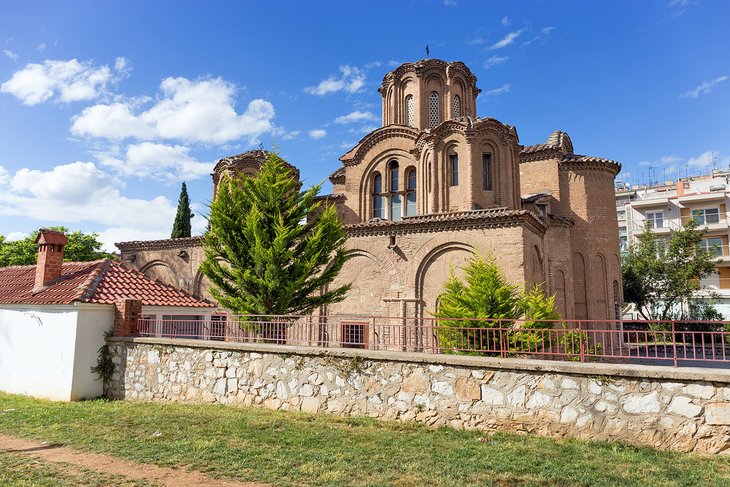
The UNESCO-listed Church of the Holy Apostles (Agioi Apostoloi) lies at the edge of the old town, close to the Byzantine Walls. This 14th-century Byzantine church was designed on a cruciform ground plan, with five domes and elaborately patterned brickwork.
A characteristic feature of the Late Byzantine architecture is the main dome that rises above the barrel vaulting of the cross with the other domes over corners of the portico.
During the Turkish period, the church was used as a mosque, the Soguk Su Camii ("Mosque of the Cold Spring"). The church boasts spectacular frescoes and mosaics of the late Byzantine era, which were discovered during restoration work in 1940.
On the northern side of the church is a cistern that belonged to the former monastery of the Holy Apostles.
The Church of the Holy Apostles holds religious services for the local community and is also open to the public daily for visits.
9. Church of Saint Sophia
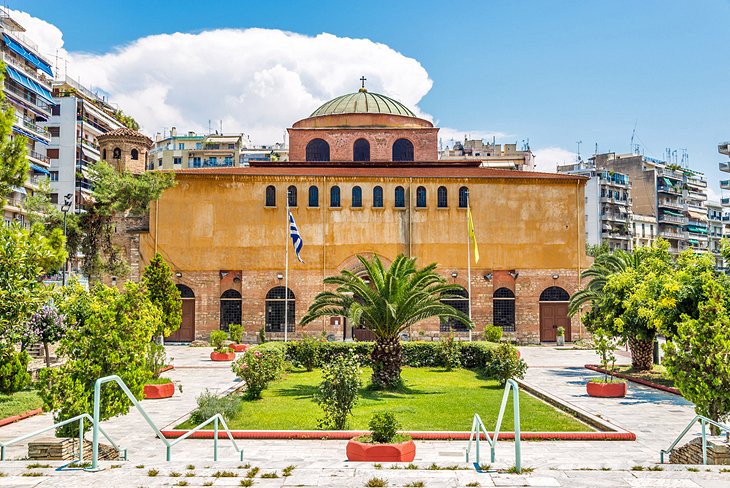
At the east end of Hermes Street (Odós Ermoú), the Church of Saint Sophia (Ayía Sofía) is one of the town's most important historic churches. The church is designated as a UNESCO World Heritage Site along with Thessaloniki's other remarkable Paleo-Christian and Byzantine monuments.
The domed church was built in the eighth century on a three-aisled cruciform plan. In the ninth and 10th centuries, after the iconoclastic conflict, the church was decorated with expressive figural mosaics, including the Mother of God mosaic in the apse and a magnificent representation of the Ascension mosaic in the dome.
Also notable are the capitals of the columns, believed to be from a fifth-century building. From 1204 to 1430, the Church of Saint Sophia was the town's metropolitan church (cathedral). During the Turkish period, it was converted into a mosque, the Aya Sofya Camii.
The building was restored after a fire in 1890 and survived the great fire of 1917 unscathed.
The Church of Saint Sophia is often used by locals to celebrate weddings. Outside of events, the church is open to the public for visits.
10. Church of Panagia Halkeon
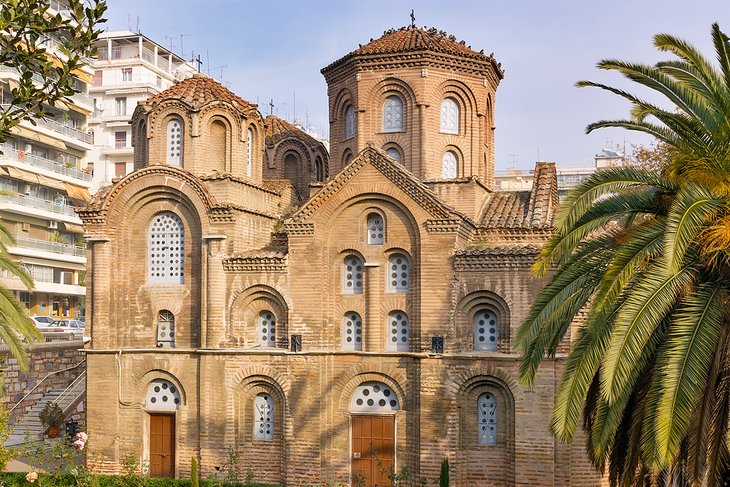
Near the ancient Roman archaeological sites, the Church of Panagia Halkeon exemplifies Byzantine architecture with its cruciform shape, four domes, and facade featuring rows of arches and columns. The design was inspired by the monuments of Constantinople, capital of the Byzantine Empire.
The sanctuary is adorned with Byzantine-era frescoes, dating from the 11th century and 14th century.
In 1430, the Ottomans converted the church into a mosque, but in 1912, it was changed back to a Greek Orthodox Church.
The church is open to the public for visits daily from 7am until 12 noon.
Address: 2 Halkeon Street, Thessaloniki
11. Museum of the Macedonian Struggle
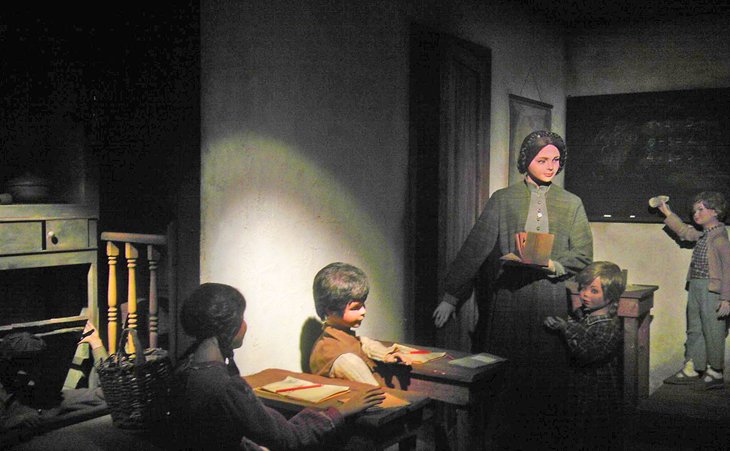
Housed in a Neoclassical building of the 19th century, this museum educates visitors about the Macedonian struggle. The collection includes artifacts and photos from 1900 to 1912.
The most interesting exhibits are the weaponry, uniforms, memorabilia, and personal effects of the leaders of the Macedonian Struggle that took place from 1904 to 1908.
The extensive photography collection includes 1,350 contemporary photographs. Also on display are explanatory maps, books, newspapers, and paintings of the Macedonian landscape in the late 19th and early 20th century.
The museum is open Monday, Tuesday, Thursday, and Friday from 9am until 2pm; Wednesday from 9am until 8pm; and Saturday from 10am until 2pm.
Address: 23 Proxenou Koromila Street, Thessaloniki
Official site: http://imma.edu.gr/en/imma-home-en/
12. Villa Allatini
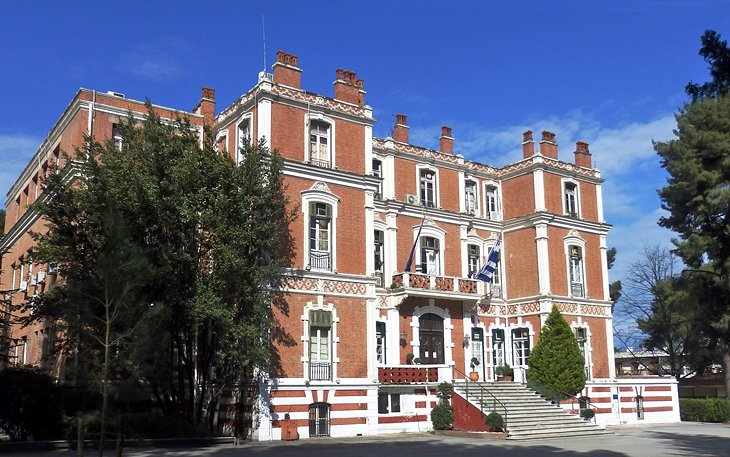
In the southwestern suburb of Kalamaria, visitors will discover many lovely 19th-century villas and mansions. Many of these villas were designed by Italian architects in Neoclassical style.
One house of particular historical interest is the Villa Allatini, created by the Italian architect Vitaliano Poselli in 1896. Set in picturesque grounds, this stately villa was originally owned by a wealthy Jewish family, who were part of the Jewish community that once thrived in Thessaloniki.
From 1926, the Villa Allatini served as a university building, and it currently houses the offices of the Central Macedonia Region headquarters.
The beautiful historic gardens of the Villa Allatini are open to the public.
Address: 26 Vasileos Irakleiou, Thessaloniki
13. Day Trip to the Archeological Museum of Polygyros
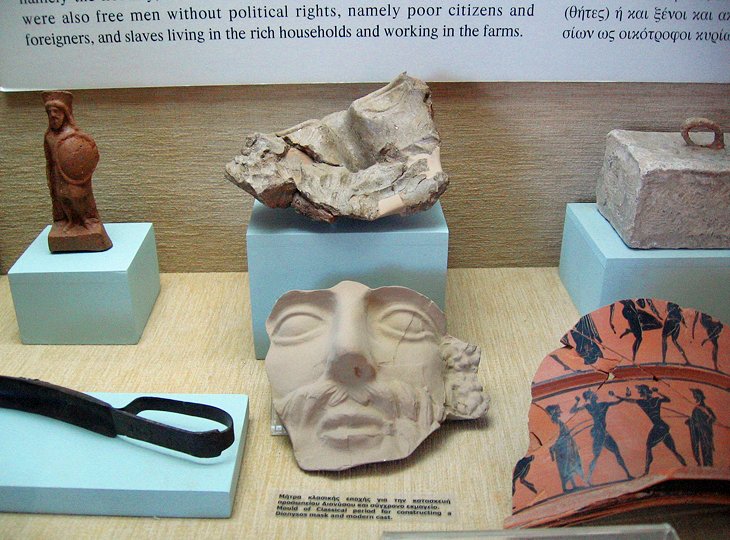
About 69 kilometers from Thessaloniki, the charming city of Polygyros is nestled in the foothills of the Chalkidiki region. The town has retained a traditional Greek character with its quaint little neighborhoods, which are a delight to explore.
Polygyros' top tourist attraction is the Archeological Museum, an extensive collection of archaeological finds from the Chalkidiki region. The collection covers the Bronze Age, the Archaic era, the Classical period, and the ancient Roman era. On display are sculptures, reliefs, pottery, weapons, fishermen's gear, coins, and jewelry.
Highlights include the exhibits of the Archaic period, jewelry of the Late Archaic and Classical period, and sculptures from the fourth century BC to the first century BC. Not to be missed are the marble Bust of Dionysos and the grave statues from the Heroön at Stratoni.
The assortment of objects uncovered at the nearby city and cemetery of Olynthus are particularly interesting because they give a sense of the everyday life of that time.
The Archeological Museum of Polygyros is open every day (except Tuesdays) from 8:30am until 3pm.
Address: 1 Arhaioloyikou Moussiou Sreet, Polygyros
14. Day Trip to Mount Olympus
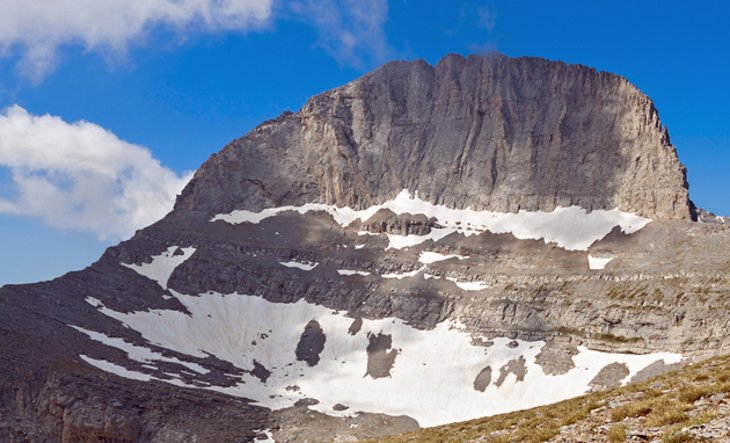
About 80 kilometers southwest of Thessaloniki, Mount Olympus is the highest mountain in Greece. It features in Homer's Iliad as the home of the gods, who were known as the Olympians. This mighty massif covers an area of some 20 kilometers across and climbs steeply towards the summit, reaching its highest point in Mítikas at 2,917 meters.
Today, Mount Olympus is the top attraction of Olympus National Park, also classified as a UNESCO Biosphere Reserve. This 238-square-kilometer park attracts nature lovers for hiking and mountain climbing. Various mountain routes provide options for different skill levels.
Though the highest ridges of Mount Olympus are difficult to climb, the most northerly peak (2,787 meters) offers easier access. A good point for an ascent of Olympus is the town of Litóhoro in the mountain's eastern foothills. From Litóhoro, there is a moderately challenging five-hour hike that leads the way past a monastery, waterfalls, and crystalline lakes.
Those seeking an easy nature walk should head to Prionia. Here, a trail begins for a gentle two-hour hike through the lush Enipeas Gorge. Prionia has a café-restaurant that is open year-round.
For overnight accommodations and meals on Mount Olympus, visitors can choose from eight mountain refuges scattered throughout Olympus National Park.
South of Mount Olympus, the Vale of Tempe is where the river Piniós (Peneios) flows to the sea and is the principal route into central Greece from the north.
Nature lovers looking for things to do may also want to visit Lake Vistonida near the town of Porto Lagos, about a two-hour drive from Thessaloniki. This area includes a protected wetland, part of the National Park of Nestos Delta and Lakes Vistonida-Ismarida, which is home to vast flocks of migrating birds. With hundreds of different avian species recorded here, this national park is one of the best places to visit in Greece for bird-watching.
Where to Stay in Thessaloniki for Sightseeing
We recommend these highly rated hotels in Thessaloniki, near top attractions like the Rotunda of Galerius and the Church of Agios Dimitrios:
Luxury Hotels:
- An upscale boutique hotel, The Excelsior offers a convenient central location and excellent amenities. This five-star property occupies a historic building with bright, spacious contemporary-style interiors. Accommodations include a generous buffet breakfast.
- The four-star Anatolia Hotel is an elegant property in the city center. Rooms and suites feature cozy modern decor and private balconies. Amenities include complimentary breakfast, a spa, fitness center, and concierge. The hotel's gourmet restaurant specializes in Mediterranean cuisine.
Mid-Range & Budget Hotels:
- The stylish yet affordable Colors Urban Hotel offers sleek contemporary-style guest rooms with sea or city views. Amenities at this four-star hotel include a concierge, parking, airport transportation, and an on-site café. Guests may opt for the breakfast buffet.
- Budget-conscious travelers will appreciate the three-star Hotel Orestias Kastorias, which provides basic accommodations in a great location near many attractions. Guest rooms feature flat-screen televisions, updated bathrooms, and city views. The front desk offers baggage storage for added convenience.
Map of Attractions & Things to Do in Thessaloniki
Salonica, Greece - Climate Chart
| Average minimum and maximum temperatures for Salonica, Greece in °C | |||||||||||
| J | F | M | A | M | J | J | A | S | O | N | D |
| 9 1 | 11 2 | 14 4 | 19 7 | 25 12 | 29 16 | 31 18 | 31 18 | 27 15 | 21 11 | 15 7 | 11 3 |
| PlanetWare.com | |||||||||||
| Average monthly precipitation totals for Salonica, Greece in mm. | |||||||||||
| 38 | 41 | 46 | 36 | 43 | 31 | 25 | 20 | 25 | 41 | 58 | 53 |
| Average minimum and maximum temperatures for Salonica, Greece in °F | |||||||||||
| J | F | M | A | M | J | J | A | S | O | N | D |
| 48 34 | 51 36 | 57 39 | 66 45 | 76 53 | 84 60 | 88 65 | 87 64 | 81 58 | 70 51 | 59 43 | 51 36 |
| PlanetWare.com | |||||||||||
| Average monthly precipitation totals for Salonica, Greece in inches. | |||||||||||
| 1.5 | 1.6 | 1.8 | 1.4 | 1.7 | 1.2 | 1.0 | 0.8 | 1.0 | 1.6 | 2.3 | 2.1 |
More Related Articles on PlanetWare.com
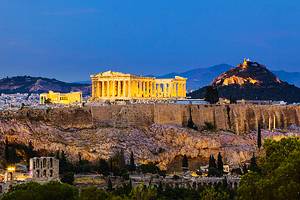
Athens: Athens is considered the cradle of Western civilization and has a history stretching back more than 3,000 years. To find out more about Athens, check out our Top-Rated Attractions & Things to Do in Athens page. This detailed guide will help you plan your sightseeing itinerary, from the Acropolis to the National Archaeology Museum.
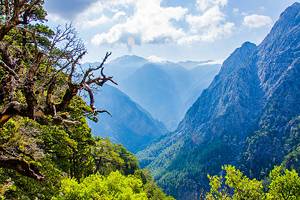
Crete: Another must-see destination for history buffs is the Island of Crete. The largest island in Greece, Crete is packed with tourist attractions including archaeological sites, historic port towns, charming mountain villages, and beautiful beaches. Other must-see sights of Crete include the ancient Palace of Knossos near the city of Heraklion and the picturesque seaside town of Agios Nikolaos surrounded by a small lake and rocky cliffs.