

London's 14 Most Iconic Tourist Attractions To Explore On Your First Trip
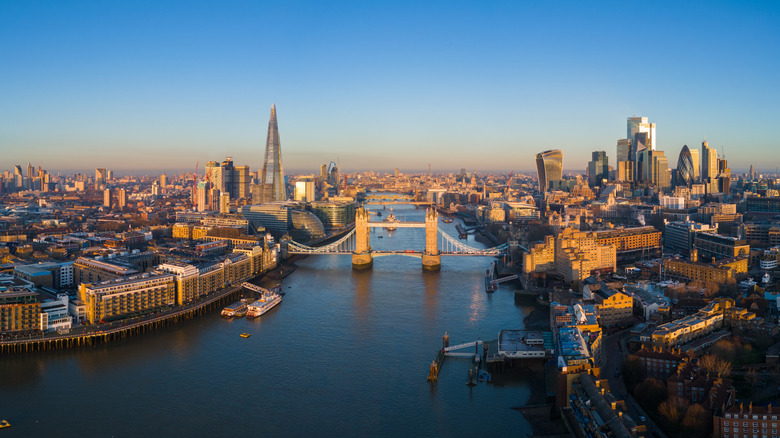
London is a city where history and modern life sit side by side. Here, medieval fortresses overlook glass skyscrapers, royal ceremonies play out beside red buses, and centuries of tradition are woven into everyday life. It's little wonder, then, that it's been named the world's "best city of 2025." For a first-time visitor, however, the sheer number of famous landmarks can feel overwhelming. To take the struggle out of planning the perfect itinerary, this guide brings together 14 of the most iconic places that define the city's character. These aren't just photo ops — they're working palaces, political powerhouses, artistic treasure troves, and living stories of Britain's past and present.
From the chimes of Big Ben to the pageantry of Buckingham Palace, each location in this collection captures something essential about London. You'll walk through ancient abbeys where kings and queens have been crowned, wander vast museums filled with global history, and take in skyline views that stretch for miles along the Thames River. This guide gives you the context, history, and details that bring London's most iconic sights to life.
Tower of London
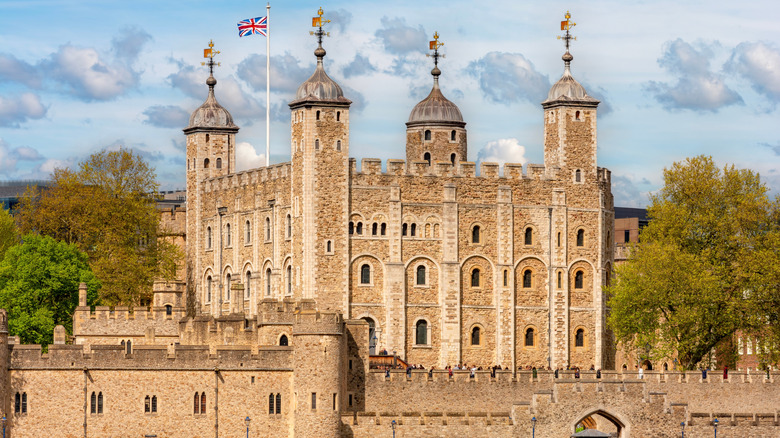
Established by William the Conqueror to assert Norman control over the city, and standing on the north bank of the Thames since the 1070s, the Tower of London has been a royal palace, prison, armoury, and a zoo (yes, really). Today, visitors are drawn to see the Crown Jewels — over 23,000 precious stones and ceremonial items used in coronations, including St Edward's Crown. The tower's famous ravens — traditionally six in number — are kept on site, thanks to a legend that claims the monarchy will fall if they leave.
Yeoman Warders, commonly known as Beefeaters, were put in place by King Henry VII and still live within the walls of the tower, leading tours filled with stories of Tudor executions, medieval torture, and royal scandal. The atmospheric White Tower, Traitors' Gate, and views across Tower Bridge make this one of London's most photographed historic sites, and an unmissable stop for visitors to England's capital city. Visit in the early morning to avoid queues and big crowds.
Big Ben and the Houses of Parliament
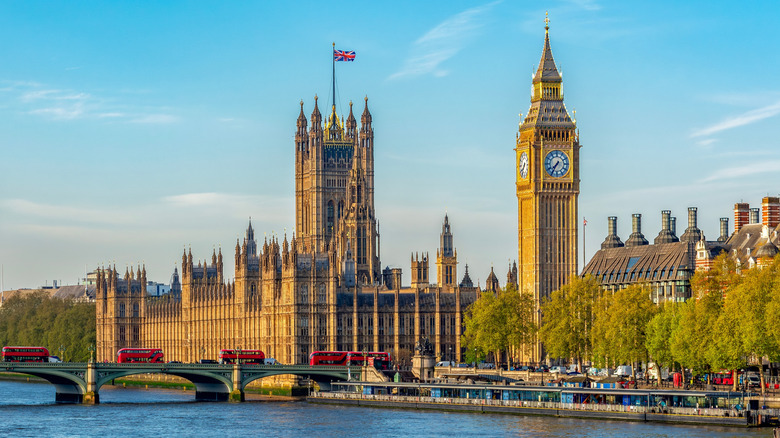
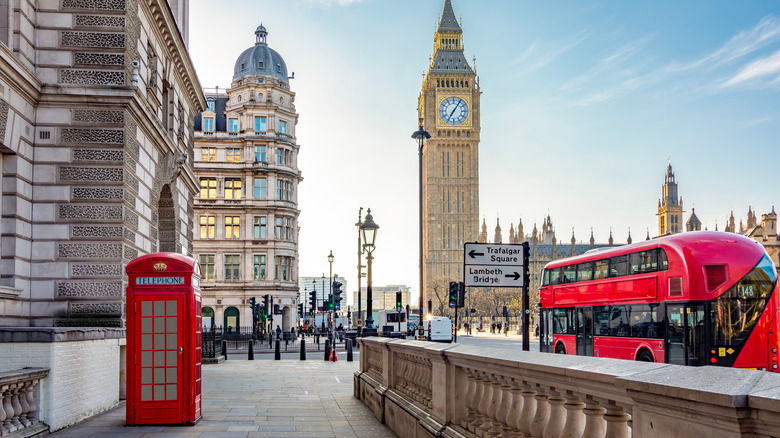
You'll be hard pressed to find a more iconic London sight than Big Ben and the Houses of Parliament. Though most people use "Big Ben" to describe the whole clock tower, the name actually refers to the Great Bell housed within the Elizabeth Tower. Completed as part of architect Charles Barry's reconstruction of the Palace of Westminster after a devastating fire in 1834, the tower's Great Clock began keeping time on May 31, 1859. Known for remarkable precision, its innovative timekeeping is regulated using old pre-decimal pennies placed on the pendulum to alter its speed by fractions of a second.
Today, the Houses of Parliament remain the heart of British democracy. Many visitors begin outside, taking in the views from Westminster Bridge or across the River Thames on the South Bank — especially at sunset, when the stone façade glows gold in the fading light. Inside, the Palace of Westminster is open for visitors on Saturdays all year long, and from Monday to Saturday during parliamentary recess. Guided or self-guided audio tours lead you through Westminster Hall, the oldest surviving part of the palace, the House of Commons where debates take place, and the richly decorated House of Lords. For those keen to see Big Ben up close, separate Elizabeth Tower tours allow visitors aged 11 and over to climb all 334 steps to the belfry, where you can stand beside the Great Clock mechanism and the Great Bell itself.
Buckingham Palace and the Changing of the Guard
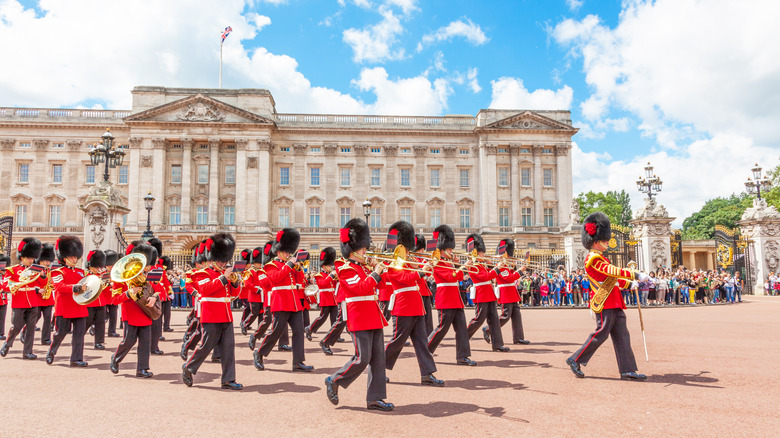
Buckingham Palace has served as the monarch's official London residence since Queen Victoria moved in back in 1837. Today, it remains a working royal palace with 775 rooms — including 52 bedrooms, 92 offices, and 78 bathrooms — and is still used for state banquets, receptions, and the monarch's weekly meeting with the Prime Minister. One of the biggest draws for visitors, however, is the Changing of the Guard. This ceremonial handover between the Old Guard and the New Guard takes place most days in summer and on a schedule the rest of the year. It lasts 45 minutes and is performed by serving soldiers from the British Army, dressed in their red tunics and iconic bearskin hats.
Crowds gather along the Mall and around the Victoria Memorial for the best view of the parade and military band. If the Royal Standard flag is flying above the palace, it signals that the monarch is in residence. During the summer months, it's possible to get a closer look at this historic building, when the palace's 19 lavish State Rooms and gardens open to the public . With its grand façade, gilded gates, and timeless pageantry, the palace is one of London's most enduring symbols.
Westminster Abbey
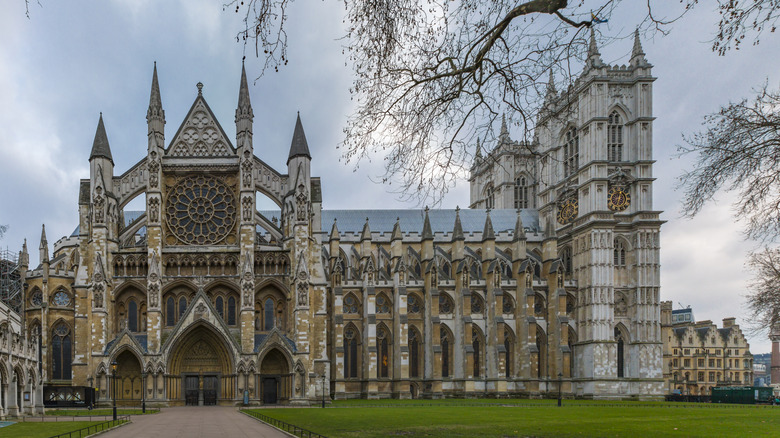
Few buildings in Britain hold as much history as Westminster Abbey. Founded as a Benedictine monastery around the 10th century, every English and later British monarch — except Edward V and Edward VIII — has been crowned here, including Queen Elizabeth II in 1953 and King Charles III in 2023. The abbey has also witnessed 16 royal weddings, including that of Prince William and Catherine Middleton in 2011.
Stepping inside, visitors are met with vaulted ceilings, stained glass, and carved stonework. One of the most popular areas is Poets' Corner, where writers such as Geoffrey Chaucer are buried and others like William Shakespeare and Jane Austen are memorialized. The abbey is also the resting place of monarchs, scientists like Isaac Newton and Charles Darwin, and the Unknown Warrior, whose grave honors unidentified soldiers from World War I. Guided and self-guided tours allow you to explore the nave, cloisters, and the ornate Lady Chapel built by Henry VII, while those who wish to worship within the historic walls are also welcome to attend a service.
St Paul's Cathedral
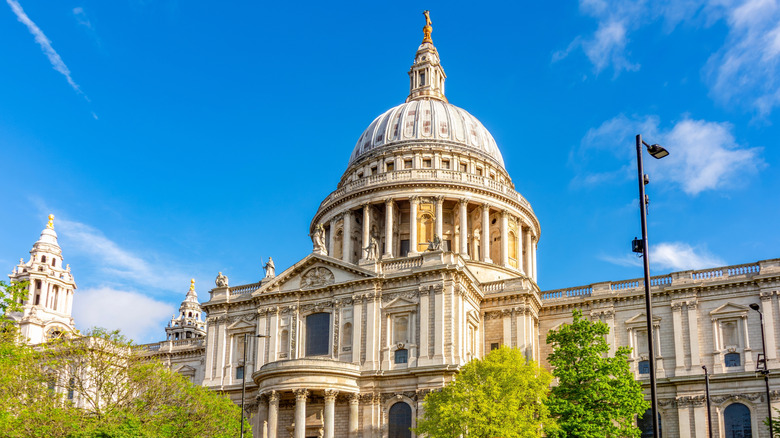
St Paul's Cathedral dominates London's skyline with its unmistakable dome, designed by Sir Christopher Wren after the Great Fire of London destroyed the building in 1666. Completed in 1711, it remains one of the greatest examples of English Baroque architecture and has hosted major national events, including the wedding of Prince Charles and Lady Diana Spencer in 1981 and the state funeral of wartime Prime Minister Sir Winston Churchill in 1965. Inside, the cathedral is grand and atmospheric, with mosaic-covered ceilings, marble floors, and shafts of light pouring through high windows.
Visitors can climb 259 steps up to the Whispering Gallery, famous for its acoustics — sound travels clearly around the dome's curved walls, even at a whisper. Above that, the Stone Gallery and the Golden Gallery reward those willing to tackle the 528 steps with sweeping views across London, from the Thames to the Shard and beyond. The crypt beneath the cathedral holds the tombs of national figures including Admiral Lord Horatio Nelson and the Duke of Wellington. Outside, the Millennium Bridge provides one of the most iconic views of St Paul's, aligning perfectly with the west façade.
The British Museum
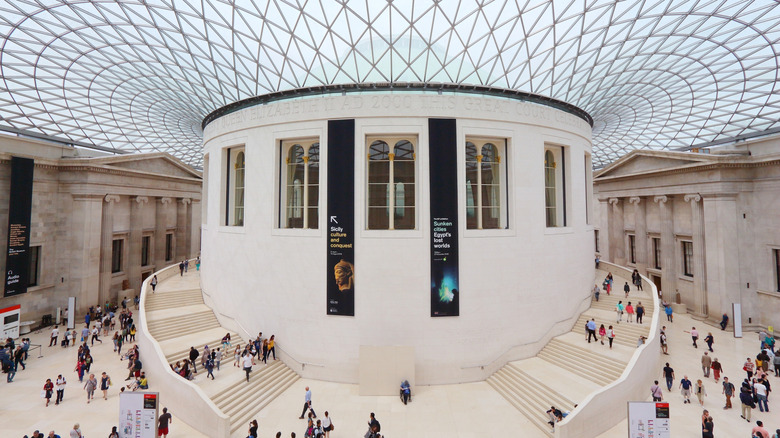
The British Museum has welcomed the public since 1759, making it the world's first national public museum with free admission. Located in Bloomsbury, the museum showcases a stunning neoclassical exterior and a vast collection of more than 8 million objects spanning 2 million years of human history. Step through the doors and you'll find some of history's most significant and impressive treasures, including the Rosetta Stone, Egyptian mummies, Assyrian palace sculptures, and the Parthenon marble sculptures.
At the center of the museum is the Queen Elizabeth II Great Court, a huge indoor courtyard that transformed the old reading room into a bright, central gathering point. Entry to the permanent galleries is free, making it easy to spend an afternoon exploring everything from ancient Mesopotamia to Renaissance Europe. Whether you're drawn to archaeology, art, or storytelling, it remains one of London's most essential stops. It's a great place to escape England's notorious wet weather, especially if you visit in the colder months — though, keep in mind that winter is considered the best time of year to plan a trip to London.
Tower Bridge
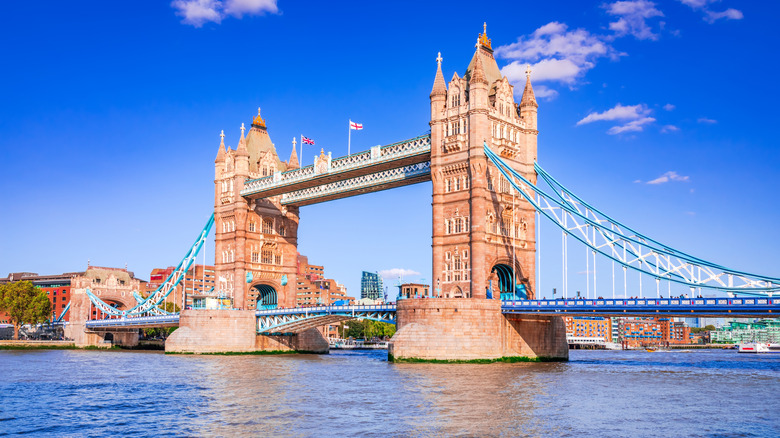
Not to be mistaken for London Bridge (which it often is), Tower Bridge is London's most recognizable river crossing and one of the city's defining landmarks. Completed in 1894 after eight years of construction, it was built to ease traffic congestion while still allowing tall ships to enter the Pool of London. One of the things that makes Tower Bridge so impressive is that it still operates using its original mechanism, raising its bridge to let larger vessels pass along the Thames. Visitors can head inside to explore the Tower Bridge Exhibition, where glass-floored walkways offer a unique view down to the traffic and river below.
The Tower Bridge Engine Rooms are also worth a visit, now serving as a museum showcasing the original machinery. If you're feeling thirsty, there's even a cozy pub loved by locals hidden beneath this iconic landmark. The best views of the bridge are from Butler's Wharf on the south side, the Tower of London's riverside walkway, or from the water on a Thames boat tour. At night, the bridge is illuminated, reflecting over the Thames and making it one of London's most beautiful sights.
The Shard Viewpoint
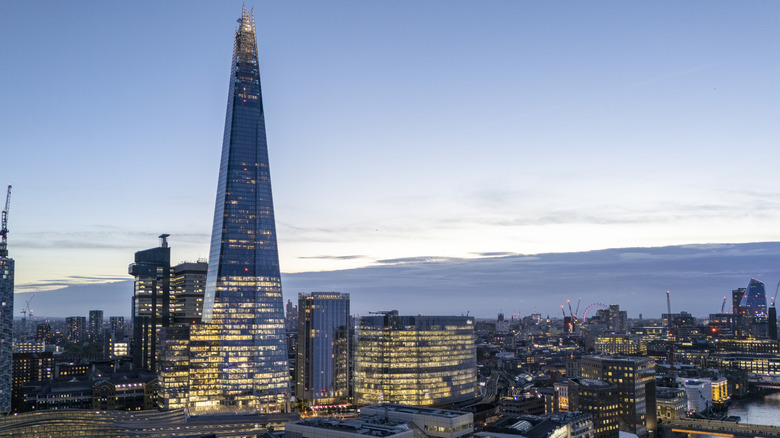
Soaring over 1,000 feet above London, The Shard is the tallest building in the UK and all of Western Europe. Completed in 2012, its glass-clad, shard-like form was inspired by church spires and ship masts on the River Thames. Near the top of the building, on floor 72, is The View from The Shard, an observation experience offering incredible 360-degree views of up to 40 miles on a clear day. Visitors begin indoors with interactive screens pointing out landmarks such as St Paul's Cathedral, Tower Bridge, and the London Eye before stepping out on the open-air platform.
Unsurprisingly, sunset is one of the most popular times to visit, when the iconic London skyline shifts from golden light to glittering night. Entry to The Shard is timed, but guests can stay as long as they like once inside. The building also houses offices, restaurants, luxury apartments, and the five-star Shangri-La Hotel. Whether you're looking down at the Thames curving through the city or the glow of city lights after dark, the view offers one of the most dramatic perspectives of London. That said, if you're on a budget, there are also several places in London where you can enjoy scenic views of the city for free.
The London Eye
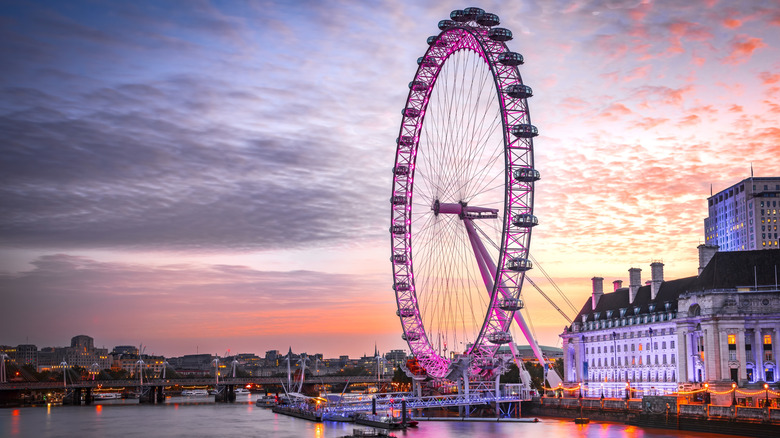
Rising above the South Bank of the Thames, the London Eye has become one of the city's most popular modern landmarks since it opened to the public in 2000. Standing over 440 feet tall, each of its 32 glass capsules — representing the 32 boroughs of London — can hold up to 25 people and rotates slowly enough that it rarely needs to stop for boarding. A full rotation takes around 30 minutes, showcasing uninterrupted 360-degree views across the skyline. On a clear day, you can see as far as 25 miles away.
From the top, landmarks like Big Ben, Buckingham Palace, and St Paul's Cathedral line up beneath you, making it particularly popular with photographers. Sunset and nighttime rides are especially atmospheric, as the city lights reflect off the Thames. The London Eye was originally meant to be temporary, but its popularity kept it in place, and it now attracts millions of visitors every year. Located beside County Hall and opposite Westminster, it's easy to combine with a walk along the South Bank's riverside path, lined with performers, cafés, and book stalls.
Trafalgar Square and The National Gallery
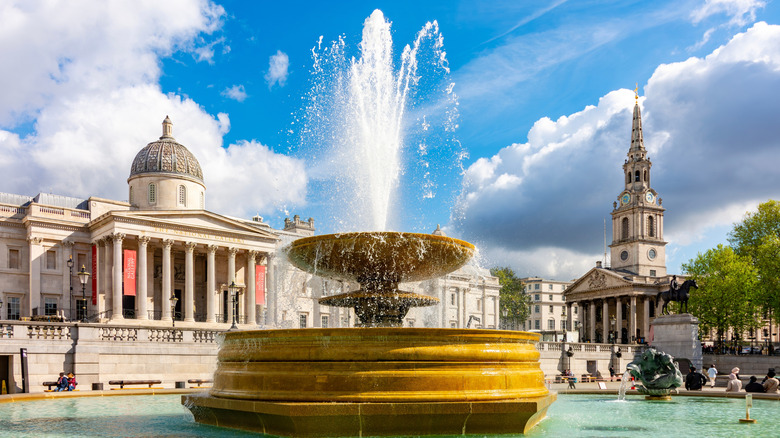
Trafalgar Square has long been considered the heart of London — a public gathering place framed by fountains, lion statues, and historic architecture. It was built in the 1840s to commemorate Britain's victory during the Battle of Trafalgar in 1805, with a large tribute to war hero Admiral Lord Horatio Nelson rising 169 feet above the square. Today, it's a space for celebrations, protests, Christmas carols, and New Year festivities, watched over by four bronze lions sculpted by Sir Edwin Landseer in 1867. On its northern side stands the National Gallery, home to more than 2,400 paintings and works of art dating from the 13th century to the early 20th century.
Entry to the permanent collection is free, allowing visitors to wander past world-famous works such as Van Gogh's "Sunflowers," Turner's "The Fighting Temeraire," and Botticelli's "Venus and Mars." Inside, the galleries range from medieval altarpieces to impressionist masterpieces, housed in a grand neoclassical building. Outside, street performers, artists, and fountains add to the atmosphere, while views stretch along Whitehall towards Big Ben and the Houses of Parliament. Whether you visit for the art, the architecture, or the people-watching, Trafalgar Square is one of the places where the city feels most alive.
Covent Garden
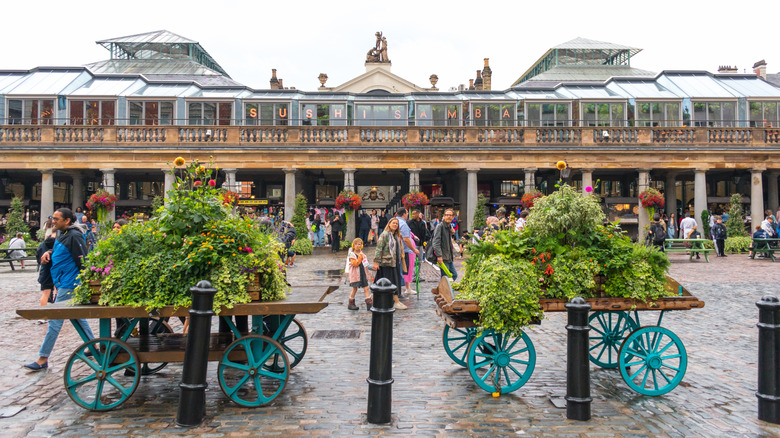
Covent Garden is one of London's most lively districts — part historic marketplace, part cultural hub, and always buzzing with energy. The area began as a fruit and vegetable market in the 17th century, supplying much of the city with fresh produce until the 1970s, when it was transformed into a specialty shopping center. Today, the elegant glass-roofed piazza designed by Charles Fowler in the 1830s houses boutique shops, cafés, and even London's only cheese conveyer belt, for those who are feeling hungry.
The area is famous for its street performers, opera singers, classical musicians, and mime artists who perform daily in designated spots around the piazza. Just steps away is the Royal Opera House, home to the Royal Opera and Royal Ballet, and St Paul's Church, known as the "Actors' Church," which sits on the west side of the square and has long been associated with London's theater community. In winter, the piazza is dressed with giant baubles, 300,000 Christmas lights, and a 55-foot tree, turning it into one of London's most festive corners and a highlight of any trip to the city.
Natural History Museum
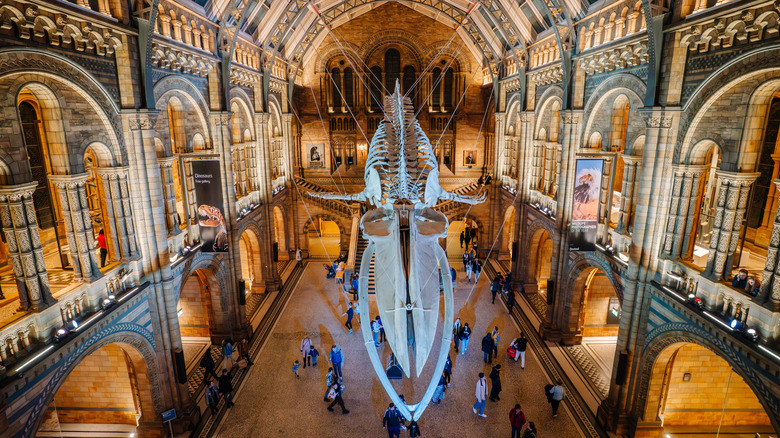
The Natural History Museum is one of London's most enchanting places to explore, whether you're fascinated by dinosaurs, the natural world, or simply want an inspiring day out. Home to more than 80 million objects from all over, including ancient fossils, meteorites, and preserved wildlife, it's the most significant collection of its kind in the world.
Guests are greeted by the stunning Hintze Hall, where an 82-foot blue whale skeleton named Hope hangs dramatically above the entrance. From here, visitors can explore the dinosaur gallery, experience an earthquake simulator, and discover volcanoes, gemstones, human evolution, and the wonders of the deep ocean. Admission to the main galleries is free, making it ideal for those traveling on a budget, though special exhibitions such as Wildlife Photographer of the Year are ticketed. Beyond its displays, the museum is also a world-leading research center on important topics like climate change and species extinction.
Hyde Park and Kensington Palace
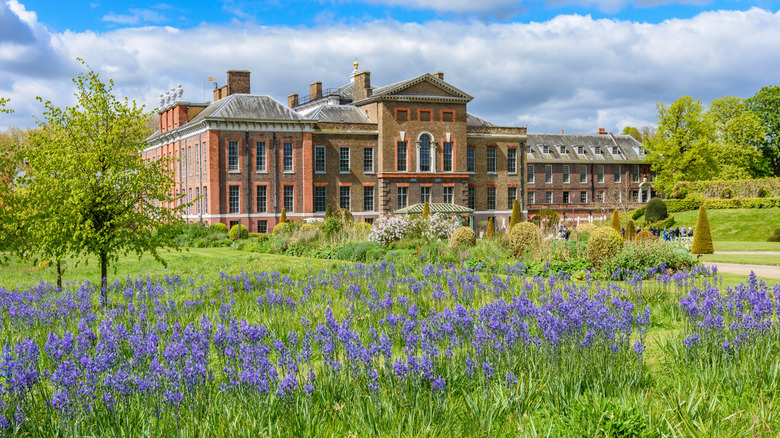
Hyde Park is one of London's largest and most historic green spaces, covering 350 acres in the heart of the city. Originally created by Henry VIII in 1536 as a royal hunting ground, it opened to the public in the 17th century. Today, visitors can wander along the Serpentine, hire pedal or row boats in summer, or remember one of England's most famous royals at the Diana Memorial Fountain. On the park's western edge stands Kensington Palace, the official London residence of the Prince and Princess of Wales.
Parts of the palace are open to the public, including the King's and Queen's State Apartments and exhibitions that explore royal life — from Queen Victoria's childhood to Princess Diana's fashion. Outside, the Sunken Garden features the statue of Diana, Princess of Wales. Hyde Park is also home to Speakers' Corner, where open-air public speaking has been a tradition since the 19th century, and to seasonal events like the Christmas spectacular that is Winter Wonderland.
Greenwich Park
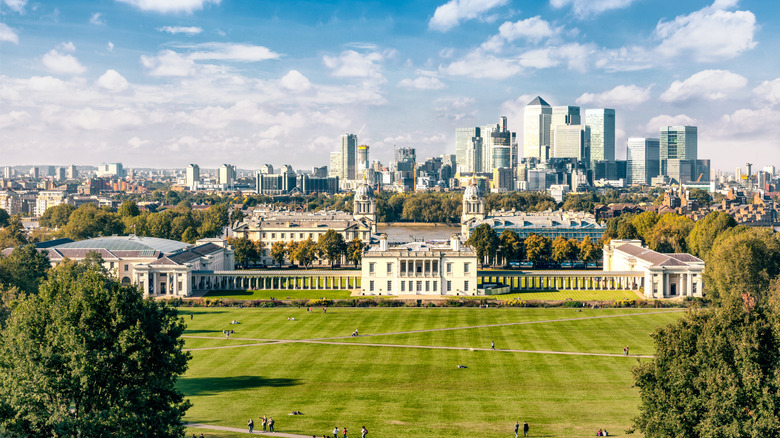
Greenwich is the place where time begins — literally. It's the home of the Prime Meridian, the line from which all world time zones are measured. You can stand with one foot in the Eastern Hemisphere and one in the Western at the Royal Observatory, which was founded in 1675 by King Charles II and is one of the most romantic destinations in London. Inside, you'll find John Harrison's revolutionary marine chronometers, which helped solve the problem of determining longitude at sea, and the Great Equatorial Telescope, one of the largest of its kind in the UK.
The top of the hill in Greenwich Park showcases one of London's most striking panoramas, featuring the Thames, the Queen's House, the twin domes of the Old Royal Naval College, and Sir Christopher Wren's architecture, with Canary Wharf's modern skyline rising in the background. Downhill, the National Maritime Museum and "Cutty Sark," a 19th-century tea clipper ship, add to the area's seafaring legacy.
Methodology
This guide focuses on the iconic landmarks that best represent London's history, culture, and identity. These destinations are both renowned and historic, continuing to play an active role in city life centuries after their creation. The attractions were chosen based on three criteria: historical or cultural significance, visitor experience, and visual or symbolic impact.
Location-specific details for each attraction, such as its history, current offerings, and visitor information, were verified using reputable and official sources such as UK Parliament, Historic Royal Palaces, Royal Collection Trust, Royal Parks, and National Museums. The information in this guide is also complemented by my extensive first-hand knowledge of each site, gained from 27 years of living in London, as well as by visitor reviews and recommendations.