Lisbon's Old Quarter: Attractions
The Alfama is Lisbon's oldest quarter. Spread over the southeastern slope of the hill crowned by Castelo de São Jorge, the picturesque neighborhood is composed of a maze of narrow streets, winding alleyways, and steep flights of steps.
Its kasbah-like layout is deliberate - this is the city's ancient Arab district, and although there are no Moorish-era houses still standing, the tightly-packed lanes, small archways, and stone-paved terraces are full of atmosphere and great fun to explore.
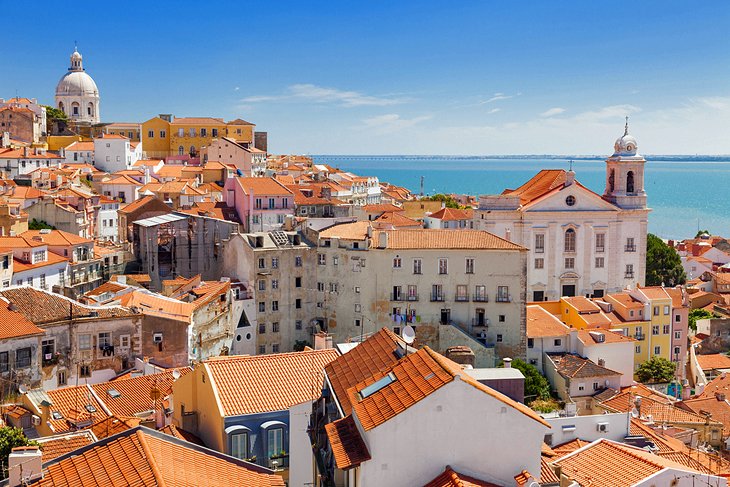
Lisbon's old quarter offers many things to do. Besides the castle, there are several historic 17th-century churches in the vicinity, as well as the city's impressive cathedral. A clutch of excellent museums provide cultural diversion, and Lisbon's biggest flea market is here. Some of the best views in Lisbon are from lofty squares, such as the Miradouro Largo das Portas do Sol - once the entrance gates to the old city.
Alfama wakes up at night, when some of the city's most authentic cafés and restaurants open their doors to serve delicious traditional cuisine and plenty of bonhomie. The neighborhood is also home to traditional fado houses, where this unique Portuguese musical expression can be appreciated in rustic and romantic surroundings.
Castelo de São Jorge
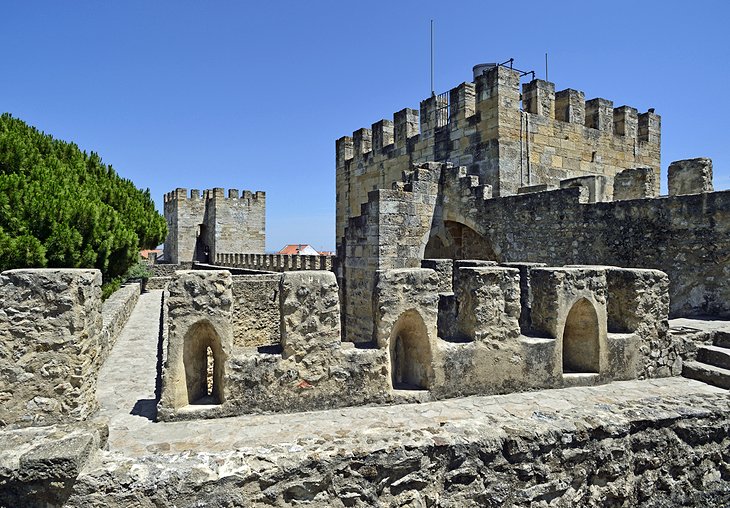
Arguably one of the most popular tourist attractions in Lisbon, Castelo de São Jorge (St. George's Castle) crowns the hilltop above the city's Baixa (downtown) district.
An Iron Age settlement is believed to have first occupied the strategically important site, but it was the Romans who strengthened the foundations and built a fortress, around 205 BCE. The Moors reinforced the stronghold, but were eventually repelled in 1147 by invading Christian forces led by King Afonso Henriques.
The citadel was transformed into a royal residence and prospered until the early 16th century, when Manuel I built a new palace down by the river. After that, the castle served as a barracks, a prison, a theater and even a children's home before archaeologists, working under the patronage of dictator António Salazar, started to renovate the dilapidated structure in 1938.
As a result, what you see today is essentially a reconstruction of a medieval landmark, but that in no way deters the hundreds of thousands of sightseers who make their way up to its lofty ramparts every year.
Actually, excavations within the grounds have revealed the foundations of a settlement dating back to the 7th century. The archaeological site also displays the remnants of an 11th-century Moorish house and the remains of the Royal Palace of the Alcáçova, which was destroyed in the great earthquake of 1755. The permanent exhibition housed in the castle museum details the history of the fortress and the city surrounding it.
Most visitors, however, are content to walk the battlements that ring the inner courtyard. From these mighty walls you can enjoy outstanding views of the Portuguese capital, its river, and the distant Atlantic Ocean. An unusual diversion is the Camera Obscura periscope housed inside the Tower of Ulysses. Here, you can admire a 360° projected view of the city below.
A café and a noted restaurant provide an excuse to pause, and the gardens are used for regular theater and musical shows, exhibitions, and festivals. Check the castle website to see what's on.
Address: Rua de Santa Cruz, Castelo, Lisbon
Official site: http://castelodesaojorge.pt/
Museu de Artes Decorativas (Museum of Decorative Arts)
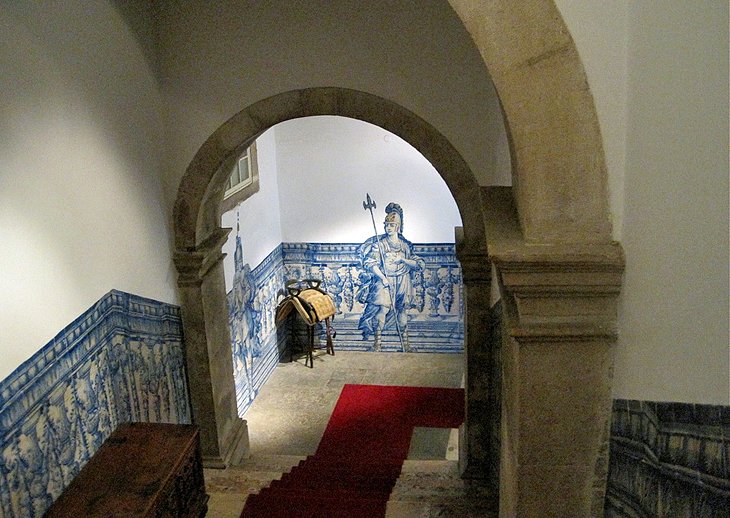
Housed in the 17th-century Palácio Azurara, the Museum of Decorative Arts is also known as the Ricardo do Espírito Santo Silva Foundation after the Portuguese banker whose stunning collection of furniture, paintings, textiles, silver, and ceramics is displayed throughout the mansion.
In 1953, shortly before he died, the financier offered it to the nation, and today, the museum is regarded as one of the finest repositories of 17th- and 18th-century Portuguese, French, and English applied arts in the country. The rich and ornate interior is set over four floors, and visitors are regaled with a magnificent array of artifacts arranged in situ as if the palace was still being lived in.
Furnishings decorating the Main Hall include a regal wool and silk tapestry, woven in 1510 and depicting a procession of giraffes. Spread across the creaky wooden floor is a beautiful 18th-century woolen carpet from Arraiolos embroidered in burlap.
In one corner stands a rare Ming dynasty blue and white ewer bearing the armillary sphere of Manuel I. In another is a fantastic Traveling Set, a gilded silver case in red Morocco leather lined in red velvet with gilded bronze fittings.
After entering the King José and Queen Maria Bedroom, take note of the exquisite 16th-century Namban hanging oratory crafted in lacquered wood and inlaid with mother-of-pearl, gold, and silver dust. Pieces like this are priceless.
During weekdays, visitors can relax after their tour in the courtyard café. If traveling as part of a group, it's also possible to book ahead for a guided tour of the adjacent workshops where antique furniture is restored and commissioned pieces are reproduced by a skilled team of artisans.
Outside, in front of the museum, the Largo das Portas do Sol ("doorway to the sun") miradouro (viewpoint) affords a stunning panorama of the neighborhood and River Tagus.
Address: Largo das Portas do Sol 2, Alfama, Lisbon
Igreja de Santa Engrácia-Panteão Nacional
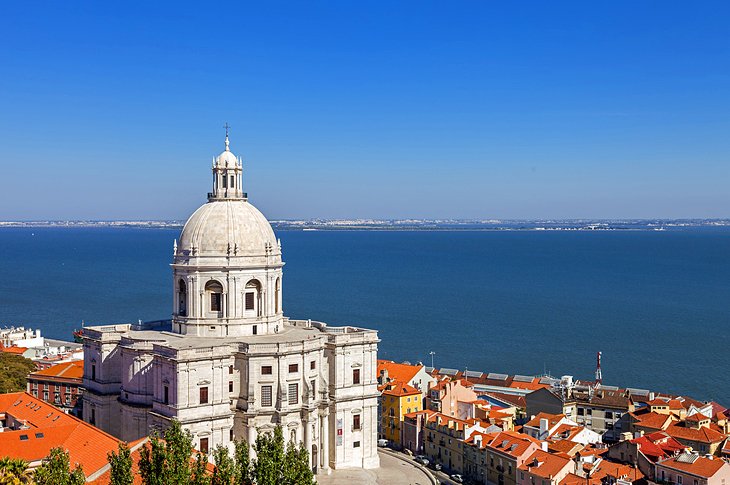
Immediately identified by its soaring chalk-white dome, the church of Santa Engrácia is one of the most recognizable buildings on the Alfama skyline.
Begun in 1682, the building of the church took an astonishing 284 years to complete after the main chapel was variously desecrated, knocked down in a storm, abandoned, and then used as an arsenal and then a factory that produced footwear.
In 1910, the church was classified a National Monument, and six years later chosen as Portugal's National Pantheon. A decision to complete the structure was only made in 1956, and in 1966, the building was finally inaugurated.
Incredibly, the church has never been used as a place of worship. Instead, it houses the cenotaphs of Portuguese heroes, such as Vasco da Gama, Infante D. Henrique (Henry the Navigator), and Pedro Álvares Cabral.
The tombs of more contemporary figures are also housed under the vast and elegant cupola and include former presidents; the writer Almeida Garrett; Amália Rodrigues, Portugal's greatest fado singer, who was interred here in 1999; and most recently, Eusébio - the first footballer to be buried at the pantheon, in 2014.
An elevator (unfortunately not wide enough to accommodate visitors confined to a wheelchair) serves the church's upper choir and inner gallery, and the blinding white exterior terrace affords sweeping views of the vicinity and the broad Tagus estuary.
However, for a truly vertiginous view, stay inside and climb the stairs to the rim of the dome, where you can gaze down on the vast, empty marble-clad interior and hear your whispers echo off the opposite walls.
Address: Campo de Santa Clara, Alfama, Lisbon
Official site: http://www.patrimoniocultural.pt/pt/
Igreja de São Vicente de Fora
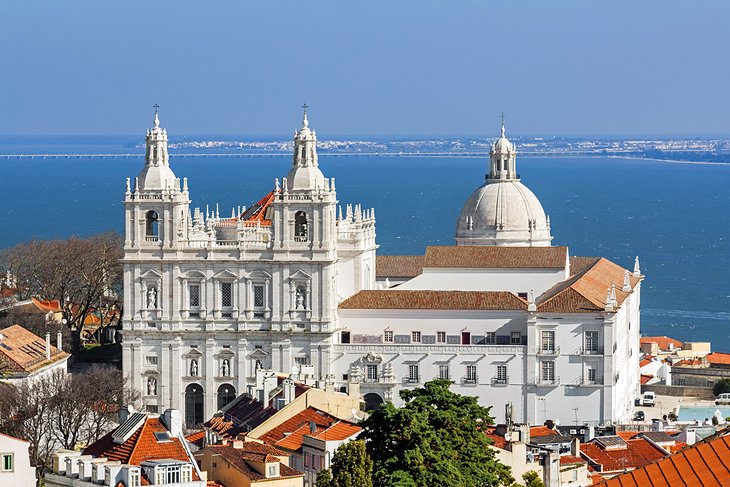
The Igreja de São Vicente de Fora was named in part for St. Vincent who was proclaimed Lisbon's patron saint in 1173 when his relics were transferred to a chapel that once stood where the present building lies. The church also takes its name from its original position fora (outside) the city walls.
Designed by the Italian architect Felippo Terzi, the church was inaugurated in 1629, and its white symmetrical late-Renaissance façade, balanced by a pair of handsome bell towers, is a familiar Lisbon landmark.
The interior is noted for the extraordinary Baroque canopy over the altar. Flanked by life-size wooden sculptures, the baldachin is the work of Joaquim Machado de Castro (1731-1822), one of Portugal's foremost sculptors.
The great earthquake of 1755 badly damaged the church and adjoining Augustinian monastery. Restored in 1855, its 16th-century cistern and vestiges of the cloister can still be discerned.
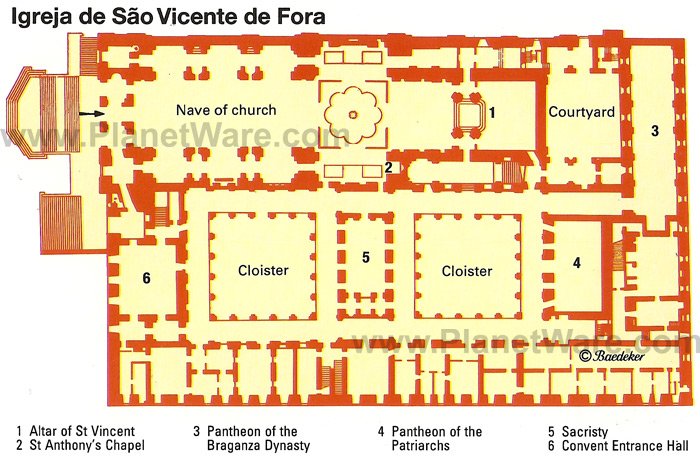
But it's for the former monastic refectory, which became the official burial site for the kings and queens of the House of Bragança, that São Vicente de Fora is famous. Just about all the country's monarchs are laid to rest here, from João IV who died in 1656, to Manuel II, last king of Portugal who died in exile in England in 1932.
One tomb to look out for is that of Catherine of Bragança, the widow of England's Charles II. Another is of Carlos I and his son Felipe, assassinated in Praça do Comércio in 1908: Portugal was declared a Republic two years later. The beautiful 18th-century azulejo panels decorating the monastery's upstairs rooms, depicting the fables of La Fontaine's, contrast sharply against the cold stone of the assembled sarcophagi.
Visitors can round off their visit by soaking up the wonderful river views afforded from the roof of the monastery, a panorama that also takes in much of Alfama and the neighboring Castelo district.
Address: Largo de São Vicente, Alfama, Lisbon
Sé (Cathedral)
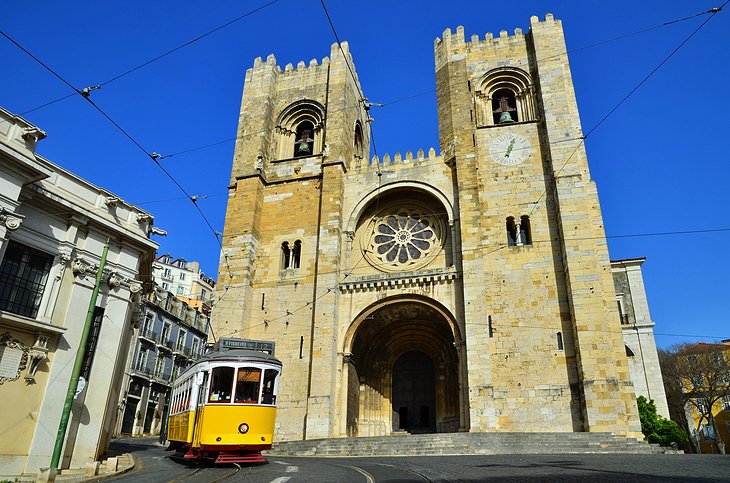
The city's Romanesque cathedral - the Sé - is easily recognized by its twin castellated bell towers, an architectural feature that lends the building an odd military character.
Founded in 1150, three years after King Afonso Henriques recaptured Lisbon from the Moors, it stands on the site of a mosque and earlier Roman foundations.
The original cathedral was badly damaged in the 1755 earthquake, the tremors raining masonry over much of the interior. This is why visitors today are greeted with a rather plain and gloomy nave, with little left of the sumptuous embellishment that 18th-century churchgoers would have admired. That said, restoration work in the 1930s saw the reconstruction of the splendid rose window, one of the most impressive in Portugal.
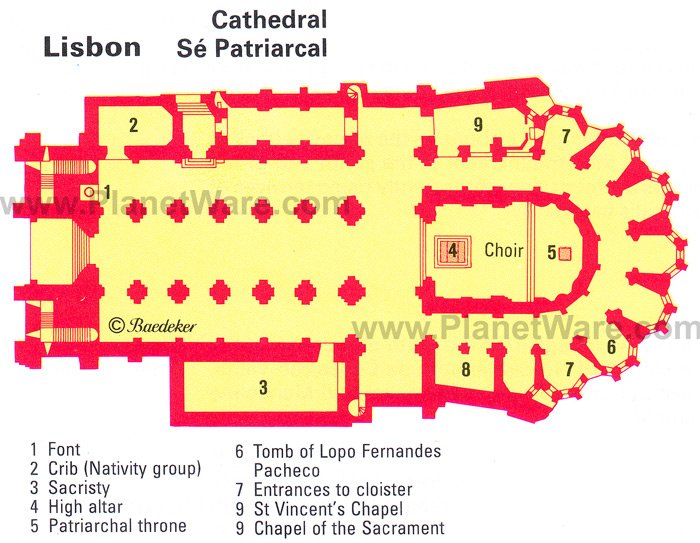
Of particular interest, though, are the nine chapels incorporated into the ambulatory, each with a story to tell - the Capela de Santo Ildefonso, for example, contains the 14th-century sarcophagi of Lopo Fernandes Pacheco and his wife, Maria Vilalobos. Pacheco was companion in arms to King Afonso IV, who is buried with is wife, Dona Beatriz, in the adjacent chancel.
The cathedral's silverware is housed in the treasury. Also displayed here are ecclesiastical robes, statuary, and illustrated manuscripts. It's believed that the remains of St. Vincent were placed here, though this, perhaps, is the wishful thinking of devotees of Lisbon's patron saint.
A sightseeing highlight is the Gothic cloister, reached via the third chapel in the ambulatory. Look out for the 13th-century wrought-iron gate and the font where St. Anthony, Lisbon's favorite saint, was baptized in 1195.
The cloister is an important archaeological site and excavations have so far unearthed the foundations of a 6th-century Roman house and Moorish public buildings. Intriguingly, archaeologists believe that an underground tunnel exists linking the cathedral with Castelo de São Jorge.
Address: Largo da Sé, Castelo, Lisbon
Museu do Teatro Romano
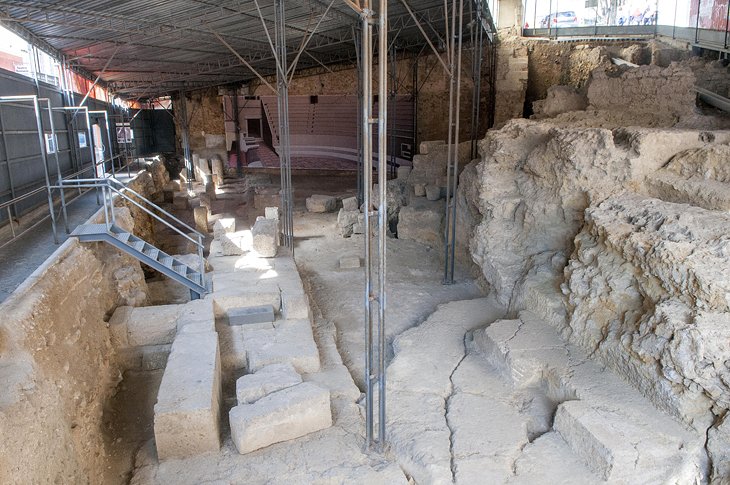
As its name implies, the principal exhibit at the Roman Theatre Museum is a theater, set opposite the main building. Dated to CE 57, vestiges of the structure can be admired from a viewing platform that overlooks what would have been the stage around which terraced seating can still be recognized. This was once one of the most important cultural venues in ancient Olisipo, or Roman Lisbon, and was built during the reign of Emperor Augustus.
Occupying the south slope of Castelo de São Jorge, the building was abandoned in the fourth century and fell into ruin, only being rediscovered in 1798.
The finds excavated from the site, which is free to enter, can be admired in the adjacent museum and include marble columns, figurines, and pottery. Enlivening the modern exhibition space are multimedia explanations of the theater's history and architecture. The museum itself is built over the foundations of an 18th-century leatherwear factory.
Address: Rua de São Mamede 3a, Alfama, Lisbon
Feira da Ladra
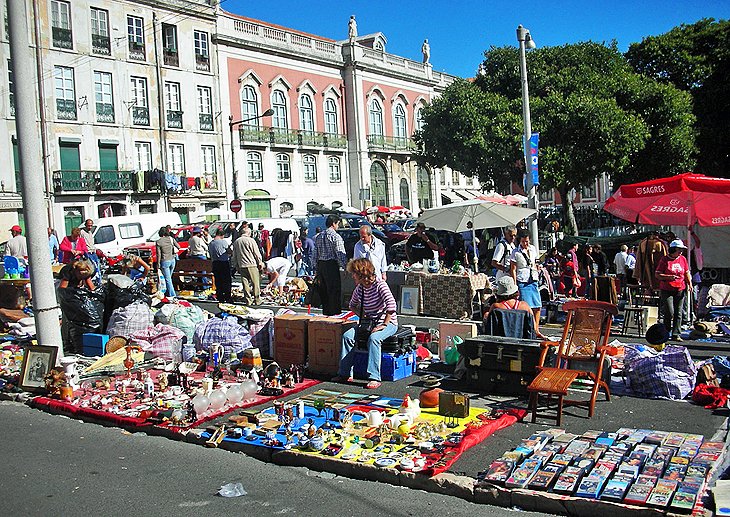
Twice a week, on Tuesday and Saturdays, the area around the Panteão Nacional and São Vicente de Fora is transformed into a colorful and sprawling flea market, the largest in the city. Indeed, Lisbon's "thieves' market" is celebrated for its huge jumble sale of hand-me-down curios, unwanted bric-a-brac, and second-hand cast-offs, all haphazardly arranged round Campo de Santa Clara, a lop-sided square set below the looming dome of the Santa Engrácia church.
There's been a market on this site since 1881, though its origins are thought to stretch back to the 12th century. The name "Feira da Ladra" first appeared in a 1610 municipal decree when it was held on the other side of the city, in Praça da Alegria. It later moved to a pitch near the castle before finding its permanent site in the late 19th century.
Bargains do exist, but the stallholders are savvy, and tourists should take with a pinch of salt any item declared as being of real value. Better to just soak in the atmosphere. Watch your wallet, though - thefts are known to occur here.
Address: Campo de Santa Clara, Alfama, Lisbon
Museu do Fado (Fado Museum)
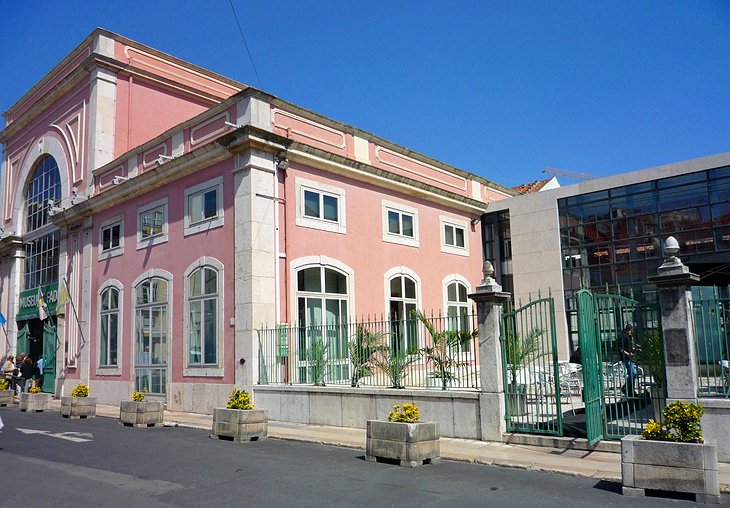
Portugal's unique musical style is suitably honored at the Fado Museum by way of a permanent exhibition that traces the origins of fado music and the Portuguese guitar since the 19th century.
Fado literally means "fate" and is an expression of longing and sorrow. In Lisbon, this poignant music has been cultivated in cafés and restaurants for more than 150 years, and the neighborhood of Alfama is considered the birthplace of this very Portuguese combination of voice and guitar.
Mouraria, one of Lisbon's oldest districts, is also associated with fado, as its mournful strains have echoed through the streets here for more than a century.
Using an interactive audio guide system, the exhibition invites visitors to discover the history of fado, from its working-class roots to international fame, through several collections of valuable prints, paintings, posters, periodicals, and music scores that highlight the development of individual songs, as well as the genre itself.
This fascinating musical journey continues with a display of musical instruments, namely the guitarra, a flat-backed mandolin aptly shaped like a teardrop; rare phonograms; and examples of early contracts and licenses issued as fado became more and more popular throughout the country and the world.
Costumes worn by Portugal's greatest fadista, Amália Rodrigues (1921-99), are lovingly preserved, along with other performing props used by leading exponents of what's sometimes described as the "Portuguese Blues."
Fans of fado can purchase CDs and other souvenirs in the museum shop, and there's a wonderful terrace café set to the side of the building.
Temporary exhibitions and regular cultural events and fado performances are held at the museum, details of which are posted on their website.
Address: Largo do Chafariz de Dentro 1, Alfama, Lisbon
Official site: www.museudofado.pt
Miradouro das Portas do Sol
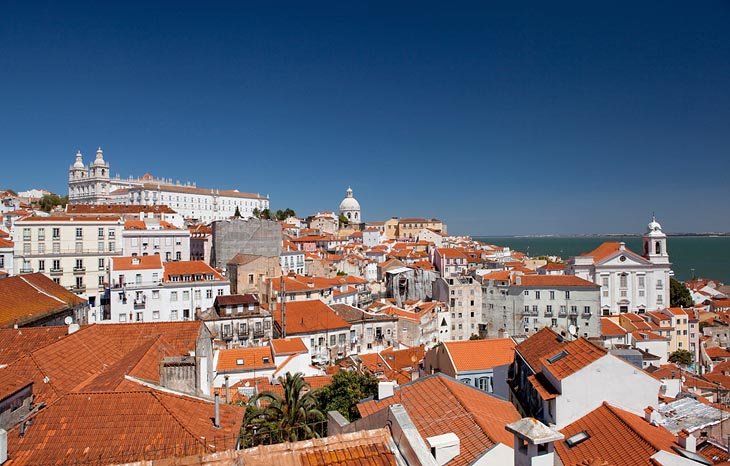
Lisbon is decorated with several miradouros - purpose-built viewpoints - that afford visitors terrific panoramas of the city and the River Tagus. Considered tourist attractions in their own right, these large, sweeping terraces are deliberately positioned in various parts of the city to take advantage of the elevated location.
One of the most celebrated of these lofty lookouts is Miradouro das Portas do Sol, the aptly named "Windows to the Sun" viewpoint. Positioned overlooking the terra-cotta rooftops of the Alfama neighborhood, the picturesque scene also takes in the impressive façade of Igreja de São Vicente de Fora and the shiny dome of Panteão Nacional. The river, meanwhile, provides a shimmering backdrop.
Portas do Sol was one of the entrance gates to the old city, and part of the original wall can still be seen today. A nearby café-kiosk with tables set outside will tempt you to linger.
Location: Largo das Portas do Sol, Alfama, Lisbon
Museu Nacional do Azulejo-Convento da Madre de Deus (National Tile Museum)
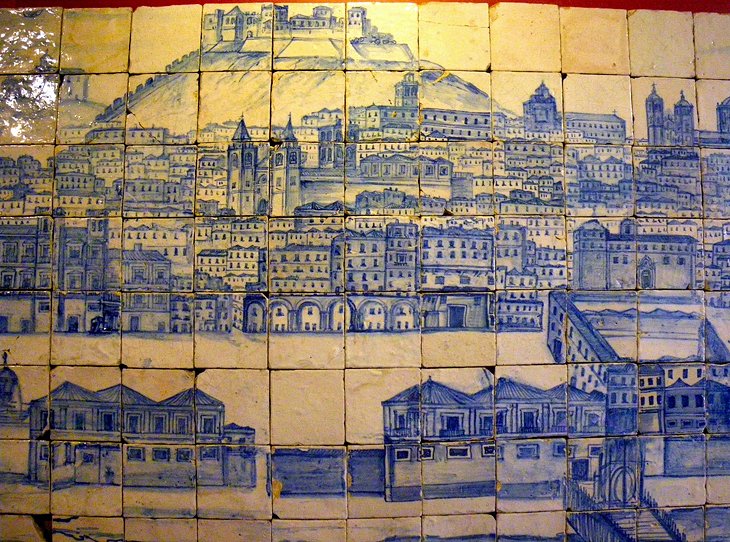
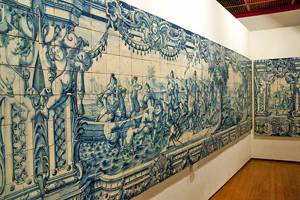
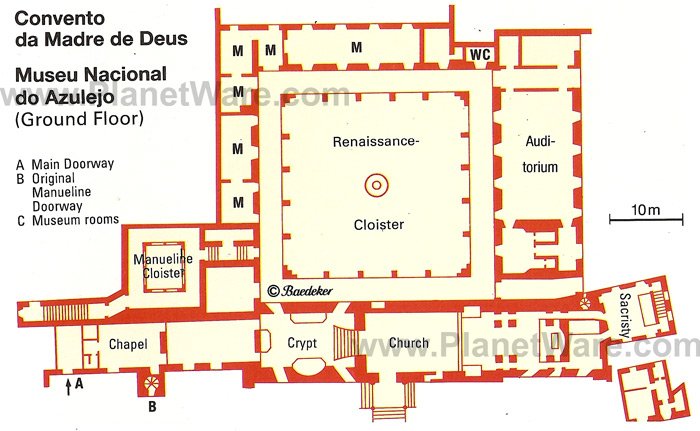
Set farther east from Alfama, the National Tile Museum enjoys a charming setting within the Renaissance cloister of the convent of Madre de Deus and is the only museum in Portugal dedicated to the azulejo, the decorated tile.
The convent, founded in 1509 by Queen D. Leonor, was originally built in the Manueline style. Badly damaged in the earthquake of 1755, the building was restored during the reign of Joao III, with Joao V adding the sumptuous Baroque decoration in the church.
Designed so that visitors can trace the evolution of tile-making, from its Moorish origins, through Spanish influence, and Portugal's own unique style, the museum's permanent collection is arranged chronologically, with the oldest tiles and panels, most dating from the 16th and 17th centuries, displayed on the ground floor.
Exhibition highlights include the stunning 16th-century Nossa Senhora da Vida panel and Portugal's longest azulejo - a 36-meter tiled panorama of pre-earthquake Lisbon.
After viewing the exhibits, you can see the tile panels as they were originally used, lining the walls of the magnificent church interior and the equally exuberant Chapel of St. Anthony. Adjoining is the graceful Manueline cloister, an important surviving feature of the original convent.
Address: Rua da Madre de Deus 4, Santa Apolónia, Lisbon
Official site: www.museudoazulejo.pt
Casa dos Bicos
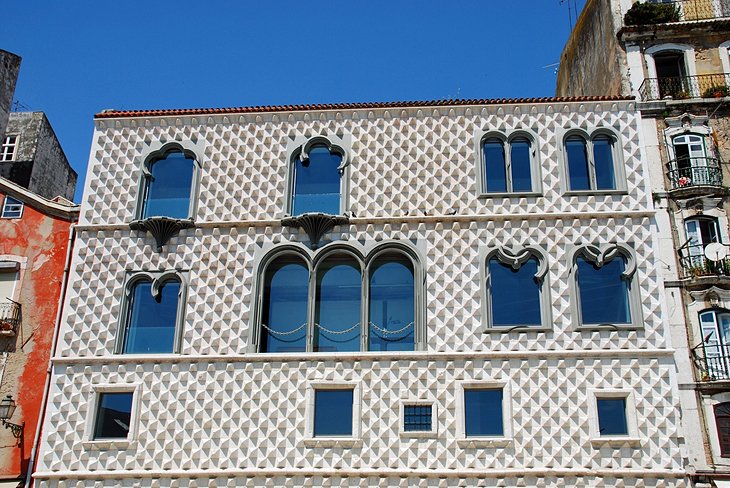
One of Lisbon's most fascinating architectural oddities is the Casa dos Bicos. This is the "House of Points," so named because of its curious façade, studded with diamond-shaped stones.
Built in 1523 for Brás de Albuquerque, the son of the Viceroy of India, the unusual design followed a plan drawn up by architects Santa Rita Fernandes and Manuel Vicente, and the striking geometric pattern of pointed stones resemble mini pyramids - a style popular in its day: similar buildings from the same time period can be found in Spanish, French, and Italian towns.
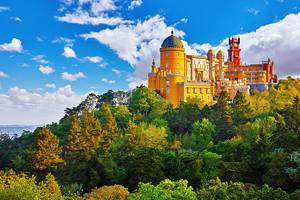
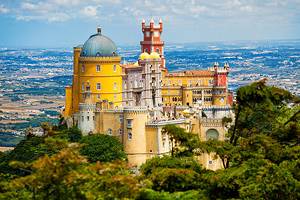
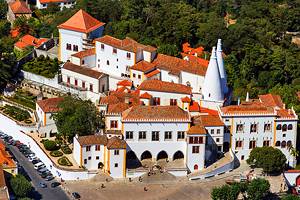
Later, in the 19th century, German architect Wilhelm Von Eschwege, used a diamond motif in the architecturally eclectic style of the Palácio da Pena at Sintra.
The façade is in fact the only part of the structure to have survived the great earthquake of 1755. Later restored, the building was used by fishmongers for salting fish (Rua dos Bacalhoeiros means street of the cod fishermen).
Its fortunes were revived in the 1980s, when the premises were used as a cultural space. The Fundação José Saramago, the organization responsible for promoting the life and work of Portuguese author José Saramago, now owns the building. Visitors can browse an exhibition of books (among them rare first editions), letters, and essays written by the Nobel Laureate, who died in 2010. Recitals of poetry and readings by guest writers and authors are also held here.
Address: Rua dos Bacalhoeiros 1100-135, Lisbon
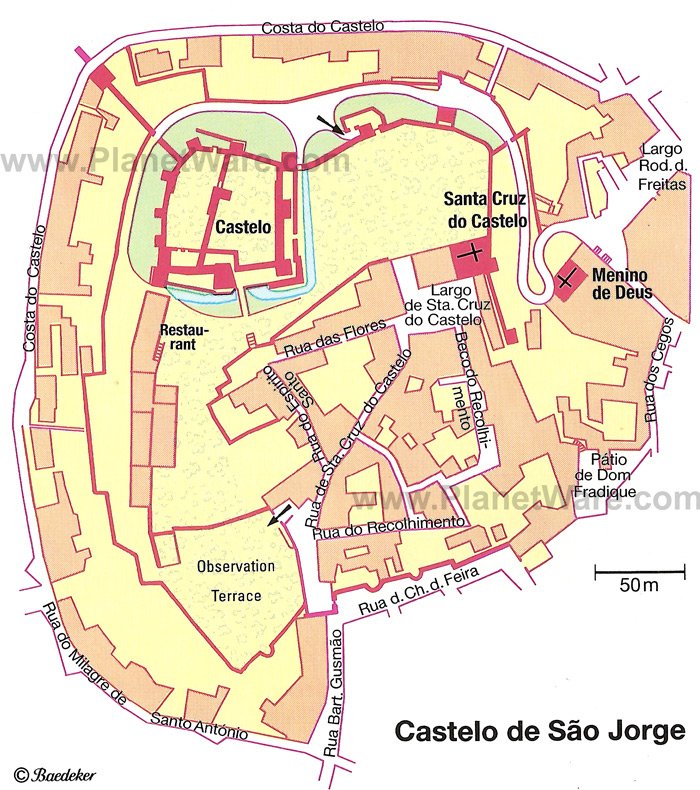
Map of Lisbon's Old Quarter: Top Attractions
More Related Articles on PlanetWare.com
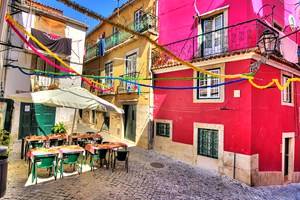
Planning Your Trip to Lisbon: To help plan your time and come up with ideas for where to stay, where to eat, where to shop, and what to see, have a read through our 1-Day, 2-Day, & 3-Day Lisbon Itineraries.
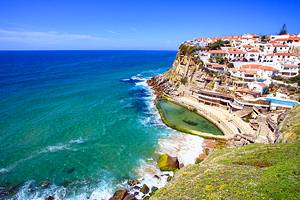
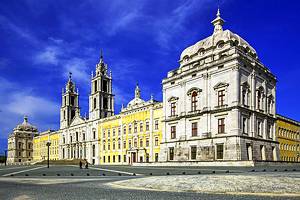
Nearby Places to Visit: Lisbon's wealth of tourist attractions deserves leisurely exploration. Must-see monuments include the 16th-century Mosteiro dos Jerónimos in Belém. Other places to visit include cultural draws like the Museu Nacional do Azulejo. The Portuguese capital is a useful base from which to explore the surrounding vicinity, and opting for day trips from Lisbon enables tourists to discover places like enchanting Sintra and the magical Mosteiro Pálacio Nacional de Mafra. A number of nearby beaches also add to Lisbon's allure.