15 Top Attractions & Things to Do in Évora
Nestling in the heart of Portugal's sun-baked Alentejo province, Évora is one of the country's oldest and most enchanting cities. Rising to prominence under the Romans, the town was also occupied for some 500 years by the Moors. Medieval Évora thrived as a center of learning and the arts, and was patronized by a succession of Portuguese kings. Some of the key attractions are the churches and monasteries that stand as testament to a devout and pious legacy.
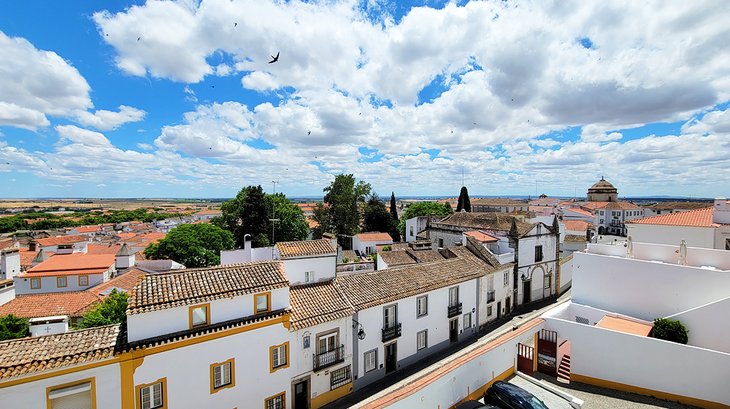
The melding of such diverse cultures and religions coupled with an abundance of different architectural styles prompted UNESCO to declare Évora's old town a World Heritage Site.
Conveniently, this precious hoard of monuments and museums is clustered together within the city walls, and many of the most important things to see and do in Évora can be easily explored on foot.
Similarly, Évora's lively market town atmosphere is best appreciated by following the narrow cobblestone lanes that snake away from the brooding cathedral to pass gurgling fountains and flower-flecked squares. Along the way, colorful handicraft stores and family-run cafés busy themselves under granite-wrapped arcades. Restaurants, meanwhile, serve some of the tastiest gastronomy in the land.
For ideas on the best places to visit, see our list of the top attractions in Evora.
See also: Where to Stay in Evora
- 1. Sé (Cathedral)
- 2. Igreja de São Francisco (Bone Chapel)
- 3. Roman Temple
- 4. Museu de Évora (Évora Museum)
- 5. Termas Romanas
- 6. Palácio dos Duques de Cadaval
- 7. Igreja São João Evangelista
- 8. Praça do Giraldo
- 9. Universidade de Évora
- 10. Largo da Porta de Moura
- 11. Aqueduto da Água de Prata (Aquaduct)
- 12. Pousada Convento de Évora
- 13. Jardim Público (Public Gardens)
- 14. Megaliths Tour
- 15. Arraiolos-Estremoz Circuit
- Where to Stay in Evora for Sightseeing
- Frequently Asked Questions
- How do you get from Lisbon to Évora?
- How do you get to Évora from Porto?
- What are some of the must-visit castles near Évora?
- What are some must-visit destinations near Évora?
- Tips and Tours: How to Make the Most of Your Visit to Évora
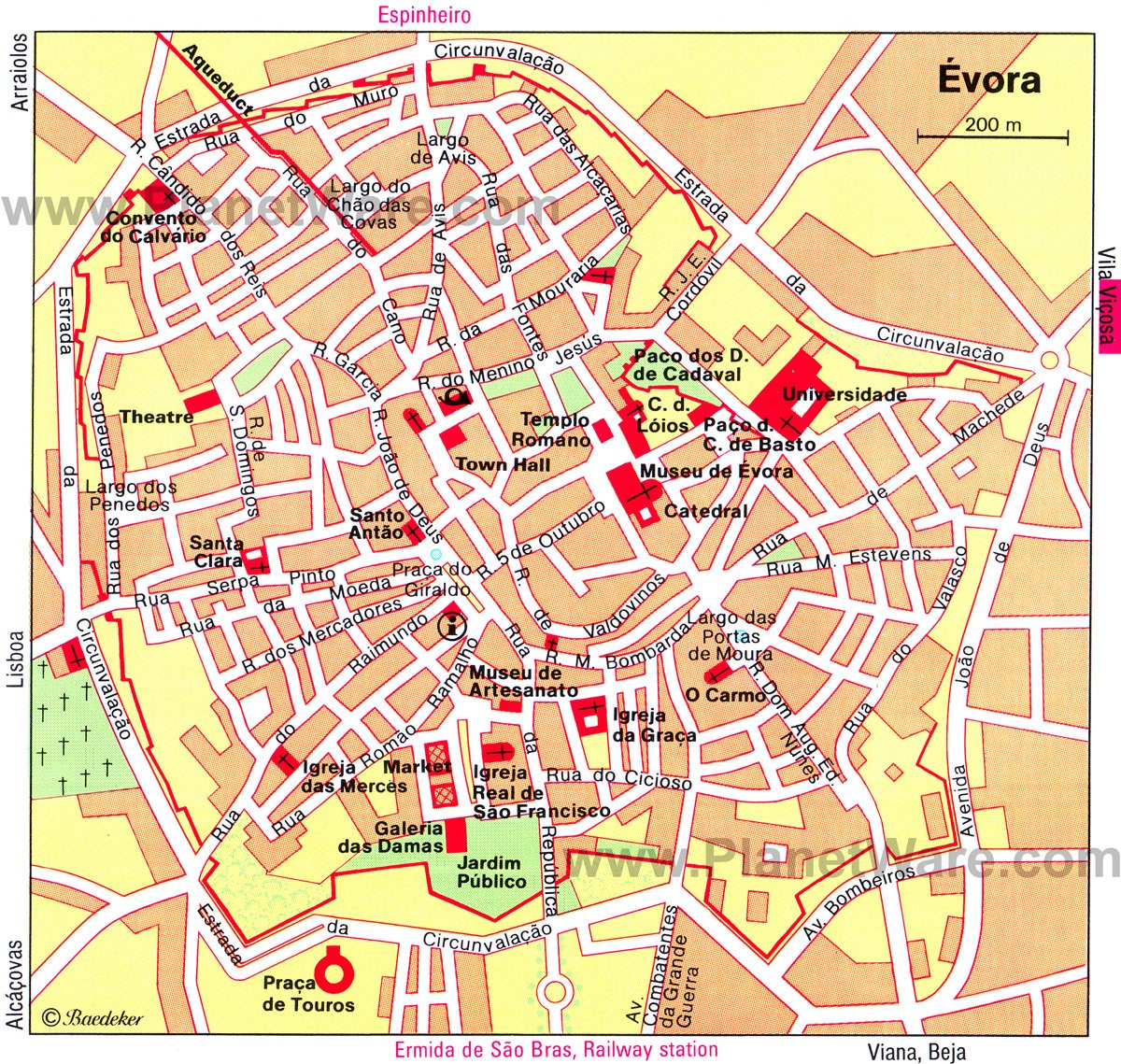
- Map of Attractions & Things to Do in Évora
- Evora, Portugal - Climate Chart
1. Sé (Cathedral)
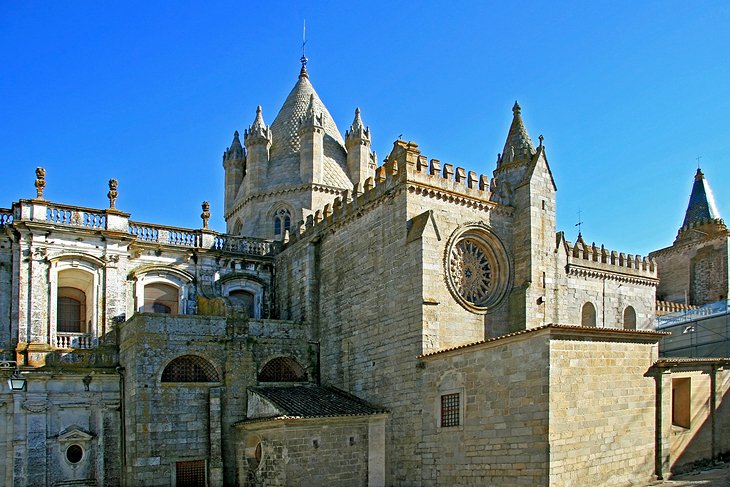
Don't be put off by Évora cathedral's rather austere complexion. Its weathered granite façade has after all endured the elements since 1204, and the heavy-set structure can't help but resemble a fortress, a look accentuated by a pair of imposing asymmetrical bell towers.
Those with an eye for architecture will notice the melding of the Romanesque with the Gothic, but everyone will gush at the stunning 14th-century sculpted Apostles that wrap themselves around the building's main portal.
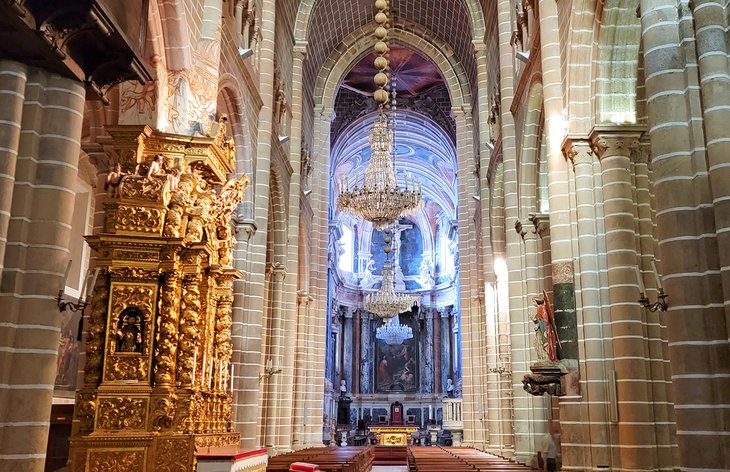
Inside, even whispering sounds too loud, but the mood of secluded gravity is lifted somewhat by the 18th-century high altar and polished marble chancel.
The Museum of Religious Art, housed in the adjoining Baroque-style building formerly used to house the choir boys, is brimming with rare and priceless artifacts fashioned out of gold, silver, and other precious metals.
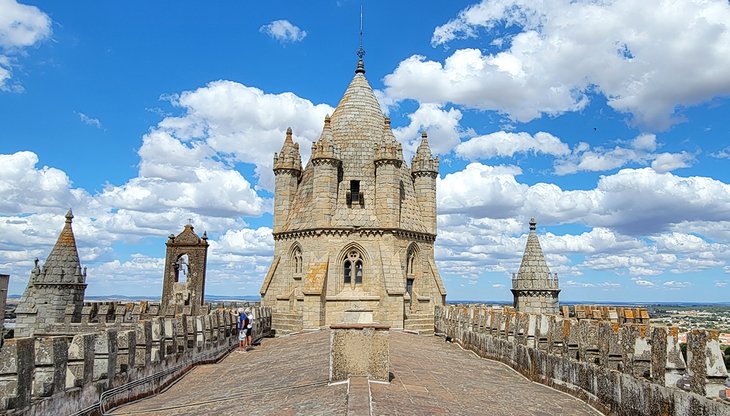
The top draw, though, is climbing the winding stairs to the roof from where a memorable view of the Alentejo can be admired.
Ticket options include access to just the cathedral and cloister, or this can be combined to include the roof (tower), and also the museum.
Location: Largo do Marquês de Marialva, Évora
2. Igreja de São Francisco (Bone Chapel)
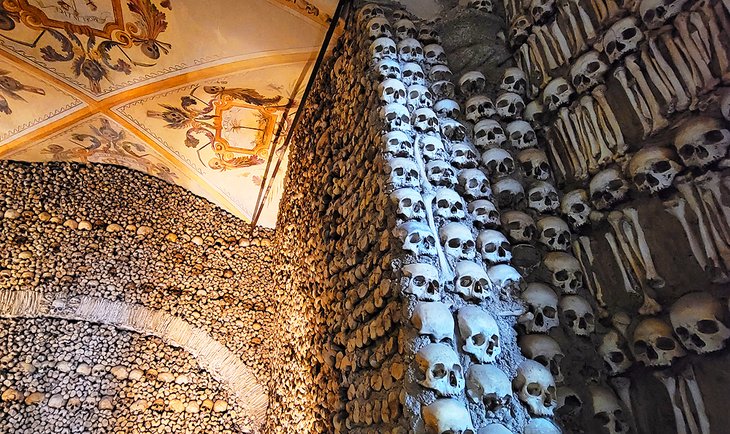
The rather nondescript church of Saint Francis just happens to feature the most macabre tourist attraction in Portugal, the grisly Capela dos Ossos (Chapel of Bones). Visitors of a sensitive disposition beware: the Bone Chapel is lined with the remains of 5,000 monks, disinterred from local cemeteries ostensibly to make room for lesser mortals.
Hundreds of skulls and broken skeletons wallpaper the 16th-century oratory. Bizarrely, two wizened corpses, one a child, dangle intact from a chain near the altar. Look up to see equally grisly images painted on the ceiling.
Despite its creepy reputation, the chapel draws tourists of all ages fascinated by its gruesome interior design. And no one appears fazed by the sarcastic reminder across the entrance that reads: Nós ossos que aqui estamos, pelos vossos esperamos (We bones that are here await yours).
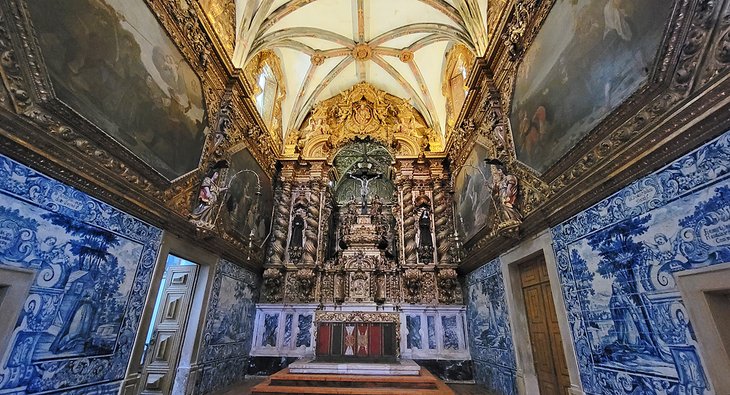
Tourists often wander into Igreja de São Francisco, the main church, expecting to find the bones. The chapel of bones is immediately next door to the church and entered through its own doorway, and there is an admission fee. The church itself, which is free to enter, has a fabulously ornate interior and is well worth stepping inside to see.
Address: Praca 1° de Maio, Évora
3. Roman Temple
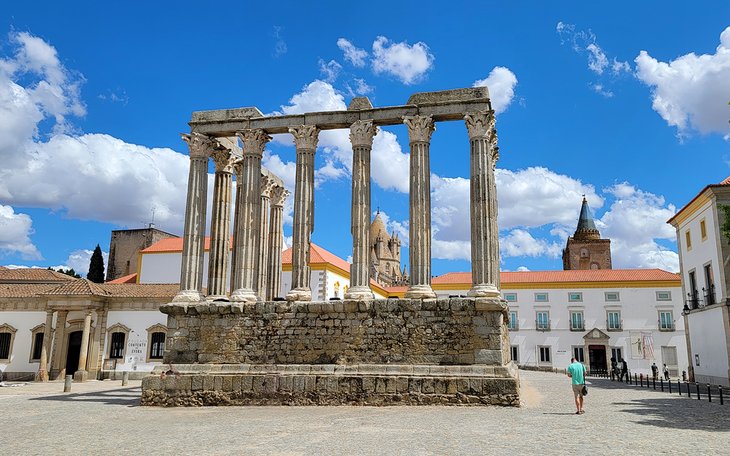
The city's pin-up tourist attraction is still often referred to as the Temple to Diana, despite the fact that there's no proof the monument was ever dedicated to the Roman goddess. The legend persists, however, as does the misnomer. But it doesn't really matter; this remains Évora's head-turning crowd pleaser, and one of Portugal's most significant Roman landmarks.
Believed to have been erected in the 2nd or 3rd century AD, the 14 surviving columns topped by Corinthian capitals stand solid over a granite base; the architrave, itself an impressive piece of masonry. The ancient structure has worn well, and you can't help feeling a sense of awe as you pause under its mighty façade.
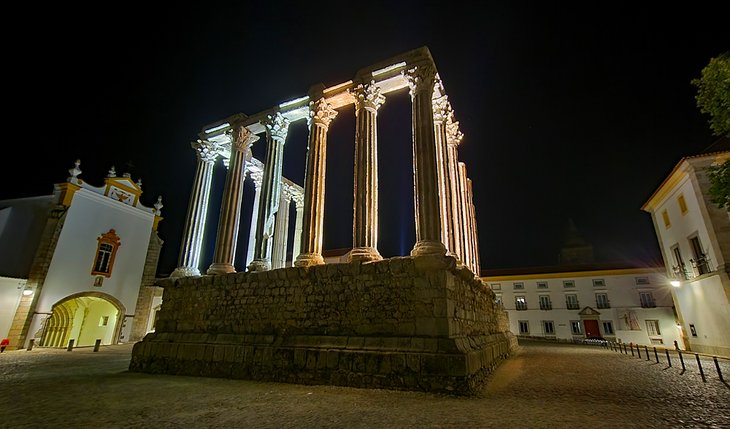
At night, after the crowds have faded away, the temple is illuminated and the soft, ethereal glow only adds to its grandeur and mystique.
Location: Largo do Conde de Vila Flor, Évora
4. Museu de Évora (Évora Museum)
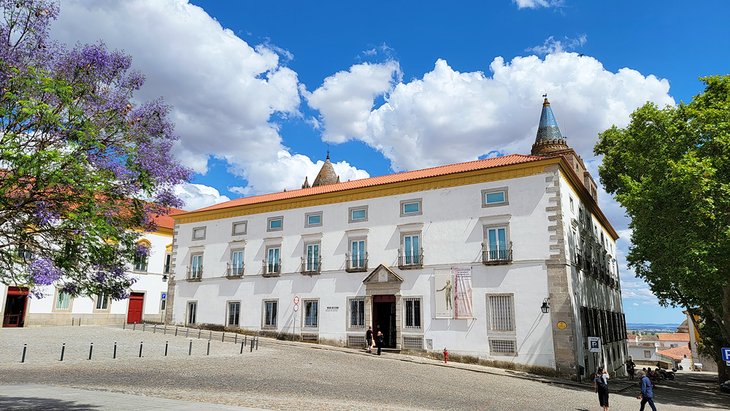
Modern and kid-friendly, Évora Museum does away with the stuffy and cramped. Instead, this delightfully engaging cultural and educative draw is spacious, light, and airy, and superbly designed to showcase a collection of regional treasures housed in what was once the residence of bishops and noblemen.
Yes, this is a former palace building dating way back to the 16th century, and the city's history is all here under one roof. It's worth spending time mulling over the exhibits. For instance, the art gallery features an extraordinary 16th-century Flemish polyptych, a fantastically detailed painting of 13 panels executed in vivid Technicolor, and this kind of brushwork requires serious study.
The main core of the museum is its collection of archaeology, and its Roman sculpture pinches all the glory - a giant 2nd century AD column rises up like a rocket as if to emphasize the period.
Across the square from the musuem is the Centro de Arte E Cultura, housed in the Forum Eugenio de Almeida building. This wonderfully restored old structure, which at one time was the Inquisition Palace, hosts an ever-changing series of artwork installations by national and international artists. It's free to enter and a nice cool escape from the summer heat (you can find washrooms here, too).
Location: Largo Conde Vila Flor, Évora
5. Termas Romanas
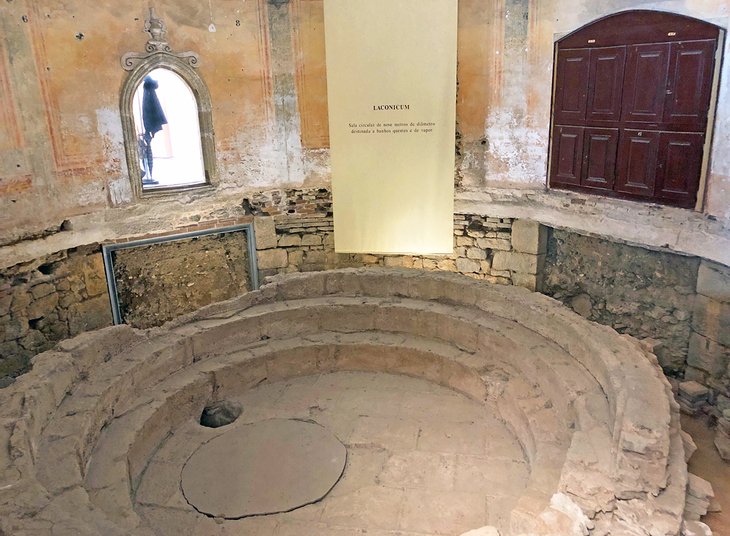
Another significant Roman-era attraction, the Roman Baths were discovered in 1987 beneath the town hall, the Câmara Municipal. Dating back to the first century AD, the remains include an arched brick doorway - the entrance to an amazing sunken room replete with a well-preserved circular steam bath, or laconicum, nine meters in diameter. Vestiges of the furnace or praefurnium (essentially, a central heating system) and the natatio (open-air swimming pool) can also be admired.
This extraordinary example of ancient architecture would have been housed in the largest public building in Roman Évora and today can be visited for free, Monday through Friday during office hours.
Address: Câmara Municipal, Praça do Sertório, Évora
6. Palácio dos Duques de Cadaval
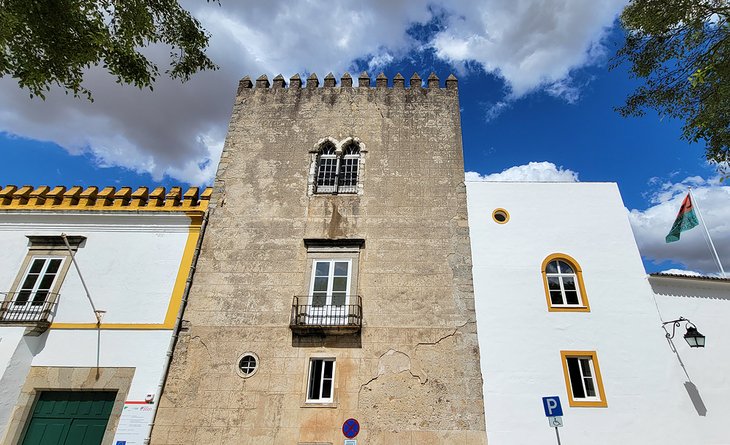
The grand-sounding 14th-century Palace of the Dukes of Cadaval incorporates vestiges of the city's long lost castle, the castellated walls surrounding the property being an obvious reference.
The palace is still a private residence, but the owners have selected a number of rooms in which to showcase valuable family heirlooms, a fascinating collection that includes valuable 15th-century illuminated manuscripts, clunky 16th-century suits of armor, and assorted antique weaponry, as well as painting and sculpture from the 17th and 18th centuries.
There's a spooky surprise in the shape of the palace's pentagonal Torre das Cinco Quinas - the Tower of the Five Shields. Said to be haunted, this is medieval ghost busting at its best. The café in the gardens offers a relaxing interlude from chasing phantoms.
Address: Rua Augusto Filipe Simões, Évora
Official site: www.palaciocadaval.com
7. Igreja São João Evangelista
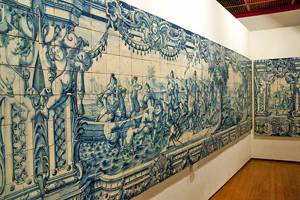
The unassuming box-like exterior of the church of St. John the Evangelist belies its eye-popping interior, a floor-to-ceiling starburst of fabulous early 18th-century azulejo (tile) panels, which depict scenes from the life of São Lourenço. Even non-religious types will take a step back to admire this outstanding effort by painter António de Oliveira.
The 15th-century church, however, hosts a grisly sideshow, an ossuary full of bones from tombs in the vicinity. While tiptoeing towards the nave, look out for the building's oddity - the Moorish cistern hidden under a trapdoor set among the pews. If it's locked, ask the custodian to lift the lid on this intriguing anomaly.
Location: Largo do Conde de Vila Flor, Évora
8. Praça do Giraldo
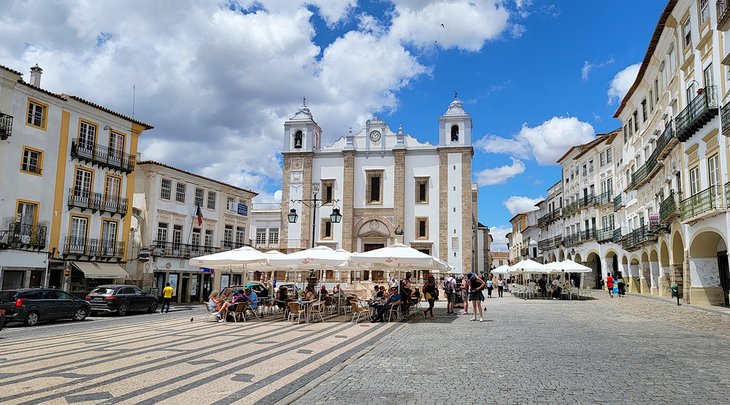
Évora's handsome central square is the city's bustling hub, a favorite meeting place where locals mingle with tourists. Probably named after Geraldo Sem-Pavor (the Fearless), the outlaw who ousted the Moors in 1165, the square hosts a lively weekend market, but is a shopping destination in its own right, with several boutiques situated under the graceful arcades that line Giraldo's eastern flank; nearby Rua 5 de Outubro is lined with shops that sell handicrafts and curios, from copperware to carved cork.
In summer, restaurants set tables across the esplanade, and the colorful scene is café society at its most ebullient. It's a far cry from the beheadings and Inquisition burnings witnessed in darker, medieval times. Fortunately, today's entertainment is likely to be animated street theater or a live music concert staged under the shadow of the 16th-century Igreja de Santo Antão.
Location: Praça do Giraldo, Évora
9. Universidade de Évora
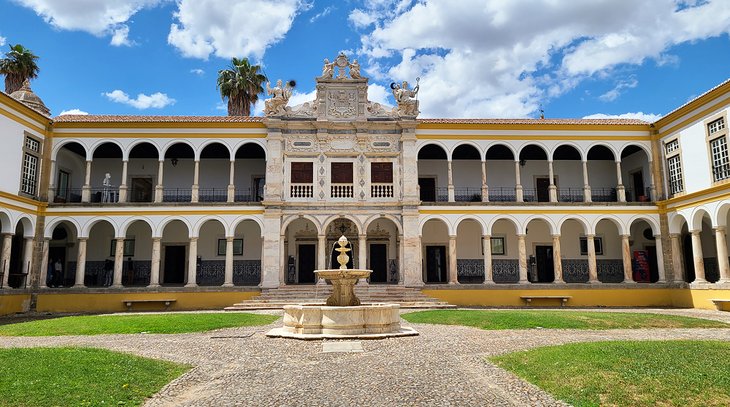
Évora's old university halls are awarded full marks for looks. Its graceful Renaissance cloister is dripping with sculpted marble and embellished by sky blue azulejos (tiles). But the real learning experience begins in the classrooms, the walls of which have been decorated with tiled panels representing each of the subjects taught.
Évora university was founded in 1559, the hallowed ambiance enlivened by the use of tiles to depict studious themes such as Aristotle teaching Alexander, and Plato lecturing to disciples. Some of the panels are enormous - complete works of art that still gleam 200 years after being painted.
The school is still used by students, and visitors must check with the gatekeeper and pay a fee before exploring. The 18th-century Baroque chapel, known as the Sala dos Actos, is certainly worth investigating. If it's closed, ask the custodian for the key.
Location: Largo dos Colegiais 2, Évora
10. Largo da Porta de Moura
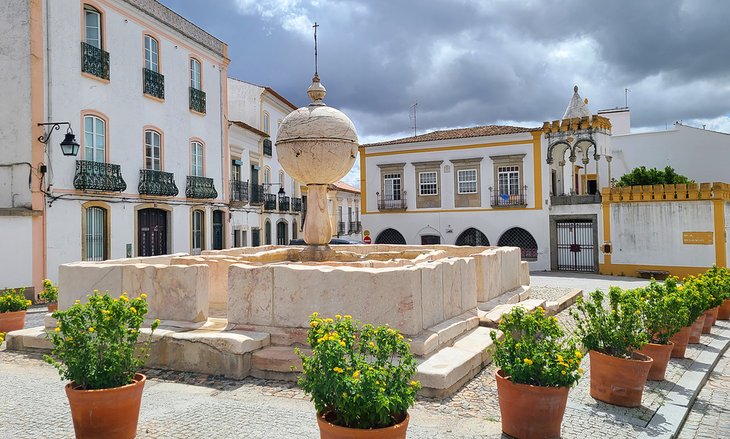
The Moors' occupation of Évora left its cultural footprint throughout the city, and this picturesque square is so named because of the Moorish gateway that used to guard its western approaches.
Today, only vestiges remain, but sightseers can admire the square's other architectural draw, the Renaissance fountain with its iconic marble sphere. It dates from 1556 and is still in remarkable condition considering that the fountain's base effectively acts as a traffic island in the middle of the road. Fortunately, the street is not too busy, and the little cafés lining either side provide for an impromptu coffee break. Otherwise, come back at night to see the orb shimmer under spotlight.
11. Aqueduto da Água de Prata (Aquaduct)
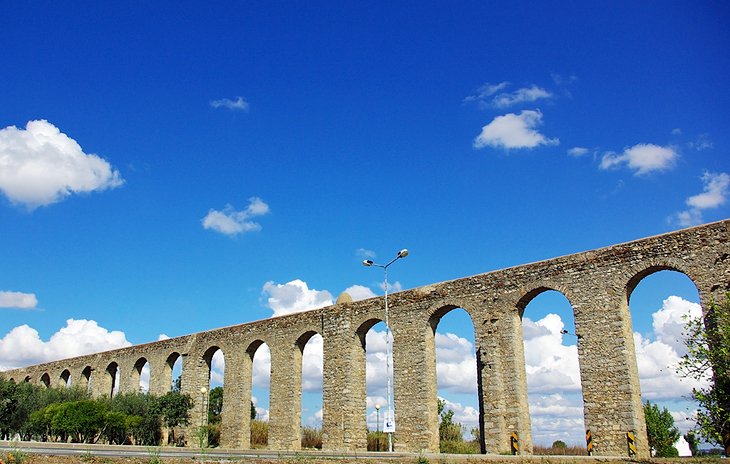
The whimsically named Aqueduct of Silver Water caught the imagination of Portugal's greatest poet, Luís de Camões, who described the majestic 16th-century watercourse in his epic Os Lusìadas, published in 1572. The structure is still regarded with awe, the tallest arches of the surviving nine-kilometer stretch reaching a height of 26 meters and visible throughout the city and beyond.
Over the years, shops, warehouses, and other commercial premises have been constructed within its arches. There are even some houses snuggled between its walls. The most interesting examples can be admired in and around Rua do Cano.
For some truly imposing views of the aqueduct, visitors should follow the well-signposted trail that begins just outside the city walls.
Location: Rua do Cano, near Largo do Chão das Covas
12. Pousada Convento de Évora
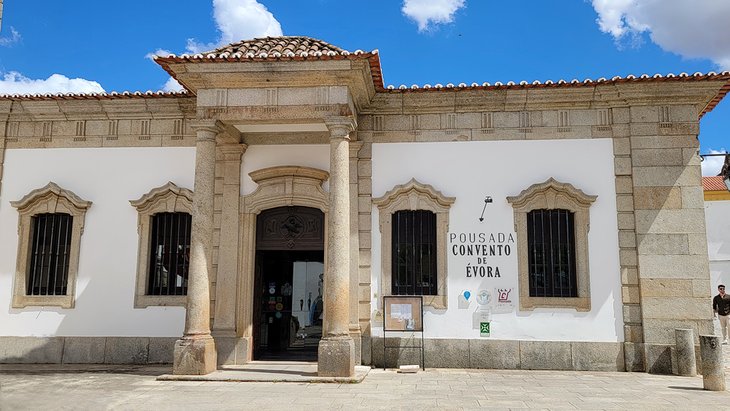
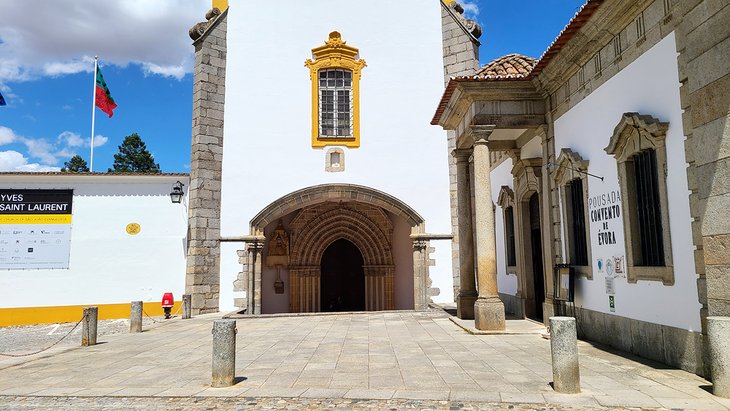
Spending a night in the cells takes on new meaning in this 15th-century former monastery (Convento dos Lóios). The building, is now the luxurious pousada, Pousada Convento de Evora, a hotel of exceptional historical character.
Non-residents are welcome to step under the Manueline porch to take a peek inside. Actually, the portal dates from 1485 and is a surviving feature of the original convent, which was largely destroyed by an earthquake in 1755. Visitors are limited in where they can wander. If you want to look around, it's best to book a room.
Location: Largo do Conde de Vila Flor
13. Jardim Público (Public Gardens)
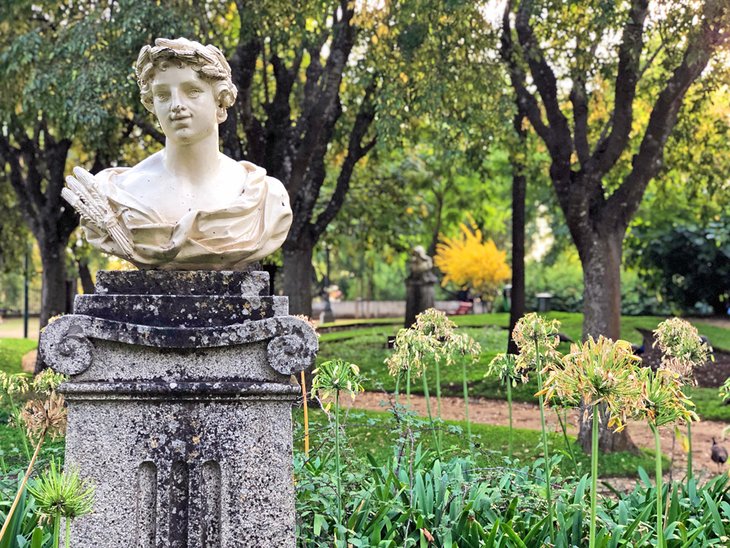
Prime picnic territory and perfect for a pleasant stroll, the city's public gardens embroider the southern edge of the old town, near Igreja de São Francisco. The grounds are set inside the walls of the once opulent Palácio de Dom Manuel, the only remains of which is the elegant Galeria das Damas, a pavilion built for Manuel I in the 15th century.
Early spring sees the gardens burst into color when flowers carpet the lawns, and park benches are at a premium. Weekends attract local families, and you might have to wait for a table at the outdoor café spread over a light-dappled terrace.
14. Megaliths Tour
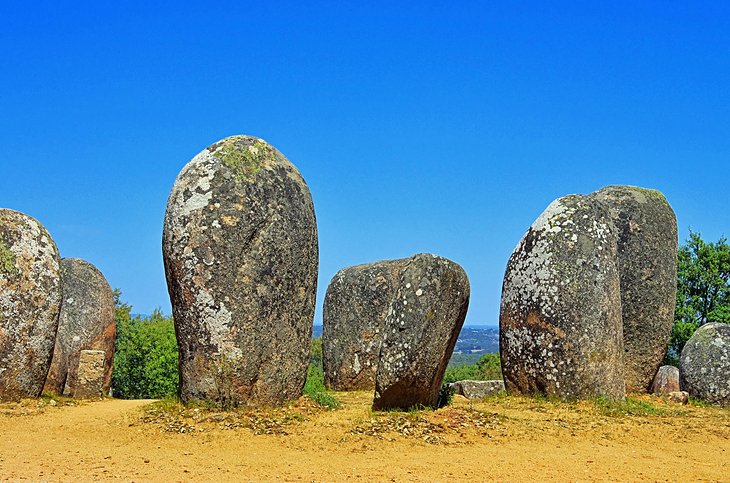
About 15 kilometers west of Évora is the isolated megalithic Cromeleque dos Almendres (Cromlech of Almendres), a mysterious oval made up of 95 lichen-encrusted granite stones that date back to between 4000 and 2000 BC. This mysterious piece of Neolithic real estate is believed to have been a temple dedicated to a solar cult. Indeed, some archaeologists maintain that the circle functioned as some kind of primitive astronomical observatory.
As if to strengthen the enigma surrounding their purpose, a solitary two-and-a-half-meter-high stone, known as the Menhir of Almendres, is positioned one and a half kilometers away from the cromlech. The two sites are linked by a marked pedestrian trail that snakes through an olive grove, and guided tours led by local archaeologists are available to those with an interest in prehistory.
Indeed, while kids will appreciate the hide-and-seek opportunities provided by the stones, mature minds will no doubt be moved by this ancient and sacred destination.
Location: Guadalupe, between Évora and Montemor-o-Novo
15. Arraiolos-Estremoz Circuit
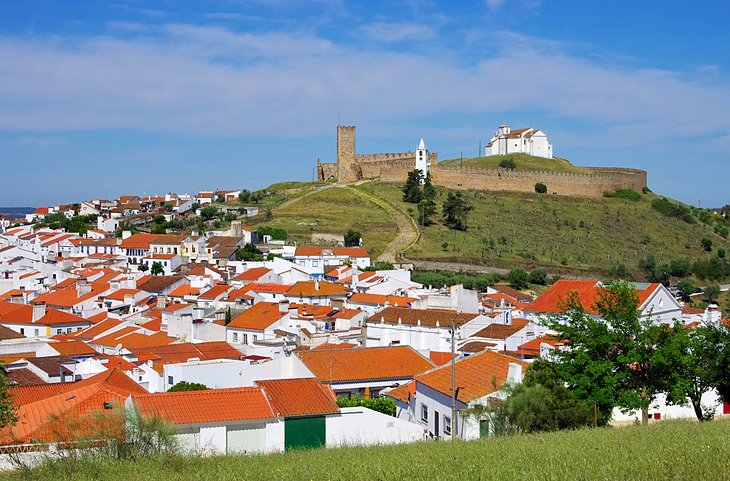
Arraiolos, 23 kilometers northwest of Évora, is your first stop on this scenic circular tour. The fortified village is noted for the dramatic ruins of its 14th-century castle, the walls of which embrace the whitewashed Igreja do Salvador.
The hilltop stronghold affords impressive views of the surrounding countryside, but what really crowns this picturesque hamlet is its reputation for needlecraft. Some of the best carpets in Portugal are woven here, hand-embroidered, bright wool rugs stitched by nimble-fingered ladies following a tradition that has endured since the 13th century. The finest examples are the elaborate floral designs crafted over several months by teams of women who weave around the clock to produce beautiful and intricately designed tapestry.
The rugs make unique souvenirs, either as wall hangings or floor coverings, and are sold in the carpet shops found threaded along the main street.
After lunch, head east to Estremoz, famous for its beautiful marble. So plentiful is this precious stone, it adorns much of the town and is even used in the cobblestones and steps. A castle dating from 1258 presides over the old town and is now an elegant pousada (historic hotel). During the early 14th century, it was the residence of King Dinis and Queen Isabel. Today, visitors can admire a marble statue of the queen on the terrace or climb the 13th-century keep for panoramic views.
Nearby is the Municipal Museum with a collection of antique furniture, local pottery, and ecclesiastical art. For shoppers, the Saturday market in Rossio Marquês de Pombal, the town's main square, sells a fabulous selection of local cheeses and pottery and is one of the biggest markets in Portugal.
Where to Stay in Evora for Sightseeing
Obviously, the most convenient hotels for sightseeing are those inside Evora's walled old city. But some excellent choices are just outside the walls, offering the advantages of free parking and easy car access (which is rare within the walls). Here are some highly-rated hotels close to the attractions in Evora:
Luxury Hotels:
- Inside the walls, in a quiet neighborhood close to the aqueduct, the small Albergaria do Calvario has spacious rooms, underground parking, fast internet, and an organic breakfast with a la carte hot dishes.
- Surrounded by Evora's top attractions, Pousada Convento de Evora is a historic convent restored into an elegant hotel with its own courtyard pool and an excellent restaurant.
- Smart, art-filled, and ultra-modern M'Ar De Ar Aqueduto is in a quiet neighborhood inside the walls; its pool sits in a landscaped patio with views of the nearby aqueduct.
Mid-Range Hotels:
- Barely outside the walls and a 10-minute walk to the cathedral, Vitoria Stone Hotel has a rooftop infinity pool, restaurant, and rooms with rain showers and balconies.
- Overlooking a quiet square in the center of the walled old town, close to the cathedral and top attractions, Hotel Solar de Monfalim is a historic manor house with antiques and a covered porch for relaxing.
- Just outside the walls, near the Public Garden and São Francisco church, Dom Fernando has free Wi-Fi and breakfast, garage parking, and rooms with balconies overlooking the swimming pool.
Budget Hotels:
- Inside the walls, near the Public Garden and a five-minute walk from lively Praça do Giraldo's cafes and restaurants, the basic Moov Hotel Evora has free Wi-Fi and cheap parking.
- In the same area, but just outside the walls, Ibis Evora has basic rooms with reliable, free Wi-Fi and free parking.
- Hotel Santa Clara Evora Centro has small rooms in an excellent location near Praça do Giraldo and the center of the old town.
Frequently Asked Questions
How do you get from Lisbon to Évora?
It's a relatively straightforward undertaking to drive the 140 kilometers east out of Lisbon along the tolled A6 motorway to Évora. You can use either the 25 de Abril or Vasco da Gama bridges to join the A6, and the journey takes approximately 1.5 hours. Note that the highways have tolls; ensure your rental car has a transponder, or have money available to pay at the toll booths.
Évora is well connected by public transport to Lisbon. Rede Expressos buses operate out of Lisbon's central Sete Rios bus station on a daily basis.
CP trains connect Lisbon with Évora four times daily out of the capital's Oriente, Sete Rios, and Entrecampos railway stations. Note that Évora railway station is located one kilometer south of the city center, a 20-minute walk.
How do you get to Évora from Porto?
It's a long drive from Porto to Évora. The quickest route is via the A1 and A6 motorways, a journey of 410 kilometers that, traffic permitting, takes around four hours. For those traveling by train or bus, a change at Lisbon is required.
What are some of the must-visit castles near Évora?
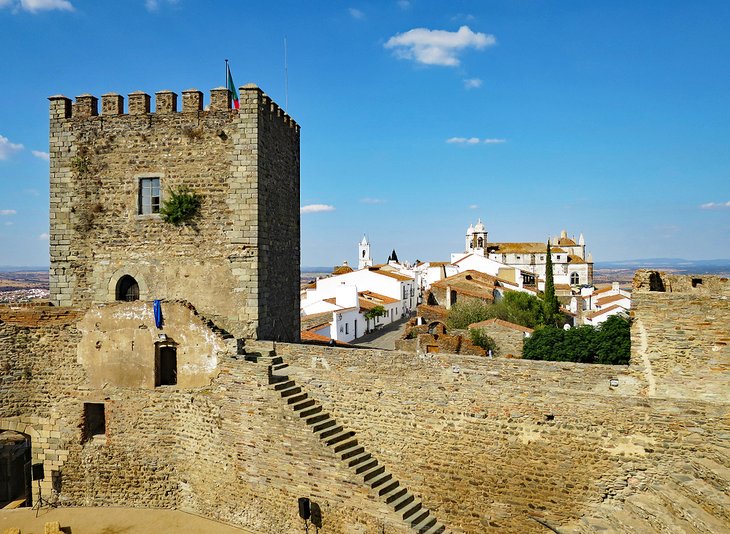
Évora's circuit of medieval walls is all that remains of the city's historic defenses. But the Alentejo is a region renowned for its collection of splendid castles, and you don't have to travel too far to admire them.
Monsaraz: The diminutive medieval walled town of Monsaraz, 53 kilometers southeast of Évora near the frontier with Spain, boasts one of the finest examples of a hilltop castle anywhere in Portugal. Built in the 14th century as part of the country's border defenses, the structure features a sturdy keep that commands a truly impressive 360-degree panorama of the surrounding countryside.
Évoramonte: Located 29 kilometers northeast of Évora, off the N18 highway towards Estremoz, is Évoramonte castle. This eye-catching, early 14th-century stronghold is noted for a peculiar architectural feature: its walls are bound by bold stone "ropes" - a stonemason's imaginative way of securing the building after the previous castle fell in an earthquake in 1513.
A Renaissance-style keep was added in the 16th century as if to provide a watchful eye over neighbor Spain, but only the walls and gate towers are accessible to the public.
What are some must-visit destinations near Évora?
Vila Viçosa: A 45-minute drive northeast brings you to the palatial town of Vila Viçosa. The destination is recognized for its Paço Ducal, or grand royal palace - the last residence of the Portuguese monarchy and a must-visit point of interest.
Allow yourself a leisurely hour or so to absorb the building's richly decorated interior. The Sala dos Duques is especially opulent, lined as it is with tapestries depicting the life of Achilles.
The castle was the original home of the Dukes of Bragança before the palace was built. The interior can be explored, after which you can climb the outer walls for pleasant town views.
Viana do Alentejo: Ideally, the drive to this pleasant southern Alentejan town, 48 kilometers southwest of Évora, should be made in spring, when the countryside is flecked with color and the air heavy with a fragrant scent.
The destination features two cultural highlights: a highly decorative castle and a vast pilgrim church. The castle features a sequence of elaborate battlements, the unusual cylindrical towers reflecting a Moorish influence.
The enormous Nossa Senhora de Aires is a scene of joviality every April, when hundreds of people congregate here to take part in the vibrant Romaria a Cavalo horse pilgrimage festivities.
Tips and Tours: How to Make the Most of Your Visit to Évora
- Day Trip to Évora from Lisbon: You can easily explore Évora on a Small-Group Évora Day Trip from Lisbon with Olive Oil Tastings. Set out from Lisbon for the 1.5-hour drive to Évora, where you'll learn about and taste olive oils, explore the historic sites of the city, including the Cathedral, the Roman Temple, and the Chapel of Bones in St Francis Church, before stopping to visit the stone monoliths of Almendres Cromlech on your return trip.
Map of Attractions & Things to Do in Évora
Evora, Portugal - Climate Chart
| Average minimum and maximum temperatures for Evora, Portugal in °C | |||||||||||
| J | F | M | A | M | J | J | A | S | O | N | D |
| 13 6 | 14 7 | 16 8 | 18 9 | 22 11 | 26 14 | 30 16 | 30 16 | 27 16 | 22 13 | 16 9 | 13 7 |
| PlanetWare.com | |||||||||||
| Average monthly precipitation totals for Evora, Portugal in mm. | |||||||||||
| 89 | 86 | 56 | 56 | 38 | 28 | 8 | 5 | 28 | 69 | 81 | 86 |
| Average minimum and maximum temperatures for Evora, Portugal in °F | |||||||||||
| J | F | M | A | M | J | J | A | S | O | N | D |
| 55 43 | 56 44 | 60 45 | 64 48 | 70 52 | 79 57 | 86 60 | 86 61 | 81 60 | 71 55 | 61 48 | 55 43 |
| PlanetWare.com | |||||||||||
| Average monthly precipitation totals for Evora, Portugal in inches. | |||||||||||
| 3.5 | 3.4 | 2.2 | 2.2 | 1.5 | 1.1 | 0.3 | 0.2 | 1.1 | 2.7 | 3.2 | 3.4 |