Things to Do in Jerusalem
The most contested city on Earth is also one of the most beautiful.
Jerusalem's scope of history is staggering, and the major role the city plays in the traditions of all three major monotheistic faiths has led to it being continually fought over, across the centuries.
This is the heart of the Holy Land, where the Jews raised the First Temple to keep the Ark of the Covenant safe, where Jesus was crucified and rose again, and where the Prophet Muhammad ascended to heaven to receive God's word.
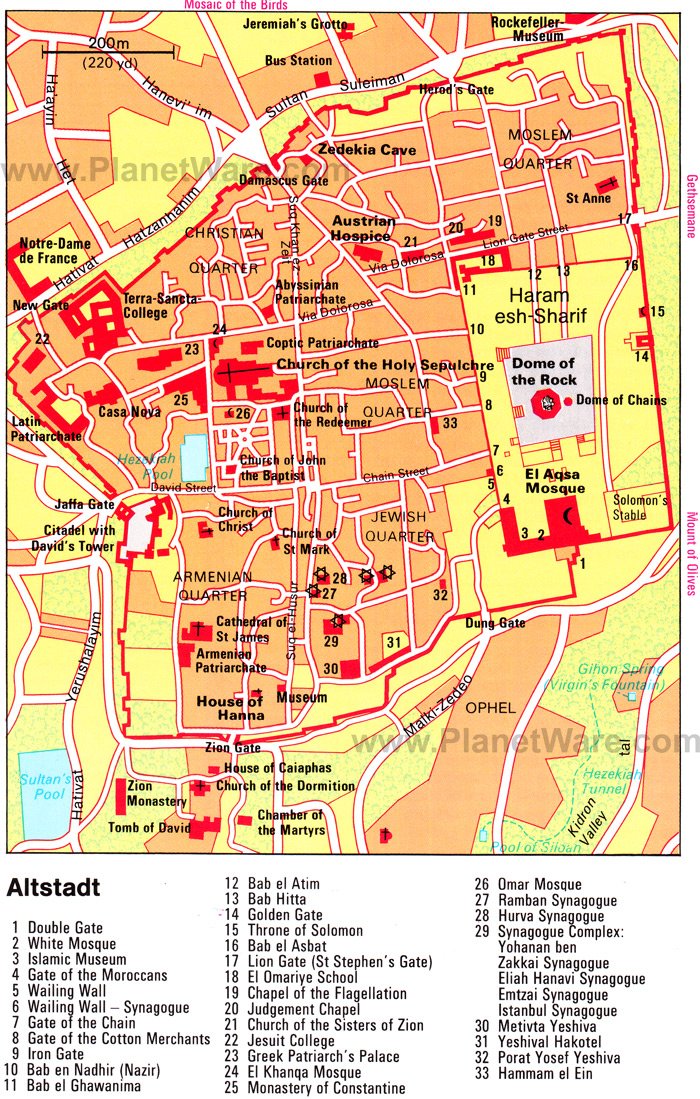
For believers, a visit to Jerusalem is a pilgrimage to one of the most sacred sites in the world. The number of religious tourist attractions here can be baffling for first-time visitors, but luckily most of the top sightseeing landmarks and things to do are secreted within the lanes of the compact Old City district.
With so much to see and do, the best way to tackle a trip here is to decide on a few key points of interest and places to visit that are must-dos and break your sightseeing down into sections of the city.
Don't try to do too much and wear yourself out. It would take a lifetime to see everything that Jerusalem offers.
Help plan your city sightseeing with our list of the top tourist attractions and things to do in Jerusalem.
Haram Al-Sharif (Temple Mount)
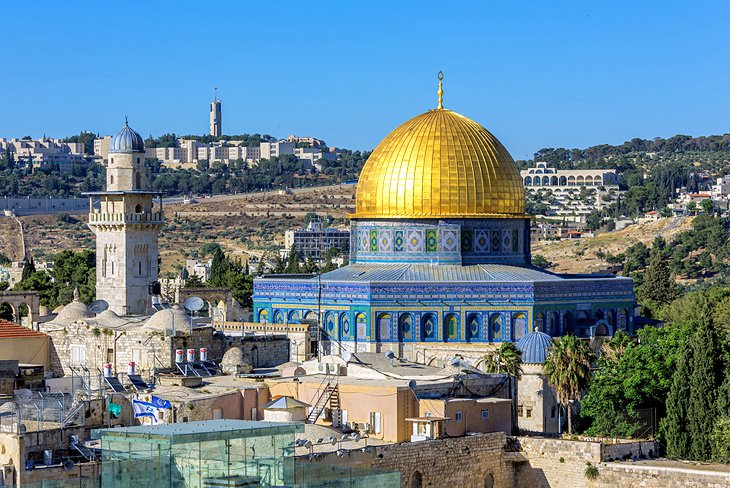
Follow in the footsteps of centuries of pilgrims, and enter one of the holiest sanctuaries on Earth.
Lauded by both Jews and Muslims, this is the site where Abraham (father of all three monotheistic faiths) is said to have offered his son up as a sacrifice to God, where Solomon built the First Temple for the Ark of the Covenant, and where the Prophet Muhammad is said to have ascended to heaven during his early years of preaching Islam.
Haram Al-Sharif is a place of deep significance (and contention over ownership) for those of faith.
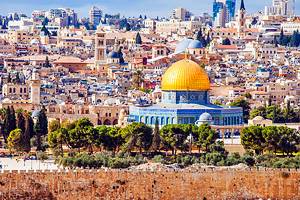
The wide plaza, above the old city, is centered around the glittering Dome of the Rock, which is Jerusalem's most iconic landmark.
Beneath the golden dome is the sacred stone both Jews and Muslims believe to be where Abraham offered his son to God and where Muslims also believe the Prophet Muhammad began his journey to heaven.
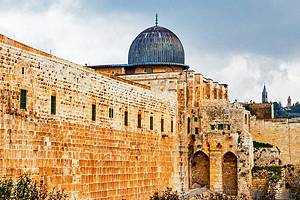
The southern side of the plaza is home to the Al-Aqsa Mosque. First established in 705 CE, it's among the oldest mosques in the world.
Location: Entry from Western Wall Plaza, Old City
Western Wall and Jewish Quarter
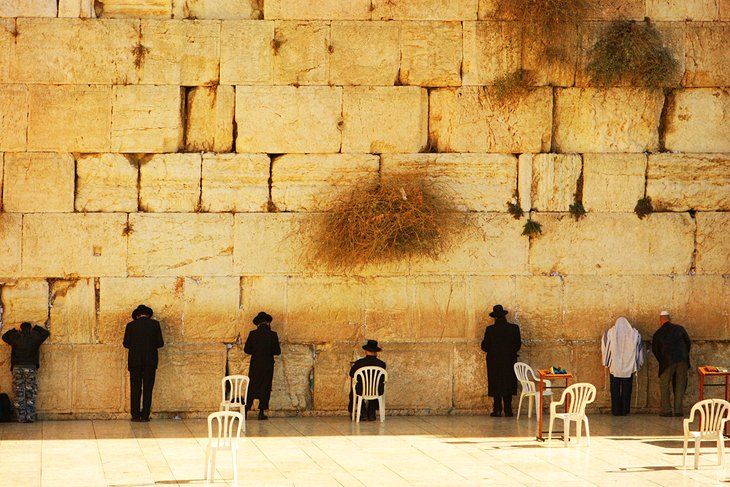
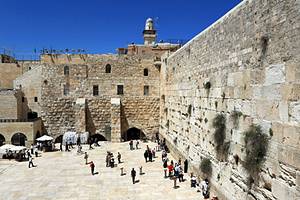
The Western Wall is the surviving retaining wall of Jerusalem's First Temple.
Sometimes also called the Wailing Wall due to the people's laments for the loss of the temple in 70 CE, it is now the holiest site in Judaism and has been a place of pilgrimage for the Jewish people since the Ottoman era.
The Jewish Quarter of the old city runs roughly from the Zion Gate east to the Western Wall Plaza. This part of the Old City was destroyed during the Israeli-Arab fighting in 1948 and has been extensively rebuilt since 1967.
A major highlight here for history fans is the Jerusalem Archaeological Park at the southern end of the Western Wall Plaza, where archaeologists have unearthed fascinating remnants of old Jerusalem.
The Western Wall Tunnels, which take you under the city, back to the level of the original city, are also not to be missed.
Jewish Quarter Street (Rehov HaYehudim) is the main lane of the district, and veering off this road onto the surrounding side streets are a cluster of interesting synagogues to visit.
Church of the Holy Sepulchre
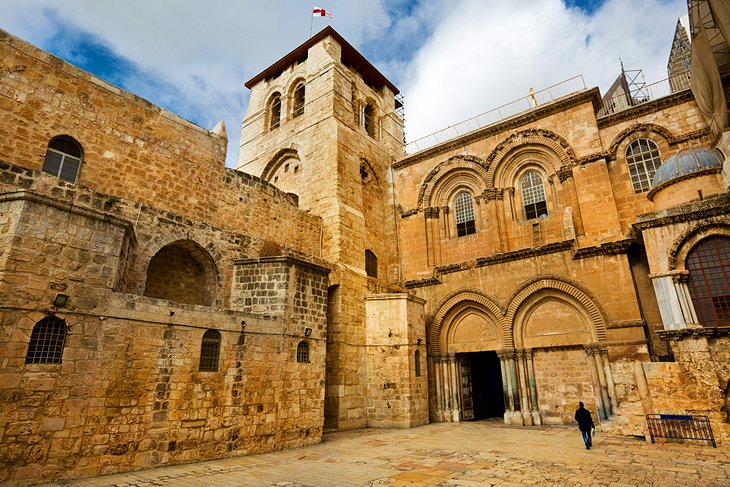
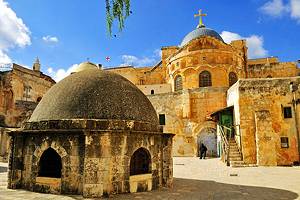
For Christian pilgrims, the Church of the Holy Sepulchre is Jerusalem's holiest site and is said to have been built on the site where Jesus was crucified.
The site for the church was picked by Saint Helena–mother to Constantine the Great–during her tour of the Holy Land. She was the one to announce to the Byzantine world that this spot was the Calvary (or Golgotha) of the gospels.
The original church (built in 335 CE) was destroyed by 1009, and the grand church you see now dates from the 11th century.
Although often heaving with pilgrims from across the world, the church interior is an opulently beautiful piece of religious architecture.
This is the ending point for the Via Dolorosa pilgrimage, and the last five Stations of the Cross are within the Church of the Holy Sepulchre itself.
The interior contains various holy relics, and the quarters inside the church are owned by different Christian denominations.
Location: Christian Quarter, Old City
Armenian Quarter
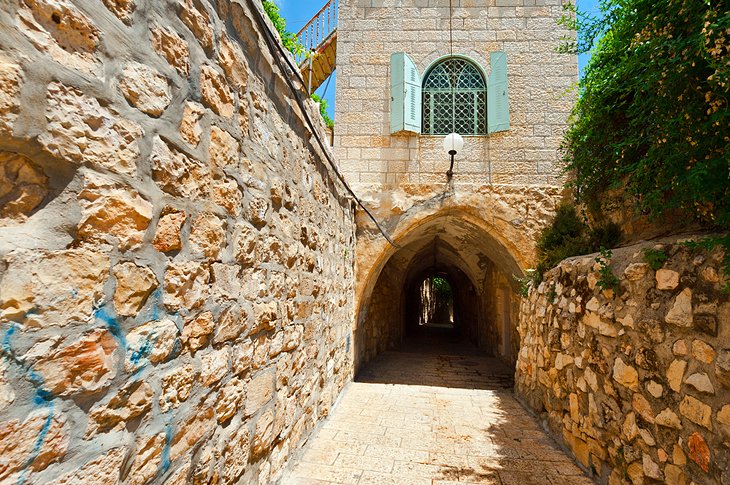
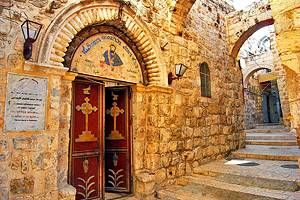
Running south from the Citadel, Armenian Patriarchate Road is the main street of what is known as the Old City's Armenian Quarter.
Within the narrow lanes here are the Armenian Orthodox Cathedral of St. James and the Syriac Orthodox St. Mark's Chapel, which receive much fewer visitors than others in the Old City.
Armenians have been part of Jerusalem's community for centuries, first arriving in the city during the 5th century. Many more arrived during the Ottoman era and after the Armenian massacres in Turkey during the early 20th century.
Jerusalem's Armenian Quarter is the Old City's most tranquil corner to explore and a good place to wander if the press of pilgrims gets too much.
Follow the Route of the Via Dolorosa
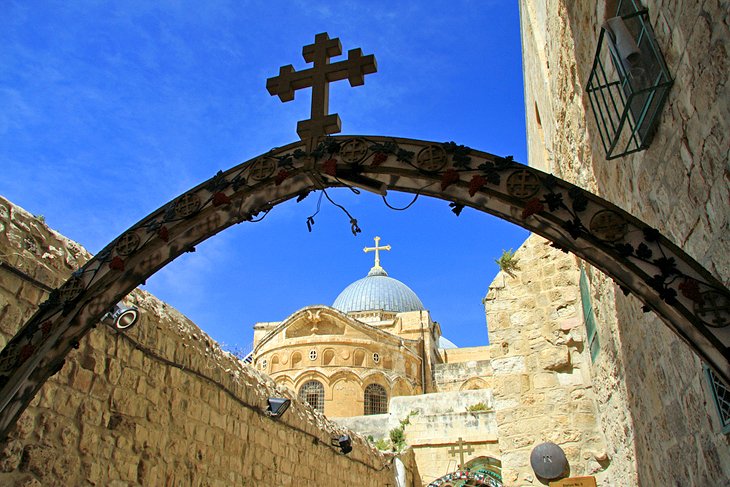
For many Christian visitors, the Via Dolorosa (Way of Sorrow) is the highlight of a visit to Jerusalem.
This walk follows the route of Jesus Christ after his condemnation as he bears his cross towards execution at Calvary.
The walk is easily followed independently, but if you're here on a Friday, you can join the procession along this route led by the Italian Franciscan monks.
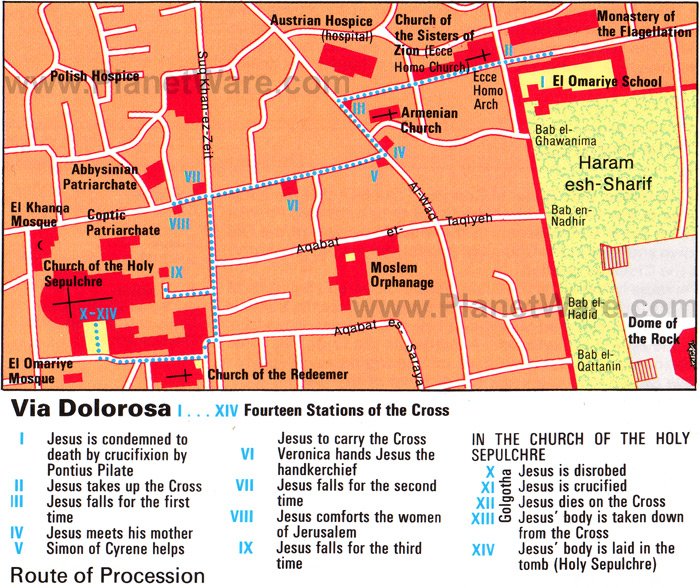
The course of the Via Dolorosa is marked by the fourteen Stations of the Cross, some of which are based on the Gospels' accounts and some on tradition.
The walk begins on Via Dolorosa Street (1st station, east of the intersection with Al-Wad Street) from where you follow the street west. Then proceed south onto Al-Wad Street and west onto Via Dolorosa Street again, through eight stations until you reach the 9th station at the Church of the Holy Sepulchre where the last five stations are.
The current route stretches for around 600 meters and has been the accepted trail since the 18th century, replacing earlier processional ways that Christian pilgrims to the city had used since around the 8th century.
Of particular interest along the way is the Chapel of the Flagellation (2nd station), built on the site where Jesus is believed to have been flogged.
Address: Via Dolorosa Street, Old City
Explore the Citadel (Tower of David) and Surrounds
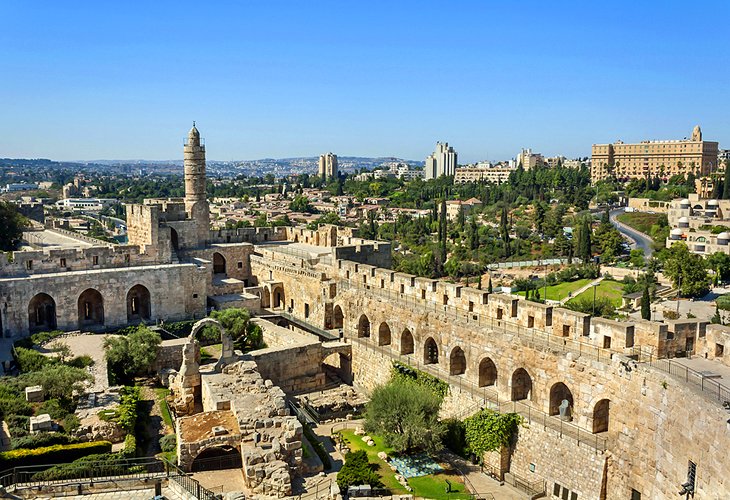
The Citadel, popularly known as the Tower of David, actually has no connection with David, having been erected by King Herod to protect the palace he built in approximately 24 BCE.
His original citadel had three towers named after his brother Phasael, his wife Mariamne, and his friend Hippicus.
After Titus' conquest of the city in 70 CE, the Romans stationed a garrison here, but later the citadel fell into disrepair. It was successively rebuilt by the Crusaders, Egypt's Mamelukes, and the Ottomans, during their years of reign over Jerusalem.
The building you now see was built in the 14th century on the foundations of the original Phasael Tower.
Inside is the Tower of David Museum, which relays the story of Jerusalem. A permanent display of archaeological exhibits can be viewed, along with temporary exhibitions that explore facets of Jerusalem's culture and heritage.
If you climb up to the citadel's rooftop, you are rewarded with one of the best Old City vistas in town.
During the evening, there is a Sound and Light show here, with visuals projected onto the city walls, which is particularly good for traveling families who want to introduce their children to some of the city's history.
Location: Jaffa Gate, Old City
Churches of the Christian Quarter
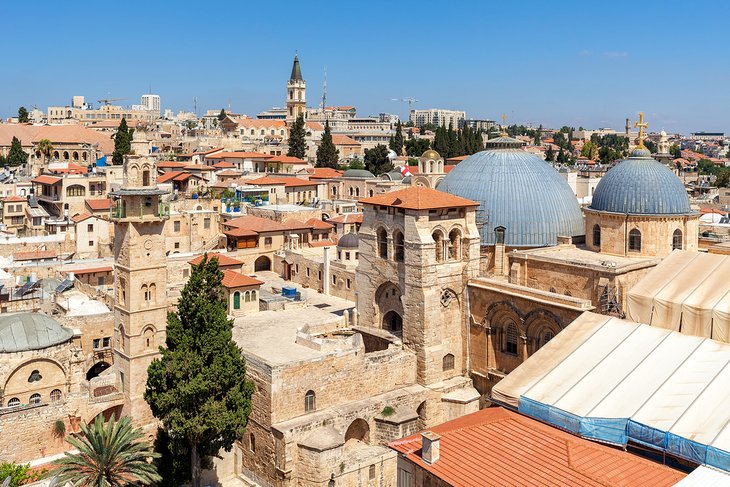
There are churches throughout Jerusalem's Old City, but the area, running north from Jaffa Gate and centered around the Church of the Holy Sepulchre, is known on most tourist maps of the Old City as the Christian Quarter.
Within this tangle of alleyways are some of the Old City's most popular tourist souvenir souks and a whole caboodle of churches that are well worth exploring.
Protestant Christ Church (Omar ibn al-Khattab Square) has a quirky museum with interesting document exhibits and a decent café to rest your weary old city-plodding feet.
The Ethiopian Monastery, squeezed into the corner of The Church of the Holy Sepulchre's courtyard, contains interesting frescoes portraying the Queen of Sheba's Jerusalem visit.
The Lutheran Church of the Redeemer (Muristan Road) is where you come to climb the bell tower for incredible Old City views. And the Church of St. John the Baptist (off Christian Quarter Street) is worthy of a visit as it is Jerusalem's oldest church.
Muslim Quarter
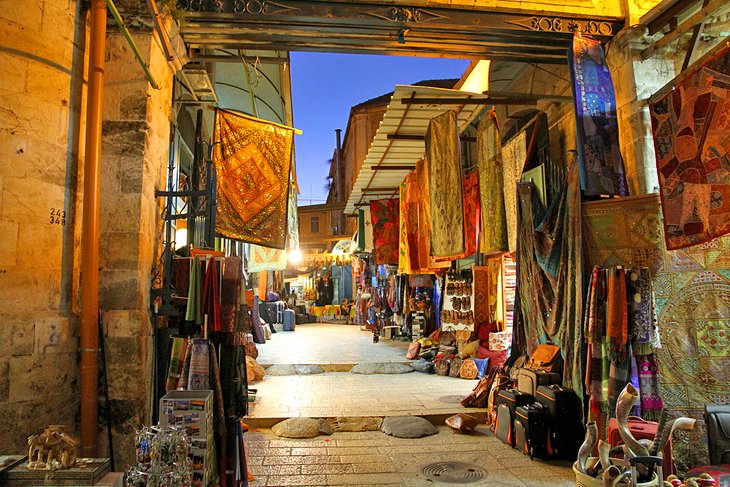
The most bustling and alive district, with the best souk shopping in the Old City, is known on most tourist maps as the Muslim Quarter.
This district roughly runs from Damascus Gate through the northeast chunk of the Old City.
Plenty of fine surviving remnants of Mamluk architecture line the streets here, including the 14th-century Khan al-Sultan (Bab al-Silsila Street), where you can climb up to the roof for excellent views across the higgledy-piggledy lanes.
If you wander down Antonia Street, you'll come to the beautiful crusader-built St. Anne's Church (believed to be built on top of the site of the house of the Virgin Mary's parents) and the Pool of Bethesda next door.
Mount of Olives
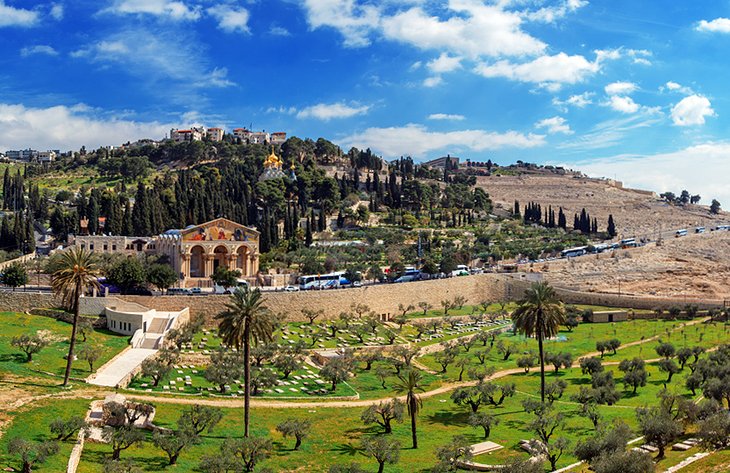
Overloaded with churches and home to the oldest continually used cemetery in the world, the Mount of Olives holds particular interest to religious pilgrim travelers to Jerusalem, but even the non-devout can appreciate the spectacular Old City panoramas from the peak.
This sacred hill is believed to be the place where God will begin rising the dead on Judgement Day. For Christian believers, this is also where Jesus ascended to heaven after his crucifixion and subsequent resurrection.
The Church of the Ascension on the top of the mount dates from 1910 and has the best views across Jerusalem.
Walking down the slope, you come to the Church of the Pater Noster built next to the site where, according to tradition, Jesus instructed his disciples.
Farther down, the Church of Dominus Flevit is claimed to be built over the site where Jesus wept for Jerusalem, and farther along is the onion-domed Russian Church of Mary Magdalene.
The Gardens of Gethsemane (where Jesus was arrested) and the Church of All Nations are next, while the Tomb of the Virgin Mary is the last big attraction on the Mount of Olives.
Mount Zion
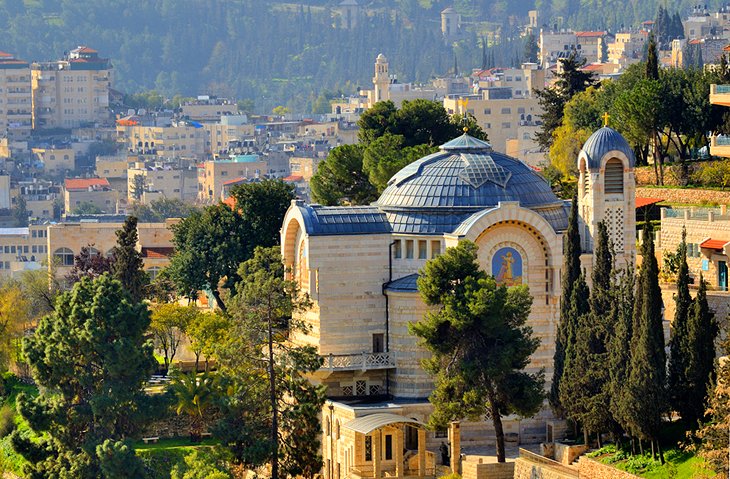
Mount Zion (the small hill immediately south of the Old City's Zion Gate) is home to Jewish and Muslim shrines as well as a number of churches.
Since the Byzantine Age, Mount Zion has been revered as the place where Christ celebrated the Last Supper and where the Virgin Mary spent the last years of her life, according to some Christian traditions (another tradition says her last days were spent in Ephesus in Turkey).
For Jews, Mount Zion's importance stems from this being the place of King David's Tomb. If you climb up the stairs from the tomb's courtyard, you'll come to the Last Supper Room, which has served as both church and mosque throughout its long history.
The Church of the Dormition nearby is where the Virgin is supposed to have died, while just to the east is the Church of St. Peter of Gallicantu where Peter is said to have denied Jesus.
Walk the Old City Walls
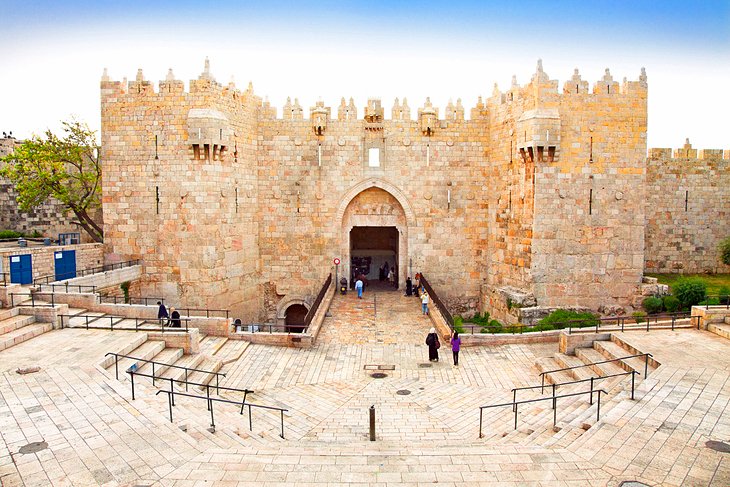
The Old City fortifications date from the Ottoman period, and nine magnificent gates at junctions within the wall's length lead into the Old City.
The Damascus Gate is one of the most famous. Lion's Gate (sometimes called St. Stephen's Gate) leads onto the Mount of Olives outside the city walls. Zion Gate is the main entry into the Jewish Quarter, while Jaffa Gate is the main passageway for the Christian Quarter.
Walking the wall ramparts is a wonderful way to experience the Old City. There are two sections that can be walked on: Jaffa Gate heading north to Lion's Gate or Jaffa Gate heading south to Dung Gate.
East Jerusalem
The entire old city is officially part of East Jerusalem (the Palestinian sector of Jerusalem that is occupied by Israel). The main entrance into the "newer" section of East Jerusalem, outside the old city walls, is through Damascus Gate.
Just to the east of the gate, within the gardens at the foot of the wall, is Solomon's Quarries, a cave system that extends under the Old City. According to ancient tradition, the stone for Jerusalem's First Temple was quarried from here.
The cave is also known as Zedekiah's Grotto as in Jewish tradition, Zedekiah, the last king of Judah, hid here from the Babylonian forces in 587 BCE.
Slightly east from here (along Sultan Suleiman Street) is the Rockefeller Archaeological Museum. Inside are exhibits from the Stone Age right up to the 18th century.
If you're short on time, some of the highlights of the collection are the skeleton unearthed on Mount Carmel, known as the Carmel Man, in the South Gallery, the 6th century BCE Lachish letters in the North Gallery, and the ornately carved beams from the Al-Aqsa Mosque in the South Room.
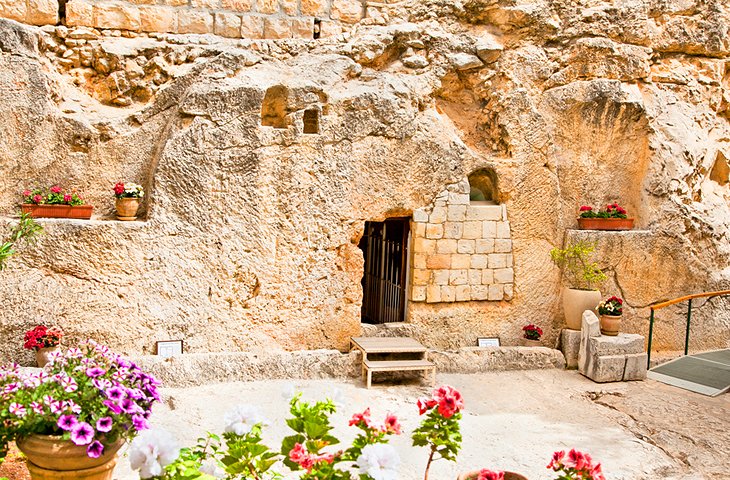
If you walk down Nablus Road, you'll come to the Garden Tomb, which dates from the Roman or Byzantine period. It was found and identified as Christ's tomb by General Gordon in 1882, and some Protestant Christians still believe that this is the true site that Christ was buried and rose again.
Heading north along Nablus Road is the French Dominican Monastery of St. Stephen where its namesake, the first Christian martyr, is believed to have been stoned to death.
Veer off onto St. George Street from here, and you'll come to the site of the Mandelbaum Gate. Between 1948 and 1967, it was the only crossing-point between the Israeli and Jordanian sectors of Jerusalem. The site is marked with a plaque.
Also on St. George Street, is the Museum on the Seam, a contemporary art museum that exhibits works dealing with social commentary on human rights and conflict.
West Jerusalem Central City Sites
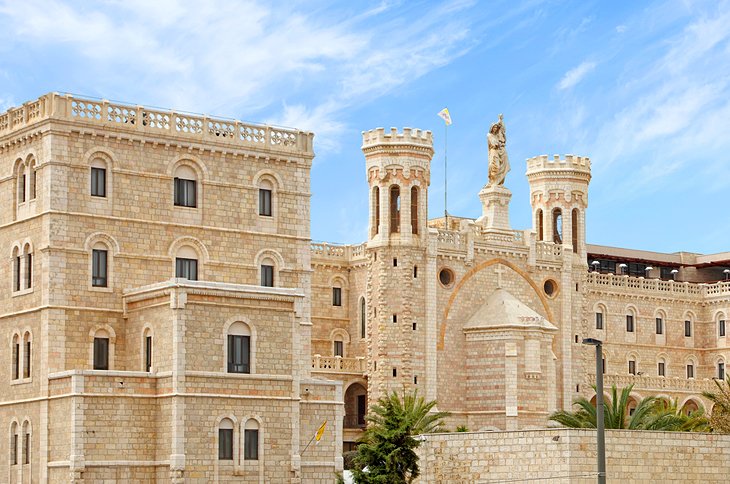
From the Old City's Jaffa Gate, you enter West Jerusalem's modern central city district with Jaffa Road running northwest to Bar Kochba Square and Zion Square.
Northeast from Bar Kochba Square, you reach the Russian Compound, dominated by the green-domed Russian Orthodox Cathedral. This area grew up in the late 19th century as a large walled complex for Russian pilgrims.
On the northeast side of the complex were the Russian consulate and a hospice for women, and to the southwest were a hospital, the mission house, and a large hospice for men that lies beyond the cathedral. The buildings are now occupied by various government institutions.
North from here is Ethiopia Street where you'll find the Ethiopian Church. The reliefs of lions above the doorway recall the style of Lion of Judah borne by the Abyssinian dynasty, which traced its origins back to the Queen of Sheba.
Farther north from Ethiopia Street is the Mea Shearim district, home to a community of ultra-orthodox Jews. If you'd like to enter this area, be aware that modest dress (covering arms and legs) is mandatory, and taking photographs of inhabitants is not allowed.
The people of Mea Shearim still wear their old East European dress and speak mostly Yiddish. Some extreme groups refuse to recognize the state of Israel because it was not established by the Messiah and regard themselves as a ghetto of true orthodoxy within the Jewish state.
South from Jaffa Road is the Time Elevator (Hillel Street), a child-friendly introduction to Jerusalem's history, and the Museum of Italian Jewish Art & Synagogue with an extensive collection of Judaica.
Running west from Zion Square on Jaffa Road is the pedestrianized Ben Yehuda Street, Jerusalem's main vortex for dining and shopping.
Israel Museum
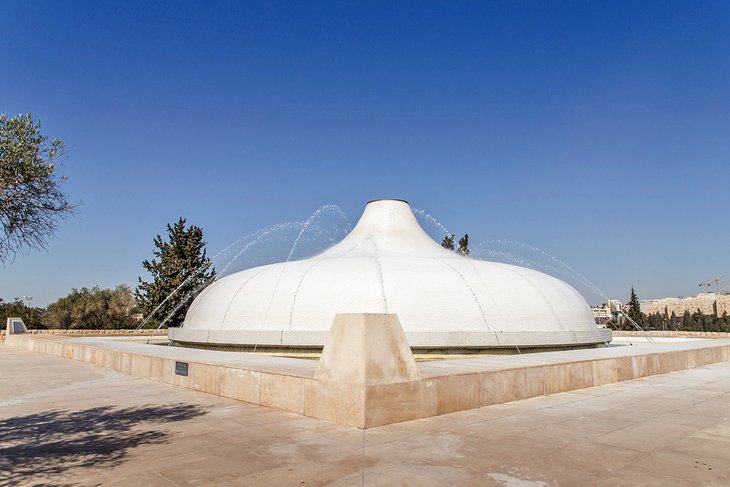
Opened in 1965, this complex of museums is the only place in the country that collects and displays both archaeological finds and art.
The Shrine of the Book building displays Israel's portion of the Dead Sea Scrolls (the rest of the scrolls are displayed in Amman's Jordan Museum in Jordan), which were unearthed in the Dead Sea area during the 1940s.
In the main building of the complex, the Judaica wing has an impressive display of sacred Jewish art and ethnographic displays from Jewish life in various countries.
The archaeological wing contains fascinating exhibits from sites throughout the country ranging from the neolithic era through to the Ottoman era.
There are also adjacent galleries displaying art and artifacts from neighboring cultures that influenced the culture and history of this land. The galleries cover ancient Egypt, Mesopotamia, ancient Greece, ancient Rome, and the Arabian Peninsula.
The museum's art wing has a good collection of works by Israeli painters as well as pieces by Gauguin, Renoir, Van Gogh, and a range of works by international artists. There's also a regular program of contemporary art exhibitions.
Location: Givat Ram district, West Jerusalem
Official site: https://www.imj.org.il/en
Kidron Valley
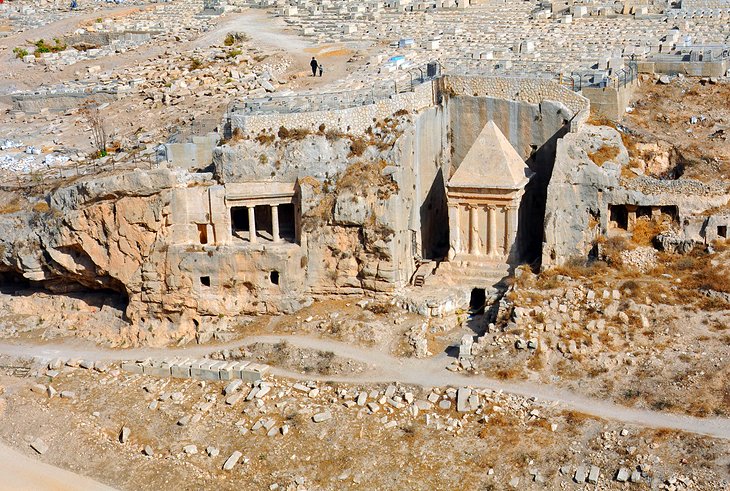
The Kidron Valley lies between the Mount of Olives and Mount Zion and is one of the oldest areas of Jerusalem.
Both Jews and Muslims believe that the Last Judgement will take place here, a rope will extend from the battlements of the Temple Mount, over the valley to the Mount of Olives, and the righteous will cross over, supported by their guardian angels, while the sinners will be cast down into damnation.
Archaeological excavations here have uncovered a settlement that dates back more than 4,000 years. The archaeological site is known as the City of David and archaeologists are still working here.
Area G is the oldest part of the site, dating from the 10th century BCE. From here, you can walk down into the tunnels known as Warren's Shaft and Hezekiah's Tunnel and proceed onto the Pool of Siloam and Shiloach Pool, which some people think may be the site where Jesus performed the miracle of healing a blind man.
Monastery of the Cross
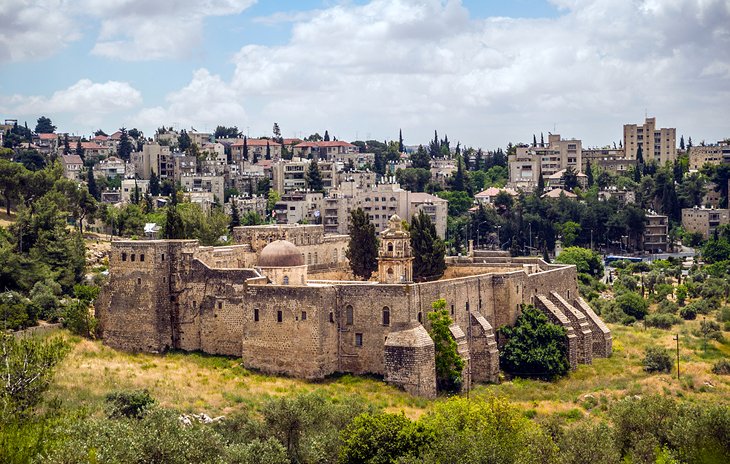
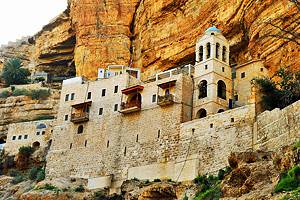
According to legend, the massive fortress-like bulk of the medieval Monastery of the Cross is built on the site where the prophet Lot lived.
The trees he is said to have planted in the surrounding area are also believed to have provided the wood for Christ's cross. In Greek Orthodox tradition, a church was first founded here by the Empress Helena.
Georgian monks controlled the church until the 18th century, when it passed back into the hands of Jerusalem's Greek Orthodox community.
Until a few decades ago, the monastery lay well to the west of Jerusalem, but the city's creeping expansion has now surrounded it.
Location: Rehavia district, West Jerusalem
Yad Vashem (Hill of Remembrance)
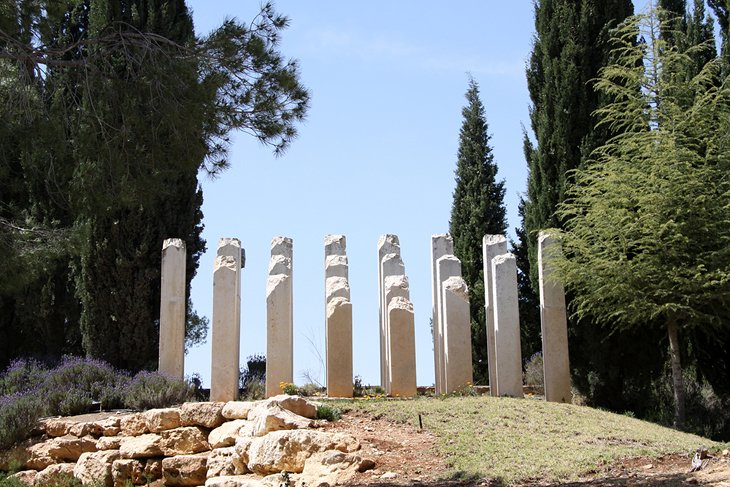
Israel's major Holocaust memorial is Yad Veshem.
In the main building, the Hall of Remembrance, the names of the Nazi death camps are set into the floor and an eternal flame burns in memory of the dead.
Opening off the main hall is a room containing victim's names, a photographic exhibition, the extremely moving children's memorial, and an art museum with work produced by inmates from the concentration camps.
The extensive surrounding grounds hold numerous works of sculpture and memorials.
Official site: www.yadvashem.org
Herzl Museum
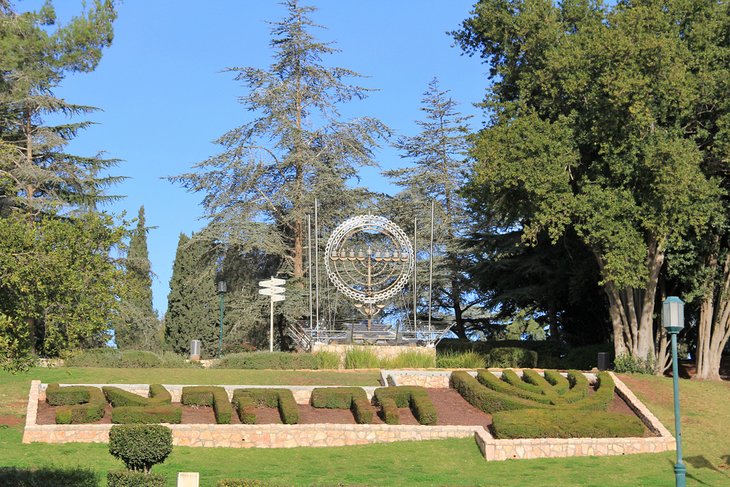
Mount Herzl commemorates the founder of Zionism.
The remains of Theodor Herzl, who died in Austria in 1904, were brought to Israel in 1949, a year after the foundation of the independent Jewish state for which he advocated, and buried in a free-standing sarcophagus on the summit of this hill, which was then named after him.
Near the main entrance is the Herzl Museum with a reconstruction of Herzl's study and library.
The large park also contains the graves of Herzl's parents and several leading Zionists.
Take a Day Trip to Ein Kerem and Abu Ghosh
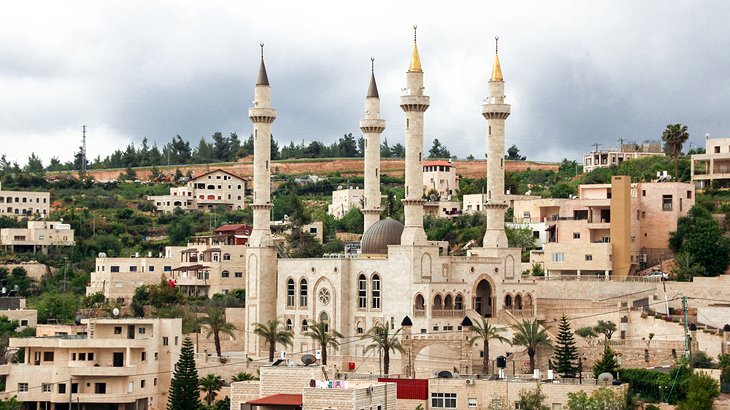
Ein Kerem Road in Jerusalem runs down into the Ein Kerem Valley where, according to Christian tradition, the village of Ein Kerem was the birthplace of St. John the Baptist.
The Franciscan Friary of St. John here was built in the 17th century over the Grotto of St. John (believed to be his birthplace).
In the center of the village is the Church of the Visitation with beautiful frescoes.
Farther west of the city is the village of Abu Ghosh. This Palestinian village is dominated by a crusader church that has belonged to the Lazarists since 1956. With its four-meter-thick walls, the three-aisled church is fortress-like and is full of crusader character.
Abu Ghosh is also home to the Church of Our Lady of the Ark of the Covenant, which is believed by some to stand on the site where the ark was kept before being transferred to Solomon's temple.
Visit Latrun
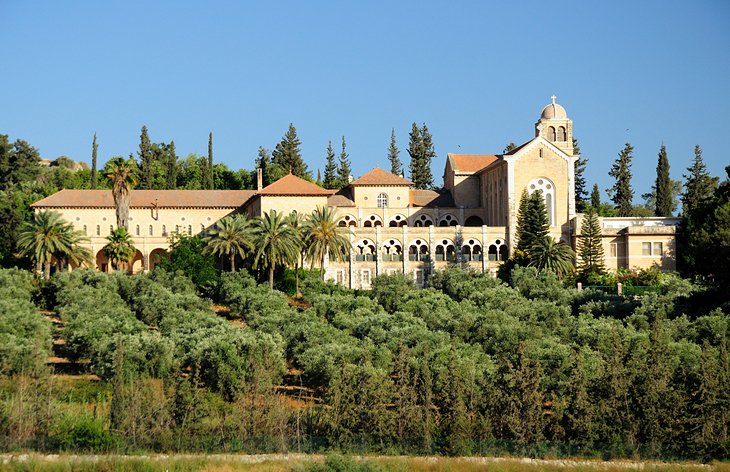
Latrun Monastery, about 28 kilometers west of Jerusalem, was built in 1927 by French Trappist Monks.
Until very recent times, Latrun was of strategic importance. During the British Mandate period, UK authorities had a fortified police post here and up until 1967, it stood on the armistice line between Jordan and Israel.
The monastery is part of the Order of Cistercians of the Strict Observance who practice silence. The extensive grounds that surround the monastery building are beautifully laid out.
In the garden are a collection of late Classical and early Christian capitals and reliefs.
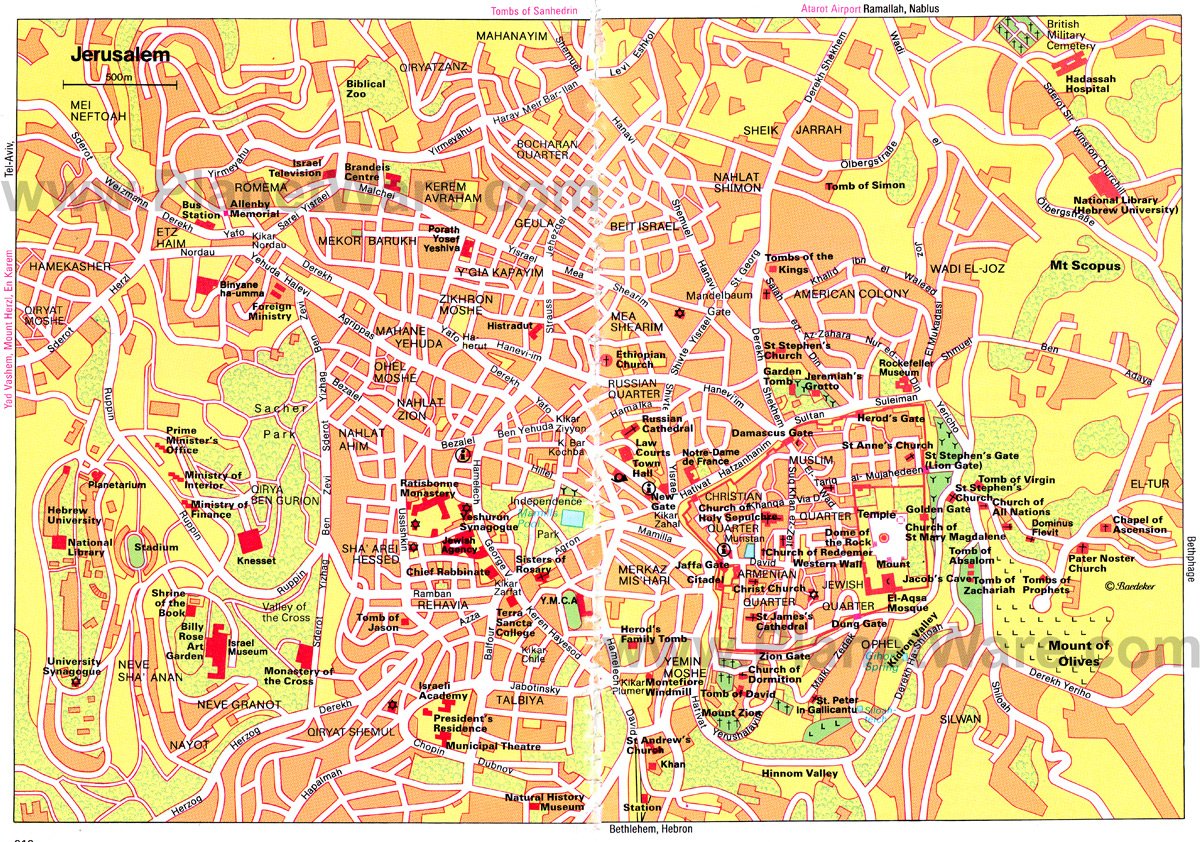
Map of Things to Do in Jerusalem
Jerusalem, Israel - Climate Chart
| Average minimum and maximum temperatures for Jerusalem, Israel in °C | |||||||||||
| J | F | M | A | M | J | J | A | S | O | N | D |
| 12 4 | 13 4 | 16 6 | 21 9 | 25 12 | 28 15 | 29 17 | 29 17 | 28 16 | 25 14 | 19 9 | 14 6 |
| PlanetWare.com | |||||||||||
| Average monthly precipitation totals for Jerusalem, Israel in mm. | |||||||||||
| 142 | 114 | 99 | 31 | 3 | 0 | 0 | 0 | 0 | 23 | 69 | 109 |
| Average minimum and maximum temperatures for Jerusalem, Israel in °F | |||||||||||
| J | F | M | A | M | J | J | A | S | O | N | D |
| 53 39 | 56 40 | 61 43 | 70 49 | 77 54 | 82 59 | 84 63 | 84 63 | 82 61 | 77 57 | 66 49 | 57 42 |
| PlanetWare.com | |||||||||||
| Average monthly precipitation totals for Jerusalem, Israel in inches. | |||||||||||
| 5.6 | 4.5 | 3.9 | 1.2 | 0.1 | 0 | 0 | 0 | 0 | 0.9 | 2.7 | 4.3 |
History of Jerusalem
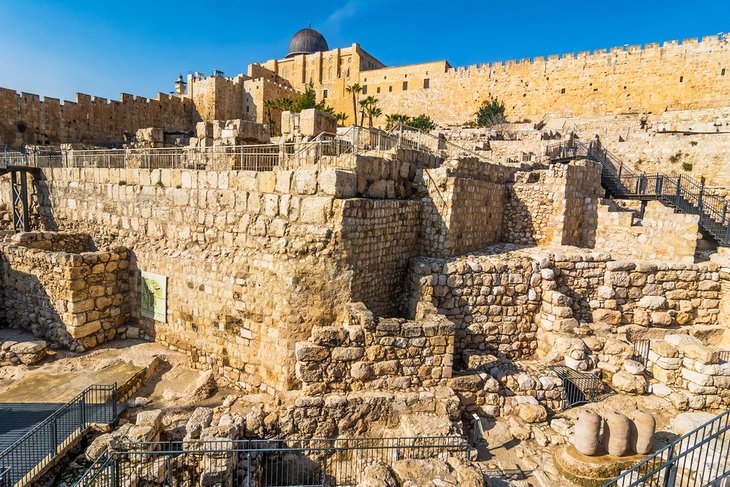
The first settlement in the Jerusalem area probably dates back to the 20th century BCE.
In 997 BCE, King David and the Israelites arrived, and his son (Solomon) constructed the first temple in 950 BCE.
In 587 BCE, the town was captured by Nebuchadnezzar and many of the inhabitants were carried off to Babylon. After the end of the Babylonian Captivity, in 520 BCE, the Second Temple was built.
In 332 BCE, Jerusalem came under Greek rule and was increasingly Hellenized. The desecration of the temple by Antiochus IV sparked off the Maccabean rising of 167 BCE.
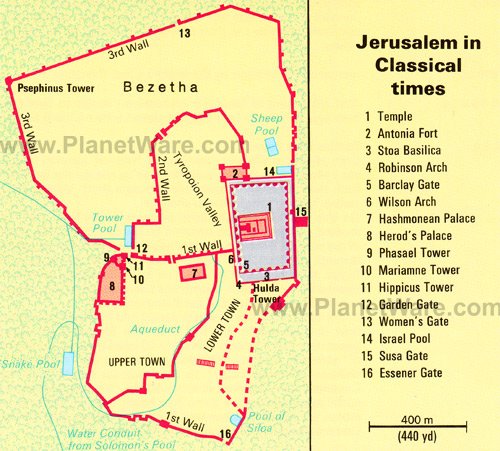
Under the Maccabees and the Hasmoneans, the town expanded westward on to Mount Zion. In 63 BCE, it passed into Roman control, and in 37 BCE, Herod became king of the Jews.
He rebuilt and embellished the temple platform and equipped the city with palaces, a citadel, theater, hippodrome, an agora, and other buildings on the Hellenistic and Roman model. After his death in 4 BCE, Jerusalem became the city of the high priests under Roman procurators.
From 41 to 44 CE, it was ruled by Agrippa I, who extended the city northward, building the Third (North) Wall. In 70 CE, Jerusalem was destroyed by Titus, and then again by Emperor Hadrian, in 132 CE, who banned Jews from the city and renamed Jerusalem Aelia Capitolina.
Jerusalem became a Christian city in 326 CE, when the Emperor Constantine and his mother Helena built a number of churches. This era came to an end when Jerusalem was captured by the Persians in 614 CE.
It was recovered by the Byzantines in 627 CE, but in 638 CE it was conquered by the armies of Islam. Thereafter, the Umayyad Caliphs built the Dome of the Rock and the Al-Aqsa Mosque.
A further period of Christian rule began in 1099 CE with the conquest of the city by the Crusaders, who built many churches, palaces, and hospices. Islam returned to Jerusalem, however, when Saladin captured the city in 1187 CE, and it remained in Muslim hands under the Mamelukes (1291- 1517 CE) and the Ottomans (1519-1917 CE), who built the present town walls (1537 CE).
In the 19th century, the Christian powers of Europe, which had supported the Ottoman Sultan against the Egyptian ruler Ibrahim Pasha, gained increasing influence from 1840 CE onwards, and built churches, schools, hospitals, and orphanages. The Pope re-established the Latin Patriarchate, which had originally been founded in 1099 CE, but was dissolved in 1291 CE.
Jews had begun returning to live in Jerusalem in significant numbers since the 13th century. In 1267 CE, Rabbi Moshe Ben Nachman Ramban (Nachmanides) founded a synagogue. In 1488 CE, Jews from Egypt settled in Jerusalem, and they were followed by Sephardic Jews from Spain offered refuge from the Spanish Inquisition by the Ottoman Sultan.
In December 1917, British forces under General Allenby entered the city, and on July first 1920, it became the seat of the British High Commissioner in the mandated territory of Palestine.
The United Nations resolved, in 1947, that Palestine should be divided between the Palestinians and the Jews and that Jerusalem should be internationalized. After the end of the British Mandate in 1948, Israeli and Jordanian forces fought for control of the city, and it was partitioned under a cease-fire agreement in 1949.
In 1950, the Israelis made West Jerusalem capital of their state, and after the Six Day War of 1967 they annexed and occupied East Jerusalem including the old city.