Attractions & Places to Visit in Ghent
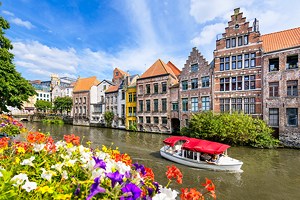
The old city of Ghent (in Flemish Gent; in French Gand) is a picturesque muddle of alleyways rimmed by quaint steeple-roofed buildings running along pretty canals. Along with Bruges, Ghent is Belgium's star architectural tourist attraction, but unlike Bruges, it comes without the tour bus hordes.
A walk through town on a summer's evening, when most of the important buildings are illuminated, is one of the best sightseeing experiences, as is a canal boat ride down the many branches of the Scheldt and Leie Canals that intersect the city.
For history-lovers and architecture fans, Ghent is one of the top places to visit in Belgium, plus its lack of tourists makes it a great place to get to grips with modern local Flemish culture.
Discover how to plan your time with our list of the top attractions and things to do in Ghent.
Cathedral of St. Bavo (Sint-Baafskathedraal)
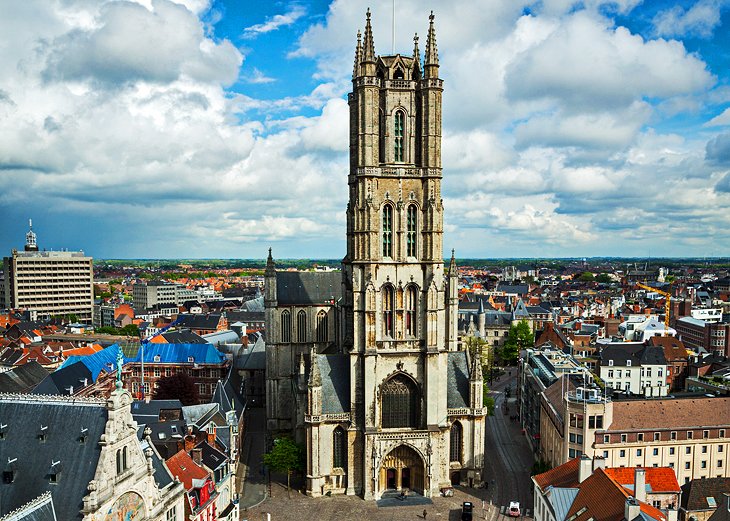
On the eastern side of Sint-Baafsplein stands the Cathedral of St. Bavo, a majestic building of brick and granite with a Romanesque crypt of its predecessor, Sint-Jans church. Charles V gave the cathedral its present name after he destroyed the old one to build a fortress.
The High Gothic cathedral choir dates from the 13th century, while the late Gothic tower and the main nave were built during the 15th and 16th centuries.
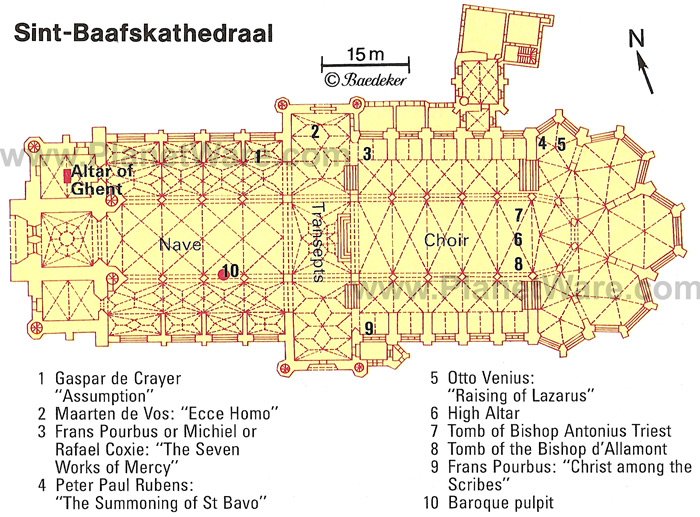
The light interior of the cathedral is richly decorated with some unique paintings. These include The Conversion of St. Baaf by Peter Paul Rubens (1624) and Christ among the Doctors by Frans Pourbus (1571).
The most famous artwork here though is The Altar of Ghent, also known as The Adoration of the Mystic Lamb, renowned as by far the greatest masterpiece of old Flemish painting.
Below the main church, the extensive crypt contains numerous tombs of bishops and a rich treasury. The outstanding Calvary triptych of 1464 by Joos van Wassenhove (Justus van Gent) is also shown in one of the chapels.
Address: Sint-Baafsplein, Central Ghent
Official site: https://www.sintbaafskathedraal.be/en/
The Fortress of Gravensteen
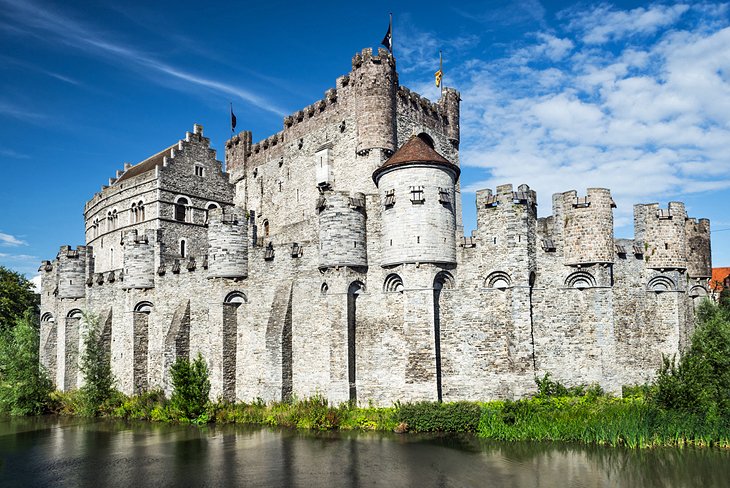
Gravensteen is one of the strongest moated fortresses in Western Europe, surrounded by the River Lieve. It was built between 1180 and 1200 on the orders of Philip of Alsace, the former count of Flanders, on the foundation of an earlier 9th-century structure and was created in the style of Syrian crusader castles. Today, it remains a unique example of the European medieval art of fortification.
In the 14th-century, it ceased to have a military function and was used by the counts for administration of the land. In 1800, it came into private ownership and was converted into a cotton mill and flats for the workers.
Most of the castle's area, including the ramparts, can be toured by visitors. In front of the castle extends the ancient Sint-Veerleplein, possibly the oldest square in Ghent, although the neighboring facades are of 17th-century origin at the earliest. This square was a marketplace but also the site of executions and burnings of the victims of the Inquisition
Address: Sint-Veerleplein 11, Ghent
Climb to the Top of The Belfry (Het Belfort)
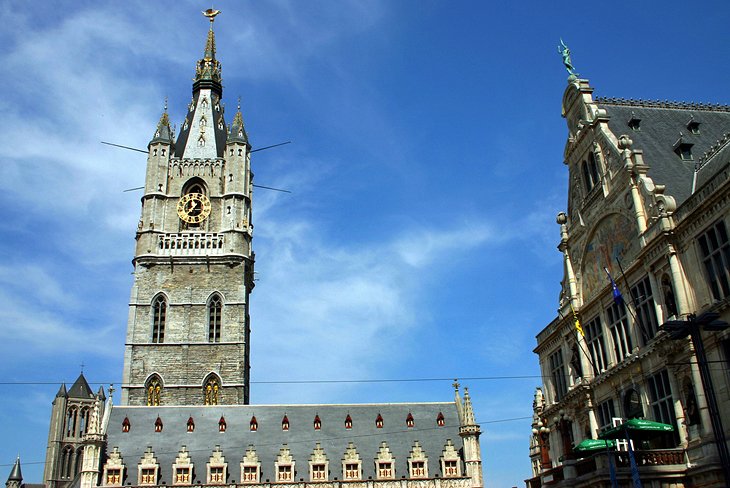
On the west side of Sint-Baafsplein stands the 91-meter-high belfry, symbol of the city's independence, where the charters of the privileges of Ghent were kept.
The tower was begun about 1300 and by 1338, it was mainly completed. The present-day spire was restored to its original 14th-century form at the beginning of this century and replaced the wooden bell tower of 1380.
It is crowned by a gilded copper dragon, which was first installed in 1377. Today, it is a replica as are the four armed figures at the corners of the platform. Only one of the originals of these survives and can be seen on the ground floor.
You can climb (or take the elevator from the 1st floor) to the top of the tower for great views over the central old town district of Ghent.
The splendid Cloth Hall directly adjoins the belfry. This building (1426-1441) by Simon van Assche was the meeting place of the wool and cloth traders and was converted into a prison in the 18th century. Today, it has a café-restaurant, which is popular with tourists.
Address: Sint-Baafsplein, Central Ghent
Official site: https://www.belfortgent.be
Cruise Ghent's Canals
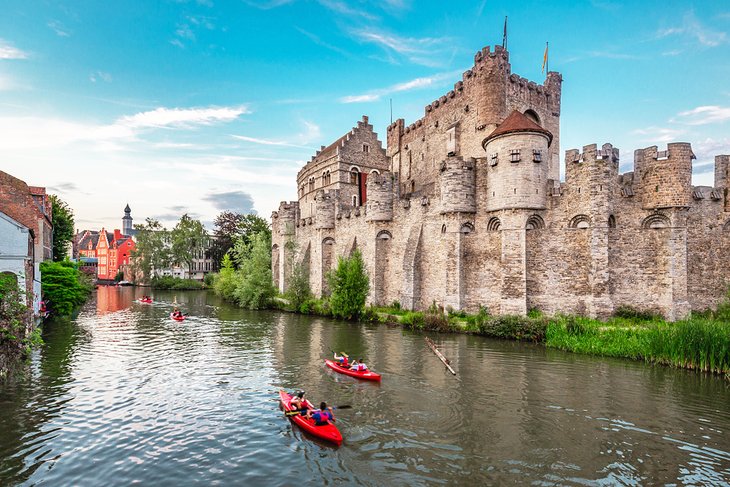
Ghent's canals are an attraction by themselves and provide the most relaxing sightseeing experience in the city.
There are various ways to enjoy Ghent from the canals, ranging from regular public boat tours and private customizable cruises in a traditional tow-barge to kayak rental.
Several different companies run regular public cruise departures from docks in the central city. The typical boat tour lasts 40 minutes and cruises past all of Ghent's major sights, including the belfry and Gravensteen, as well as the canal-side guildhall architecture along the Leie canal.
On the public tours, you can turn up and buy your ticket before you board.
Stroll the Neighborhood of Graslei
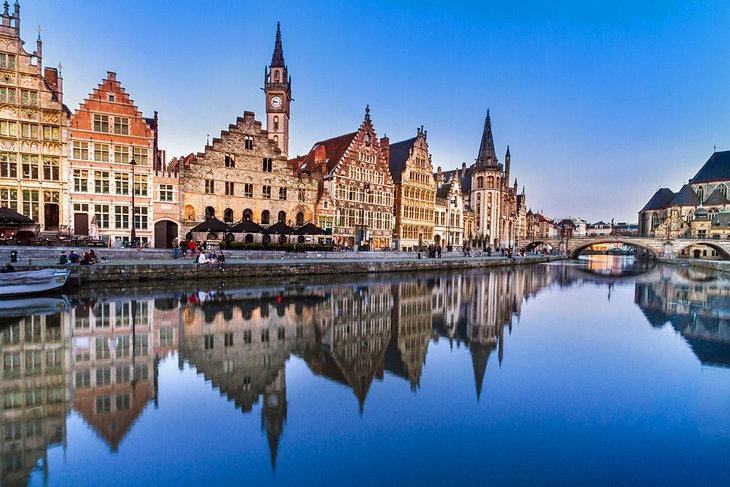
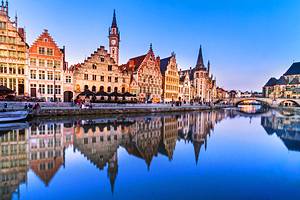
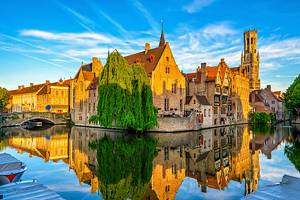
Some of Belgium's finest guild houses are along the Graslei Canal. This is an excellent place for a stroll for anyone with more than a passing interest in architecture.
Check out the adjoining Gildehuis der Vrije Schippers (House of the Free Boatmen), built in 1531 in the Brabant Gothic style, and Gildehuis der Graanmeters (House of the Grain Weighers), with its stepped gable that dates from 1698.
Further along, you'll see Tolhuisje (Customs House), a Flemish Renaissance building of 1682, which stands next to the Romanesque Spijker or Koornstapelhuis (around 1200).
The Gildehuis der Metselaars (House of the Masons) from 1527 in Brabant Gothic style completes this unique row of guild houses.
Explore Korenmarkt
Ghent's Korenmarkt (Wheat Market) is a historic square that is home to many of the old Guild Houses (Gindenhuis) positioned along the Leie Canal. This was once an important center of trade, and today, it is a lively area known for its lovely architecture and numerous restaurants and cafés.
Each year in late July, the Korenmarkt is the center of a 10-day festival, Gense Fieste, which combines plenty of music, theater, and other entertainment, as well as lots of food stalls.
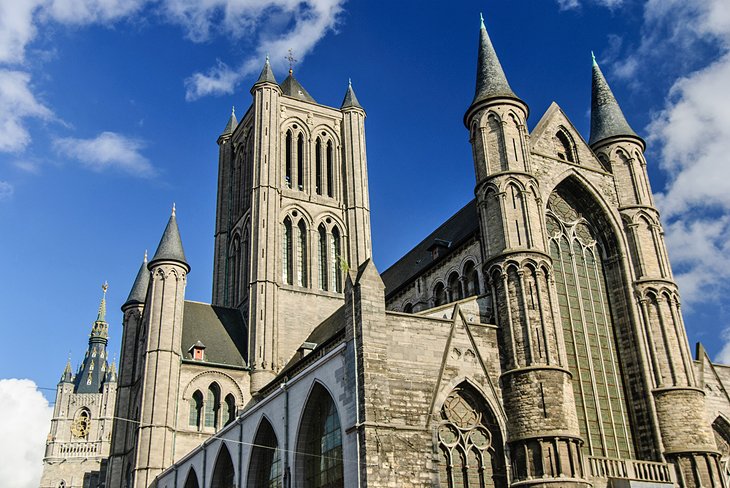
Bordering the southern side of the Korenmarkt, St. Nicholas Church is one of Ghent's most iconic landmarks. Its exterior is constructed of Tournai bluestone in the Scheldt Gothic style, dating back to the 13th century. Of note are its imposing central tower and an organ made by Aristide Cavaillé-Coll.
Saint Michael's Church and Sint-Michielsbrug
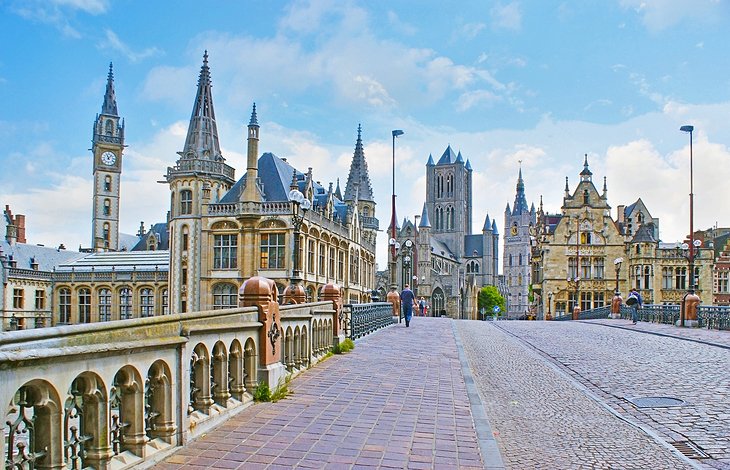
Saint Michael's Church is located on the western shore of the Leie and is known for its absolute grandeur, a massive Gothic church constructed of Belgian sandstone. The pulpit, altar, and many other parts of the interior are in the Neo-Gothic style, while other styles are represented as well, including an early 17th-century Baroque confessional.
Among the church's treasures are several 18th-century statues; paintings by Baroque artists like van Dyck; and the Relic of Doorn, which was a gift from Mary Queen of Scots.
Next to the church is Sint-Michielsbrug (Saint Michael's Bridge), a beautiful stone-arch bridge known for its spectacular views of the skyline. From here, you can see all three of Ghent's iconic towers, making this an excellent spot for photography. Visit in the evening for a particularly nice view of the city's landmarks illuminated.
Address: Sint-Michielsplein 4, 9000 Ghent
Discover the Korenlei Canal Area
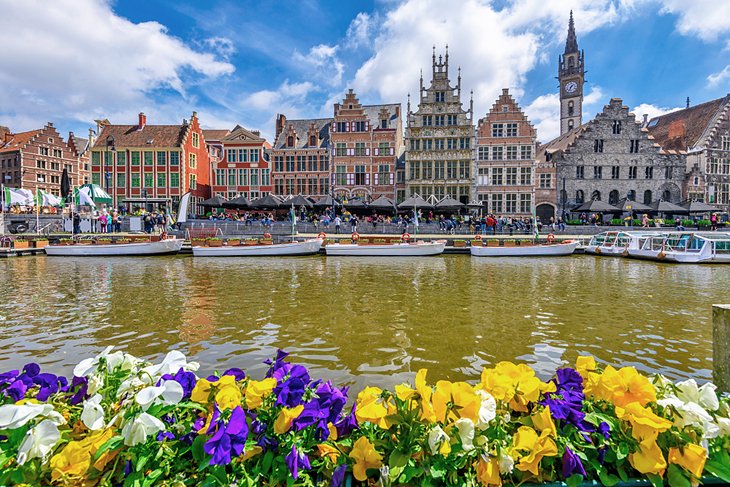
The Sint-Michielsbrug leads down to the Korenlei Canal, itself lined by splendid facades and offering the best view of the even finer houses on the opposite bank of the Graslei.
While wandering here, take note of the following houses: No. 15 is the site of the former Hof van Gruuthuse, (House of Duke Egmont), which dates from 1352 and is now replaced by a building with a Neoclassical facade that also encompasses No. 17-19, the Hotel de Ghellinck.
No. 7 along the Korenlei is the Gildehuis der Onvrije Schippers (House of the Tied Boatmen), which is a Baroque building dating from 1739.
Also, pay attention to the beautiful façade of No. 24, Lintworm en Krocht. This was a Romanesque château from the 12th century that was rebuilt at the beginning of the 20th century.
Address: Korenlei, central Ghent
Town Hall (Stadhuis)
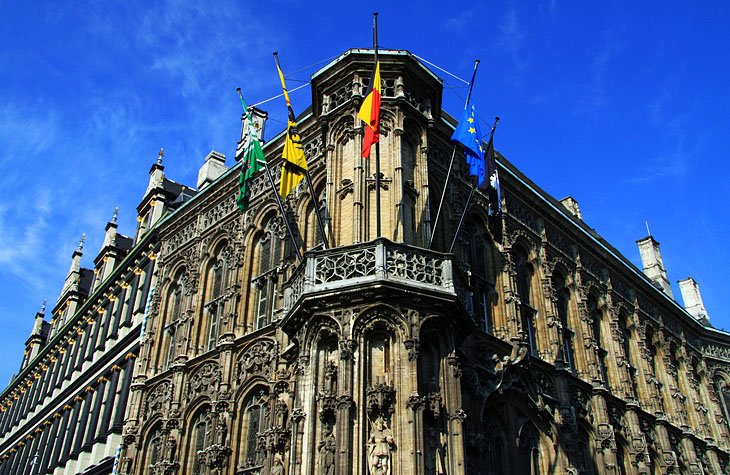
Built over a long period of time, Ghent's magnificent town hall combines a variety of architectural styles.
On the oldest parts of the building on the Hoogpoort, completed in the style of Bruges City Hall in 1482 and containing the council chambers, the architects Rombout Keldermans and Dominic de Waghemakere built a new wing in the finest late Gothic form, richly decorated with statues.
However, building work on this part, which is best seen from the corner of Hoogpoort and Belfortstraat, was suspended because of religious disputes in 1539.
Only a quarter of the original plan was realized and only the Peace Hall (Pacificatiezaal; actually the courtroom for the Keure, the protectors of the town constitution) and the Marriage Chapel, both 1535, were built.
Work only resumed at the end of the 16th century, so that the wing facing the Botermarkt is in Renaissance style as is the Throne Room on the upper floor.
Address: Botermarkt, Central Ghent
Museum of Fine Art (Museum voor Schone Kunsten)
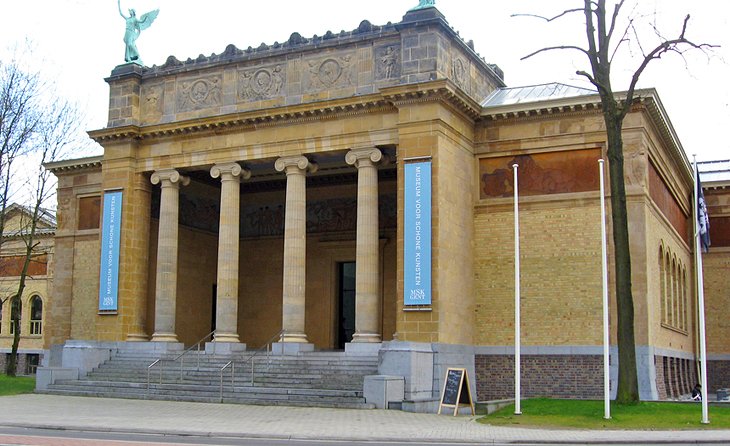
The main emphasis of the collection here is painting covering the 15th to 20th centuries. The central hall adjoining the entrance hall has eight fine Brussels wall tapestries: three with motifs from the story of Darius (17th century) and five with the theme "Triumph of the Gods" (1717).
Left of this hall are the Old Masters. Prominent are two works by Hieronymus Bosch in Room B: Bearing of the Cross and St. Hieronymus.
To the right of the Tapestry Room are paintings of the 19th and 20th centuries, especially by Belgian artists.
The museum also hosts a wide variety of traveling exhibits on loan from other world-class fine arts museums.
Address: Fernand Scribedreef 1, Liemaeckereplein, Ghent
Official site: https://www.mskgent.be/en
Ghent City Museum (STAM)
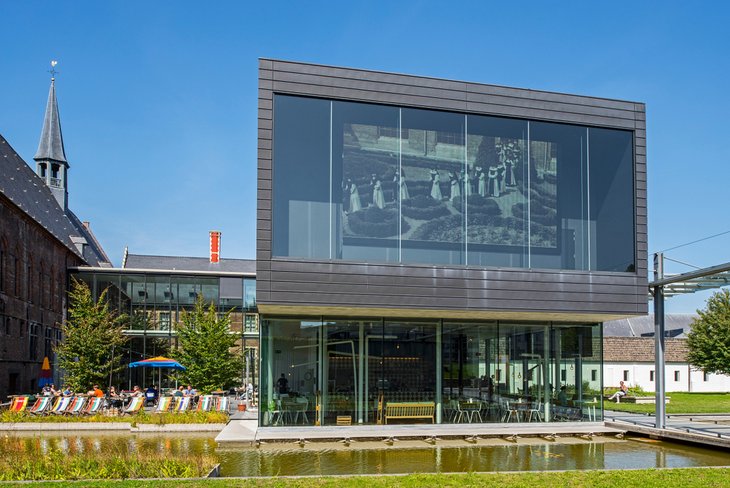
Based in the brick buildings of the Cistercian Abbey of Bijloke, the Museum of Ghent is one of the richest in Belgium and showcases a remarkable collection that traces the heritage and culture of the city in a unique historical setting.
The numerous rooms chronologically tell the story of Ghent with exhibits including jewelry, weapons, textiles, books, paintings, religious icons, and ceramics all enhanced by state-of-the-art multimedia displays.
The museum's outstanding centerpoint is the 14th-century refectory with an exceptional brick gable.
The interior walls are painted with frescoes, among which is a 10-meter-long painting of the Last Supper.
As well as the permanent collection, the museum hosts a series of temporary exhibits throughout the year that are housed in the neighboring monastery building.
Address: Godshuizenlaan 2
Official site: https://stamgent.be/en
Visit the Old Market Area
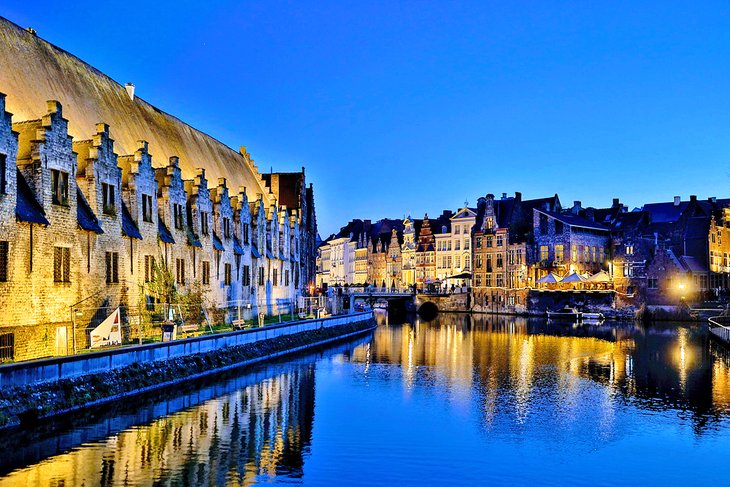
The Old Market (Groentenmarkt) began life as a fish market and then in the 18th-century began functioning mainly as a vegetable market. In the medieval era, Ghent's pillory stood here.
On the west side of the market area is the long Groot Vleeshuis, a medieval covered meat market with a guild house, chapel, and numerous gables in the roof. The building originated in 1406-1410 and was restored in 1912.
At the south end of the Vleeshuis is the Penshuizeken (entrails cottage) where the poor were given the entrails of slaughtered animals.
Today, the Vleeshuis building is a rather fine restaurant, but even if you're not hungry, you can walk through to view the interior.
Address: Groentenmarkt, Hoogpoort, central Ghent
The Architecture of Vismarkt and Kraanlei
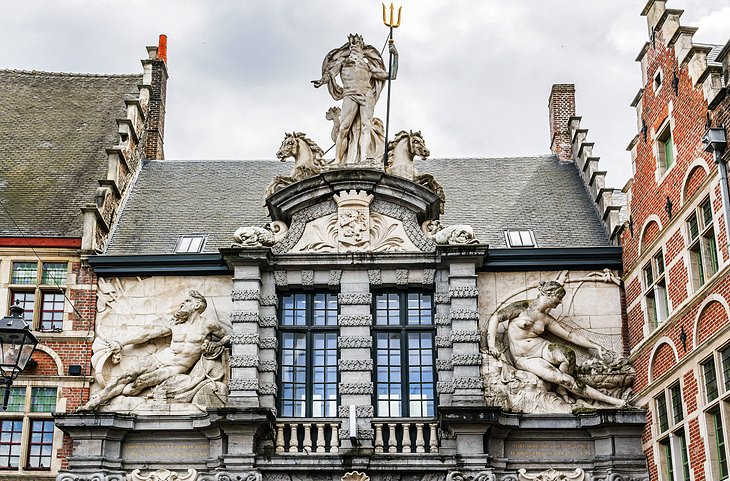
The superb Baroque building at Sint-Veerleplein No. 5 is the old fish market, built in 1689 according to plans by Artus Quellin.
The gateway depicts Neptune and allegorical representations of the Scheldt (male) and Leie (female).
To the northeast, the Kraanlei Canal adjoins Sint-Veerleplein, all lined with elegant houses.
Immediately on the left is No. 1, the Craenenburgh, then the row of houses De Lelye (No. 3-11), built around 1500 in Brabant Gothic style. No. 13, In den Bleikenmarkt is a former fish shop.
Farther along the Kraanlei is house No. 75, De Klok, dating from the 17th century, with a spiral staircase and decorated with numerous allegorical reliefs. No 77., De Zeven Werken van Barmhartigheid, and No. 79, Het Vliegend Hert, are Baroque 17th-century town houses, decorated with exquisite reliefs
Address: Kraanlei, central Ghent
Walk through the Ruins of Sint-Baafsabdij
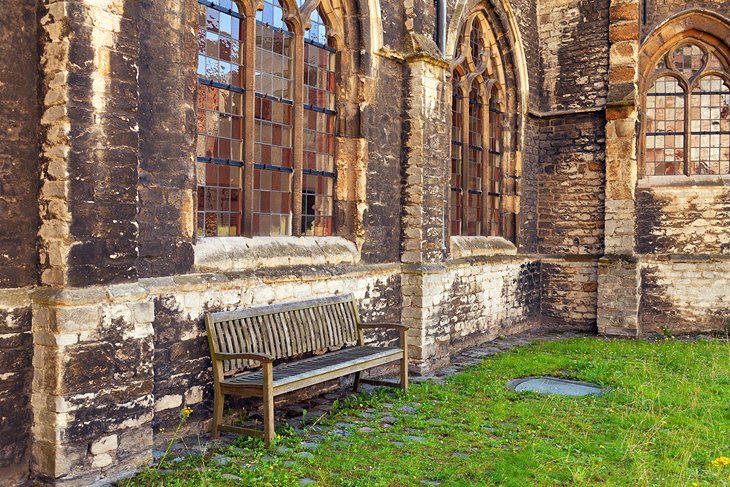
In the east part of the city, across the Slachthuisbrug over the Leie Canal, are the ruins of Sint-Baafsabdij, an abbey founded in 630 by St. Amandus and rebuilt after being destroyed by the Normans in the 10th century.
A gallery of the late Gothic cloisters, the octagonal lavatorium, and parts of the chapter house and the refectory still remain from the original abbey.
The refectory, with its beautiful 12th-century Romanesque frescoes, is home to the Museum voor Stenen Voorwerpen (Museum for Stone Cutting and Sculpture) and contains an extraordinary collection of medieval tombstones, Ghent sculpture, and architectural artefacts from the 12th to the 18th centuries as well as mosaics.
Address: Godshuizenlaan 2, Ghent
Museum voor Volkskunde
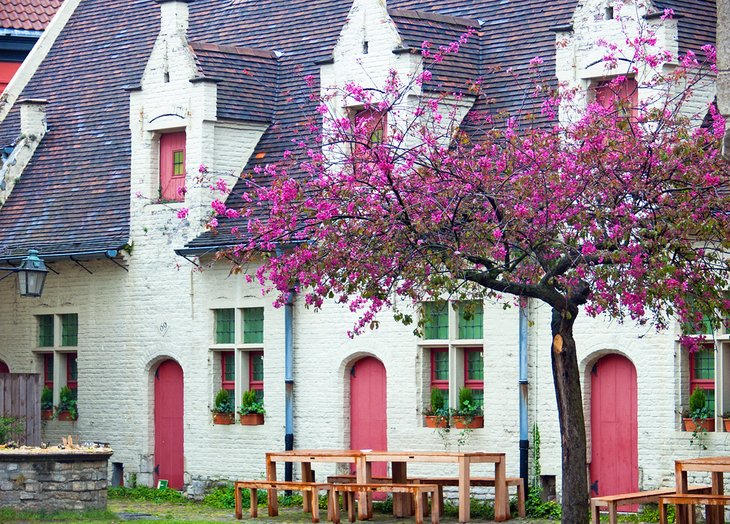
Immaculately restored in 1962, this former children's hospital - founded in 1363 - is one of Belgium's last remaining Godshuizen. These houses were founded by well-off families for the needy.
In a picturesque courtyard are 18 typical Flemish cottages, all interconnected and now housing the extremely comprehensive Museum voor Volkskunde, which with its notable collection of equipment, documents, and everyday objects provides a vivid picture of Flemish folk life around 1900.
Of particular interest are the restored workshops and living rooms, a dining room, a barber's shop, a cobbler's workshop, an apothecary's shop, a confectioner's bakery, and a candlestick maker's workshop.
Address: Kraanlei 65, Ghent
More Related Articles on PlanetWare.com
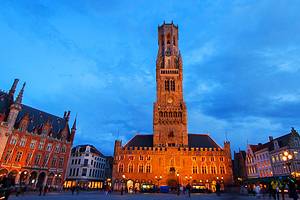
Medieval Bruges: Tourists who appreciate Ghent's architecture will fall in love with the medieval town of Bruges, a picture-perfect combination of historic buildings and canals. The romantic ambience is everywhere, with narrow streets and flower-lined waterways perfect for a long stroll. Those visiting the city have plenty of day trip options from Bruges, including the nearby beach towns like the ritzy Knokke-Heist resort area or family-friendly Blankenberge, or the nature-lover's Zwin Nature Park.
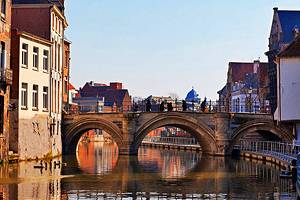
Flanders' Cultural Center: The center of Dutch-speaking Belgium is Antwerp, a northern city that is well-known for its port, historic architecture, and arts community. Antwerp is home to several excellent art museums, as well as some beautiful churches, most notably the Gothic Cathedral of Our Lady. Those staying in the city will have plenty to do, but tourists who want to explore can enjoy a good range of day trips from Antwerp to nearby destinations like medieval Mechelen, Fort Breendonk in Willebrook, Aalst, and picturesque Dendermonde.