Attractions & Things to Do in Basel
With more than 40 museums to choose from and an atmospheric old town to explore, you won't have any trouble finding things to do in Basel. Few cities in Europe can match Switzerland's second-largest city for its concentration of cultural attractions and things to do.
Moreover, many of these are housed in buildings that are themselves works of art, designed by great architects that include Renzo Piano, Frank O. Gehry, and Mario Botta. Basel's university became a center for humanism in the 16th century and continued to be a magnet for distinguished scholars and teachers, which may account for its remarkable cultural heritage today.
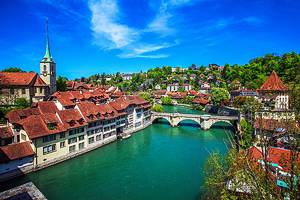
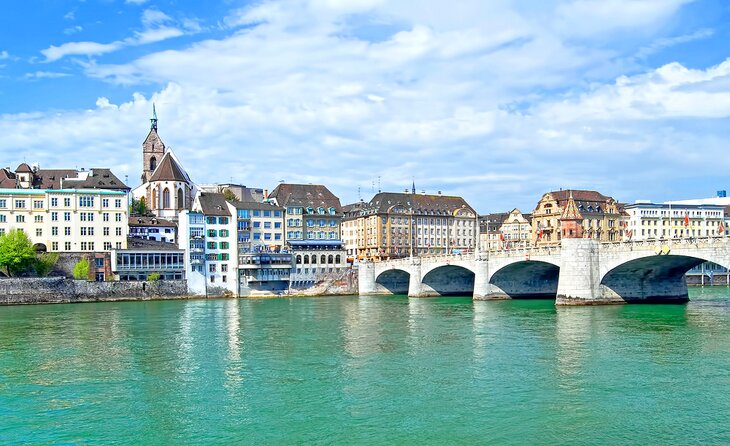
The two sides of Basel are joined by six bridges over the Rhine, as it makes a sharp turn before flowing north to become the German-French border.
It's the higher left bank where you'll find the old town and cultural attractions. The river itself is a good vantage point for sightseeing, and you can take short cruises or cross the river on the quirky little cable-operated ferry.
Whether you enjoy sightseeing or immersing yourself in art, you can be sure of finding the best places to visit using this list of the top tourist attractions and things to do in Basel.
Admire Art in the Kunstmuseum Basel (Museum of Art)
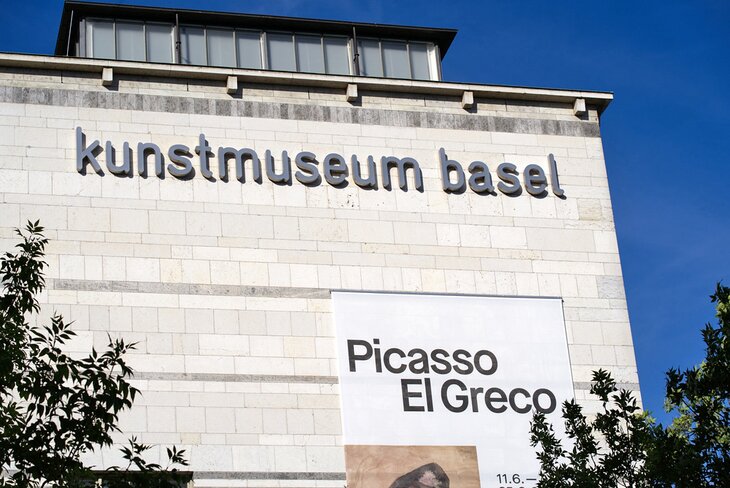
The Kunstmuseum, enhanced by the added exhibition space of a 2015 wing, is considered the finest collection of paintings in Switzerland, representing both old masters and modern art. On the first floor are the old masters and a collection of French and Dutch paintings.
Outstanding among these are the 15th-century Heilsspiegelaltar (Mirror of Salvation Altar) by Konrad Witz, 16th-century portraits by Holbein the Younger, Crucifixion by Mathias Grünewald, and Rembrandt's David with Goliath's Head from 1627. The second floor houses an outstanding collection of 19th- and 20th-century Impressionists, Expressionists, and Surrealists.
You'll find major works by Gauguin, Van Gogh, Corot, Cézanne, Braque, Picasso, Kandinsky, Léger, Chagall, Klee, Dali, Max Ernst, and others, along with later works and special exhibitions.
Address: St. Alban-Graben 16, Basel
Stroll through the Old Town
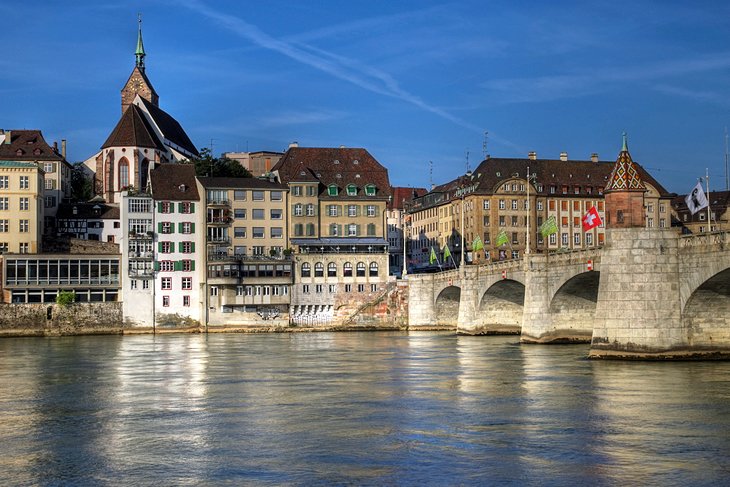
The part of Basel that lies roughly between the river and the old city gate at Spalentor is not large but quite atmospheric with its stone streets, medieval churches, beautifully maintained old homes, and brightly painted fountains. But leave it to Basel to introduce a thoroughly modern and whimsical fountain by Swiss sculptor Jean Tinguely in the midst of the stately historic houses.
From Marktplatz, wander west along Spalenberg with detours into some of the narrow side streets, such as Leonhardsberg and Spalenberg, Heuberg. This was the old artisans' neighborhood. Or wander along Freiestrasse, which begins with the Renaissance Geltenzunfthaus, from 1578. At number 25 is the guild-house of the locksmiths dating from 1488 and decorated in Baroque style in 1733.
Look for more wall paintings at the guild-house of the Hausgenossen at 34. In the little Fischmarkt, you'll find a reproduction of a Gothic fountain whose original you can see in the historical museum.
Take the Kids to the Zoologischer Garten (Zoo)
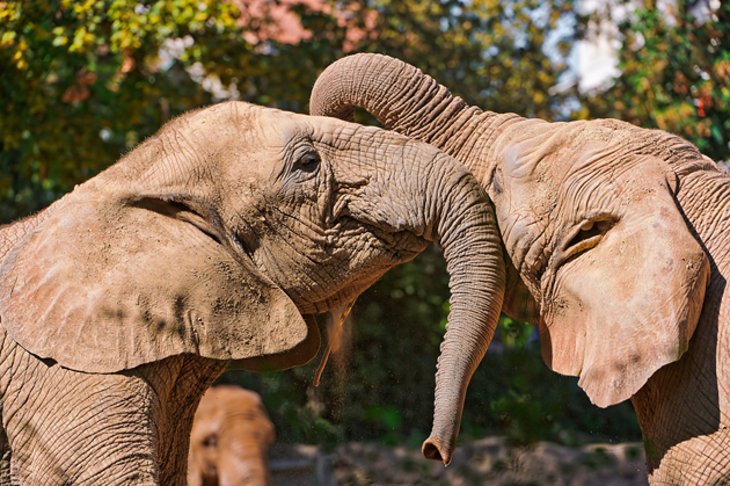
Switzerland's oldest and largest zoo, Basel Zoo is affectionately known as the Zolli by locals, and it is one of the most visited tourist attractions in Switzerland. It has been named one of the fifteen best zoos in the world.
Founded in 1874 with 510 European animals, today the zoo is known more for exotic species. With predators, primates, mammals, reptiles, birds, and aquatic life, the population ranges from seahorses to elephants, the latter now enjoying an elephant enclosure added in 2015 with wallowing pools, showers, and a savannah-like environment.
The lion enclosure and monkey house are highlights, along with the penguins in the vivarium, which also houses fish and reptiles. The aviary houses both indigenous and exotic birds, as well as birds of prey. The zoo has been particularly successful in breeding rhinoceros and cheetahs. The realistic habitats and variety of exotic animals make this one of the favorite places to visit with children in Basel.
Address: Binningerstrasse 40, Basel
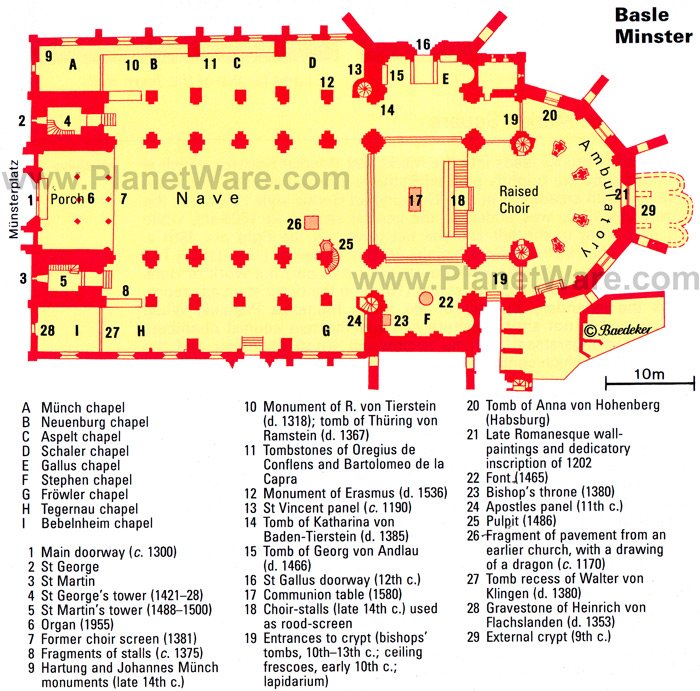
Visit Basler Münster (Basel Minster)
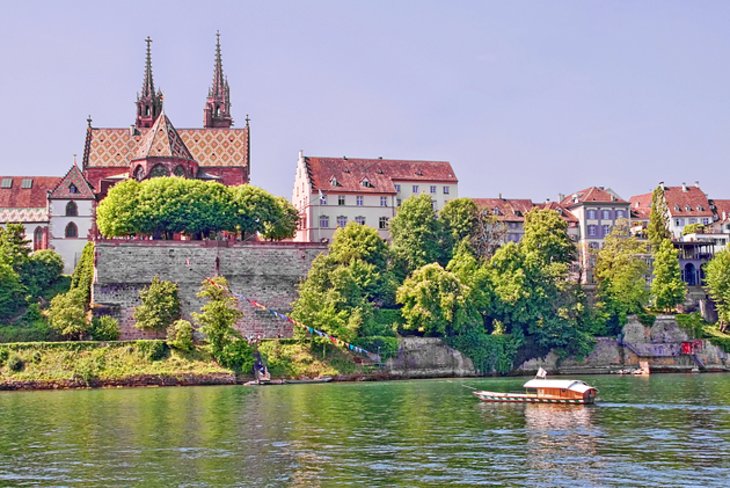
Set atop the highest point on Münsterhügel (Minster Hill), Basel's Minster is easily spotted by its prominent spires and brightly patterned roof tiles. The spacious Münsterplatz, formerly the site of a Roman fort, is an elegant 18th-century square. Built of red sandstone from the Vosges mountains of France between the ninth and 13th centuries, the minster was rebuilt in Gothic style after an earthquake in 1356.
But some of the original church remains. The high altar and much of the furnishings were destroyed by Protestants in 1529, but the greatest treasures were hidden in the sacristy vaulting and survived; you can see some in the historical museum.
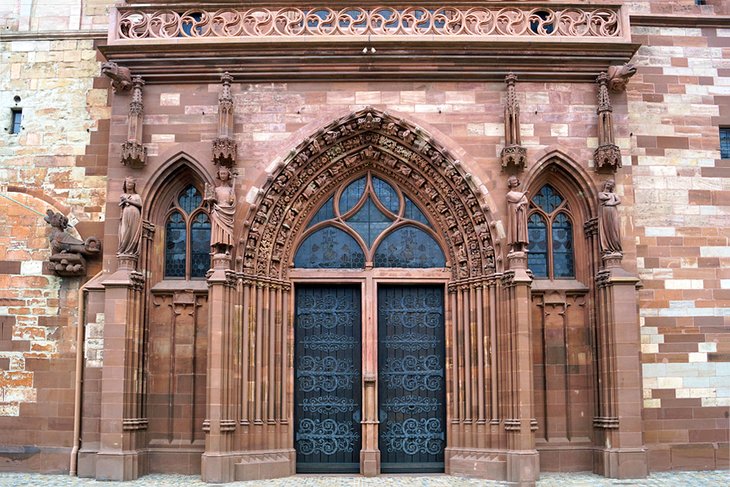
Be sure to see the St. Gallus doorway in the north transept, with its many 12th-century Romanesque stone carvings - one of the oldest figured doorways in German-speaking Europe. The tympanum above the doorway shows the Wise and Foolish Virgins, with Christ enthroned above flanked by Peter and Paul.
A large rose window lies above the doorway. Inside, the lower part of the choir is Romanesque; be sure to notice the capitals carved with rich foliage and animals and the Romanesque capitals in the nave and ambulatory. In front of the pulpit, under glass, is a piece of the Late Romanesque pavement from the 12th century.
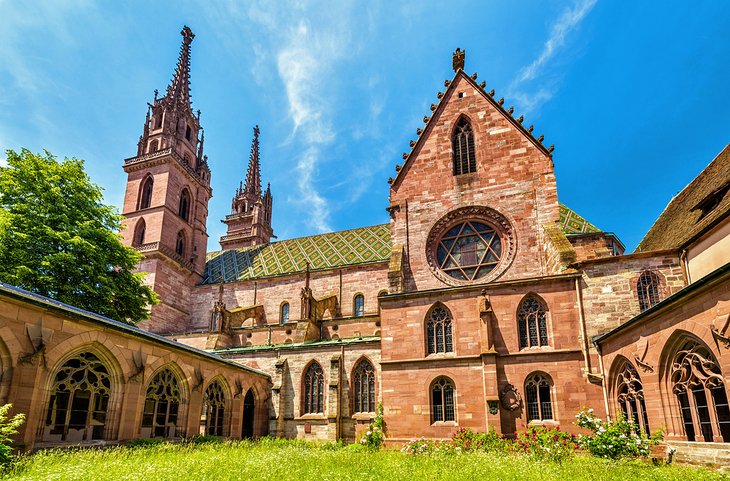
From inside the church, you can access the stairs to the top of the south tower. The crypt, which can be entered from beside the choir, contains the tombs of 10th- to 13th-century bishops and an excellent Romanesque frieze on the piers; ceiling frescoes depict scenes from the life of the Virgin and other New Testament themes. The beautiful 15th-century double cloister, entered from Rittergasse, contains monuments ranging over five centuries.
Address: Münsterplatz, Basel
Museum Tinguely
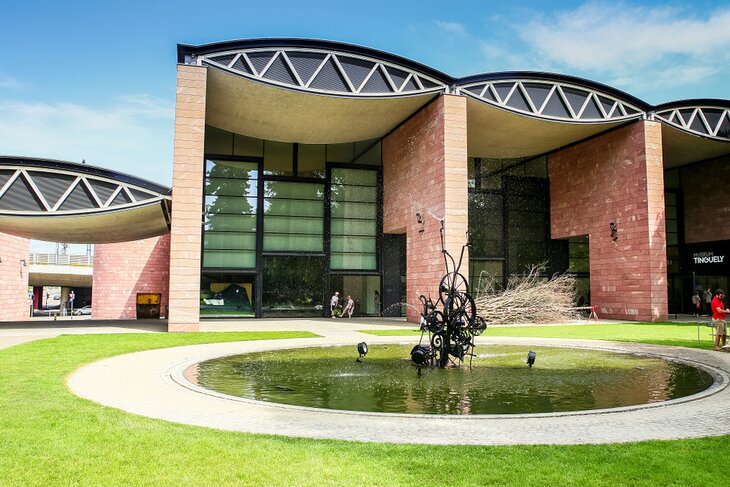
The Museum Tinguely contains the largest collection of this influential Swiss artist's work thanks to a generous donation by his widow Niki de Saint Phalle, as well as contributions by other collectors. The collection includes Tinguely's sculptures and drawings, as well as an extensive library of documents and photographs.
The museum also hosts visiting installations that change every three months, focusing on artists who inspired Tinguely, as well as the work of contemporary artists. The building housing the collection was designed by famed architect Mario Botta.
Address: Paul Sacher-Anlage 2, 4002 Basel
Learn about Printing at Papiermühle (Paper Mill Museum)
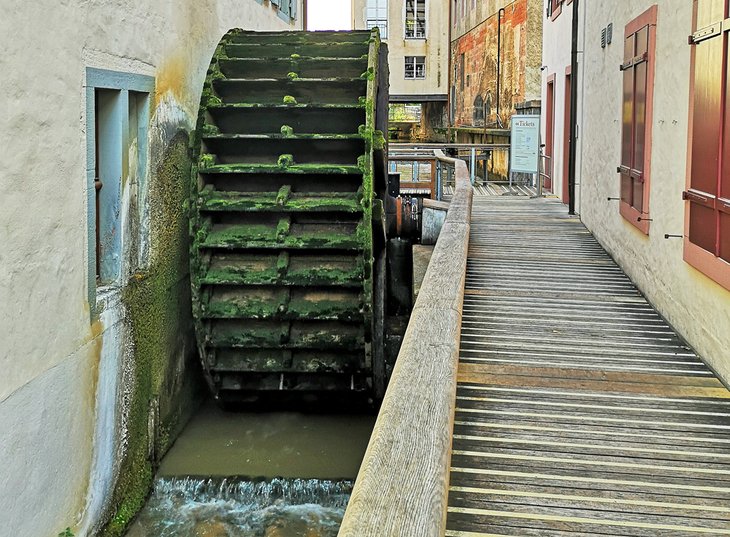
Set on a medieval canal with an operating waterwheel, an old paper mill has been turned into a museum of writing, printing, and paper, showing the printing and papermaking processes with actual working machinery.
As you tour the museum, you can watch the laborious production of handmade paper, explore the evolution of printing from before Gutenberg's press through the demise of lead type in the 1980s, and see how books are bound. Displays follow the development of writing from primitive pictographs through modern typography.
Address: St. Alban-Tal 37, Basel
Rathaus (Town Hall) and Marktplatz
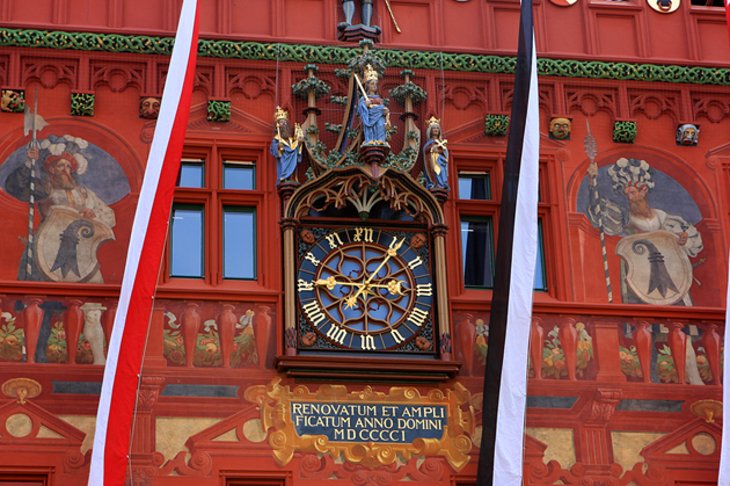
The focal point of the Old Town is Marktplatz, where you'll still find the colorful daily market selling local produce, flowers, and food specialties. Dominating the square is the bright red Basel Rathaus, with its colorful painted facade. The arcaded main building is in Late Burgundian Gothic style dating from 1504 to 1521; the new wing to the left and the tall tower on the right are 19th-century additions.
The clock dates from the building's origins, the work of Master Wilhelms from the early 1500s. Be sure to step into the beautiful courtyard to see the wall paintings, restored from 1608-11 originals. The statue, from 1574, on the outer staircase represents the legendary founder of the town, Munatius Plancus. You can also see the two council chambers, the Regierungsratssaal, with its impressive wood paneling, and the Grossratssaal, decorated by 15 coats-of-arms of the Swiss cantons.
Address: Marktpl. 9, 4001 Basel, Switzerland
Smile at the Tinguely Fountain
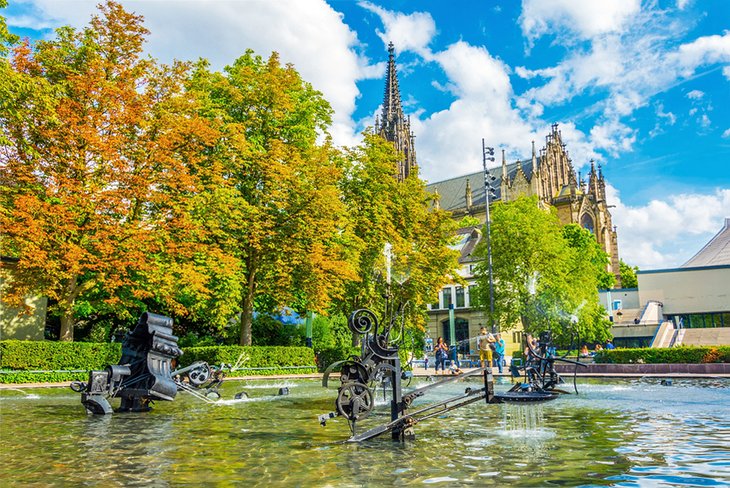
Completed in 1977, the playful fountain designed by the Swiss artist Jean Tinguely quickly became a Basel landmark. Placed inside a large shallow pool, 10 large figures made of scrap metal seem to be playing with each other in the water as they move and spray jets of water into the air.
Powered by low-voltage current, these playful and ingenious water-spouting mechanical figures are built from pieces of metal equipment from the old theater that once stood on this spot. In the winter, the fountain becomes a series of fantastic ice sculptures as the water freezes around the figures. You can see more of his unusual and imaginative sculpture in Basel at the Jean Tinguely Museum.
Address: Theaterstrasse, Basel
Take a Break at Tierpark Lange Erlen
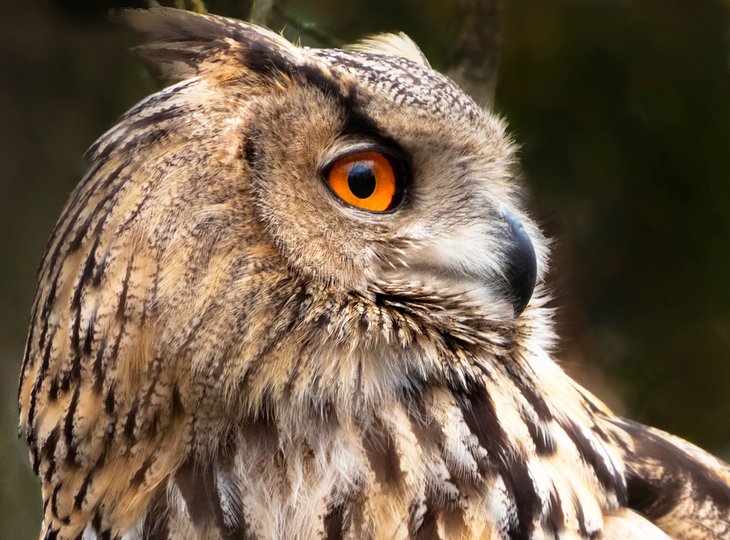
When you need a break from Basel's abundance of museums and historic attractions, or if you are looking for things to do with children, take a tram or bike to the Tierpark, an expanse of green parkland alongside the river. Here, you'll meet a variety of local wildlife — deer, lynx, wild boar and others — roaming free in their natural habitat, discreetly fenced from the public.
Swans and ducks swim as herons fish in the ponds, and colorful peacocks roam about the grounds. More birds inhabit the spacious aviary, and an assortment of farm animals are in stables and paddocks. It is a peaceful green space for walking and relaxing, and a good place for children to meet animals in a non-zoo environment. They can also let off energy in the large playground.
Address: Erlenparkweg 110, Basel
Historisches Museum (Historical Museum)
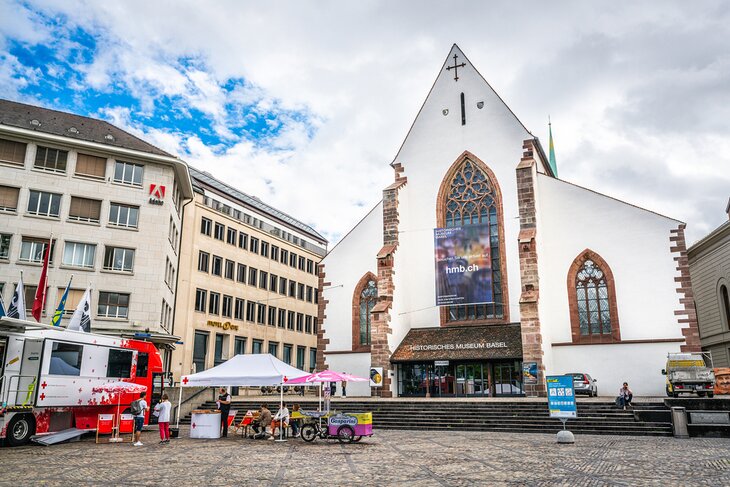
The 14th-century Barfüsserkirche (Church of the Barefoot Friars) was renovated in the 1970s to house the Historical Museum with important collections on local history and culture. It spotlights particularly the city's unique position at the crossroads between Swiss, German, and French cultures.
In the nave of the church are the Late Gothic tapestries and the curious Lällenkönig (Babbling King), a crowned head with a movable tongue and eyes that was the emblem of Gross-Basel in the 17th century. In the aisles are weapons and furnished period rooms, in the choir religious art, and in the crypt is the minster treasury, recovered after being saved from destruction during the Reformation.
Interesting exhibits deal with the importance of silk ribbon manufacture in Basel from the late 18th through the 19th century.
Address: Barfüsserplatz 7, Basel
Be a Kid again at the Spielzeug Welten Museum (Toy Museum)
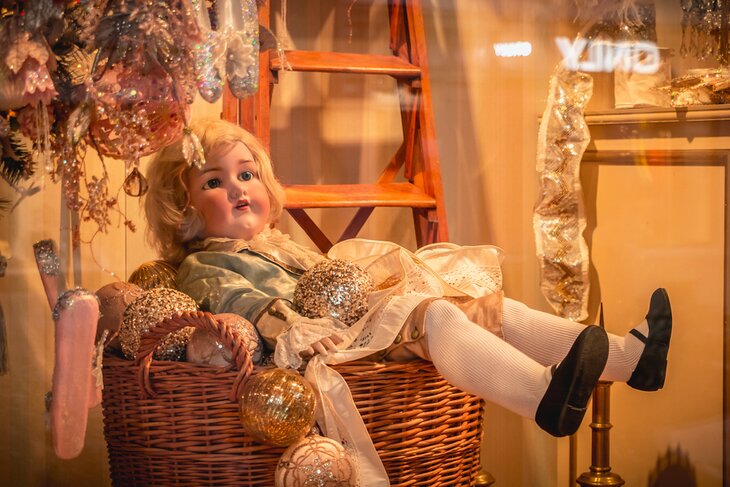
The Spielzeug Welten Museum collection of more than 6,000 toys, including dolls, stuffed animals, dollhouses, shop models, and carousels is not just for children. The dollhouses are exceptional, not only the historical examples but the newly commissioned works of artists who create rooms and shops in miniature.
One section is devoted to the Neapolitan folk art of nativity scenes set in the context of everyday life in early Naples, with figures dressed in infinitely detailed costumes. The museum's collection of 2,500 teddy bears is thought to be the world's largest.
Even if you don't tour the museum, don't miss walking around to look in the windows. Six display-sized windows facing the street are dedicated to changing displays from the collections, based on seasonal and other themes and representing current special exhibitions.
Address: Steinenvorstadt 1, Basel
Tour the Museum für Gegenwartskunst (Museum of Contemporary Art)
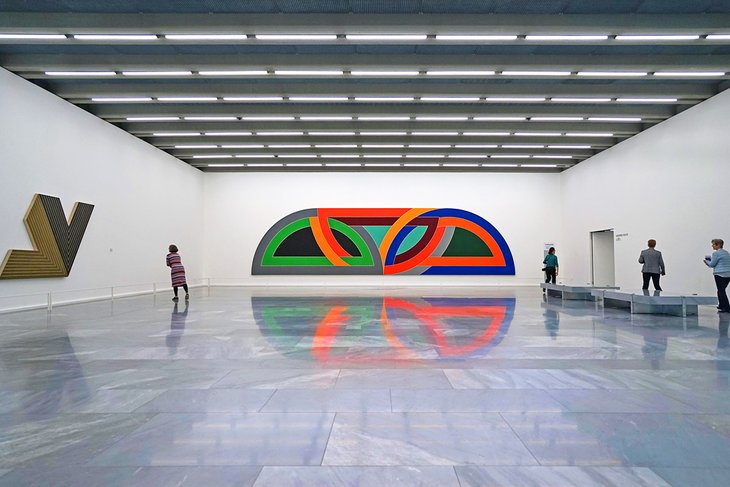
Housed in an old paper mill with modern extensions, Basel's Museum of Contemporary Art highlights art from 1960 to the present. You'll find paintings and sculptures by artists that include Chagall, de Chirico, Dali, Braque, Mondrian, Klee, Giacometti, Moore, and the Swiss sculptor Jean Tinguely.
It was the first public museum in Europe dedicated exclusively to artworks created in the late 20th century. Guided tours in English are available with advance notice and are included in the admission price.
Address: St. Alban-Rheinweg 60, Basel
Antikenmuseum and the Sammlung Ludwig (Museum of Antiquities and the Ludwig Collection)
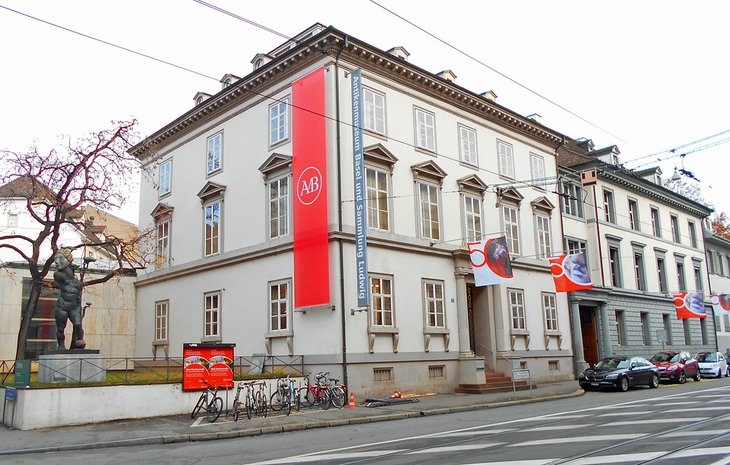
Basel's Museum of Antiquities and the Ludwig collection feature Egyptian, Greek, Italian, Etruscan, and Roman works of art, covering antiquity from about 4000 BC to the 6th century AD. The strongest areas are sculptures and Greek vases, although there are outstanding exhibits of gold jewelry, bronze sculptures, and clay figures.
The museum also operates Skulpturhalle Basel, located near Basel University, which features more than 2,200 plaster casts of Greek and Roman sculptures including a complete set of casts of the Parthenon, part of the Acropolis in Athens, as well as scale-size architectural sculptures.
Address: St. Alban Graben 5, Basel
Jüdische Museum (Jewish Museum)
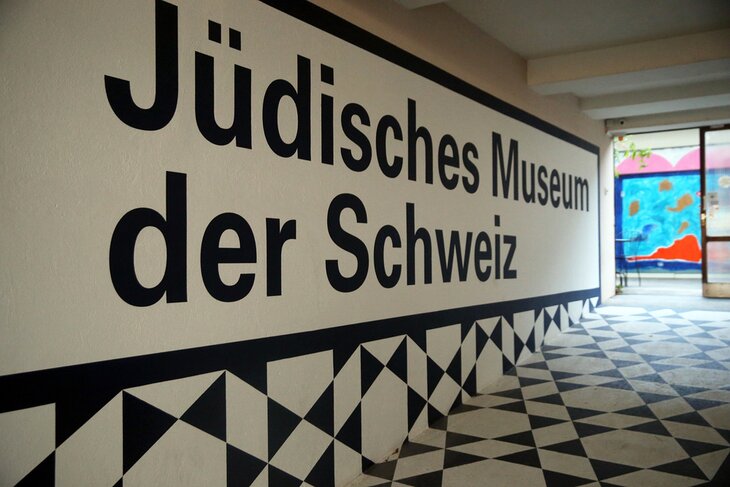
One of central Europe's best collections of Judaica, the Jüdische Museum depicts religious and everyday life as it explores the Jewish history of Basel and its surrounds. In addition to documenting the local history, it introduces visitors to Jewish ceremonies and customs from the broader diaspora through exhibits focused on Jewish Law, the Jewish Year, everyday life, and history.
In the courtyard, medieval gravestones and documents go back as far as the medieval Jewish communities with documents printed in Hebrew by the city's book printers from the 16th through 19th centuries. Significant documents focus on the two World Wars.
Address: Kornhausgasse 8, Basel
Visit the Haus zum Kirschgarten
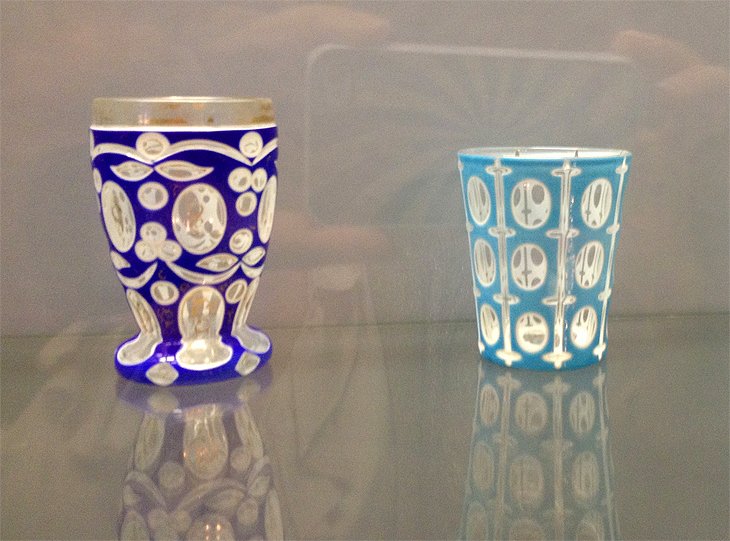
One of the finest of Basel's patrician houses, the Haus zum Kirschgarten was built between 1775 and 1780 in the early Classical style. It was the home and office of a prosperous Basel manufacturer of silk ribbons and is among Switzerland's best museums of domestic life.
Throughout the 25 furnished rooms are displays of the furniture of a wealthy 18th-century commercial family, as well as internationally important collections of decorative arts. The Pauls-Eisenbeiss Foundation's collection of porcelain, a significant watch and clock collection, and major groups of Basel silver and scientific instruments are displayed.
Address: Elisabethenstrasse 27/29, Basel
Spalentor
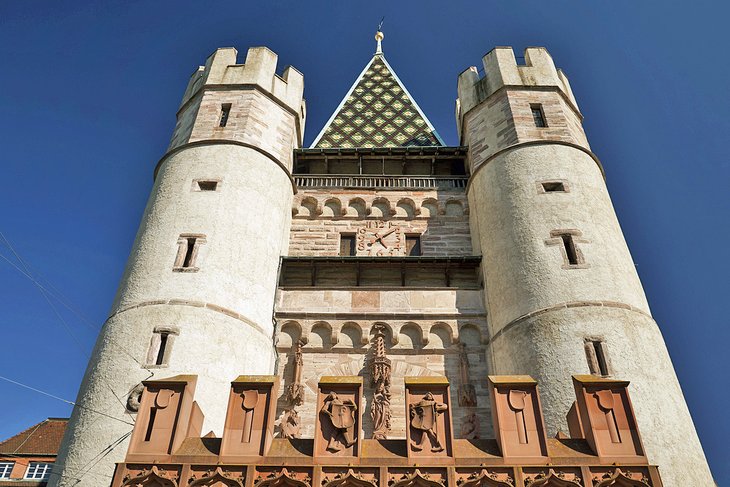
Dating from 1370, the Spalentor is a fortified gate marking the end of the old town. The town gate, once part of the old town walls, has stood alone since their destruction in 1866. Look to the left of the gate to find an early 19th-century letterbox with the emblem of the Basel pigeon.
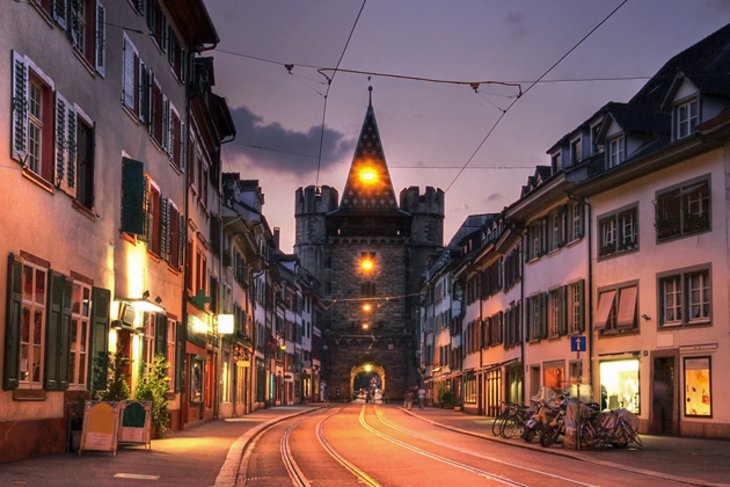
The adjacent Peterskirche (St. Peter's Church) was rebuilt in the 15th century, but the vaulting in the choir is from an earlier 14th-century building. There are frescoes in the Eberler chapel and the nave. Adjacent is the university, with a botanical garden that was founded in the 16th century, one of the oldest in the world.
Fondation Beyeler
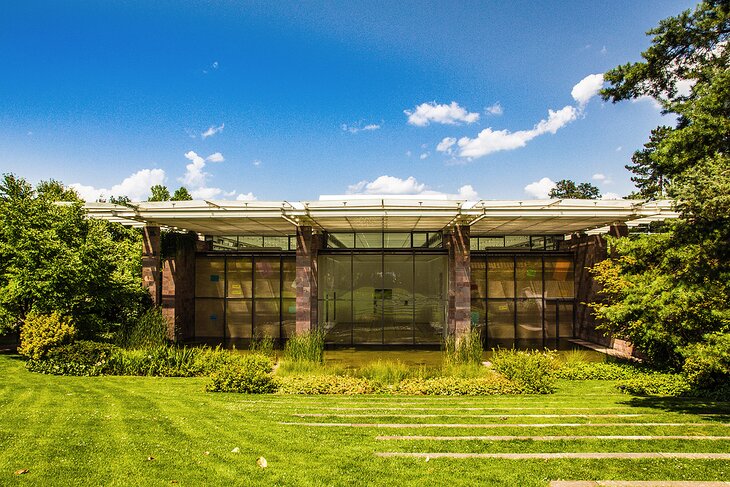
Collectors Ernst and Hildy Beyeler opened the Fondation Beyeler in 1997 to allow the public to enjoy their extensive personal collection of Classic Modernist art. A staggering number of works by both Pablo Picasso and Henri Matisse are on display, including drawings, paintings, and sculpture.
Also displayed are multiple sculptures by Alberto Giacometti and Max Ernst, and a variety of works by celebrated artists, including Georges Seurat, Marc Chagall, Marlene Dumas, Paul Klee, and Vincent Van Gogh. The collection also includes pieces from the Beyelers' world travels to Africa, Oceania, and Alaska.
The museum is set in a lovely park, housed in a building designed by architect Renzo Piano.
Address: Baselstrasse 101, Basel
Cross the Border to Vitra Design Museum
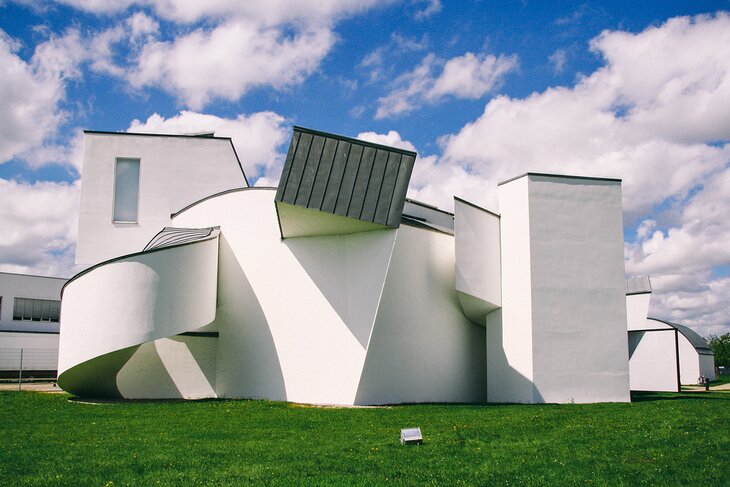
Because Basel lies right on the international border, some of its suburbs spread over into Germany and France. So it is with the Vitra Design Museum, which although considered a Basel institution, is a five-minute train ride just across the German border from central Basel.
By any measure, it is one of the world's most important museums of design. The building itself is a landmark, designed by Canadian architect Frank O. Gehry. Inside are changing exhibitions - two or three each year - examining current and historical design trends and themes. The displays are stunning and provocative, often inviting interaction.
Add some outdoor exercise to your gallery hopping by hiring an electric bicycle at the central train station to follow the Rehberger-Weg bike path across the border to the Vita campus.
Address: Charles-Eames-Str. 2, Weil am Rhein, Germany
Take a Day Trip to Solothurn
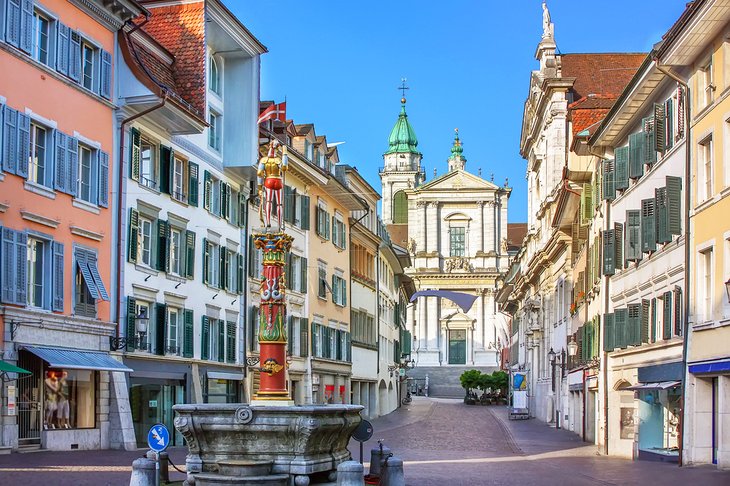
Lying astride the river Aare, about 67 kilometers from Basel, Solothurn is an elegant town of Renaissance and Baroque buildings that indicate its splendor in the 16th, 17th, and 18th centuries as the residence of the French ambassadors to the Swiss Confederation. Earlier, the town of Salodurum ranked with Trier in Germany as one of the oldest Roman settlements north of the Alps.
Marktplatz is a beautiful square with a 12th-century clock tower, the Zeitglockenturm, that has mechanical figures from 1545. The Mauritius fountain is decorated with a figure by the master Hans Gieng of Fribourg. You'll see several more fountains with colorfully painted figures as you stroll down picturesque old Hauptgasse.
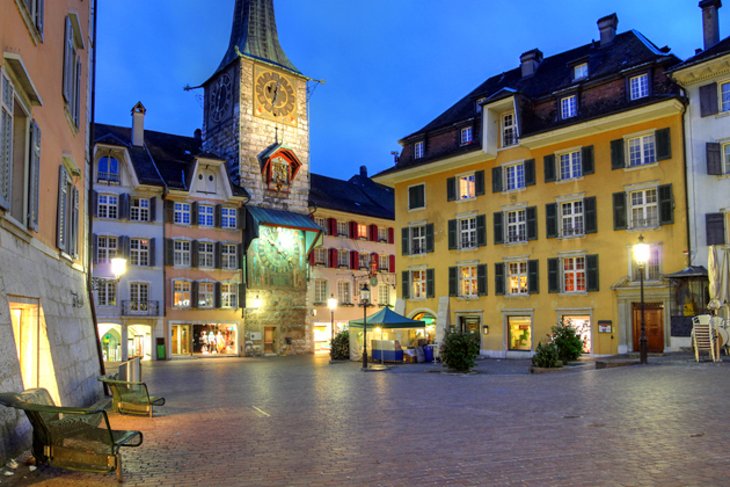
Stop there at the Jesuit church to see its interior, decorated with stucco work by 17th-century artists from the Swiss Ticino region. In the cloister is a collection of stones with Roman inscriptions. Just inside the 1508 Baseltor gate stands the Italian Baroque Cathedral of St. Ursen, built from 1763 to 1773.
Its treasury is especially rich in goldsmiths' work and textiles from the 15th to 19th centuries. In the hills outside of Solothurn, be sure to visit Schloss Waldegg - Waldegg Castle. The palace is set among lovely Baroque gardens and its beautiful interior gives you an idea of the splendor in which the French ambassadors lived.
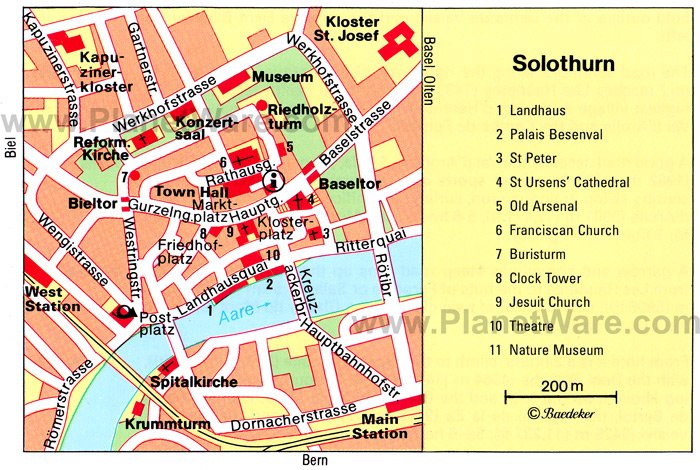
Map of Attractions & Things to Do in Basel
Basel - Climate Chart
| Average minimum and maximum temperatures for Basel, Switzerland in °C | |||||||||||
| J | F | M | A | M | J | J | A | S | O | N | D |
| 4 -2 | 6 -2 | 11 1 | 16 4 | 20 8 | 23 12 | 26 13 | 25 13 | 21 11 | 15 6 | 8 2 | 4 -2 |
| PlanetWare.com | |||||||||||
| Average monthly precipitation totals for Basel, Switzerland in mm. | |||||||||||
| 41 | 41 | 53 | 66 | 81 | 99 | 89 | 86 | 79 | 74 | 58 | 51 |
| Average minimum and maximum temperatures for Basel, Switzerland in °F | |||||||||||
| J | F | M | A | M | J | J | A | S | O | N | D |
| 39 28 | 43 29 | 52 34 | 60 40 | 68 47 | 74 53 | 78 56 | 77 56 | 70 51 | 59 43 | 47 36 | 39 29 |
| PlanetWare.com | |||||||||||
| Average monthly precipitation totals for Basel, Switzerland in inches. | |||||||||||
| 1.6 | 1.6 | 2.1 | 2.6 | 3.2 | 3.9 | 3.5 | 3.4 | 3.1 | 2.9 | 2.3 | 2.0 |