11 Top-Rated Attractions & Things to Do in Ávila
Inside the perfectly preserved walls of Ávila, visitors are transported to a world where time seems to have stood still. The ancient ramparts guard many historic attractions: Romanesque churches, medieval convents, and Renaissance palaces. The wealth of exceptional monuments and the old-world ambience make UNESCO-listed Ávila one of the most interesting cities in Spain.
Throughout the early medieval period, Ávila alternated between Moorish and Christian rule until the Reconquest by Alfonso VI in 1085. Many noble families settled here beginning in the 11th century. With its numerous aristocratic palaces, the town became known as Ávila de los Caballeros ("Ávila of the Nobles"). However Ávila's real heyday was in the 16th century, when the mystical following of Santa Teresa de Jesús made it an important pilgrimage destination.
Equally inspiring is the natural setting, as the town stands on a high plateau sheltered by the rolling hills of the Sierra Gredos Mountains.
Learn about the best places to visit in this fascinating historic city with our list of the top attractions and things to do in Ávila.
See also: Where to Stay in Avila
- 1. Murallas (Town Walls)
- 2. Basilica de San Vicente
- 3. Convento de Santa Teresa de Jesús
- 4. Real Monasterio de Santo Tomás
- 5. Catedral de San Salvador
- 6. Mirador de los Cuatro Postes (Viewpoint of the Four Posts)
- 7. Museo de Ávila
- 8. People-Watching in Plaza Mayor
- 9. Barrio Judio (Jewish Quarter)
- 10. Capilla de Mosén Rubí de Bracamonte
- 11. Monasterio Nuestra Señora de Gracia
- 12. Las Gordillas
- Where to Stay in Avila for Sightseeing
1. Murallas (Town Walls)
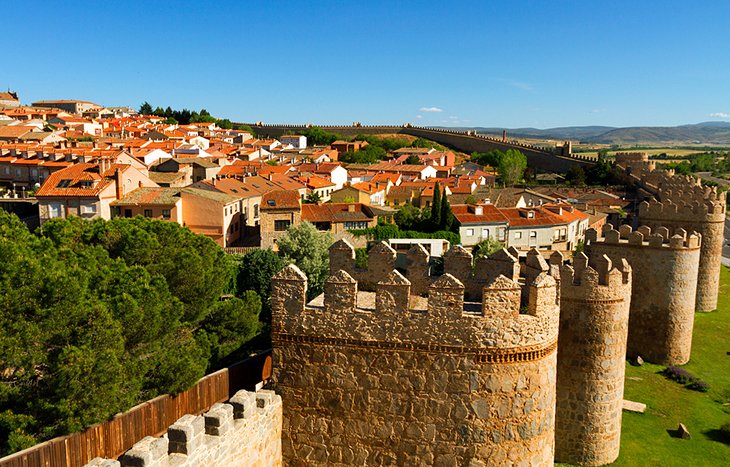
The ancient walls, which still enclose the Ciudad Vieja (Old Town) of Ávila, are the best preserved in Spain. After the Christian Reconquest of Ávila, the ramparts became an important line of defense against the Moors. Raimundo de Borgoña, son-in-law of Alfonso VI, built the massive circuit of protective walls between 1090 and 1099.
With a rectangular shape following the circumference of the town, the circuit extends 2,557 meters. The imposing stone wall stands at an average height of 12 meters, along with crenellated towers and round turrets positioned every 20 meters for guards to watch for coming invaders.
Nine entrance gates provided access to the city. The most spectacular gates are the Puerta de San Vicente and the Puerta del Alcázar, which incorporate repurposed Roman-era stones. Between these two gates is the apse of the Cathedral. Known as the Ciborro, the cathedral's tower forms part of the town's defenses.
Another interesting feature of the wall sits on the north side of the town next to the Puerta del Carmen, a slender tower topped by storks' nests (common all over the Castile region). Visitors can begin a self-guided walking tour of the wall at the Puerta del Carmen gate by taking the steps leading up to the walking path.
2. Basilica de San Vicente
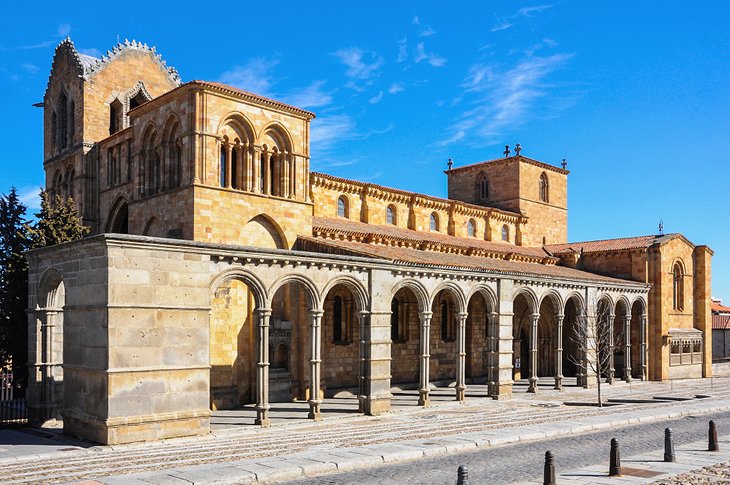
Outside the town walls beyond the Puerta de San Vicente, the Basilica of San Vicente stands on the spot where Saint Vincent is believed to have been martyred in AD 300. Much of the church was built in the early 12th century, including part of the nave, the apses, and transepts; the rest of the building was completed in the 14th century.
The entrance is through a grand Gothic doorway framed by two towers. Within these are the Chapel of the Orejones, which is home to an inscription from 1321, and its twin, Chapel of the Palomeques; access to the towers above is just inside the second entry.
Various architectural styles find expression throughout the building. The basilica has a Baroque altar and a nave that blends Romanesque and Gothic elements, with a particularly impressive Gothic cimborri (cupola), which dates from the mid 13th century.
Tourists may visit the Basilica of San Vincente to admire its splendid interior. The church is open to the public every day for an admission fee. Mass is celebrated here on Sunday mornings, and the church is only open for cultural visits on Sunday afternoons.
Address: Puerta de San Vicente, Avila
3. Convento de Santa Teresa de Jesús
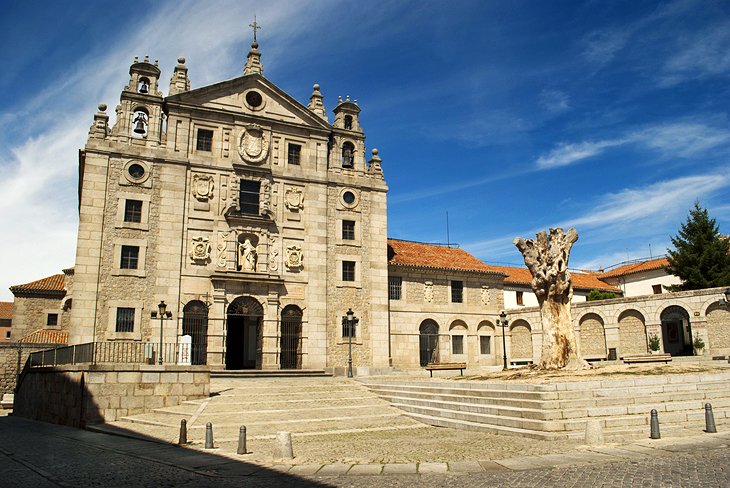
Opposite the Puerta de La Santa, the Convento de Santa Teresa de Jesús stands on the site of Santa Teresa's birthplace. The building was designed by the architect Fray Alonso de San José as a convent for Carmelite nuns. The Convento de Santa Teresa and its church, the Iglesia de Santa Teresa, were inaugurated in 1636.
The Iglesia de Santa Teresa has a relatively plain Baroque facade with a statue of Saint Teresa over the doorway. The main feature of the interior is the Capilla Natal, the room in which Santa Teresa was born, converted into a lavishly decorated Baroque chapel. The altar displays a richly ornamented statue of Saint Teresa by Gregorio Fernández, depicting the moment of her vision of the Cross.
Tourists may visit the Iglesia de Santa Teresa (open daily year-round but closed on Monday in the off season) and the Museo de Santa Teresa (open April through October), a museum that educates visitors about Saint Theresa's life, works, and spiritual message. The convent also has a hostel with simple accommodations decorated in somber Teresian style.
For those seeking a luxurious place to stay nearby, there is an exceptional historic hotel, the Parador de Ávila, on Calle Marqués Canales de Chozas within walking distance of the convent.
Address: 2 Plaza de La Santa, Ávila
4. Real Monasterio de Santo Tomás
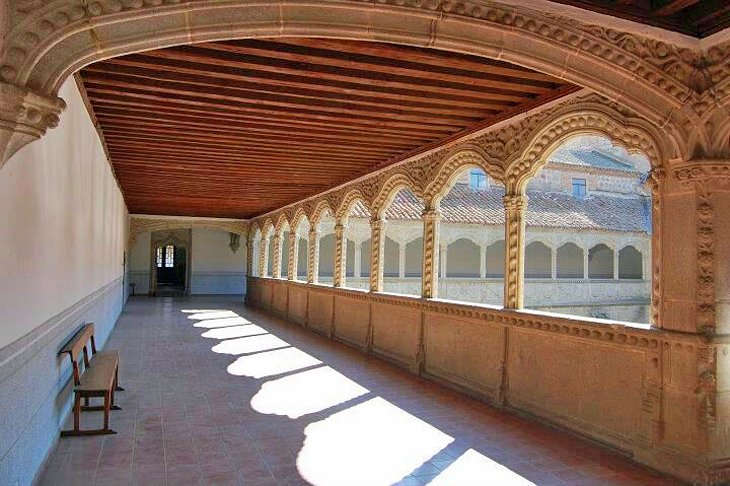
The Dominican monastery of Santo Tomás lies outside the town walls in a peaceful setting. With an endowment from the Catholic Monarchs Ferdinand and Isabella, the Royal Monastery of Saint Thomas was founded in 1483 by María Dávila and Tomás de Torquemada, the first Grand Inquisitor of Spain. The Catholic Monarchs also used the monastery as a summer palace.
The church facade has an austere appearance, and its interior is somber, except for the high altar and choir featuring richly carved stalls. The high altar displays a wonderful retablo, a masterpiece of art by Pedro de Berruguete, illustrating scenes of the life of Saint Thomas Aquinas. Tribunals of the Inquisition once met in the choir, and the Catholic Monarchs attended mass seated in the choir.
Despite its weighty history, the monastery is a place of serenity, with three beautiful cloisters: the simple Claustro del Noviciado (Cloister of the Novices), the peaceful Claustro del Silencio (Cloister of Silence) with steps leading into the choir, and the two-story Claustro de los Reyes (Royal Cloister)
The Real Monasterio de Santo Tomás is open daily year-round. The entrance fee includes an audio guide.
Address: 1 Plaza Granada, Avila
5. Catedral de San Salvador
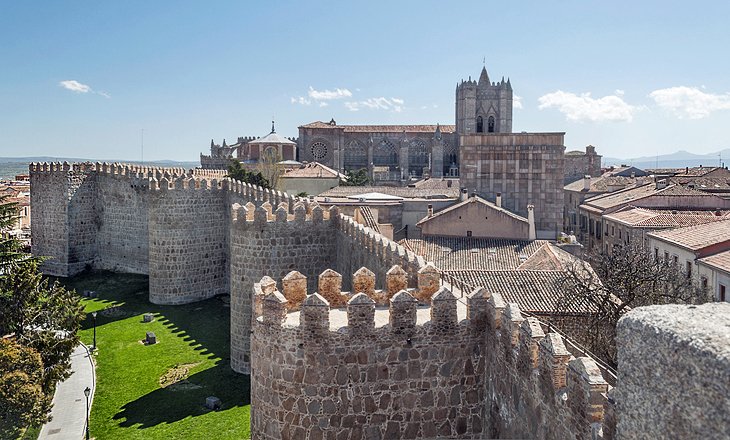
This spectacular monument holds the distinction of being Spain's oldest Gothic cathedral. One of the most visible landmarks in Avila, the cathedral is integrated into the ancient town wall.
Construction of the cathedral was begun in 1091 in Romanesque style, but the building wasn't completed until the 14th century and the dominant architectural style is Gothic. The enormous granite structure has a fortress-like aspect.
One of the cathedral's most notable features includes the figural decoration on the Puerta de los Apóstoles (Apostles' Doorway) on the north facade that dates from the 15th century. A striking feature of the interior is the red and white granite stonework from the early building phase.
Other highlights are the 15th-century stained-glass windows in the transepts and the richly carved choir stalls with reliefs in Plateresque style.
Also of note is the impressive altarpiece by Vasco de la Zarza in the Capilla Mayor (Main Chapel) along with renowned paintings by Pedro Berruguete and Juan de Borgoña.
The Capilla de San Antolín is noteworthy for its magnificent retablo, and a group of alabaster sculptures by Isidro Villoldo and Pedro de Salamanca is displayed in the sacristy.
Another attraction is the Museo de la Catedral, a museum that displays religious art in the former Cardinal's Chapel. The collection includes a noteworthy Romanesque altarpiece and the Portrait of Garcibáñez de Múxica by El Greco.
The cathedral and museum are open daily for cultural visits. Mass is celebrated at the cathedral at 9am Monday through Saturday and at 11am on Sundays.
Address: Plaza Catedral, Avila
6. Mirador de los Cuatro Postes (Viewpoint of the Four Posts)
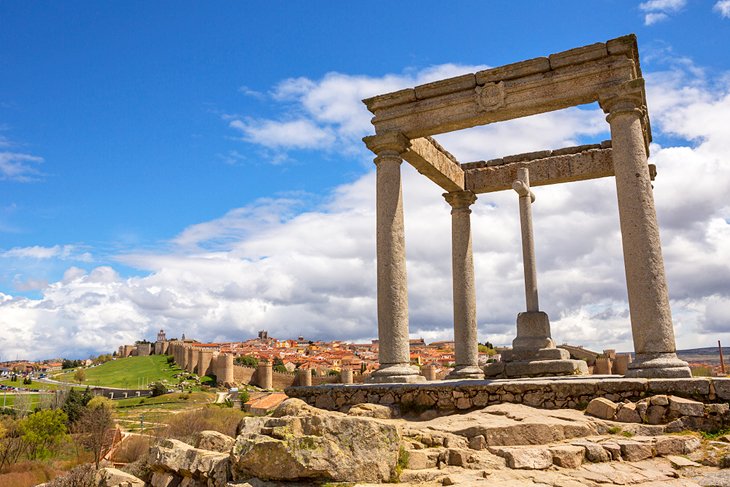
The Cuatro Postes is a monument consisting of four five-meter Doric columns that frame a large cross made of granite. Built in the late 16th century, it was intended as a stopping point for those on a pilgrimage to the hermitage of San Leonardo, significant for being one of the spots where Santa Teresa de Jesus rested.
This popular vantage point gives tourists the opportunity to see Ávila and the entirety of its historic walls from above, as well as panoramic views of the surrounding landscape.
The scenery looks especially magical at night, when the city walls and landmarks are illuminated.
Address: Calle Cuatro Postes, Ávila
7. Museo de Ávila
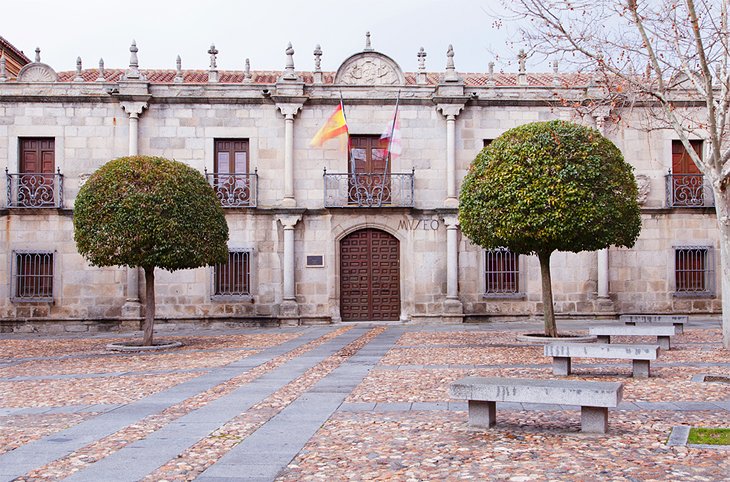
A significant portion of the Museum of Ávila is dedicated to the history of the province of Ávila. These exhibits focus on various historical periods, from the prehistoric Paleolithic, Bronze, and Iron ages to the various stages in recorded history from Romanization through the 19th century. Specimens in these exhibits include those recovered from places all over the province.
Additional exhibit areas focus on the traditional culture of rural Ávila, including arts, crafts, and social aspects, with a stress on those traditions in danger of falling by the wayside. The uppermost section of the museum is dedicated to archaeological finds from within the city walls.
The main collections are housed in a 16th-century Renaissance palace called Deanes House, so named because it once served as the home of the deans of Ávila's cathedral.
Larger items from the collections are kept in the "Visitable Warehouse," located within the 12th-century Church of Santo Tomé el Viejo; museum guests may see these as part of their visit.
The museum is open year-round Tuesday through Sunday.
Address: Plaza Nalvillos, 3, Ávila
8. People-Watching in Plaza Mayor
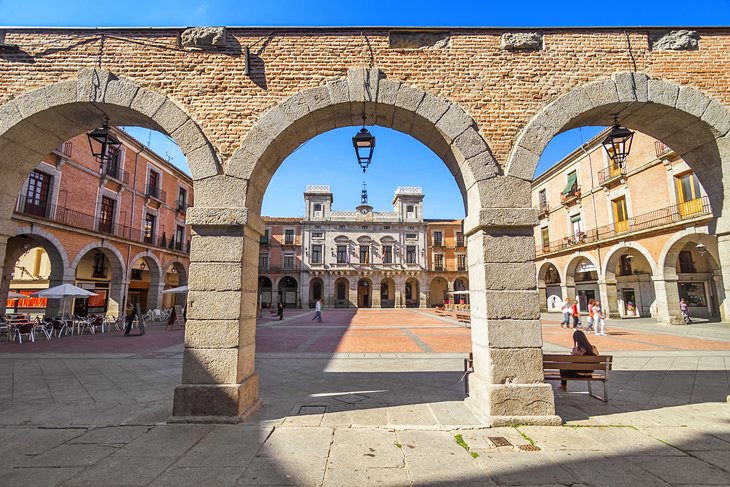
Like most Spanish cities, Ávila has a central plaza that is the natural gathering place for socializing. Ávila's Plaza Mayor, also known as Plaza del Mercado Chico or the Plaza Mercado Grande, may not be the largest of its kind but it is nevertheless a wonderful place to visit.
This lovely plaza has a typical arcaded perimeter lined with plenty of restaurants and shops, and is the ideal place to stop and enjoy an espresso at a café or simply rest on one of the many benches to watch the people come and go.
Tourists and locals alike frequent the plaza, and many of the city's major cultural and social events are held here.
Address: Plaza Mercado Chico, adjacent to Iglesia San Juan Bautista
9. Barrio Judio (Jewish Quarter)
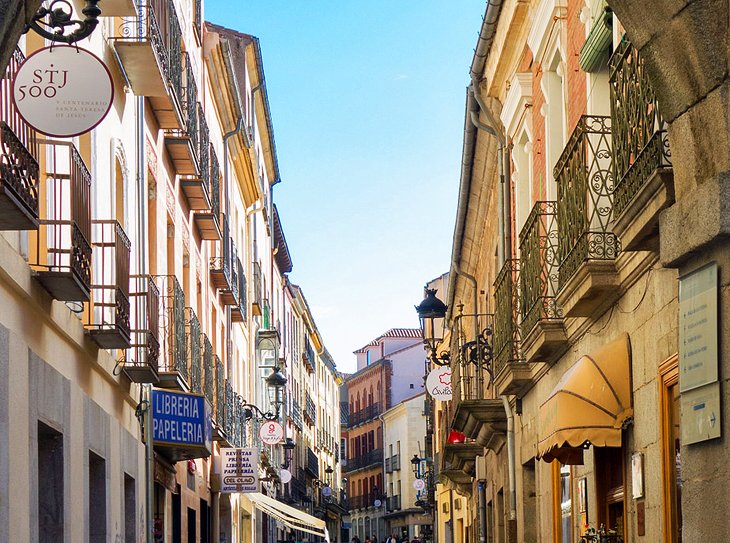
During the Middle Ages, the town of Ávila had a large, flourishing, and influential Jewish community. The Jews lived in two areas within the town walls: in the northeast corner around the Puerta de San Vicente, and in the southwest corner between the Puerta de la Mala Dicha and the Puerta del Puente.
Medieval cobblestone streets and hidden squares hint at the legacy of the past. The former Calle Andrín, renamed the Calle Reyes Católicos, once had many shops and craft workshops run by Jewish owners.
One of the town's synagogues, the Synagogue de Belforad, was on this street where the 16th-century Chapel of Nuestra Señora de las Nieves now stands. South of the chapel is a hostel called La Sinagoga that occupies the former House of the Rabbi and is full of Hebrew references.
The Calle de los Zapatero (Street of the Cobblers) was named after one of the main trades of Jews who lived in Avila. Researchers believe that a house (with a brick arch) on Calle del Pocillo is the site referred to in 15th-century documents as the synagogue "built by Don Simuel" in the old Jewish quarter of Santo Domingo.
On Calle Telares, the Garden of Moshé de León is dedicated to the author of Sefer ha-Zohar (the Book of Splendor).
10. Capilla de Mosén Rubí de Bracamonte
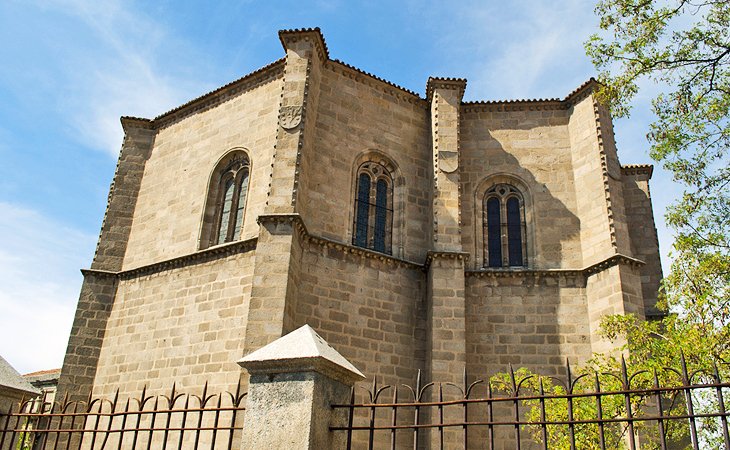
This historic chapel is found in a quiet part of the Old Town, north of the Plaza Mayor, between the Puerta del Carmen and the Puerta de San Vicente. Mosén Rubí, a converted Jew who belonged to an aristocratic family of Ávila, dedicated the chapel in 1516 as a mausoleum for his aunt María Herrera and her husband; the alabaster tomb was created by Vázquez Dávila.
The Chapel of Mosén Rubí now belongs to a Dominican nunnery. The richly decorated interior features beautiful art works and a particular highlight is the Cristo de las Batallas, a 17th-century polychrome figure of Christ.
Some scholars believe that the church was originally constructed in 1492 as a synagogue.
Address: Calle Marqués de Benavites, Ávila
11. Monasterio Nuestra Señora de Gracia
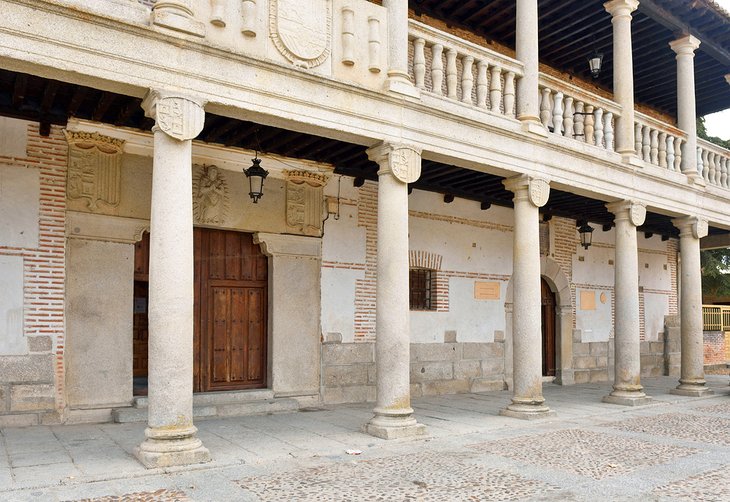
The Monasterio Nuestra Señora de Gracia was founded in the 16th century by Lady María Mencía de San Agustín. This peaceful retreat is found outside of the Ávila city walls in the town of Madrigal de las Altas Torres.
The convent occupies the former Palacio Real de Don Juan II (Royal Palace of Don Juan II), which was also the birthplace of Queen Isabel the Catholic (Casa Natal de Isabel la Católica).
Visitors enter from the Plaza del Cristo, which leads to an exquisite Gothic cloister. Dating to 1406, the two-level arcaded cloister is a serene space that surrounds a small garden and provides access to other areas of the convent, including the church, which was the Capilla Real del Palacio (Royal Chapel of the Palace).
Although the church was built during the Renaissance period, it was designed in Gothic style. The sanctuary was later enhanced with Baroque plasterwork details. The high altar features a Renaissance reredos by Juan Rodríguez and Lucas Giraldo.
Tourists may attend a celebration of Mass at the church during hours of worship (Monday through Saturday at 7pm and Sundays at 11am). The church is also open to the public for guided visits every day except Mondays.
Address: Plaza del Cristo, Madrigal de las Altas Torres
12. Las Gordillas
Another lovely convent outside the Ávila town walls is known simply as Las Gordillas after the farm that used to be located nearby.
Declared as a National Monument, the Renaissance convent was built in the 16th century, although much of the building was renovated later. Constructed from brick, the church has an inspiring sanctuary with only one nave.
The most remarkable feature of the interior is the choir, featuring delicate tiercerons (diagonal rib vaulting). The high chapel displays an exquisite Neo-Baroque reredos.
Address: Calle Jesús del Gran Poder, Ávila
Where to Stay in Avila for Sightseeing
Luxury Hotels:
- As the name suggests, five-star La Casa del Presidente was once the home of Spain's first prime minister. The hotel is near the Ávila city walls, close to the Puerta de Santa Teresa. Guest can enjoy this unique setting, while relaxing in the hotel's tree-shaded garden patio. Hotel amenities include an outdoor swimming pool, gourmet restaurant, and complimentary breakfast.
- An outstanding four-star hotel within the city walls, the Parador de Ávila is housed within a renovated 16th-century palace. The spacious guest rooms feature traditional decor, including tile floors and wooden shutters, and incredible views of the city walls or the beautiful garden. The hotel's gourmet restaurant serves traditional cuisine of the region.
Mid-Range Hotels:
- Housed in a renovated 16th-century palace, the four-star Palacio de los Velada is well situated in the Old Town across from the Catedral de San Salvador. The bright, cheerful guest rooms have original features like exposed stonework. The building is listed as a monument of "historical and cultural interest" because of its stunning Renaissance atrium. The hotel has a casual restaurant, as well as a fine-dining establishment.
- The Hotel II Castillas is a four-star hotel with moderate prices thanks to its location outside the city walls. This modern property offers contemporary-style single, double, and triple guest rooms, as well as family rooms and suites. Amenities include a concierge, restaurant, paid parking, and a breakfast buffet.
Budget Hotels:
- In a refurbished 16th-century house near the city walls, the three-star Hotel Las Leyendas is a 10-minute walk to the cathedral. Modernized guest rooms blend contemporary decor with original exposed beams and stone walls. The hotel's restaurant serves seasonal cuisine in a cozy dining room or on a pleasant outdoor terrace.
- An affordable hotel in a central location, the three-star Hotel Las Moradas has a friendly staff and basic but comfortable rooms. This family-friendly hotel is located just up the street from the cathedral, and there are many good restaurants within a five-minute walk. Amenities include a 24-hour front desk and concierge services.
More Related Articles on PlanetWare.com
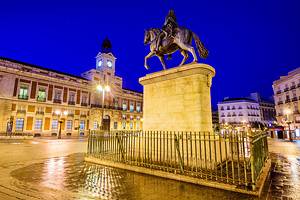
Exploring Madrid: Thanks to its close proximity, Ávila is one of the most popular day trips from Madrid. This city, in contrast to the quieter ones that surround it, is a bustling metropolis that offers something for everyone. Among Madrid's top attractions are cultural institutions like the Prado Museum, parks and beautiful public spaces like Buen Retiro Park and its Crystal Palace, and plenty of historic landmarks like the impressive Royal Palace.
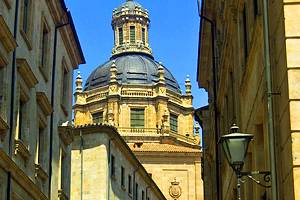
Salamanca & Segovia: Those who would like to explore some of the nearby smaller cities will enjoy Salamanca, a university town that has earned a place on the UNSECO World Heritage list for its beautifully preserved historic buildings and streets that make the entire town feel like a museum. Also within a short drive from Ávila and perfect for a day trip is Segovia, a romantic walled city perched on a hilltop. Segovia is home to many Roman ruins, including a massive aqueduct from the first century CE, as well as a fairytale castle.