

America's Longest Hiking Trail Loop Is A Scenic 6,800+ Mile Journey Full Of Outdoor Adventure
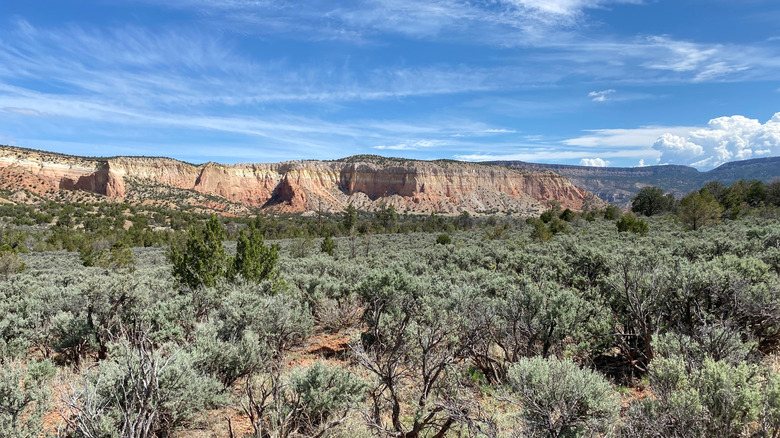
The great American West is known for its incredible scenery. Having over two dozen national parks spread across 11 states (excluding Alaska and Hawaii), the region makes for an incredible road trip adventure. However, travelers keen to truly explore the vast open spaces — including deep forests, wilderness areas, and challenging deserts — as Native Americans and pioneers did centuries ago can trek the Great Western Loop, a challenging trail that captures the pioneering spirit of the West one step at a time.
The concept of the 6,875-mile Great Western Loop, thought to be the longest circular trail in the country, first came about in 2006 by two thru-hikers, Andrew Skurka and Ryan Jordan. Per Skurka's website, he and Jordan were talking about one of the last remaining hikes that had not been attempted in modern history. They traced a massive loop that links two major 2,400-mile-long trails out west (the Pacific Crest Trail and the Continental Divide Trail) with other major regional trails (the Arizona Trail, Grand Enchantment Trail, and the Pacific Northwest Trail). The trail passes through a dozen national parks, including Yellowstone, Joshua Tree, and hiking paradise Glacier National Park in Montana, to name a few.
In recent history, only a handful of hikers are known to have completed the hike. Skurka completed the Great Western Loop first, finishing the entire route in 208 days and averaging about 33 miles per day. Currently, the record holder for the fastest time on the trail is Nick "Chezwick" Gagnon, who reportedly hiked the entire trail in 197 days, averaging over 40 miles per day in his last two weeks, according to his notes. While the hike (and the pace) may sound absurd, there was a genuine motivation for his trek: Gagnon hiked the trail to raise funds and awareness for communities without access to water and the growing water shortage in the western U.S.
The incredible, nearly 7,000-mile route
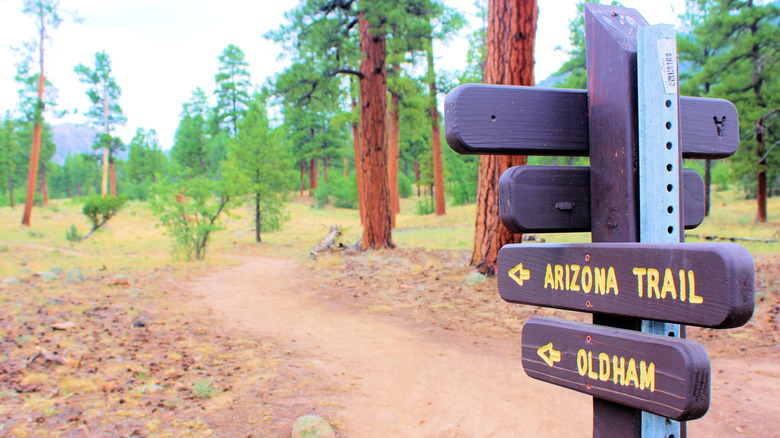
Unlike the Appalachian Trail or other well-trodden treks, the Great Western Loop has no defined route connecting the major trails. Starting from northern Washington, the route follows the Pacific Crest Trail through the Cascades and Sierras before reaching the barren deserts surrounding Joshua Tree National Park. Past that, there is no trail for nearly 675 miles to the Grand Canyon in Arizona. Hikers then trek along the Arizona Trail and the Grand Enchantment Trail through New Mexico before a 2,400-mile journey through the Rockies along the Continental Divide Trail. Hikers pass through the towering San Juan Mountains in Colorado and follow the divide through Yellowstone to Montana, before linking up with the Pacific Northwest Trail in Glacier National Park, leading back to Washington. The routing of the Great Western Trail does not reach an endpoint on the trails. However, some hikers have already proposed a "Greater Western Loop" that does traverse the major trails from end to end.
Recreational hikers can experience bits and pieces of the trail for an incredible outdoor adventure. You can find a more accessible section of the Pacific Crest Trail near the Tipsoo Lake Trailhead in Mount Rainier National Park and enjoy a day hike, or take a longer, 18-mile hike from Laughingwater Creek to Chinook Pass along the Pacific Crest Trail. In Yellowstone, which has the most miles of trail in the national park system, the trail passes through Shoshone Geyser Basin. If you are planning to hike or camp in sections of the trail in national parks, ensure that you have a backcountry permit.
Preparing to hike the Great Western Loop
If you decide to hike the Great Western Loop, note that the trail is a major undertaking, and it will push you and your gear to the limit. The hike encompasses long stretches without human contact or development (often with a lack of potable water), passing through more than 75 designated wilderness areas. Sections of the major thru-trails also have few markings and very little existing trail infrastructure at times, requiring hikers to use maps and a compass for navigation. It would behoove would-be hikers to know backcountry first aid as well. On his first attempt on the trail in 2021, Nick "Chezwick" Gagnon broke his foot in Colorado. After completing the entire Great Western Loop the next year, Gagnon said in an interview with Outside that he considered it "the hardest thru-hike in the world."
While wild animals are a danger, perhaps the biggest danger on the Great Western Loop is the sheer pace of the trek, averaging well over a marathon a day. Hikers on the trail face short windows to cross mountains and overcome major changes in weather. Parts of the Continental Divide Trail passing through Colorado and the Pacific Crest Trail are impassable outside of a short window during the middle of summer. And soon after, the Northern Cascades in Washington can be hit by snowstorms in early fall. Farther south, hikers have just a few weeks to cross the Sierras and San Juan Mountains, on opposite ends of the trail. For travelers who don't want to deal with the heavy snow, yet still want to choose their own adventure, the East Coast also has one of North America's longest trails, running from Florida to Canada.