

Not Yosemite, Not The Grand Canyon: This National Park Has The Most Miles Of Trails
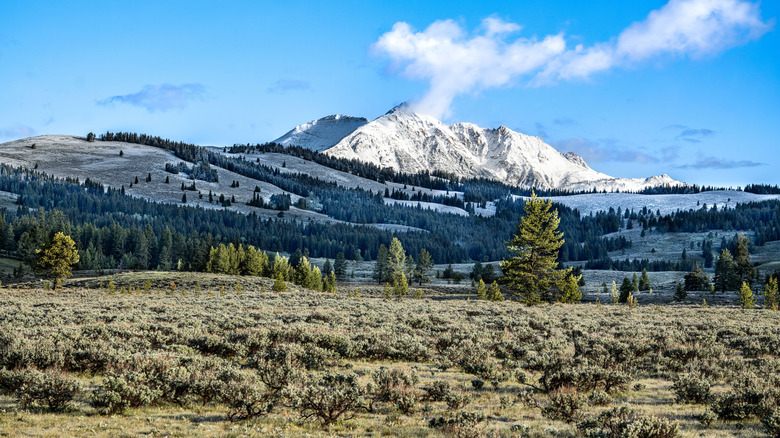
The 63 national parks in the United States preserve some of the most beautiful scenery in the country. World-famous outdoor sites such as Half Dome and the Grand Canyon are at the center of some of the best national parks for hiking, with the winner of the best park being up for debate. However, there's one clear champion for the park with the longest trail network: Yellowstone.
Compared to Grand Canyon National Park's 595 miles of trails and Yosemite National Park's 800-mile trail network, Yellowstone National Park boasts more than 1,100 miles of trails – slightly more than the distance between San Diego and Seattle – running across 2.2 million acres. Within the park's vast trail network are treks for hikers of all abilities to breathe in the clean air and witness some of nature's incredible scenery. Easier boardwalks mark the path to Old Faithful, while you'll need a trail map and compass, or even snow gear, to find your way to some backcountry campsites.
Yellowstone's trails are mapped out in each of the park's eight visitor areas, each with its own lodges, visitor services, and unique (and stunning) scenery. Take in jaw-dropping views from the top of Mount Washburn in the Canyon Area; spot wildflowers, waterfowl, and possibly beavers and bears in the Tower and Northeast Area; or trek along geothermal lakeshores in the West Thumb and Grant Area. It's recommended to get an early start to beat the crowds, especially in the busy summers, and to chat with a ranger about the current trail conditions before setting off. Unless you're spending the night in the backcountry, you won't need a permit to hike on day-use trails in the park.
Standout hikes on Yellowstone's 1,100 miles of trails
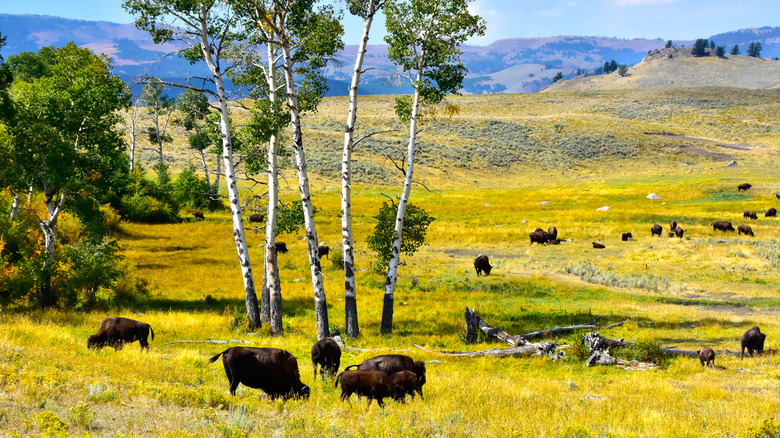
Within the 1,100 miles of trails in Yellowstone National Park, you'll likely find your perfect hike in terms of scenery, grade, and distance. Easier noteworthy hikes in Yellowstone include the stunning Mammoth Terraces hike along Mammoth Hot Springs and the South Rim Trail leading to spectacular views of the Grand Canyon of the Yellowstone. For visitors eager to see some of the park's incredible wildlife, including bison and elk, the Upper Geyser Basin Loop is well worth the 3-mile trek. Take your time, and enjoy every step of the hike; you'll likely see a few eruptions – including Old Faithful — if you're patient.
Hikers looking for a more strenuous trek have several options in the park. Standouts include taking a full day to climb Sepulcher Mountain, where you'll pass stunning alpine meadows and possibly mountain goats, sheep, and moose. The trail makes a loop and can be done clockwise or counter-clockwise; past hikers note that walking counter-clockwise makes for a steeper trail overall. The clockwise trail is more gradual and has switchbacks near the summit. If you're visiting Yellowstone to trek the "American Serengeti," head for the Lamar River Trailhead. In this part of the park, you'll likely spot Yellowstone's world-famous bison, bears, elk, and wolves on your hike. Full-day and overnight hikes are possible in this part of the Yellowstone backcountry. If you plan to spend the night, be sure to plan your trip well, have a permit, and reserve a campsite on Recreation.gov.
Explore Yellowstone's trails during the winter
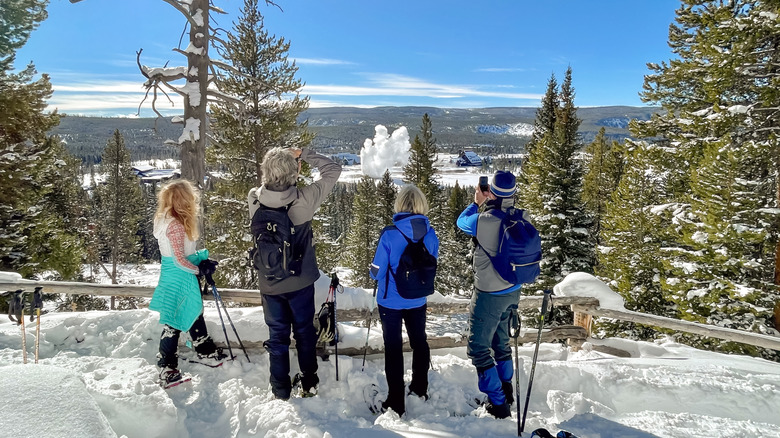
During the summer months, Yellowstone is one of the five most-visited national parks in the country. However, visitor numbers drop considerably in winter. If you're willing to bundle up, the winter season can be a magical experience, not only for spotting wildlife, but also for taking in the beautiful snow-covered scenery on cross-country skis, snowshoes, or a snowmobile. While the park is notably quieter, lodges and ski rental shops remain open around Mammoth Hot Springs and Old Faithful. Both areas have miles of trails (the Old Faithful Area in particular has 40) to explore for skiers and snowshoers of all abilities, ranging from the 2-mile Observation Point Loop snowshoe trail to machine-groomed and skier-tracked backcountry ski trails. If you visit during the winter, note that only the north entrance outside of Gardiner, Montana, remains open for regular vehicles. Visitors heading into the interior of the park, including to the Old Faithful Area, will have to take a snow coach. During winter, accommodation is available at Old Faithful Snow Lodge, Mammoth Hot Springs Hotel, and Mammoth Campground. For the truly adventurous sleeping out, you'll need a high-quality sleeping bag for your winter camping adventure.
Before starting your hike — no matter what season you visit — ensure that you're well prepared. Many hikes in the national park are over 7,000 feet in elevation, and even flat hikes can be challenging for visitors accustomed to lower altitudes. If you plan to camp, be sure to carry bear boxes or ropes to hang your food. Carrying bear mace is also a must, even on short treks, as is a jacket and plenty of water. Finally, be aware that throughout the park, cell service is very spotty, and infrastructure is often overloaded.