

One Of North America's Longest Hiking Trails Is A 4,400-Mile Trek From Florida To Canada
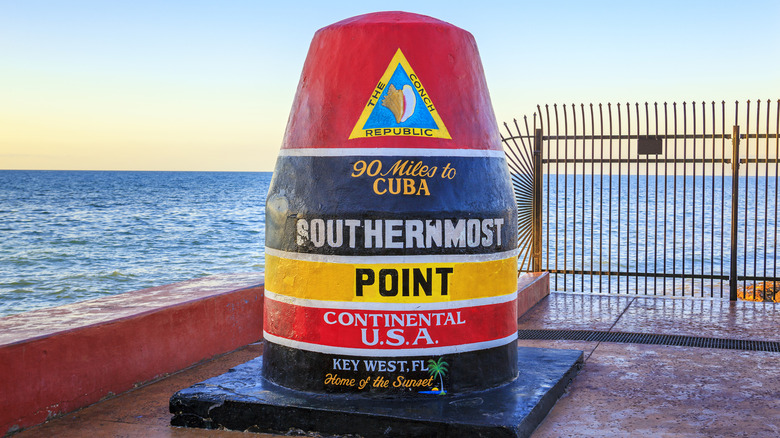
Hiking a major trail along the East Coast of North America — such as the Florida Trail or the Appalachian Trail – is a major triumph and testament of will. However, if you're a hardy hiker who isn't ready to let a trail marker or even an international border end your trek, you can keep going till you run out of land walking along the Eastern Continental Trail (ECT), one of the longest trail networks on the continent.
First coined by hiker M.J. "Nimblewill Nomad" Eberhart and traversed by John Brinda in 1997, the trail is a patchwork of existing long-distance hiking trails across the eastern seaboard running for over 4,400 miles. Officially, the ECT trailheads are in two of the most extreme geographical locations on the continent: Key West, Florida, the southernmost point in the continental United States, and Cap Gaspé, Québec, near where the Appalachian Mountains meet the Gulf of St. Lawrence. The route traverses five major trails, including the Florida National Scenic Trail, the Pinhoti National Recreation Trail, the Benton MacKaye Trail, the entire Appalachian Trail, and the International Appalachian Trail.
However, the endpoint is debatable. Hikers who truly want to go the distance can continue traversing Atlantic Canada, namely Prince Edward Island, Nova Scotia, and Newfoundland and Labrador, crossing each province on foot between ferry ports. Once on the island of Newfoundland, the route leads about 437 miles north to L'anse aux Meadows National Historic Site, where Vikings first landed in North America. This trail totals roughly 6,000 miles. In any case, the hike takes months to complete and is noted for being incredibly challenging due to significant variations in terrain and climates, and its remoteness – especially at the northern end.
Sixteen states and (at least) two provinces on the ECT

Hikers who trek the ECT trail normally fly into Key West, an old-school tropical vacation spot, in January to begin their trek, then island-hop along the Florida Keys Overseas Heritage Trail, before traversing the Florida Trail to the Alabama state line. Once in Alabama, the route traverses the Alabama Road Walk, crossing into northwestern Georgia on the Pinhoti Trail, where the elevation and altitude start to change. From Georgia, you'll begin the main portion of the hike from Springer Mountain and begin walking nearly 2,200 miles on the Appalachian Trail, taking in some of the most breathtaking scenery on the East Coast. You'll cross into Great Smoky Mountains and Shenandoah national parks, two of the best national parks for hiking, and a sliver of West Virginia before turning north to the Mid-Atlantic states of Maryland, Pennsylvania, New Jersey, and New York. Past New York, the route goes through Connecticut, Massachusetts, Vermont, and New Hampshire before traditionally ending at the top of Mount Katahdin in Maine.
From Mount Katahdin, the International Appalachian Trail leads toward New Brunswick. The trail runs across the province for 185 miles and follows the Tobique River, through Mount Carleton Provincial Park, and passes small villages before reaching Québec. Once in Canada, the trail is more challenging; the journey is more remote, meaning there are fewer other hikers and greater distances between towns, especially in rural Québec. The official International Appalachian Trail companion notes that hikers should plan for 35 to 40 days (over a month) before reaching land's end near the lighthouse at Cap Gaspé. The trail in Québec closes in late September due to weather, moose hunting, and caribou mating season. As most Québécois speak French as a first language, it's a good idea to bring a phrase book or learn a few phrases of basic French.
The ECT hiking experience
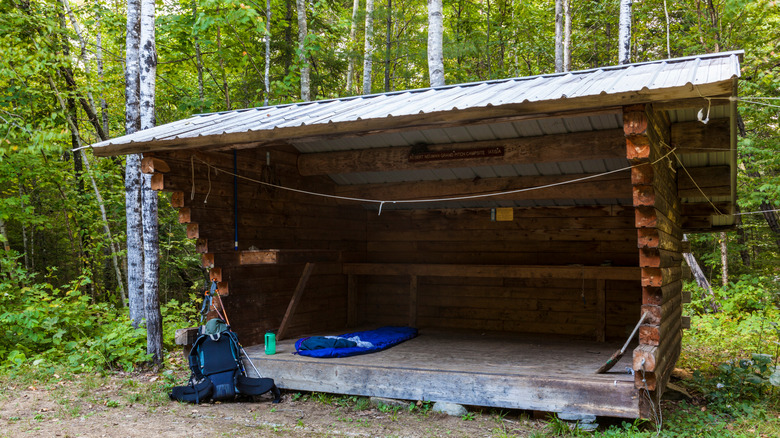
Hikers who have finished the entire trail have ranged from inexperienced to expert thru-hikers, though perhaps all have overcome major challenges, including illness and loneliness. Sterling Coleman, who hiked the ECT in 2012, told Sierra that he left Key West without food, popped his sleeping pad, and lost his tarp early on the hike, causing him to have no shelter for a month. Other more experienced hikers who completed the trail, including Steve Hoekwater and Jacob Pepper, who both hiked the trail in 2025, suffered from medical issues that caused them to lose time, though they ultimately completed the hike. They maintained a pace of at least 20 to 30 miles a day, with Pepper using six pairs of footwear on his trek.
On long thru-hikes like the ECT, some hikers such as Pepper have largely hiked solo, while others like Hoekwater had a friend join them for part of the trip. If you do go with a friend, or connect with other hikers and join in the camaraderie, the journey is likely to be a deeply bonding experience. In any case, you likely won't make it alone. Reach out to local volunteers and family and friends to arrange supply drops, or do so through the postal service and local businesses, as it is impossible to carry all of the food and water you will need for months on the trail.
If you are considering the milestone trek on the ECT, note that a spirit of adventure and mental fortitude are key traits that keep hikers moving mile after mile, though being in shape will also help. Having the right equipment is important, too. While long-distance hikers often carry little more than the essentials, don't forget your passport, and plan for a lack of phone service. These must-have analog items will make your hike easier.