

Avoid This Old-School Luggage Mistake To Protect Your Personal Information
We may receive a commission on purchases made from links.
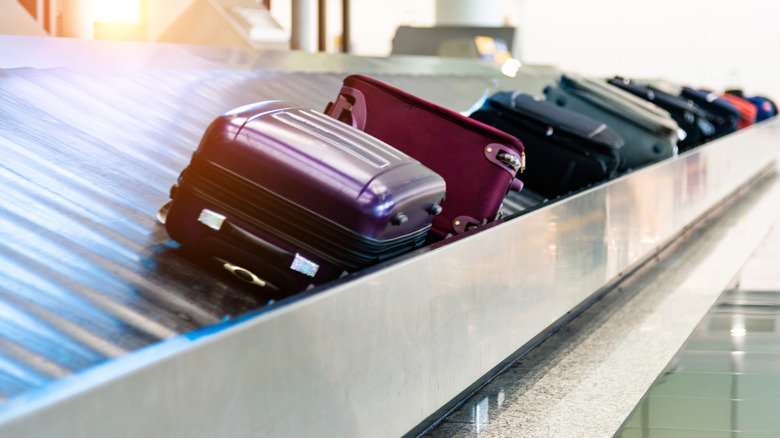
Checking a bag at the airport is always a bit nerve-wracking. While it's likely that your bag will arrive at your destination with you, there's always the possibility of it getting lost. In fact, according to the air transport communication specialist SITA, 24 million bags were mishandled in 2025. While that's not a huge percentage of the 5 billion travelers SITA reports, it's still a massive number of suitcases. To make sure any lost baggage gets back home safely, you can pick a standout color for your bag and have a luggage tag with your information on it, so you can be contacted when it's found. While it was once standard to put your name, address, and phone number on a luggage tag in the days before email, that was (and is) a sure way to let criminals know where you live — and that you're probably not home. Putting fewer details on your luggage tag keeps people from finding your personal information, something that can lead to burglary and even identity theft.
As someone who has lived in and flown through major U.S. cities, I've seen people wander into the baggage claim area to check the tags on luggage that wasn't claimed yet and snap pictures of them. (Yes, I reported it every time.) If you simply have your name, phone number, and possibly an email address on your tag, it's less likely that bad actors can do anything with the information. Still, there are a few more steps you can take to keep yourself safe.
Keep yourself safe by limiting information on your luggage tag
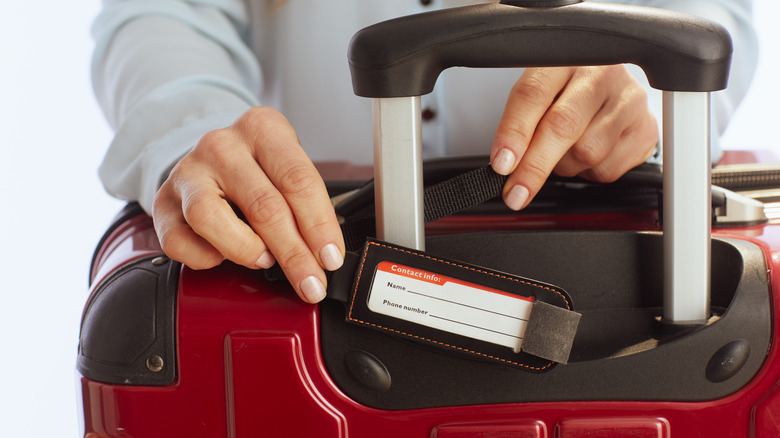
While it's smart to have some identifying information on your luggage tag, it doesn't need to be more than your name and number. (I use my first initial rather than my full name.) Switch your number to your email if you're going overseas or won't have mobile service. In addition to your home address, never put down your passport number or ID information, which can be used to steal your identity. Don't put your hotel or room number on your tag, either. If someone (besides the airline) finds your bag, having them show up at your door can be dangerous. This goes for any tags on your carry-on bag as well, as they are sometimes gate-checked when the plane is full.
Additionally, the type of luggage tag you use can make a difference. Select one with a cover so the information isn't immediately visible. You can also find tags where your information isn't printed but is instead accessible through a QR code, like the Dynotag Sentry Series Solid Metal Web Enabled Smart Luggage Tag ID on Amazon, which attaches with a steel loop. Whichever sort of tag you choose, make sure it's not dangling where it can get pulled off in airport machinery. You can also put it inside a suitcase pocket. (List the same information inside your luggage as well, in case the tag does get lost somehow.) You may also want to include a tracking device like an Apple AirTag so you can find its location. While you're restricting information on your luggage tag, remember not to throw away the airline luggage tags, which can have sensitive information on them as well. Finally, if you're checking a bag, make sure you know whether or not you have to pick up and recheck your luggage for a connecting flight.