

The Common Luggage Mistake Travelers Should Avoid At All Costs

As a flight attendant who spends an overwhelming majority of my time in the airport, I know that there are a number of very simple things travelers can do to help ensure their trip runs smoothly. For example, although it's second nature to rely on technology these days, obtaining a paper boarding pass is always a good idea. Knowing how to interpret the information on that printed pass may save you time, as certain codes reveal the need for extra screening or seating information. It's important to protect the personal information your boarding pass may hold, which is why experts recommend you never discard your boarding pass at the airport. What many people don't realize is that the same rule should be applied to the tags placed on your checked luggage by the airline.
Ripping off your checked luggage tags the second you retrieve your suitcase from the carousel may seem like good housekeeping, but it's a poor idea for several reasons. You may need information from them to make a claim in the case that any items turn out to be damaged or missing from your bag, which leads to the real reason you should not discard these in public, including at a hotel. "We are getting an influx of fraudulent claims ... for reimbursement," a Delta baggage claims manager posted on social media (via Boston 25 News). "From my own personal experience in currently dealing with this it is causing issue with reimbursing the real people if they submit a legitimate claim." These fraudulent claims occur when someone retrieves a tag and attempts to make a claim on the real owner's behalf.
More luggage tag tips
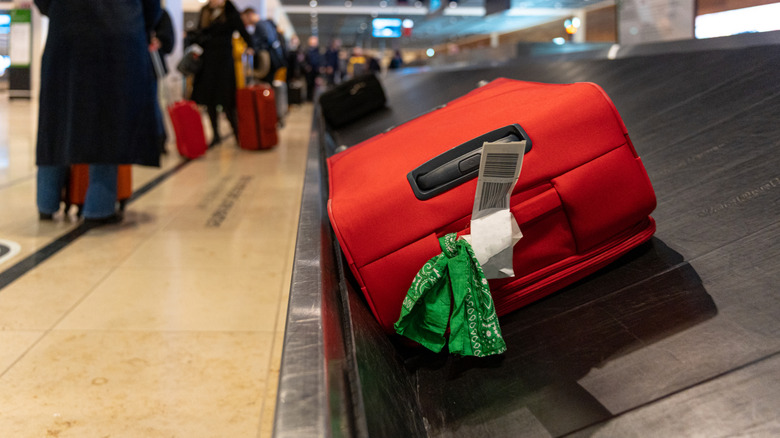
Now that you know the importance of keeping your luggage tags secure, there are a few best practices you can implement to ensure continued access to them. You will be provided with a tag to keep, but it may be a good idea to take photos of your bags and all of their tags prior to turning your luggage over to be checked. Doubling up with a digital file will ensure you keep a proper record of tag information, no matter what happens to the physical copies, and while this may be an extra step most people don't take, as someone who travels for a living, I'd rather be safe than sorry.
Checked luggage tags are only going to be valuable to both you and the airline if they can be properly scanned, and there is one very common culprit that could contribute to the possibility of your bag being lost in transit — ironically, it has to do with the fact that fliers want their bags to be easily recognizable. According to baggage handlers, travelers should not tie a handkerchief or ribbon to their luggage as a way to quickly identify their belongings, as they can prevent bar codes from being accessible to scanners.
And while you don't want to remove your checked luggage tags too early, you also don't want any old tags to remain for future trips, as this could cause an invalid barcode to be scanned. By documenting your tags, remembering to discard them once your trip is complete, and avoiding loosely tied items on the outside of your bag, you can evade common luggage pitfalls that lead to extra travel headaches.