

The Secret Code You Never Want To Hear A Flight Attendant Say On An Airplane
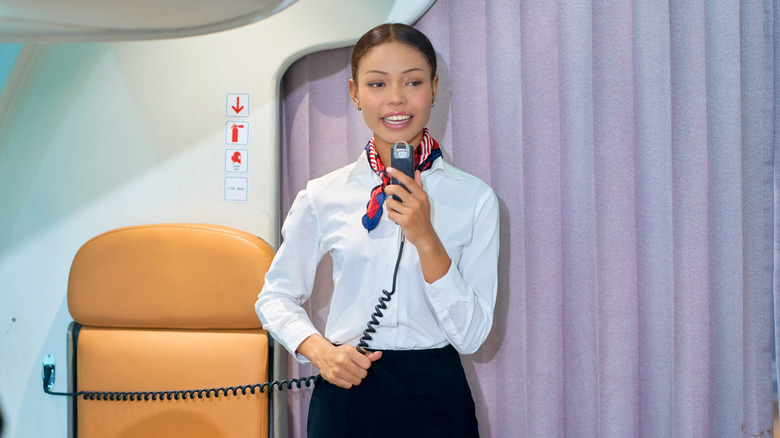
Travel can be stressful, and flight attendants often use certain phrases or codes to ensure passengers remain calm — and to relay private messages. "Bob," for example, can refer to an attractive passenger, or the "best on board." If a flight attendant calls someone a "mermaid," it's definitely not a compliment. Often, these code words are benign and of no interest to a passenger. However, one code passengers don't want to hear muttered over the intercom is "Code 300." This usually means tragedy has struck a fellow passenger.
Flight attendants often use Code 300 to covertly announce that someone on the plane has experienced a medical emergency or has passed away. It's important to remember, however, that the code is not standardized across all airlines; individual airlines may also have their own additional code words to nimbly navigate the situation. Therefore, when a passenger dies, a flight crew may also use other code words, like "Angel." Not only does the announcement keep the rest of the passengers in the dark, it also lets the crew know that necessary arrangements need to be made at the arrival airport. The hope is the code word will leave most passengers calm and oblivious to the tragedy.
What passengers should do when they hear a 'Code 300'
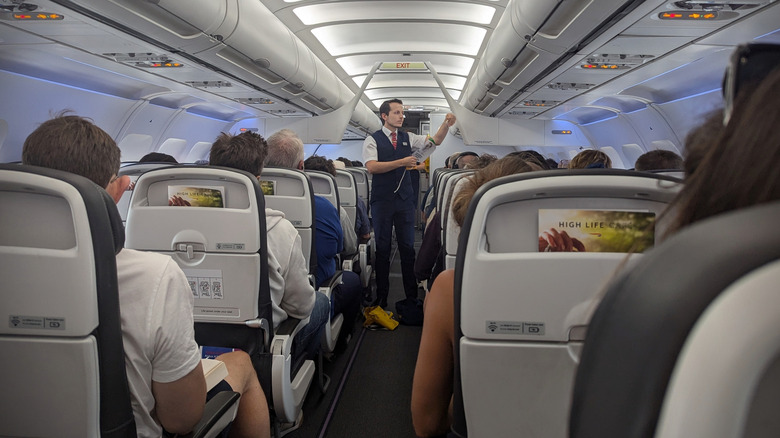
Luckily, it's very unlikely passengers will witness the death of a fellow passenger on their flight. According to a 2025 study published by JAMA Network Open, medical emergencies aboard flights are not uncommon. However, deaths aboard flights are rare. The publication estimates an average death rate of 0.15 per 1 million passengers. But what should passengers do if someone does die on board?
According to a Reddit comment by a flight attendant, the best thing passengers can do is relocate seats if asked to do so. A passenger who dies in his or her seat is not simply left there. "You free up a row in the rear of the aircraft ... so we can keep an eye on the body," they wrote. Flight attendants say that the back row, incidentally, is often considered the worst seat to book on an airplane (but for reasons other than a death), so you may want to avoid it anyway.
Keeping passengers calm in all situations is a flight crew's goal, but that goal is not only limited to airplanes. For example, knowing what a "Code Charlie" means on a cruise ship can also help prepare passengers in the event of an emergency. However you travel, if you're not familiar with a code word, it's important not to panic. Code words are designed to keep a calm atmosphere in the cabin during a crisis. If additional actions are required by passengers or more information is necessary, the flight crew will offer the appropriate instructions.