

This Seemingly Unthreatening Behavior Could Get You Flagged By TSA
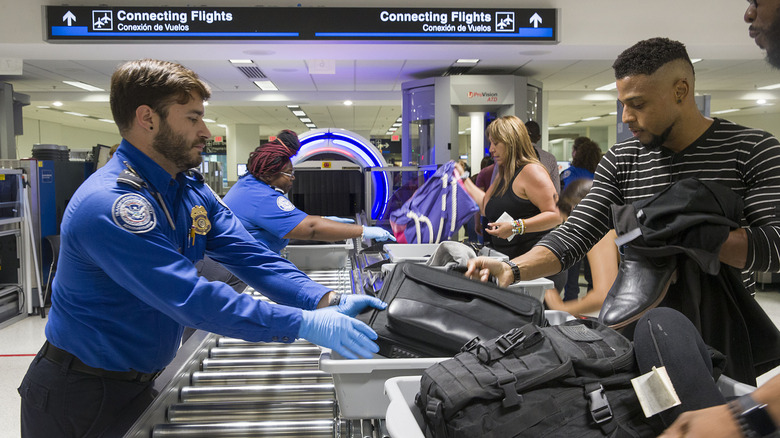
Traveling can be one of the greatest joys in life. That doesn't mean, however, that it's free from drama. That's particularly true when going through the Transportation Security Administration (TSA) checkpoint. Between taking out your laptop and bag of toiletries, trying to get your coat off, and the irritation of the people behind you if you don't do it fast enough, the process can cause a lot of anxiety. However, signs that you're feeling stressed or anxious, no matter how unthreatening they may seem, might actually get you flagged by the TSA for a secondary screening. One surprising behavior that could draw negative attention is continually clearing your throat.
In 2015, The Intercept published a TSA checklist of signs that may flag someone as suspicious. While the list of behaviors — which includes things like "rubbing or wringing of hands" and "widely open staring eyes," in addition to "excessive throat clearing" — might indicate someone is up to no good, they're also normal for nervous fliers and people stressed about making their flight on time. (Even moving to a shorter line can make you look suspicious to the TSA.) In addition, clearing your throat can come from a chronic medical condition or post-nasal drip from a cold or allergies.
What to do if you get flagged by the TSA
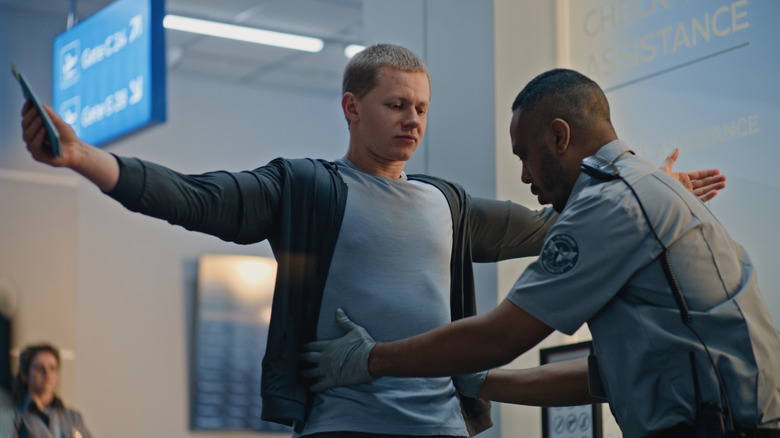
While the list published by The Intercept is over a decade old, Reader's Digest spoke to Mike Delgado, a TSO (Transportation Security Officer), and several other experts in the field in 2024 about what the officers at checkpoints notice about you, and again, one big flag was acting nervous. In fact, one of the behaviors they still watch out for is excessive throat clearing. That might make you worry, especially if you have no choice but to fly when you're sick. (Doctors recommend packing a first-aid kit when you travel anyway, so you may want to keep cough drops in there.)
However, if you can, stay calm while going through security, no matter what. Chances are, going through the security checkpoint will be fairly painless. Delgado told the publication, "We won't pull you aside just for being nervous but we may start to pay more attention to you. ... If things don't feel right, I'll call my supervisor and ask them to keep an eye on you, looking for other red flags." Your best bet, he says, is to let TSA agents know if you have any issues that you think might get you flagged. If you end up having to get a pat-down as part of a secondary screening, the TSA allows you to request a private screening, "accompanied by a companion of your choice." If you do get pulled aside, remember that all of this is being done to keep you safe, no matter how odd or arbitrary it feels to you.
Finally, make sure to check your boarding pass before hitting the security line. Even if you're cool as a cucumber, there is a four-letter boarding pass code that might mean you're getting flagged anyway.