

This Time-Saving Move Could Make You Look More Suspicious Around TSA
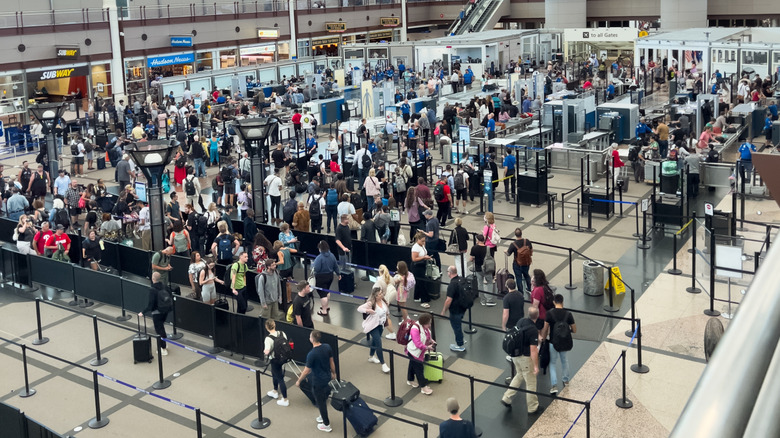
Traveling is stressful. There's the packing, the organizing, the documentation, and the time crunch. But for many, the most stressful part of the entire trip are the long security lines at the airport. We're all in a hurry to get to our gates on time and are on the constant lookout for shortcuts. But deciding to switch to a shorter Transportation Security Administration (TSA) line mid-stream may cause more suspicion than it's worth.
TSA is designed to keep us all safe, of course. But the agents do more than just scan bags, look at X-rays, and riffle through the occasional flagged carry-on. Agents undergo "behavior detection" training to notice any traveler's suspicious behavior, according to the TSA website. And moving to a different queue could catch an agent's attention because it could indicate stress, fear, or deception, all warning signs that TSA looks for, according to the U.S. Government Accountability Office.
As we all know, if something seems off, there's a good chance you may get a much more thorough inspection than you originally bargained for. Switching lines may seem like common sense when it comes to saving time, but it could backfire. Instead, see if your airport has TSA wait times on its app, which can help you navigate to the shortest available queue. It's important to remember that it's not just queue swapping that can get a TSA agent's attention. The maneuver is just one of many behaviors TSA watches passengers for with eagle eyes.
Opting for a shorter security queue could get you unwanted attention from TSA
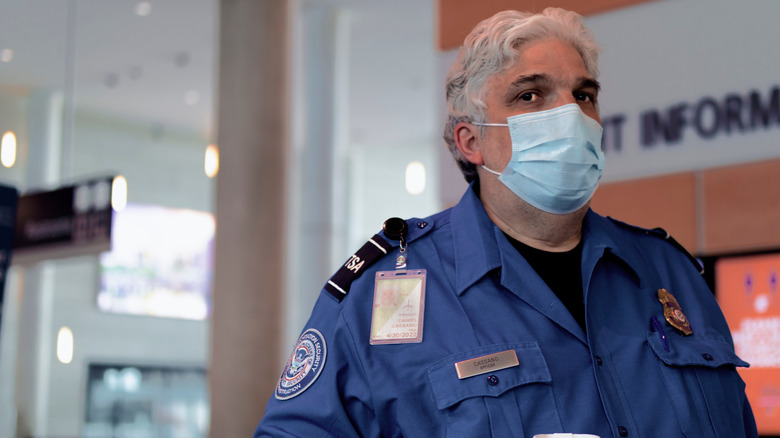
It's human nature to look for the shortest path forward. Airport security lines, however, are not the local supermarket checkout line or a bathroom stall at a concert venue. Patience is the key when navigating TSA security. Looking for faster routes can attract unwanted attention that not only impacts your own travel plans, but also the plans of others around you. Your suspicious behavior will likely attract the side-eyes of your fellow travelers, placing you among the most frustrating travelers in airport security lines.
If it seems like the rules around TSA are constantly shifting, you're not wrong. In 2026, TSA launched another new airport security program impacting nearly two dozen U.S. airports. The new program will introduce new screening technology that will allegedly make security more efficient and effective. But that doesn't mean passengers are off the hook when it comes to behaving improperly. The U.S. Sun quoted a TSA spokesperson as saying, "Behavior detection, which is just one element of the Transportation Security Administration's (TSA) efforts to mitigate threats against the traveling public, is vital to TSA's layered approach to deter, detect and disrupt individuals who pose a threat to aviation." In 2015, The Intercept published TSA's "secret behavior checklist" that it says is used to spot potential terrorists. Among the red flags are passengers wearing inappropriate clothing for their destination, excessive yawning, whistling, and widely open staring eyes. And while jumping lines wasn't explicitly mentioned, it, too, can make you seem nervous or agitated.
If you want to move fast through TSA, use the appropriate resources
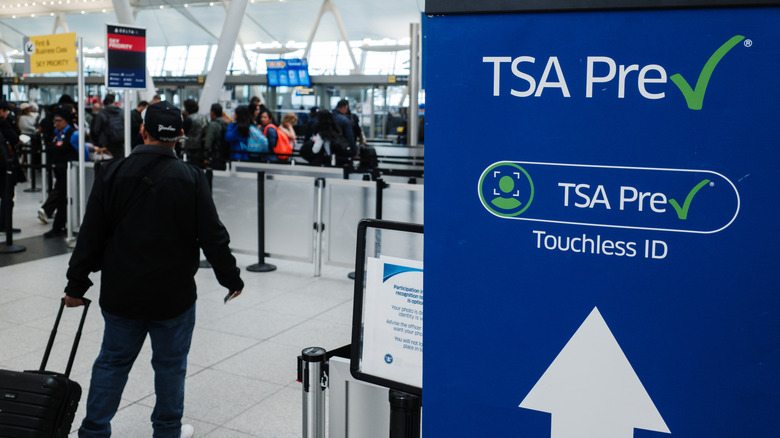
Long lines are a bummer, especially at the airport, but airport security is serious business. The TSA assures passengers that there is plenty going on behind the scenes to keep flights safe. Fortunately, there are also options in place designed to reduce wait times without raising the suspicions of TSA agents. Among the most popular options, of course, is the TSA PreCheck program, which can help scoot you through security in about 10 minutes, when conditions are right. It's also family-friendly and allows children 17 and under to join guardians in the PreCheck line.
Some airports across the United States are taking their own steps to help move passengers through security more efficiently. For example, dedicated lanes for families with children under 12 years old are designed to move families through faster. These "Families on the Fly" lanes are available in 13 airports as of this writing, with more to come soon. TSA says the lanes not only make it easier for families to pass through security, but they also lessen congestion in other lines, allowing for better flow.
Traveling is stressful, and as security measures evolve, travelers must adapt. But knowing how to approach airport security and not attract attention can make the experience better for you, the agents, and fellow passengers. Still nervous about how to handle your next security screening? Consider reviewing TSA's list of tips before heading to the airport to help avoid any unexpected surprises.