Tourist Attractions in Mérida, Mexico
Author Meagan Drillinger visits Mexico regularly, traveling around the country to visit towns, cities, and up-and-coming destinations.
Mérida, the capital of Yucatán, is one of the oldest cities in Mexico. Before it was settled by the Spanish in the 16th century, it was a thriving capital city for the Maya people. It's a city rooted in tradition, steeped in history, and decorated with architecture that has stood for hundreds of years. Many of the things to do in Mérida revolve around its history.
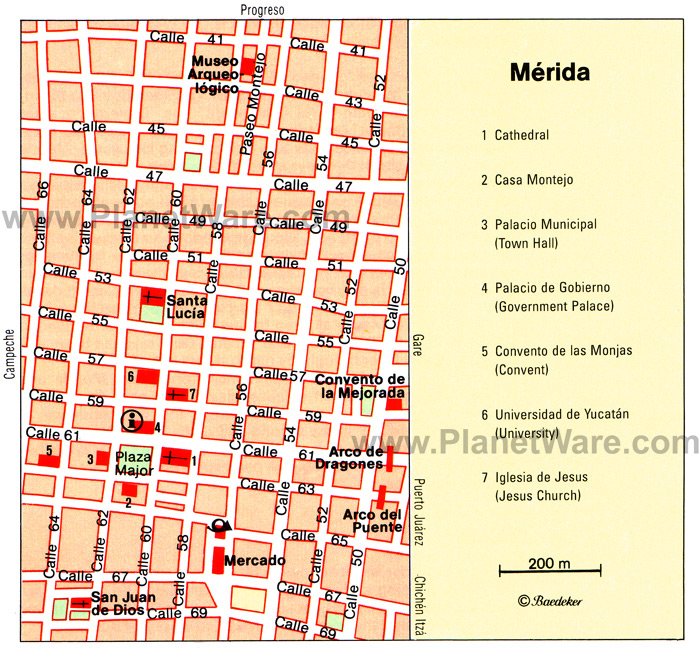
Mérida's historic downtown — where some of the city's top attractions can be found — is laid out with streets that run at right angles to one another, making it much easier to navigate than most other Mexican towns.
It's also a great place from which to embark on a day trip exploring Yucatán's many Mayan sites, in particular those of Uxmal and Chichén Itzá, each an easy drive away.
Learn more about the top places to visit with our list of the best things to do in Mérida.
Wander around the Historic Plaza Mayor (Plaza Grande)
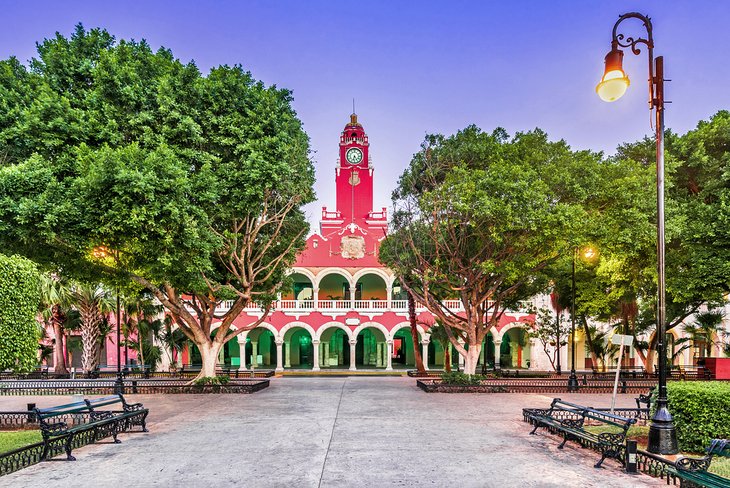
Plaza Mayor - also known as Plaza de la Independencia, or Plaza Grande - is both the commercial and cultural hub of Mérida, and is a good place to start a walking tour of the old city center. In addition to being surrounded by some of Mérida's most important buildings, it's also a very pleasant space to simply hang out, thanks to its shady palm trees, beautiful flower gardens, and fountains.
Covering an entire city block, it's as popular among locals as it is tourists due to its regular markets, where vendors sell everything from food to crafts and souvenirs. It's also lined with a number of good restaurants offering traditional Mexican fare.
Also of interest is the Municipal Market, just a short walk south of Plaza Mayor and worth visiting for its many products made from locally produced sisal, such as hammocks and panama hats, huipiles (Mayan-style dresses with brightly colored embroidery around the neck), and guayabera shirts for men - all of them easy to take home with you. A must for Latin dance enthusiasts is the weekly Yucatecan Serenade, a fun outdoor dance event accompanied by live music, which has been a fixture of nearby Park Sta Lucia since 1965.
Address: Calle 62 SN, Centro, 97000 Mérida, YUC
Mayan World Museum of Mérida
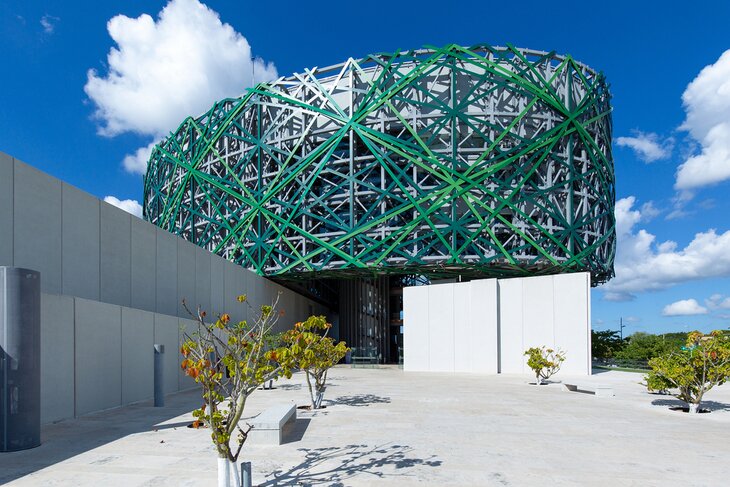
One of Mexico's most important museums, the ultra-modern Mayan World Museum of Mérida (Gran Museo del Mundo Maya) is dedicated to a fascinating culture, which is evident everywhere in Yucatán. The museum comprises four large permanent exhibitions housing more than 1,100 relics.
Highlights of this impressive collection include ancient engravings and sculptures, historic documents, and textiles dating from the pre-Spanish period, as well as fascinating displays covering the colonial period.
Of particular interest is the section dealing with the Mayan culture as it exists today, as well as a superb hi-tech audio-visual show exploring the long history of the local people, which can also be seen at night as it's projected onto the building's exterior.
Address: Calle 60 299-E, Revolucion, 97180 Mérida, YUC
Mérida Cathedral
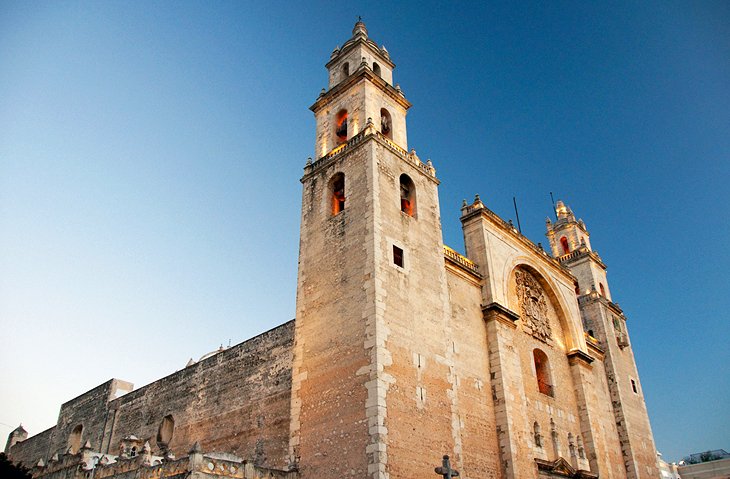
On the east side of the Plaza Mayor, occupying the site of an earlier Maya temple, stands Mérida Cathedral. Built between 1561 and 1598, this impressive building is the largest church in Yucatán.
Despite its rather plain façade, the building's interior boasts a rich décor, notable for its many references to the town's Mayan and colonial histories. One of the first you'll see is a painting above a doorway of the Maya ruler, Titul-Kiú, shown visiting conquistador Francisco Montejo in Tihó.
Other notable features include the Chapel of the Christ of the Blisters (Capilla del Cristo de las Ampollas), with its 16th-century Indian wood carvings, famous for the blisters left after the wood was charred during a fire. Part of the cathedral since 1645, the relics here are the subject of special celebrations held each October. (Visitors are welcome to attend regular mass.)
Address: Calle de la Revolución No. 62, Centro, 97000 Mérida, YUC
Parque Cepeda Peraza and the Church of Jesús
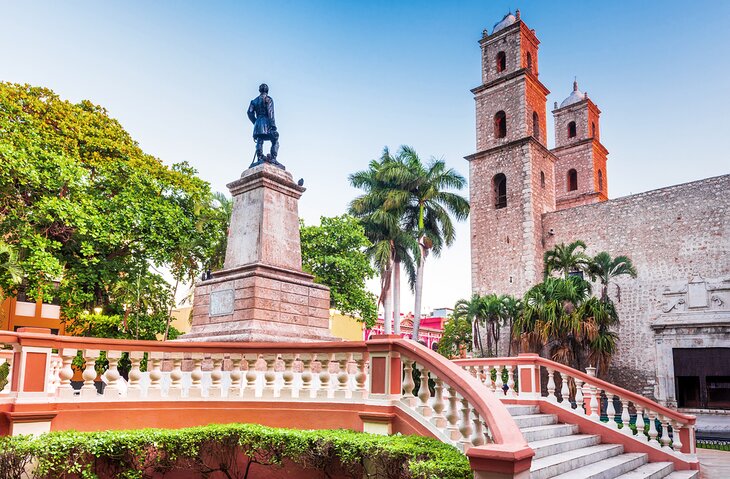
In the picturesque Parque Cepeda Peraza (or Parque Hidalgo) stands the quaint Church of Jesús, or the Church of the Third Order (Iglesia de la Tercera Orden), a favorite spot for weddings.
After enjoying the park and the church's superb 17th-century exterior - it was built as part of a convent that later served as a Jesuit seminary - be sure to pop inside for a look at the fine high altar with its exquisite altarpiece of carved and gilded wood made in the Plateresque style, a tradition common to communities with talented silversmiths.
Afterwards, take a ride on one of the fun "calesas," horse-drawn coaches in Parque Cepeda Peraza, which will take you past some of the town's most interesting colonial architecture.
Address: Por 59 y 57, Calle 60, Centro, 97000 Mérida, YUC
MACAY: The Museo de Arte Contemporáneo de Yucatán
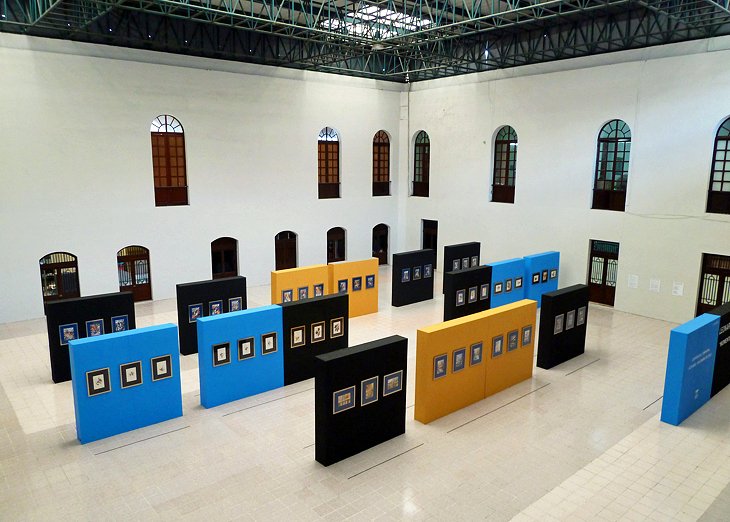
The Museum of Contemporary Art (Museo Fernando García Ponce-Macay), known locally as MACAY, is one of the state's most important museums. This superb gallery is a joy to explore for its many excellent permanent and temporary exhibits of both modern and contemporary art.
Highlights of its permanent collection include works by leading Mexican artists including Gabriel Ramirez Aznar, Fernando Castro Pacheco, and Fernando García. The facility also serves as an important cultural establishment offering numerous workshops and programs, and boasts a library, café, and shop. English language guided tours are available, as well as audio guides.
Also of interest is the Museum of Popular Art (Museo Regional de Arte Popular) with its fine collections of textiles and costumes, pottery, jewelry, toys, and musical instruments.
Address: Pasaje de la Revolución 58-60, Centro, 97000 Mérida, YUC
The Natural History Museum and Palacio Canton
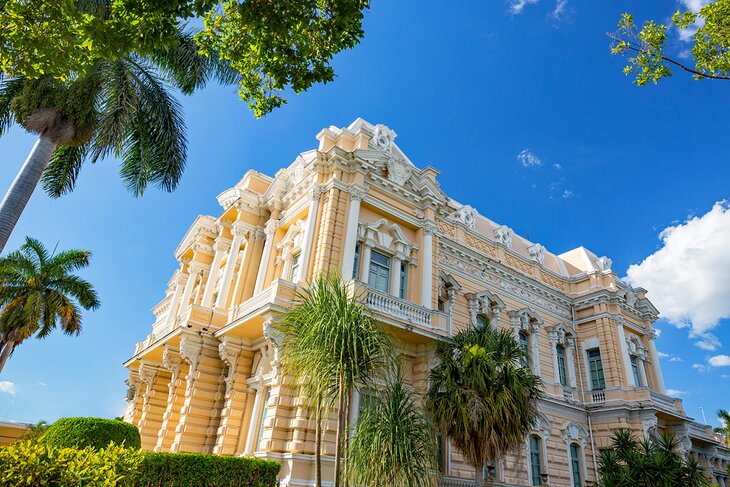
Mérida's superb Natural History Museum (Museo de Arqueología e Historía) lies in the beautifully restored former government building known as the Palacio Cantón. The collection in this imposing 19th-century building consists mostly of material associated with the Maya civilization's heyday, although other advanced cultures from pre-Columbian Mexico are also well represented.
Collection highlights are the sacrificial gifts retrieved from the cenotes at Chichén Itzá, as well as reproductions of the sketches of the Maya sites drawn by archeologist Frederick Catherwood and photographs taken by Teobert Maler at the turn of the century.
Address: Paseo de Montejo 485, Zona Paseo Montejo, Centro, 97000 Mérida, Yuc., Mexico
Museo Casa Montejo
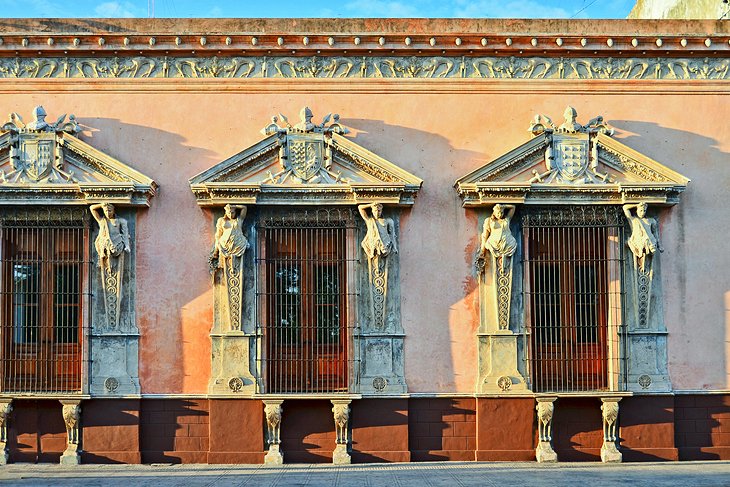
The south side of Plaza Mayor is dominated by Casa Montejo, one of the finest examples of Spanish colonial architecture in Mexico. Built in 1549 as the residence of the wealthy Montejo family, who owned the building until 1978, the palace's magnificent Plateresque façade once extended along the whole of the south side of the square (although somewhat smaller today, it remains impressive).
Inside, its large and handsome rooms house Museo Casa Montejo, an interesting museum set around two courtyards, which is furnished with antique pieces imported from Europe. Of particular interest is the coat of arms of the Montejo family, as well as the stone sculptures of a conquistador standing with one foot on the bowed head of a conquered Maya.
If fine old architecture is of interest, be sure to include Quinta Montes Molina on your itinerary. This attractive colonial mansion includes a superb collection of European furniture along with a pleasant garden.
Address: Calle 63 506, Centro, 97000 Mérida, Yuc., Mexico
The Governor's Palace and Museo Fernando García Ponce
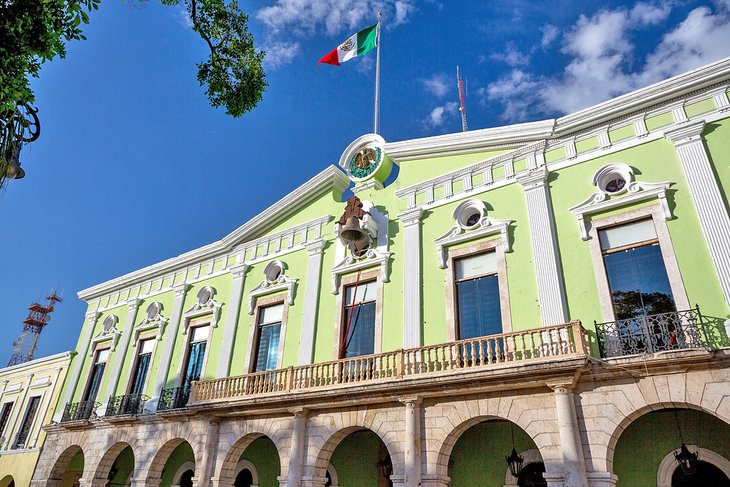
A must-visit in Mérida is the sumptuous Government Palace (Palacio de Gobierno). Built in 1892 and decorated with 31 interesting murals painted by the Campeche artist Fernando Castro Pacheco between 1971-74, the building and its beautiful central courtyard is considered something of a masterpiece.
In addition to its fine murals, it also houses Museo Fernando García Ponce, a museum with a rich collection of paintings by other leading Mexican artists, the best of which can be seen in the History Room. They cover topics from the Spanish invasion and their often harsh treatment of the Maya.
After enjoying these historically significant murals, spend a little time exploring this splendid old building, in particular the balcony for its fine views over the cathedral and Plaza Mayor.
Address: Calle 60 s/n X calle 61 y 59, Centro, 97000 Mérida, Yuc., Mexico
The City of Mérida Museum
In the city's historic old post office building, the City of Mérida Museum deals specifically with the community's development through the centuries. Of special interest are exhibits dealing with locally produced textiles, in particular henequen, once referred to as "green gold" for the prosperity it brought to the city. Also of interest are exhibits dealing with the years prior to colonization by the Spanish.
For those traveling with kids, there are two zoo parks to explore: Parque Zoológico del Centenario, popular for its tiger compound, and Parque Zoológico Animaya, which has a good-sized reptile collection, as well as some Mayan-themed rides.
Art Galleries, Museums, and Studio Tours
Thanks in large part to the influx of tourists — as well as residents who have moved here from abroad — Mérida, which in 2000 was selected as the Cultural Capital of the Americas, has come to play an important role in the promotion of Mexican arts. The city boasts many fine private galleries selling works by local artists in contemporary and traditional styles, along with traditional pottery and other art forms.
Many of the better-known artists open their studios for tours, with some areas designated as art districts, such as that along Calle 60. Both the state and municipal governments also have their own dedicated art galleries, some of the most notable being the Folk Art Museum of Yucatan (Museo de Arte Popular) and Teatro Peon Contreras with its displays of contemporary art from across the country.
Take a Day Trip to the Ancient Ruins of Uxmal
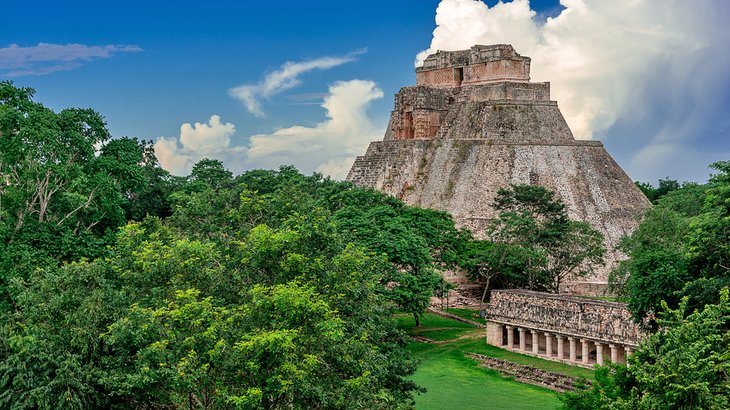
The famous Maya site of Uxmal makes an easy day trip from Mérida. Located just 80 kilometers south of the city, it's widely considered to be one of the most beautiful Pre-Columbian sites in Mexico.
Declared a UNESCO World Heritage Site in 1996, Uxmal dates back to the sixth century and, in contrast to Chichén Itzá, shows little Toltec influences. In addition to the many fine examples of the dominating Puuc styles — seen in the thin limestone cladding in square or lattice patterns on top of smooth walls — are its many panels of Chac masks (the rain god), with their long curved noses and snakes with stiff bodies.
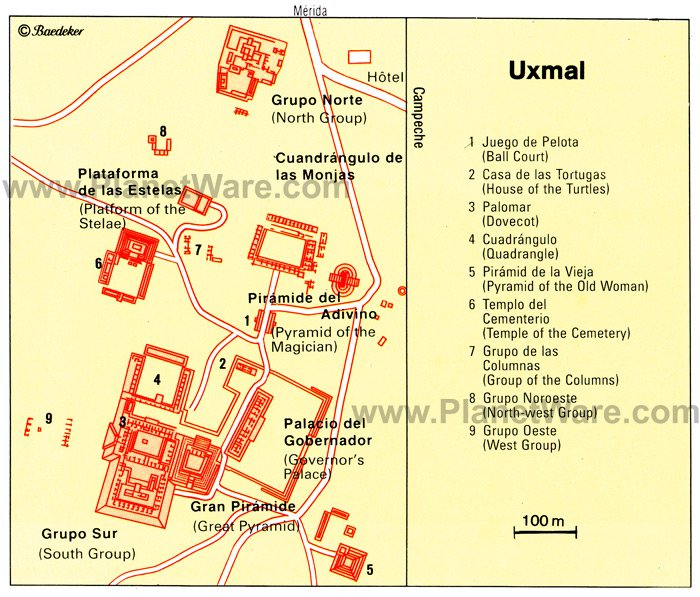
Particular buildings of note are the Pyramid of the Soothsayer, at 35 meters the highest building in Uxmal and notable for its oval base; and Temple I, the oldest building and of interest for its having a date chiseled into a door lintel revealing the building's age (it was built in 569 CE), as well as the famous sculpture known as the Queen of Uxmal on its façade.
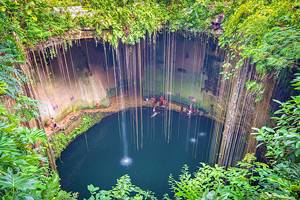
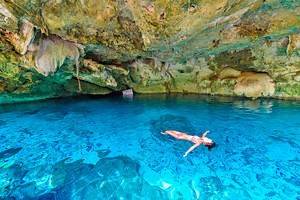
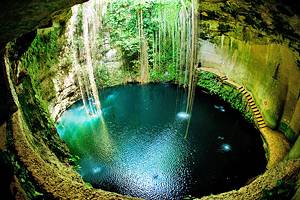
There's also an on-site museum, which houses the four stone heads of the rain-god Chac and hieroglyphic panels. Also worth seeing, and easy to include with a visit to Uxmal as it's located just a few minutes' drive outside the city center, the ancient site of Dzibilchaltún is popular for its cenote, a great place for a refreshing swim after a day of exploration.
Enjoy the Beaches and Biospheres in Celestun
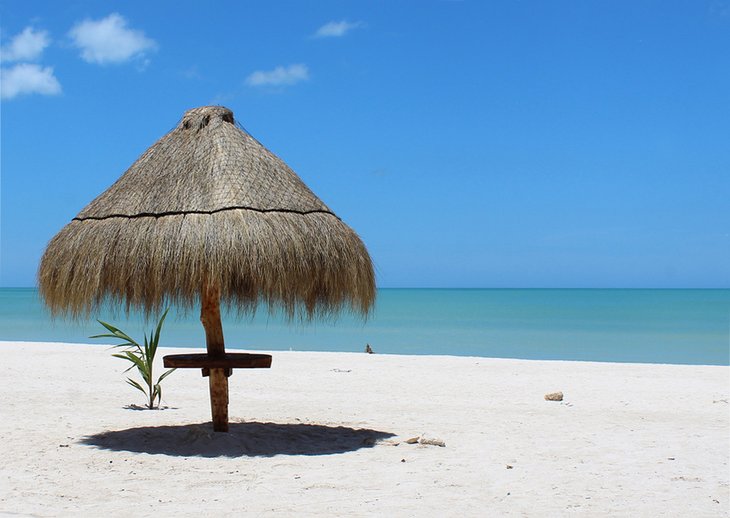
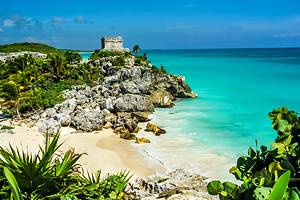
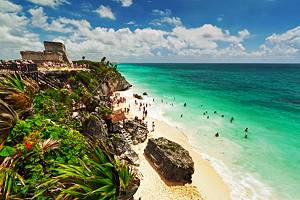
While the spotlight may be pointed at Cancun and Riviera Maya for its beaches, Merida has a few beaches of its own with considerable bragging rights. Celestun, for example, is a sleepy, laid-back beach destination just 30 minutes from Merida. It sits perched right where the Caribbean Sea meets the Gulf of Mexico.
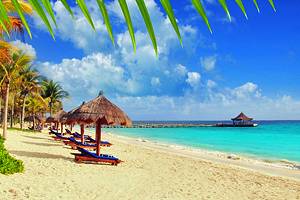
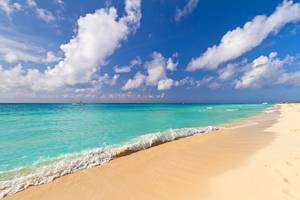
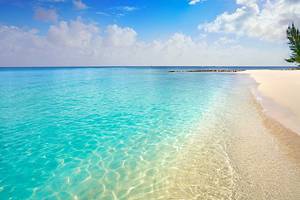
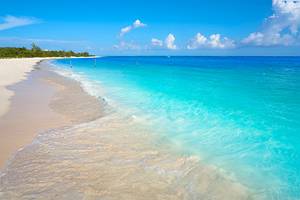
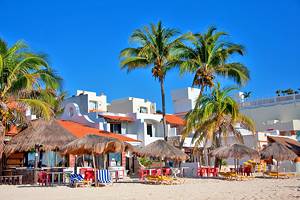
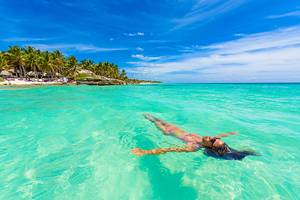
Celestun's beaches are powder soft and sugary white, backed by calm, deliciously warm turquoise water. The beach is lined with palapa-topped restaurants, where locals and tourists-in-the-know kick back for an al fresco lunch with stellar views.
For those who prefer a little more action, rent a kayak or a stand up paddleboard, or hire a local tour guide who will take you into the 146,000-acre Reserve de la Biosfera Ria Celestun. The biosphere is absolutely humming with wildlife, from one of the largest colonies of flamingos in North America to more than 365 other species of birds. Turtles also come to the banks of the biosphere to make their home. Other species include ocelot, jaguars, and spider monkeys.
The coastline near Merida has a few other gems, as well. Sisal, for example, is one of Mexico's Magical Towns. These small communities are known for their distinct heritage and either natural or historic beauty. Just an hour from Merida, Sisal is known for its shockingly white sand, mangrove forests, and sparkling blue-green water. Residents and visitors can agree that El Cuyo is its most beautiful beach.
And then Yucatan has Progreso, a still-thriving port city and growing cruise destination for the Mexican Caribbean and Gulf of Mexico. Progreso is the largest of Yucatan's beachfront towns and has a thriving Malecon lined with restaurants and shops. Two of the beaches in Progreso have earned Blue Flag certification, as well.
Merida, Mexico - Climate Chart
| Average minimum and maximum temperatures for Merida, Mexico in °C | |||||||||||
| J | F | M | A | M | J | J | A | S | O | N | D |
| 29 18 | 30 18 | 33 20 | 35 21 | 36 23 | 35 23 | 34 23 | 34 23 | 33 23 | 32 21 | 30 19 | 30 18 |
| PlanetWare.com | |||||||||||
| Average monthly precipitation totals for Merida, Mexico in mm. | |||||||||||
| 25 | 25 | 23 | 23 | 64 | 145 | 163 | 163 | 180 | 94 | 43 | 33 |
| Average minimum and maximum temperatures for Merida, Mexico in °F | |||||||||||
| J | F | M | A | M | J | J | A | S | O | N | D |
| 84 63 | 86 64 | 91 67 | 95 69 | 97 72 | 94 73 | 93 72 | 93 73 | 91 72 | 88 69 | 86 66 | 85 64 |
| PlanetWare.com | |||||||||||
| Average monthly precipitation totals for Merida, Mexico in inches. | |||||||||||
| 1.0 | 1.0 | 0.9 | 0.9 | 2.5 | 5.7 | 6.4 | 6.4 | 7.1 | 3.7 | 1.7 | 1.3 |
Map of Merida, Mexico - Attractions & Things to Do
More Related Articles on PlanetWare.com
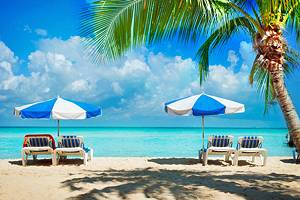
Places to Visit near Mérida: The attractions of Cancún make a superb side trip for those staying in Mérida. If you visit, you'll be treated to endless white-sand beaches, superb weather, and numerous things to see and do. You're also within day trip distance of Cozumel, a large resort island popular for its lush vegetation and great diving.
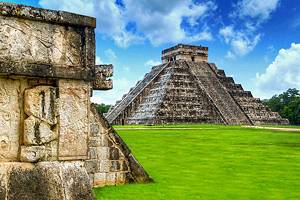
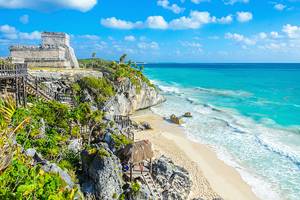
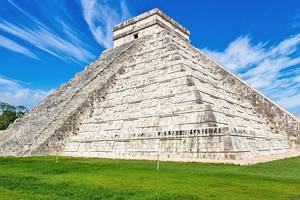
Explore the Yucatán Peninsula: Other potential destinations to visit within easy striking distance of Mérida include ancient Tulum, the only Mayan settlement to ever be built on the coast. And, of course, you should certainly consider visiting Chichén Itzá, perhaps the most famous of all Mayan ruins.
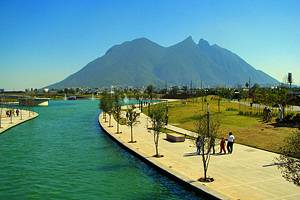
Mexican Vacation Ideas: Mexico is blessed with so many great reasons to vacation here that it's hard to whittle down your choice. A few of our favorites include visiting the diverse cultural attractions of Mexico City; exploring the fine colonial architecture of Guadalajara; or spending time visiting the museums and galleries of modern Monterrey.