Visiting Yellowstone National Park: Attractions
World-famous Yellowstone National Park, established in 1872, is the oldest national park in the United States and one of the most popular, with more than 4.5 million visitors a year.
It is a bucket-list trip for most people because it encompasses some of the most spectacular natural and geological formations in the United States, and it has an active wildlife population that visitors get to experience intimately. Seeing a bison herd just outside of my window for the first time is an experience I will never forget, but Yellowstone offers a trove of experiences.
This magnificent wilderness area sprawls across a basalt plateau in the northwest corner of Wyoming and spills into neighboring Idaho and Montana. It forms the heart of the Greater Yellowstone Ecosystem, one of the largest and best-preserved temperate-zone ecosystems on the planet.
Yellowstone is one of Wyoming's top attractions, and the park is home to the world's largest number of active geysers and offers a window into the powerful forces deep beneath the earth's crust. The scenery ranges from rivers and green valleys to vast lakes, canyons, waterfalls, and hissing lunar-like landscapes.
Yellowstone is a land of contrasts. Each season paints a dramatically different scene, from the lush greens and sparkling blues of spring and summer, to fall's fiery colors, to the white wonderland of the freezing winter.
At any time of year, Yellowstone offers an unforgettable safari adventure in the wild American West. Be sure to pack a rain jacket as weather conditions change quickly in the park and can easily switch from a thundershower to full sunshine several times a day.
Touring the Park on the Grand Loop
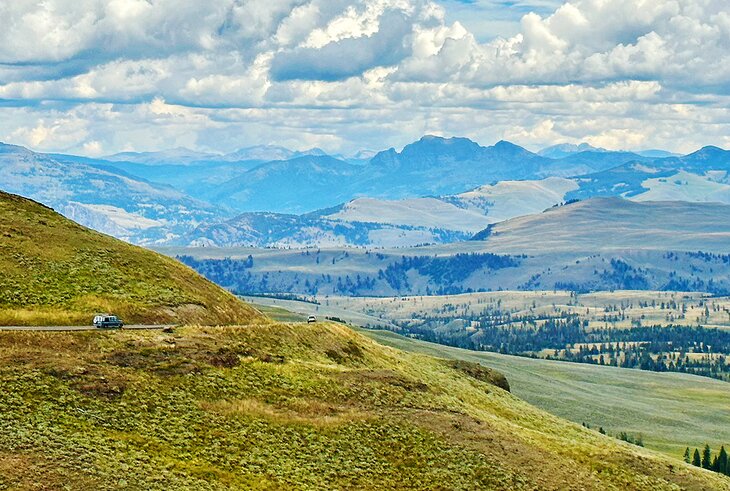
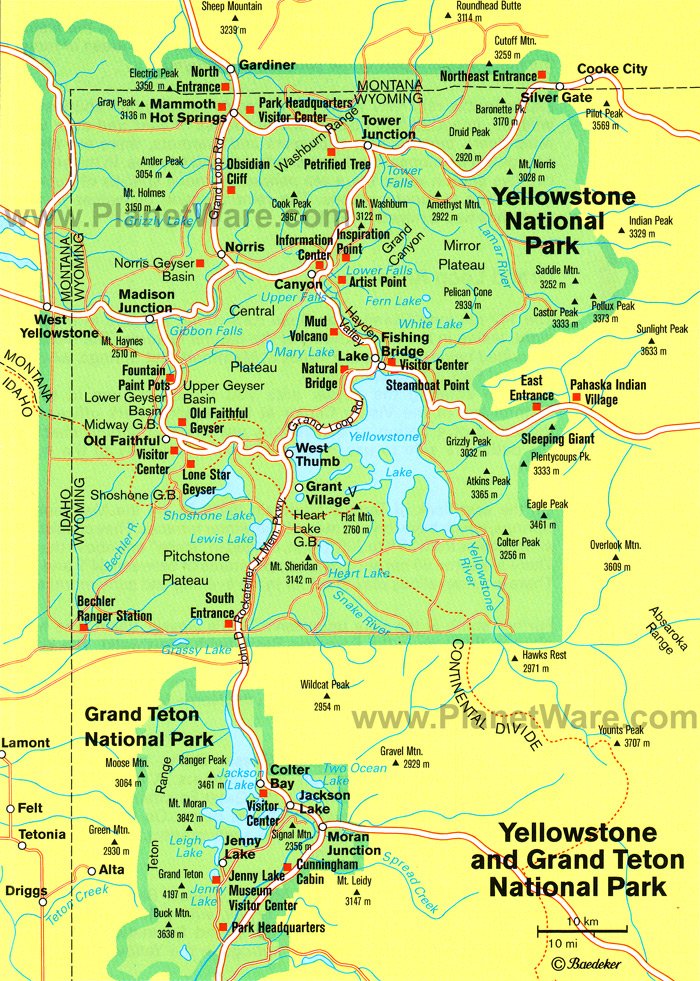
The best way to tour Yellowstone National Park is by driving around the Grand Loop, a 142-mile-long road that curves around in a figure-eight past the park's most striking natural features. At each attraction, well-maintained boardwalks and hiking trails offer close-up views of the main features, as well as breathtaking viewpoints, and many of the paths are wheelchair friendly.
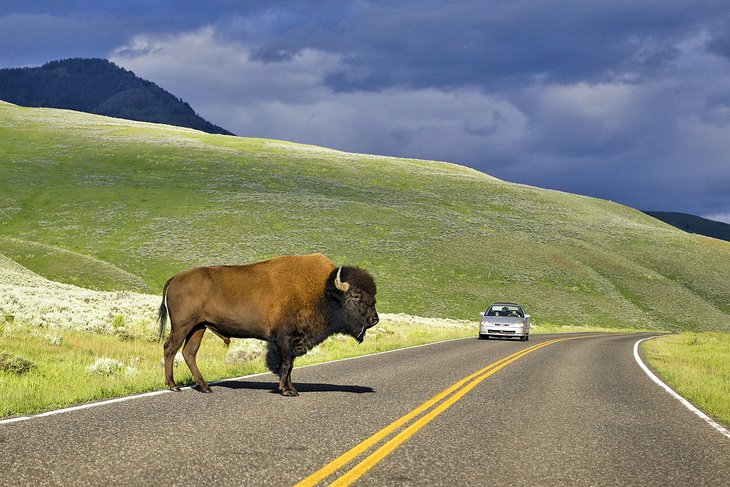
Driving the entire length of both loops can take between four and seven hours, depending on traffic. In the summer months, the traffic can be stop-and-go the entire way, especially when bison are crossing the road. There are plenty of places to stop, from lookout points to visitor areas that have restrooms, concessions, and picnic tables that help to break up the time in the car.
A great option for your Yellowstone trip is to base yourself in Cody, which is about an hour from the East Gate and about two hours from the northeast entrance. You can plot a two-day trip by taking the Upper Loop one day and the Lower Loop another day, staying the night at one of the park's lodges like the Mammoth Hot Springs Hotel.
If you only have one day to see the park, the best approach is to select one-half of the Grand Loop's figure-eight.
If you are taking a self-driving tour of the park, pick up a Yellowstone attractions map or download the NPS Yellowstone App. You can adapt the order of attractions and your route depending on time constraints and which of the five entrances you use to enter the park.
Old Faithful
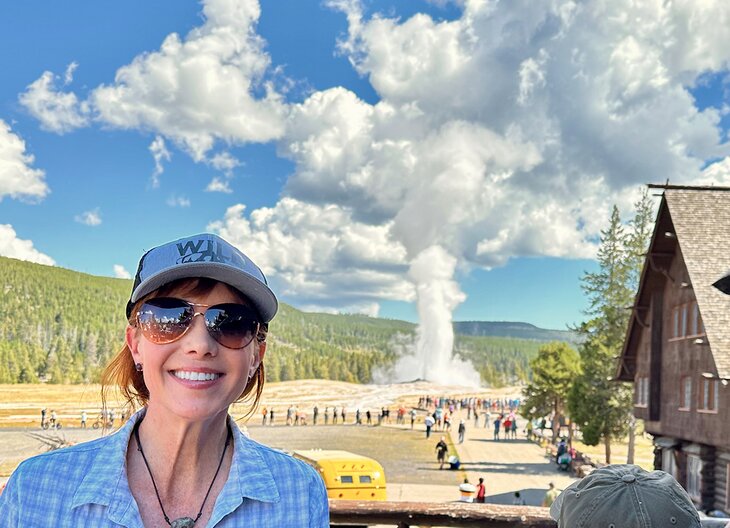
One of the star attractions of Yellowstone, the geyser known as Old Faithful is named for the regularity with which it erupts, shooting columns of water high up into the air.
Witnessing this incredible sight is one of the most popular things to do in Yellowstone, though eruption intervals are not quite as regular as in the past. They now vary from 35 minutes to 120 minutes, with an average interval of about 92 minutes.
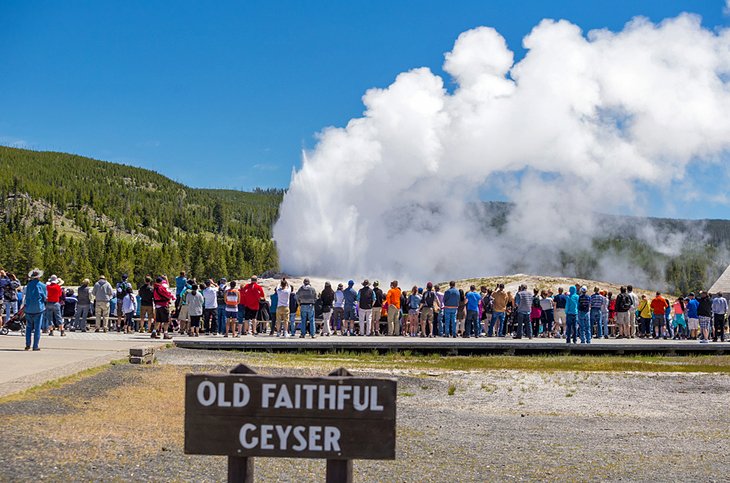
Old Faithful is not the park's largest geyser, however, it does erupt more frequently than other large geysers in the park. The eruptions usually last from one and a half minutes to five minutes and reach heights of between 90 and 184 feet.
One of the best ways to enjoy your time waiting for Old Faithful to erupt is to pack a lunch or buy one from the cafe and find a comfortable spot on the upper outside deck of the Old Faithful Inn where you have a front-row seat to the geyser show. Be sure to stop by the Visitor Center where you can pursue various exhibits describing the nearby landscape and get maps, books, and unique souvenirs from the gift shop.
The Visit Center is also where you can find the next estimated eruption time posted, so you know when to find a spot to watch. Predictions are also often available on the NPS Yellowstone App.
While you're here, stop by the historic Old Faithful Inn. Built in 1903 to 1904, this legendary hotel is a National Historic Landmark and is thought to be the largest log structure in the world. Even if you only pop in to gawk at the magnificent lobby and its towering stone fireplace, it's worth visiting this famous Yellowstone National Park hotel.
The thermal area known as Black Sand Basin lies about a mile from the Old Faithful geyser, and the two attractions can be combined in one easy trip. It has a reputation for being one of the most colorful spots in Yellowstone.
Upper Geyser Basin and Morning Glory Pool
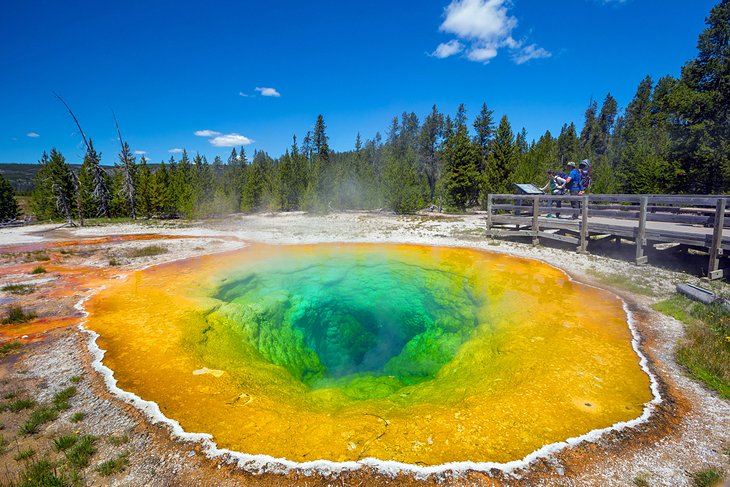
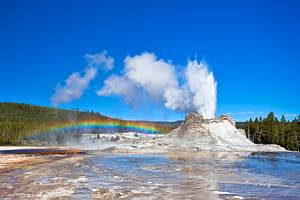
Upper Geyser Basin has the highest concentration of geysers in the world, most of them packed into one square mile. A two-hour boardwalk trail through the area takes you past Old Faithful, the Giantess Geyser, the Beehive Geyser, the Castle Geyser, the Grand Geyser, and fountain basins, shimmering in a rainbow of colors.
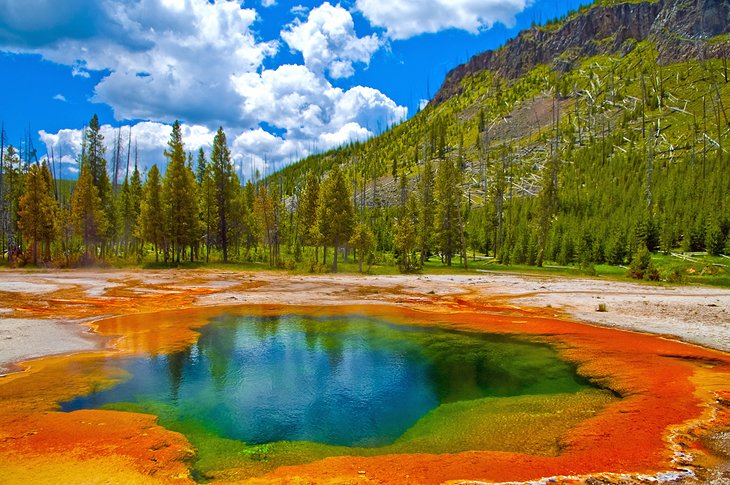
On the north edge of the Upper Geyser Basin is the magical Morning Glory Pool, named after the beautiful flower.
The Biscuit Basin is also part of the Upper Geyser Basin area, however, the formations for which the area was named have long since disappeared due to the 1959 earthquake. Note that the parking lot, boardwalk, and Firehole River at Biscuit Basin are closed to all travel until further notice due to the possibility of ongoing hydrothermal explosions. (A major explosion occurred on July 23, 2024.)
Don't get so distracted by the spectacle of the colorful geysers and hot springs that you miss some of the other elements of the Upper Geyser Basin, like the occasional osprey nest and other wildlife you may be able to spot out the window.
Midway Geyser Basin & the Grand Prismatic Spring
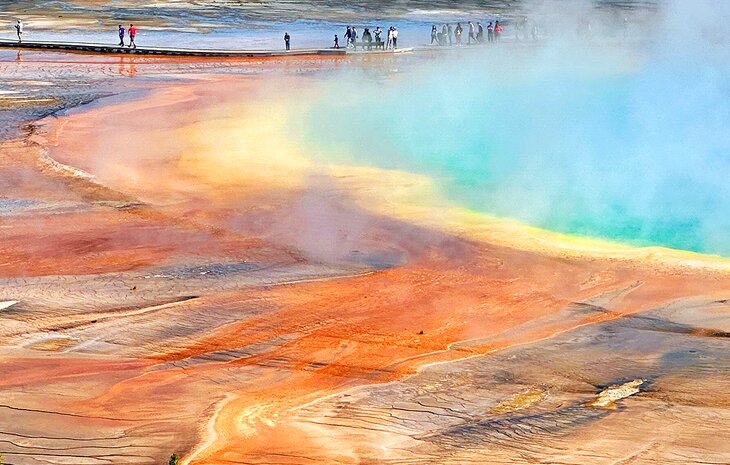
Named for its location between the Upper and Lower Geyser Basins, Midway Geyser Basin boasts two of the park's biggest geothermal features. The mighty crater of the Excelsior Geyser discharges 55 gallons of hot water per second into the Firehole River. It is common to find artists parked near some of these features to capture the moment in paintings.
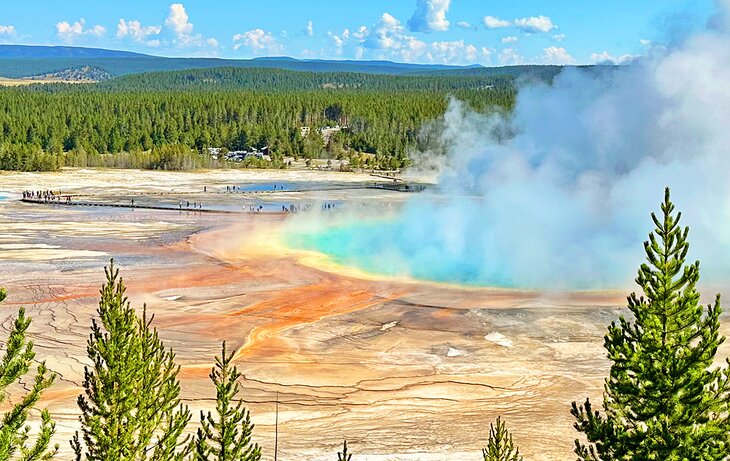
Nearby is the 370-foot-wide, stunning Grand Prismatic Spring, one of the finest and biggest hot springs in the park. This is a must-see attraction and a photographer's favorite, with its vivid hues of blue, green, orange, and gold. The varying temperatures in the pool which is approximately 123 feet deep, is what determine its colors.
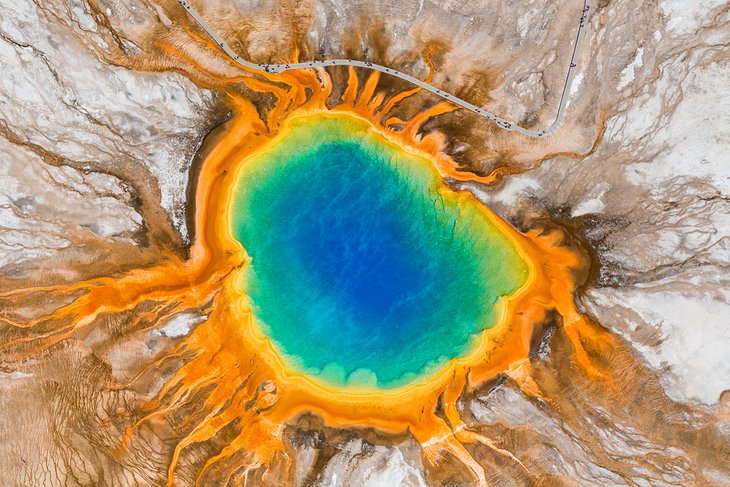
There are two ways to see Grand Prismatic Spring. To get the vantage point from above, you can walk Fairy Falls Trail to the overlook, which is about 1.5 miles round-trip with an incline. Another way to see it is from eye level by parking below and taking the boardwalk along the springs. There is limited parking on the road for this option, which may be difficult during peak times.
Lower Geyser Basin
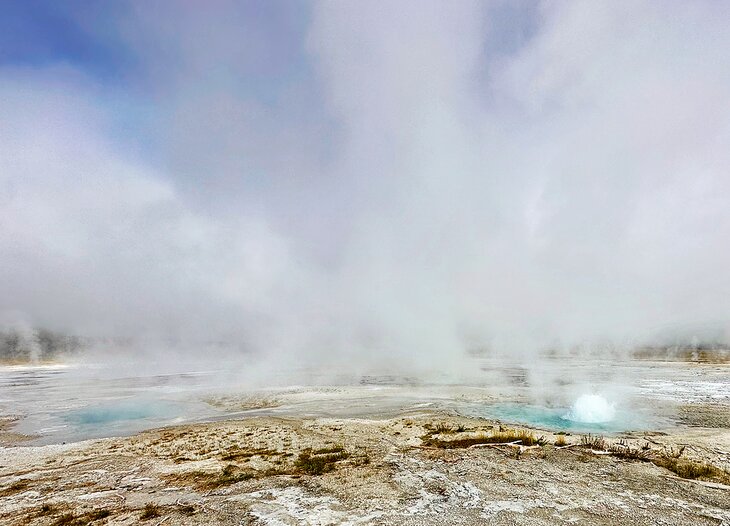
Lower Geyser Basin claims more hot-water eruptions than any other area of the park. A boardwalk trail takes you to the famous Fountain Paint Pots, which simmer with hot, red-hued mud. The fountain paint pot trail is great because you get to see examples of each of the four categories of geothermal features: hot springs, mud pots, fumaroles (steam vents), and geysers all on one stop. Plan on spending about 30-45 minutes walking the trail.
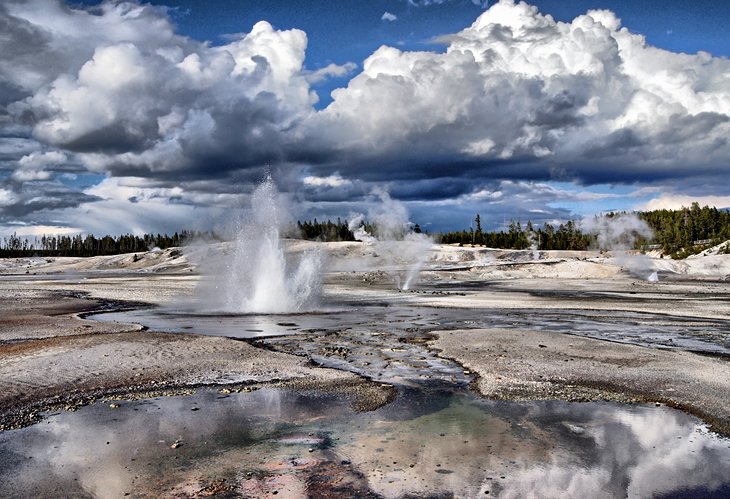
A little way south of this on the popular three-mile Firehole Lake Drive is the Great Fountain Geyser, a magnificent spectacle every nine to 15 hours, when it blasts water 75 to 220 feet high into the air.
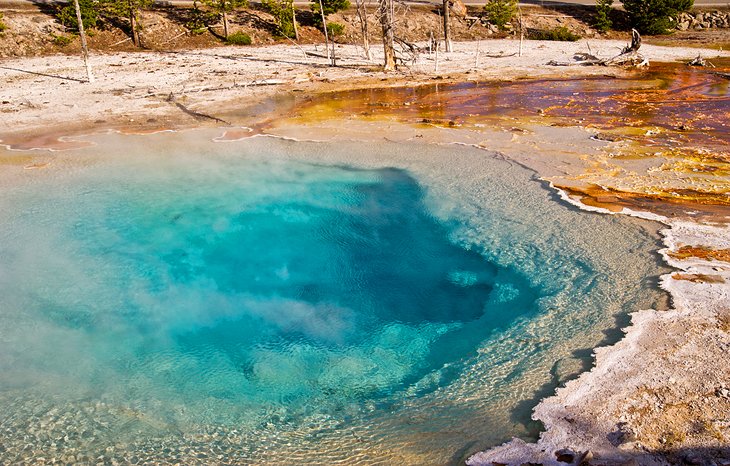
Geyser field has many smaller geysers that are unpredictable, so the area is generally active. Do you see the stunning blues in the pools? That color is formed at the boiling point of 199 degrees.
On the lush green of Fountain Flats, bison and deer often graze, particularly in the early morning and evening.
Norris Geyser Basin
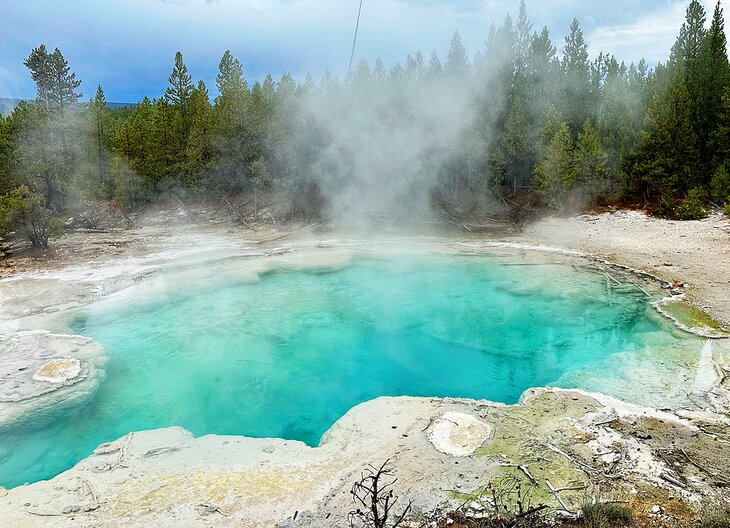
The Norris Geyser Basin is famous for being the oldest, hottest, and most active of the hydrothermal areas in Yellowstone.
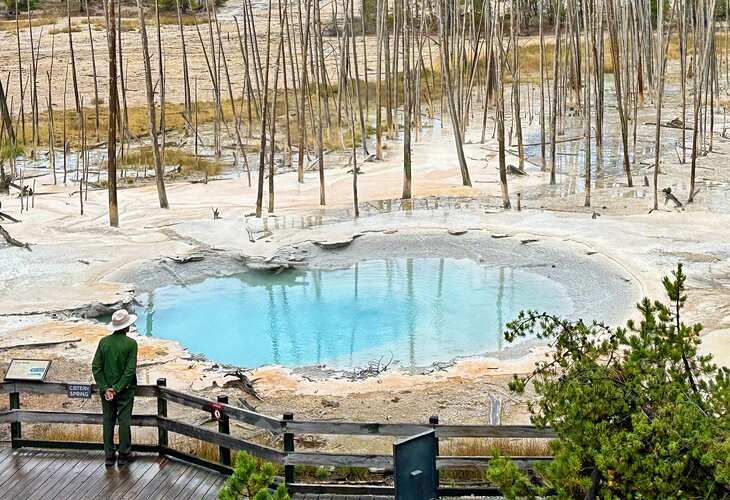
The basin encompasses two main areas that are open to visitors and accessible via looped trails: Porcelain Basin is a bleak and treeless lunar-like setting steeped in the pungent aroma of the bubbling geysers that surround the three-quarter-of-a-mile trail.
Back Basin is a wooded area with geothermal features scattered along a one-and-a-half-mile boardwalk trail. The most well-known features in this basin are the Echinus Geyser, the largest known acid-water geyser, with a pH close to that of vinegar, and the Steamboat Geyser, the tallest active geyser in the world, which erupts irregularly, shooting water up to a height of 300 feet.
Stop by the Norris Museum to learn more about these fascinating hydrothermal features.
Mammoth Hot Springs & Minerva Terrace
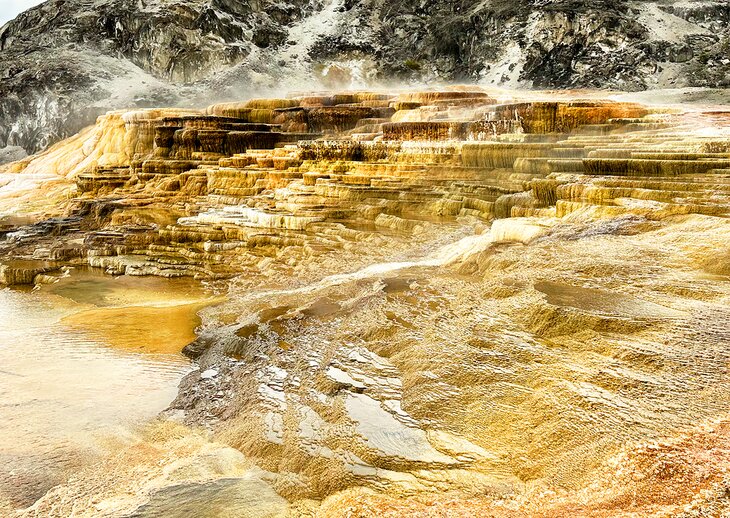
On the east flank of Terrace Mountain (8,012 feet), Mammoth Hot Springs is one of the world's finest examples of thermal springs that deposit travertine.
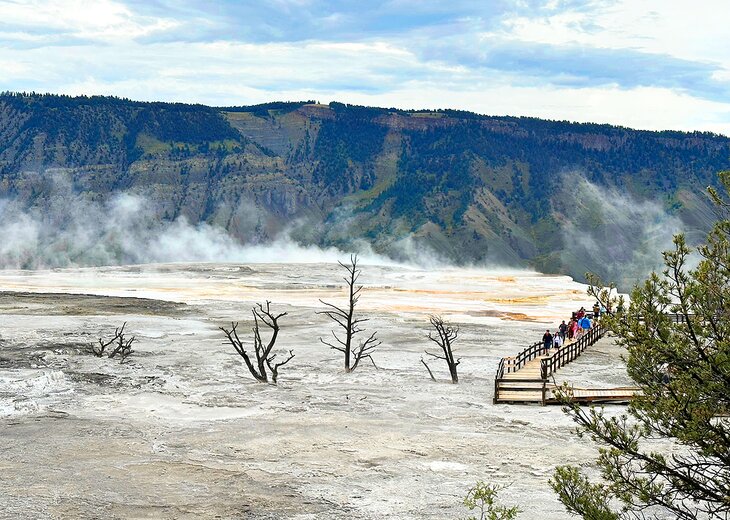
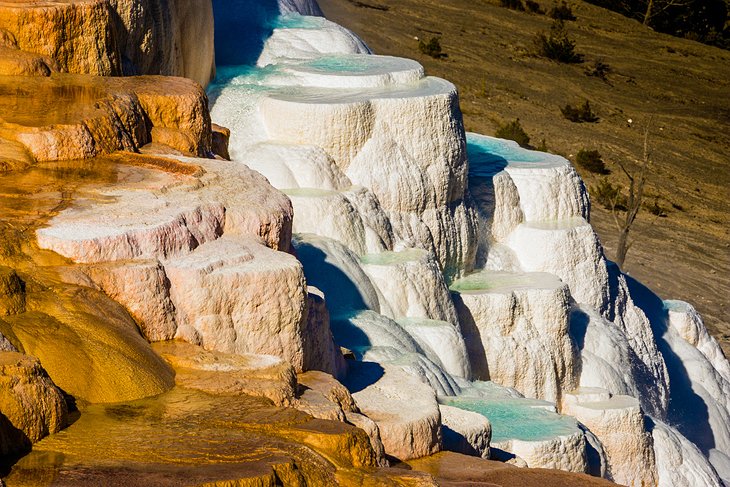
Some 60 hot springs pepper the area at temperatures of between 64 degrees and 165 degrees Fahrenheit, and their scalding waters dissolve calcium carbonate in the surrounding limestone, forming a series of constantly evolving travertine steps. There are three terraces to experience from the boardwalk, each with spectacular views of hot springs that are all active at different times.
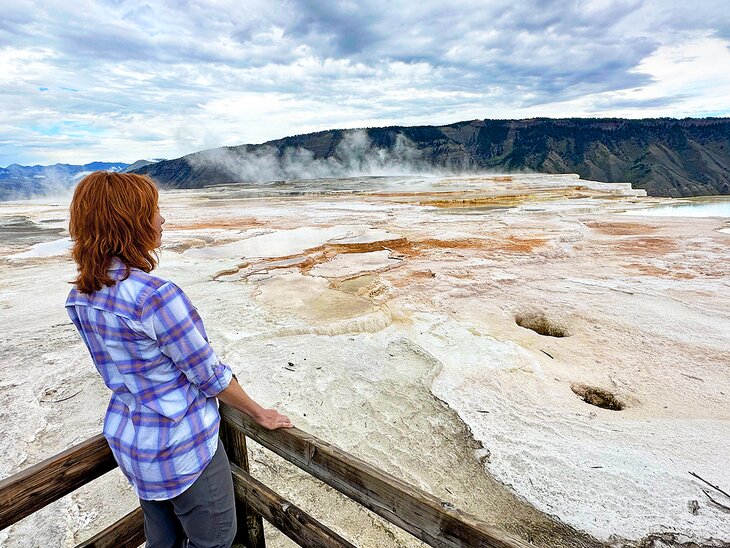
One of the most beautiful examples is the multihued Minerva Terrace, a popular subject for photography and one of the enduring images of Yellowstone National Park.
This area is a nice place to stop for lunch or to spend the night at the Mammoth Hot Springs Hotel and Cabins, which is a short walk down the hill.
Tower-Roosevelt & the Lamar Valley
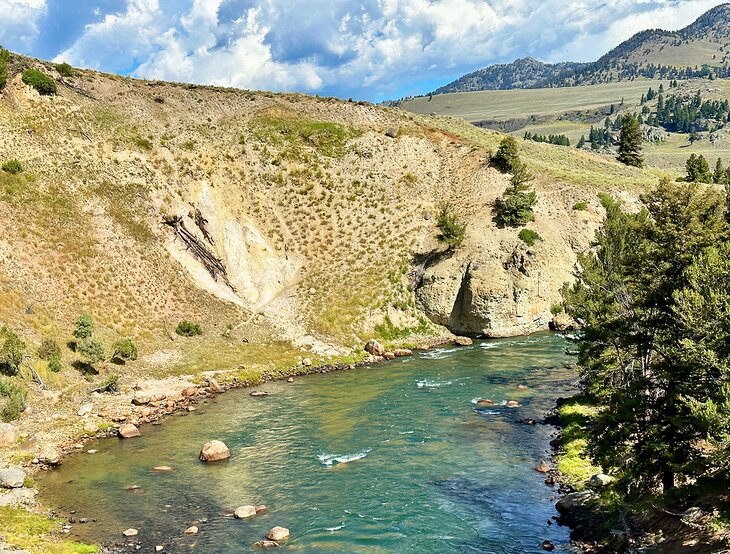
On the northern edge of the National Park is the little holiday resort of Tower-Roosevelt, home to the rustic Roosevelt Lodge, built in 1920. Notable features in the area are the Tower Fall (130 feet high) and the Petrified Tree. To the southeast is the Specimen Ridge, with the remains of a number of fossil forests superimposed on one another.
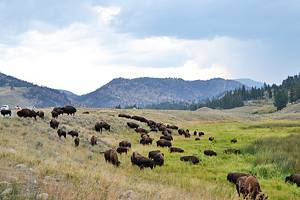
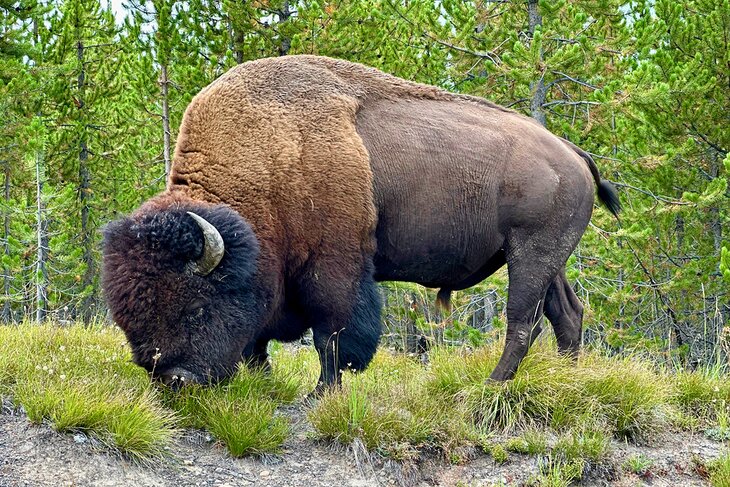
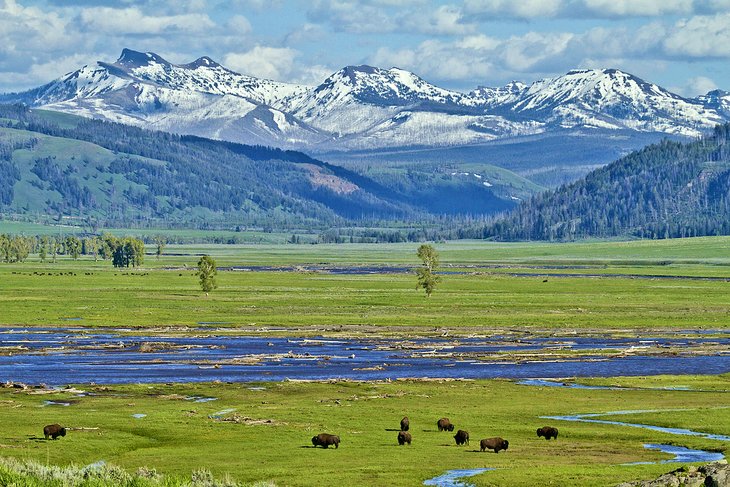
From here, you can venture east off the Grand Loop and enjoy an exciting safari experience in the magnificent Lamar Valley. This is the best wildlife viewing area in Yellowstone for bison herds, foxes, elk, coyotes, and birds of prey.
It is estimated that 3/4 of Yellowstone's bison live in Lamar Valley, so get your camera read,y but be sure to keep your distance and respect the wildlife. Roll down the windows and breathe in the fresh smell of natural pine as you soak in the scenic views that alternate between winding rivers and sprawling grasslands.
Mount Washburn
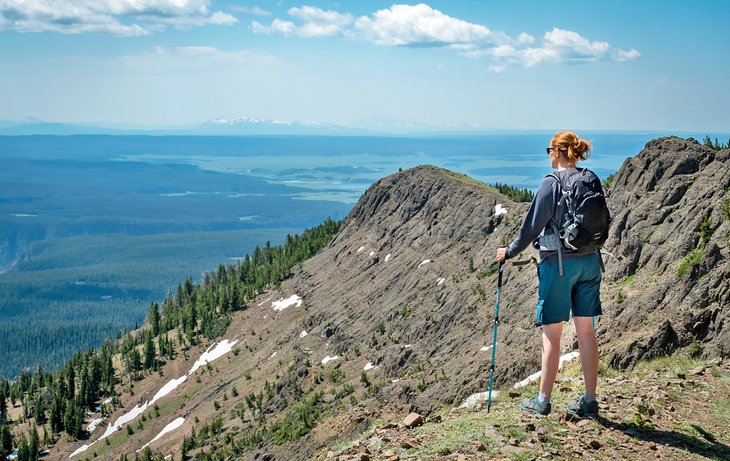
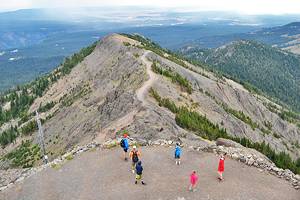
Named after Henry Dana Washburn, leader of the 1870 Washburn-Langford-Doane Expedition, Mount Washburn is a spectacular peak in Yellowstone National Park. It rises to an impressive 10,243 feet and is the main mountain of the Washburn range.
Various hikes lead up its flanks and offer breathtaking views of the park, including the Mount Washburn Trail, considered one of Yellowstone's best hikes. In summer, you can see beautiful wildflowers here, as well as bighorn sheep grazing on its slopes.
You can also hike to Mount Washburn from the Dunraven Pass trailhead, which is on the highest road pass in Yellowstone.
The Grand Canyon and the Upper and Lower Falls of the Yellowstone River
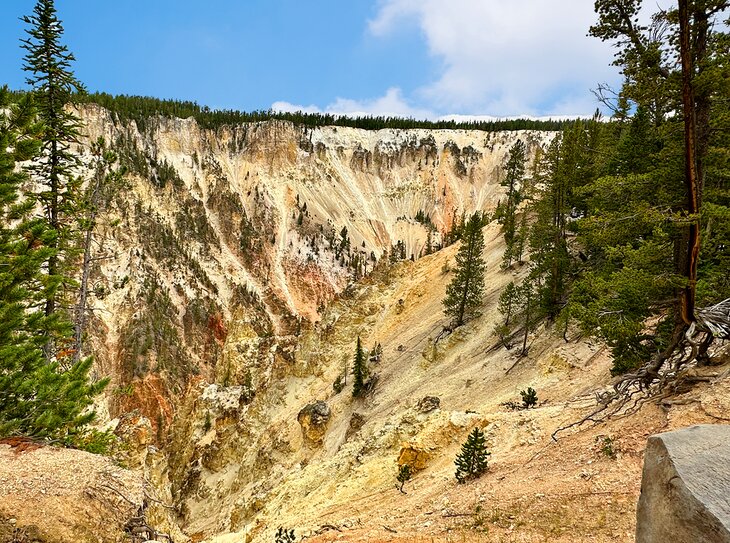
Emerging from Yellowstone Lake, the Yellowstone River flows through the beautiful Hayden Valley before it forms two spectacular waterfalls as it plunges into the Grand Canyon of the Yellowstone, a steep 20-mile-long gorge that resembles Arizona's Grand Canyon.
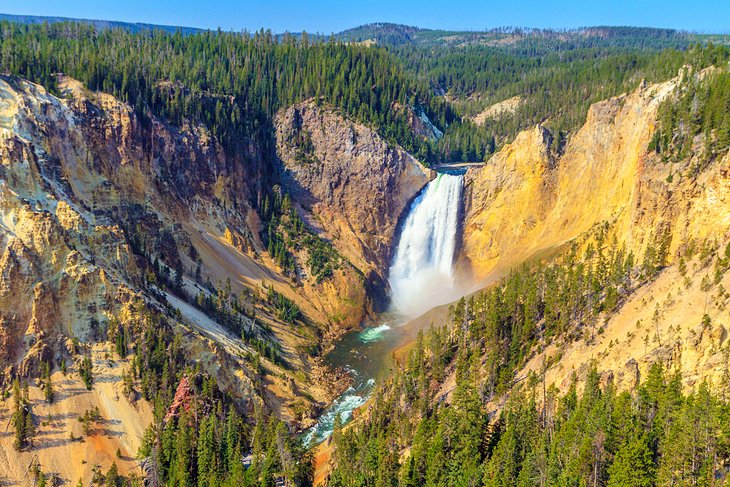
A walkway from the Grand Canyon viewing areas leads you to overlooks of the Lower Falls, which are almost twice as high as Niagara Falls. Here, the river plunges 308 feet with a deafening roar. Lookout Point, Red Rock Point, Artist Point, Brink of the Lower Falls Trail, and various points on the South Rim Trail offer breathtaking views.
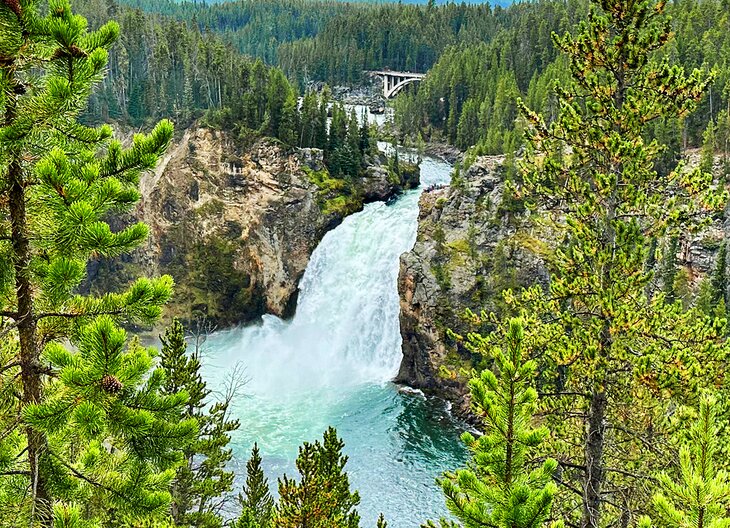
You will need to take a short drive to see the Upper Falls. Ideal spots to watch the water plummet 109 feet are from the Brink of the Upper Falls Trail and from Uncle Tom's Trail.
Notice how the walls of the gorge shimmer in reddish and yellow tones due to chemical reactions in the rock's rhyolite.
Hayden Valley
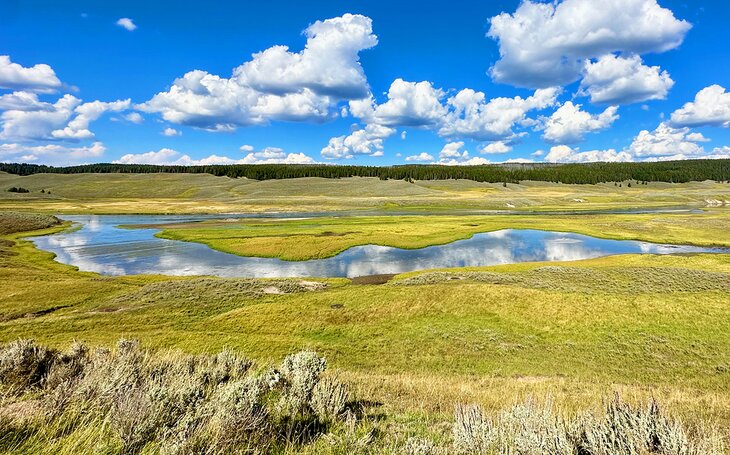
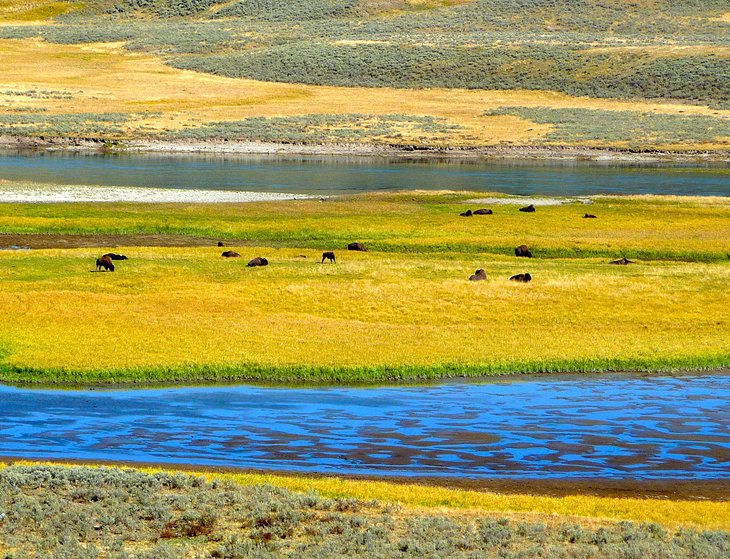
Often dotted with large herds of bison, the gorgeous Hayden Valley is a wide-open landscape that is a prime spot for wildlife viewing. In the spring and early summer, grizzly bears often roam here looking for newborn bison and elk. Coyotes are also easy to spot on the rolling green meadows.
Birders will also have plenty to see. Bald eagles, northern harriers, sandhill cranes, shorebirds, ducks, geese, and pelicans are some of the species that inhabit the area around the mud flats and river.
Mud Volcano
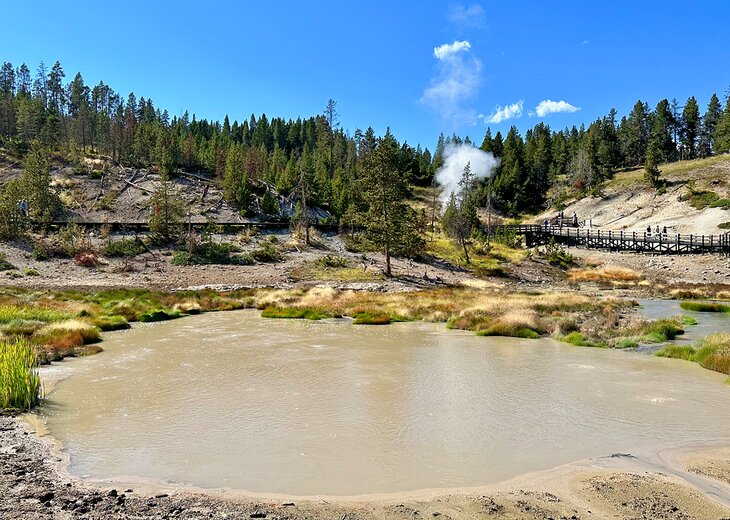
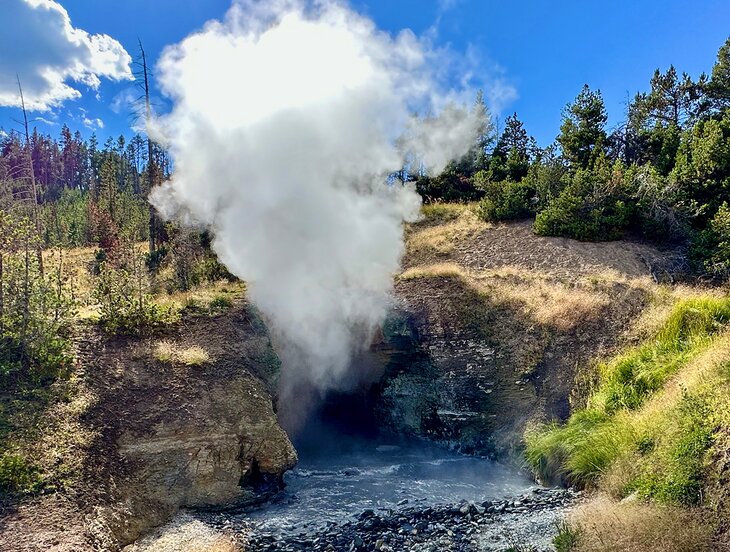
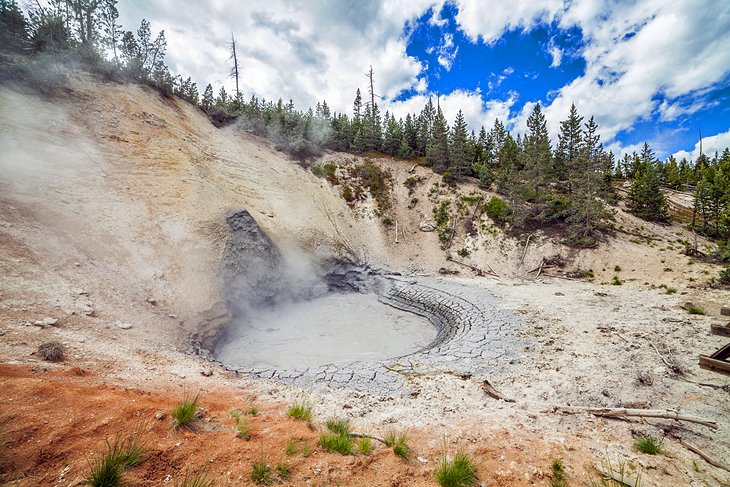
A few miles below Fishing Bridge are the striking mud pots of the Mud Volcano Area and the simmering Sulphur Caldron, one of Yellowstone's most acidic springs. While the bubbling mud volcano is the star of the show in this location, there are several features to see. You will notice a heavy sulphuric smell from the active geothermal features in every direction.
Take care to stay on the boardwalks. From the parking lot, a short wheelchair-friendly loop passes by the steam-belching Dragon's Mouth Spring and the Mud Volcano. If you're more mobile, you can take the steep half-mile loop past Black Dragon's Cauldron.
Yellowstone Lake
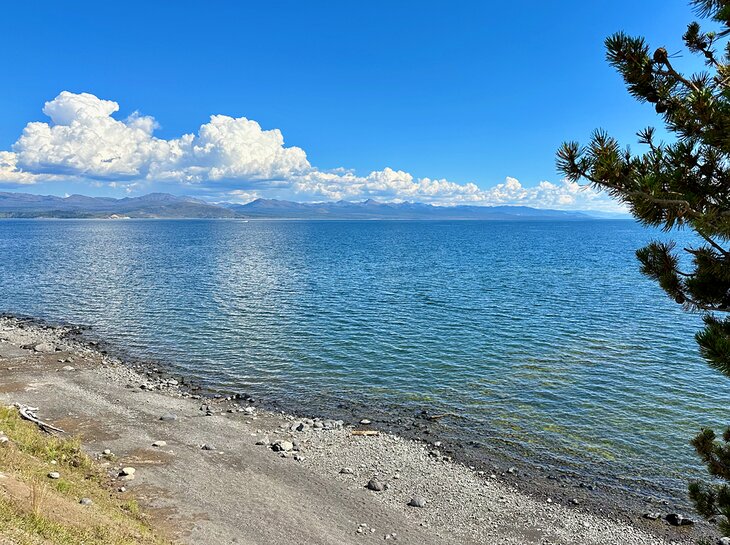
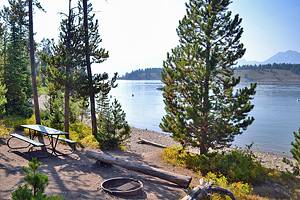
The largest high-altitude lake on the continent (7,737 feet), Yellowstone Lake is an angler's paradise. Submerged nutrient-rich fountains nurture an amazing diversity of plant and animal life, such as earthworms, sponges, native cutthroat trout, as well as invasive lake trout. Birds are abundant here, especially many species of waterfowl.
On the northwest shore of Yellowstone Lake, you will find motels, campgrounds, and various leisure facilities in the surrounding areas of Bridge Bay, Lake Village, and Fishing Bridge.
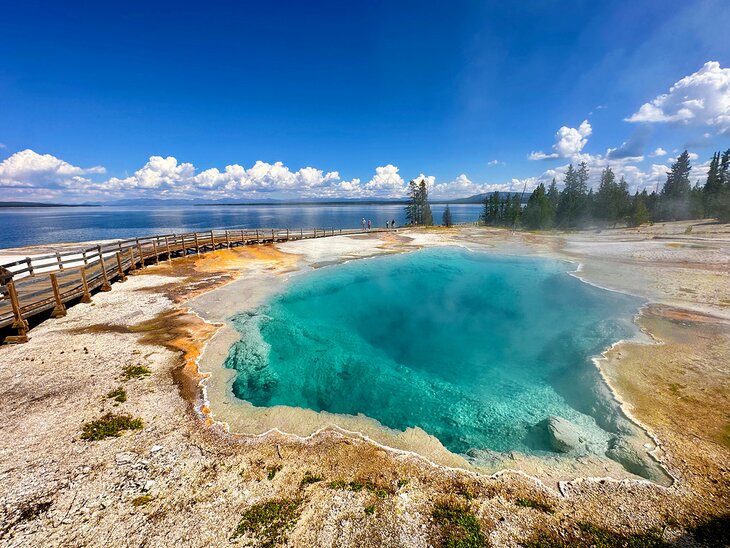
West Thumb, an offshoot on the west side of Yellowstone Lake, is a water-filled caldera with hot springs, fumaroles, mud pots, and geysers all within a relatively small and scenic area.
Old Faithful Inn
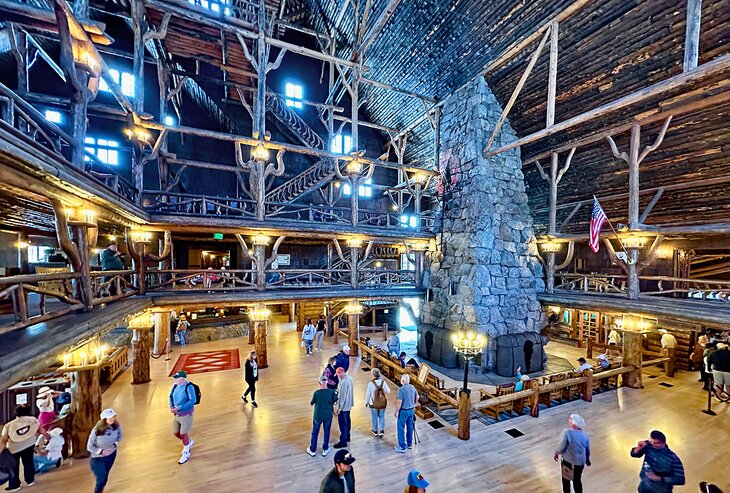
The Old Faithful Inn is a National Historic Landmark building right on the edge of its namesake geyser. It stands seven stories high, with a steeply pitched roof, and is often touted as the world's largest log cabin structure. The interior features a grand yet cozy log cabin feel centered around a massive fireplace.
It's the Old Faithful Inn's aesthetics that make it an attraction worth visiting, whether you are staying at the lodge or not. You can take a free tour of the inn four times a da,y which takes about 45 minutes. You can just show up, and you do not need to be a guest.
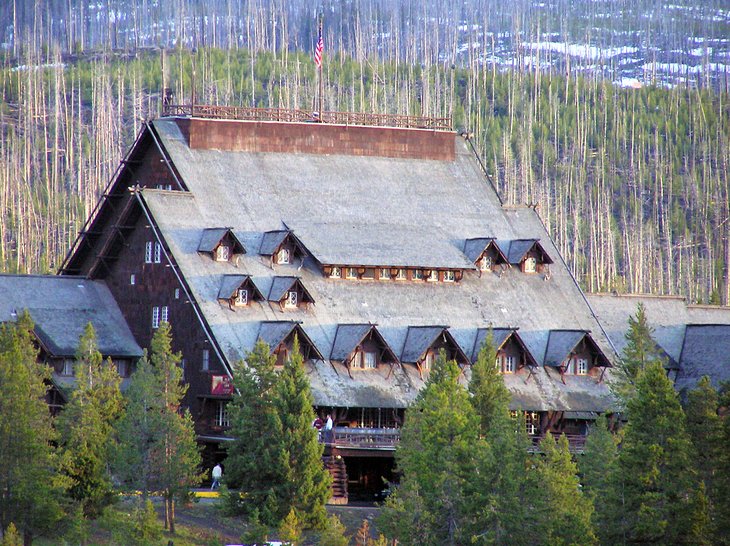
That and the Old Faithful Inn Dining Room, which serves guests and the public alike. Expect an international feel upon entering Old Faithful Inn, as it's a home base for travelers from across the globe.
Grizzly and Wolf Discovery Center, West Yellowstone
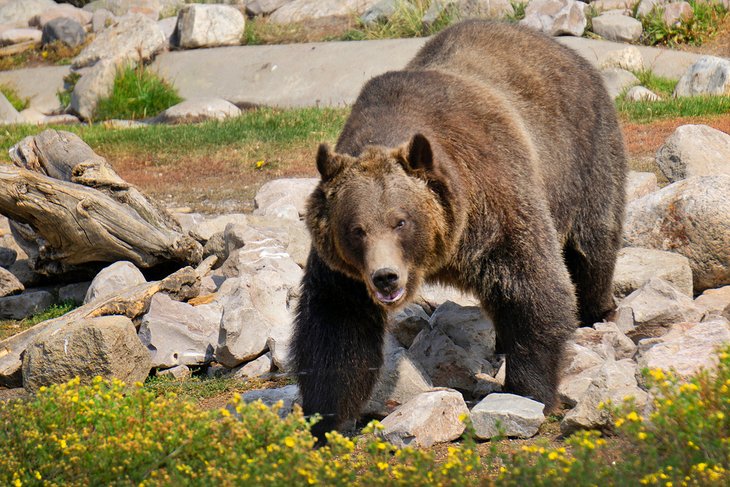
This non-profit wildlife park is outside the park gates in the neighboring town of West Yellowstone, Montana. It's home to bears and wolves unfit to live in the wild, where they now live their lives out as animal ambassadors in large constructed habitats.
The Discovery Center provides the unique opportunity to witness grizzly bears and wolves in a controlled environment. Other animals at the center include birds of prey and river otters in the new Banks of the Yellowstone River Otter exhibit.
The Grizzly and Wolf Discovery Center hosts several programs and educational shows. Many of the programs center around how to cohabitate with bears and other large wild animals, including demonstration classes on how to use bear spray.
Places to Stay in Yellowstone National Park
Staying in Yellowstone is the best way to experience the park, but you can also book accommodation outside the park in West Yellowstone, Gardiner, Cody, and Cooke City in Montana, and near Yellowstone's East gate in Wyoming. Here are some highly rated places to stay in convenient locations in and outside the park:
In the Park:
- Yellowstone National Park lodging includes nine lodges operated by the concessionaire of the park, ranging from rustic cabins to hotel rooms. If you'd rather sleep under the stars, Yellowstone camping options are abundant.
In West Yellowstone:
- Less than a two-minute drive from Yellowstone's west gate, the pet-friendly Kelly Inn West Yellowstone offers impeccably clean rooms, with bright log cabin-style decor, as well as a heated indoor pool, hot tub, and sauna. Rates include continental breakfast.
- The cozy Explorer Cabins at Yellowstone come with kitchenettes, and the BEST WESTERN Desert Inn, with an indoor pool, is only two blocks from Yellowstone's west entrance and within walking distance of restaurants.
In Gardiner:
- About a mile from the north entrance to Yellowstone, Travelodge by Wyndham Gardiner Yellowstone Park offers clean rooms with a free breakfast. Some rooms come with kitchenettes.
- Also with complimentary breakfast, The Ridgeline Hotel At Yellowstone, Ascend Hotel Collection has an indoor heated pool, hot tub, and saunas and is only minutes from the north gate.
Operating Hours
Yellowstone National Park is usually open throughout the year, but many roads are closed from November to April. During winter, most of the roads are only open to snowmobiles and snow coaches, with the exception of the road between the north and the northeast entrance, which is open year-round.
Best Time to Visit Yellowstone National Park
Yellowstone National Park is worth a visit no matter the time of year. It's the first national park in U.S. history, established in 1872, and encompasses the supervolcano known as the Yellowstone Caldera. This dynamic landscape is home to one of the largest collections of hydrothermal features in the world. And this collection of geysers, fumaroles, and mud pots draws over four million visitors every year.
The best time to go to Yellowstone National Park depends on the desired experience. The summer months bring beautiful 70-degree weather and extended daylight hours. Half of the park's annual visits also occur during these months. Summer visitors should expect crowded boardwalks, backed-up traffic, and difficulty with finding lodging.
The shoulder seasons offer some respite from the crowds, making the fall and spring an excellent time to travel to Yellowstone. Visitors will want to pack warm clothes in the shoulder seasons and a rain jacket for the spring. But the new colors in the park are well worth the travel. Between wildflowers blooming in the spring and the crisp air of autumn, spring and fall are beautiful seasons to go to Yellowstone.
Winter also offers a magical time of year to visit Yellowstone. The park's many fumaroles, hot springs, and geysers are true natural beauties when covered with snow. Although, freezing winter temperatures and few operating facilities deter some visitors to Yellowstone in the winter. For these reasons, winter is one of the best times to visit Yellowstone National Park to avoid the crowds.
What's Nearby
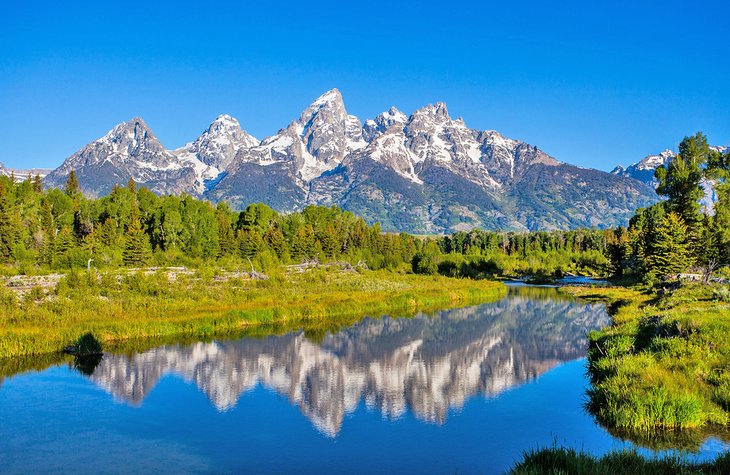
From the south entrance, you can drive the John D. Rockefeller Parkway, one of the most scenic roads in the country, all the way to Grand Teton National Park for spectacular mountain scenery and superb wildlife viewing.
West Yellowstone is also a popular tourist stop and gateway to the park. Highlights include the Yellowstone Historic Center, the West Playmill Theatre staging local productions, and the Grizzly and Wolf Discovery Center.
For information on other places to visit and things to do near Yellowstone, see our page on the top attractions in Jackson Hole. Looking for outdoor adventure? Head out on some hiking trails in Jackson Hole and Grand Teton National Park, or cast a line in some of the best fly fishing destinations in Wyoming.
Map of Yellowstone National Park: Attractions, Tips & Tours