Tourist Attractions in Chile
Boasting one of the planet's most diverse landscapes, Chile has in recent years become an increasingly popular travel destination, particularly among nature lovers and adventure seekers. Here in this long, narrow nation on the west coast of South America, travelers will find an array of stunning sightseeing opportunities, from the tall peaks of the Andes and endless beaches to lush temperate forests, ancient volcanoes, and a dramatic coastline such as that found at Cape Horn.
Chile is also blessed with an abundance of superb national parks and conservation areas, many of them popular destinations for those into trekking and hiking, as well as those who enjoy adventurous things to do such as climbing, river rafting, mountain biking, and horseback riding.
But Chile is not without its cultural attractions, too, with cities such as the capital of Santiago offering many fine museums and art galleries, and stunning Easter Island with its famous stone figures. Whatever your travel preferences, you'll find no shortage of beautiful places to visit and photograph in Chile.
To ensure you see the best points of interest in this amazing South American country, be sure to read our list of the top things to do on Chile.
Torres Del Paine National Park
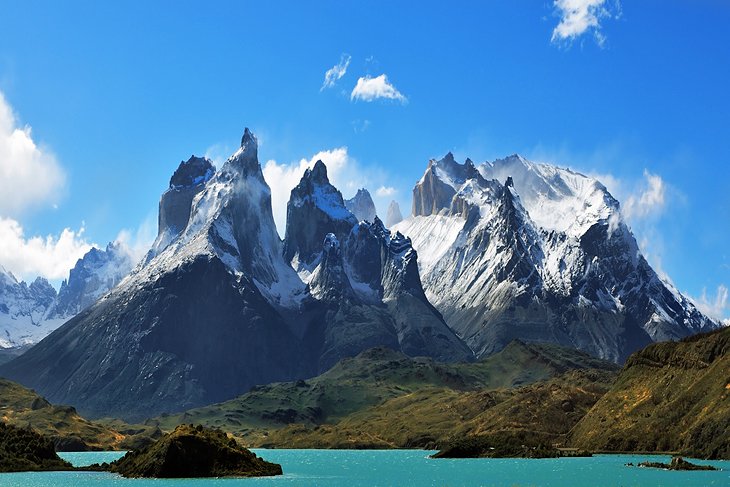
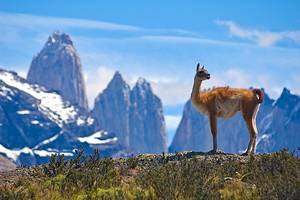
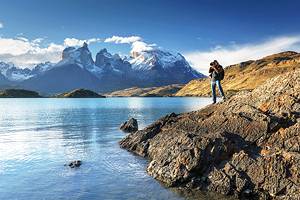
One of Chile's most important natural areas and an increasingly popular travel destination is the spectacular Torres del Paine National Park. Situated more than 100 kilometers north of the city of Puerto Natales in southern Patagonia, this stunningly beautiful area encompasses mountains, glaciers, and countless lakes and rivers.
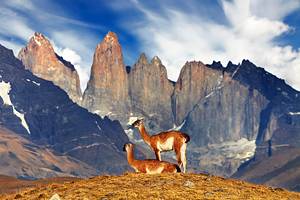
The most important region of the park is the Cordillera del Paine, an area that marks the transition from the Patagonia steppe to the subpolar forests of the north. Perhaps the most notable of its many wonderful features are the three 2,850-meter-tall granite peaks of the Paine Massif, which dominate this already breathtaking scenery.
Hiking is one of the park's most popular activities, with numerous well-marked trails, many offering overnight shelters (refugios) with the basics needed for longer treks that circle the mountains. If you're planning on anything more than a day's hiking, professional guides are recommended and, in some areas, mandatory.
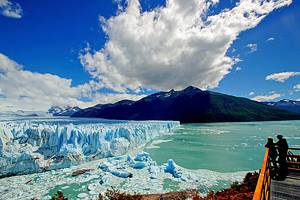
One of the top guided tours of the park is the five-day W Trek, one of the top hikes in Patagonia. This 71-kilometer route takes in some of the top points of interest in Patagonia, including the massive Glacier Grey and the mountains of Paine Grande.
Address: Magallanes y la Antártica Chilena Region
Official site: www.torresdelpaine.com/ingles/
Valle de la Luna and the Atacama Desert
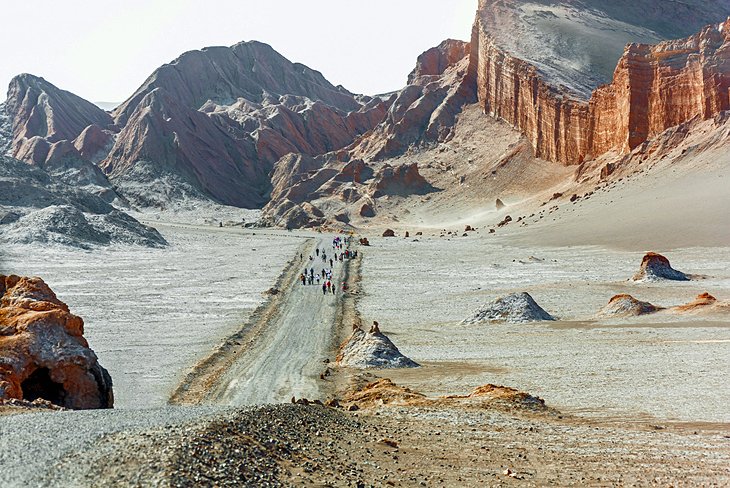
Valle de la Luna, which literally translates as "Valley of the Moon," lies 13 kilometers west of San Pedro de Atacama at the north end of the country, near its border with Bolivia. It can be accessed via well-marked bike trails, tour buses, or self-drive car rentals.
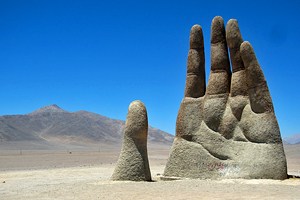
This rugged, inhospitable looking landscape in the heart of the Atacama Desert attracts many visitors for its eerie resemblance to the surface of the moon, an effect caused by the erosion of its sand and stone features by wind and water over countless millennia. Despite its remoteness, though, this surprisingly beautiful landscape has sustained life for centuries, both human as well as that of numerous species of flora and fauna.
Among its most interesting features are its dry lake beds-this is, after all, one of the driest places on the planet-which are dazzlingly white due to deposited salt, and prone to producing fascinating natural saline outcrops.
Other notable features of the Atacama Desert are the region's many caverns, some containing evidence of pictographs created by early man and where some of the world's oldest mummies, preserved by the area's aridity, were found. The most famous of these, the Chinchorro mummies, are now on display at the archaeological museum in San Miguel de Azapa.
Also of interest is the Laguna Cejar sinkhole, famous for its turquoise water.
Address: San Pedro de Atacama, Antofagasta Region
Easter Island & Rapa Nui National Park
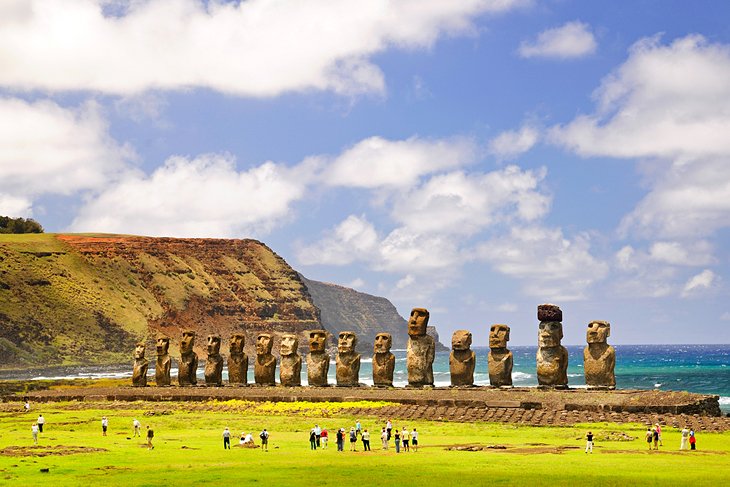
First visited by Europeans in 1722, the magnificent yet remote Easter Island – so named by a Dutch Explorer who first set eyes on it on Easter Sunday – has been inhabited for thousands of years by Polynesians. Despite being more than 3,500 kilometers away from mainland Chile, this fascinating island with its remarkable stone sculptures remains the country's most recognizable attraction.
All told, 887 of these statues, known as Moai – created by the island's early Rapa Nui population – have been identified, most of them now protected by Rapa Nui National Park (the island itself has been declared a UNESCO World Heritage Site). The most impressive collection is at Ahu Tongariki where 15 of them have been re-erected on the island's largest Moai platform, or "ahu."
Rapa Nui is also where you'll find one of the country's best beaches, Anakena. This beautiful yet short stretch of white coral sand is the perfect spot for a break from hiking.
Also of interest are the many "hare paenga" ruins near ahu sites consisting of stones that once formed the foundation of boat-shaped houses. Other highlights include the Father Sebastian Englert Anthropological Museum in Hanga Roa, the island's main community, notable for its exhibits relating to the history of the Polynesian islanders and their traditions.
Hot Tip: Visiting Easter Island is best done as part of a Chilean vacation, with regular flights available from Santiago or Tahiti. Flight times are approximately five hours, so expect to stay at least a couple of days.
Read More: Most Beautiful Islands in the South Pacific
Santiago: Chile's Cultural Capital
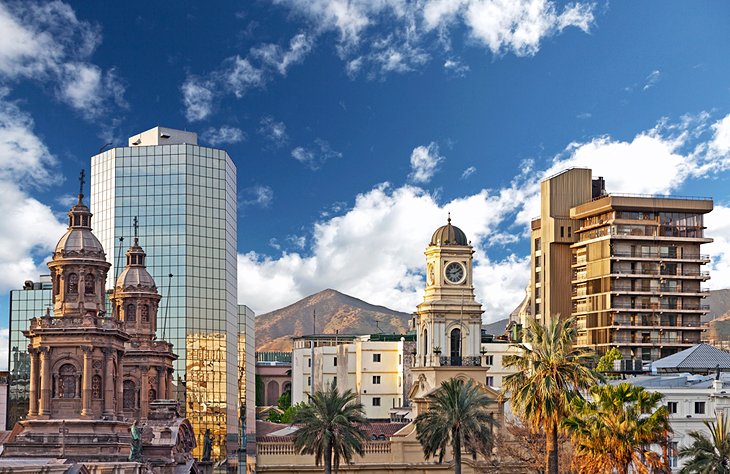
Santiago is not only the financial and business capital of Chile, it also serves as the country's cultural and entertainment center. Consequently, it's home to endless fun things to do, including visiting its best museums and galleries, along with excellent shopping, dining, and hotel options.
Centrally located and the country's main transportation hub, Santiago is where most visitors begin their Chilean travels before heading to the Andes or other areas of outstanding natural beauty, such as Easter Island. The smartest travelers, though, will allow time in their Chile travel itinerary to get to know Santiago.
Founded in 1541 and relatively crowd-free, the city features points of interest such as the Centro Cultural Palacio La Moneda, a state-of-the-art cultural center occupying part of the impressive Palacio de la Moneda, and the Chilean National Museum of Fine Arts (Museo Nacional de Bellas Artes). Established in the 1880s, it focuses on Chilean artists, and boasts a large permanent collection of paintings, sculptures, and photos.
Other must-sees are the excellent Museum of Pre-Columbian Art (Museo Chileno de Arte Precolombino), featuring collections relating to the country's native people, and the Museum of Memory and Human Rights (Museo de la Memoria y los Derechos Humanos). The latter commemorates those who suffered under the Pinochet regime.
A highlight of any visit to Santiago is taking the aerial tramway to San Cristóbal Hill for its stunning views over this most hospitable of cities. There are also some interesting attractions here, including an observatory, a 22-meter-tall statue of the Blessed Virgin Mary, and an amphitheater.
Be sure to also spend time enjoying Santiago Metropolitan Park (Parque Metropolitano de Santiago), a huge urban green space. Here, you'll find a botanical garden, the Chilean National Zoo, and a funicular railway.
The Chilean Lake District
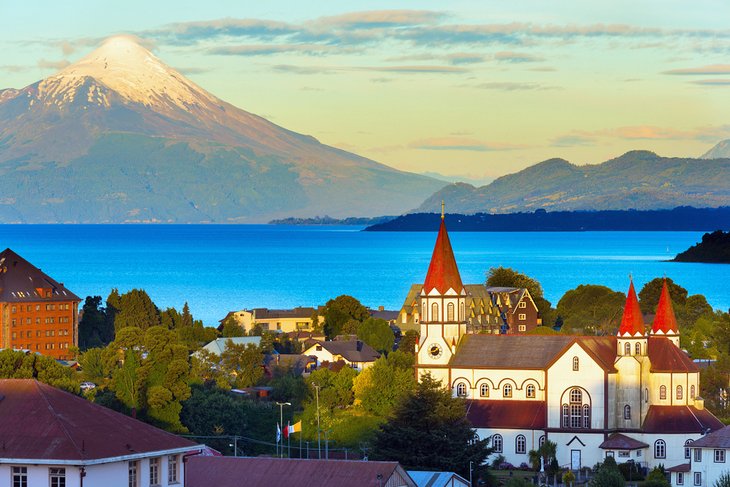
Stretching for more than 330 kilometers from Temuco to Puerto Montt and resembling the alpine regions of Europe, the Chilean Lake District (Zona Sur) is well worth exploring. Like its alpine cousin, this beautiful region of the Andean foothills boasts rich farmland at the base of its many snowcapped volcanoes, ringed by thick forests and the kind of deep lakes that water sports enthusiasts drool over.
And the connection to Europe doesn't end here. After the forced resettlement of the region's indigenous people, the Mapuche, farmers from Switzerland, Austria, and Germany arrived, bringing with them aspects of their own culture that can still be seen in the architecture of towns like Osorno and Valdivia, as well as in the region's customs and festivals.
For adventure seekers, a typical Chilean Lake District itinerary includes endless hiking and biking potential, along with other fun activities such as volcano climbing; white water rafting; kayaking; canoeing; horseback riding; and, come winter, skiing. Road trips to the region are also extremely popular.
Cape Horn
Considered something of a Holy Grail for travelers – and the equivalent of Mount Everest for yachting types – Cape Horn is, if you can get here, well worth the effort, if not the bragging rights.
The last stop before Antarctica and the world's southernmost tip, Cape Horn has for centuries been known as a sailor's graveyard for its remoteness, its hazardous coastline, and the rough seas that prevail here. While less important as a trade route now thanks to the Panama Canal, it has seen an increase in popularity among serious sailing enthusiasts, and features in a number of exciting races.
For the rest of us, it can, with careful planning, still be visited. There are, however, only a few ways to get to Cape Horn (apart from having your own yacht, of course). An increasingly popular option is via helicopter from the Chilean town of Puerto Toro. A day-long adventure, it can be expensive, so you may want to seek travel companions on the adventure. Alternatively, charter sailboats can get you here, but it's a long haul and often rough.
Cruise ships are, perhaps, the best option. A number of cruises in fact pass by Cape Horn on their way to Antarctica and will, weather and seas permitting, stop here for an hour. Passengers disembark via inflatable boats, so this part of the journey can be rough, too.
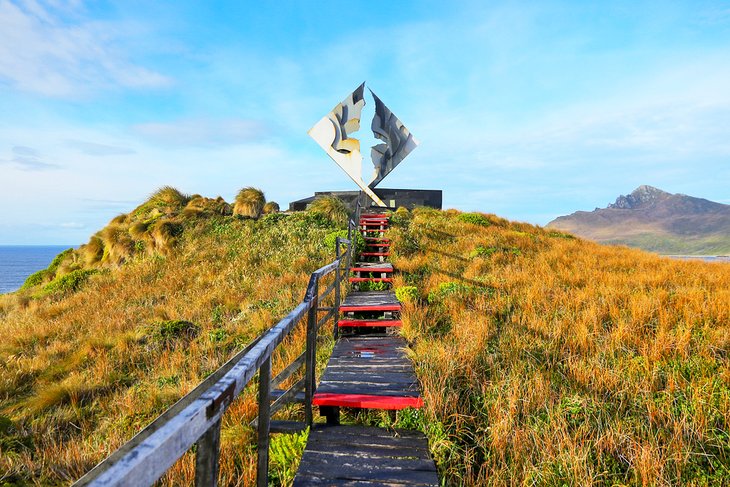
Once ashore, passengers can make the short cliff-top climb to what is perhaps the ultimate tourist selfie spot: the Cape Horn Memorial Sculpture. This breathtaking monument and its incredible views welcome you to the bottom of the world.
Valparaíso
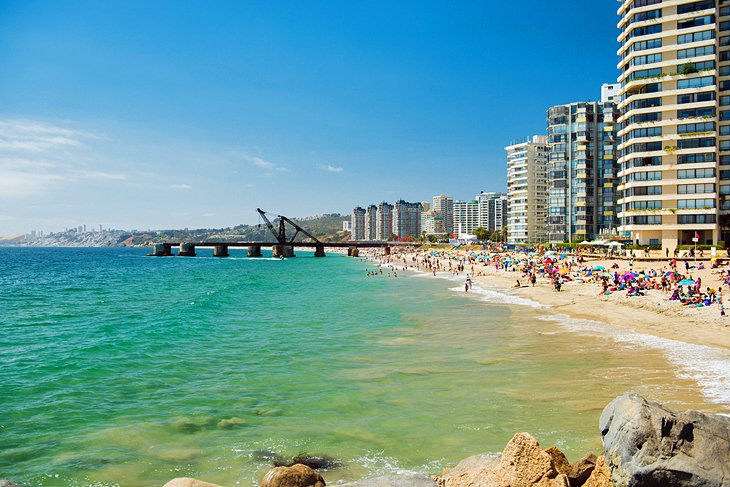
Chile's third largest city, Valparaíso, is nestled between the sea and the coastal mountain range about 112 kilometers northwest of Santiago and makes for an excellent day trip. As popular for its many old cobbled streets and unique architecture as it is for its lovely harbor and beaches, the city offers a great deal of fun things to do.
Many tourist attractions focus on the country's rich maritime heritage, including Lord Cochrane's Museum (Museo Lord Cochrane), located in a lovely old colonial home built in 1842. Another must-visit tourist attraction is the superb Naval and Maritime Museum (Museo Naval Y Maritimo) with its displays dealing with the War of the Pacific of 1879 between Chile and allied Peru and Bolivia, with particular emphasis on the contributions of Chile's war heroes.
A related attraction is the Ironclad Huáscar located in the Port of Talcahuano, some 600 kilometers south of Santiago. Talcahuano's beautiful harbor – home to Chile's navy – is the base for this immaculately restored historic vessel built in 1865 in Britain and one of the only surviving such battleships of her kind.
Lauca National Park
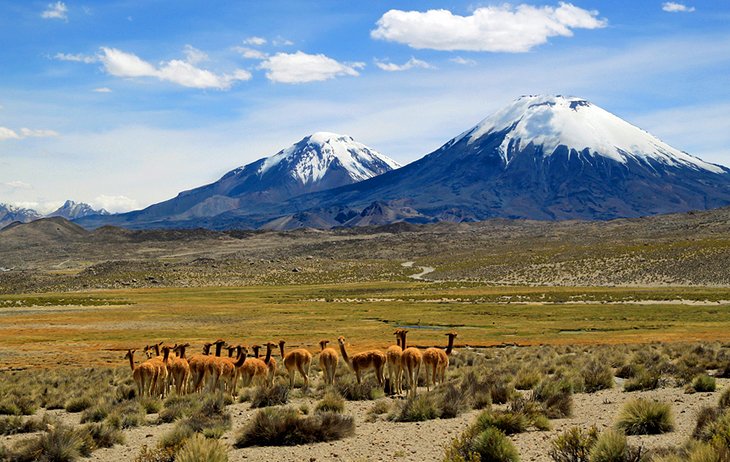
Located in the far north of Chile, just 140 kilometers east of the city of Arica, Lauca National Park (Parque Nacional Lauca) covers an area of 1,300 square kilometers and consists largely of high plains and mountain ranges, many of the latter comprised of large volcanoes.
Highlights include hiking around its many pristine mountain lakes, most notably Cotacotani and Chungara, which reflect the scenery around them to stunning effect. The park also features a number of important archaeological sites, as well as evidence of the early European settlers who left their mark in the region's many fine old colonial churches and buildings.
It's also especially popular for bird-watchers and is home to more than 140 species, including Andean geese, crested ducks, Chilean flamingos, and the massive Andean condor. Another beautiful area popular with nature lovers is Conguillío National Park (Parque Nacional Conguillío), also in the Araucanía Region of the Andes.
Address: Putre, Arica y Parinacota Region
Pumalín Park
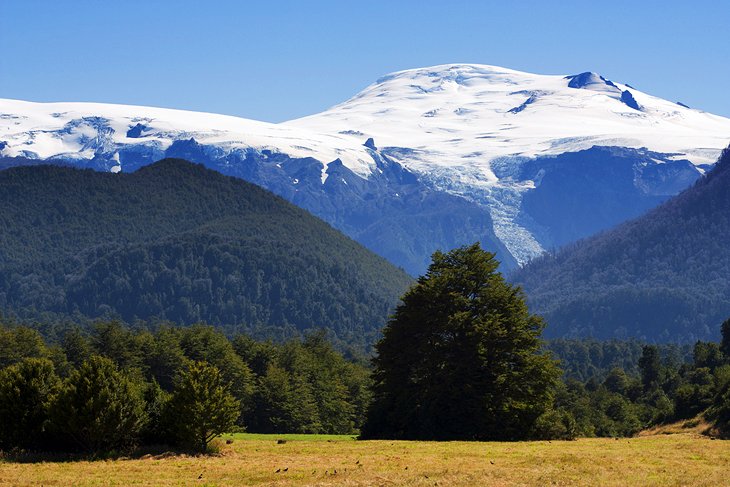
Although only established as a nature sanctuary in 2005, Pumalín Park has become one of Chile's most important and popular conservation areas. Covering a vast area of more than 988,000 acres stretching from the Andes to the Pacific, the area boasts some of the country's most pristine coastline and forests and is notable for being almost entirely untouched by human development.
In addition to protecting the area's rich flora and fauna, including the Alerce, the world's oldest tree species, the park is easily accessible to visitors and provides one of the country's best wilderness experiences. It's owned and operated by the US-based Conservation Land Trust.
Thanks to its extensive network of trails, campgrounds, and visitor facilities, Pumalín Park is a delight to explore, whether for a short nature hike or as part of a longer ecotourism adventure. These often include a stay at rustic cabin-style accommodations overlooking one of the world's most beautiful, unspoiled backdrops.
Address: Sector Río Amarillo S/N Chaitén, Chaiten, Chaitén, Región de los Lagos
Official site: www.parquepumalin.cl/en/index.htm
Los Pingüinos Natural Monument
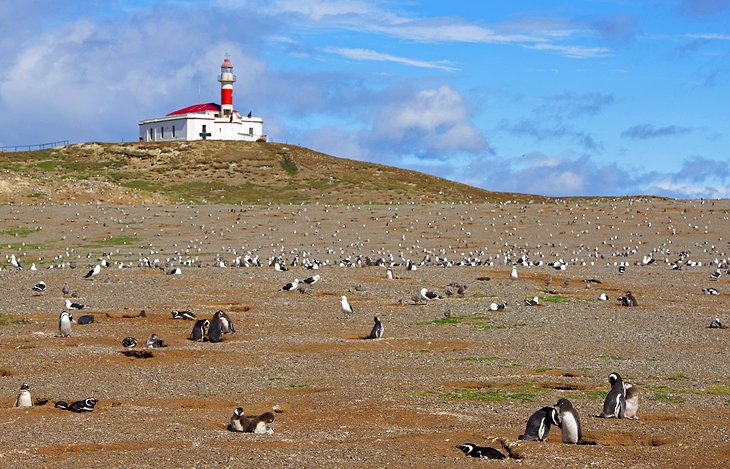
In addition to its national parks, more of Chile's important conservation efforts can be seen in its many natural monuments. One of the most popular is Los Pingüinos Natural Monument (Monumento natural Los Pingüinos), just 35 kilometers northeast of the city of Punta Arenas at the southern tip of the island and incorporating the beautiful Magdalena and Marta Islands.
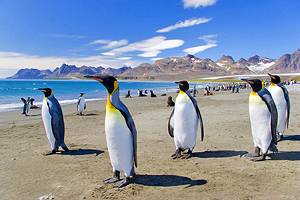
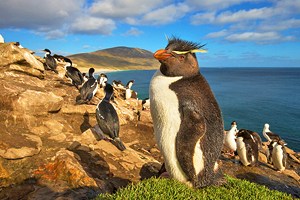
As its name suggests (pingüinos is Spanish for penguins), the monument is home to one of Chile's largest penguin colonies, consisting of some 60,000 breeding pairs of Magellanic penguins. Accessible only by guided boat tours, the islands are also home to large colonies of seals and sea lions.
Another of Chile's important natural monuments is El Morado, an easy drive from Santiago and site of the San Francisco Glacier and the 4,674-meter-tall Cerro El Morado mountain.
Address: Punta Arenas, Magallanes y la Antártica Chilena Region
The Humberstone and Santa Laura Saltpeter Works
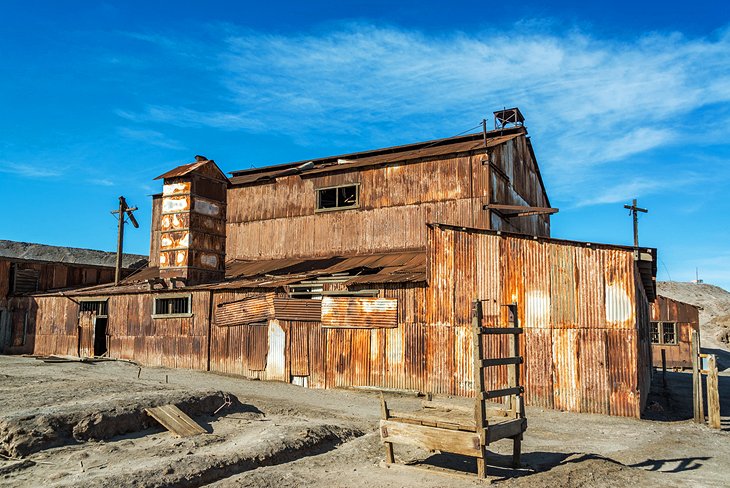
Situated near the northern port city of Iquique in the remote Pampa Desert and declared a UNESCO World Heritage Site in 2005, this fascinating ghost town was once home to a bustling community.
For more than 60 years from about 1880, thousands of Chilean, Bolivian, and Peruvian workers toiled in the Humberstone and Santa Laura Saltpeter Works (Salitreras Humberstone y Santa Laura), a hostile environment that included some 200 saltpeter mines. In the process, these workers formed a distinct culture and way of life that has been preserved here.
Although derelict since 1960, the site offers a fascinating glimpse into the tough conditions faced by these "pampinos," with many of the site's larger structures still standing and able to be explored. Professional guides are recommended given the area's remoteness and harsh climate.
Address: km 47 A-16, Pozo Almonte, Región de Tarapacá
Chiloé Island & Chiloé National Park
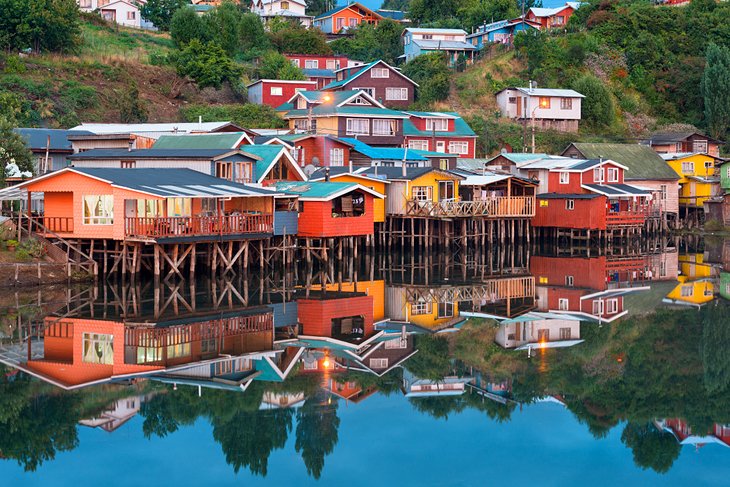
Situated on Chiloé Island, the country's second largest island, Chiloé National Park is well worth adding to your travel itinerary. While not as rugged as the majority of the country's most striking scenery, Chiloé Island is nevertheless quite unique.
In places, it looks not unlike the kind of rural topography you'd expect to find in parts of Europe – Germany immediately springs to mind – and it's a delight to explore.
In addition to the island's numerous old iconic wooden churches, remnants of the communities established by Jesuit missionaries who settled here in the 1600s, you'll see plenty of attractive, colorful old homes. Known as "palafitos," they snuggle along the shoreline in places and are raised out of the water on stilts. Many of the island's old churches, too, are painted brightly and should be visited.
Chiloé National Park itself has become increasingly popular among tourists in recent years. A highlight of a visit to this area of outstanding natural beauty is the chance to observe wildlife as diverse as blue whales and dolphins (sightseeing excursions are available), and the large penguin breeding grounds on the nearby Islotes de Puñihuil Natural Monument. Available adventures include sea kayaking, hiking, and eco-tourism.
Address: Los Lagos Region
Valle Nevado
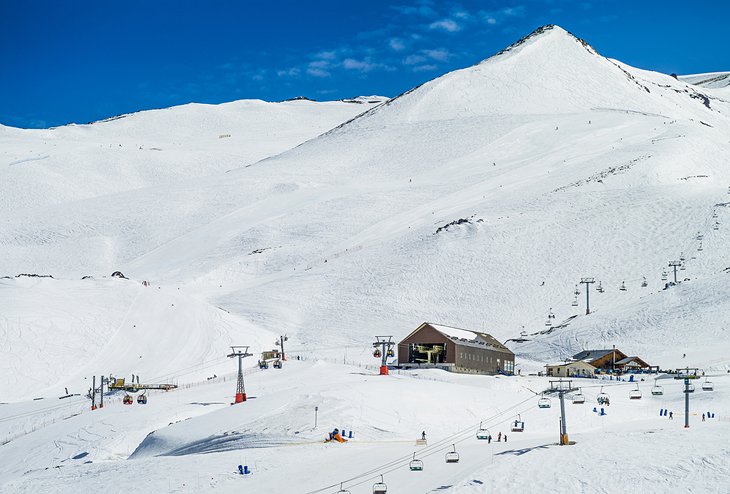
Once a well-kept secret, the fact that Chile is home to some of the world's best skiing is now common knowledge among skiers. By far the most popular ski area in South America, the Valle Nevado (Snowy Valley) resort region in the El Plomo foothills of the Andes is well-served by public transit from the country's capital of Santiago, located just 46 kilometers west of the slopes. Established in 1988, the ski resort covers a vast area and has grown rapidly in the time since.
Boasting mostly clear skies and great snow thanks to its high elevation 3,000 meters above sea level. It's skiable 112 days a year, and the resort features 37 trails and 11 lifts. It's as popular with beginner families as it is with seasoned skiers and snowboarders.
In addition to its three hotels, a variety of rental chalets and condos are available, suitable for short and long stays, and the resort also features eight restaurants. A snow school is located on-site, along with a ski shop and a tour company featuring heli-skiing adventures. Other notable Chilean ski resorts close to Santiago include La Parva and El Colorado.
Address: Avenida Vitacura 5250 of. 304, Vitacura, Región Metropolitana
Official site: https://vallenevado.com/en/
Mylodon Cave Natural Monument
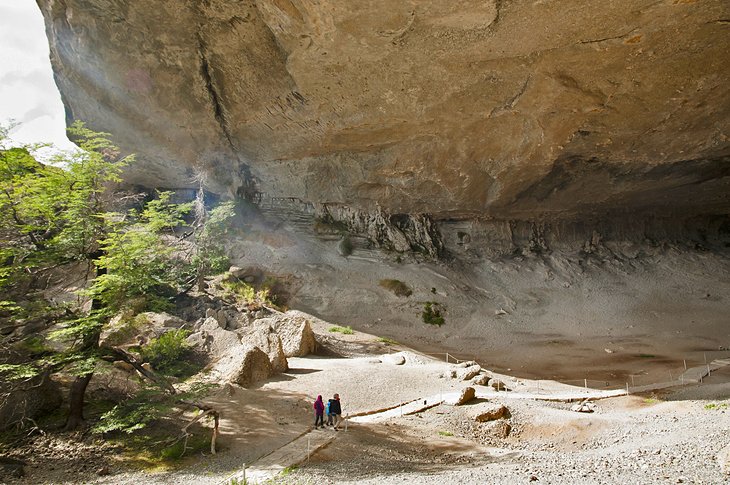
As popular with sightseers as it is with nature lovers, the Mylodon Cave Natural Monument (El Monumento Natural Cueva del Milodón) is situated in the heart of the Patagonia area of Chile a short distance from Puerto Natales.
Highlights of this fascinating natural wonder – part of the popular End of the World scenic drive – include a number of easy-to-access caves set around a formidable rock formation known as the Devil's Chair (Silla del Diablo).
The main cave, known as the Milodón Cave, was where, in 1895, the well-preserved remains of a prehistoric Mylodon were discovered (a tall statue of this long-extinct creature marks the spot where the discovery was made), along with remnants of other ancient animals and even human bones.
This impressive cave is some 200 meters deep, and it's fun to explore. If you've got time, take the marked trail that leads to the top of the cave, where you'll enjoy spectacular views over the nearby Eberhard fjord.
Other fun things to do include exploring the park's many other hiking trails, which include a number of raised sections at tree height that are fun to walk.
Address: Y-290 8, Natales, Región de Magallanes y de la Antártica Chilena
Official site: http://cuevadelmilodon.cl/en/index.php
Cochamó Valley
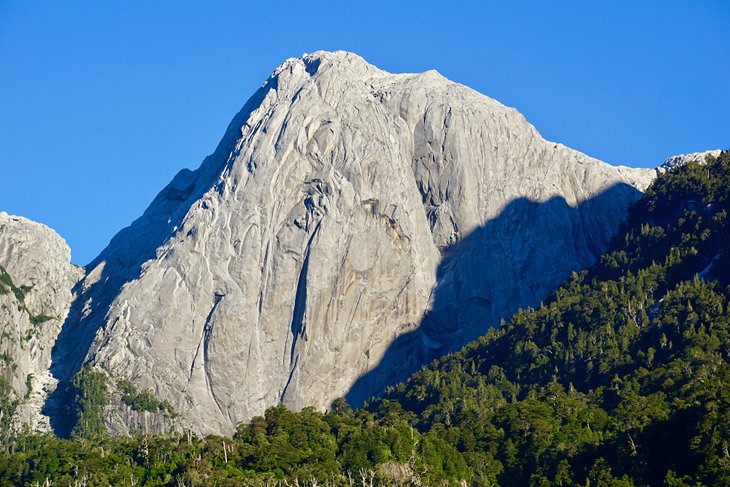
Known as the "Yosemite of Chile," the beautiful Cochamó Valley region of Chile is a delightful area to explore. Situated in the Los Lagos region of the Andes and named after the Cochamó river, it's a region that, like Yosemite, has become extremely popular among hikers and rock climbers, the latter drawn here for the chance to tackle its many 1,000-meter-plus granite walls.
Hikers, for their part, can choose from a variety of trails of varying degrees of difficulty, most of them taking you directly to popular sightseeing spots. These include the many beautiful waterfalls that dot the region.
You'll definitely want to tackle the 10-kilometer-long "Cowboy Trail," so named for its 100-plus-year history as a cattle trail (it was also used by the infamous bank robbers, Butch Cassidy and the Sundance Kid, after fleeing the US). This fun six-hour hike starts in the village of Cochamó and leads to La Junta, a rocky outpost with a number of campsites should you wish to bed down for the night.
In addition to the varied flora and fauna here, people are also drawn for the great fly fishing.
Vicente Pérez Rosales National Park
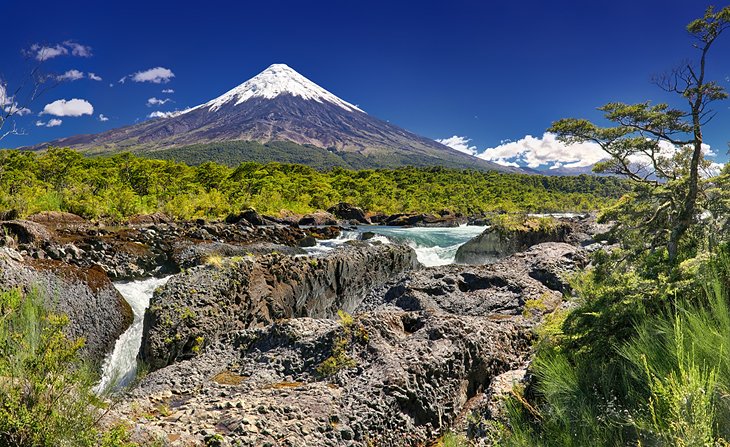
Established in 1926 and the first of the country's now numerous national parks, Vicente Pérez Rosales National Park (Parque Nacional Vicente Pérez Rosales) is located in the heart of the Chilean Lake District, and provides the perfect excuse to at least get a taster of this beautiful region.
Easily accessible from the city of Puerto Montt, the big tourist attraction here is the spectacular Petrohué Falls (Saltos del Petrohué). Here, the fast flowing Petrohué River plummets down a volcanic rock chute to Todos los Santos Lake, an especially impressive sight during the rainy season. After descending the falls and rapids, the water settles in the crystal clear lake, a popular fishing and bird-watching spot.
The area is also known for its diverse wildlife, including deer and pumas, as well as its thermal springs. Add to this picture-perfect location a backdrop of snowcapped volcanos, and you've got the perfect selfie spot to snap that memento of your vacation in Chile.
Address: Puerto Varas, Los Lagos Region