

13 Of Montréal, Canada's Must-See Tourist Attractions For Your First Visit
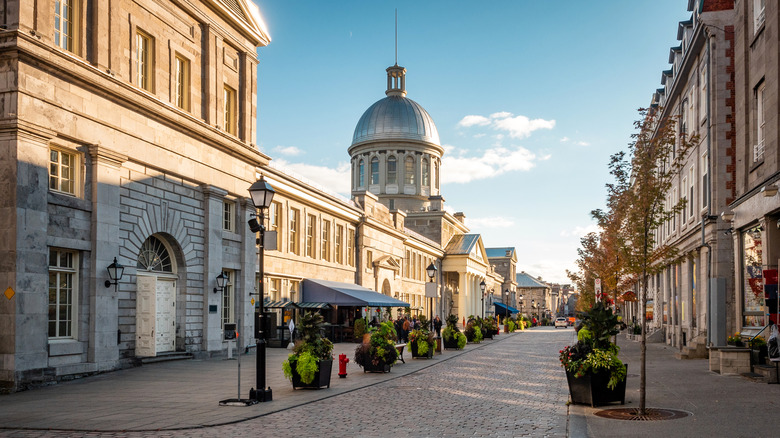
Montréal offers an unbeatable introduction to both Québec's old-world heritage and modern urban life. It's the most populous French-speaking city in North America, and its mix of languages and traditions make it a hub for creative exchange. Often referred to as the cultural capital of Canada and a haven for artists, Montréal boasts Euro-hip neighborhoods and trend-setting cultural institutions that spark the collective imagination.
The key to getting around Montréal lies in understanding a thing or two about its history and geography. The name Indigenous Mohawk people gave the city in the Mohawk language is "Tio'tia:ke," meaning "where the rivers meet." Montréal is an island city, nestled between the St. Lawrence River — Québec's breathtaking coast and one of the best whale watching destinations — and the Rivière des Prairies, or Back River. In the middle of the island is a large mountain where French explorer Jacques Cartier took in its spectacular views in the 16th century and proclaimed it "Mount Royal," after which the modern city now takes its name.
Whether you come for its food, festivals, stunning architecture, or thriving creative energy, the city delivers a memorable experience. This guide highlights the top places every first-time visitor should see to truly experience Montréal, a city that delivers Paris vibes at a lower cost and with fewer crowds than the French capital.
The Big Wheel of Montréal
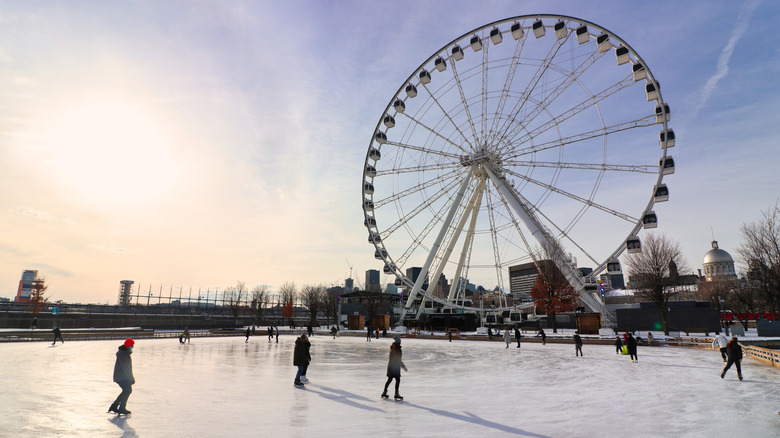
Since 2017, Montréal has been home to the largest wheel in Canada, sitting comfortably at nearly 200 feet tall. This iconic ferris wheel is a defining fixture of the Montréal skyline, an experience not to be missed. From the top, you can see 17 miles into the distance, offering first-time visitors an invaluable opportunity to orient themselves to the overall layout of the city, as well as take in a breathtaking sight.
Each ride lasts about 20 minutes, which is plenty of time to allow visitors to fully enjoy a birds-eye view of the entire city spreading out in all directions. To the south is the St. Lawrence River, which marks the important southern boundary of the island city of Montréal. Beyond the river are gorgeous fields and mountains.
Each of the wheel's 42 cabins is climate controlled, for both the hot days of summer and the chill of winter. Visitors can comfortably ride the wheel during any season, day and night, and it's open daily from 10 a.m. to 11 p.m. In addition, the wheel is centrally located in the vibrant Old Port of Montréal, with cute cobbled streets and historic charm. Today, the beautifully preserved European-style architecture along the banks of the river is a central part of what gives Montréal its old-world charm. After a ride on the wheel, it's worth spending a few hours taking in the many historic and cultural landmarks within walking distance.
Pointe-à-Callière, the Montréal Archaeology and History Complex
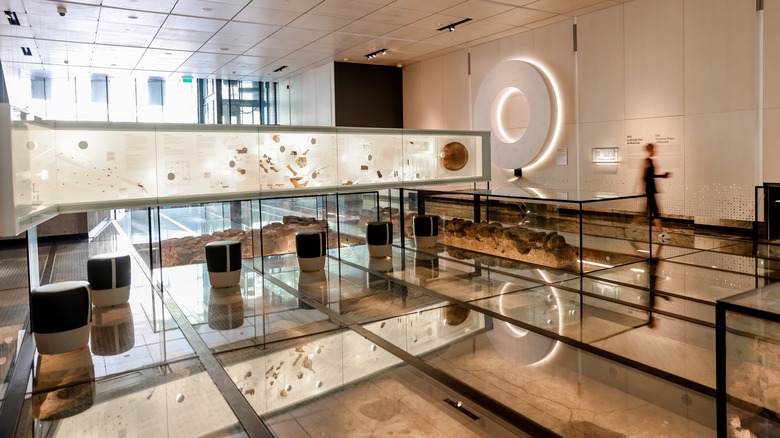
The Old Port's Pointe-à-Callière Museum is built over the stones of the first French settlement in Montréal. That is to say it's quite literally the birthplace of the modern city itself. It's a designated national historic and archaeological site, and is the most visited museum in the city.
Pointe-à-Callière takes its job seriously of bringing history to life, and offers immersive and interactive learning opportunities for visitors of all ages. The museum's permanent exhibits offer a deep dive into the early French colony, British influence, and the archeological discoveries that help you connect to the past in a very real way.
For example, the "Where Montréal Began" exhibit showcases ruins from the first French settlement built in the 17th century, including traces of Indigenous pottery and religious artifacts from European missionaries. The "Archaeo-Adventure" workshop offers a simulated archaeological dig and analysis of the findings. The museum is also well known for its lively offering of seasonal exhibits on a wide array of fascinating topics, including witchcraft, knighthood, and even Sherlock Holmes.
Notre-Dame Basilica
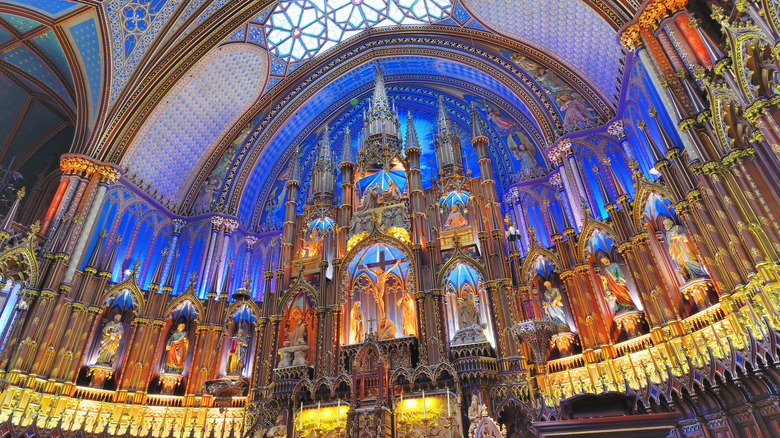
Another emblem of Montréal's European heritage is the gorgeous gothic revival-style Notre-Dame Basilica, also located in the Old Port. The church was built between 1824 and 1829 to serve a growing parish, and became the largest church in North America at the time. Its history is tied to the city and province's development under the leadership of the Catholic Church.
The church has hosted significant cultural and state events, such as Prime Minister Pierre Trudeau's funeral and singer Céline Dion's wedding. It is also a venue for choir performances and concerts featuring its famous Casavant organs, including the annual Christmas show. The church is an active place of worship, offering daily services in French only.
When services are not in progress, visitors can take a self-guided sightseeing tour of the church for about $12 USD. At night, the acclaimed AURA Experience offers a mesmerizing light and sound show that brings the grandeur of the church to life. As one guest wrote on TripAdvisor, the show is "[k]ind of a cross between Disney and 'Phantom of the Opera'." Some find that the show doesn't feel quite long enough at only 30 minutes, but argue that it's still worth seeing at least once.
Schwartz's Deli
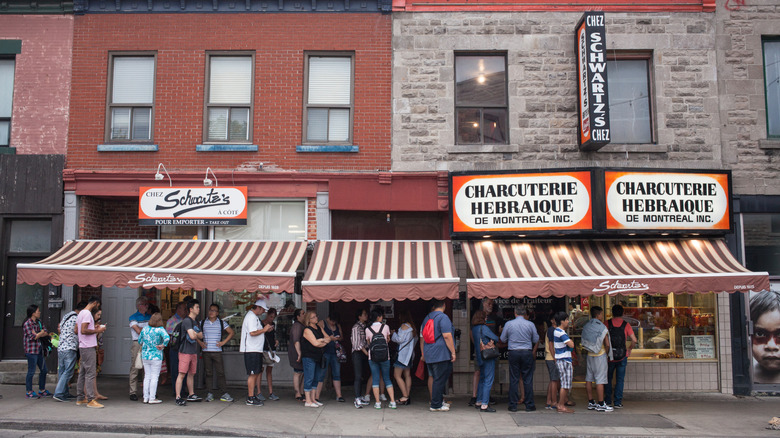
Located on Montréal's bustling Saint-Laurent Boulevard is the most iconic restaurant in the city — Schwartz's Deli. Positioned in the heart of a historically Jewish settlement, this institution has been serving the classic, heartwarming smoked meat sandwich since 1928. Don't be surprised to find a line outside, but also don't get discouraged — it generally moves fast since the welcoming staff here are masterful hosts to the city's hungry souls and offer quick and friendly service.
The portions are consistently generous — every sandwich comes packed with deli meat and is served with a pickle on the side. Unfortunately for vegetarians, there are no plant-based alternatives available, but you won't be disappointed by the fries and coleslaw. In order to accommodate the large number of daily guests, the restaurant maximizes the relatively small space. Expect to be seated elbow-to-elbow with strangers, but don't be shy. Unexpected encounters are part of what gives this old-school joint its cozy charm.
St. Viateur Bagel and Fairmount Bagel
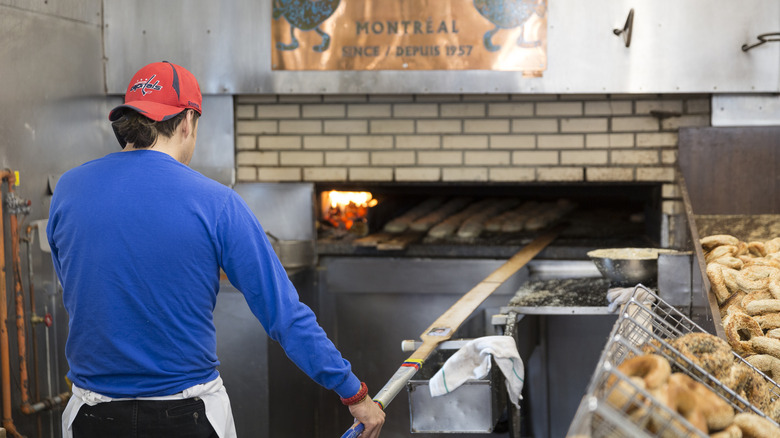
Montréal's spirited local rivalry between the two most iconic bagel shops never ceases, and first-time visitors are inevitably recruited into choosing sides. In one corner, St. Viateur Bagel holds the title of the "longest-running bagel shop" in the city, per its website. In the other corner, Fairmount Bagel claims to be the "first bagel bakery in Montréal." Both offer fresh hand-rolled bagels baked in a wood-fired oven. The two storefronts are only a 10-minute walk from one another in the youthful and vibrant Mile End neighborhood.
The bakeries have perfected the art of the Montréal-style bagel. Montréal bagels tend to be smaller, denser, and just a little sweet, thanks to the dough being simmered in honey water before baking. The heat of the wood-fired oven gives them a perfectly blistered crust and a warm, chewy center. Every bagel is hand-rolled, too, making each one unique.
Don't forget to bring cash, as St. Viateur doesn't accept cards. Just when you think you've sorted out this Montréal rivalry, another one arises: are the bagels better in Montréal or New York City? It's the bagel debate that will likely outlive us all.
Poutine from La Banquise
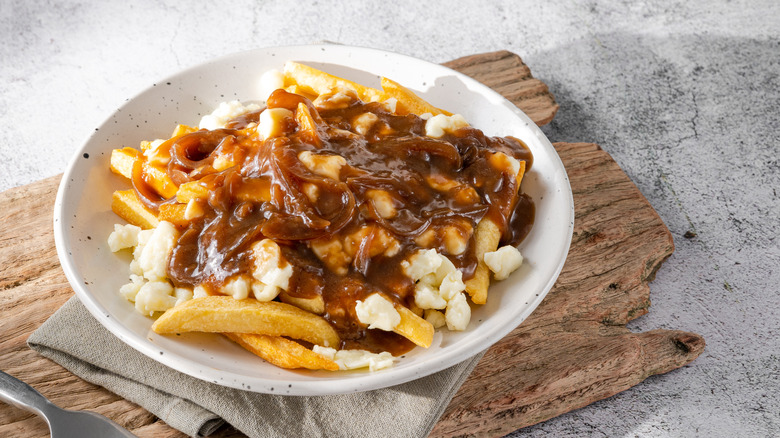
Montréal is home to another ongoing rivalry: who has the best poutine? For those who don't know, poutine is the national dish of the province of Québec. The classic version consists of fries and fresh cheese curds, topped with a brown gravy sauce. Its origin can be traced to rural snack bars in Québec, and folks still claim that the country does it better than the city. However, Montréal still boasts excellent initiation-worthy poutine that won't leave you disappointed.
While the jury is still out on who does it best, you can't go wrong at La Banquise. This 24-hour joint is one of the most famous poutine kitchens in the city and has been in business since 1968. The menu offers an astounding 32 unique variations of the classic dish, featuring ridiculous names and loaded with extra toppings. For example, "La Fred Caillou," meaning the Fred Flintstone, features the classic ingredients as well as ground beef, smoked meat, spicy sausage, and merguez sausage. Vegan and vegetarians can also indulge as there are several plant-based options available.
The Montréal Botanical Garden
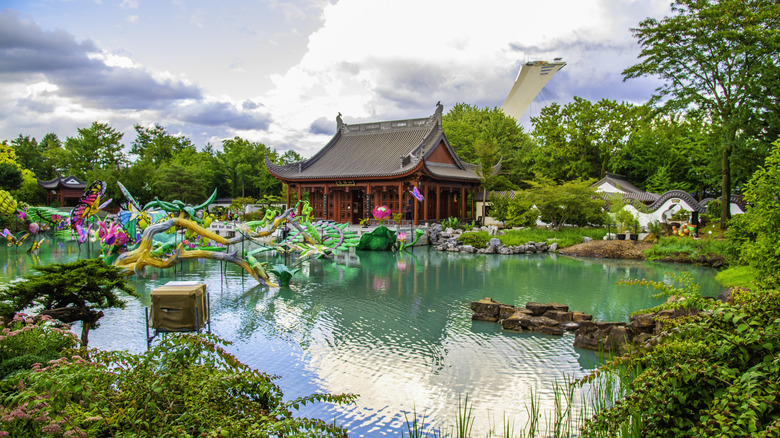
One of the largest and most renowned botanical gardens in the world, Montréal's Botanical Garden spans 185 acres. Home to more than 22,000 plant species, it features over 20 thematic gardens and 10 exhibition greenhouses. It's part of the Space for Life museum district, which also includes the Biodôme, Insectarium, and Planetarium, all focused on educating the public about the natural world.
During the summer months, major highlights include the First Nations Garden, Japanese Garden, Chinese Garden, and extensive collections of alpine, aquatic, and medicinal plants. The First Nations Garden showcases 300 different plant species and achieves the bold botanical feat of representing five of Québec forest ecosystems. The Chinese Garden, one of the largest outside of China, showcases architectural craftsmanship from artisans in Shanghai. It hosts the popular annual Gardens of Light lantern festival.
In the colder months, the Botanical Garden remains a welcoming retreat thanks to its vast network of climate-controlled greenhouses. These indoor spaces house tropical and subtropical species, including orchids, bonsais, palms, and fruit-bearing plants.
The Insectarium
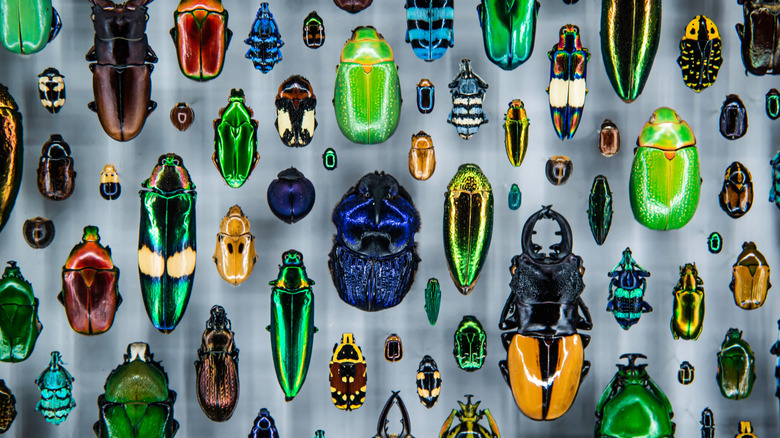
The Montréal Insectarium is a world-class museum dedicated entirely to the study and appreciation of insects and their role in global ecosystems. Housing more than 160,000 preserved specimens, its vast collection includes beetles, ants, stick insects, and a notable display of vividly-colored butterflies and moths sourced from multiple continents.
One of the most memorable visitor experiences is the opportunity to walk through immersive environments that feature live insects. A seasonal butterfly exhibit includes an enclosed space in which hundreds of butterflies fly freely among guests. These spaces are designed to simulate natural habitats and allow visitors to observe insect behavior up close, with staff available to facilitate learning and answer questions.
Aimed at audiences of all ages, the Insectarium combines education with a sense of curiosity and wonder. Exhibits highlight the essential roles insects play in food systems, soil health, and carbon cycling, while challenging common fears and misconceptions about "creepy crawlies." One visitor wrote on TripAdvisor, "Even my bug hating wife enjoyed it enough to let an 8-inch walking stick crawl up her arm."
Jean-Drapeau Park
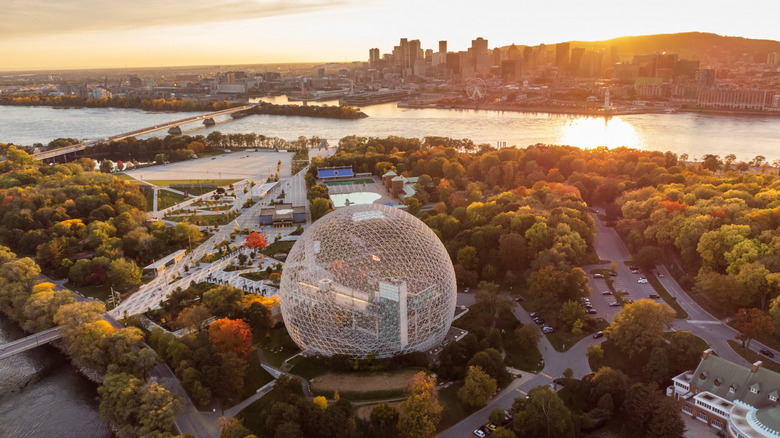
Jean-Drapeau Park is spread across Sainte-Hélène Island and the man-made Notre-Dame Island on the St. Lawrence River. Known for its extensive network of bike and walking paths, the park also features public beaches, landscaped gardens, outdoor art installations, and multiple performance and recreational venues. Its waterfront setting offers striking views of downtown Montréal, and is accessible by metro.
The park hosts major international festivals and sporting events throughout the year. These include the Formula 1 Canadian Grand Prix at Circuit Gilles-Villeneuve, Osheaga Music Festival, and the long-running electronic music series Piknic Électronik. The park also features one of the largest aquatic complexes in Canada, canoeing and kayaking facilities, and winter activities like cross-country skiing.
Originally developed for Expo 67, Jean-Drapeau Park retains several landmark structures that reflect its origins. The most iconic of these is the Biosphere, a giant metal lattice dome that now operates as an environmental museum and remains a recognizable element of Montréal's skyline.
La Fontaine Park
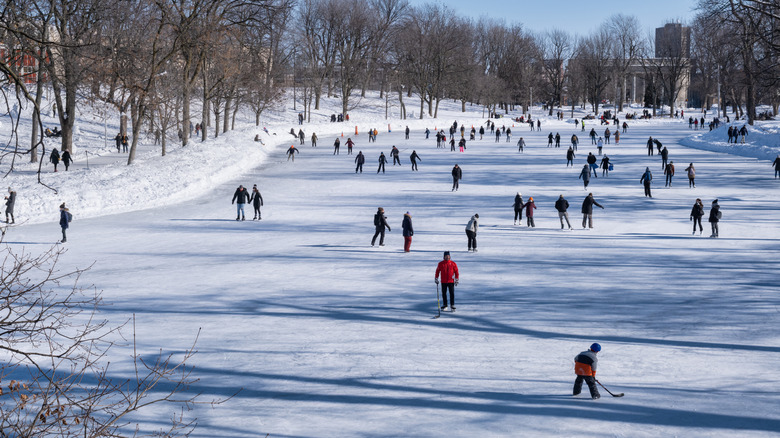
If you want to get a sense of day-to-day life in Montréal, head over to La Fontaine Park, a nearly 100-acre oasis in the heart of the Plateau neighborhood. When the weather is warm, the park is where locals go for their daily jog around the pond, to meet up with friends for a game of pétanque, or to eat poutine in the grassy hills on summer evenings. In the winter, the park turns into a magical wonderland. The pond becomes an ice skating rink and the surrounding hills are a hub for sledding and snowball fights.
The park is filled with amenities. At the western side of the park, you'll find the welcome center where you can rent skis in winter. It's also where you can find the Robin des Bois cafe, an ultra cozy space to grab soup, salad, or a sandwich and relax. You can feel extra good about your purchase because the cafe is a community-driven non-profit actively involved in fighting poverty in Montréal.
Walking, biking, and cross-country skiing trails criss-cross the park. There's also a dog park, tennis and volleyball courts, playgrounds, splash pads, and more. The renovated outdoor theater, Théâtre de Verdure, offers free events all summer long. Concerts, dance performances, circus acts, plays, and film screenings are among the many events that take place from June through August.
Mount Royal Park
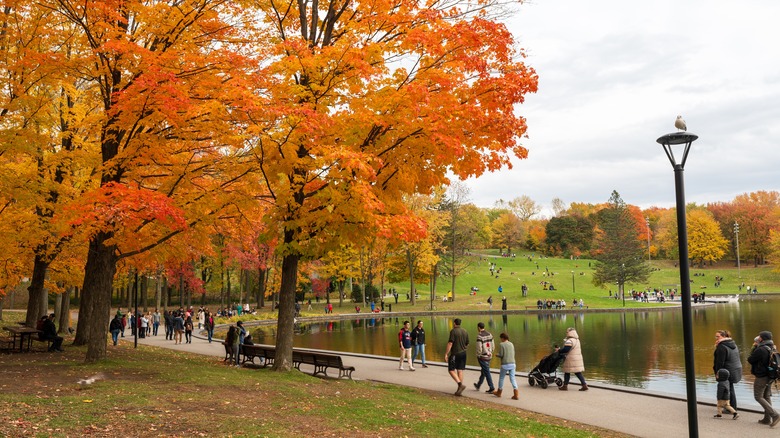
One of the most bewildering features of Montréal's geography is that there happens to be a mountain sitting smack dab in the middle of the city, which is also where the city gets its name. Mount Royal is topped with a Christian cross that lights up at night, a highly visible landmark rising out of the city's French Catholic heritage and that has helped orient locals and visitors alike for generations. More than just a beacon, Mount Royal is home to a 560-acre forested park, and a 165-acre cemetery on its north side. Interestingly, the park was designed by Frederick Law Olmsted, who also famously designed New York City's Central Park.
In the midst of the hustle and bustle of the city, Mount Royal offers a quiet escape for connecting with nature, offering dozens of hiking trails and outdoor activities all year long. The non-profit organization Friends of the Mountain offers a variety of programs and activities at the park, including walking tours to its various landmarks, winter sports equipment rentals, and classes for cross-country skiing.
The Kondiaronk Belvedere is among the most popular lookouts for skyline views of downtown and the St. Lawrence River. It's quite a trek up several staircases, but you'll be rewarded not only with views but also a place to rest your feet in the Mount Royal Chalet. This gorgeous stone building features French Beaux-Arts architecture. Inside, exposed beams make for a cozy vibe with dozens of lounge chairs to sip hot cocoa from the cafe while looking out over the city.
Saint Joseph's Oratory of Mount Royal
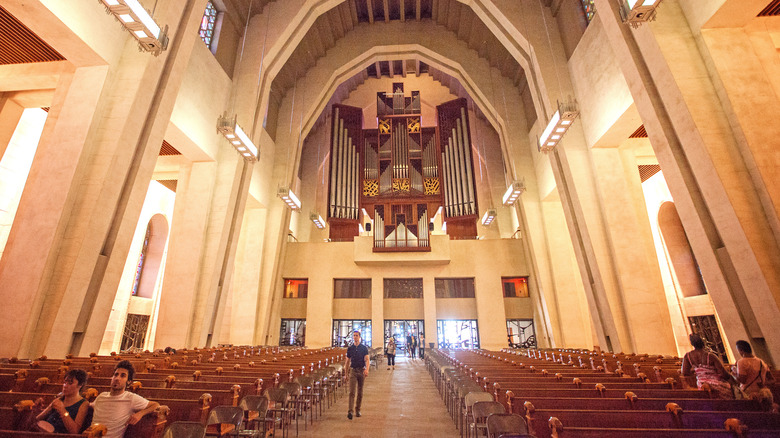
Saint Joseph's Oratory of Mount Royal, the largest basilica in Canada, is nestled on the flank of Mount Royal. Visitors can explore its many neo-gothic chapels and sanctuaries, connected historically to the growth of the city.
Part of this church's fame is due to a renowned healer who made the church his headquarters. Often referred to as the "Miracle Man of Montréal," Saint André Bessette was credited with healing thousands of people, and pilgrims flocked to see him at the oratory from near and far. To this day, the church sustains this ministry of the sick and offers special services to people with illness who wish to be blessed. A chapel dedicated to Saint André Bessette features an impressive 10,000 votive candles, and is decorated with crutches, canes, and other mementos from those who claim to have been healed by his blessing. It's also his final resting place. Regular musical concerts are held at the oratory, including the annual Montréal International Bach Festival that features premier organ players from around the world.
Saint Catherine Street
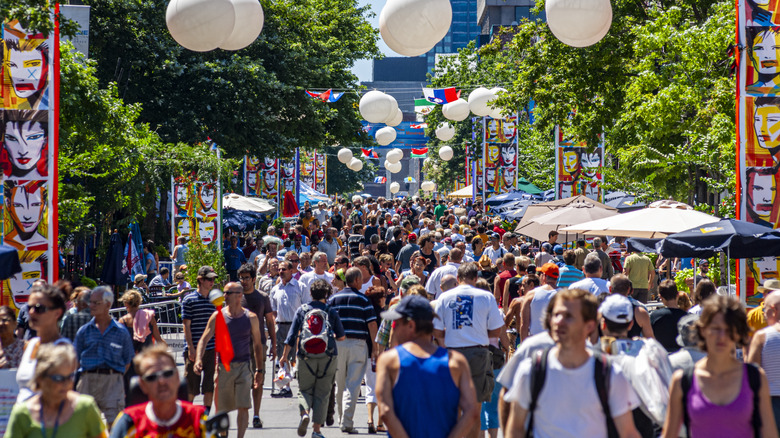
Saint Catherine Street is one of Montréal's most prominent and historic commercial avenues. It gives visitors a window into the city's economic and cultural lifeblood. The street runs nearly 7 miles east to west, through the heart of the city's more corporate downtown, and intersects with the LGBTQ-friendly Village and the Place of Arts, the largest performing arts centre in Canada.
Montréal's Village is one of the largest and most vibrant districts of its kind in North America, and part of the reason why Canada is considered the safest country for LGBTQ+ travelers. It is also a substantial part of Montréal's exuberant nightlife. During the summer, Saint Catherine's east side that runs through the Village is transformed into a pedestrian-only paradise bursting with lively arts and entertainment. Here you'll find restaurants and bars with open terraces, nightclubs, and theaters, including many a must-see drag show.
The Place of Arts rests between the Village and downtown's more corporate sections. It's a large outdoor esplanade that is home to many year-round festivals, including the summer International Montréal Jazz Festival and the winter lights festival, Montréal en lumière. The esplanade is surrounded by six major cultural venues including Montréal's opera house, symphony, and ballet.
Methodology
This list was compiled based on a mix of personal experience and research. I have lived in Montréal for six years, and in that time, I have visited most of the sites on this list on several occasions and hosted many visitors for their first time in the city. My intimate knowledge of tourist attractions in Montréal helped narrow down the list to a few of the most impressive sites I would recommend to anyone visiting for the very first time.
This first-hand knowledge was combined together with research and information gathered from multiple sources, such as a list of top attractions in Montréal from TripAdvisor. Each attraction was evaluated based on its overall popularity and distinctive appeal, both in Montréal and on the world stage. Altogether, this guide features the top destinations that stand out among Montreal's many cultural, economic, and historic attractions, combining its old-world charm with new-world vibrancy.