

Thailand's Top 10 Tourist Attractions You Should Never Skip
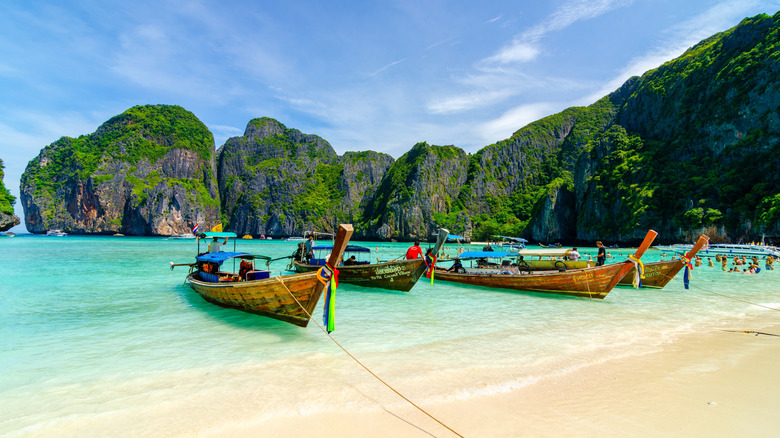
There are a lot of reasons to visit Thailand, the "Land of Smiles."Turquoise seas dotted with tropical islands and pristine beaches, golden-peaked temples, exciting festivals, a wide array of unique wildlife, food that's a delight for your senses — Thailand is the adventure of a lifetime. It can feel impossible to narrow down what to see in this vibrant, gorgeous, splendid country, which is why we've compiled this list.
For this article, we've chosen to focus on specific attractions, rather than events, cities, or regions (with the exception of Pai and the Mae Hong Son Loop, as well as the island of Ko Tao). Amassing data from travel experts, travel review sites like Tripadvisor and Reddit, personal experience, and local travel websites, we've included ten of Thailand's best destinations, from palaces to national parks to historical sites of significance. Some of these sites of significance include Thailand's many temples, or wats. The majority of these wats are Buddhist (the majority religion in Thailand), although technically a wat can refer to nearly any place of worship. Many Thai wats attract visitors from all over the world due to their intricate and beautiful architecture, as well as their sacredness. One crucial detail every traveler should know before a vacation to Thailand is to make sure to accord these religious sites the respect they deserve, in manner, customs, and dress.
This list of Thailand's top tourist attractions, which you should definitely explore during your trip, runs the gamut from the northern mountains down to the idyllic coastline and everything in between. From the aforementioned wats to markets and islands, beaches and bridges, national parks and palaces, we strove to include some of Thailand's best and most diverse destinations.
Grand Palace, Bangkok
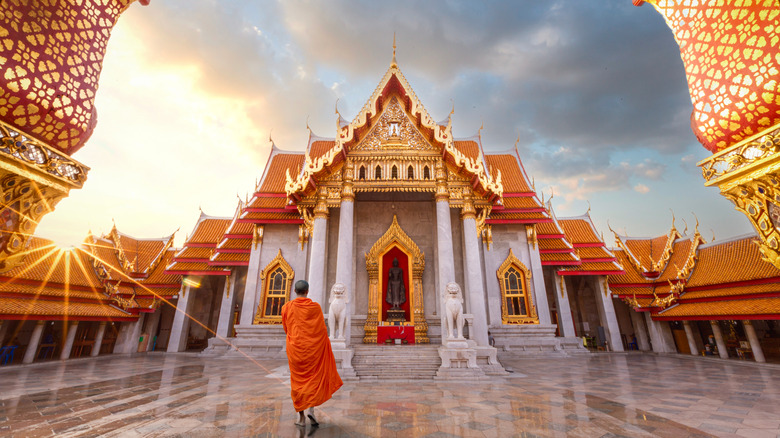
A visit to Bangkok, the capital, is a must when you're in the country (and not just because its airport is the most well-connected). Bangkok is one of the most visited cities in the world, and for good reason. The nightlife, food, and markets, along with skyscrapers juxtaposed with ancient temples, all combine to form a fascinating city. And of the many amazing tourist attractions in Bangkok, the Grand Palace might be the cream of the crop. One of Thailand's most popular destinations, the Grand Palace dates back to the 18th century and once housed the Thai royal family. Nowadays, this intricate, gold-trimmed palace complex is home to several museums and hosts a variety of cultural experiences during the year.
Start your visit (preferably in the early morning) to beat the crowds and the heat at the iconic Emerald Buddha, a giant sculpture formed out of one piece of jade, with robes that change with the seasons. or wats. Remember that this is a wat, or a temple, a sacred place of worship, not just a tourist attraction, so follow these etiquette rules you need to know for Thailand's temples, such as covering your shoulders and knees.
One reviewer on Tripadvisor raves, "I was really enchanted by the beautiful architecture, linked to the history of the Thai royal family," with another chiming in: "If you had to choose only one attraction in Bangkok, I would choose this one." Yet another notes that it's a "must-visit...not just a tourist attraction—it's a deeply cultural, spiritual, and historical experience. The detail in every building, the gold-covered spires, and especially the Temple of the Emerald Buddha (Wat Phra Kaew) are absolutely breathtaking."
Sunday Night Market, Chiang Mai
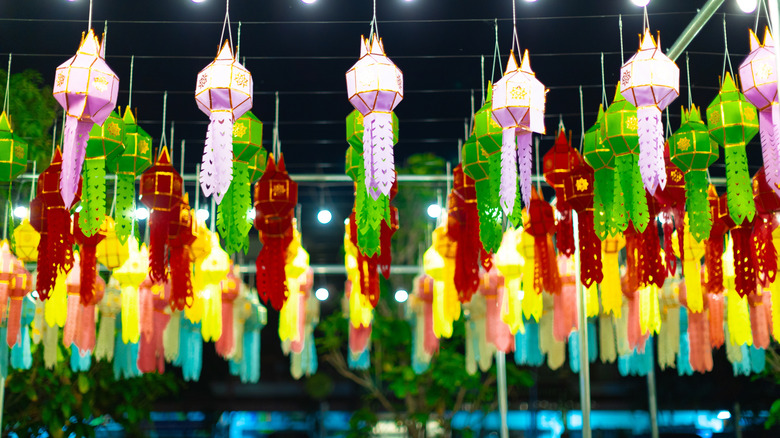
Chiang Mai, one of the most beautiful cities in Thailand, attracts visitors from all over the world, drawn to its delicious food, gorgeous festivals, mountain temples, and markets. And speaking of markets, one of the best things to do in Chiang Mai is the Sunday Market, or the "Sunday Walking Street." Every Sunday after sunset, Chiang Mai's Old Town (specifically Ratchadamnoen Road) transforms into a lively mishmash of stalls selling pad Thai, fried bananas, handmade soap, textiles, local handicrafts, fruit shakes, and much more.
Keep an eye out for stalls selling traditional crafts from nearby hill tribes, like the Hmong, Karen, and Lahu. Some local handicrafts include intricately woven baskets, fabric, beautifully painted bamboo lacquerware, silver jewelry, and bamboo umbrellas. When it comes to eating, it's hard to go wrong (it's Thailand, after all), but be sure to sample khao soi, a noodle soup that's a northern Thai specialty. Other favorites include roti (a crepe-like dessert), mango sticky rice, papaya salad (it's surprisingly spicy!), and sai oua, a local sausage. While markets are generally safe, petty thieves can be an issue, so consider these tips to avoid getting pickpocketed in popular night markets.
Damnoen Saduak Floating Market
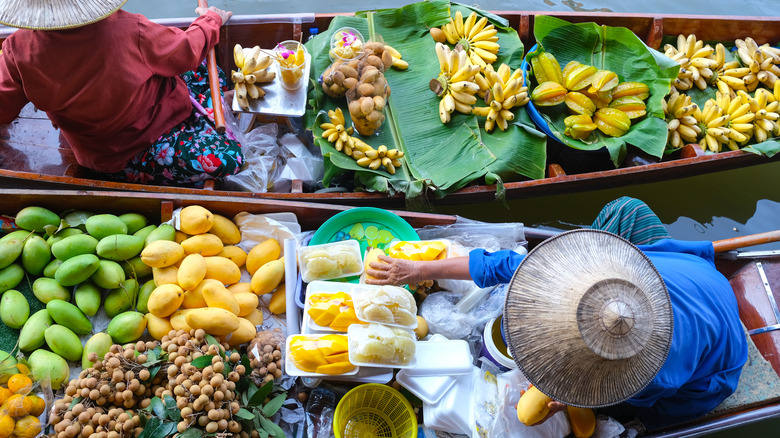
Thailand is known for its floating markets, and while said floating markets can seem designed for tourists, they're actually an ancient custom. Bangkok, thanks to its intricate maze of canals and central river, is known as the "Venice of the East," and the waterways are still an integral part of daily life in the city. One of the best is about an hour outside of Bangkok. Located on the longest canal in the country, Klong Damnoen Saduak, the Damnoen Saduak Floating Market starts early and is crammed with boats selling everything from fresh fruit to souvenirs.
While visitors have mixed reactions, most still consider it a worthwhile visit, especially if you reach the market via a tour through the connecting canals, which will provide a rare glimpse at smaller villages, authentic local life, nature, and fruit plantations. As one reviewer on Tripadvisor notes, taking the "long boat down the side rivers ... is the trick" to enjoying the market. Another chimes in, saying it's "chaotic and picturesque all at once, oozing an exotic charisma unique to the Southeast Asian way of riverside life ... you will appreciate the travel back in time despite the disorder." The market is a slice of bygone Thailand, an overwhelming feast for the senses, and a chance to experience a tradition in Thailand that may not be around forever.
Railay Beach, Krabi
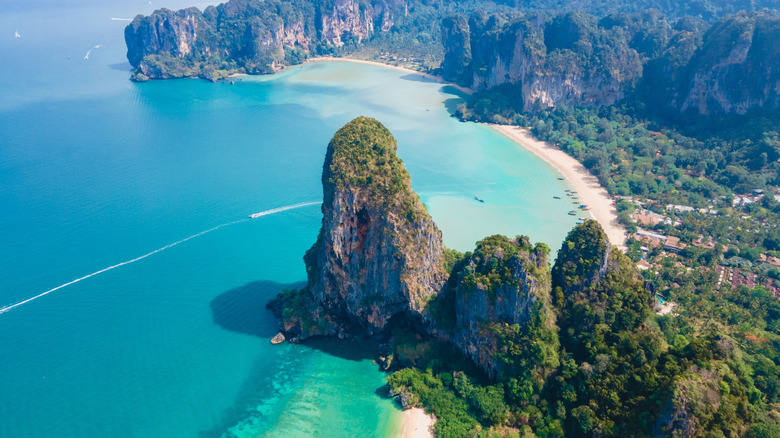
Thailand has no shortage of incredible beaches. On Thailand's west coast, the province of Krabi is a popular Thailand destination for an incredible beach vacation (and is the gateway to several Thai islands, including the famous Ko Phi Phi islands). One of the most stunning beaches near Krabi is Railay Beach, a peninsula that's only reachable via long tail boat (an essential experience in itself). The boat trip takes around 20 minutes and costs around $3, and while the boats can be a bit rocky and disembarking can be tricky, it's completely worth the trip for this picture-perfect Thai beach. It's a favorite among travelers, with one reviewer on Tripadvisor saying, "the scenery is breathtaking ... the massive limestone cliffs surrounding the turquoise water make this place feel like a hidden paradise." A fellow traveler agrees, highlighting the climbing opportunities: "Railay Beach is a paradise for rock climbers, and it did not disappoint! The towering limestone cliffs offer incredible climbs with breathtaking views ... A must-visit for adventure seekers!"
In addition to its incredible rock formations and challenging rock climbing, Railay Beach is known for its bucket-list sunsets, beach activities like sunbathing and kayaking, as well as caving, hiking, and other adventures. One favorite hike is "The Viewpoint," a challenging, roped, 20-minute trek leading to postcard-worthy views of the beach from above.
Pai & the Mae Hong Son Loop
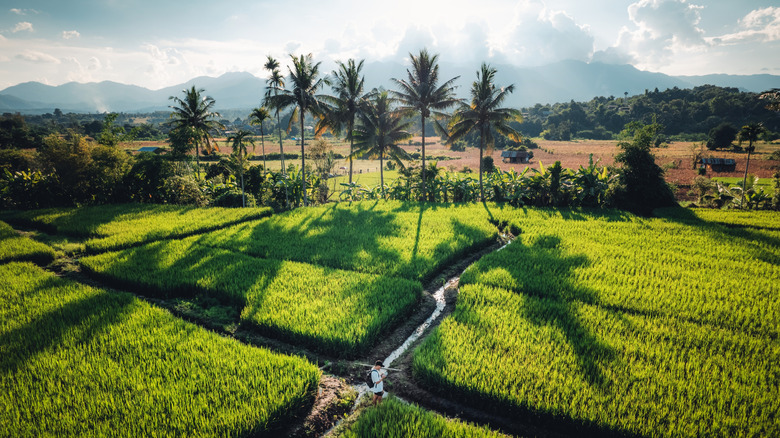
The tiny mountain town of Pai in northwestern Thailand, about three hours from Chiang Mai, is considered a backpackers' haven, thanks to its lively, nightly market and access to some of Thailand's most incredible nature. It's also the most famous stop on the dramatic Mae Hong Son loop, a 400-mile scenic byway that showcases some of Thailand's most incredible mountain scenery. To see the Mae Hong Son Loop, it's best to rent a car or motorcycle, or hop on a bus/van tour (note: it's not an easy road, so only drive it if you're experienced on the Thai roads and in the mountains). To get used to the switchbacks, traverse the loop clockwise and end in Pai; counterclockwise, and you'll start the trip in Pai. Another notable stop along the loop is Mae Hong Son itself, a gorgeous lake town known for its access to the beautiful surrounding hills and hill tribes.
The loop can be done in as little as three days, although spend longer to appreciate the beauty and culture along the way. And earmark at least several days in Pai itself, to take advantage of the laidback, cozy yet lively spot, often considered one of the best places to visit in Thailand. The main street becomes a walking market at least several evenings a week (every night during the winter), selling handicrafts, souvenirs, and both local and Western-inspired dishes. In addition to the mountains and the Mae Hong Son Loop, Pai is ideally situated near natural wonders like Pai Canyon, hot springs, waterfalls, and gorges.
Ko Tao
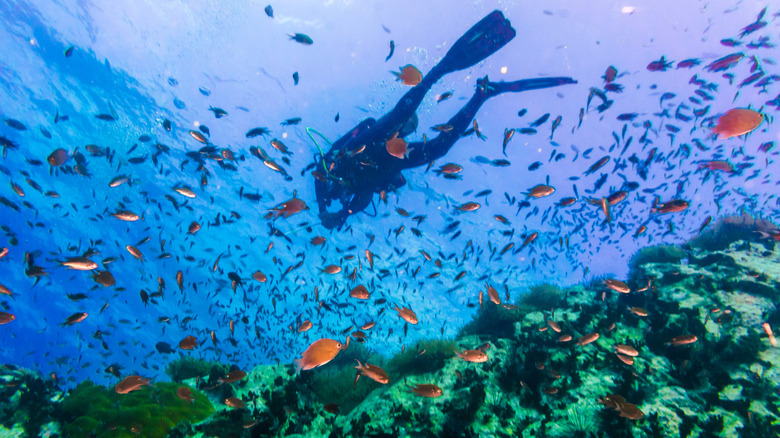
Thailand has a lot of islands to choose from (over 1,400, in fact), including some of the best islands to visit in Southeast Asia. Truthfully, you'll be hard-pressed not to enjoy your time on any of the Thai islands! But the tiny, mountainous Ko Tao, or "Turtle Island," is peaceful, scenic, and home to some of the best scuba diving in the world. The clear waters feature colorful, healthy reefs, home to black-tip reef sharks, sea turtles, whale sharks (best seen between March and May), and even some "shipwrecks" — decommissioned ships that have been turned into artificial reefs.
Ko Tao gets its name not from the turtles that frequent the area, but from its shape. While nowadays it's a mecca for divers, as one of the cheapest (and best!) places to complete your PADI Open Water certificate, Ko Tao has a complex history. A political prison in the 1930s that eventually became all about coconut (farms), Ko Tao's commitment to preserving its underwater world has helped shape it into the dive paradise it is today. In addition to diving, the mountains are loved by hikers, especially the John-Suwan Viewpoint for expansive views. Sairee Beach, the main hub of the island, while retaining its roots as a fishing village, is where most of the nightlife happens.
Ko Tao is a favorite of Redditors, with one on a r/ThailandTourism thread saying, "it's the best island by far because of the size and being more remote." The same user goes on to say that the "vibes are fun" and they "had the best time [and] felt really safe." Another Redditor agrees that Ko Tao is a "small heaven on Earth." As a bonus, it's also just a two-hour ferry from Ko Samui, another favorite Thai island with a handy airport, making it the fastest way to reach Ko Tao.
Historic City of Ayutthaya
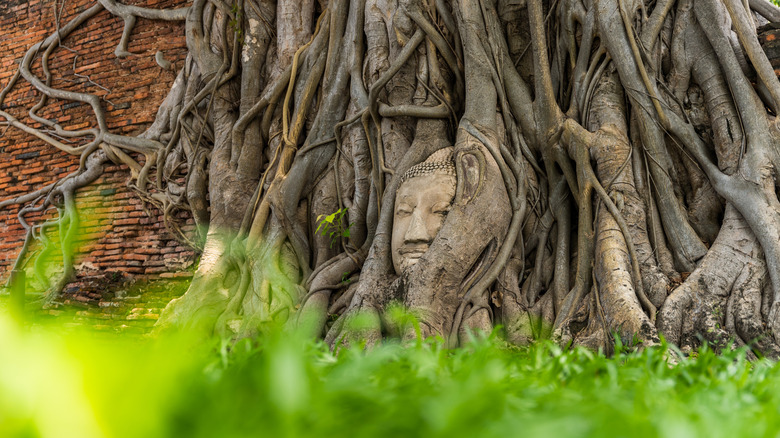
Ayutthaya was once the capital of Siam (the former name of Thailand), but after an attack by the Burmese army in the 18th century, the citizens were forced out, leaving the city abandoned. Nowadays, it's an explorable UNESCO Heritage Site, showcasing centuries of Thailand's long and complex history (and it's quite fun to wander the ruins). Ayutthaya is only about 50 miles north of Bangkok, and easily visited as a day trip. To add some extra scenery, consider taking a one-hour riverboat trip from Bangkok. If boats aren't your thing, hop a two-hour train from the Hua Lamphong station that takes you through picturesque rice fields.
As Ayutthaya contains multiple points of interest, one tip is to rent a bike after you arrive, to make traveling between the many attractions in Ayutthaya a bit faster (and easier). Highlights of this ancient, spiritual city — which one reviewer on Tripadvisor called "one of the best spiritual experiences I have ever had ... it demonstrates Thailand's rich history and culture in the best way" — include Wat Phra Sri Sanphet, reminiscent of Angkor Wat with its three giant domes, and Wat Mahathat, where you can spot the iconic Buddha face peeking out from overgrown tree trunks.
Khao Yai National Park
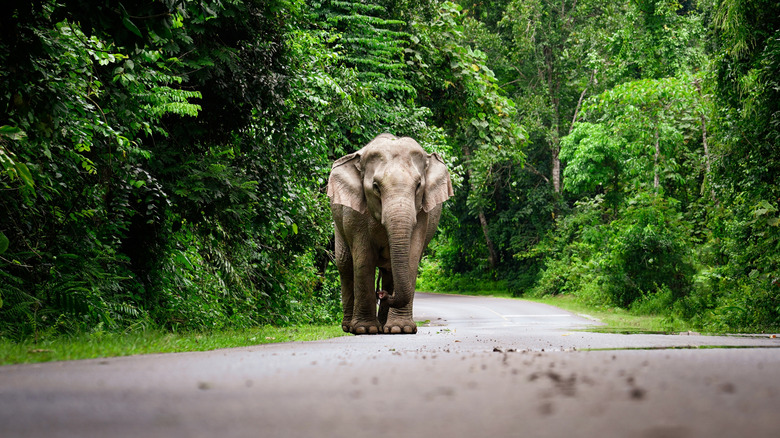
The nature and wildlife of Thailand are incredible and should not be missed on your trip. One of the best ways to immerse yourself in the wild Thai world is with a visit to Khao Yai National Park. Khao Yai is a favorite with bird watchers and is also one of the best places to see elephants in the wild (remember: think twice before partaking in common wildlife tourist attractions in Thailand that exploit animals, particularly elephants). Less than three hours from Bangkok, Khao Yai nevertheless feels like a completely different world from the teeming city. Covering over 500,000 acres, it's home to endangered endemic animals like Asian elephants, leopards, giant black squirrels, hornbills, chameleons, gibbons, and Asian black bears.
As the first national park in Thailand, Khao Yai has a long history of environmental stewardship. Although Khao Yai is so remote, it's a popular destination for both locals and tourists, meaning that its infrastructure is surprisingly established, so if you're hoping to stay for longer than a day, you'll have a place to sleep and plenty to eat. When exploring Khao Yai National Park, make sure to utilize one of the knowledgeable rangers as a guide to spot unique animals you may have missed on your own. Some of the best sites within the park, besides the trails and the animals, include the Haew Suwat Waterfall (recognizable as the site of Leonardo DiCaprio's death-defying leap in "The Beach"), the Non Pak Chi Watchtower, and Khao Luk Chang Bat Cave, best seen at sunset when all the bats leave for their nightly hunt. If you're really set on seeing elephants or other more elusive animals, consider a night safari, put on by park rangers.
The River Kwai & the Death Railway
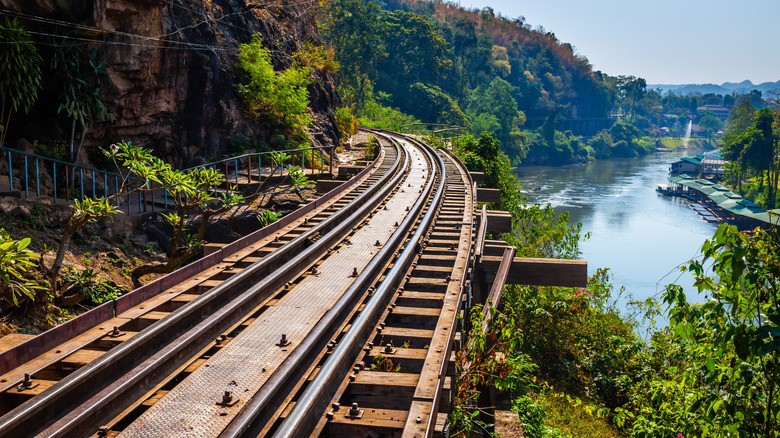
The River Kwai in Thailand is well-known, immortalized on film in "Bridge Over the River Kwai." The bridge remains over the river, and one of the best ways to see it is on the slow-moving "Death Railway." Not only is the area full of war history, including several museums, but its scenery is unmatched.
Located less than three hours west of Bangkok is Kanchanaburi, a thriving community that attracts many tourists, both World War II aficionados and nature lovers. Kanchanaburi is the gateway to Erawan National Park, a hidden gem of swimming holes. The park is particularly famous for the seven-tiered Erawan Falls, known for its bright turquoise water, plethora of wildlife, swimming holes, and secret caves. Other visitors come to stay the night on a riverboat in the River Kwai, while yet others come for the archaeological remains, like the ruins of Khmer temples (a la Angkor Wat) at Muang Singh Historical Park.
Of course, the sober World War II history is undeniable. Although Thailand started the war as neutral, it technically allied with Japan in late 1941, although this was because the government capitulated rather than protested. The bridge was conceived as part of the planned Thai-Burma Railway, only partially completed by forced labor under Japanese forces, who, while occupying Thailand (then Siam), wanted to decrease their reliance on sea travel. The railway became known as the "Death Railway" thanks to the huge number of Allied prisoners of war and local civilians — likely around 100,000 — that died during construction. Visit the JEATH War Museum and the Hell Fire Pass Memorial Museum to discover more about the war, and take a short local train over the train bridge, to experience it for yourself (for the best views, leave from the Kanachanaburi Station).
Wat Rong Khun, Chiang Rai
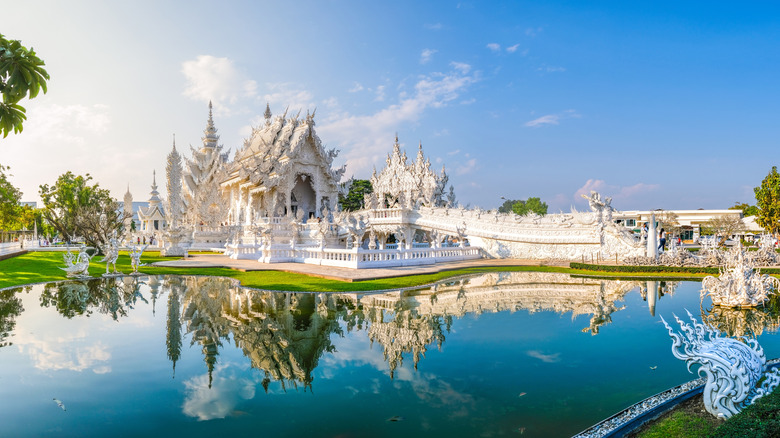
Thailand has a lot of gorgeous wats, but one of the most unique temples in Thailand can be found at the edge of the famous Golden Triangle in the city of Chiang Rai. Wat Rong Khun, or the "White Temple," is a white-washed architectural marvel, with plenty of the requisite gold accents. It's a favorite of travelers the world over, with several reviewers raving about it on Tripadvisor, saying "This is the most beautiful temple I have ever seen...it took my breath away and I had tears in my eyes," and that it's "an extraordinary sight with its intricate carvings, sweeping vistas and complex iconography."
Wat Rong Khun is comparatively modern compared to other Thai temples, as it was constructed in 1997. Renowned Thai architect Chalermchai Kositpipat had the vision of a unique temple dedicated to the Buddha's purity of spirit. Thus, he created the mirrored, white-hued temple that glitters from a distance and is especially otherworldly in the late afternoon or under the light of the moon.
What makes the temple unique, in addition to its white exterior, is its contemporary murals, which feature scenes from the Matrix, the Twin Towers on 9/11, Elvis, and Hello Kitty. Not what you'd expect in a temple built for Buddha! The temple is also home to an ornate, golden bathroom known as "the most beautiful restroom in Thailand" (via atlasobscura.com). To reach Wat Rong Khun from Chiang Rai, take a bus from the central station on any bus heading to the "White Temple."
Methodology
To compile this list, we gleaned information from official tourism websites, reviews from Tripadvisor, Reddit, and other traveler review sites, local travel websites, and general travel experts, not to mention our own experience. We aimed to include a variety of sites, covering temples and palaces, national parks, islands and beaches, markets, and UNESCO heritage sites.