12 Top-Rated Tourist Attractions in Alicante
This sunny seaside locale was named Lucentum (meaning "place of light") by the ancient Romans who settled here. Today, visitors still come here to enjoy the sunshine and pleasant climate as well as the beautiful setting in an expansive bay.
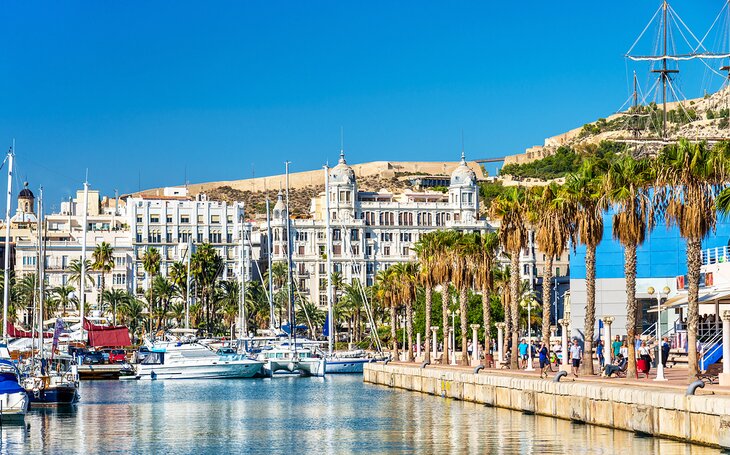
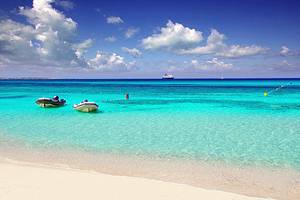
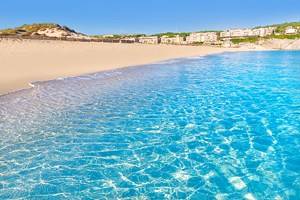
With the turquoise waters of the Mediterranean lapping against its sandy shores, Alicante is understandably a popular summer and winter resort destination on the Costa Blanca.
Alicante offers the ideal combination of leisure activities and cultural attractions. Popular pastimes include playing golf, visiting museums, attending festivals, sunbathing at the beach, and strolling along the waterfront promenade.
Of course, you must try the local cuisine. Don't leave without sampling the arroz a banda (rice with fish), Olleta (chickpea, bean, and vegetable stew), and turrón (honey-almond nougat).
Well-designed for tourists, Alicante has many high-rise hotels near the harbor and the beach. There's also plenty of open space. Throughout the city, lush gardens and elegant palm-fringed boulevards break up the urban sprawl.
Learn about the best places to visit with our list of the top attractions and things to do in Alicante.
See also: Where to Stay in Alicante
- 1. Castillo de Santa Bárbara
- 2. Museo Arqueológico Provincial de Alicante (MARQ)
- 3. Explanada de España
- 4. Basilica de Santa María
- 5. Playa del Postiguet: A Beautiful City Beach
- 6. Museo de Arte Contemporáneo de Alicante
- 7. Mercado Central de Alicante
- 8. Playa de San Juan
- 9. Concatedral de San Nicolás de Bari
- 10. Ayuntamiento (Town Hall)
- 11. Plaza de Gabriel Miró
- 12. Cabo de las Huertas
- Where to Stay in Alicante for Sightseeing
- Day Trips from Alicante
- Playa de Los Saladares
- Las Cuevas del Canelobre
- Tabarca Island
- Altea
- Albacete
1. Castillo de Santa Bárbara
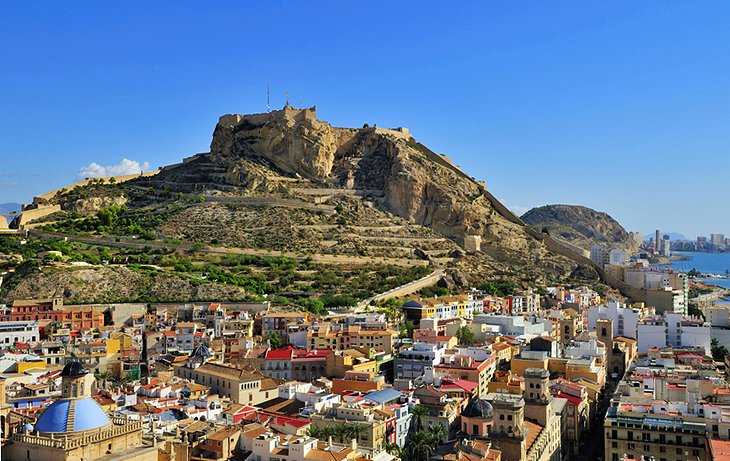
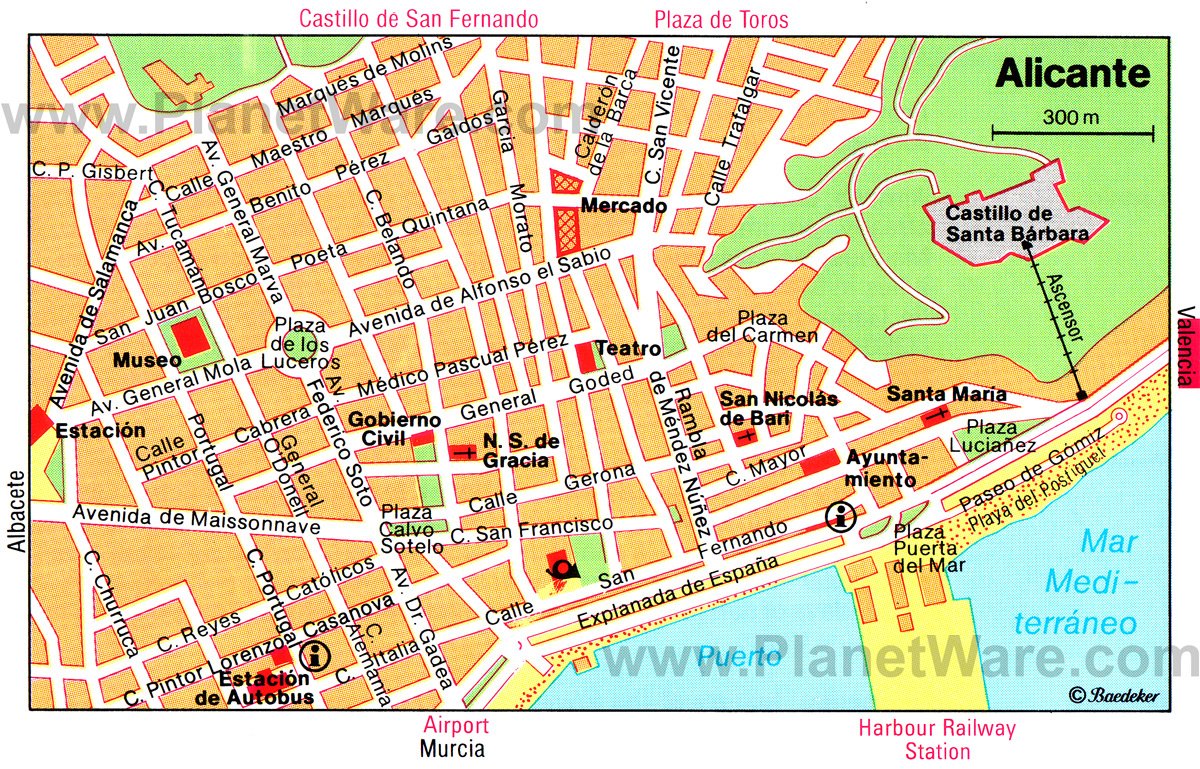
The Castillo de Santa Bárbara stands in a commanding position above the town and the seafront. The hilltop location on Monte Benacantil is a testament to the castle's military purpose and has been a strategic asset as far back as the Carthaginian era.
The original 9th-century Islamic alcazar (Moorish fortress) was captured from the Moors by the Christian Prince Alfonso of Castile. The victorious battle was on the feast day of Santa Barbara, explaining the castle's name. During the reign of Philip II, the castle was renovated in Renaissance style.
The castle is open year-round for self-guided visits, as well as guided tours. You have a chance to see La Torreta, the old keep (tower); the splendid reception hall of Philip II; the Patio de Armas; and the Revellín del Bon Repós rampart. The castle also hosts themed weekends, dramatized visits, and gastronomic experiences throughout the year.
Upon entering the castle, you are astounded by the grand scale. Panoramic coastal views add to the striking impression. From the vantage point of the rampart and the tower, the outlook stretches over the town, across the bay, and to the hills in the north.
Location: Mount Benacantil
2. Museo Arqueológico Provincial de Alicante (MARQ)
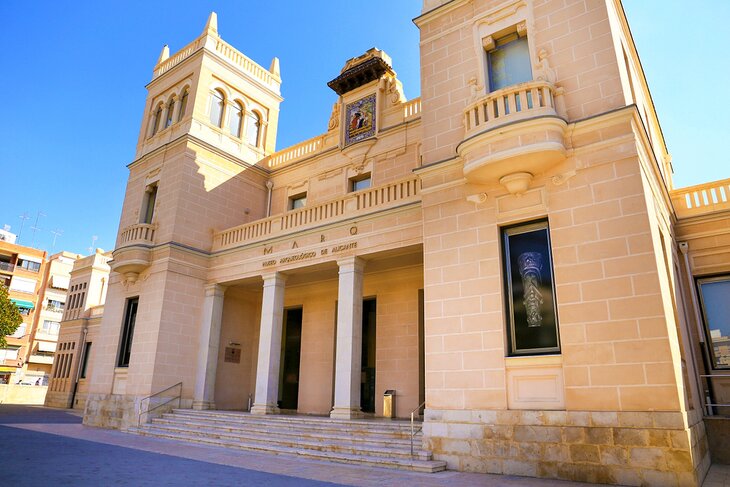
The superb Museo Arqueológico Provincial de Alicante (MARQ) takes you on a journey through 100,000 years of history. The collection covers prehistory; the classical period of antiquity with Greek, Roman, and Iberian artifacts; and the Middle Ages.
Highlights of the collection include a scene of Roman daily life, an assortment of ancient coins, a figure of the goddess Tanit, and Iberian ceramics. The medieval exhibit is especially impressive, with an assortment of more than 300 objects.
The museum also presents educational information about the archaeological sites of Lucentum and Illeta dels Banyets, as well as the Sanctuary of Pla de Petracos, where many of the artifacts were discovered.
In addition to the collections, the museum shows visitors a behind-the-scenes look at excavation work. Exhibits also show how researchers learn about the past from the objects that they find.
You may visit the museum year-round. The museum is open every day, except Mondays.
Address: Plaza del Doctor Gómez Ulla, Alicante
3. Explanada de España
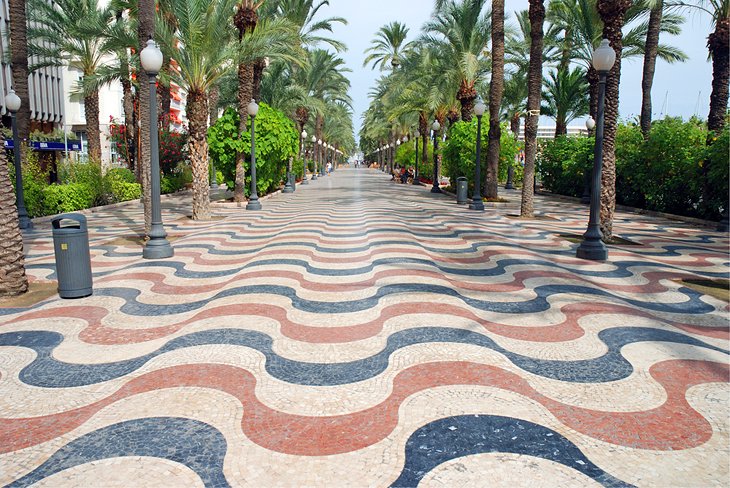
The Explanada de España, also known as the Paseo de la Explanada or the Promenade Explanada, runs parallel to the yacht marina and the port. Fringed with rows of swaying palm trees, this mosaic-paved walkway invites you to go for a stroll.
A hub of social life in Alicante, the Explanada de España is particularly refreshing on summer evenings. When the weather is warm, you'll enjoy the cool Mediterranean breeze that brushes in from the harbor.
Soak up the sun and the ambience at a restaurant with outdoor seating. The Italian restaurant Prego (28 Passeig Esplanada d'Espanya) has a picturesque terrace. Momen (21 Passeig Esplanada d'Espanya) is another great place to sit down and enjoy the scenery.
Head to the dessert-focused café Chocolatería Valor (14 Passeig Esplanada d'Espanya) for rich hot chocolate served with churros (sugar-coated strips of fried pastry dough).
If you're visiting during summertime, then you can browse the outdoor market. One section of the Explanada de España is devoted to the Alicante Craft Fair, where you'll find artisanal craft items and traditional sweets such as turrón (nougat).
Almost always buzzing with energy, the Explanada de España often provides a stage for street performers. The promenade also features an outdoor auditorium, La Concha, that presents music concerts, dance performances, and other cultural events.
Just a short walk from the Explanada de España promenade are dozens of excellent restaurants.
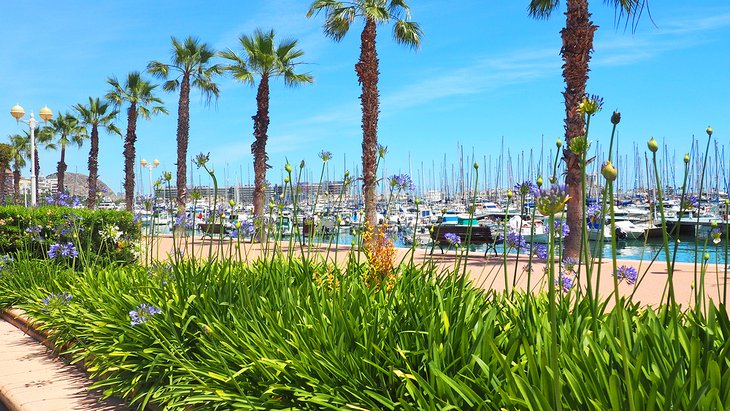
The promenade begins at the Plaza Puerta del Mar and winds up at the Parque de Canalejas, a lush seaside park. Several of the city's top historic attractions can be seen while ambling along the promenade, including the Casa Carbonell, a splendid example of Modernist architecture, and the Plaza de Gabriel Miró, a delightful public square shaded by leafy hundred-year-old trees.
Families with younger children will want to visit El Mundo de los Niños (The World of Children) amusement park (near the Parque de Canalejas), which features carnival-type rides and games.
4. Basilica de Santa María
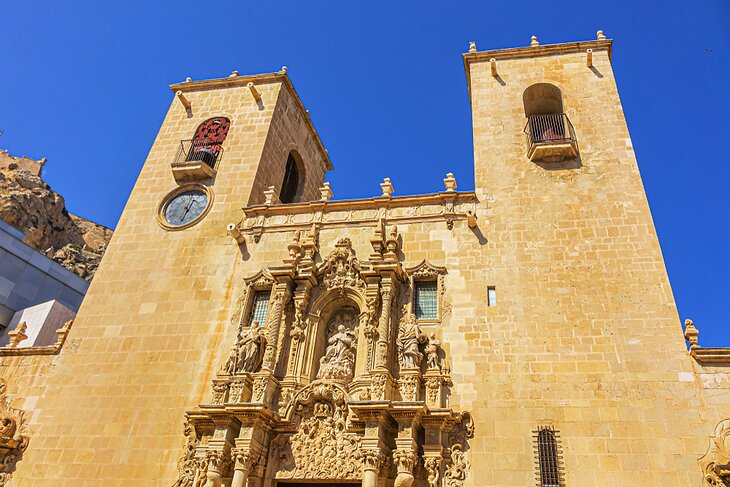
In the Barrio Santa Cruz, the Basilica de Santa María is the oldest church in Alicante and replaced Alicante's main mosque of the Moorish era. The church dates to the 14th century and was rebuilt by the Catholic Monarchs in the 15th century.
Originally Gothic in style, the basilica was remodeled in the 18th century with a Baroque facade and interior. On the main front of the exterior, the Virgin sculpture by Juan Bautista Borja stands out as a stunning example of detailed stone carving.
Another unique feature of the building is the pair of bell towers, which, although positioned on each side of the entrance, do not match. One of the bell towers was built in the 14th century and the other not until the 18thcentury.
Step inside to admire the richly decorated sanctuary. Take time to appreciate the 18th-century high altar designed in an elaborate Rococo style.
The Santa Maria Basilica is open year-round. Hours are 10am until 7pm, Monday through Saturday, and 2pm until 7pm on Sundays. Entrance requires an admission fee, which includes an audioguide (with the choice of English, Spanish, or French language).
Address: Plaza de Santa María, Alicante
5. Playa del Postiguet: A Beautiful City Beach
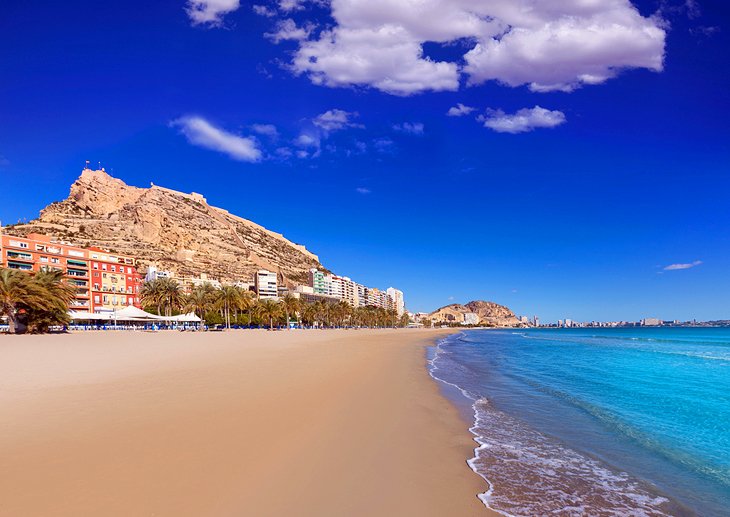
The Playa del Postiguet is right in the city center of Alicante, tucked beneath the Castillo de Santa Barbara. This picturesque wide beach offers the serenity of gentle waves and calm turquoise waters.
Crowds flock here during summer time because of its fine golden sand and excellent facilities, including restaurants, public toilets, showers, beach volleyball areas, a children's playground, as well as sun parasols and lounge chairs for rent.
You'll appreciate the safe water if you plan to take a dip. Generally swimming is possible at this beach. Signposts indicate water safety on a daily basis.
The Playa del Postiguet is next to Alicante's lovely and spacious Marina Alicante, where many yachts and private boats are docked. Here you can go for a stroll, relax on a bench and enjoy the seaside scenery, or dine at one of the stylish waterfront restaurants. The dining options range from casual to upscale.
Address: Muelle 8 Zona de Levante, Alicante
6. Museo de Arte Contemporáneo de Alicante
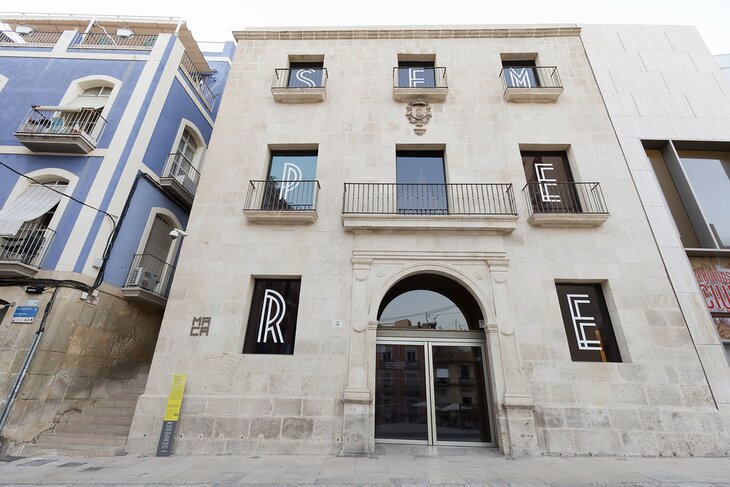
The Alicante Museum of Contemporary Art presents a superb collection of avant-garde 20th-century art. The collection is housed within a 17th-century Baroque building that stands opposite the Basilica de Santa María.
Opened in 2011, the museum has a permanent collection of contemporary art that features paintings, sculptures, and drawings. The collection includes masterpieces by prominent artists like Pablo Picasso, Joan Miró, Salvador Dalí, Juan Gris, and Julio González.
The museum also displays works by two major Alicante artists. The Juana Francés collection celebrates the career of this pioneering female artist. The Eusebio Sempere collection comprises 575 works by this Alicante artist best known for his geometric designs and optical illusions.
Admission to the museum (open daily) is free of charge. Guided tours are available.
Address: 3 Plaza de Santa María, Alicante
7. Mercado Central de Alicante
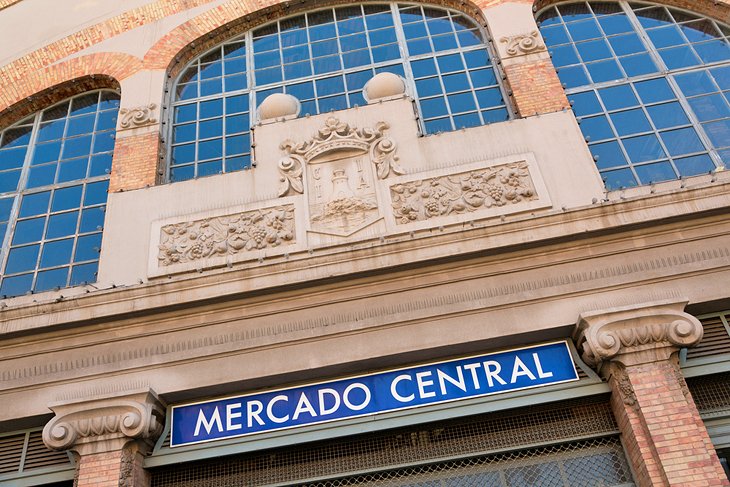
Visit the Mercado Central de Alicante to get a sense of local culture and everyday life. Built in the early 20th century, this large market hall features Modernist design elements on its facade.
Inside is a vibrant marketplace where farmers, fishermen, and other food vendors make sure that the city is well-fed. The first floor is almost entirely dedicated to household items, dairy, and butcher stalls selling meat, while the second floor houses vegetable farmers and the fish market.
The market is open Monday through Saturday from 7am to 2:30pm (until 3pm on Saturdays). Local restaurants use this market as their source for daily ingredients, and residents of the city also come here to shop for specialty items and fresh produce.
Visiting this market immerses you in the sensory delights of a traditional European food market. The bustling atmosphere makes it a fun place to wander around.
Address: 10 Avenida Alfonso X El Sabio, 03004, Alicante
8. Playa de San Juan
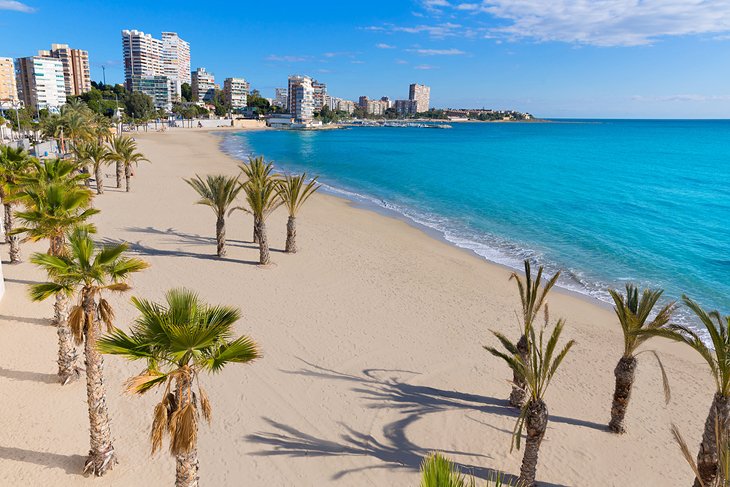
This gorgeous sandy beach is just a 15-minute drive from the Alicante city center. With its expansive shoreline, the Playa de San Juan is ideal for sunbathing and relaxation.
The Playa de San Juan has been awarded a Blue Flag for water safety. The calm waters are suitable for swimming and water sports.
A wide variety of cafés, restaurants, and snack bars along the beach make it convenient for you to spend a full day here.
9. Concatedral de San Nicolás de Bari
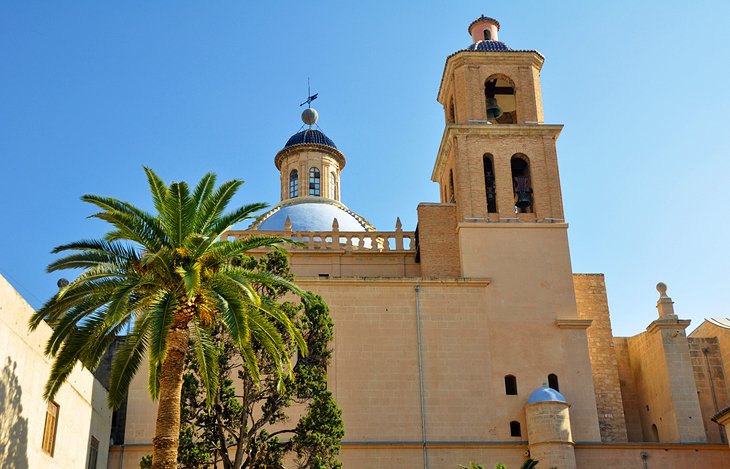
The Concatedral de San Nicolás de Bari stands in the heart of the city, near the Town Hall. This 17th-century church was constructed on the site of a former mosque and is dedicated to the town's patron saint.
While the exterior is plain, the interior is an impressive and awe-inspiring spiritual space. The sanctuary features several notable retablos, including a magnificent 17th-century work that is entirely gilded. The 15th-century cloister is also exquisite.
This unique church blends Baroque elements with Herrerian style, an architectural school that flourished during Spain's Renaissance era. Herrerian buildings are distinguished by austere facades and precise geometrical lines.
10. Ayuntamiento (Town Hall)
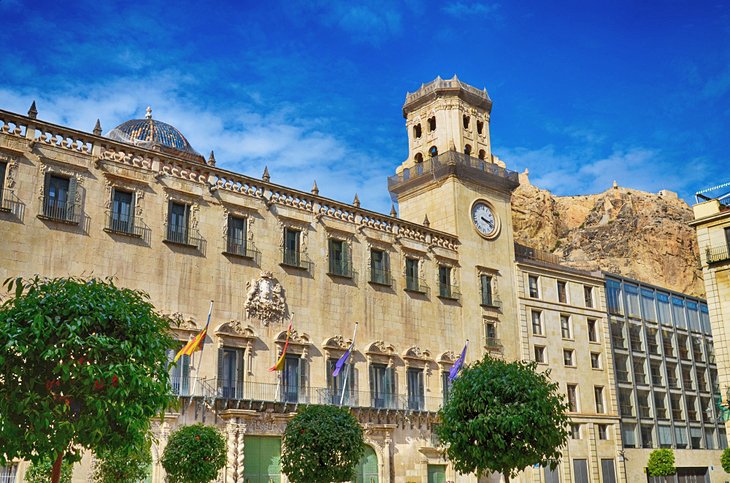
The Ayuntamiento (Town Hall) of Alicante makes a striking impression. This grand Baroque building has an ornate Churrigueresque facade and two imposing towers, which soar to 35 meters.
On the staircase leading up to the building is an instrument used in Spain as a reference point to measure the height above sea level.
The building is listed as a Historic Monument and is open to visitors year-round daily. The Ayuntamiento is only closed on December 25th, January 1st, and January 6th.
Inside the Ayuntamiento, a must-see is the Salón Azul (Blue Room), which is decorated with furnishings from the epoch of Queen Isabel. Also be sure to visit the Capilla del Oratorio (chapel) where Mass is held.
The Ayuntamiento is located behind the park of the Explanada de España and near the Plaza Puerta del Mar
Address: Plaza del Ayuntamiento, Alicante
11. Plaza de Gabriel Miró
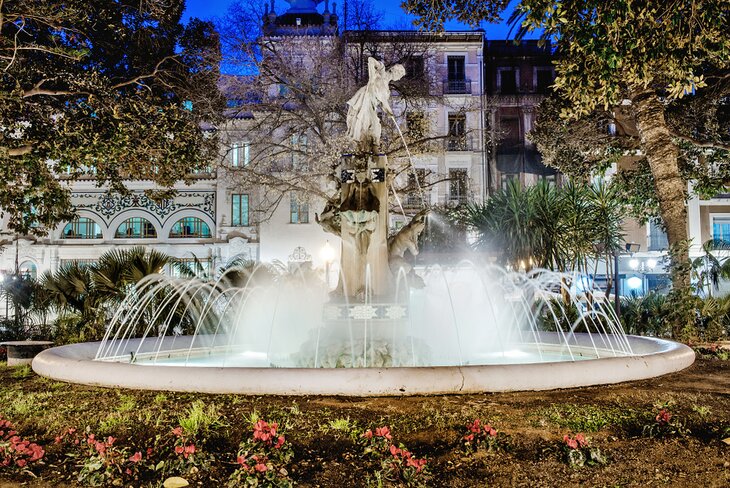
This delightful square pays homage to the renowned author of Alicante, Gabriel Miró. A bust of Gabriel Miró stands at one end of the square.
You immediately feel a sense of peacefulness when stepping into the Plaza de Gabriel Miró. Shaded by leafy ficus trees, the square abounds with luxuriant vegetation. The center is adorned with a fountain that features interesting statues.
Close to Alicante's Old Town, the Plaza de Gabriel Miró offers a respite from the hustle and bustle of the city. You can relax on the terrace or take an unhurried stroll through the beautiful grounds.
12. Cabo de las Huertas
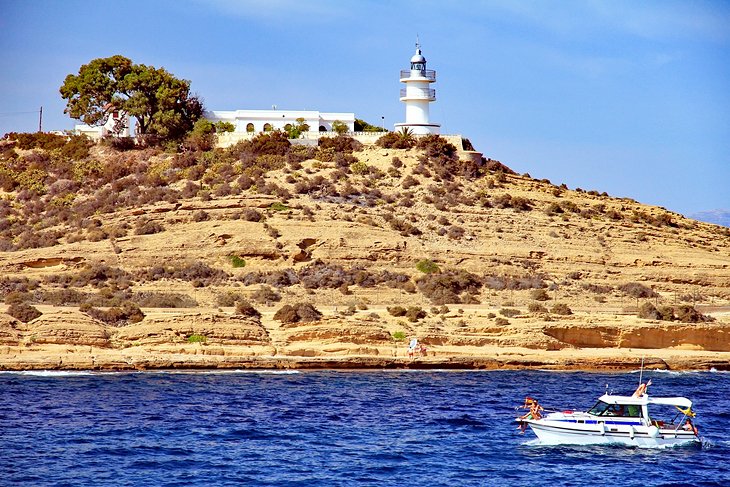
Several small sea coves are found just outside Alicante on the Cabo de las Huertas, between San Juan and Albufereta.
The Cala Cantalars are small coves in a quiet residential area two kilometers from the Alicante city center. These coves conceal sheltered rocky beaches with placid waters.
The Cala dels Jueus coves are both rocky and sandy. Both of these areas have rocky beaches with gentle waters. This area is great for scuba diving.
Where to Stay in Alicante for Sightseeing
The main tourist areas of Alicante are the Barrio Santa Cruz (Old Town), the nearby port and marina, and the beach. The most charming place to stay is the Old Town, but beach lovers will prefer being near the Playa del Postiguet in Alicante or by the Playa de San Juan, which is about a 15-minute drive from the city center. Here are some highly rated hotels in Alicante:
Luxury Hotels:
- If you're seeking modern five-star accommodations, the Hotel Hospes Amérigo is an ideal choice. This hotel in the Old Town occupies the historic Salesian Convent, which has been completely renovated and decorated in a sleek minimalist style. Amenities include a fine-dining restaurant, rooftop terrace and swimming pool, indoor pool, fitness center, spa, sauna, concierge, and 24-hour front desk. The hotel is near restaurants, shops, and the port.
- The four-star Meliá Alicante is a resort hotel with a pool at the marina, overlooking the beach. The hotel is ideally located within easy walking distance to many tourist attractions in the Barrio Santa Cruz.
- Also at the marina and an easy walk to the Barrio Santa Cruz, the four-star Hotel Spa Porta Maris by Meliá has outdoor and indoor pools, a fitness center, spa, Jacuzzi, and a restaurant that serves Mediterranean cuisine. This seaside hotel is located right next to the Playa del Postiguet beach.
Mid-Range Hotels:
- Eurostars Centrum Alicante is conveniently located on a residential street close to the Old Town and waterfront. This four-star hotel has excellent amenities, including a fitness center, sauna, Turkish baths, spa treatments, and a restaurant that serves regional cuisine.
- At the northern side of the Old Town and a 10-minute walk to the harbor, the four-star Eurostars Lucentum is conveniently located across the street from the airport shuttle-bus stop. The hotel has a fitness center and a spa.
- The four-star AC Hotel Alicante is also near an airport shuttle-bus stop and about a 15-minute walk from the Old Town and harbor. Amenities include a fitness center, a rooftop terrace with swimming pool, and room service. Some of the guest rooms have wonderful sea views.
Budget Hotels:
- The three-star Hotel Ciudad de Alicante is right by the beach and an airport shuttle-bus stop, and just a short walk to the Old Town. Guest rooms feature balconies with views of the Castillo de Santa Bárbara. The hotel offers a 24-hour front reception desk and laundry service.
- Surprisingly affordable for a three-star hotel, the Occidental Alicante is ideally located in the Old Town near many restaurants and shops and close to the Mercado Central. The hotel features modern guest rooms and a casual café. The beach is about a 20-minute walk away.
- The Hotel Cervantes is in the city center near many shops and restaurants and a 15-minute walk to the port. This two-star hotel offers basic guest rooms with air-conditioning and complimentary breakfast. Amenities include a 24-hour front reception desk and concierge.
Day Trips from Alicante
Playa de Los Saladares
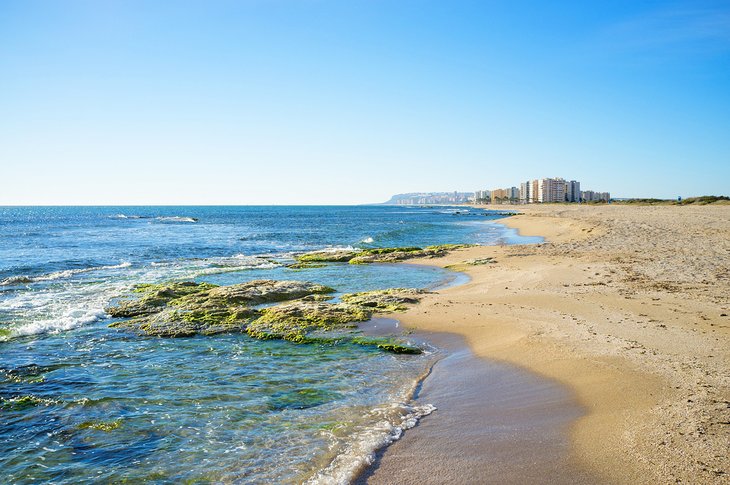
Another excellent beach is Playa de Los Saladares, located seven kilometers from Alicante. The pristine golden-sand shoreline extends for nearly two kilometers and features sand dunes at one end. This beach offers a welcome escape to nature, along with public facilities.
The Playa de Los Saladares has public restrooms, showers, shops, restaurants, a beachfront promenade, and a children's play area. Beach umbrellas and lounge chairs are available for rent.
This beach is a great place to visit for sunbathing and leisurely seaside strolls. The moderate waves make the water safe for wading or swimming.
Las Cuevas del Canelobre
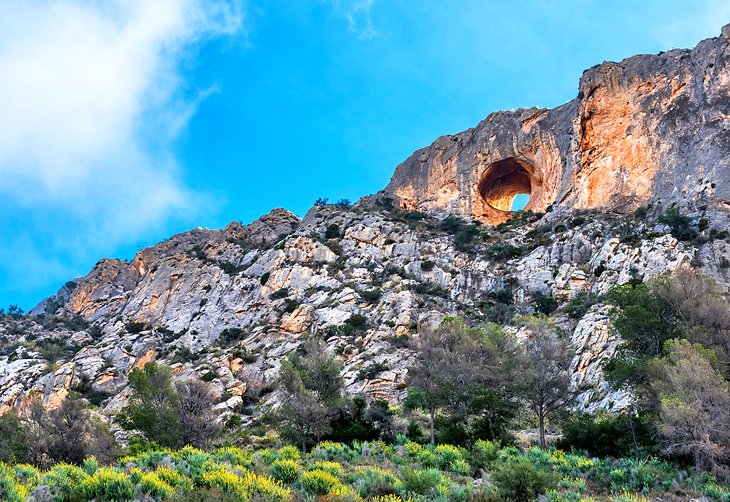
Las Cuevas del Canelobre are a stunning natural cave system 24 kilometers from Alicante, located within the slopes of the Sierra del Cabeçó d'Or mountains, an area with breathtaking views of the coastline.
One of the caverns has been compared to a cathedral with its awesome 150-meter-long hall filled with a profusion of stalactites and stalagmites. Tourists will enjoy visiting this unique nature site.
Guided tours include colored lighting to illuminate the caves and music for ambience. The caves are sometimes used as a venue for concerts because they offer exceptional acoustics and a truly special ambience.
Tabarca Island
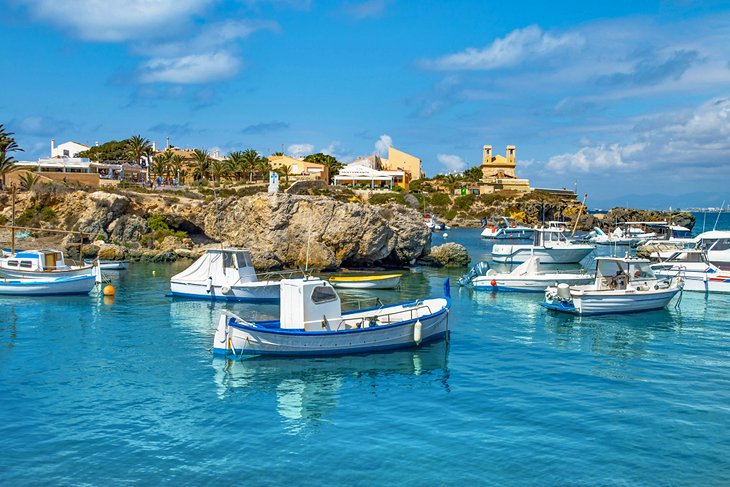
Travelers can escape to a small island off the coast of Alicante and enjoy being surrounded by the deep blue waters of the Mediterranean Sea. Tabarca Island is the only inhabited island of the region, and the area around the archipelago has been designated a Mediterranean Marine Reserve.
The landscape boasts an incredible biodiversity of flora and fauna, and the island itself is rich in history having been a former pirate hideout, an 18th-century fortified town, and isolated fishing village prior to becoming a premier tourist destination.
There are plenty of things to do on the island, from simply enjoying the breathtaking views and idyllic Mediterranean ambience to visiting the island's museum, relaxing on the beach, and dining at one of the many excellent restaurants.
Tourists can reach the island for a nice day trip via an hour-long boat ride from the port of Alicante, or choose to spend the night in one of several small hotels.
Altea
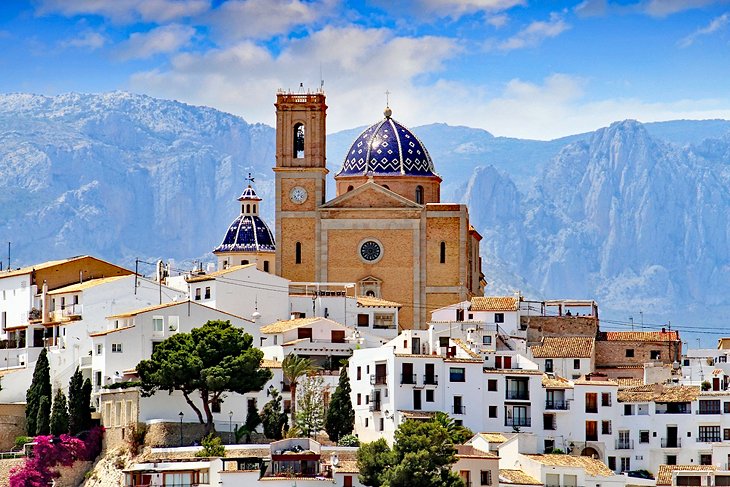
From a distance, the historic village of Altea appears as a small group of buildings nestled on a hilltop. This medieval perched town, located about 45 minutes by car from Alicante, overlooks the Mediterranean Sea and offers sensational panoramic views.
The town is dominated by the Church of Virgin of Consuelo with its striking blue-and-white tiled dome. Characteristic whitewashed houses and atmospheric cobblestone streets lend old-world charm.
Many areas of the town have shaded terraces and viewpoints for taking in the picturesque scenery. Some of the narrow lanes turn into pedestrian staircases that lead down to the sea.
Altea is also renowned for its artisan craft workshops and art studios, as well as its summertime festivals.
In August on the Saturday closest to the feast day of Saint Lorenzo, the Castell de l'Olla puts on a spectacular festival with dancing, musical entertainment, and a dazzling fireworks show.
In late September, a festival celebrates the old traditions of the Christians and Moors of the region.
Albacete
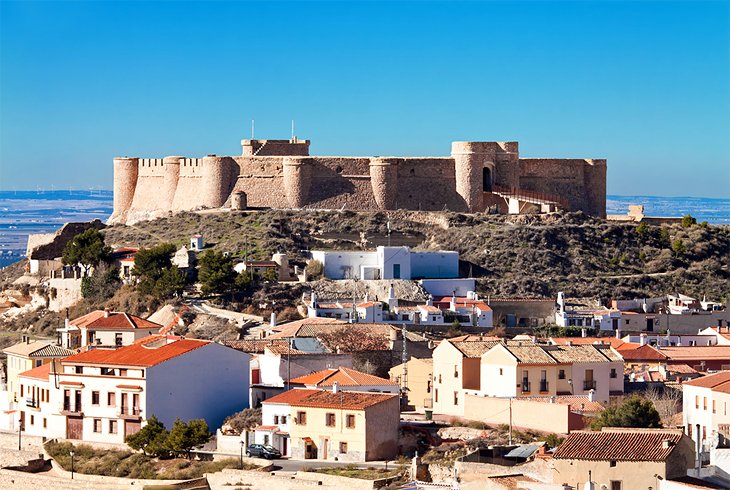
The town of Albacete is in the Castilla-La Mancha region, about 160 kilometers from Alicante, and is most quickly reached via train in around an hour.
In the old upper town (el Alto de la Villa) is the 16th-century Cathedral of San Juan Bautista. The building was originally designed by Diego de Siloé in Gothic style and was continued in Renaissance style. It has a fine Churrigueresque high altar, and the sacristy features five grisaille wall paintings of biblical scenes.
In the newer lower part of the town in the Parque Abelardo Sánchez is the Albacete Museum with three departments: archeology, fine arts, and ethnology. Among the treasures of the archeology collection are the Iberian sculptures from Cerro de los Santos, ancient Roman dolls made of ivory, ancient Roman mosaics from Balazote, and Gothic religious objects.
The Albacete province of the Castilla-La Mancha region boasts a well-preserved medieval town, Chinchilla de Montearagón, which is noteworthy for its monumental fortified hilltop castle. The town is famous for its traditional Easter celebrations and also hosts a renowned theater festival every year in July.
More Related Articles on PlanetWare.com
Spain's Spectacular Coast: The coast of Spain has no shortage of choices if you are looking for a classic Mediterranean town and is home to many of Spain's most highly rated beaches. Among the largest of the port towns is Valencia, the historic former capital city of the old kingdom. Farther north up the Mediterranean coast, the city of Tarragona is home to UNESCO-listed Roman ruins, medieval remnants, and a richly Catalonian atmosphere.
Islands in the Sun: Spain's Mediterranean islands offer their own unique flavor, and are a favorite tourist destination for both Spanish and international travelers alike. The gorgeous island of Ibiza boasts famous beaches, which range from secluded coves to lavish resort complexes. Tourists who are looking for a wider range of things to do will want to visit Majorca (also known as Mallorca), the largest of the Balearic Islands, prized for its sandy shores, as well as Gothic cathedrals, medieval churches, and old castles.