17 Top-Rated Tourist Attractions in Valencia
In a dreamy seaside setting, this balmy Mediterranean port town lives up to the local saying "a piece of heaven fallen to earth." Under the warm rays of the southern sun, Valencia's palm-fringed plazas are full of life, and its churches sparkle with brightly colored azulejo domes.
As the old capital of the kingdom of Valencia, the city is rich in cultural attractions. Magnificent historic monuments, such as the 15th-century Silk Exchange, the 18th-century Marquise Palace, and the Museum of Fine Arts, tell the story of a wealthy merchant and aristocratic past.
Valencia has a charming historic center, the Ciutat Vella (Old Town), but the city has entered the 21st century with gusto. The sleek Modern Art Institute, along with the futuristic City of Arts and Sciences immerse visitors into a brave new world of artistic and scientific discovery.
Learn about the best places to visit with our guide to the top attractions and things to see and do in Valencia, Spain.
- 1. La Ciutat de les Arts i les Ciències
- 2. Las Fallas Festival
- 3. Oceanogràfic de València
- 4. La Lonja de la Seda
- 5. Go Shopping at Mercado Central
- 6. Iglesia de San Nicolás de Bari y San Pedro Mártir de València
- 7. Admire the Catedral de València
- 8. Plaza de la Virgen
- 9. Iglesia de Santo Tomás y San Felipe Neri
- 10. Meet the Animals at Bioparc València
- 11. Museo Arqueológico de la Almoina
- 12. Palacio del Marqués de Dos Aguas (Ceramics Museum)
- 13. Museo Nacional de Bellas Artes de València
- 14. Institut València d'Art Moderne
- 15. Torres de Serranos (Ancient Town Gate)
- 16. Spend a Day at Playa del Saler
- 17. Day Trip to the Medieval Town of Requena
- Where to Stay in Valencia for Sightseeing
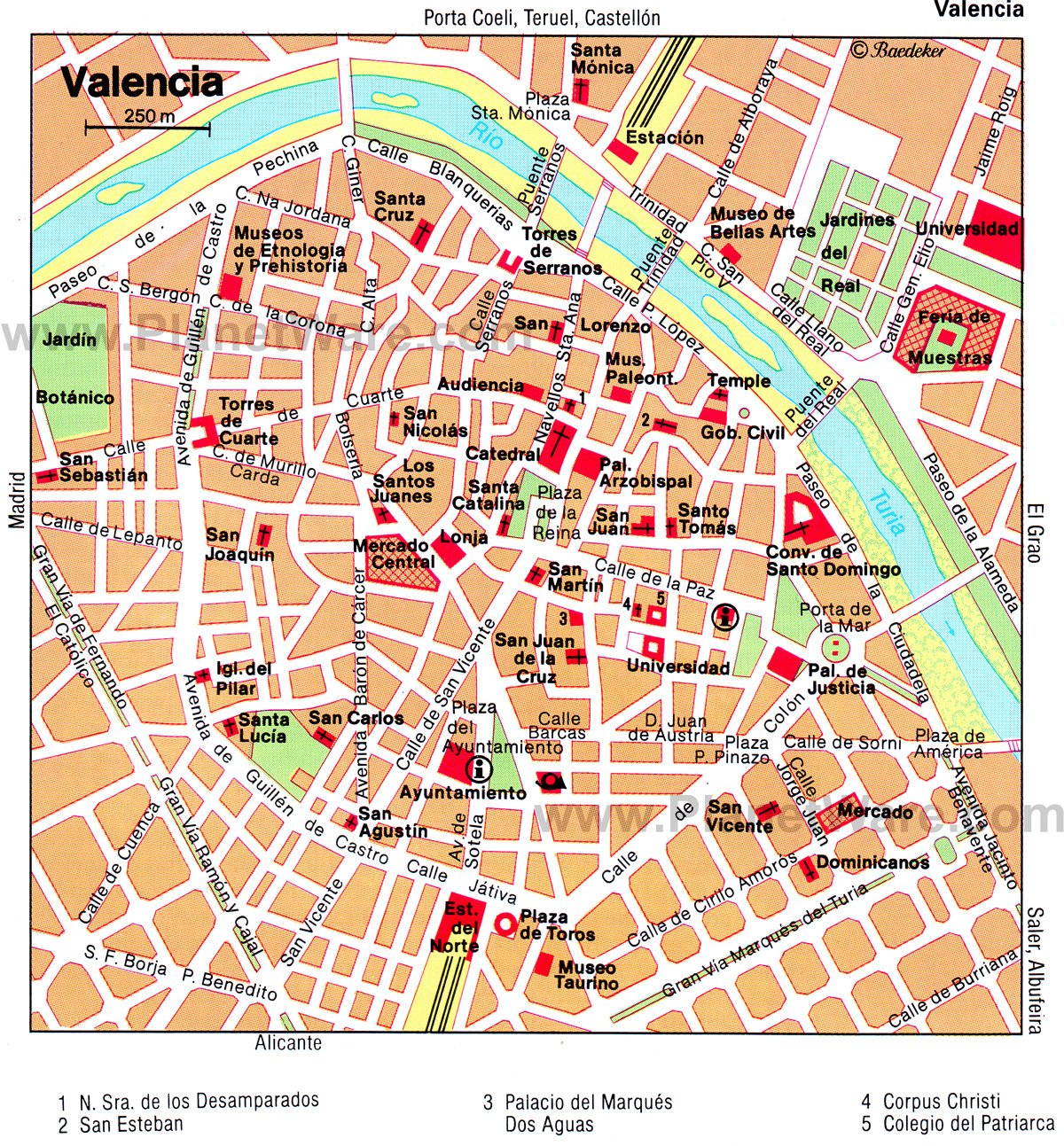
- Map of Tourist Attractions in Valencia
- Valencia, Spain - Climate Chart
1. La Ciutat de les Arts i les Ciències
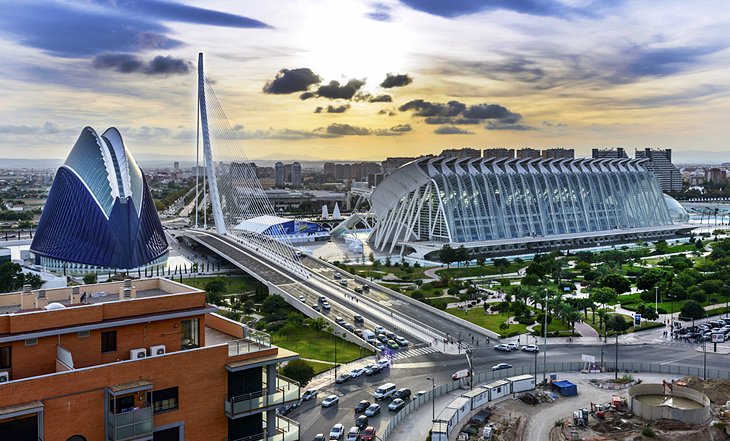
You can discover the fascinating world of arts and sciences at this futuristic complex on the outskirts of Valencia. La Ciutat de les Arts i les Ciències (The City of Arts and Sciences) is one of Europe's most impressive centers dedicated to cultural and scientific exhibitions.
In a two-kilometer space along the Turia River, the complex includes several stunning examples of avant-garde architecture designed by architects Santiago Calatrava and Félix Candela.
The Ciudad complex has six main areas: the Hemisfèric IMAX Cinema, which screens 3-D digital films and serves as a planetarium; the Umbracle landscaped area that features shaded walkways; the Museu de les Ciències, an interactive museum with exhibits about science, the environment, and technology; the Oceanogràfic, Europe's largest aquarium; the Palau de les Arts opera house; and the Ágora concert space.
The City of Arts and Sciences also hosts conferences, exhibitions, and workshops related to science and art topics.
Address: 7 Avenida del Professor López Piñero, València
Official site: http://www.cac.es/en/home.html
2. Las Fallas Festival
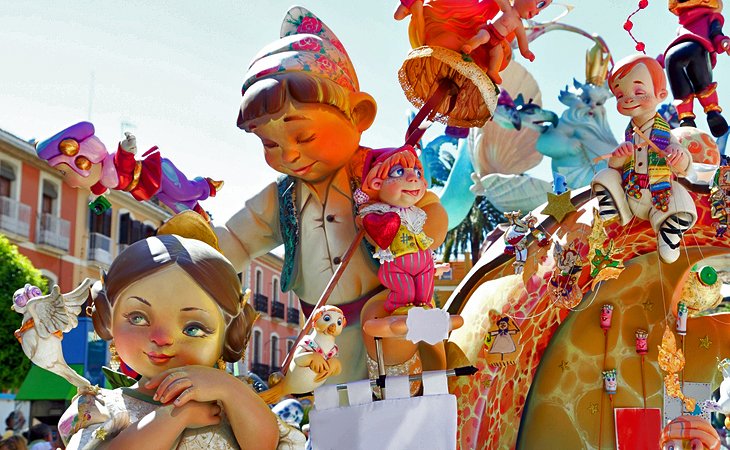
Valencia is one of the best places to visit in March. For over two weeks during the month of March, the city becomes a scene of joyous celebration during the Fiesta de San José (Feast Day of Saint Joseph), a lively religious festival that brims with creative spirit and interesting things to do. The festival includes traditional music and food (paella), a parade, fireworks, and unique art exhibits.
This festival is known for its creative installations called fallas, large floats featuring figures made of papier-mâché. These creations are set up in the streets and then burned at midnight on the last day of the fiesta. The custom originated in the Middle Ages, when carpenters and other craftsmen would burn leftover scraps of wood and other materials on the feast of Saint Joseph.
The Museo Fallero (Fallas Museum) on Plaza Monteolivete offers a chance to see the ninots (figures) that have been created over the years. It is interesting to see how the ninots have evolved with technology, from early wax figures dressed in real clothes to cartoon-like modern figures made of papier-mâché and most recently of polystyrene.
Address: Plaza Monteolivete 4, València
3. Oceanogràfic de València
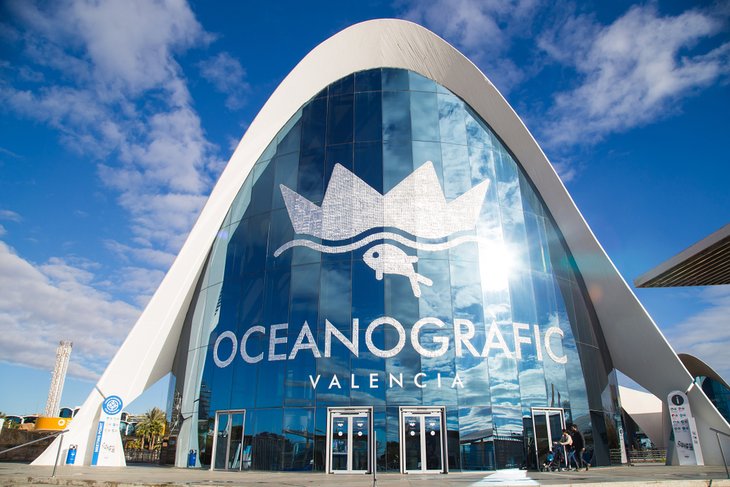
This striking building designed by architect Félix Candela as part of The City of Arts and Sciences houses the largest aquarium in Europe.
It is actually a complex of several buildings, each dedicated to one of the earth's most important marine ecosystems and environments: Wetlands, Temperate and Tropical, Oceans, Mediterranean, Antarctic, Arctic and Islands, and the Red Sea.
More than 500 different marine species are represented by 45,000 sea creatures, visible in nine towers that allow viewing as though you are underwater. The most dramatic of these is the tunnel, where you walk surrounded on both sides and overhead by swimming sharks.
Some of the most popular things to see are the beluga whales, sea lions, walruses, penguins, seals, sea turtles, and dolphins. Along with watching the sea life, you can experience mangrove swamps, marshlands, kelp forests, and other wetland environments with their native plant species.
If you're looking for something special to do, enjoy a meal at the Submarine Restaurant within the Oceanogràfic de Valencia building. The dining room is surrounded by a circular aquarium and features a chandelier that looks like a swarm of jellyfish. The menu focuses on modern-fusion cuisine with a Mediterranean influence. The restaurant serves lunch every day and dinner Monday through Saturday.
The Oceanogràfic de Valencia is open every day year-round. You can purchase combined tickets for admission to the Oceanogràfic aquarium and the Museu de les Ciències or the Hemisfèric.
Address: 1 Carrer d'Eduardo Primo Yúfera, València
Official site: https://www.oceanografic.org/en/
4. La Lonja de la Seda
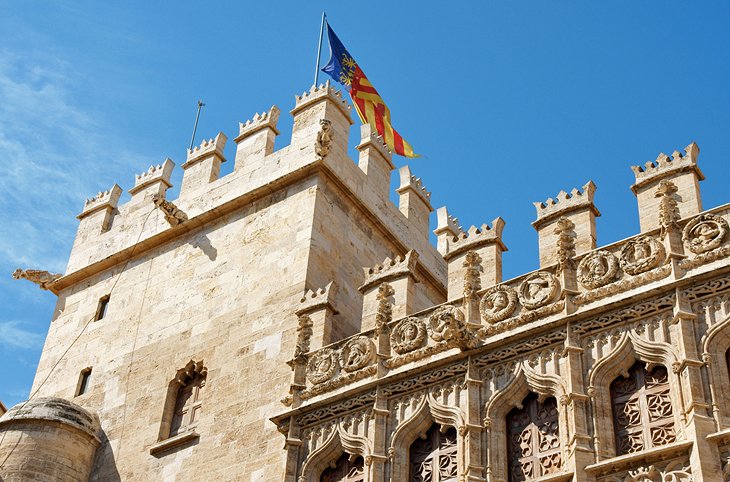
This magnificent Gothic structure was built in the 15th century to house the city's Silk Exchange, the marketplace where the famous Valencian silk was traded with merchants (to be sold all over Europe). The monument is listed as a UNESCO World Heritage Site.
One of the finest examples of Gothic civil architecture in Europe, La Lonja de la Seda resembles a medieval castle with its crenellated exterior and formidable tower. The façade features richly decorated doorways, decorative windows, and gargoyles (the grotesque carved creatures that function as water spouts). The main hall has rich stellar vaulting borne on twisted columns.
You can climb the 144 stone steps of the tower's helical staircase. From the top of the tower, the views of the town are stunning. This attraction is open to the public daily (except Mondays).
Address: Plaza del Mercado, València
5. Go Shopping at Mercado Central
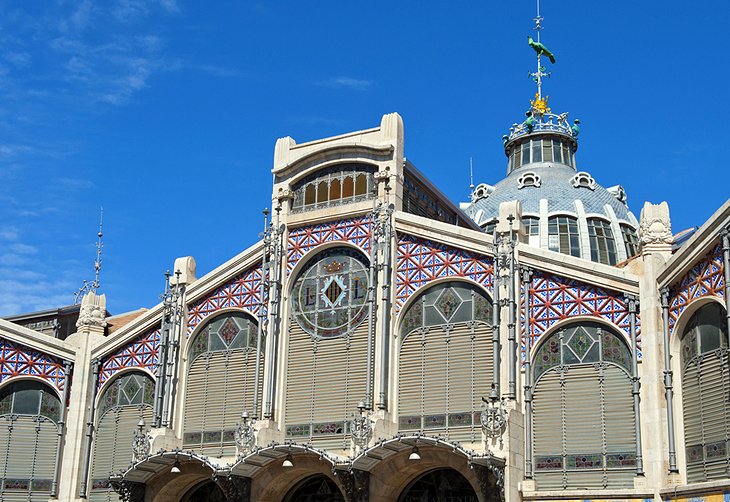
Just steps away from La Lonja de la Seda, the Mercado Central (Central Market) is a spacious marketplace built in 1928.
The Art Nouveau building is lavishly adorned with azulejos, decorative ceramics typical of the region. The hall contains hundreds of market stalls where vendors sell fresh fruits, vegetables, and food products from the Valencia region, as well as other areas of Spain.
The Iglesia de los Santos Juanes, a lovely historic church, is found on the Plaza del Mercado immediately next to the Mercado Central. This National Historic and Artistic Monument was built between the 14th and 16th centuries on the site of a hermitage church that replaced an old mosque.
While the interior is Gothic in style, the exquisite Baroque façade was designed by Vicente García in the 17th and early 18th centuries. Gorgeous frescos grace the interior's vaulted ceiling; the fresco paintings were created by Antonio Palomino in 1700.
Address: Plaza de la Ciutat de Bruges, València
Official site: https://www.mercadocentralvalencia.es/
6. Iglesia de San Nicolás de Bari y San Pedro Mártir de València
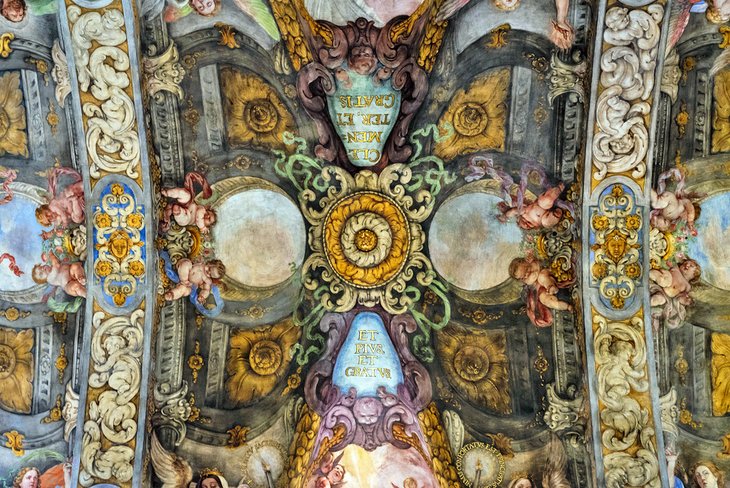
This church dedicated to St. Nicholas of Bari and St. Peter the Martyr was founded in the 13th century on the site of a Roman sanctuary. The Romanesque church was renovated in the Gothic style in the 15th century, and its interior was finished in the 1690s in the Baroque style.
Although the exterior is quite simple and somber, the church has a sumptuous interior that is one of the most ornate of all Valencia's churches. The sanctuary features breathtaking wall and ceiling frescoes designed by Antonio Palomino, while the actual painting was completed by Dionis Vidal. The frescoes represent scenes from the lives of Saint Nicholas and Saint Peter Martyr.
With its lavish frescoes and sculptural embellishments, this church is a gem of Baroque art and is sometimes compared to the Sistine Chapel in Rome. The impressive scale of the ceiling frescoes is unique in the world.
Address: 35 Calle de los Caballeros, València
7. Admire the Catedral de València
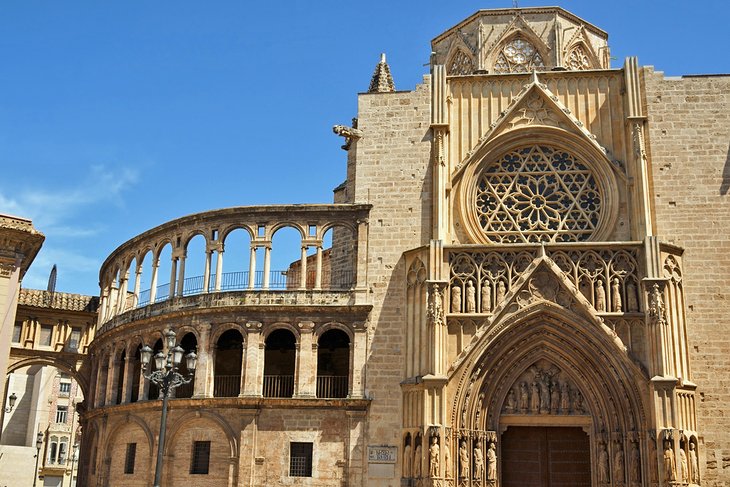
The Catedral de València (Catedral del Santo Cáliz) stands out as one of the most unusual cathedrals in Spain owing to its mishmash of architectural styles. Originally this location was the site of an ancient Roman temple and then a Moorish mosque.
At this spot that is steeped in history, the cathedral was constructed beginning in the 13th century. Renovations were made in the 15th century and 17th century.
The exterior combines original Romanesque architectural elements with sculptural details added later in the Middle Ages. Spend some time admiring the façade before entering the cathedral. The splendid Puerta del Palau doorway dates to the Romanesque era, while the Puerta de los Apóstoles (Apostles' Doorway) dates from the 15th century.
The interior has an inspiring ambience with its majestic domed ceiling and a rose window illuminating the space. Dazzling in its Gothic splendor, the somber high-vaulted nave is embellished with Renaissance paintings and elegant Baroque art. The various chapels are adorned with masterpieces of art, including paintings by Goya and a crucifix by Alonso Cano.
A highlight of the sanctuary is the Chapel of the Holy Grail (Capilla del Santo Cáliz), with delicate vaulting and star motifs. This chapel illustrates a scene of the 12 apostles in Heaven and the coronation of the Virgin Mary. The most sacred object is a reliquary containing the Holy Chalice, an artifact from the first century CE said to be the goblet that Jesus used to perform the Holy Eucharist.
The Cathedral of Valencia also has a museum, the Museo Catedral de València, which displays a prestigious collection of religious art. A variety of styles from different time periods (Gothic, Renaissance, etc.) are on display. The museum boasts many exceptional artworks including paintings by Mariano Salvador Maella and Francisco de Goya.
In addition to visiting the interior of the cathedral and the cathedral museum, you may ascend El Miguelete (the Miguelete Tower) to admire superb views. The 207-step climb to the top of the tower rewards with panoramic vistas of Valencia's cityscape.
The Cathedral of Valencia and the Cathedral Museum can be visit with an admission fee, which includes an audio-guide with various language options. Both the cathedral and its museum are open to the public year-round every day (except for Sundays during wintertime). The Miguelete Tower is open daily year-round; admission requires a small entrance fee.
Address: Plaza de l'Almoina, València
Official site: http://www.catedraldevalencia.es/en/
8. Plaza de la Virgen
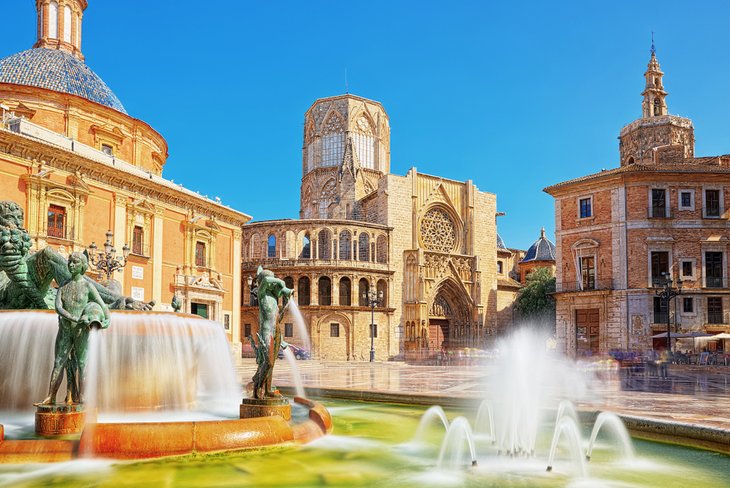
Overlooking the cathedral, the Plaza de la Virgen is among the oldest (it dates to Roman times) and loveliest of Valencia's many plazas.
The graceful Neptune fountain at the center of the Plaza de la Virgen is the work of Valencia sculptor Silvestre Edeta. Lighted at night, it's a favorite meeting place among locals.
The square is bordered by several landmark buildings. Across the square is the Palace of the Generalitat and next to the Catedral de València is the Real Basílica de Nuestra Señora de los Desamparados, the most important (and also the first) Baroque church in Valencia. This church is renowned for its magnificent fresco on the dome ceiling that was painted by Antonio Palomino in 1701 and is considered a masterpiece of Spanish Baroque art.
9. Iglesia de Santo Tomás y San Felipe Neri
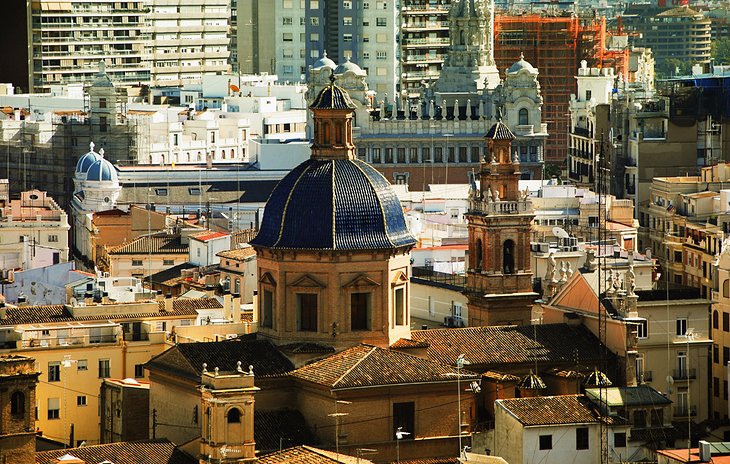
With its dazzling blue-tiled dome, this beautiful church exemplifies the characteristic Mediterranean style of Valencia. Built in 1725, the Church of Saint Thomas and Saint Philip was listed as a National Historic Monument in 1982.
The church has a fancifully decorated Baroque façade, and the architectural layout was modeled after the much-imitated Il Gesú church in Rome. The breathtaking interior has a spacious central nave lined with numerous side chapels.
Catholic mass is held at the church daily. The monument is not open to the public for visit, but tourists may attend a mass to see the lovely sanctuary.
Address: Plaza de San Vicente Ferrer, València
10. Meet the Animals at Bioparc València
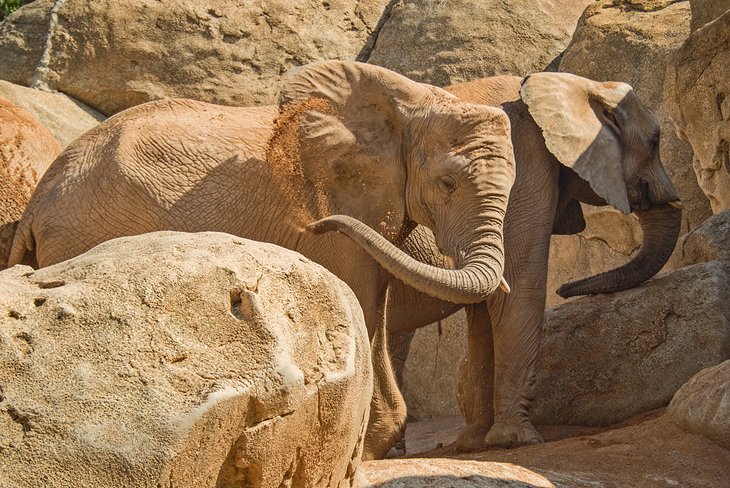
Valencia's zoo covers 25 acres north of the park created by the diversion of the River Turia's course. The landscape was created to house animals in as close to their native habitats as possible, and the zoo is especially known for its large collection of African animals.
The environment is designed so that you immediately feel as though you have been transported to Africa as they view animals almost barrier-free in landscapes typical to the savannah, Madagascar, and equatorial Africa.
Instead of separating different species, they coexist as they would in their native environments. On the savannah, for example, lions, giraffes, antelopes, and rhinoceros all live together as they do in the wild. Gorillas inhabit a dense equatorial forest, while hippopotami and crocodiles cool in the water.
Bioparc is actively committed to sustainability of resources and to wildlife conservation, using solar panels to heat water, and recycling more than 95 percent of it.
Address: 3 Avenida Pío Baroja, València
11. Museo Arqueológico de la Almoina
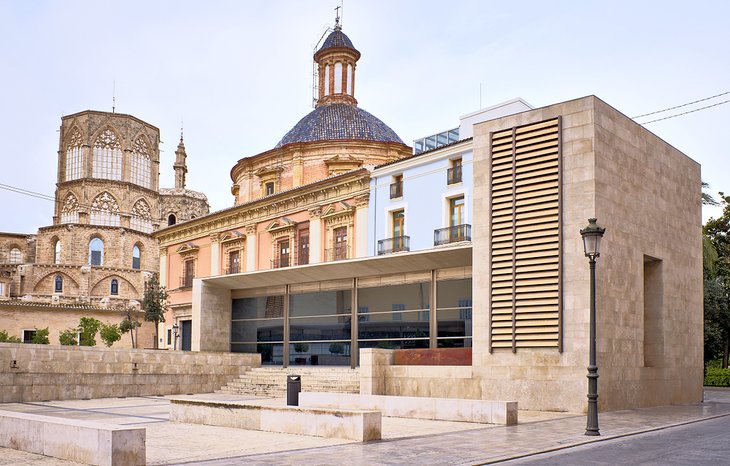
Beneath a sleek modern building across from the cathedral, La Almoina Archaeological Museum offers a glimpse of the civilizations that have contributed to Valencia's heritage. Discovered during excavations between 1985 and 2005 are well-preserved remains of the first settlement here by the Romans, more than 2,000 years ago.
There are remnants (dating to the 2nd century CE) of the Roman baths and streets, including a sanctuary, part of the forum portico. A baptistery and the apse of a church are from early Christian times. The era of Moorish rule is revealed in vestiges of a courtyard, pool, and fortifications from the Alcázar of the old Muslim city.
Together with historic pottery and other artifacts found underneath modern Valencia, the excavated area is considered one of Europe's best archaeological sites. The ancient ruins are covered with plexiglass to allow for easy viewing, and walking paths are lined with railings for a pleasant experience.
Address: Plaza Décimo Junio Bruto, València
12. Palacio del Marqués de Dos Aguas (Ceramics Museum)
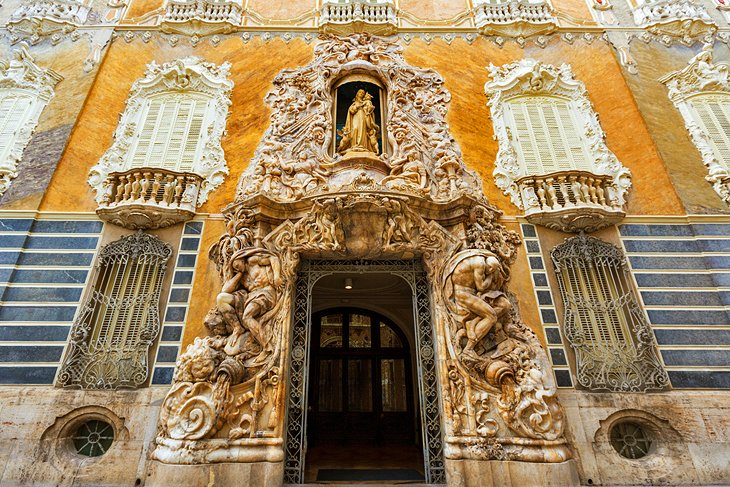
Near the Església de Sant Martí (Church of San Martín) is the Palacio del Marqués de Dos Aguas, an 18th-century aristocratic palace that belonged to a prominent noble family. The palace is renowned for its opulently decorated façade and refined, ornately decorated interior.
The palace now houses the González Martí National Museum of Ceramics, which opened in 1947. The museum presents more than 5,000 examples of traditional pottery from Valencia and the surrounding area, azulejos (blue glazed ceramic) from Teruel, and faience (glazed earthenware) from Toledo and Seville.
Other interesting items on display include ancient Greek, Roman, and Arab pottery; and fine porcelain from the Silk Route (China) and Japan. The collection also contains modern pieces, including works by Picasso, and contemporary items.
A highlight of the collection is the fully-equipped 19th-century Valencian kitchen featuring traditional tiles.
The González Martí National Museum of Ceramics is open Tuesday through Sunday.
Address: 2 Calle Poeta Querol, València
13. Museo Nacional de Bellas Artes de València
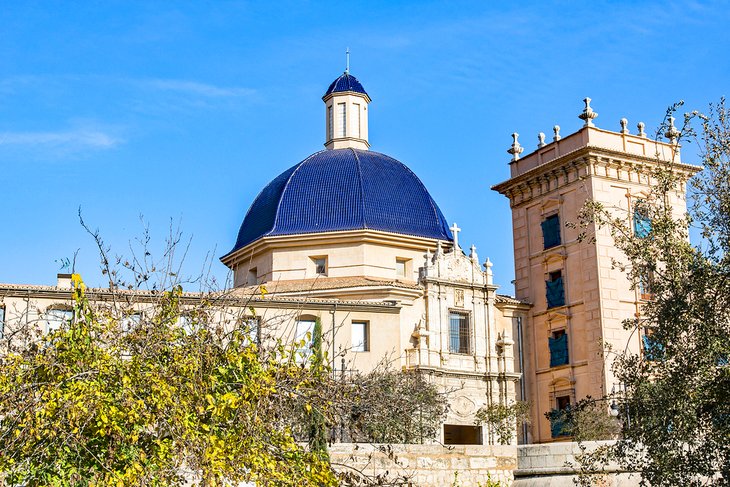
The National Museum of Fine Arts is a wonderful place to discover the artistic heritage of the Valencia region.
The museum displays archeological findings, paintings, and sculptures, from the medieval period to the 20th century. Much of the art collection represents medieval religious paintings created by Valencian artists or works created for Valencia churches.
Among the museum's most precious works are the 14th-century altarpiece of Fray Bonifacio Ferrer (a Valencian friar) and a triptych of the Passion by Hieronymus Bosch. The assortment of 16th- to 19th-century Spanish paintings is also interesting.
Highlights of the Valencian painting collection are the Last Supper and Saint Bruno by Francisco Ribalta and Saint Jerome by Jusepe de Ribera. Other Spanish masters represented include Diego Rodríguez de Silva y Velázquez, Bartolomé Esteban Murillo, El Greco, Francisco de Goya and Luis de Morales.
Adjoining the Museum of Art is the Jardines del Real, a peaceful green space filled with statues, fountains, and walking paths.
The museum is open Tuesday through Sunday. Admission is free of charge.
Address: 9 Calle San Pío V, València
14. Institut València d'Art Moderne
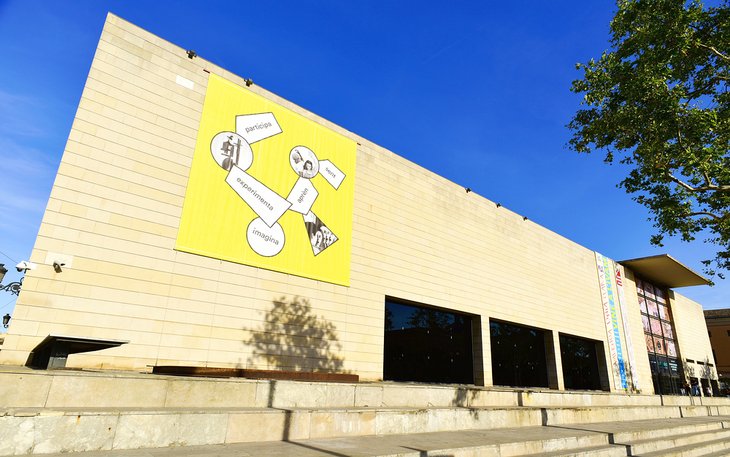
Housed in a surprising space-age building, the Valencia Institute of Modern Art is dedicated to the avant-garde art of the 20th century. The permanent collection covers all movements of modern and avant-garde art, including Analytical Abstraction, Pop Art, and New Figurative.
The museum also hosts temporary exhibitions, lectures, and workshops. In striking contrast to the modern building, an underground room of the museum reveals ruins of Valencia's medieval city wall. The archeological remains were uncovered during construction of the museum.
Well-designed for visitors, the museum has a trendy casual restaurant, Mascaraque, which serves contemporary-style Mediterranean cuisine and has a pleasant outdoor terrace.
There is also a library with a bookshop and Reading Room; the library contains over 40,000 books and documents on topics of modern art.
The Valencia Institute of Modern Art is open Tuesday through Sunday and is open late on Fridays. Admission is free of charge.
Address: 118 Calle Guillem de Castro, València
Official site: http://www.ivam.es/en/
15. Torres de Serranos (Ancient Town Gate)
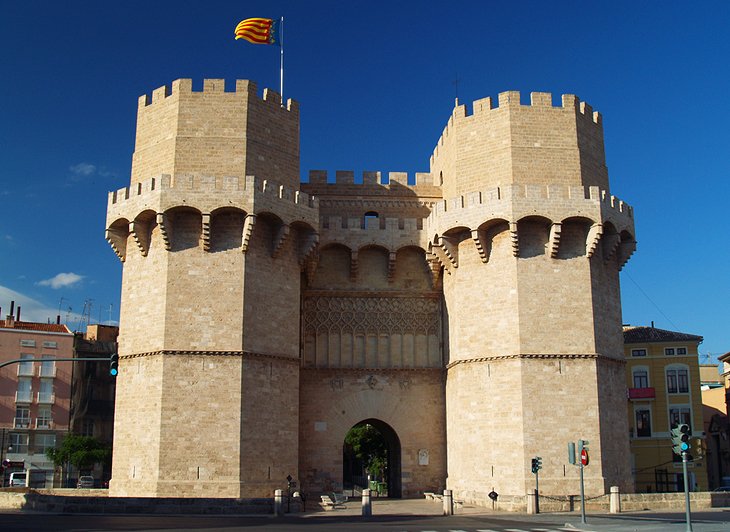
This impressive landmark is a symbol of Valencia. The Torres de Serranos represents an ancient gate of the Old Town and recalls an era when the town was surrounded by defense walls. The town ramparts were built in the 14th century on top of Roman foundations.
In 1930, the Serranos Towers were restored to their former glory. From these massive towers, take in sweeping views of the cityscape. The archway of the entrance gate features decorative Gothic details and two shields of the city.
Address: Plaza dels Furs, València
16. Spend a Day at Playa del Saler
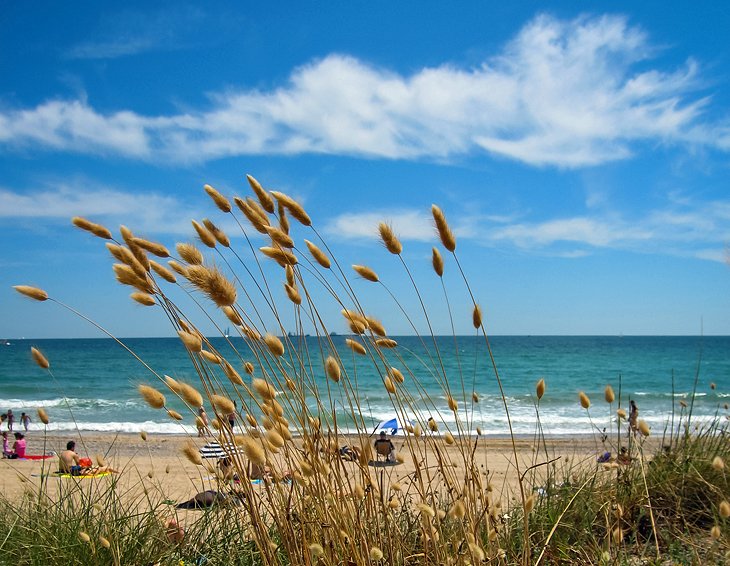
One of the most popular beaches in the Valencia region, this pristine stretch of sand is just 16 kilometers from Valencia in the La Albufera Natural Park. Two other beautiful beaches border El Saler Beach: Playa L'Arbre del Gos; and to the south, La Garrofera beach. This idyllic stretch of fine sandy shoreline extends for 2.6 kilometers and is protected from the wind by dunes and pine trees.
17. Day Trip to the Medieval Town of Requena
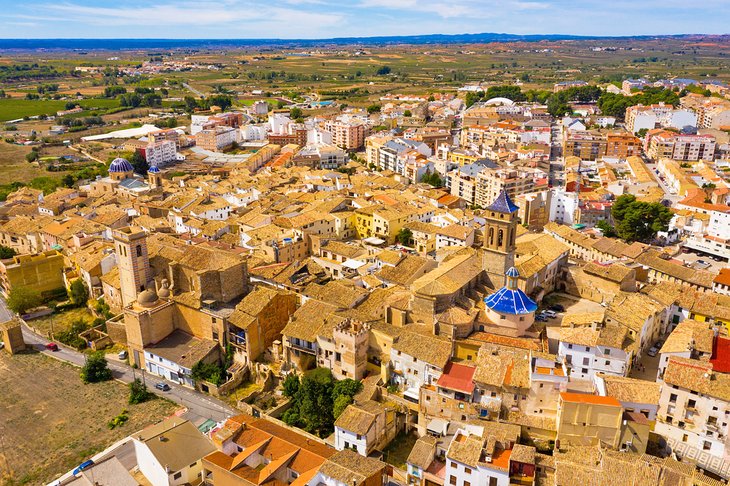
Located 68 kilometers from Valencia, the charming medieval town of Requena reveals a typical Hispanic-Arabic ambience with its old Moorish castle, many narrow pedestrian streets, peaceful squares, and houses adorned with decorative tiles and wrought-iron balconies.
The town has two important 14th-century churches, the Iglesia de Santa María and the Iglesia del Salvador; both feature ornate Isabelline Gothic facades. Other noteworthy medieval monuments include the El Cid Palace and the Iglesia de San Nicolás.
For those seeking relaxation, the Fuente Podrida spa resort is a worthwhile 30 kilometers from Requena in a pristine natural environment.
Where to Stay in Valencia for Sightseeing
The top tourist attractions in Valencia are mostly in the Ciutat Vella (Old Town), the historic city center around the cathedral and Plaza del Ayuntamiento. Fortunately for tourists, other attractions (such as the beach) are accessible by an excellent transit system. These highly rated hotels in Valencia are convenient for sightseeing:
Luxury Hotels:
- On a quiet street near the cathedral, the five-star Caro Hotel occupies the Palacio Marqués de Caro, a historic monument that has been beautifully restored. The recently updated interior décor is sleek and minimalistic. Amenities include a concierge, small swimming pool, and a Michelin-starred gastronomic restaurant.
- Styled with Art Deco interiors, the five-star The Westin Valencia is in a quiet neighborhood near The City of Arts and Sciences. Lush Mediterranean landscaping, a fitness center, spa, indoor swimming pool, and three restaurants make for a resort-like atmosphere.
- The five-star Hotel Las Arenas Balneario Resort is a beachfront property with a large outdoor swimming pool. Many guest rooms feature private balconies with sea views. The hotel is on a metro line to the center, a good compromise between the beach and sightseeing.
Mid-Range Hotels:
- Ideally located in the center of Valencia on the Plaza del Ayuntamiento, the four-star Meliá Plaza is within walking distance of many historic attractions, as well as shops and restaurants. Some rooms have balconies with views onto the Plaza de Ayuntamiento. The hotel's restaurant specializes in Mediterranean cuisine.
- The three-star Petit Palace Plaza de la Reina is located in the historic center of Valencia near the cathedral and the Palacio del Marqués de Dos Aguas. The contemporary-style guest rooms feature modern amenities such as flat-screen televisions and iPads. Some rooms feature balconies with city views.
- The SH Ingles occupies a beautifully restored 18th-century palace in the historic La Xerea neighborhood near Palacio del Marqués de Dos Aguas. This four-star boutique hotel has a concierge, 24-hour front reception desk, and a gourmet restaurant known for its authentic paella. The guest rooms are spacious, bright, and minimalistic in style.
- Within easy walking distance of The City of Arts and Sciences, the four-star AC Hotel by Marriott Colón Valencia offers sleek contemporary-style guest rooms, a fitness center, and room service.
Budget Hotels:
- Just off Plaza del Ayuntamiento, near restaurants and historic attractions, the three-star Catalonia Excelsior offers well-situated accommodations at affordable rates. The hotel provides a 24-hour front reception desk, concierge services, and a buffet breakfast.
- The four-star Barceló Valencia is just opposite The City of Arts and Sciences, with great views of the iconic buildings. The hotel offers many luxuries for the price, including a rooftop terrace with a swimming pool and sundeck.
- Another hotel overlooking The City of Arts and Sciences, the three-star NH Valencia Las Ciencias is a 15-minute drive to the beach and a 10-minute bus ride to the historic center (Ciutat Vella) of Valencia. Amenities include concierge service and a 24-hour front reception desk.
Map of Tourist Attractions in Valencia
Valencia, Spain - Climate Chart
| Average minimum and maximum temperatures for Valencia, Spain in °C | |||||||||||
| J | F | M | A | M | J | J | A | S | O | N | D |
| 15 5 | 16 6 | 18 8 | 19 9 | 22 13 | 26 17 | 29 20 | 29 21 | 27 18 | 23 13 | 18 9 | 16 7 |
| PlanetWare.com | |||||||||||
| Average minimum and maximum temperatures for Valencia, Spain in °F | |||||||||||
| J | F | M | A | M | J | J | A | S | O | N | D |
| 59 41 | 61 43 | 65 46 | 67 49 | 72 55 | 79 63 | 85 68 | 85 69 | 81 64 | 73 56 | 65 48 | 60 44 |
| PlanetWare.com | |||||||||||
More Related Articles on PlanetWare.com
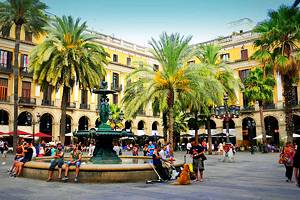
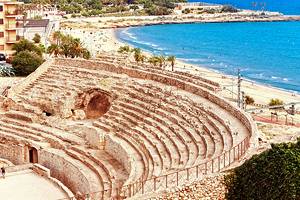
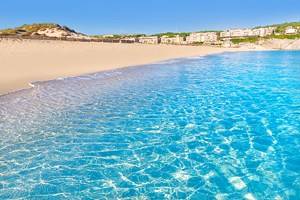
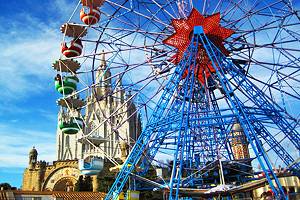
Exploring the Mediterranean Coast: The beaches of Mediterranean Spain are some of the loveliest in the world, one of the most famous being El Milagro in the UNESCO-listed Tarragona, which sits north of Valencia. Iconic Barcelona is just beyond, famous for its medieval Barri Gòtic, Modernist architecture, and sandy beaches.
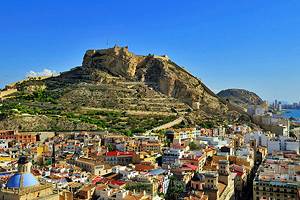
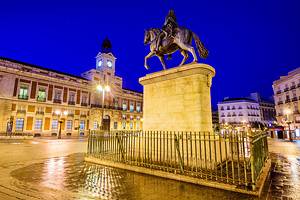
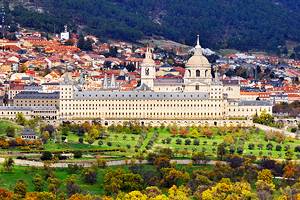
Historic Towns near Valencia: South of Valencia, the Castillo de Santa Bárbara looks down over the extensive beaches and historic town of Alicante. For those who want to venture inland, the art museums of Madrid and cultural diversity of the medieval walled city of Toledo are top picks for sightseeing.
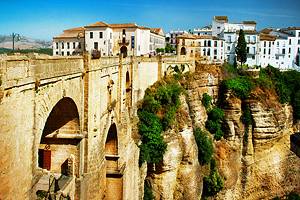
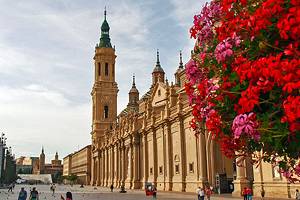
Other Must-See Cities in Spain: A treasure-trove of cultural attractions, Zaragoza boasts ancient Roman ruins, as well as Moorish and Baroque landmarks. West of Alicante, Córdoba is best known for its UNESCO-listed mosque, La Mezquita. To the south, Andalusia's pride, Granada is a top tourist destination thanks to its vibrant cultural life full of flamenco dancing and cuisine influenced by neighboring Arabian countries. From here, the seaside old-world paradise of Málaga is just a short jaunt to the southern shores.