Tourist Attractions in Sukhothai
Sukhothai dates back to the 13th century and was once Thailand's first independent kingdom capital. The Sukhothai period (the name translates to "Dawn of Happiness") is considered the "golden age" in Thailand's history. During this era, the alphabet was created under King Ramkhamhaeng, setting the stage for artistic and intellectual developments.
Today, visitors can tour the ruins of this once great city in Sukhothai Historical Park - a UNESCO World Heritage Site restored thanks to an initiative of the Thai King himself. The park offers a variety of historical attractions, and it's easily accessible by plane, bus, and train from Bangkok, Chiang Mai, Phitsanoluk, and Mae Sot.
For details on the best temples and other things to do during your visit, see our list of top tourist attractions in Sukhothai.
Sukhothai Old City
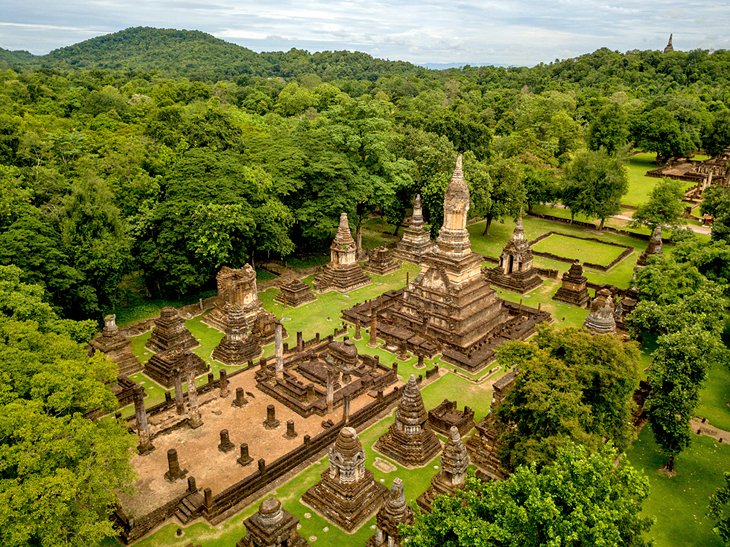
This UNESCO World Heritage site stands as a testament to Thailand's storied and colorful past and it should be your first place to visit on a trip to Sukhothai. Nearly 200 temples were excavated and partly reconstructed here, providing visitors with a chance to get a unique look at what Thailand's early capital might have been like.
In the city's heyday, three earthen walls and two moats surrounded the old center. Twenty-one wats and four ponds were uncovered during excavations. This was the cradle of Thai culture, and archaeologists have found the remnants of artistic and religious works that would define a society for centuries.
Foreign visitors will find here an information center detailing Sukhothai activities and self-guided tours, plus display boards in English outside every building.
Wat Mahathat
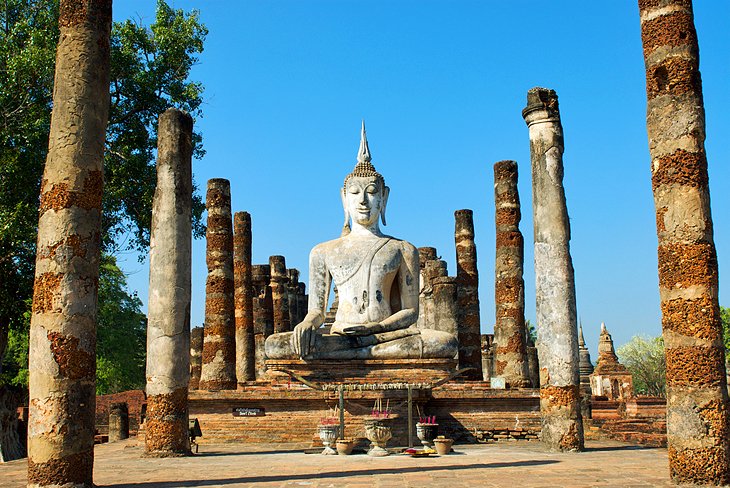
The most splendid wat of the ruined city (and one of the oldest and most important in Thailand) is Wat Mahathat. It originally stood next to the ancient Royal Palace (a wooden building of which no trace remains) and covered an area of four hectares. The temple was surrounded by 185 chedis (Buddhist stupa), six wiharn (prayer halls) of varying sizes, a bot, and eleven salas-very little of which can still be seen. The towering main chedi at the center of the site is most impressive, with both a wiharn and a bot. Built in a purely Sukhothai style, the top is crowned by the tip of a lotus bud.
The middle section resembles the Khmer prangs, and the high square base is decorated by a procession of worshippers with 40 figures of about one meter high on each side. The niches of the four corner chapels show fine stucco work, rosettes, scenes from the life of Buddha, and gods and demons in conflict. The central chedi once contained the gilded statue of the Phra Buddha Shakyamuni, which King Rama I had removed and brought to the Wat Suthat in Bangkok at the end of the 18th century.
Wat Traphang Ngoen
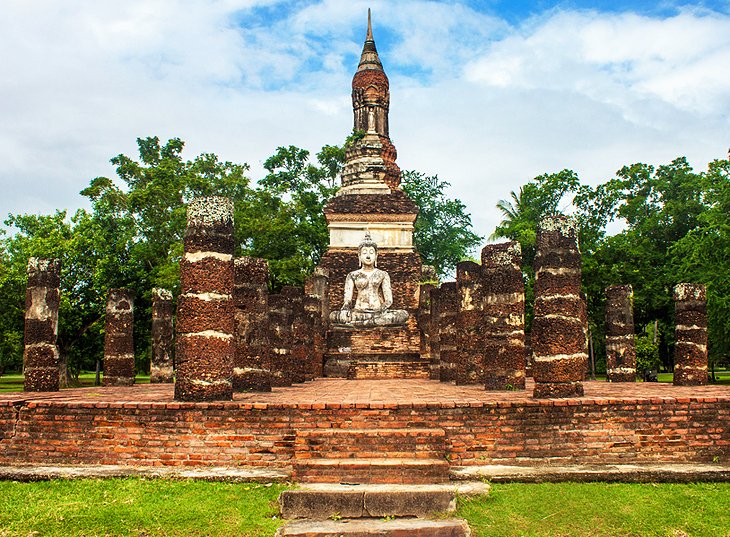
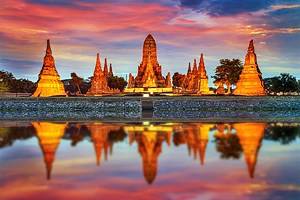
To the west of Wat Mahathat, on an island covered with lotus blossoms in the Traphang Ngoen ("Silver Lake"), lies the outstandingly beautiful chedi of Wat Traphang Ngoen. With a large Buddha image on a pedestal taking central stage, this small 14th-century temple is set so both the sunrise and sunset light illuminate it perfectly.
While the roof of the temple is now gone, the columns that once sustained it are still in place. On a separate tiny island-that you can see but not access- there are also the ruins of an ordination hall and a pedestal that are part of this temple.
Wat Sa Si
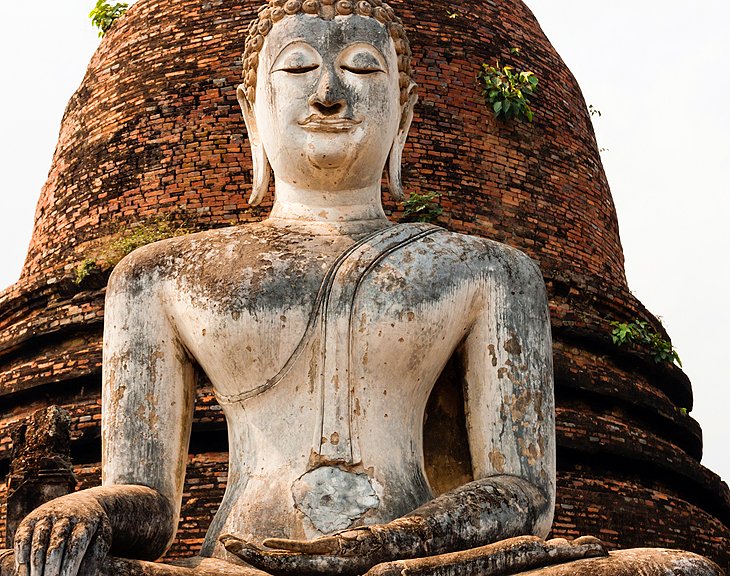
This stunning temple might not be the largest in the park, but it's certainly one of the most beautiful ones. Sitting in the middle of Traphang-Trakuan lake and accessible by crossing a wooden bridge, Sa Si's ruins consist of 10 chedis still standing, as well as six rows of columns and the breathtaking statue of a seated Buddha.
Some of the wat's buildings are still inhabited by monks. Every year on the 12th month of the lunar calendar (which usually falls around November), Sa Si becomes the central celebration spot for Loy Kratong (light festival), in which the lake is transformed into a fantastical sea of light with thousands of tiny floating candles.
Wat Sorasak
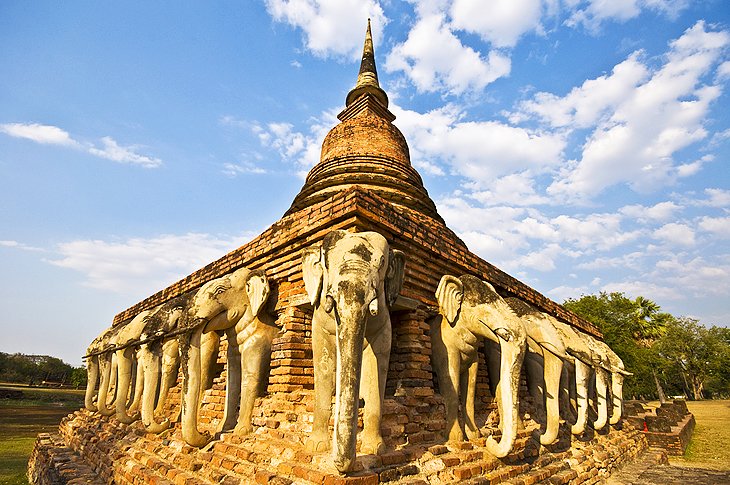
According to inscriptions carved on the temple itself, Wat Sorasak was built in 1412, towards the end of the Sukhothai Empire. The 24 exquisitely carved elephants that still guard the decaying bell-shaped chedi of Wat Sorasak are one of the real highlights of the park. Elephants are considered protectors in Buddhism, and ancient kings often kept rare white elephants in their kingdoms as a representation of their power and wealth.
This elephant guard style is also seen in other parts of Sukhothai, Si Satchanalai, and Kamphaeng Phet. Parts of the wat have been restored in recent decades-this includes the niches occupied by statues depicting Buddha sitting in a rare "western" position, with legs hanging down.
Wat Si Chum
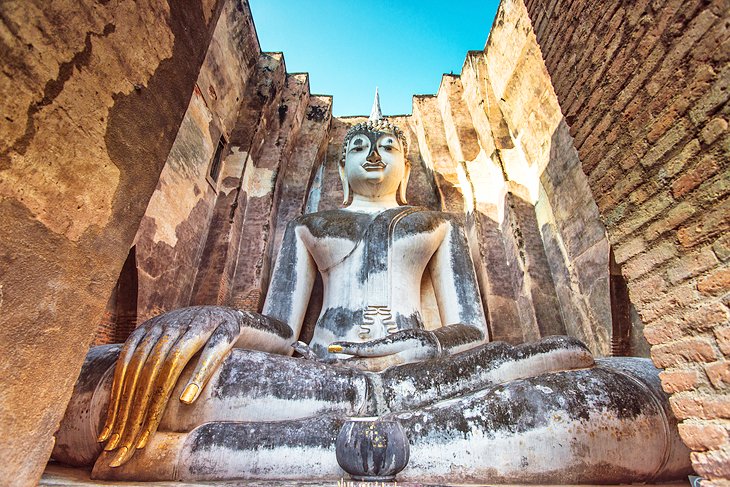
Visitors to Wat Si Chum will be especially impressed by the mondhop: a huge, windowless cuboid construction that stands on a high pedestal. Built in the 14th century, the temple is easily recognizable because of its 15-meter-tall silver seated Buddha leaning against a brick wall in the open.
A narrow enclosed staircase on one of the southern walls leads to the roof and to beautiful open views of the park. The enclosed stair passage was once home to engraved slates featuring different images of Buddha. Ruins of another temple and a brick building that contains a seated Buddha can also be found in the area.
Wat Phra Pai Luang
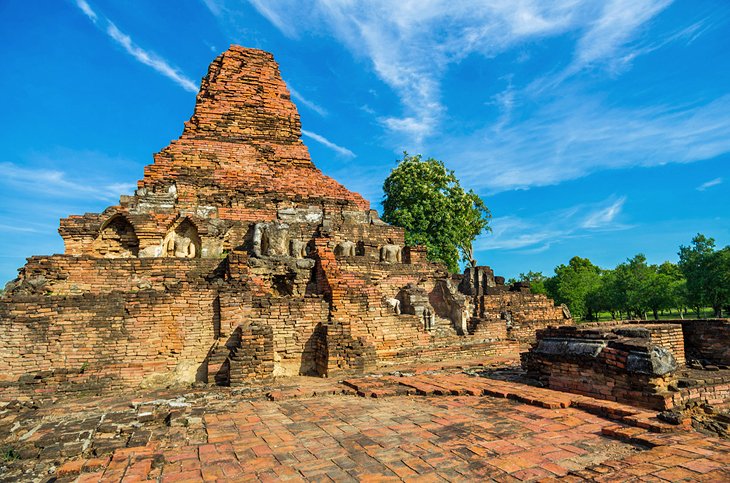
Wat Phra Pai Luang is one of the oldest temples in the Sukhothai area. Thought to date from the end of the 12th or beginning of the 13th century, it was once one of the most important wats in the region.
Beautiful stucco adorns the steps of the chedi here and the outside wall, foundations, and ruins of four rows of columns that still remain from the wiharn.
Though less famous than some of the other temples in the old city, this is a nice one to visit because it's less popular, which means smaller crowds. Save your visit for later in the day, so you can enjoy the quiet sunset falling over the ruins.
Wat Traphang Thong Lang
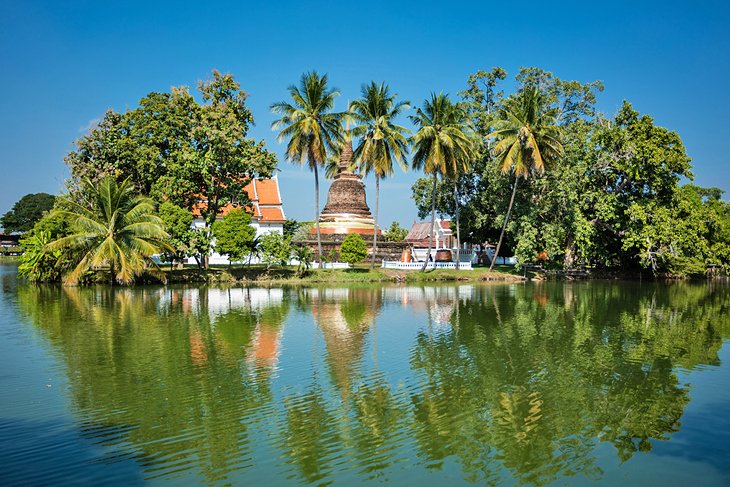
Wat Traphang Thong (also known as "the Temple of the Coral Pond") sits on its own island in the complex, and it's only accessible via a bridge. Although much of the stucco on the temple walls has been heavily damaged, the square temple still sits magnificently high on a platform and overlooks the park.
The flat relief on the southern side shows Buddha, striding over steps. Protected by two parasols, Buddha is accompanied by the Hindu goddesses Indra and Brahma, as well as by worshippers. This is assumed to be the first visual representation of a stepping Buddha from the Sukhothai period. On the north side, a relief depicts Buddha taming the elephant Nalagiri, which his cousin Devadatta had set upon him.
Wat Chetuphon
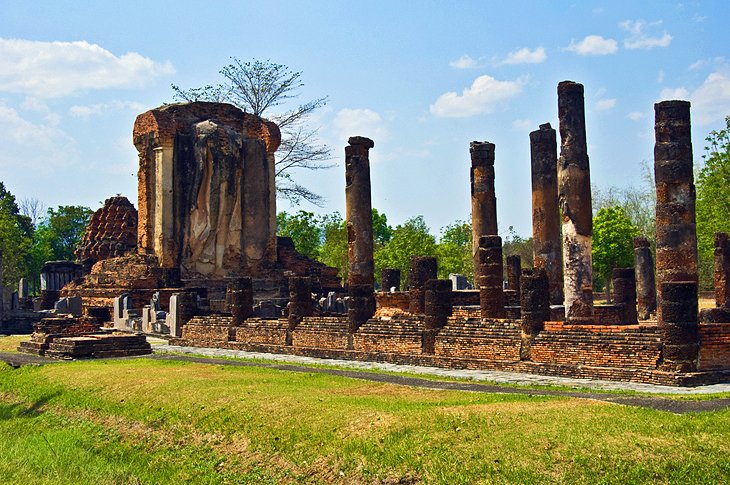
Wat Chetuphon houses a particularly beautiful example of classical Sukhothai-style with four stucco Buddha statues pointing towards different cardinal points: one sitting, one walking, one standing, and one reclining Buddha. A moat and a brick wall surround this 14th-century temple, which also features a towering brick mondhop and slate balustrades that have been designed and carved to imitate the look of wood.
Chetuphon has a very unique location far away from the other ruins and next to a modern village. And while there's no chedi in these ruins, the temple does feature a mandapa (a pillared outdoor pavilion).
Wat Saphan Hin
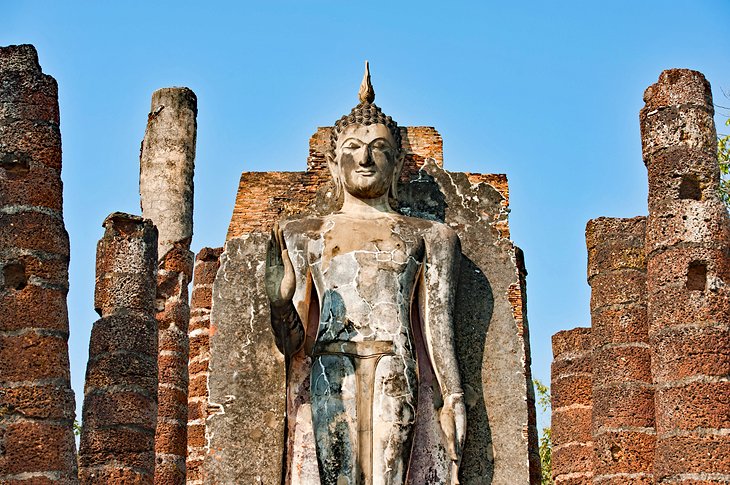
Wat Saphan Hin lies on a 200-meter high hill-climb to the top, and you'll get beautiful views of the park and other temples around it. Also known as "Temple of the Stone Bridge" because of the slate stairway and path in front of the structure, Saphan Hin is considered one of the most magnificent temples in the western zone of the park. Part of the temple is the impressive 12.5-meter-high statue of a standing Buddha leaning against a brick wall in the open-visitors often leave flowers on its toes as a sign of respect.
Ruins of another temple and a chedi can also be found in the area-because the ruins are only a few hundred meters away, historians believe it's possible they might all have been part of one single massive structure at one point.
Wat Phra Bat Noi
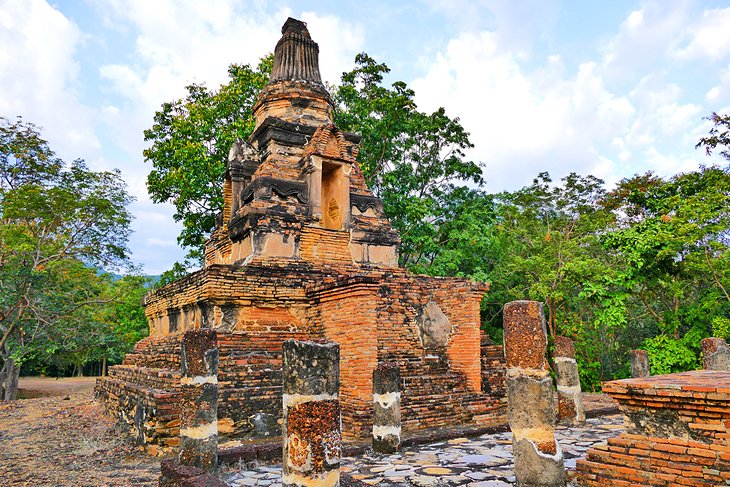
Wat Phra Bat Noi ("Temple of the Hill of the Lesser Buddha Footprint") is often missed by many visitors, as the temple sits south of the main ruins, over a forested hill.
Originally a meditation monastery used by Arannavasi (forest dwellers) monks-which explains its more secluded location-Phra Bat Noi is a great mixture of Thai and Khmer styles. The temple has a four-sided chedi and is decorated with many Hindu motifs. While the Buddha statues that were once part of the wat are long gone, visitors can still walk through the ruins and collapsed towers and admire the structures away from the crowds of visitors.
Ramkhamhaeng National Museum
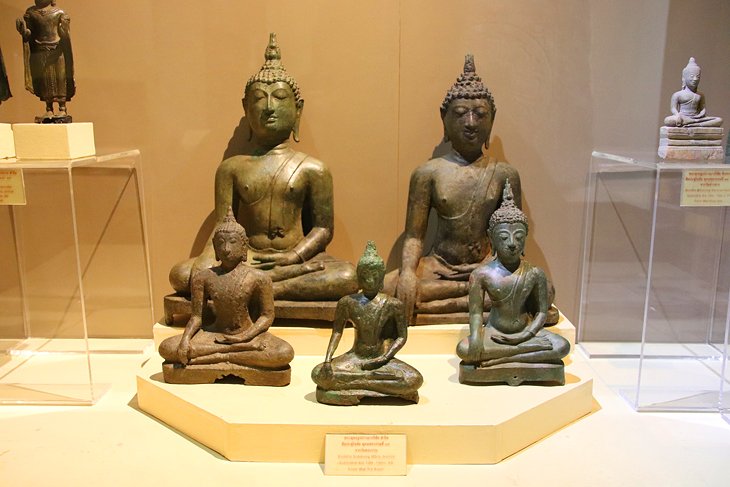
The Ramkhamhaeng Museum is dedicated to house and preserve finds from excavations conducted at both Sukhothai Historical Park and Sri Satchanalai Historical Park. The museum provides a good overview of the development of the Sukhothai style from the era of Khmer influence to the rise in popularity of the Ayutthaya style.
Particularly noteworthy are Sukhothai-style and walking Buddha images (considered among the most beautiful representations of Buddha), a seated Buddha from the Wat Chang Lom in Si Satchanalai, and a replica of the Ramkhamhaeng inscription (believed to be the earliest Thai writing on record). The museum garden showcases a number of stucco sculptures, a ceramic kiln, and a number of large antique structures. The admission fee includes a detailed brochure in English.
Things to Do in Sukhothai
Walk around the Ruins at Si Satchanalai National Park
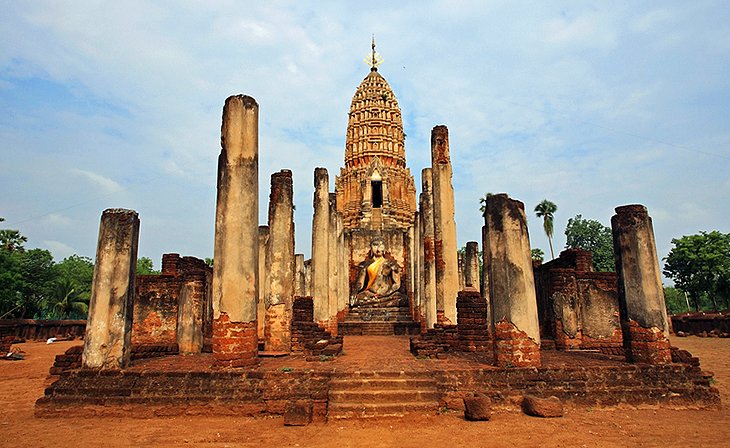
This 45-square-meter park might seem relatively small compared to Sukhothai Historical Park, but it's worth visiting in order to get a fuller picture of this once-flourishing area and the country's early kingdoms. In addition to temple ruins, Si Satchanalai is home to palace and house remains in various states of preservation, all of which feature Sukhothai, Khmer, and Ayutthaya architecture.
Wat Phra Si Rattana Mahathat, the biggest temple in the complex, features an impressive corn-cobbed shaped prang (tower-like spire), a pillared pavilion, and a thick rock wall made of laterite, an iron-rich rock with a natural rusty-red color.
Get a History Lesson at Celadon Kiln Site and Study Center
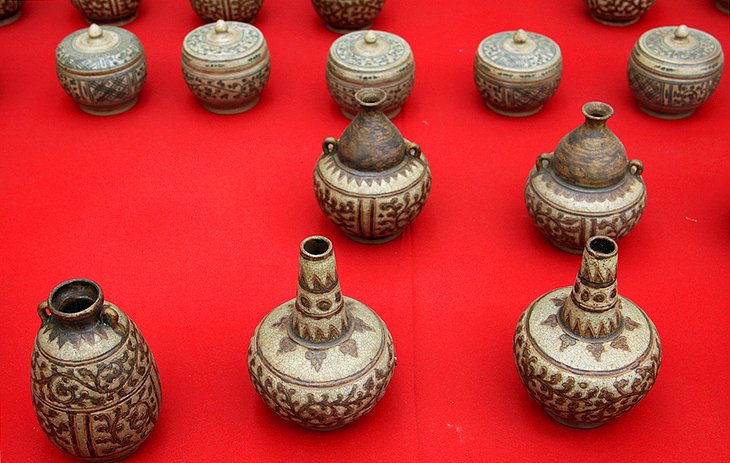
Over 500 limestone kilns-as well as many celadon pots and wares-have been discovered in this area over the years, making this ancient site an important spot for pottery craftsmanship and production. Rather than moving the excavated pieces somewhere else, a center was built here to study and display them.
Check out the excavated pieces, then take in an exhibit of other ancient finds while learning about the crafting process inside the center. In addition to reconstructed pieces, you can also see here the ruins of the furnaces used to fire the pots.
Getting There: Head north of Si Satchanalai Historical Park about 6.5 kilometers to Ban KoNoi, until you reach the area with visible kiln remains. Alternately, take highway 1201 from Amphur Si Satchanalai, driving approximately seven kilometers to Ban KoNoi, to find the center on the left.
Help Rescued Animals at the Boon Lott's Elephant Sanctuary
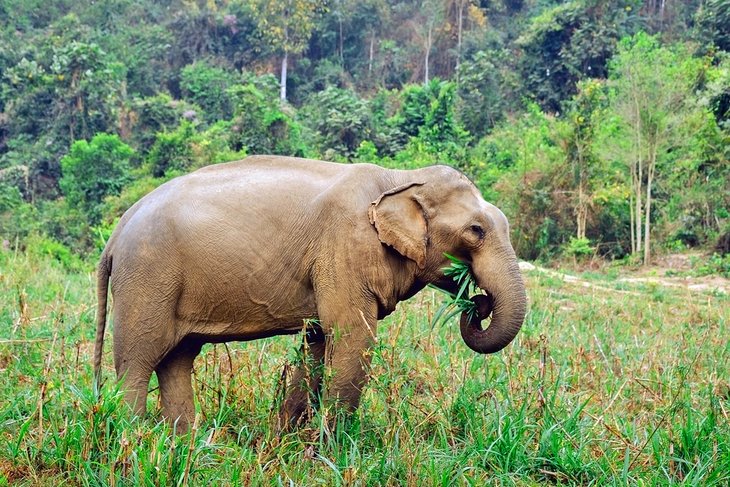
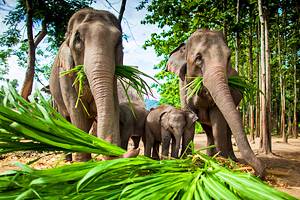
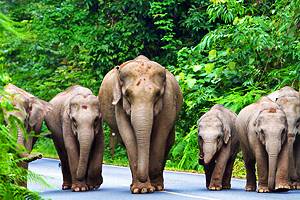
For something different to do when you need a break from history and ruins, this small, family-run rescue is a must-see. As the only local sanctuary focusing on helping abused elephants relearn social skills so they can live in a natural environment, this is a great alternative to other, more questionable elephant-related tourism.
British-born animal activist Katherine Connor founded Boon Lott's Elephant Sanctuary (BLES) to give elephants rescued from the tourist and logging trades a place to call home. Located not far outside the historical city of Sukhothai, BLES is a 540-acre animal reserve where things are done on "elephants' time."
There are no tours here or organized activities. Instead, visitors get to immerse themselves in a participative experience, walking the elephants to the grazing area or to swim in the river, helping plant or clear vegetation, and hiking with the mahouts to bring "wandering" elephants back from release sites and into the sanctuary.
Guests who want to stay overnight can book accommodations at a nearby guesthouse, from where sanctuary staff would pick you up and bring you to the grounds every morning.
BLES is also home to a number of other animals rescued from abuse or neglect, including dogs, cows, tortoises, and a horse.
Official site: https://www.blesele.org
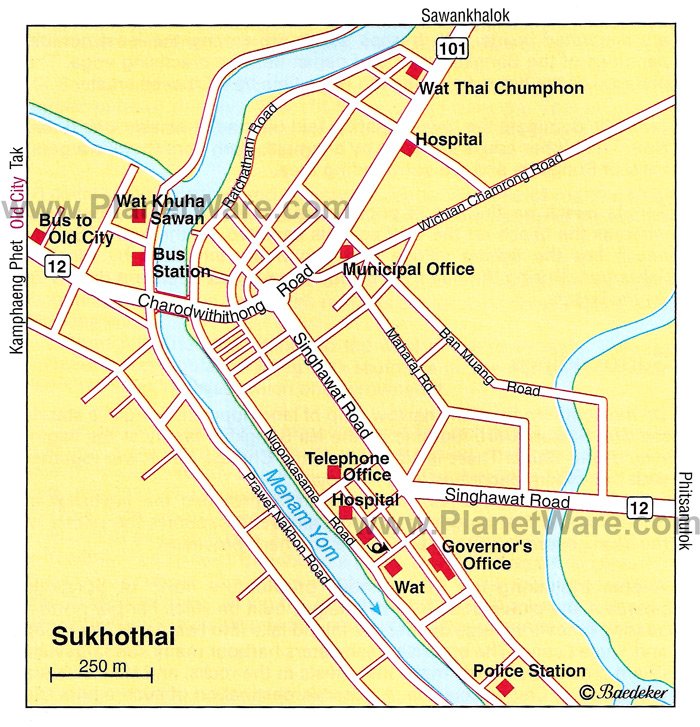
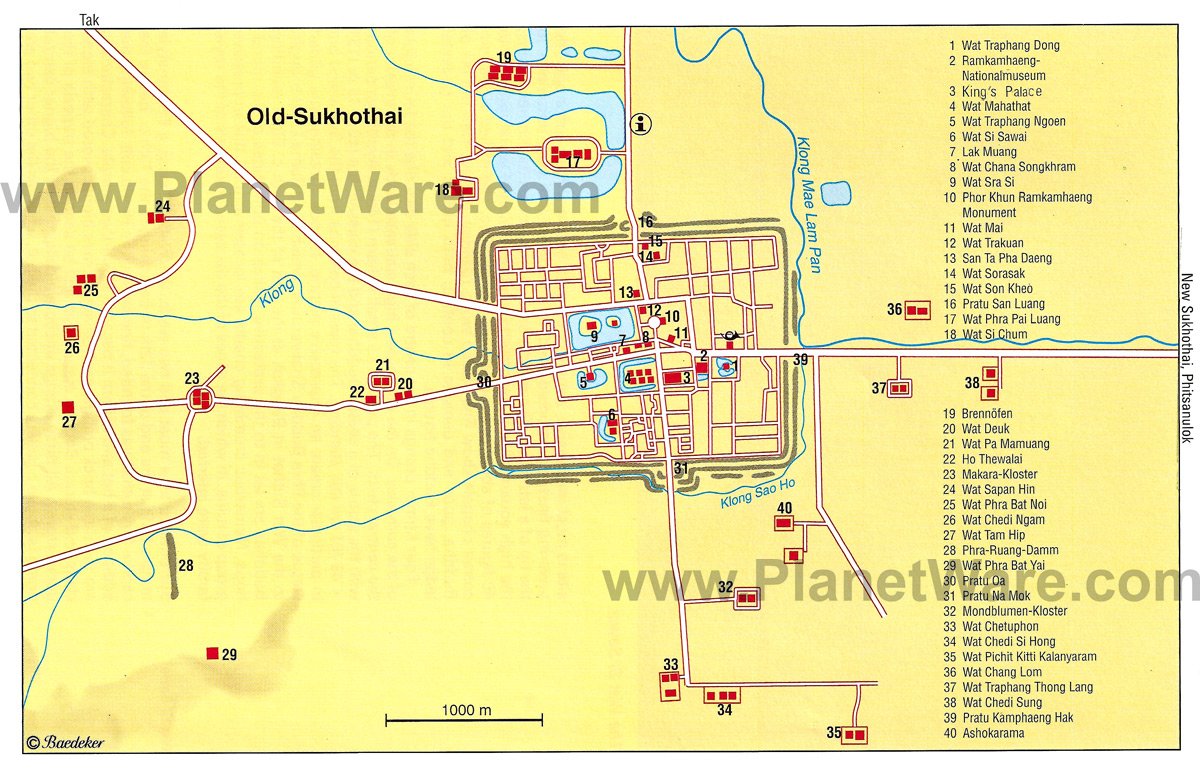
Map of Attractions & Things to Do in Sukhothai
More Related Articles on PlanetWare.com
Exploring Thailand: For more magnificent ruins, consider visiting the ancient city of Ayutthaya. Once the capital of the Siamese Kingdom and now a UNESCO World Heritage Site, Ayutthaya is located near Bangkok and makes for a great day trip. To learn more about it, check out our article, Tourist Attractions in Ayutthaya.