12 Top-Rated Tourist Attractions on the Island of Gozo
If you've read Homer's Odyssey, you may recognize the Island of Gozo as the legendary Calypso's Isle described in the epic poem.
Today, this Mediterranean island still fits the description of idyllic scenery, with its quaint fishing villages and peaceful bays. The pastoral landscape features green, rolling hills with a patchwork of small farms that lead down to sandy beaches and small coves.
The rural setting makes Gozo feel farther from Malta than the eight-kilometer channel separating the two islands would suggest.
Postcard-perfect images define the island's picturesque coastline of sheltered beaches. The crystal-clear waters are ideal for swimming, snorkeling, and scuba diving. The countryside also has many scenic pathways, ranging from gentle walks to invigorating hikes.
Gozo is known for its sleepy ambience but comes to life during summer, holidays, and festivals.
The main resort town, Marsalforn, is surprisingly lively. In the high season, the harbor area bustles with activity: vacationers taking strolls along the promenade and dining at the waterfront restaurants, and sunbathers headed to the small centrally located beach.
To arrive in Gozo, you have to take the ferry from Cirkewwa on the Island of Malta to the seaport of Mgarr on the Island of Gozo. You can then hop on the local buses (and taxis) to get around the island. Buses run less frequently than on Malta, but it's easier than renting a car. Gozo bus drivers know how to navigate the island's hairpin turns and narrow one-lane roads.
Learn about the best places to visit with our list of the top tourist attractions and things to do in Gozo.
See also: Where to Stay on Gozo
- 1. Victoria: A Medieval Hilltop City
- 2. Ġgantija Temples: A UNESCO World Heritage Site
- 3. The Seaside Resort of Marsalforn
- 4. Gozo's Best Beach: Ir-Ramla il-Hamra
- 5. Spectacular Sea Views and the Baroque Church of Nadur
- 6. Swimming and Diving at Dwerja Bay
- 7. The Basilica of Ta' Pinu: A National Shrine and Pilgrimage Church
- 8. Fishing, Swimming, and Diving at Xlendi
- 9. Ix-Xewkija Rotunda: Gozo's Largest Church
- 10. A Heritage of Handcrafted Lace in Sannat
- 11. The Dramatic Scenery at Ta'Cenc Cliffs
- 12. Mgarr ix-Xini: A Secluded Beach and Snorkeling Site
- Where to Stay on Gozo for Sightseeing
- Tips and Tours: How to Make the Most of Your Visit to Gozo Island
- Map of Tourist Attractions on the Island of Gozo
1. Victoria: A Medieval Hilltop City
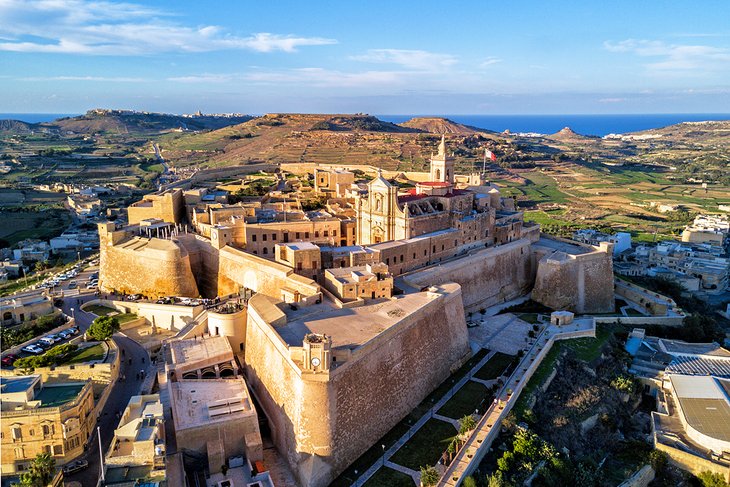
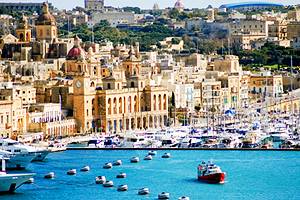
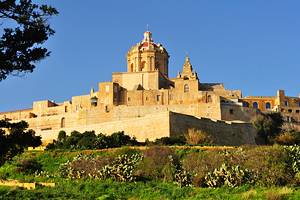
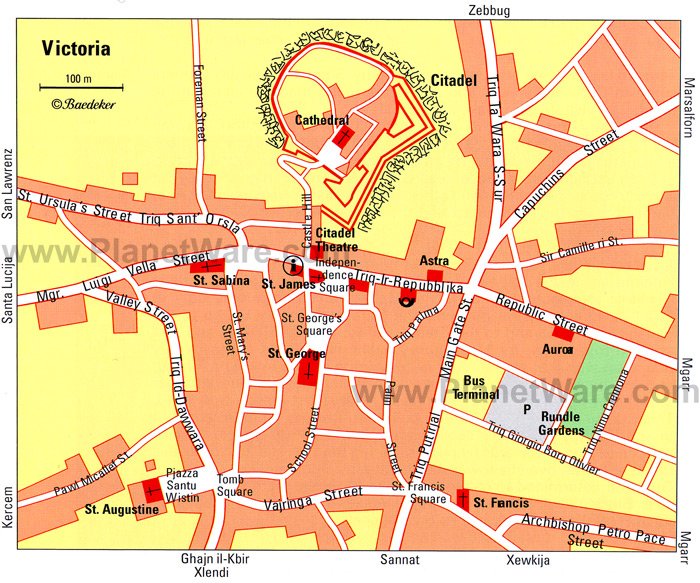
Gozo's capital city, Victoria (also known as Ir-Rabat) is surrounded by a sun-parched Mediterranean landscape. The historic center of Victoria stands on a hilltop enclosed within a Citadel (Cittadella), constructed by the Knights of Saint John after the medieval walls were destroyed by the Turks in 1551.
The immense fortified ramparts of golden stone glow a pinkish-ochre hue in the afternoon light. From the three bastions (semicircular battlements) of the Citadel, you can take in panoramic views of the Gozo countryside. The landscape is dotted with villages in the hills and valleys all the way to the sea. Within the Citadel is a maze of winding streets and narrow alleyways.
At the heart of the Citadel is the Cathedral of the Assumption designed by Lorenzo Gafà. Maltese Baroque style of the 17th century defines the façade, with its ornamented doorway and Corinthian pillars. The interior features exquisite ceiling paintings and ornate gilded moldings. Above the nave, a trompe l'oeil painting tricks you into believing that there is a dome.
The cathedral has a noteworthy statue of the Virgin Mary (The Assumption of Our Lady) created in Rome in 1897. Every year on August 15th, the cathedral celebrates its Feast Day, and the statue is paraded around the town during the festivities.
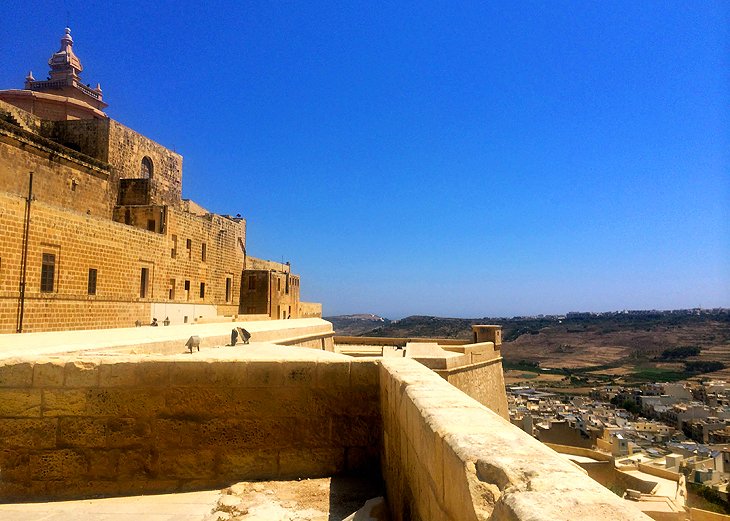
Cultural attractions in the Citadel include the Folklore Museum, which presents traditional costumes and crafts of Gozo Island; and the Old Prison used by the Knights of Saint John in the 16th century (the cells are covered in prisoner's graffiti).
Housed behind the Citadel's gateway in a 17th-century townhouse, the Gozo Museum of Archaeology displays an exceptional collection of ancient art, tools, and architectural elements dating from 4100 BCE to 2500 BCE found at Neolithic sites on Gozo Island. Highlights are the prehistoric statuettes from the Ggantija Temples and the ix-Xaghra Stone Circle.
Outside the citadel in the more modern area of Victoria is Independence Square, a bustling hub of street vendors and shops.
Steps away from Independence Square is St. George's Basilica is a 17th-century Baroque church known as the "Marble Basilica," because the interior is covered with marble inlays and columns. The basilica also has lavish ceiling paintings and numerous works of art by Mattia Preti.
A short walk from the basilica is the Baroque Church of Saint Francis. The exquisite interior features a charming ceiling painting that depicts a multitude of pudgy winged cherubs.
2. Ġgantija Temples: A UNESCO World Heritage Site
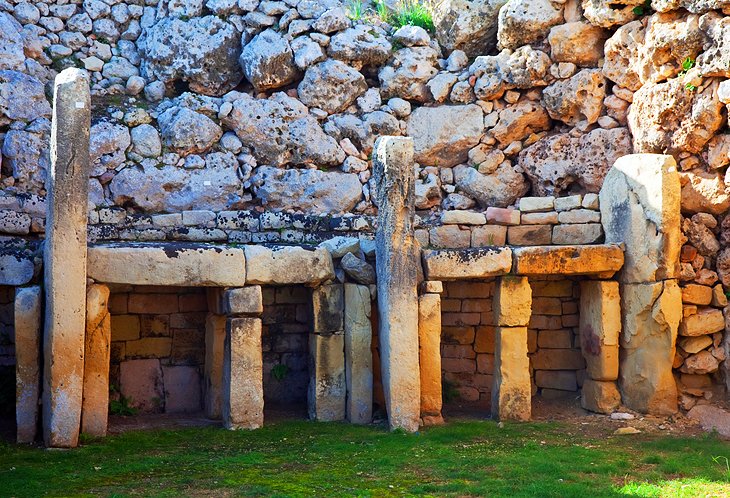
This UNESCO-listed archaeological site dates from a very early period of civilization: 3600 BCE to 3200 BCE, the Ġgantija Phase during the Copper Age. Along with Ta Hagrat and Skorba in Malta, the Ġgantija Temples are believed to be the oldest freestanding monuments in the world, predating Stonehenge in England and the Pyramids in Egypt.
The etymology of "Ġgantija" is derived from the Maltese word for "giant" ("ggant") because it was believed the site was built by a race of giants. This mythological idea makes sense considering that the temples are constructed from megaliths (massive limestone blocks) measuring more than five meters in length and weighing over 50 tons.
To arrive at the Ġgantija Archaeological Park, you follow a scenic path that leads to a contemporary Interpretation Centre. The center displays artifacts from prehistoric archaeological sites on Gozo Island and provides context for understanding the temples.
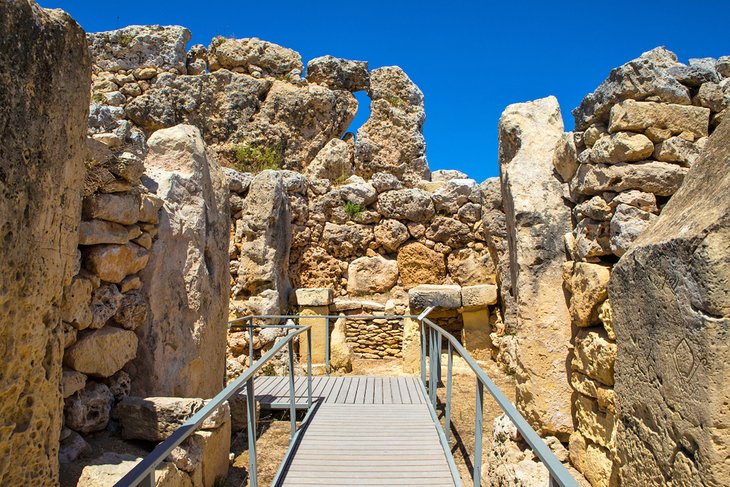
Ġgantija Temples is one of the best-preserved archaeological sites on the Maltese Islands. The archaeological park is well-maintained and beautifully situated. Excavated in 1826, the site contains the ruins of two temples enclosed by a perimeter wall, which is the most striking element of the site.
The temples feature a terrace in front, which would have been used for ceremonial rites, while stone hearths and animal bones found throughout the site suggest rituals of animal sacrifice. Statuettes and other objects found at Ggantija Temples are now on display at the Museum of Archaeology in Victoria.
The Ggantija Temples site is located just outside the center of Ix-Xaghra. This small country village has a splendid 19th-century church and a pleasant main square lined with outdoor cafés.
Address: John Otto Bayer Street, Xaghra, Gozo
3. The Seaside Resort of Marsalforn
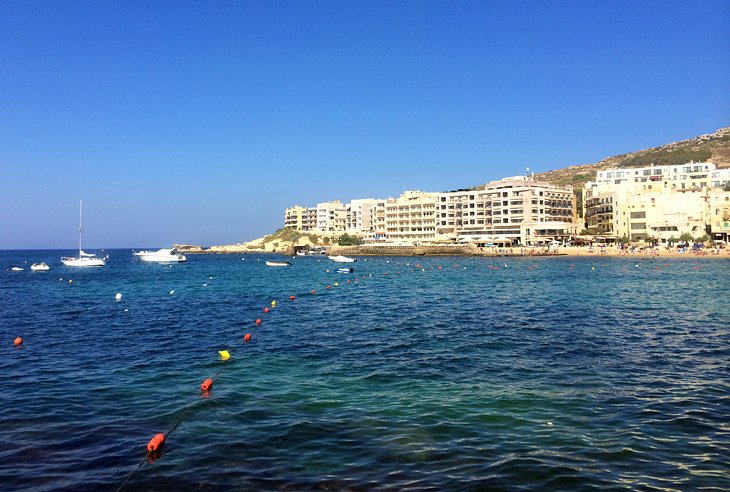
This seaside resort town defies Gozo's reputation as a sleepy island. During summertime, Marsalforn swells with hundreds of Gozitan visitors, Maltese families, and European tourists. Despite the bustle of activity, the town has a laid-back ambience.
On hot sunny days, Marsalforn's small pebble beach is filled with sunbathers lounging under colorful parasols and kids playing with beach balls. The water is safe enough for swimming and for children to wade.
Marsalforn's tiny harbor is a popular starting point for scuba diving expeditions. Favorite places to visit for scuba diving trips from Marsalforn include the Blue Hole and the Inland Sea on the Island of Gozo, around Cirkewwa on Malta Island, and the Comino Caves on the Island of Comino.
Marsalforn is a charming and convenient place to stay, especially for families and travelers seeking a relaxing vacation. Local grocery stores and shops sell essentials like snacks, sunscreen, and swimsuits, and the town has a great selection of hotels and holiday rentals.
The waterfront is also a hub of restaurants and cafés, most of which have pleasant outdoor terraces overlooking the sea. In the evenings, many families stroll along the waterfront promenade after dinner.
Local festivals and outdoor music concerts take place throughout the summer, taking advantage of the balmy evenings.
4. Gozo's Best Beach: Ir-Ramla il-Hamra
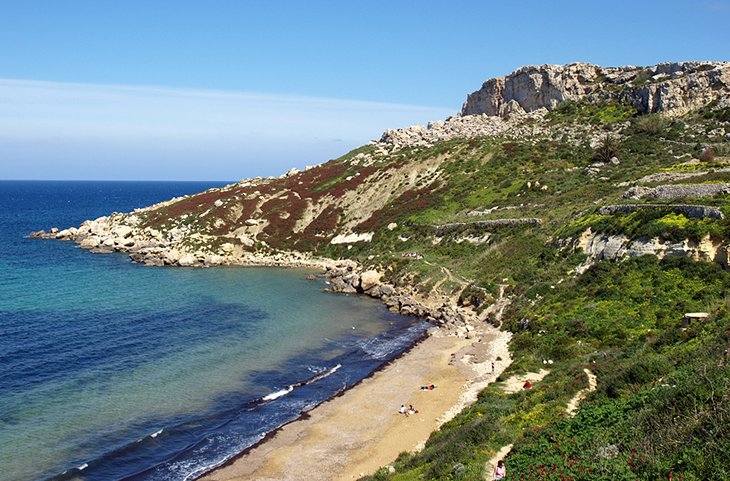
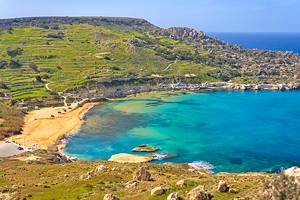
Nestled along a protected bay surrounded by steep cliffs, Ir-Ramla il-Hamra (Ramla Bay) is the largest beach on the Island of Gozo. Unlike most beaches in Malta, Ramla Bay has a wide shore covered in fine reddish sand. There are almost no pebbles except for a few where the shore breaks.
In this sheltered location, the gentle sea is shallow and calm, ideal for swimming and snorkeling. The Green Flag that is usually flying indicates the safety of the waters. Many vacationers come to Ramla Bay simply to sunbathe and lounge under parasols.
A delightful place to spend the day, the Ramla Bay beach features well-maintained facilities: public bathrooms, showers and changing areas, umbrella and lounge chair rentals, snack kiosks, and ice-cream stands. In the middle of the beach is a large statue devoted to the Virgin Mary known as Our Lady of Hope.
Gozo buses stop at the Ramla Bay beach, but a more scenic route is the eight-kilometer walking path from Marsalforn. This moderately difficult hike traverses hillsides and clifftops (beware of steep drops), affording superb seaside views along the way. The route continues through rural valleys, past the village of Ix-Xaghra until reaching the coastline at Ramla Bay.
5. Spectacular Sea Views and the Baroque Church of Nadur
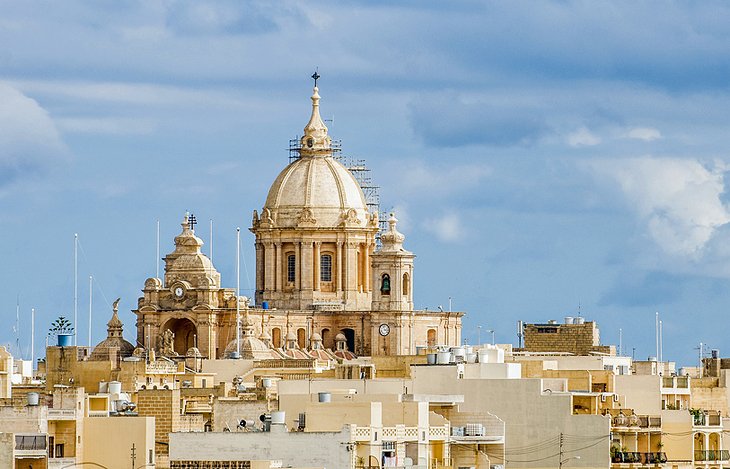
Verdant valleys surround this historic hilltop town, which looks out to the Mediterranean Sea. This strategic location was the watchpoint where the Knights of Saint John kept vigil over the channel between the islands of Malta and Gozo. The name of the village comes from the Maltese word that means "to keep guard."
Outside of the village, the Ta' Isopu Tower was built in 1667 by the Knights as a watchtower. At the highest point in Nadur, the more modern Ta' Kenuna Tower (open to the public) offers panoramic views of the Gozo countryside and the islands of Comino and Malta.
The village has a lavish Baroque Parish Church dedicated to Saints Peter and Paul. The ornate interior features marvelous ceiling paintings, gilded Corinthian columns, and an airy dome with stained-glass windows.
The Parish Church houses statues of Saint Peter and Saint Paul created in 1881 in Marseilles, which are paraded through town for the Feast of Saints Peter and Paul celebration at the end of June every year. The festival also includes brass band concerts, a crafts show, and fireworks.
Along the nearby coastline are three tranquil bays with excellent beaches. Gozo's popular wide sandy beach at Ramla Bay is a little more than three kilometers away.
San Blas Bay (2.5 kilometers away) has a pristine beach of fine red sand; the beach is unspoiled because it's only accessible by a narrow road and steep steps.
In the small inlet of Dahlet Qorrot Bay (three kilometers away) is a pebbly beach popular with swimmers and a cove used by local fishermen.
6. Swimming and Diving at Dwerja Bay
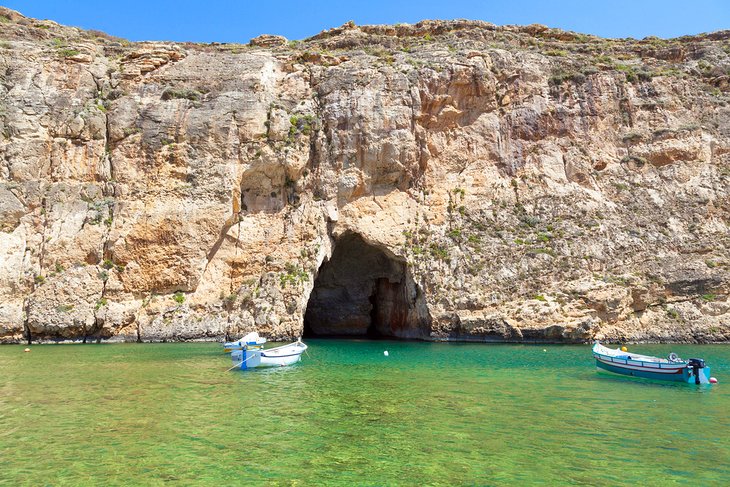
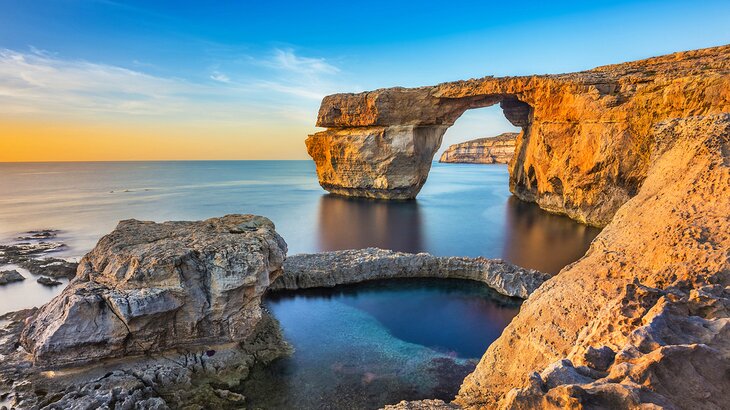
The famous Azure Window, a huge natural arch along the coastline, collapsed during a storm in 2017. Although the Azure Window was previously the main tourist draw of Dwerja Bay, the area is still worth visiting to appreciate the dramatic coastal scenery and deep blue waters.
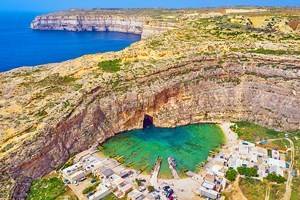
The bay begins with the Inland Sea (Il-Qawra), a natural lagoon of shallow water in a recess along the coastline. The Inland Sea is a favorite spot for swimming and snorkeling.
An inlet connects the Inland Sea to a premier scuba diving spot in the Mediterranean, the Blue Hole, a 10-meter-wide sea pool. Divers pass through an underwater rock arch and tunnel of rock formations before diving into the sea. The clear blue waters at this site are filled with octopus, lobster, parrot fish, sea bream, and other schools of fish.
At the entrance of the Dwerja Bay, the 65-meter-high Fungus Rock was named after the flowering parasitic plant found here. The Knights of Saint John praised this plant for its medicinal properties.
The clear sea around Fungus Rock has a wide variety of fish and is suitable for scuba diving (accessible by boat). Fishermen also offer boat rides to tourists from the Inland Sea to Fungus Rock.
7. The Basilica of Ta' Pinu: A National Shrine and Pilgrimage Church
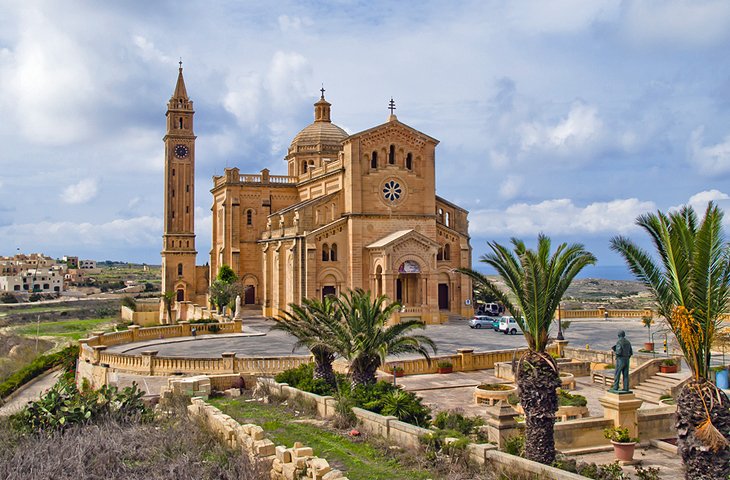
This Marian shrine is the most important pilgrimage church on the Maltese Islands. With its 47-meter campanile, the Basilica of Ta' Pinu stands as a beacon of faith in a remote valley between the villages of Ghammar and Gharb.
The Basilica of Ta' Pinu was built in the early 20th century after a miraculous event occurred here that was associated with Hail Mary prayers. The basilica was constructed on the site of a 16th-century chapel.
Designed in Romanesque style, the basilica has a stark exterior and a surprisingly inspiring interior that features exceptional Maltese craftsmanship. The sanctuary is plain but has a moving and reverential ambience. Part of the original 16th-century church, with its shrine to the Blessed Virgin Mary, was incorporated into the basilica.
The basilica's Sanctuary Museum illustrates the history of the Ta' Pinu Basilica and exhibits the art of Maltese painters Giuseppe Briffa and Emvin Cremona.
You may visit the Basilica of Ta' Pinu or attend Mass here daily. Please keep in mind that you must wear appropriate clothing.
8. Fishing, Swimming, and Diving at Xlendi
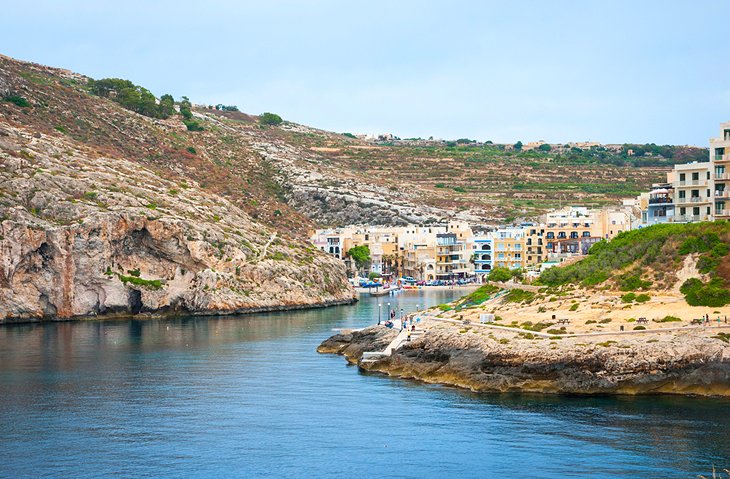
Xlendi is an old fishing village that has become one of the island's most popular seaside resorts. The village nestles in the sheltered Xlendi Bay, a narrow inlet on Gozo's southwest coast, surrounded by steep limestone cliffs.
Traditional fishing boats in the bay seem unaffected by the passage of time, but flocks of tourists have changed the overall scene. This typical Gozitan village now has many contemporary seafront accommodations and modern hotels built into the steep hillsides around the bay.
Along the waterfront promenade and the small streets of the village are many restaurants and cafés. Most restaurants feature outdoor terraces, so that guests can dine alfresco while admiring the stunning landscape and mesmerizing deep blue sea.
The village has a tiny beach with sandy shores and gentle shallow waters, which are safe for swimming and wading.
Another great swimming area is in the area below the watchtower (this 17th-century tower was built by the Knights of Saint John). The natural coves around the beach are ideal for snorkeling and scuba diving, especially for beginners.
9. Ix-Xewkija Rotunda: Gozo's Largest Church
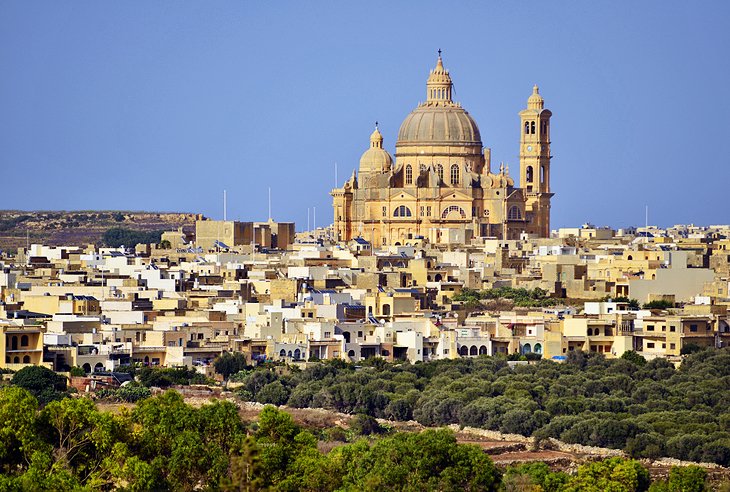
Ix-Xewkija is a historic village (the oldest on the island) best known for its parish church dedicated to Saint John the Baptist. This remarkable church at the center of the village is Gozo's largest religious monument; its dome is a distinctive landmark visible across much of the island.
The parish church is also known as the ix-Xewkija Rotunda because of its enormous dome, which is the third largest in the world after Saint Peter's Basilica in Rome. The ix-Xewkija parish church is the seat of the present-day Knights of the Order of Saint John (Knights of Malta).
Built in the 20th century, the Rotunda boasts impressive dimensions of 74 meters in height by 27 meters in diameter. Equally amazing is the fact that the dome weighs 45,000 tons.
The spacious white limestone sanctuary is sparsely decorated with sculptures and modern paintings. The polished marble on the floor was sourced from Carrara, Italy, and the main altar is also carved in precious marble.
Ix-Xewkija is about three kilometers from Mgarr ix-Xini, a beautiful inlet with a small pebbly beach that attracts many swimmers and snorkelers.
10. A Heritage of Handcrafted Lace in Sannat
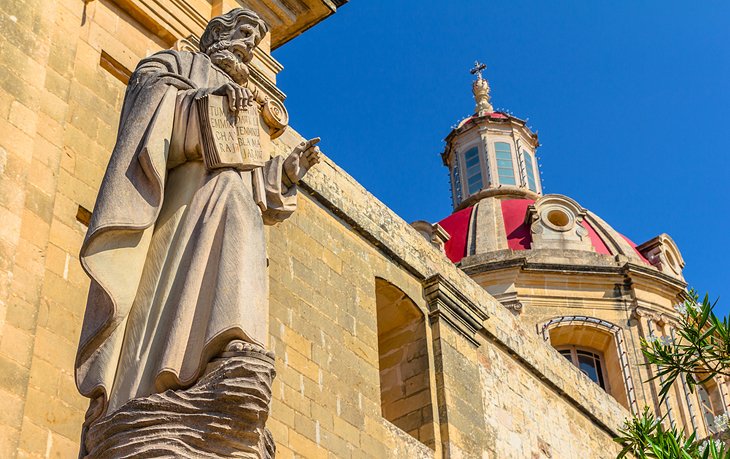
The Maltese lace industry was established in the early years of the 17th century. The craft of lacemaking came from Italy and was altered to create the easily distinguishable type known as "Maltese Lace."
Centuries ago, the village of Sannat was the center of the island's lace-making cottage industry. On rare occasions, visitors can still see women sitting on chairs in the shade of the 18th-century Parish Church of Saint Margaret, creating lace tablecloths and other crafts.
Sannat celebrates the Feast of Saint Margaret on July 27th, and the village Festa (religious festival) is held during the entire third week of July every year.
Sannat is in the south of Gozo Island just eight kilometers from the port town of Mgarr, where the ferry arrives here from the Island of Malta.
11. The Dramatic Scenery at Ta'Cenc Cliffs
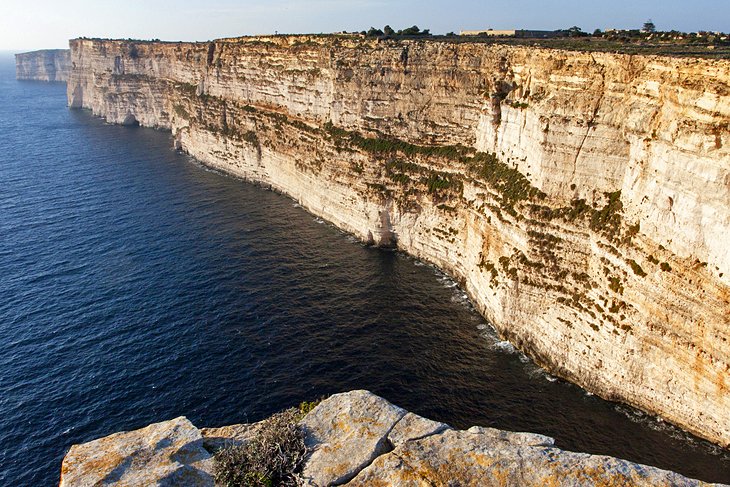
The breathtaking Ta'Cenc Cliffs are the tallest cliffs in Gozo at 130 meters high. The sheer precipice of white limestone cliffs looks like a slice of layer cake, with hundreds of layers dropping off into the sea below.
These spectacular cliffs were important to the Knights of Malta because they provided breeding grounds for their Peregrine Hunting Falcons (Maltese Falcons), although the species is now extinct on the Maltese Islands.
The Ta'Cenc Cliffs are just two kilometers from the village of Sannat. It's possible to hike to the cliffs from Sannat, which takes about 30 minutes and affords sensational views along the way. From the cliffs, you can admire sweeping views of the coastline.
12. Mgarr ix-Xini: A Secluded Beach and Snorkeling Site
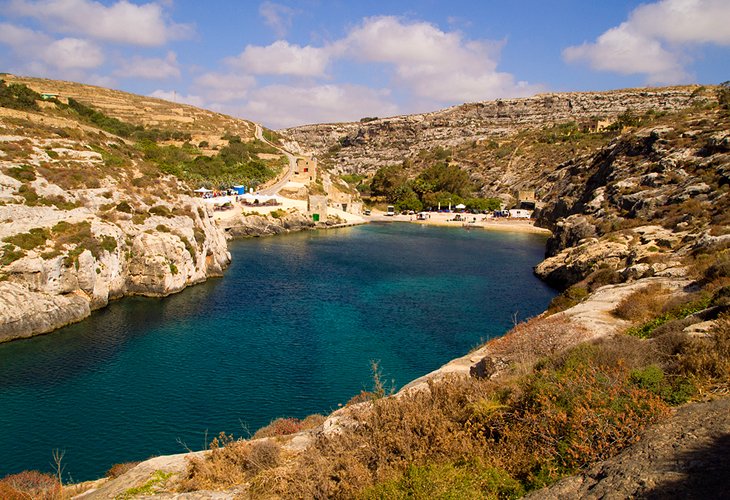
About a 10-kilometer drive or hike from the port of Mgarr and five kilometers from Ix-Xewkija, the Mgarr ix-Xini Beach is found in the narrow inlet of a secluded bay, surrounded by steep-sided cliffs and a valley.
The beach at Mgarr ix-Xini is tiny and pebbly but is popular with swimmers because of the calm waters. Snorkelers appreciate the crystal-clear quality of the waters, which allow for views of flourishing marine life, as well as underwater photography.
Please note that the Mgarr ix-Xini Beach does not have lifeguards or public restrooms.
In the Mgarr ix-Xini area, there are opportunities for other things to do outdoors. Adventurous types will find spots suitable for rock climbing. If you enjoy hiking, you can explore the walking trail around the valley. The views are fabulous!
Where to Stay on Gozo for Sightseeing
You could stay almost anywhere on the Island of Gozo, by the seaside or in the countryside, and enjoy a relaxing vacation experience. Either Marsalforn or Xlendi are ideal for a relaxing seaside holiday, while Victoria is the most convenient location for sightseeing. Larger resort properties are found near quaint villages in the countryside, where the sea can be seen in the distance. We recommend these highly rated hotels and guesthouses on the Island of Gozo:
Luxury Hotels:
- In the peaceful countryside near the village of San Lawrenz (a short drive from Dwerja Bay), the Kempinski Hotel San Lawrenz is an upscale five-star resort with sprawling gardens; three outdoor swimming pools; four restaurants plus a poolside refreshment stand; and a spa with two indoor pools, a hammam, steam room, Jacuzzi, and relaxation areas.
- At the heart of Victoria on a street with many restaurants and shops, The Duke Boutique Hotel features contemporary-style guest rooms with luxurious bedding. Accommodation includes concierge services and a generous breakfast buffet. This hotel is a short walk away from the Citadel and 200 meters from the bus terminal.
- In the resort town of Xlendi, the waterfront San Andrea Hotel offers guest rooms with sea views and provides a complimentary breakfast buffet. This quaint three-star hotel features a rooftop terrace and a Mediterranean restaurant with outdoor seating.
Mid-Range Hotels:
- At the heart of Marsalforn, near many shops and restaurants and just a short walk from the beach, the Maria Giovanna Guest House is a delightful family-run bed & breakfast. This small boutique hotel offers lovely rooms decorated in classic Maltese style, and delicious breakfasts complete with homemade cakes and muffins.
- Right on the harbor in Marsalforn, the four-star Hotel Calypso offers stunning sea views and three restaurants. The hotel features a rooftop terrace with a sundeck and swimming pool. Services include massages, spa treatments, and fitness sessions. A breakfast buffet is available.
- Just outside the village of Xaghra, the Cornucopia Hotel occupies an authentic converted farmhouse with traditional decor. This four-star property has a resort feel, thanks to its swimming pool, outdoor terraces, distant sea views, and a restaurant that serves excellent Italian and Maltese cuisine.
Budget Hotels:
- Tucked away in the quiet village of Gharb, just a short walk from the town square, Grotto's Paradise is a bed-and-breakfast hotel in a typical Maltese house. This three-star hotel has an outdoor swimming pool and sun terrace. The hotel is located within walking distance of the Basilica of Ta' Pinu and three kilometers from the Dwerja Bay.
- In the seaside resort of Marsalforn, the Lantern Guest House provides affordable, family-friendly accommodations, including breakfast. This two-star hotel is just one block from Marsalforn's waterfront promenade and a short walk away from the beach.
Tips and Tours: How to Make the Most of Your Visit to Gozo Island
- Sightseeing Tours: For tourists wondering how to see all the sights on a short trip to Gozo, an organized tour provides a solution. The Gozo Full-Day Quad Tour with Private Boat offers a delightful seven-hour spin around the island, allowing for stops at highlights such as Dwerja Bay, the Basilica of Ta' Pinu, and Xlendi. To see both Gozo and Comino islands, the Comino Cruise and Gozo Jeep Safari Malta Tour is a fabulous option.
- Use the Bus System: The Island of Gozo has an excellent bus system that provides access to all of the top tourist attractions on the island. Although the Gozo buses run less frequently than on Malta, this mode of transportation is an easy-to-use and affordable way for tourists to travel around the island.
- Hiking Excursions: Gozo is a small island, and many sights are within reasonable hiking distance. The eight-kilometer hike from Marsalforn to Ramla Bay leads through hillsides and valleys to the coastline, with amazing views along the way. You can also try the five-kilometer hike from Ix-Xewkija to the tiny beach of Mgarr ix-Xini. The most exhilarating hike is the eight-kilometer trail from Victoria via Xlendi to the Ta'Cenc Cliffs.
- Boating Trips: Scenic boat rides give you a chance to take in Gozo's incredible seaside scenery. A popular boating excursion is from Gozo to the Island of Comino; multiple ferry services run from Gozo's port town of Mgarr to the Blue Lagoon on Comino. For an outdoor adventure, take an organized kayaking excursion from Gozo to Comino. It's also possible to travel by boat from the seaside resort of Xlendi to Dwerja Bay.
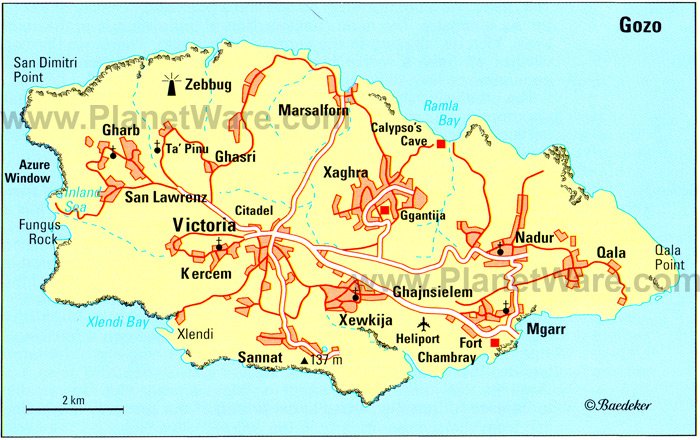
Map of Tourist Attractions on the Island of Gozo
More Related Articles on PlanetWare.com
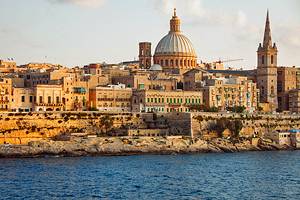
Other Sights on the Maltese Islands: The Island of Gozo is usually part of a Maltese Island travel itinerary. Gozo is accessible by ferry boat from the Island of Malta, so you may begin your tour in the elegant capital of Valletta, then visit the UNESCO-listed medieval walled city of Mdina before taking a bus trip across the Island of Malta to embark on the ferry in Cirkewwa, Malta to the port of Mgarr on the Island of Gozo. While visiting the Island of Gozo, you can sail or take a ferry ride to the Blue Lagoon on the Island of Comino.