Tourist Attractions in Miami, FL
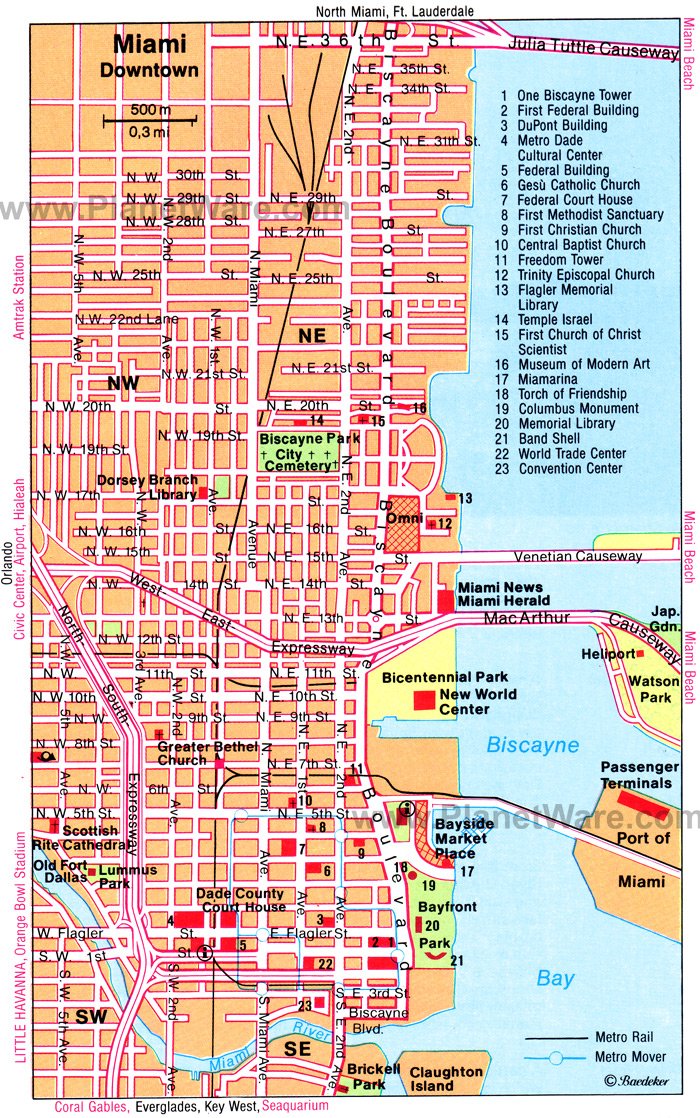
Miami is one of South Florida's premier vacation destinations, with beautiful beaches, great weather, history, culture, sports, and entertainment. Downtown Miami, separated from the Atlantic Ocean by the Biscayne Bay and Miami Beach, is a modern metropolis and cultural treasure trove.
From the museums to the streets of Little Havana, you can always find plenty of things to do in Miami. Across the bay, Miami Beach, with its Art Deco District, fantastic stretch of beachfront, and fun vibe, is a must-see in the area. Nearby, Everglades National Park is one of several popular day trip destinations from Miami.
Plan your time and discover fun and interesting places to visit with our list of popular tourist attractions in Miami.
Miami Beach
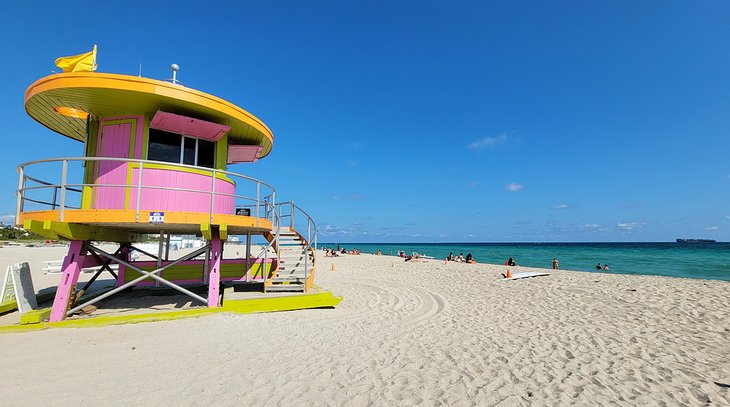
Located on a barrier island and connected to the mainland by a series of bridges, Miami Beach is a mix of quiet neighborhoods, lively entertainment-focused areas, and long stretches of soft-sand beaches. The southernmost portion of the island is the historic and action-packed area known as South Beach, and this is where you'll find many of the top attractions and things to do.
One of the biggest attractions in Miami Beach is the Art Deco Historic District, with pastel buildings from the 1930s and early 1940s sporting classic neon signs. An expensive tourist district, this area features numerous beachfront restaurants, shops, hotels, and plenty of sunbathing opportunities.
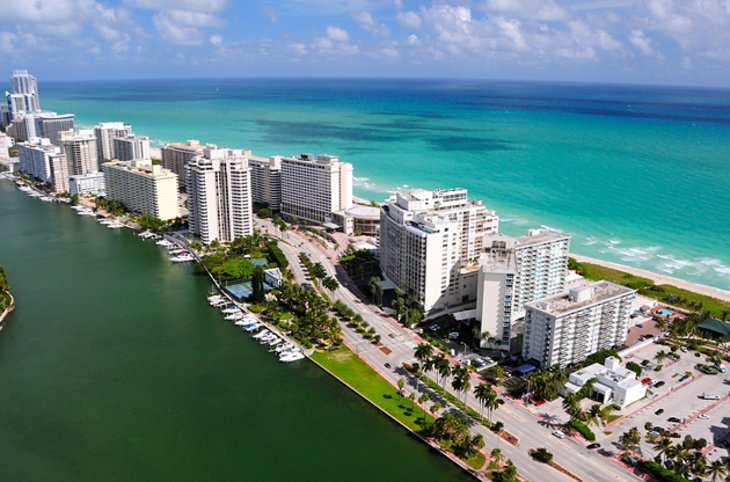
The main street in this area is Ocean Drive, a section of road located along the oceanfront and home to some beautiful Art Deco buildings. Ocean Drive was closed to all but pedetrian traffic in May of 2020 but in 2022 opened to one-way vehicle traffic from 15th Street to 5th Street.
One block inland, running parallel with Ocean Drive, is Collins Avenue. Collins Avenue is actually State Road A1A and is the main street in Miami Beach, joining numerous neighborhoods.
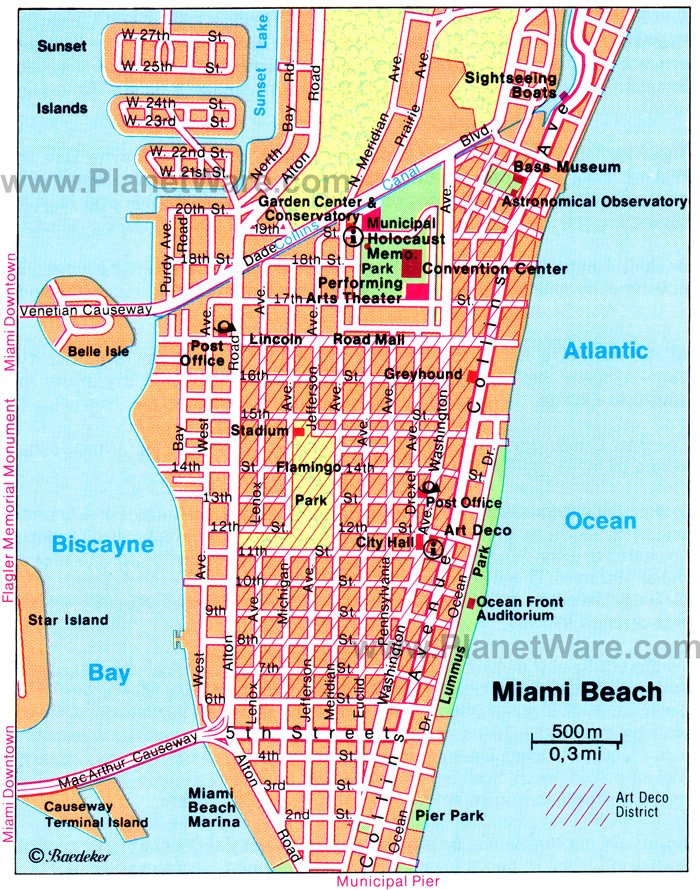
Art Deco Historic District
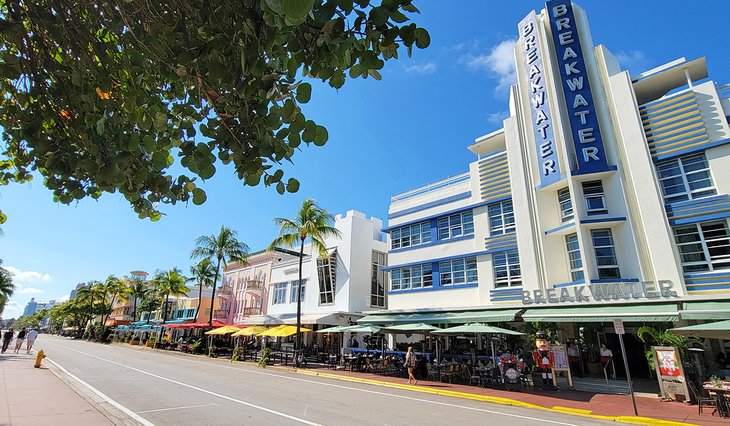
Even if you have no interest in the beach, the Art Deco Historic District is worth a trip out to Miami Beach. This architectural style, popular in the 1930s and 40s, dominates the trendy South Beach neighborhood.
These uniquely designed buildings, in a range of pastel colors and displaying large neon signs, were built following a devastating hurricane that struck in 1926. Many are hotels and restaurants, most of which have been beautifully restored. Along some of the main streets, awnings on the lower level of these buildings provide shade for outdoor dining areas. Ocean Drive and Collins Avenue are the two main streets through the area.
If you are interested in staying in one of these historic gems, many of the Art Deco buildings still function as hotels and have much more character than modern hotels. Some good options are the National Hotel Miami Beach or the more moderately priced Hotel Breakwater South Beach.
South Beach
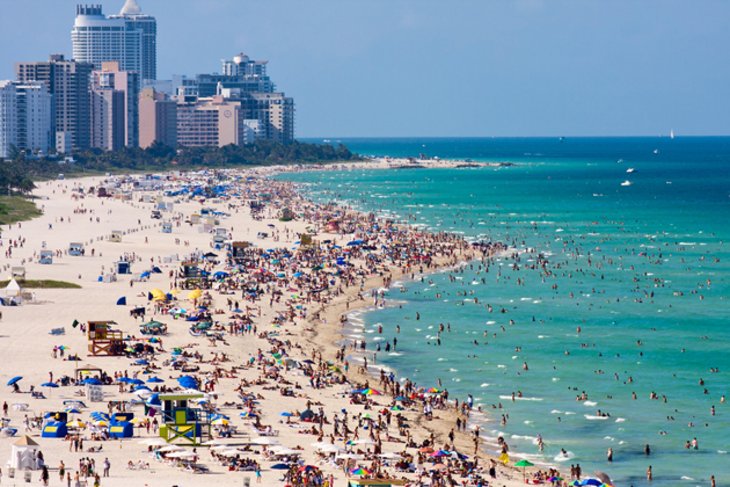
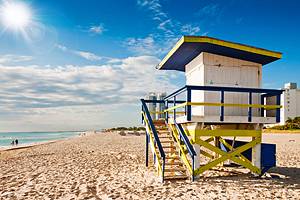
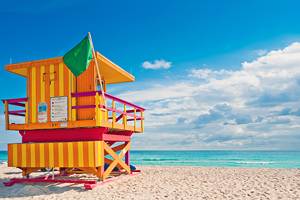
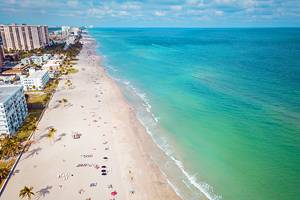
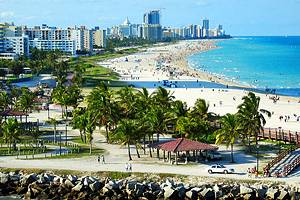
Located at the southern end of Miami Beach is the always action-packed neighborhood of South Beach. This is what many people have in mind when they plan a beach vacation to Miami. The wide section of beach that fronts the ocean along Ocean Drive is one of the big attractions. Often full of people in summer, this is the most popular beach in Miami and one of the top beaches in Florida.
This is a place to see and be seen, but also a place to swim and enjoy the shallow waters, escape the heat, and soak up the sun. A paved walk is set well back from the beach, and in behind is Ocean Drive. Art Deco buildings line the streets and offer luxury hotel rooms and a good mix of dining options.
South Beach is home to several popular festivals and events held throughout the year. By day, it's a great place to wander around or hang out on the beach. At night, it comes alive with dining and nightlife.
Vizcaya Museum and Gardens
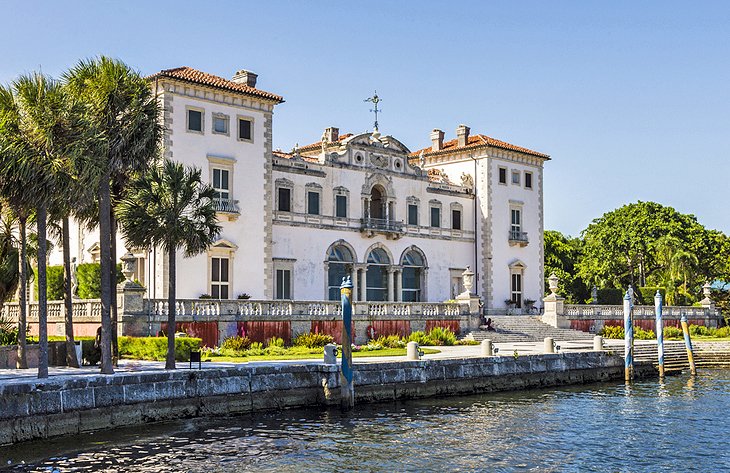
This National Historic Landmark, set on 28 acres, was the luxurious winter home of 20th-century industrialist James Deering. Built in 1916, the mansion features 34 rooms arranged around a central courtyard.
It took more than 1,100 workers and craftsmen to complete the Vizcaya project, many of whom were brought over from Europe to ensure authenticity in design.
The Italian Renaissance-style villa is filled with an impressive collection of European furniture and decorative arts from the 15th to the 19th centuries.
The grounds and gardens feature stunning Italian and French fountains, pools, and sculptures. Be sure to explore each area: the Secret Garden, the Maze Garden, and the Theater Garden.
A breakwater out front, protecting the estate from the waters of Biscayne Bay, is an ornately carved barge, a massive stone structure designed by sculptor Alexander Stirling Calder, meant to resemble a mythical Venetian vessel.
Address: 3251 South Miami Avenue, Miami, Florida
Official site: http://vizcaya.org
Everglades National Park
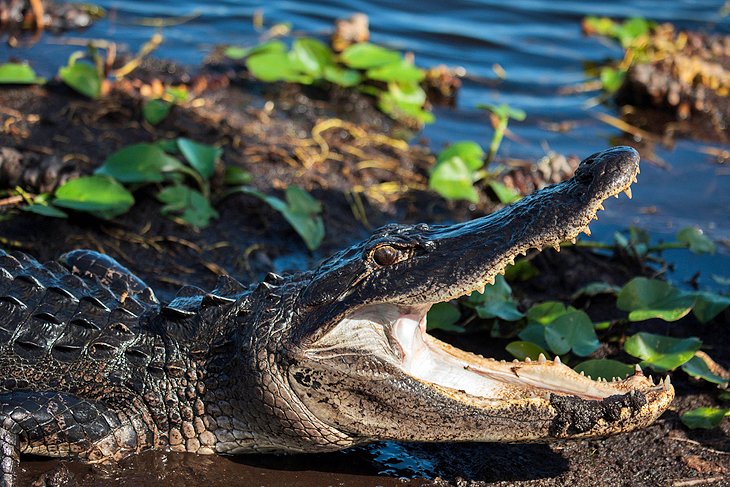
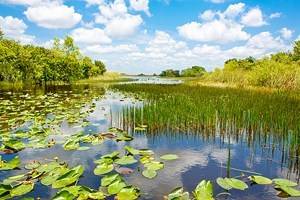
Everglades National Park, just a short drive from Miami, protects one of Florida's most unique natural features. These swamplands, covering about 1.5 million acres, are home to alligators, crocodiles, snakes, and birds. This whole area is essentially a shallow river flowing out to the ocean.
The park has three main entrances, each providing different opportunities to explore the park. The main entrance near Homestead has an informative Visitors Center, as well as walking trails and boardwalks for wildlife viewing.
One of the most popular walking trails in the park is the Anhinga Trail, which leaves from the Royal Palm Visitor Center. This trail is less than a mile long but leads through terrain where visitors are likely to see alligators and other animals. This trail is wheelchair accessible and non-strenuous.
The Shark Valley entrance is notable for its 15-mile-long paved loop, ideal for biking, and a 65-foot-high observation tower.
The third entrance is near Everglades City and is primarily for visitors planning on experiencing the park by watercraft. One of the most enjoyable ways to experience the Everglades is on an airboat tour. These high-speed boat trips take visitors out into the marshes and streams to see alligators and other wildlife.
Bayside Marketplace
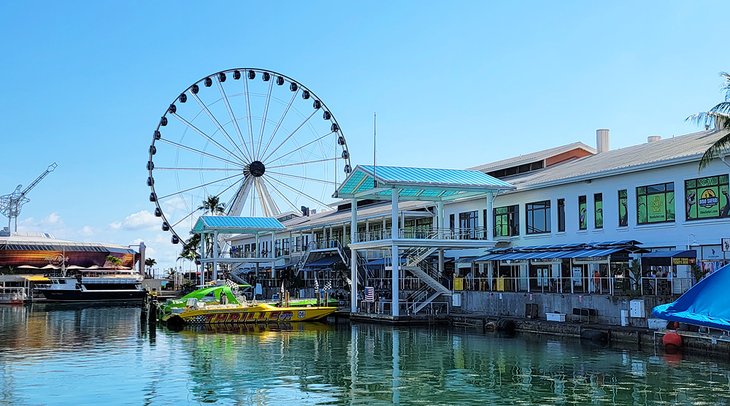
Bayside Marketplace is a large outdoor-style mall with more than 120 specialty and tourist shops, numerous cafes and restaurants, and daily live entertainment. Visitors will find some well-known chain stores, as well as many unique, one-of-a-kind places. The marketplace draws locals as well as tourists.
As may be evident in the name, the mall is located along Miami's waterfront, looking out over docks and boats. Many people come here simply to soak up the atmosphere. Tour boats leave from here, visiting locations around Biscayne Bay. There is also a water taxi service to Miami Beach and downtown hotels located in the area.
A brand new attraction has risen at Bayside Market: the Skyviews Miami Observation Wheel. Towering 200 feet in the air, this giant Ferris wheel has 42 climate-controlled passenger gondolas plus one glass-floored VIP version. The views out over Biscayne Bay and Miami you'll see during your 15-minute ride are spectacular.
Address: 401 Biscayne Blvd, Miami, Florida
Official site: http://www.baysidemarketplace.com/
Little Havana and Calle Ocho
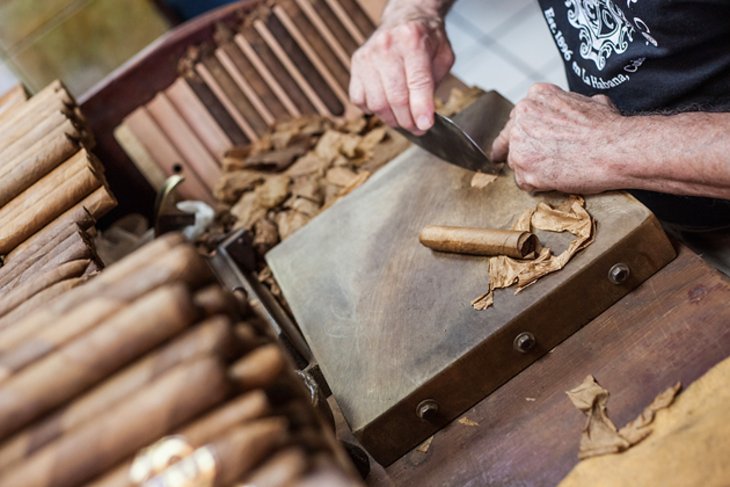
Little Havana, the Cuban district of Miami, isn't known for its wealth of tourist attractions but more for its distinctive cultural scene. Restaurants and specialty food shops line the streets, and Latin music drifts through the air. Locals socialize in the open spaces.
Murals grace the walls of buildings, showing important Cuban figures and scenes of daily life, and large rooster sculptures decorate the sidewalks along Calle Ocho. This is the main thoroughfare running through the district and home to much of the activity, but Little Havana spreads well beyond, into the surrounding streets and avenues.
For people-watching, the area offers a great deal of entertainment, especially at Máximo Gómez Park (Domino Park), where locals play spirited games of dominoes and chess. And, of course, this is the place to visit for Cuban cuisine or perhaps, a surprise to most visitors, a great haircut at one of the numerous barber shops.
The Calle Ocho Festival, held in March, is a celebration of Cuban culture and the largest of its kind in the world. Over the years, this street festival has expanded to include more Latin American cultures and is now a great way to experience Latin American music and Caribbean cuisine.
Bayfront Park
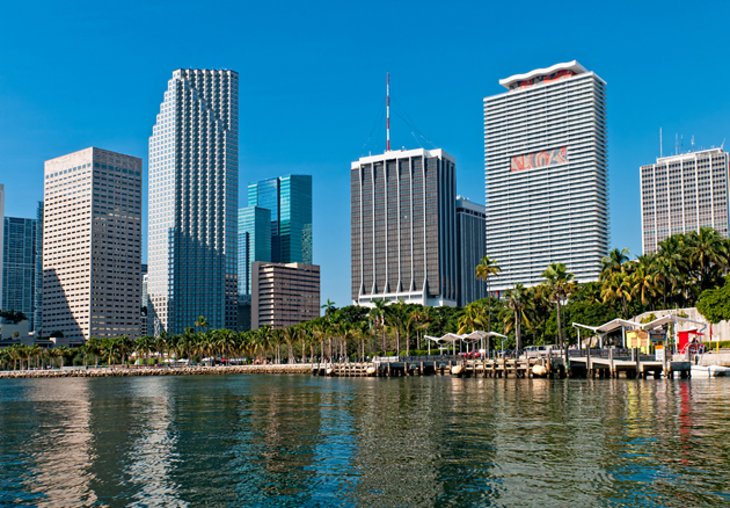
Bayfront Park, on the east side of Biscayne Boulevard, is a 32-acre green space, adjacent to the Bayside Marketplace. The park has several interesting monuments and sculptures. One of the unique features is the electronically controlled Pepper Fountain.
Other highlights include the Challenger Memorial, commemorating the crew of the Challenger spacecraft; the Light Tower, an amphitheater used for musical performances of all kinds; and a children's playground. Locals often come here just to run or walk on the paved trails.
A waterfront trail extends from Bayfront Marketplace to the park past the FPL Solar Amphitheater. Near the park are other interesting attractions including the Freedom Tower, the Kaseya Center, and Maurice A. Ferré Park.
Address: 301 North Biscayne Blvd, Miami, Florida
Official site: http://www.bayfrontparkmiami.com/
Perez Art Museum
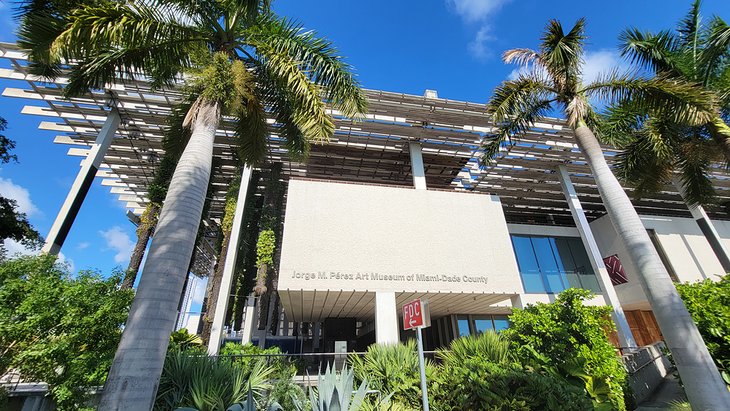
The Perez Art Museum, known locally as the PAMM, occupies a section of prime real estate on Miami's waterfront. Inside an architecturally stunning building designed by Herzog & de Mueron is housed artwork from the 20th and 21st centuries.
The museum has been celebrating art from local and international artists for over 25 years. In addition to the permanent collection, the PAMM hosts a regular procession of temporary exhibits. The interior of the building is almost a work of art in itself. Light, airy spaces along with incredible views out over Biscayne Bay invoke a sense of calm and introspection, helping to aid in your appreciation of the artwork. You'll find the permanent exhibits are primarily displayed on the first and second floors; the temporary exhibits are usually on the second floor.
The PAMM has a well-regarded on-site restaurant named Verde. Settle in at a table either inside or outside on the expansive patio and enjoy a light lunch while you soak up the fantastic views out over the water.
Save a few dollars on parking (flat rate of $18) by combining a visit here with a stop at the Phillip and Patricia Museum of Science, located right next door.
Address: 1103 Biscayne Blvd, Miami, Florida
Official site: https://www.pamm.org/
Phillip and Patricia Frost Museum of Science
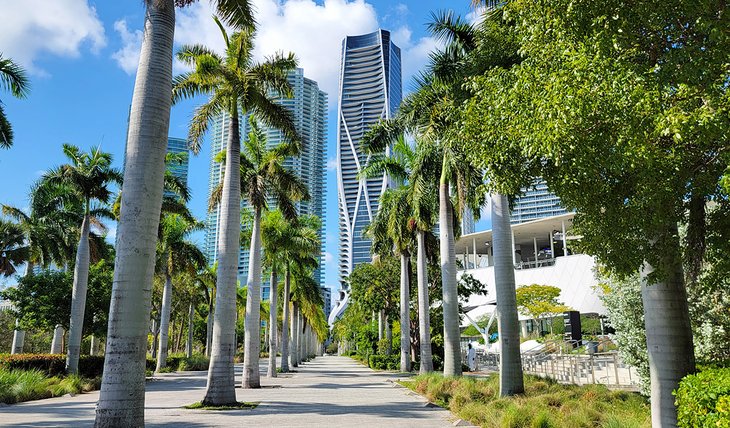
Ideal for a rainy day or if you are looking for something to do off the beach, the Phillip and Patricia Frost Museum of Science is jam-packed with interesting things for all ages.
The museum is divided into four areas: The aquarium is all about the ocean, with a focus on South Florida. A highlight of visiting this location is a 31-foot-wide oculus lens at the bottom of the massive Gulf Stream tank, which allows visitors to look straight up and see sharks, devil rays, and other fish swimming overhead.
The planetarium helps bring an understanding of the solar system through interactive displays and shows. In the North and West wings, other permanent and traveling exhibits help to explain the world we live in.
Across all areas, displays are interactive and fun, and the viewing areas in the aquarium are exceptional.
Address: 1101 Biscayne Boulevard, Miami, Florida
Official Site: https://www.frostscience.org/
Fairchild Tropical Botanical Gardens
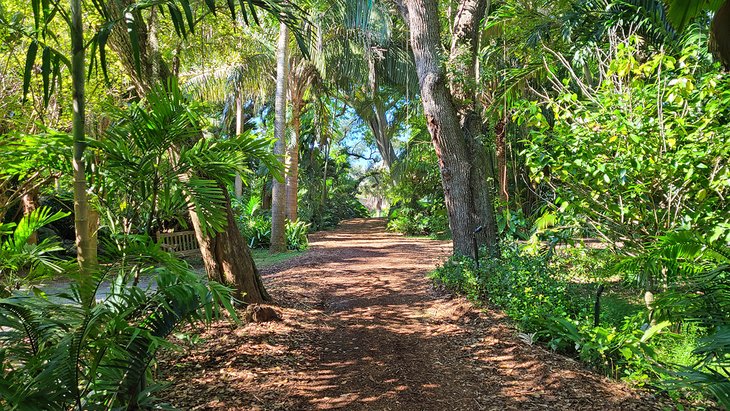
Miami is a green city. Lush tropical vegetation grows here with abandon, nourished by the frequent rain, warm temperatures, and sunny days. One of the best places to see the wonderful show that Mother Nature puts on is at the Fairchild Tropical Botanical Gardens. Originally founded in 1938, the entire organization is now run by passionate volunteers and is a first-class operation.
Extensive grounds are spread out over 83 acres, allowing you to walk for miles. If that sounds a bit daunting, take one of the 45-minute-long tram tours instead. The tours are led by a knowledgeable guide and provide a fascinating insight to the gardens. Even if you are only slightly interested in plants, you'll find something interesting in one of the 27 exhibits and collections.
Owing to the size of the gardens, it's important to plan out your visit. Most of the attractions are in the southwest area of the gardens, reached by walking straight to the tram stop area from the main entrance and then turning right. Along the way, look down at the pathway to see all manner of leaves imprinted in the cement. This pathway will take you past interesting viewpoints and the entrance to the Richard H. Simmons Rainforest area. Be sure to take a stroll through this area, where mist snakes along the pathway, and rain showers take place among the plants.
Beyond the rainforest area are the Clinton Family Conservatory and the Wings of the Tropics exhibit. Enter the building, and find yourself in a wonderland of colorful butterflies and tropical flowers. Have your camera ready to try to snap a picture of the stunning blue morpho butterfly.
Spread throughout the gardens are 11 sculptures, including two by the acclaimed glass artist Dale Chihuly. A good spot to grab a light lunch is the Glasshouse Café. Tables are spread among the greenery, and it's a pleasant spot to refresh and recharge.
Unless you've ventured further afield, you may find yourself walking back past one of the more unusual plant displays in the gardens: the Lougheed Spiny Forest of Madagascar. Large trees with spikes definitely discourage any touching! Nearby is a giant baobab tree dating from the mid-1930s, planted by the founder, David Fairchild.
Address: 10901 Old Cutler Road, Miami, Florida
Official site: https://fairchildgarden.org/
Bill Baggs Cape Florida State Park
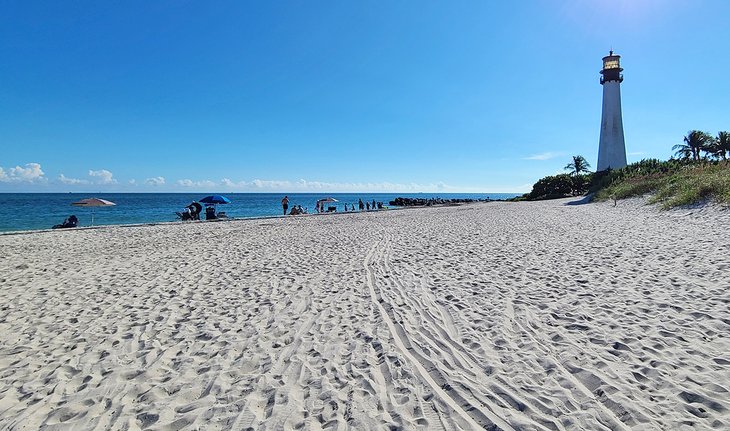
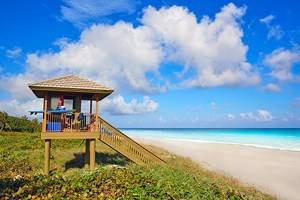
Miami is fortunate in the fact that it has one of Florida's most beautiful state parks only a bridge ride away. Saved from development by Bill Baggs in the 1960s, this perfectly preserved wilderness is a perfect place for a family beach day trip. One of the main attractions is the 1.25-mile-long soft-sand beach, providing amazing views out over the Atlantic Ocean.
The park is long and relatively narrow, and where you park depends on what you'd like to do. If you just want to hit the beach, park near access #6. If you'd like to visit the beach and see the historic lighthouse built in 1825 (closed for renovations as of June 2025 with no reopening date provided), park at access #7. Fishing more your thing? Park at the far end of the road in the parking lot by the washrooms, and walk out to the fishing docks or set up on the seawall.
The park is also a migratory bird hotspot. To have a chance at seeing birds, walk Robin's Birding Trail.
Address: 1200 South Crandon Blvd, Key Biscayne, Florida
Official site: https://www.floridastateparks.org/parks-and-trails/bill-baggs-cape-florida-state-park
Hobie Beach
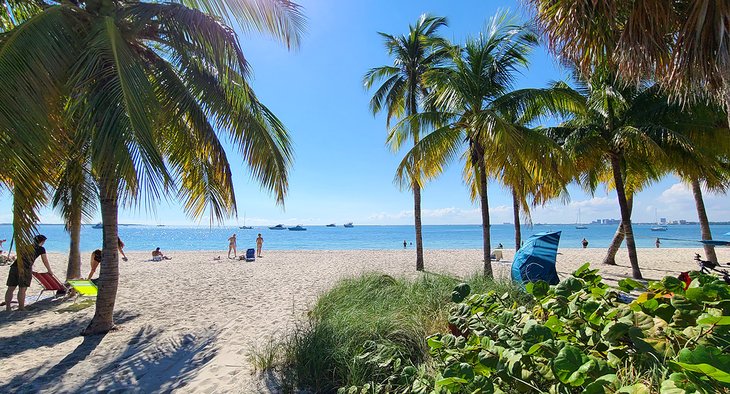
One thing you learn pretty quickly about Miami is that it can be an expensive place. Road tolls, restaurant prices, park and attraction admissions – the costs can add up quite quickly. For a delightful beach spot that's gentle on the pocketbook, head to Hobie Beach.
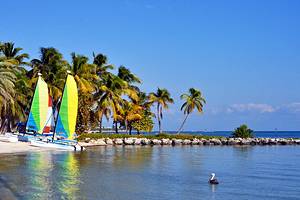
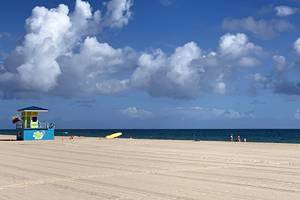
It's easily located on the Rickenbacker Causeway, and parking here is, amazingly, free! Soft white sand and gentle waves (if any) make this one of the most accessible beaches in the area. Hobie Beach is dog friendly – pooches can run leash-free here on the sand and in the water.
Note that Hobie Beach exists in two locations. The first location you come to as you cross the causeway is the area that rents sailboats and is popular with the windsurfing and sailing crowd. The beach here is narrow and rocky. Further along is the main beach area described above.
Zoo Miami
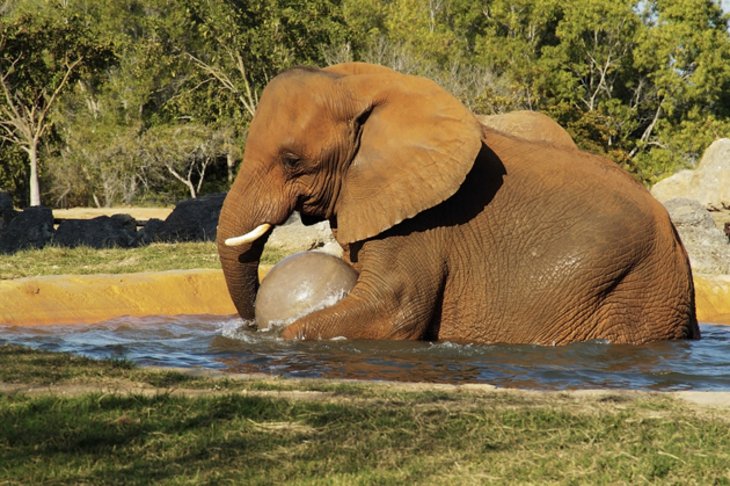
Zoo Miami houses more than 3,000 wild animals, including 40 endangered species. Unlike many traditional zoos, animals here are grouped with other species they would normally co-exist with peacefully in the wild, and kept in settings similar to their natural habitats.
One of the most enjoyable experiences at the zoo is feeding the giraffes. Kids will be amazed as these gentle giants reach down with their long necks to pluck a treat from their hands.
This is the only zoo in the continental United States located in a subtropical climate. More than 1,000 species of trees and plants can also be found on the grounds, including a large collection of orchids.
Children will find plenty of entertainment options. If they are bored with the animals, they can head over to the play areas and enjoy some splashing around at the water-themed play area.
Address: 1 Zoo Blvd, 12400 SW 152nd Street, Miami, Florida
Official site: http://www.zoomiami.org/
Deering Estate at Cutler
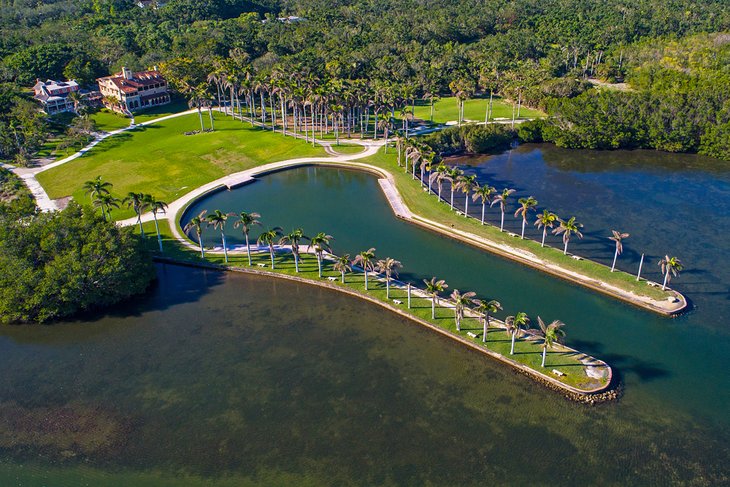
This former home of Charles Deering is a 444-acre estate, protecting globally endangered pine rockland habitat, as well as coastal tropical hardwood rockland hammocks, mangrove forests, salt marshes, and a coastal dune island.
Listed on the National Register of Historic Places, Deering Estate at Cutler is home to the Richmond Cottage, which served as a hotel, as well as historical buildings dating from 1896 to 1922, and an American Indian burial ground dating from 1500.
Charles Deering was an art collector who, along with his brother James, accumulated a great number of works by the Old Masters. Deering himself also painted, and some of his works are on display here. The Artist Village at the estate has become an important cultural center, featuring art and artists' programs.
Address: 16701 SW 72nd Avenue, Miami, Florida
Official site: http://www.deeringestate.org/
Wynwood Walls Street Art
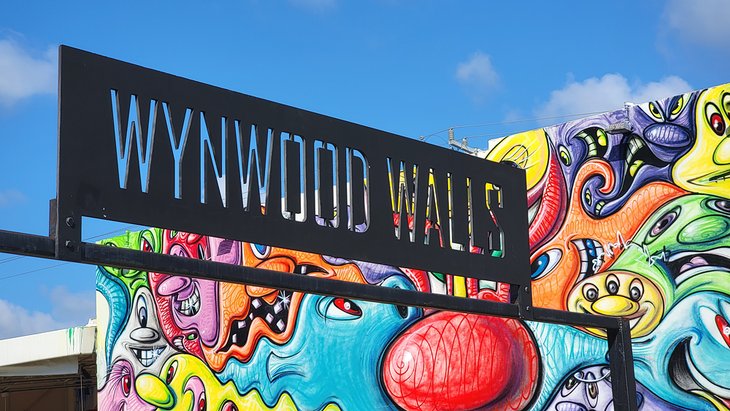
In the warehouse district of Wynwood, the formerly drab exterior warehouse walls have been transformed into colorful pieces of art. The Wynwood Walls, plastered in street art, or what most people think of as graffiti, have brought new life to this area.
Brought about by Tony Goldman in 2009, the district has attracted big names in the world of street art from across North America and around the world. Since it was started, more than 80,000 square feet of wall space have been graced with paintings in this unique artform.
The Wynwood Walls make up only one small part of the entire area; there are blocks and blocks full of colorful street art. Wander around on your own, or for greater insight into the murals, sign up online for a guided tour. If you want to see famous name artists and purchase prints, visit the Wynwood Walls Museum. Inside this gated area, you'll find 35 walls, retail shops, and galleries. This area was once free, but now an admission fee is charged.
Official site: http://www.thewynwoodwalls.com
Miami Children's Museum
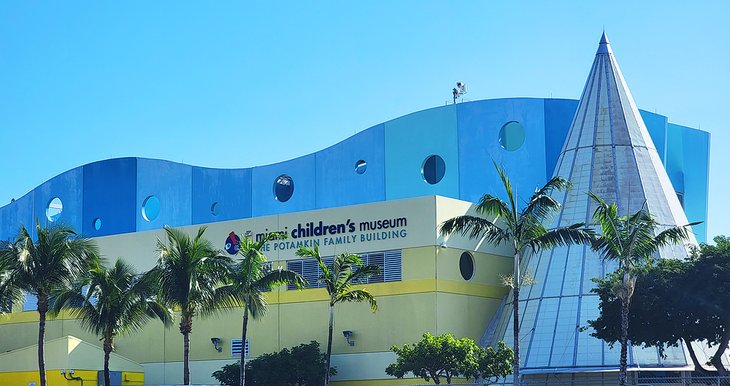
Always a fun outing for children, the Miami Children's Museum is housed in a colorful and creatively designed facility with more than 56,000 square feet of space. Educational and entertaining exhibits are designed to appeal to children's curiosity and creativity.
Fourteen themed galleries revolve around arts, culture, community, and communication, and four outdoor exhibits allow kids a chance to play and enjoy time outside. Some of the exhibits are definitely Miami-themed: the ability to explore a cruise ship and the ability to explore the Port of Miami.
Address: 980 Macarthur Causeway, Miami, Florida
Official site: http://www.miamichildrensmuseum.org/
Key Biscayne and Crandon Park
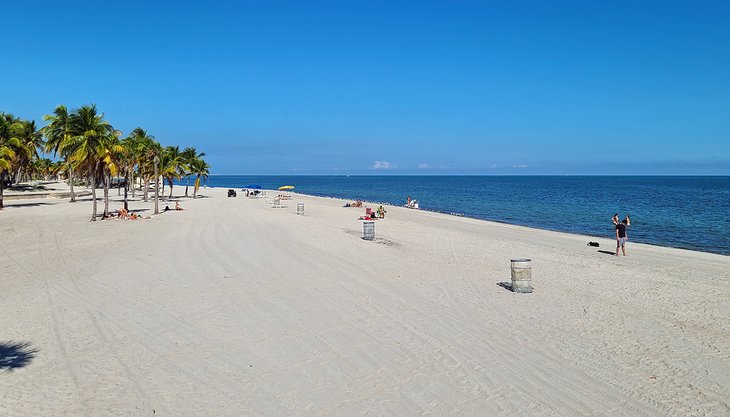
South, beyond Miami Beach and over the Rickenbacker Causeway, is Key Biscayne, a small community with lovely beaches and beautiful parks. Of particular note is Crandon Park, with an offshore reef that leaves the shoreline protected from big waves and perfect for swimming.
The park has a Family Amusement Center, making it particularly popular with families, and a Nature Center. There is generally ample parking, good facilities, chair rentals available, and lifeguards on duty.
On windy days, you may see kiteboarders ripping across the waves, being towed by their colorful kites.
Basketball Games at Kaseya Center
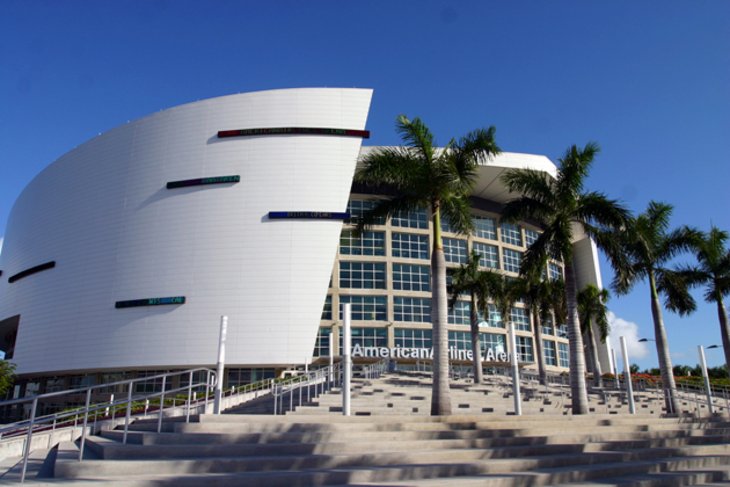
The Kasey Center, formerly the FTX Arena, is the home of the NBA's Miami Heat. It is also the main venue for large concerts and other special events, including top-name singers and performers. It can hold more than 19,000 people.
The structure itself opened in 1999, has been awarded the Leed Green Building Certification for being an energy-efficient building. The arena stands out prominently on Biscayne Bay in downtown Miami.
Address: 601 Biscayne Boulevard, Miami, Florida
Official site: https://www.kaseyacenter.com/
Venetian Pool
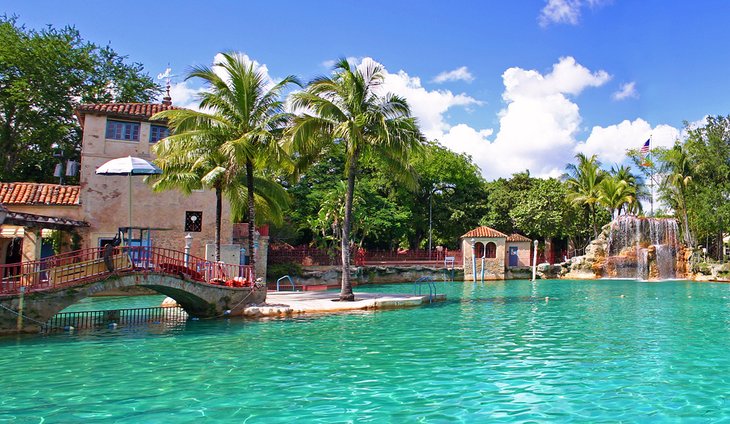
If you become tired of the beach, or the wind is up, or you are just looking for freshwater to swim in, head to the historic Venetian Pool. Located in the beautiful city of Coral Gables, just south of Miami, the pool dates from the early 1920s. The water in the pools is as pure as it gets. Fed from an underground spring, the water is crystal clear and refreshing. Each day, the 820,000-gallon pool is drained and refilled by the spring.
The pool is a byproduct of a former quarrying operation that used the coral dug from here for the construction of homes in Coral Gables. The area surrounding the pool is like a scene from Venice, Italy. Bridges, towers, and small plazas surround the pool, giving it a very European look and feel, while caves, grottoes, and two waterfalls provide hours of enjoyment for children and adults alike.
The pool is open from the start of February until the end of November each year. Ample free parking is available across the street in the public lot.
Address: 2702 de Soto Boulevard, Coral Gables, Florida
Official site: https://www.coralgables.com/venetianpool
Coral Castle
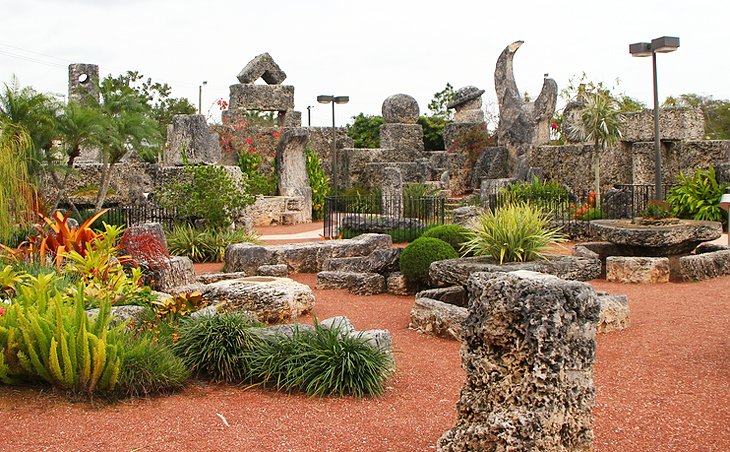
The Coral Castle is the result of one man's 28 years of carving, using his own home-made tools. This incredible creation, made of limestone, was built by Edward Leedskalnin between 1923 and 1951. He kept his methods private and would not allow anyone to watch him work, leaving many people to wonder how he did it.
Today, you can tour the property and see the most famous structure, a giant stone gate, which opens effortlessly with the touch of a finger, as well as carvings that include stone tables and chairs, unique figures, and other pieces.
Address: 28655 South Dixie Highway, Miami, Florida
Official site: http://coralcastle.com
Freedom Tower
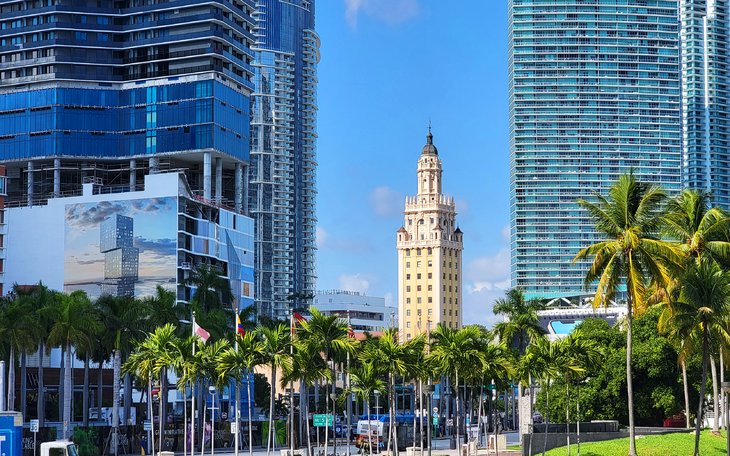
One of the most striking buildings on Biscayne Boulevard, Freedom Tower displays a "wedding-cake" style. Built in 1925, it is one of the oldest skyscrapers in the southeastern United States, and served for many years as the headquarters of the Miami Daily News.
Its name comes from its role as the immigration-processing center for hundreds of thousands of Cuban refugees who arrived in the 1960s. Today, it stands as a tribute to Cuban immigration and is used, in part, as a contemporary art museum.
Address: 600 North Biscayne Boulevard, Miami, Florida
Official site: http://www.nps.gov/history/nr/travel/american_latino_heritage/Freedom_Tower.html
Best Time to Visit Miami, FL
| Average minimum and maximum temperatures for Miami, FL in °C | |||||||||||
| J | F | M | A | M | J | J | A | S | O | N | D |
| 24 16 | 26 16 | 27 18 | 29 20 | 31 22 | 32 24 | 33 25 | 33 24 | 32 24 | 29 22 | 27 20 | 26 17 |
| PlanetWare.com | |||||||||||
| Average monthly precipitation totals for Miami, FL in mm. | |||||||||||
| 48 | 53 | 65 | 85 | 140 | 217 | 147 | 219 | 213 | 157 | 87 | 55 |
| Average minimum and maximum temperatures for Miami, FL in °F | |||||||||||
| J | F | M | A | M | J | J | A | S | O | N | D |
| 76 60 | 78 61 | 81 64 | 84 68 | 87 72 | 90 75 | 91 77 | 91 76 | 89 76 | 85 72 | 81 68 | 78 62 |
| PlanetWare.com | |||||||||||
| Average monthly precipitation totals for Miami, FL in inches. | |||||||||||
| 1.9 | 2.1 | 2.6 | 3.4 | 5.5 | 8.5 | 5.8 | 8.6 | 8.4 | 6.2 | 3.4 | 2.2 |
If you're planning a vacation packed with plenty of sunshine, endless entertainment, and festivals galore, the best time of year to visit Miami is spring.
March through May are considered high season (as are the winter months of December through February), which means you should expect crowds of tourists splaying themselves on Miami's best beaches, as well as increased rates on things like hotel rooms and local attractions. You may also need to call in advance to book a dinner reservation.
During spring, you can expect beautiful weather. With highs in the high 70s and low 80s Fahrenheit, it's not too hot, nor is it too humid. Plus, spring offers a slew of events to keep visitors busy. From tennis tournaments to outdoor concerts to food festivals, you won't be lacking in fun things to do.
This time of year is also free of the intense rains and pesky insects that plague the sticky summer months, as well as the hurricanes that hit during late fall.
A word of advice: Avoid spring break; unless you're a fan of all day (and all night) parties, screaming youth, and bikini contests. Prices go up during this popular holiday and so does the noise level!
Easter is another time to steer clear of Miami if you're hoping to avoid crowds and keep your costs low.