Tourist Attractions in Cusco
Former capital city of the Incas, Cusco is the oldest continuously inhabited city in the Americas and a UNESCO World Heritage Site. The ruins of the old Inca city became the foundation for the Spanish architecture you see today, and many of the stone walls that line the streets were built by the Incas.
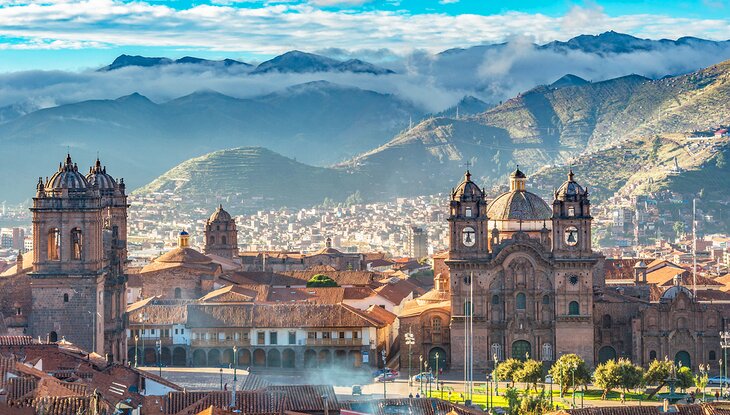
Most tourists who come to Cusco head to Machu Picchu, the Sacred Valley, and the other nearby Inca centers, but it's well worth spending some time exploring the city itself to discover its many attractions. Most are around the Plaza de Armas and surrounding streets, which is where you'll also find restaurants, hotels, and shopping.
Follow streets uphill from the northeast end of the Plaza de Armas into the stone-paved streets of the San Blas district. In this picturesque little neighborhood, you'll discover small shops and restaurants frequented by locals as well as visitors who prefer to stay in this quieter neighborhood with fine views over the entire city.
To be sure you don't miss any of the best places to visit, plan your trip with our list of the top attractions in Cusco.
Santo Domingo and Coricancha
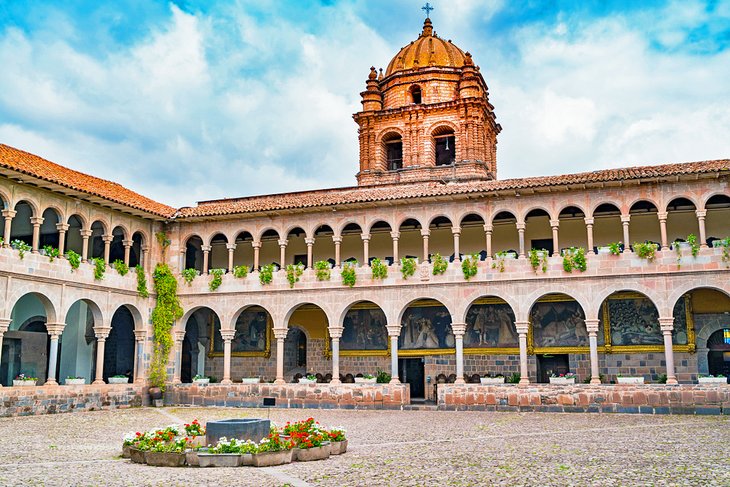
The church of Santo Domingo is built on the ruins of the famous Inca site of Coricancha, the Templo del Sol or Temple of the Sun. Coricancha (Q'orikancha in Quechua) means "golden courtyard," and its walls were once lined in sheets of solid gold.
Statues and ornaments of gold decorated the interior and a large golden disc reflected the sun, casting a brilliant light on the temple.
All this was stripped by the conquistadors soon after they arrived in Cusco, and most of the gold was melted down. All that remains today of the once glorious Coricancha is the fine Inca stonework, which forms the foundation of the church of Santo Domingo.
From both inside and outside, you can see the impressive six-meter-high curved wall at one end of the church. Unlike much of the Spanish architecture, the Inca wall has withstood the major earthquakes that rocked Cusco in 1650, 1950, and 1986. Through each of these, the Inca stonework that underlay the later buildings survived, while the colonial and later buildings crumbled above.
In the center of the courtyard is a structure, which was once covered with 55 kilograms of gold, and along the sides of the courtyard are small Inca rooms whose smooth gray stones and sharp angles are a stark contrast to the rounded arches and Spanish architecture that surround them.
A small museum has a model showing what it probably looked like and explains the history of local civilization, with pre-Inca, Inca, and colonial artifacts, many from excavations in the Coricancha.
Address: Ahuacpinta 659-A, Cusco 08002, Peru
Sacsayhuaman
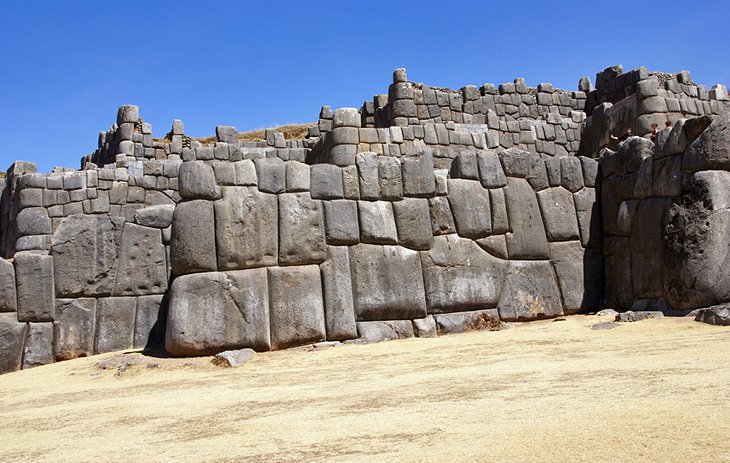
The massive fortified complex of Sacsayhuaman is the most significant ruin in Cusco, and is close enough to the historic center that you can walk there. Many tourists stop to see it on the way to Pisac. Sacsayhuaman is thought to have both military and religious significance.
Cusco was designed in the shape of a puma, with Sacsayhuaman as the head. Three ramparts of zigzagging defense walls extend for almost 300 meters, forming the teeth of the puma.
The fascination of this ruin is not just its staggering size, but the size of the stones from which it was built, and the complexity of the stonework. Consider that what you see here is only about 20 percent of the original mass — until it was protected in the 1930s, blocks from Sacsayhuaman were being hauled away to use for construction in Cusco.
Most of the largest stones, which were more difficult to move, were left at the site, and form the basic structure. Some of these stones measure more than eight meters high and weigh 361 tons.
Despite the massive size of these stones and their often irregular shapes, they are fitted together so perfectly that modern engineers wonder at how the Incas managed such a feat.
Plaza de Armas
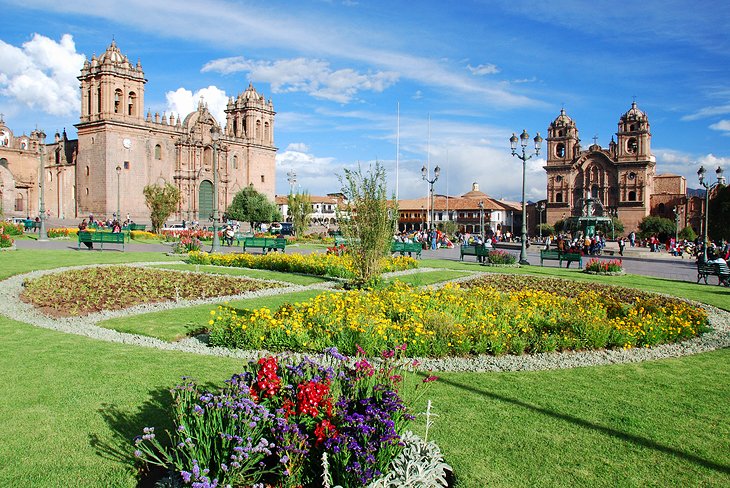
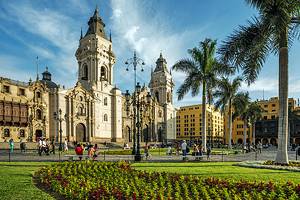
The Plaza de Armas has been the heart of Cusco from the time of the Inca Empire, when the square was called Huacaypata or Aucaypata. The cathedral, on the northeast side of the Plaza de Armas is the main attraction, and you'll often find both locals and tourists relaxing on its steps.
On one side of the cathedral is the church of Jesus Maria, and on the other is El Triunfo. The southeastern side of the main square is dominated by the church of La Compania, which is easily mistaken for the cathedral because of its ornate façade. However, it is smaller and lacks the grand stairs in front.
The other two sides of the Plaza de Armas are lined with colonial arcades. The center of the square is a place to rest on the benches and admire the gardens and fountain in the center as you watch daily life in Cusco. The plaza is especially lively and beautiful at night, with people strolling about and the buildings lit with spotlights.
One of the most popular things to do at night in Cusco is to stroll around the plaza, which is especially lively and beautiful after dark, with people socializing and the buildings lit with spotlights.
Inca Walls
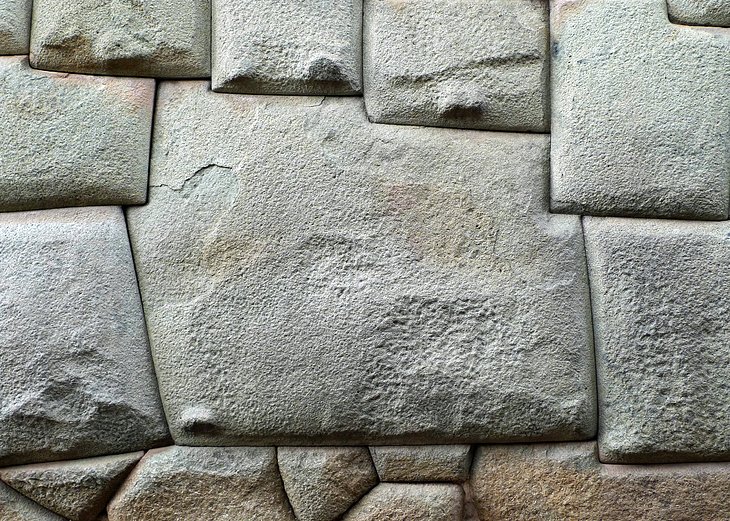
Walking beside the ancient Inca Walls that line the narrow streets of Cusco is like walking through an outdoor museum. These intricately constructed Inca walls are the foundations of today's Cusco, and although they are found all over the city, a few areas stand out.
Some of the best places to see them are along the streets of Loreto and Hatunrumiyoc. Inca walls line both sides of Loreto, which runs southeast from the Plaza de Armas. The south wall is from Amarucancha, the site of the Palace of Huayna Capac, and on the north side is the wall of the Acllahuasi, one of the oldest walls in Cusco.
Hatunrumiyoc runs northeast from the Plaza de Armas, and is famous for the 12-sided stone found along the east wall. It's usually easy to spot because souvenir sellers set up regularly directly across from the stone. The curved end of Santo Domingo church is another outstanding example of Inca stonework.
Cathedral
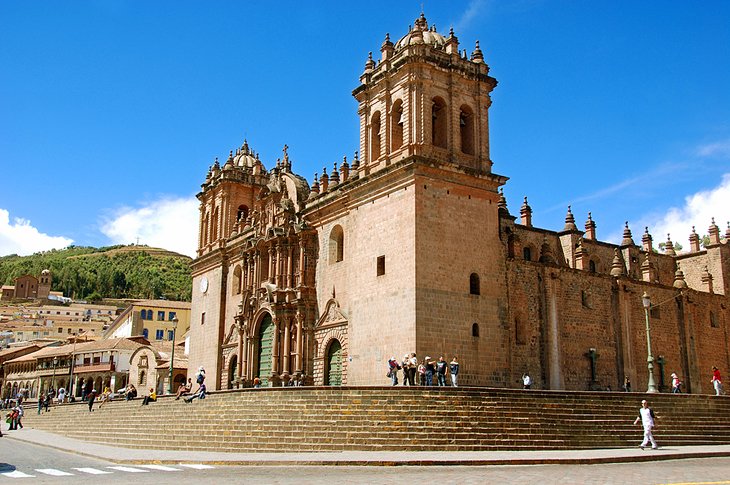
Construction on Cusco's cathedral began in 1559 and was completed in 1669. It is built on the site where the Inca Wiracocha's palace once stood. The three-aisled nave of the Renaissance-style church is supported by 14 massive pillars, remarkably few for such a large nave.
The main altar, made of silver, weighs 400 kilograms, and the choir stalls are intricately carved from cedar. Even more impressive is the cathedral's collection of more than 400 paintings from the Escuela Cuzqueña, the Cusco School.
These paintings from the 16th and 17th century are unique in that they reflect European style, but with an obvious native Andean influence. You can see a good example of this in The Last Supper by Marcos Zapata, which shows the apostles dining on guinea pig. The painting of the crucifixion in the sacristy is attributed to Van Dyke.
Adjoining the cathedral is the church of El Triunfo to the right, and the church of Jesus Maria to the left. El Triunfo was the first Christian church in Cusco, built on the site of the Inca armory where the Spanish were trapped during a siege in 1536. The Incas burned the city, but the fire in the thatched roof of the armory went out mysteriously.
After the Spanish had escaped and retaken the city, the story had grown to the status of a miracle, which the church was built to honor. The Capilla del Triunfo houses a famous Alonso Cortes de Monroy painting of the 1650 earthquake that devastated Cusco.
Address: Plaza de Armas, Cusco
Museo Inka
The best museum in Cusco for those interested in the Incas, Museo Inka is housed in the ornate 16th-century Spanish Admiral's House, a building worth the visit in its own right.
The house, which belonged to Admiral Francisco Aldrete Maldonado, was built on Inca foundations. It was damaged severely in both the 1650 and 1950 earthquakes but has been repaired and is one of the most impressive colonial houses in Cusco.
The collections focus on the Incas, from the rise of their culture to the Conquest and its impact on Peruvian cultures. Displayed are ceramics, textiles, metal and gold work, jewelry, mummies, and skulls that show an early surgical method of trepanning.
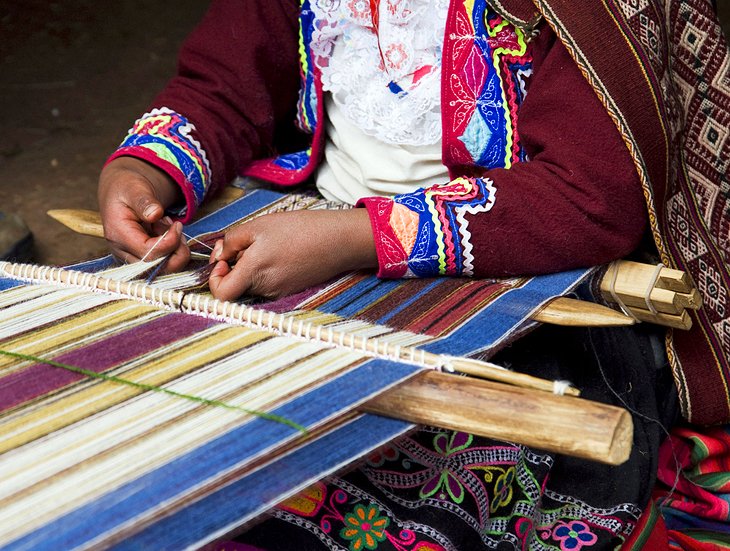
Especially interesting are the 450 carved and painted wood cups known as queros, the largest collection in the world. During the busiest tourist season, local weavers from the Centro de Textiles Tradicionales de Cusco demonstrate and sell their impressive work in the courtyard.
Address: Cuesta del Almirante 103, Cusco
Museo Casa Concha
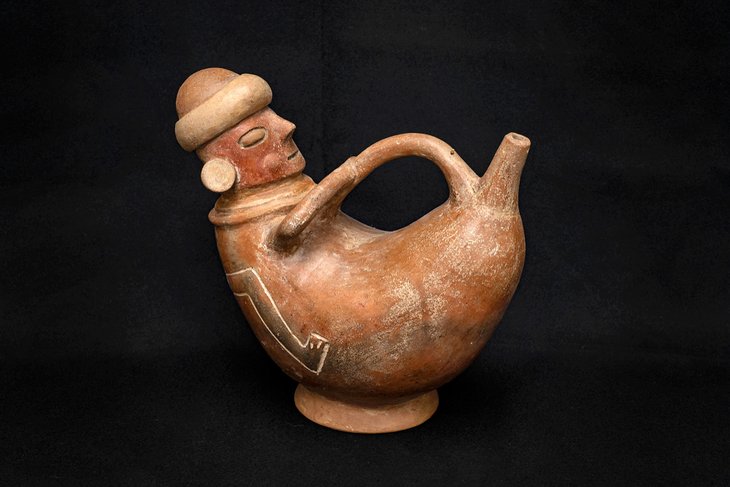
A century after archeologist Hiram Bingham brought Machu Picchu to world attention, the artifacts he found there were repatriated from the Yale University museums where he had deposited them.
Returned to Peru in 2011, after a decade of often-contentious negotiations, they are now displayed in the Museo Casa Concha, former home of Jose de Santiago Concha, an aristocrat from the early days of the conquest.
Twelve rooms of the beautiful balconied house, which spreads around three courtyards, house the collection of more than 360 artifacts that include items from large ceramic pots to small silver pins.
Interactive displays and videos fill in the story of the Incas and Machu Picchu and include an interactive map of the site. Visible through a glass floor are the remains of a floor from the previous Inca royal residence.
Address: Santa Catalina Ancha 320, Cusco
La Compania
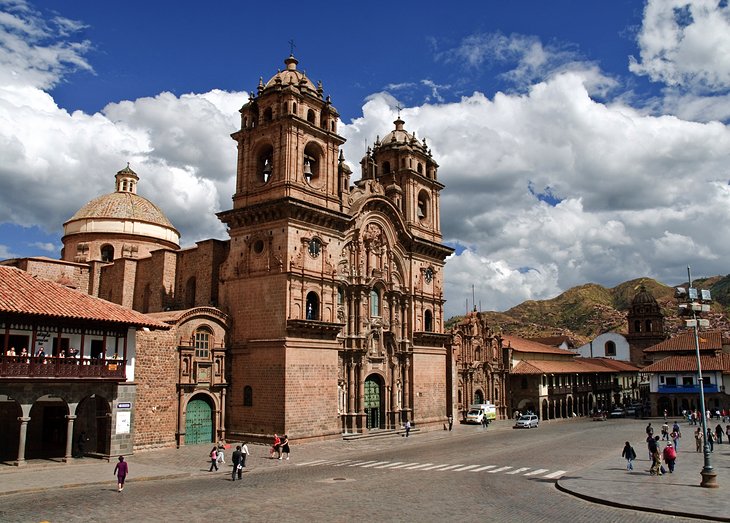
Compania de Jesus, usually called La Compania, is a Jesuit church built in the 16th century. It was badly damaged by the 1650 earthquake but was rebuilt and finished in the late 1660s. La Compania was the source of considerable controversy when it was built, because its grandeur threatened to surpass that of the cathedral in the same square.
The bishop of Cusco complained about the church's lavish design and the argument was finally brought to Pope Paul III to arbitrate. The Pope sided with the bishop, but by the time word of his decision reached Cusco, the Jesuits had almost completed La Compania.
So the Pope's decision had little effect, and La Compania's impressively ornate Baroque façade still rivals the cathedral. It is particularly beautiful when illuminated at night. But even the ornate façade doesn't prepare you for the magnificent gold altarpiece studded with polychrome statues.
La Compania is built on the foundations of the palace of Huayna Capac, the last ruler of the united Inca Empire, whose rule extended over much of present-day Peru, Bolivia, Ecuador, Argentina, Chile, and southwestern Colombia.
Address: Plaza de Armas, Cusco
Museo de Arte Precolombino (Pre-Columbian Art Museum)
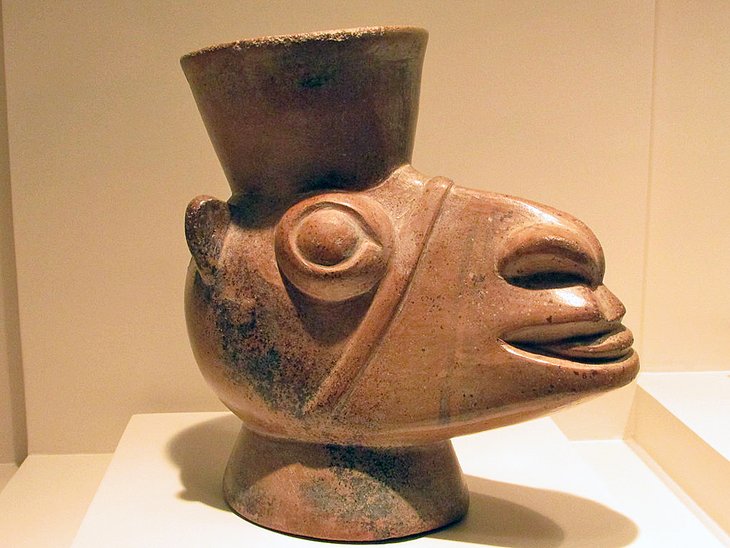
The Pre-Columbian Art Museum contains about 450 pieces from the storage rooms of the Larco Museum in Lima, whose collections are too vast to be shown there. On display (and with English signage) are jewelry; ceramics; gold work; weavings; silver work; and other artifacts from the Nasca, Moche, Huari, Paracas, Chimú, Chancay, and Inca cultures, dating from 1250 BCE to 1532 CE.
In addition, a room is dedicated to paintings from the Escuela Cuzqueña — the Cusco School — and a hall to wooden sculptures. The collection is relatively small but very well chosen, and housed in the former mansion of the conqueror Alonso Díaz.
Address: Plaza de las Nazarenas 231
La Merced
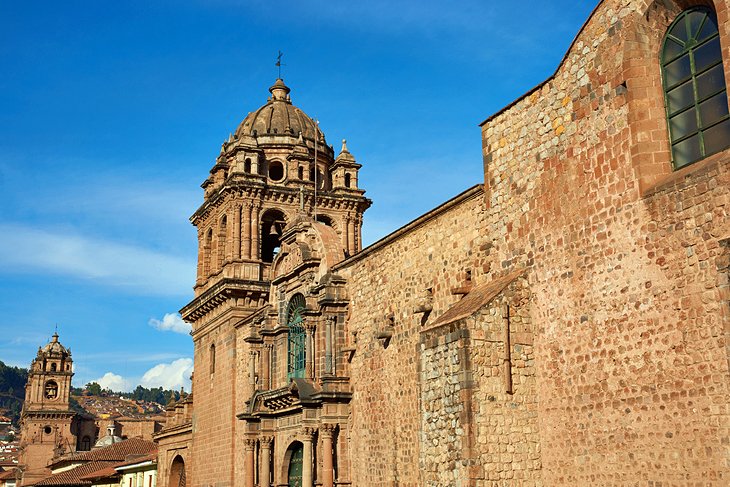
The Baroque church and convent of La Merced was built between 1657 and 1680, replacing an earlier church built here in 1536 and destroyed in the 1650 earthquake that devastated much of Cusco.
La Merced is considered the third most important colonial church in Cusco, after the cathedral and La Compania. The most precious of the church's treasures is in the sacristy, a gold monstrance set with precious stones and a giant pearl (held to be the world's second largest).
Inside the church are a carved choir and 18th-century paintings based on the life of San Pedro Nolasco, who founded the Order of La Merced. Several outstanding lunettes picturing scenes from the life of the Virgin Mary were painted by an anonymous Cusco master at the turn of the 18th century.
The two-story cloister is especially beautiful. The church is just south of the Plaza de Armas.
Address: Mantas 121, Cusco 08002, Peru
San Blas
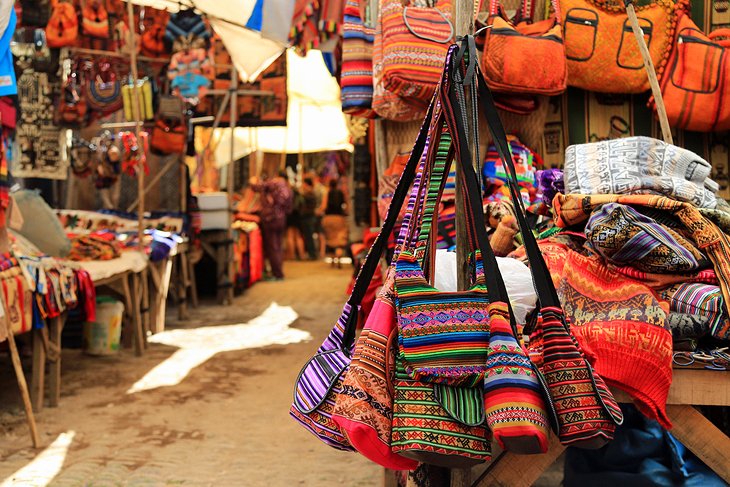
The San Blas neighborhood rises on a hill to the northeast of the Plaza de Armas. This area is known for its narrow cobbled streets filled with small art galleries and artisan workshops, as they have been since Inca times.
This area comes to life in the evenings when the shops and restaurants open, but San Blas Plaza is lively all day on Saturday, when it is filled with colorful market stalls.
At the end of the plaza is the adobe church of San Blas, from 1562, with an ornate gold Baroque altar and an exceptional pulpit carved from a single tree. Legend holds that the skull upon which the sculpture of St. Paul rests its foot is that of the pulpit's creator.
A terrace above the plaza offers good views across the red-tile rooftops of Cusco.
Qenqo
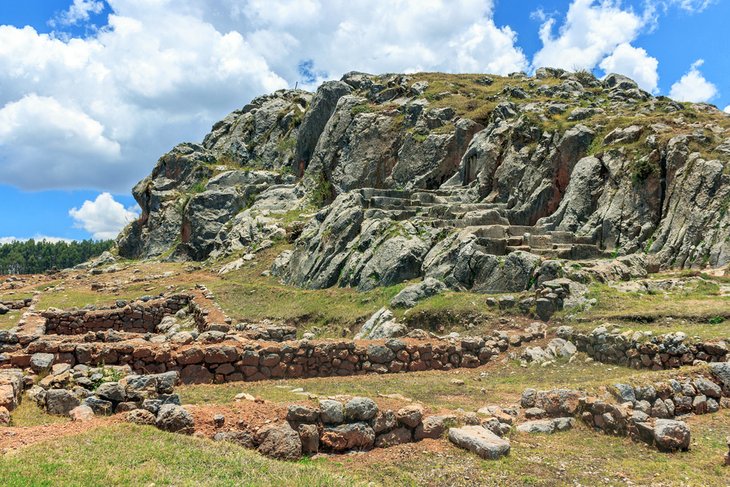
A relatively small archaeological site compared to others nearby, Qenqo is particularly interesting and especially puzzling to historians, as its exact uses are unknown. The entire remaining complex was carved out of a single solid rock, including its underground chambers and unusual winding channels.
What these channels were intended to hold — water, blood from sacrifices, or chichi (beer) have been speculated — is unknown, but they zigzag down through the site.
Early accounts from the time of the Incas describe the entire stone site covered in a layer of gold. Two upright stones at the upper area appear to have formed an Intiwatana, similar to the "Hitching Post of the Sun" at Machu Picchu and used for astronomical observations.
Qenqo is about four kilometers from the center of Cusco.
San Francisco Church and Monastery
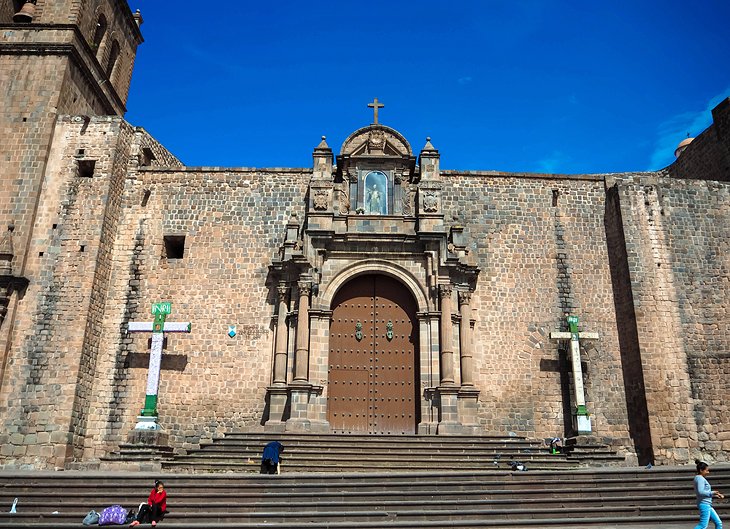
The church and monastery of San Francisco, a few blocks southwest of the Plaza de Armas, is a large church built in 1572 and restored after the 1650 earthquake. While the church itself is not spectacular, it does contain a beautiful carved cedar choir and a good collection of colonial art, with works by Marcos Zapata and Diego Quispe Tito.
A monumental — 12 by 9 meters — painting by Juan Espinoza de los Monteros shows the family lineage of St. Francis of Assisi, founder of the Franciscan Order, and around the cloister are paintings with scenes from his life.
Two crypts below the church have human bones arranged in patterns, a feature found in Franciscan churches elsewhere.
Address: Plaza de San Francisco, Cusco
San Pedro Market
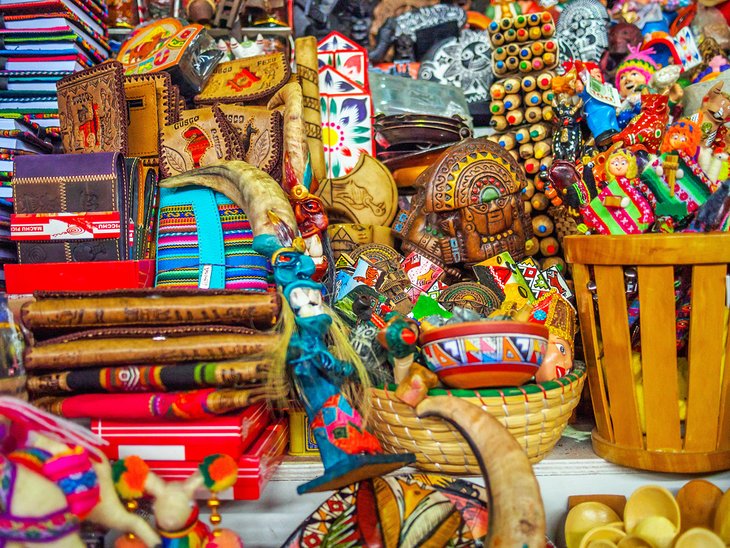
To get a sampling of local life, visit the busy and colorful San Pedro Market on any day of the week, especially in the morning while locals are shopping for their day's food. Local fruits and vegetables are displayed in colorful mounds, and an entire section is devoted to ready-to-eat foods, where you can get an inexpensive meal any time of day.
Look for the colorful displays of dried fruit snacks, as well as stacks of pan chuta, a local bread. Hand-knit sweaters and hats, as well as woven rugs and blankets made from alpaca yarns, are popular souvenirs, as are colorful handmade fabric dolls.
Address: Calle Tupac Amaro, Cusco
Choco Museo (Chocolate Museum)
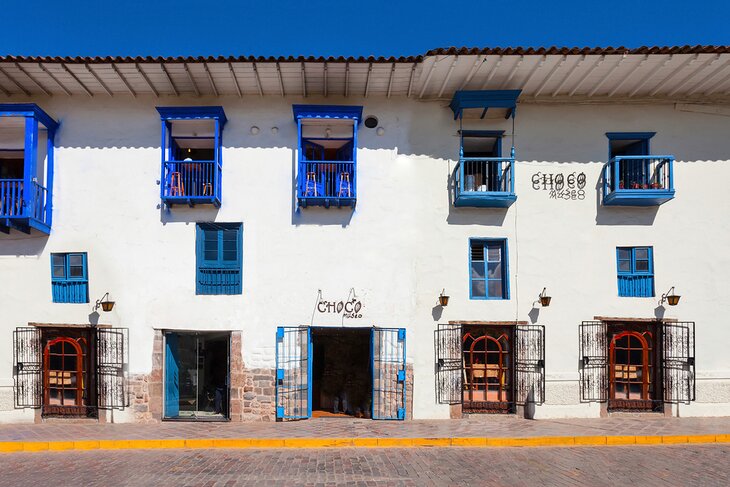
Chocaholics will have their fill at the Choco Museo, a free-to-visit museum that teaches visitors about the history and cultural significance of chocolate, from harvesting the plant to the final product. Hands-on displays allow you to touch and smell the cacao beans, and staff is ready to answer any questions.
If you want an even more in-depth look, you can participate in their "bean to bar" workshop, which allows you to be a part of each step. You will try Mayan chocolate beverages, and even bring home your own creations. You can try your hand at more advanced chocolate-making skills in a truffle workshop.
A cooking class starts with sourcing fresh ingredients from the San Pedro Market, and ends with a traditional Peruvian meal. If you enjoy both coffee and chocolate, be sure to check out the "Tasting Explorer" sessions.
For those who are fascinated with the origins of this tasty bean, the museum offers a two-day plantation tour that includes meals and a stay at the cacao farm. Here, you will learn about growing cacao as well as coffee and local fruits, and learn more about everyday life on a Peruvian farm.
Address: Plaza Regocijo 216, Cusco