Things to Do in Joshua Tree National Park
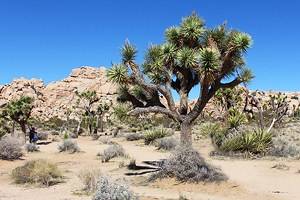
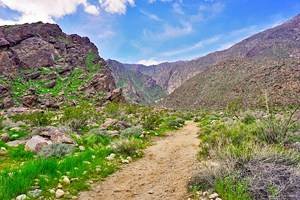
With its Dr. Seuss-like Joshua trees and almost lunar landscape of giant granite boulders and rolling mountains, Joshua Tree National Park is like something out of a children's storybook. It's not uncommon to hear people using terms like magical or spiritual to describe how they feel about this park.
The most popular things to do here are walking or hiking among the trees, climbing the towering rock walls, camping under the stars, capturing the beauty in photographs, or simply soaking up the tranquility of the desert.
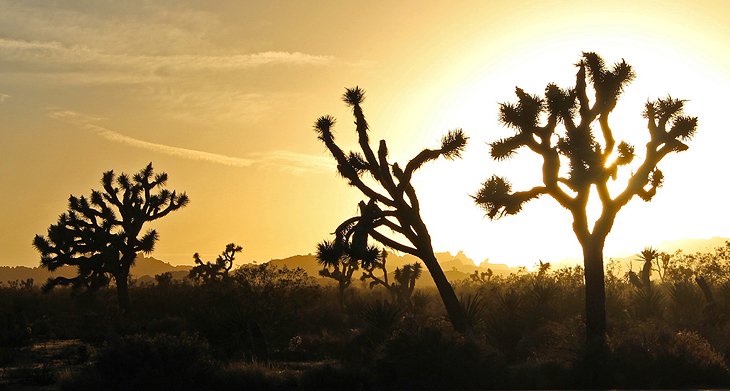
Set where the Mojave and Colorado Deserts meet, the park has a complex landscape, with profoundly different appearances and vegetation depending on the elevation. Some areas are covered with mature Joshua trees as far as the eye can see, and others are completely devoid of these trees but still offer their own unique beauty.
Well positioned nature paths, hiking trails, and vehicle pullouts are spread throughout the park, providing easy access to this stunning landscape.
Although the park encompasses some 800,000 acres, most of it is not accessible by road. Two main roads run through the park: Park Boulevard, which runs west to east from Twentynine Palms and the North Entrance to the West Entrance and the town of Joshua Tree; and Pinto Basin Road, which joins up with Park Boulevard and runs south to north from Interstate 10 and the Cottonwood Visitor Center to the North Entrance and the town of Twentynine Palms.
Park Boulevard is the main section of the park that is of interest to most visitors, but other places of interest are found along the north half of Pinto Basin Road.
Note that pets are not allowed on trails in the park; the only exception is the Oasis of Mara paved trail. Pets are allowed on-leash on the unpaved roads and on the roads within the campgrounds and picnic areas.
To help plan your visit, see our list of things to do in Joshua Tree National Park.
Hidden Valley Nature Trail & Day Use Area
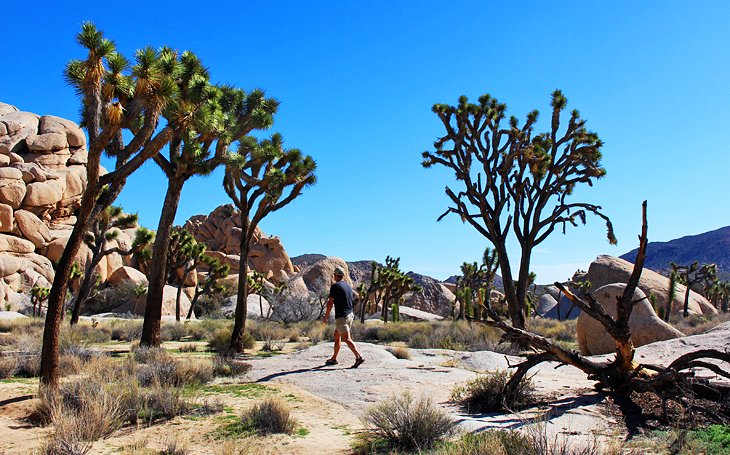
The Hidden Valley area of Joshua is one of the most beautiful and easily accessible areas of the park. It's perfect if you are looking to do a short hike or simply wander among the trees and rock formations.
The Hidden Valley Nature Trail is an enjoyable one-mile loop trail that enters through an opening into a large bowl surrounded by rock walls. It's thought that due to the geography, Hidden Valley was once used by cattle rustlers, who would herd the cattle into this area to conceal them.
This is a relatively easy and scenic trail, making it one of the most popular hikes in Joshua Tree National Park. It does not have many Joshua trees. Of note on this trail is the giant monolith known as the Great Burrito, a popular climbing area in the park.
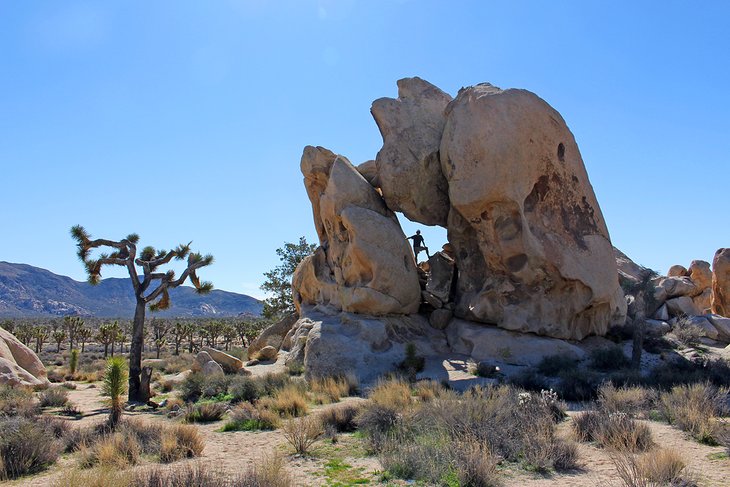
The Hidden Valley picnic area, on the opposite side of the parking lot from the trailhead, is much more scenic, with an abundance of large Joshua trees scattered around huge boulders and rock piles. This is a wonderful place to enjoy a picnic and meander around.
From the last picnic area at the west end, a very short rudimentary trail leads out and around to the back side of the stand of boulders, opening up into a wonderland of rocks and trees, perfect for photography.
Keys View
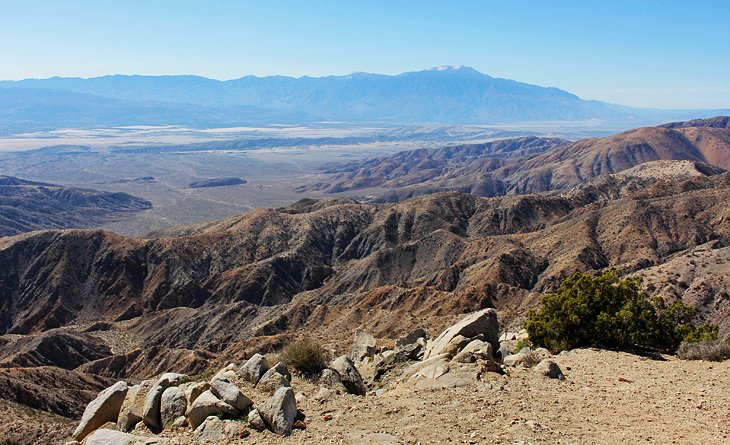
It is well worth the drive up to Keys View, a lookout point at an elevation of more than 5,000 feet, with sweeping views extending out over the Coachella Valley. In the distance, you can see the San Andreas fault line, Palm Springs, the Salton Sea, and on a clear day, beyond to Mexico. If the air is clear, the view is spectacular and this is a great way to get oriented with the surrounding geography.
As you drive up here, the elevation changes, the temperature is noticeably cooler, and the landscape takes on a whole different character.
Barker Dam Nature Trail
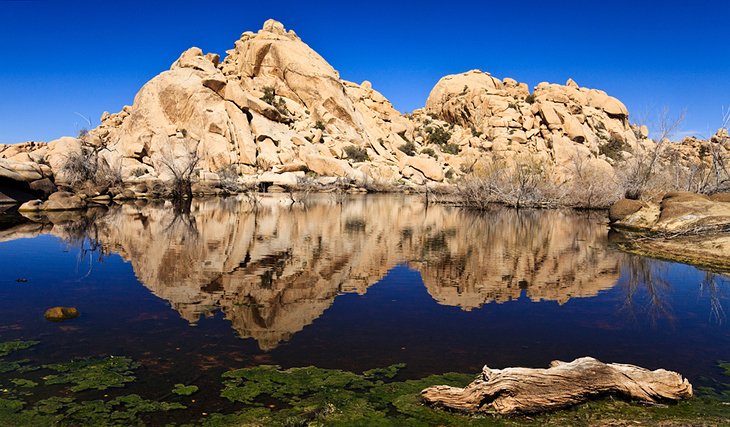
Another short walking path, Barker Dam is a 1.3-mile loop trail. If you are only looking to do one short trail in Joshua Tree, this is your best bet, with huge Joshua trees, rocks, and an area of water that often attracts birds.
At the far end of the loop are the remnants of a water tank left by cattle ranchers who once lived in the area. Many people walk in to this point and turn around, leaving by the same route, but this is a mistake. While this might be slightly shorter, it is well worth continuing on, with much of the best scenery and largest trees on the loop beyond the dam.
Camping
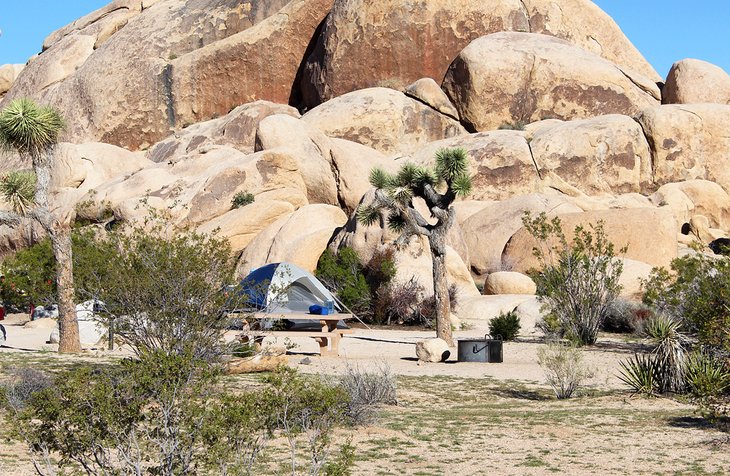
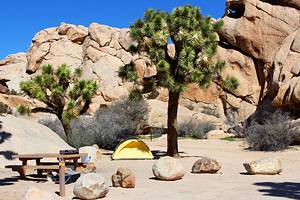
For campers, Joshua Tree is a real treat. Camping among the Joshua trees, surrounded by bizarre rock formations, the experience here is different than your standard camping trip.
Several of Joshua Tree's stunning campgrounds are set in convenient locations for exploring the park. Each of these has its own look and feel, but all of them are worth spending a night or two under a star-filled sky.
The ideal time to camp here is in spring and fall: March, April, October, and November. Nights are cool, but days tend to be sunny and warm.
This is not jumbo RV camping: the campgrounds are relatively small and primarily intended for tent camping, RVs under 25 feet, or smaller pop-up-style camp trailers.
One of the best campgrounds is Hidden Valley Campground, but it is a first-come, first-served area. If you want the security of having a reservation before you arrive, the best option is Jumbo Rocks. Both of these are close to all the main things to see and do.
Cholla Cactus Garden
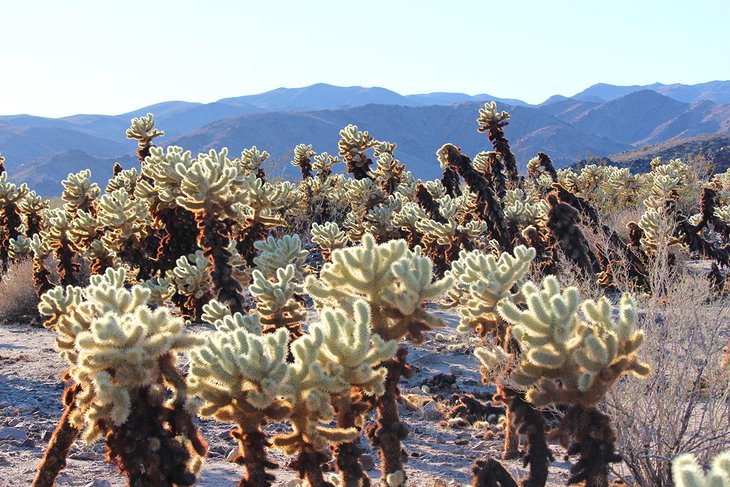
For nature lovers, the Cholla Cactus Garden is arguably one of the most awesome sites in the park, with more than a thousand densely packed chollas stretching out across the desert floor. While chollas are often sprinkled among other vegetation in the desert, here they are the only cactuses in this natural garden.
In the early morning light or late afternoon sun, the backlit needles almost glow, and the mountains in the distance provide the perfect backdrop. An easy, level walking trail takes you through this magical place.
The Cholla Cactus Garden is on the road to Cottonwood Spring, beyond Belle and White Tank campgrounds.
Farther along this road, heading towards Cottonwood, is the Ocotillo Patch, but there are only a small number of these plants at this pullout location. If you plan on leaving the park on this road, there is no need to stop here because there are plenty more Ocotillos further on, beyond Cottonwood, on the way to Interstate 10.
Skull Rock
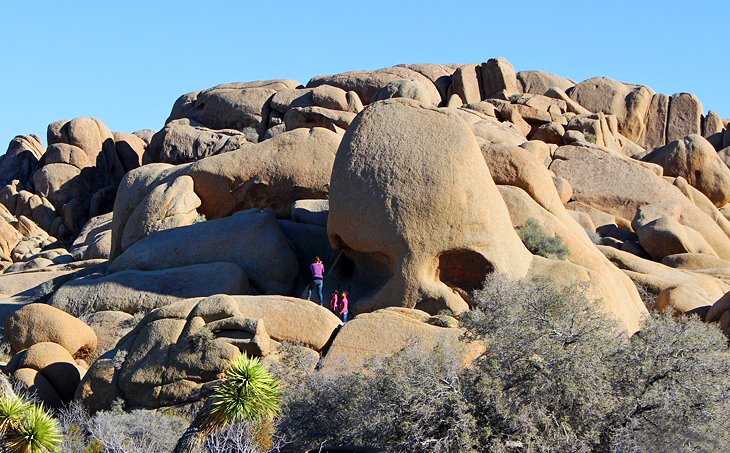
Perhaps nowhere else in the park is the almost comic book landscape more finely illustrated than at Skull Rock. You may see faces and images in the rock formations that dominate the park, but at Skull Rock it takes very little imagination to see the skull shape peering out of the boulder-strewn rubble. This huge, naturally sculpted rock is located right beside the road, and it always draws a crowd.
The whole area around this roadside stop is interesting, with an expanse of rolling rock piles, great for walking or light scrambling. Remnants of trails run through the area, but many people just wander about, finding high points for lookouts, sunning themselves on the slabs of rock, or simply taking a break.
Across the street is a 1.7-mile hiking trail through rocks and shrubby vegetation with a few Joshua trees scattered around.
Rock Climbing and Bouldering
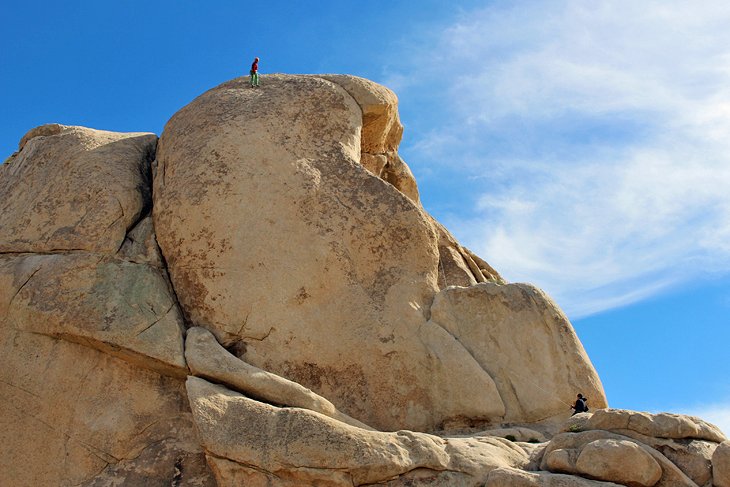
Climbing and bouldering are some of the most popular recreational activities in the park, and one look at the landscape will tell you why. Joshua Tree has somewhere in the neighborhood of 8,000 climbing routes and hundreds of climbing formations. Information pamphlets and maps are available at the visitor centers.
Climbers frequent Joshua Tree National Park, particularly during the winter months when the great climbing destinations further north, like Yosemite, are out of season. Climbers tends to congregate in several sections, but the Hidden Valley area and other nearby sites at the west end of the park are the main hot spots.
As a result, campgrounds at this end of the park tend to be full on a regular basis throughout the winter, particularly in February and March, when climbers and recreational campers are vying for spots.
Ryan Mountain Hike
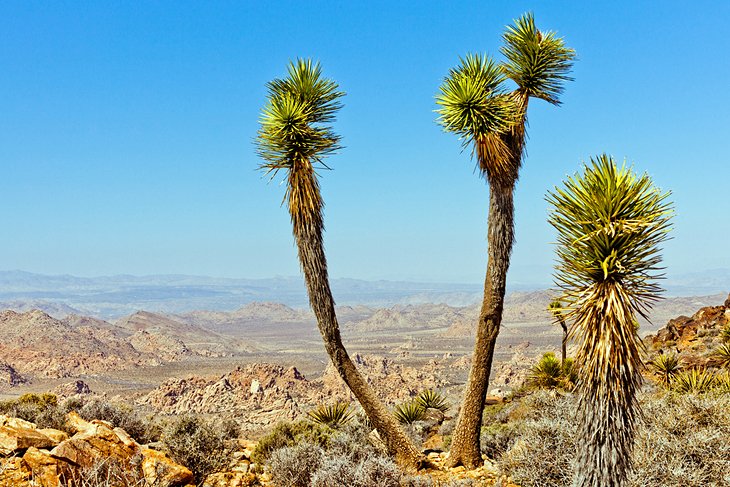
From Park Boulevard, the hike up Ryan Mountain looks a bit daunting and relatively unspectacular, but this hike is all about the reward from the top, where the views extend 360 degrees out over the park. This is a relatively strenuous, three-mile up-and-down hike, with 1,000 feet of elevation gain.
The exposed trail offers little to no shade and is less than exciting as it follows a barren hillside up to the top, but from the summit, at 5,457 feet, the view is fantastic, making the effort worthwhile.
Keys Ranch (Guided Tour)
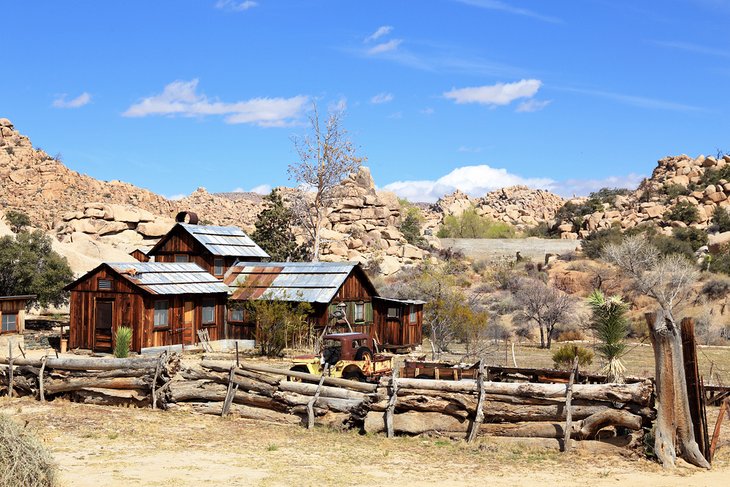
In an area that few people would describe as hospitable are the remains of Keys Ranch, the former homestead and ranch of William F. Keys, who settled in this area in the 1910s.
The property, which includes the house, schoolhouse, store, and workshop, is a National Historic Register Site and can only be visited on ranger-led guided tours. These tours run seasonally throughout the winter and into spring.
The tours are very informative and provide insight into Keys, who was quite a character, and the challenges faced by the family and ingenuity required to live out here. See the park website for information on tour dates and times.
Reservations are required and can be made up to 60 days in advance. The 90-minute tours are offered at a fee and involve a half-mile of walking.
Official site: https://www.nps.gov/jotr/planyourvisit/ranchtour.htm
Cottonwood Spring Oasis
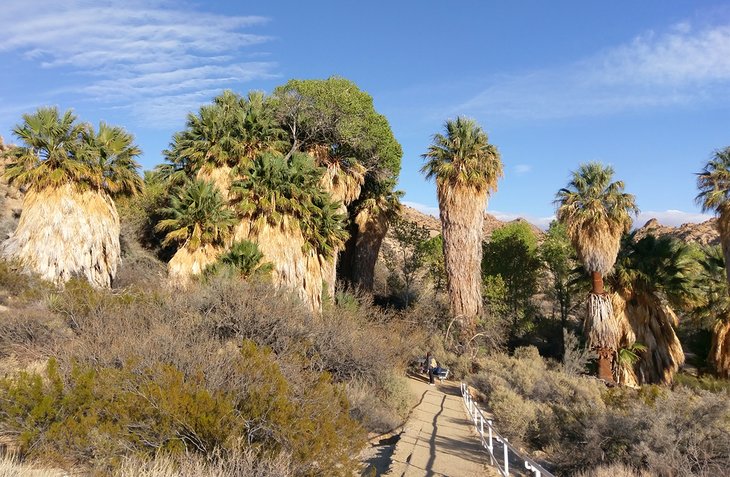
The Cottonwood Spring Oasis is a permanent spring, a rarity in the desert. The flow varies but currently it's around 500 gallons per day.
The spring came to life many years ago due to an earthquake and since then has been used by the native Cahuilla Indians, miners, and prospectors over the years. You can still see the remains of old gold processing equipment and some concrete ruins.
Cottonwood Spring is one of the best areas in the park for birding. The reliable source of water, shade, and trees draws birds and other wildlife to the area. Keep a sharp eye out for the following: Gambel's Quail, hummingbirds, bushtits, and the titmouse with its pointy crown.
Arch Rock Trail
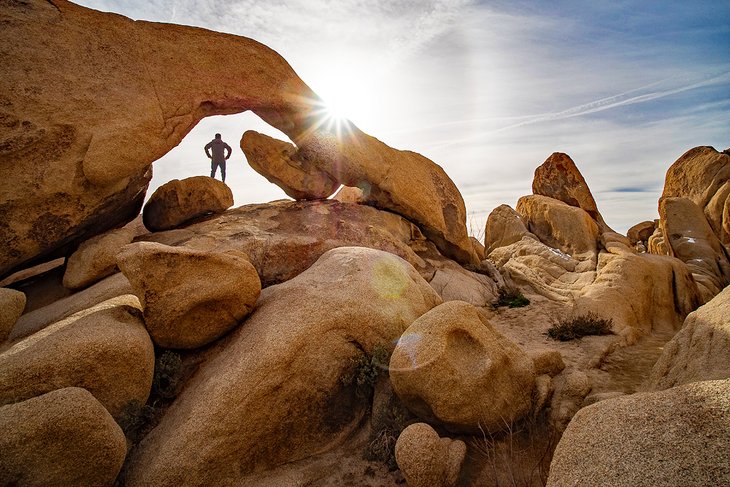
The Arch Rock Trail rewards hikers with great scenery without significant exertion. Only 1.4 miles in length, the lollipop trail ensures that you see new scenery for most of your trek. About halfway along the trail, you'll come to the arch. Hikers who have been to other national parks like Arches in Utah, may find the arch slightly underwhelming; however, the setting of the arch among an area of bizarrely shaped rocks more than makes up for its diminutive size.
The trail is easy, with only a 100 feet of elevation from start to finish and is one of the more popular hikes in the park.
Wildflowers in Spring
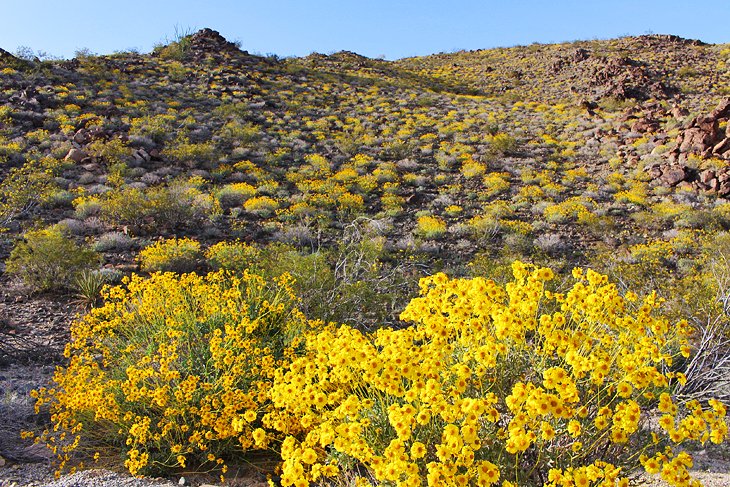
Spring is an amazing time in the desert, and Joshua Tree National Park is no exception. The Joshua's themselves bloom, but many other plants, shrubs, and cactus come into bloom in the park as well.
The best place to see wildflowers may depend on the week you are visiting, but as a general rule, the area of the park near Cottonwood Spring and the road that leads out to Interstate 10 has a fantastic variety of spring wildflowers that bloom in large concentrations.
Not far from the Cottonwood Visitor Center, thousands of small Joshua trees dot the landscape, scattered as far as the eye can see in some areas. The spring bloom here is spectacular, even more so than the larger Joshua trees because the blooms are lower to the ground and close to eye level, making them easier to see.
From Cottonwood Spring to Interstate 10 there can be a kaleidoscope of colors, ranging from yellow, orange, and red, to pink, purple, and blue.
Bloom times vary depending on the elevation and the weather conditions throughout the winter. Lower elevations generally begin blooming in February, and higher elevations can bloom as late as June. March and April are always a safe bet for seeing wildflowers.
Bird-Watching
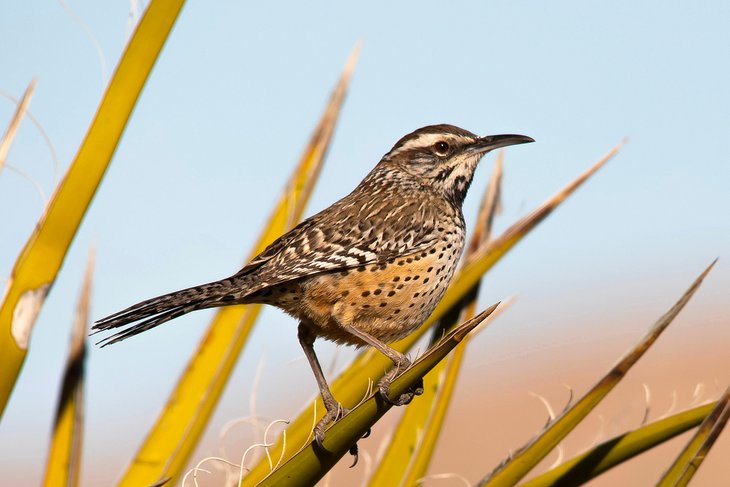
Joshua Tree National Park's location, at the junction of the Mojave and Colorado Deserts, combined with a few permanent waterholes, draws birds from far and wide.
The park is a wintering ground for white-crowned sparrows, cedar waxwings, juncos, and many others. Some of the resident birds include the greater roadrunner, colorful hummingbirds, red-tailed hawks, kestrels, and cactus wrens. Be sure to keep an ear and eye out for the always entertaining Gambel's quail and roadrunners.
The best spots to find birds are Barker Dam, Lost Palm Oasis, Cottonwood Spring, and the Oasis of Mara.
Horseback Riding
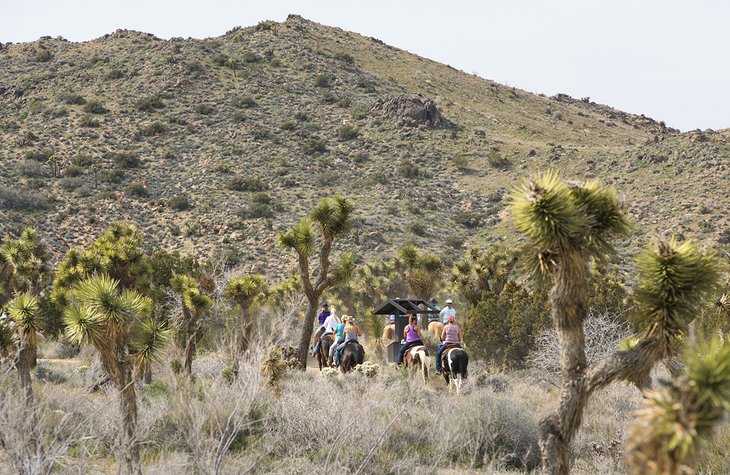
A majority of the park is pure wilderness and ideal for horseback riding. About 250 miles of equestrian trails run through the park, most of which are well marked and easy to follow. Most horseback riders tend to favor the trails in the Black Rock Canyon area along with those near the western entrance to the park.
Trails are across open desert, along canyon floors, and up and over small passes. Note that water is not available anywhere along any trails.
The park has two campgrounds, Ryan and Black Rock, with areas set aside for horses and stock animals. At Black Rock is a special horse camp, which can be reserved in advance. Ryan is first come, first served.
Gaze up at the Stars
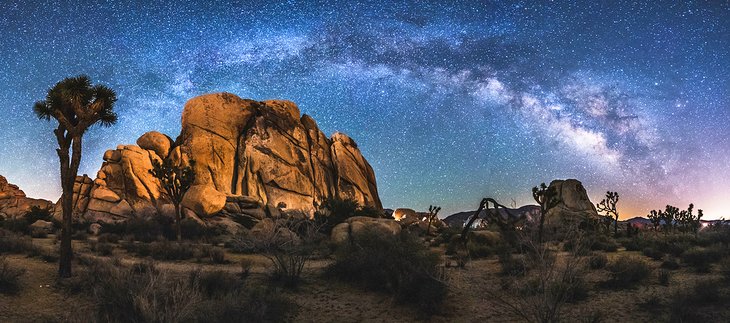
Owing to its desert location, with clear nights and relative isolation, Joshua Tree National Park is an excellent place to see the stars in the night sky. Joshua Tree enjoys a designation as an International Dark Sky Park.
If you live in a city where the lights obscure the sky, you will be amazed by the stunning sight of the Milky Way Galaxy and easy-to-spot constellations such as the Big Dipper and Orion's Belt. Winter is the best time to stargaze due to the short days and long nights, but be sure to bring warm clothes, as the temperature drops quickly as the sun sets.
In order to see the stars in their full glory, give your eyes at least 20 minutes to adjust to the dark.