Brazil Travel Guide
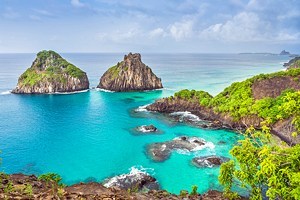
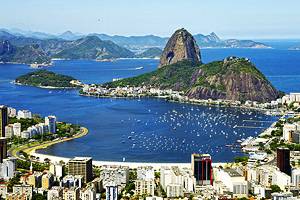
The country of Brazil is a tropical paradise, home to stretches of rainforest, islands with tropical beaches, and endless rivers. Hang gliding, surfing, sailing and fishing are popular activities with excellent opportunities for rock climbing and hiking. Rio de Janeiro has so much to see and do from museums, exotic parks and gardens, beaches, and dancing to mountain views of the city.
Brazil, almost twice the size of Europe (excluding the former Soviet Union), is the largest state in South America, occupying some 47% of the sub-continent.
Read More
With its great size and natural resources it is not only the giant of South America but seems destined to become a great world power.
Brazil has a long land frontier with every state in South America except Chile and Ecuador. It is bordered on the west by Argentina, Paraguay, Bolivia, Peru and Colombia, on the north by Colombia, Venezuela, Guyana, Surinam and French Guiana and on the south by Uruguay.
Brazil has a coastline of some 7400km/4600 miles on the Atlantic. Some 93% of its territory lies in the southern hemisphere, and accordingly its seasons are the reverse of those of the northern hemisphere: when it is winter in Europe and North America it is summer in Brazil. Most of the country lies between the Equator and the Tropic of Capricorn, less than 10% in the southern temperate zone.
Attractions in Popular Destinations
More Destinations and Attractions