Attractions & Things to Do in Namur
Namur (in Flemish Namen), at the confluence of the Sambre and the Meuse Rivers, is an important university town, but it was once a critical junction for both road and shipping transport. The hill on which the citadel sits was already of great military importance by Roman times, and today it's one of the town's most important tourist attractions.
Namur's strategic position led to a number of sieges throughout its history. Due to these battles, the city has an interesting hodgepodge of architecture from different time periods.
For many visitors, Namur is one of the best places to visit if you're looking for a base before launching out to explore the pretty villages of the Meuse and Semois Valleys.
Discover your sightseeing options in this fascinating city with our list of the top attractions and things to do in Namur.
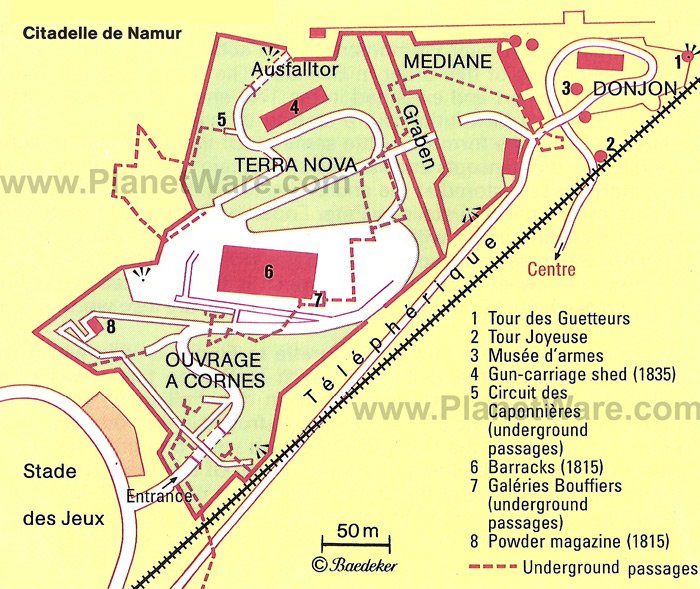
Explore Namur Citadel
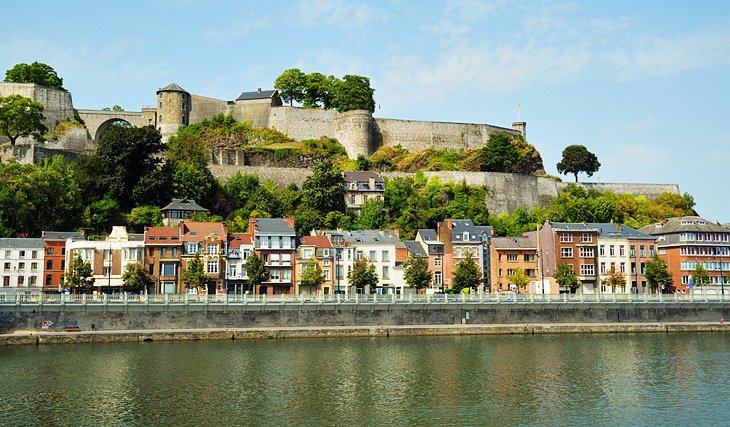
Namur's impressive citadel, sitting above the town, is one of the mightiest fortresses of Europe. As early as Roman times, the rocky outcrop between the Sambre and the Meuse was fortified, so it's no surprise that the Counts of Namur chose this as the site for their castle.
It's a great place to explore, with barracks, ramparts, and subterranean tunnels.
The best views across town are from the citadel's bridge below the barracks area. From here, you can look down onto the bend of the Route Merveilleuse around the "donjon" (the site of the medieval castle).
Tourists traveling with children will appreciate the Parc Attractif Reine Fabiola, a fun entertainment park that gives kids a break from the history lessons and offers a variety of things to do.
There is a huge playground for kids ages 3-12 that includes adventure castles, swings, and games like giant chess, and a climbing area for all ages, as well as mini-golf, trampolines, and go-karts. There are also ample refreshments available, including plenty of treats.
Address: Route Merveilleuse, Namur
Official site: https://citadelle.namur.be
Sightsee along Rue de Fer
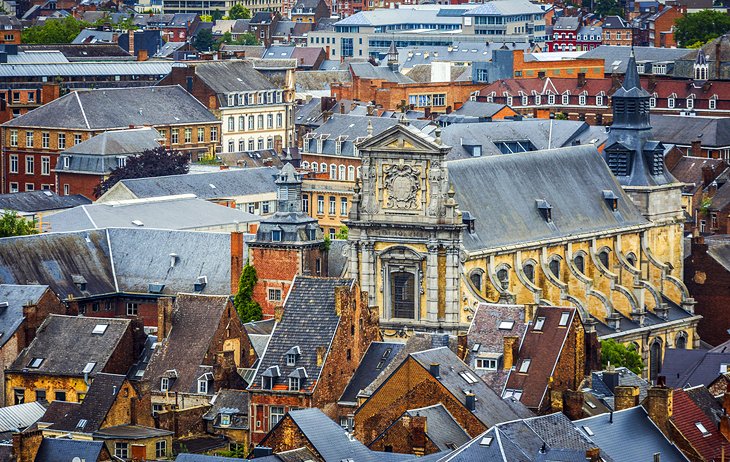
Rue de Fer, in the central city, has two excellent attractions. The fine patrician residence, the Hôtel de Gaiffier d'Hestroy, dating from the 17th century contains the Museum of Ancient Art (Musée des Arts Anciens du Namurois), which exhibits artistic artifacts of the Middle Ages and the Renaissance from the Namur region. In particular, the exhibits of local goldsmiths' work, ivory pieces, and copper utensils are of exceptional quality.
Farther along the road is the Baroque Church of Saint-Loup (Église catholique Saint-Loup), architecturally the most interesting church in Namur because of its stucco facade with 12 Doric pillars. Peter Huyssens designed the plans for the church, which was built between 1621 and 1645.
Nearby, the Musée Provincial Félicien Rops displays the lifetime works of 19th-century artist Félicien Rops, as well as hosts temporary exhibits featuring the artist's contemporaries. The museum also features a beautiful garden with curated sculptures.
Address: Rue de Fer, central Namur
Cruise along the River
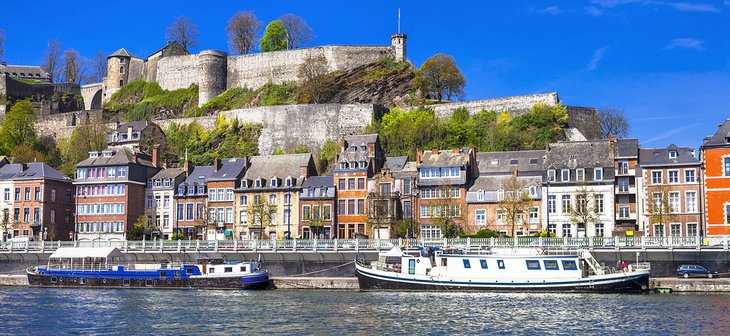
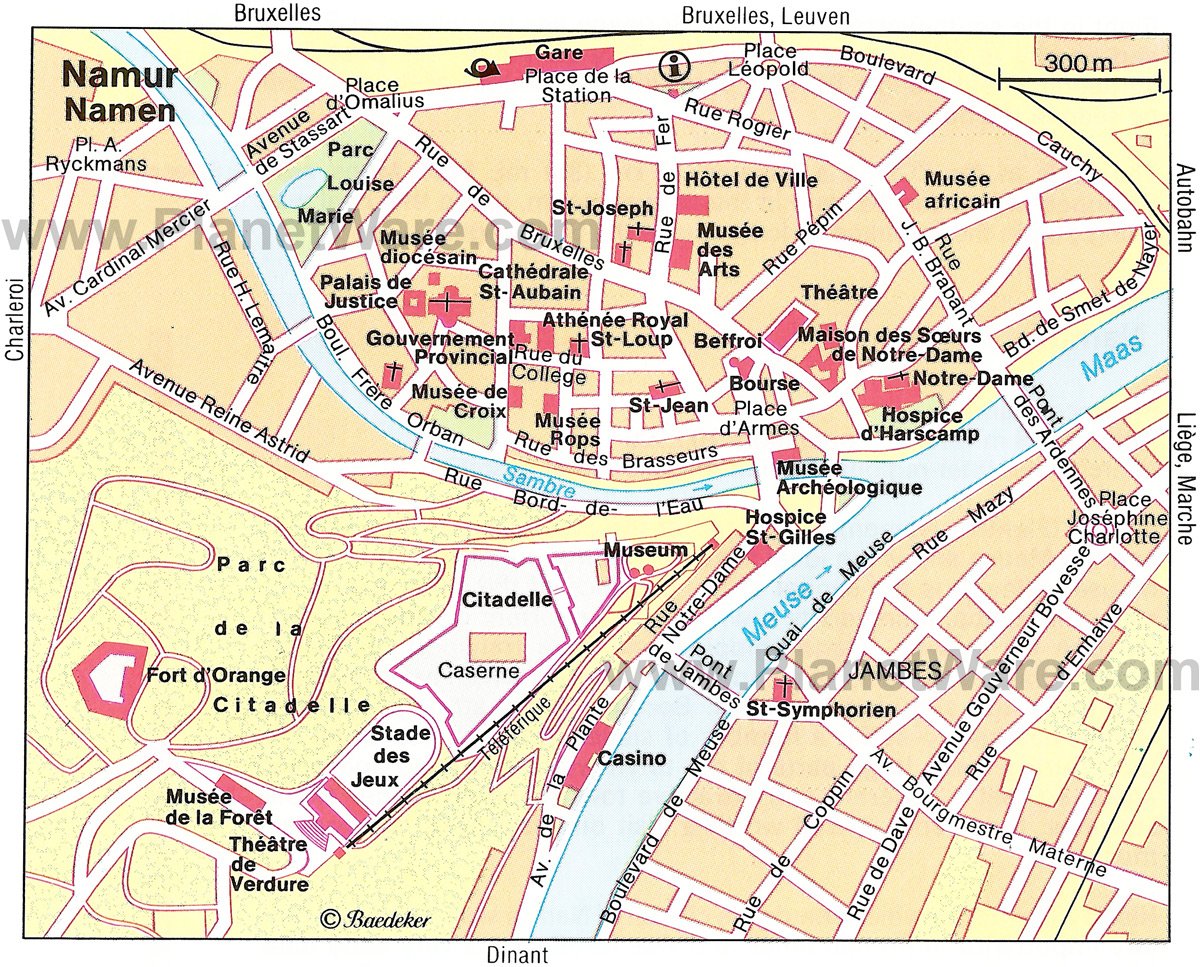
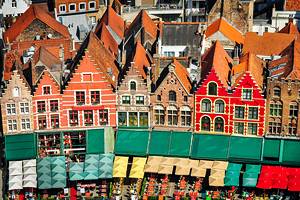
The most relaxing sightseeing option in Numur is to hop aboard one of the cruise boats that ply the Meuse and Sambre Rivers and simply sit back and admire the scenery.
Private operators offer a selection of different boat tours in Namur, but the most popular option is a 50-minute cruise through the town's historic center along the Sambre and the Meuse Rivers. There are brilliant views of the citadel and Namur's riverbank architecture along the way. Longer options head out of the town center for views of the surrounding countryside and villages.
There's no need for advance bookings on the public cruise boats; you just turn up at the dock in the old town and hop aboard.
View the Cathedral of Saint Aubain
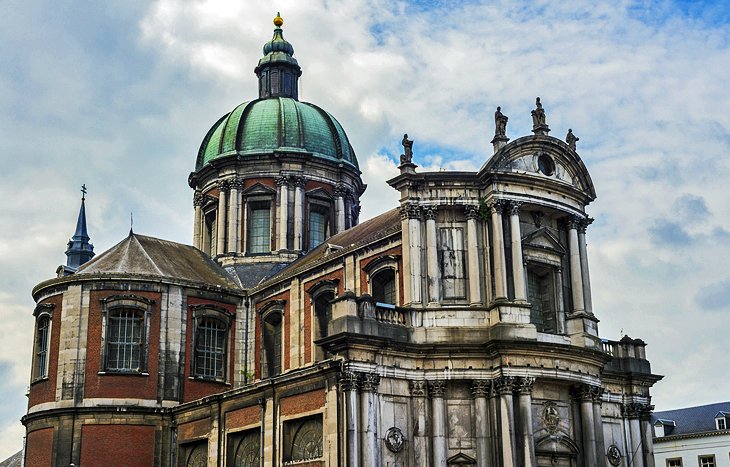
The Cathedral of Saint Aubain rises up in the middle of Place Saint Aubain. This stately classical domed building dates from 1751-1767 and was built by Gaetano Pizzoni from Milan on the site of a previous 11th-century church.
Just to the right is the Diocesan Museum with the cathedral Treasury. On display are liturgical vessels, vestments, sculpture, and goldsmiths' work.
Of special note are a 12th-century portable altar of the Counts of Namur with ivory decoration; an eighth-century Merovingian reliquary from Andenne; and the reliquary crown of Philip the Noble of Namur that is said to bear thorns from Christ's passion crown; it was a gift from Philip's brother Henry of Constantinople.
Address: Place Saint Aubain, central Namur
Take to the Skies on Namur's Cable Car
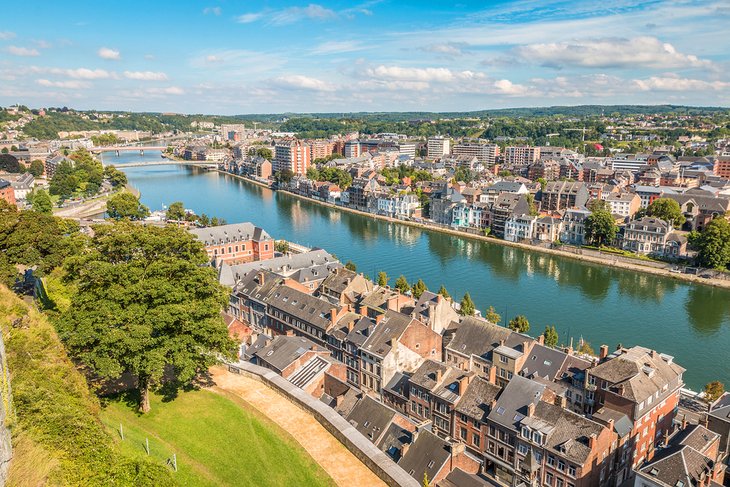
For bird's-eye views over Namur's old town and the meeting point of the Sambre and the Meuse Rivers, take a trip on the Namur Citadel cable car.
The cable car's lower station is on Place Maurice Servais, right in the historic core of the city. From here, cable-cars transport passengers on a short trip up to the citadel's esplanade, with panoramic vistas of Namur's slanted rooftops, punctured by church steeples, all the way along the ride.
It's the most direct way of hopping between the center and the citadel, so it's hugely practical, as well as being a chance to snap some aerial photos.
Stroll around the Central Old Town
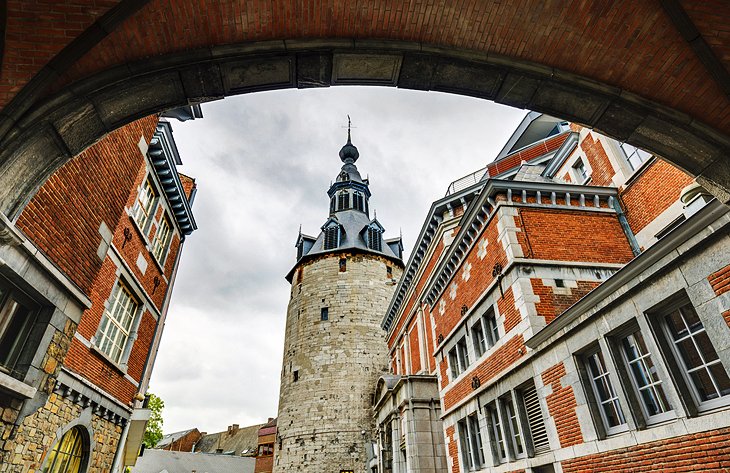
To discover the inner city, start your walk at the Pointe de Grognon and visit the former meat hall, which dates from 1590 and now houses Namur's Archaeological Museum.
It has a comprehensive collection of antiquities from the Province of Namur dating from the Roman, Frankish, and Merovingian periods (first to seventh centuries), which is regarded as one of the best collections in Belgium. The goldsmiths' work and glass work are valuable and unique.
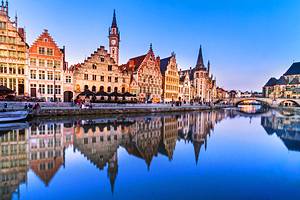
A short way from the museum is the Place d'Armes, the busiest square in town. To the rear, rises the belfry, the foundations of which are a remnant of the Tour Saint-Jacques, which was part of the second city wall in the 14th century.
Day Trip to Dinant
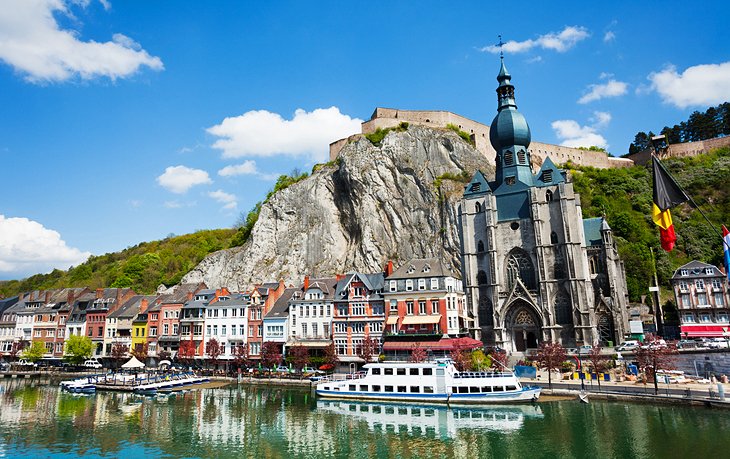
About 28 kilometers south of Namur, Dinant is the second largest town in the Belgian region of Condroz and one of the most important tourist centers in the Ardennes.
Thanks to its delightful location in the Upper Meuse Valley below precipitous limestone rocks, crowned by a mighty citadel, Dinant has become a very lively tourist resort, especially at weekends when the Meuse is dotted with pleasure boats and canoeists.
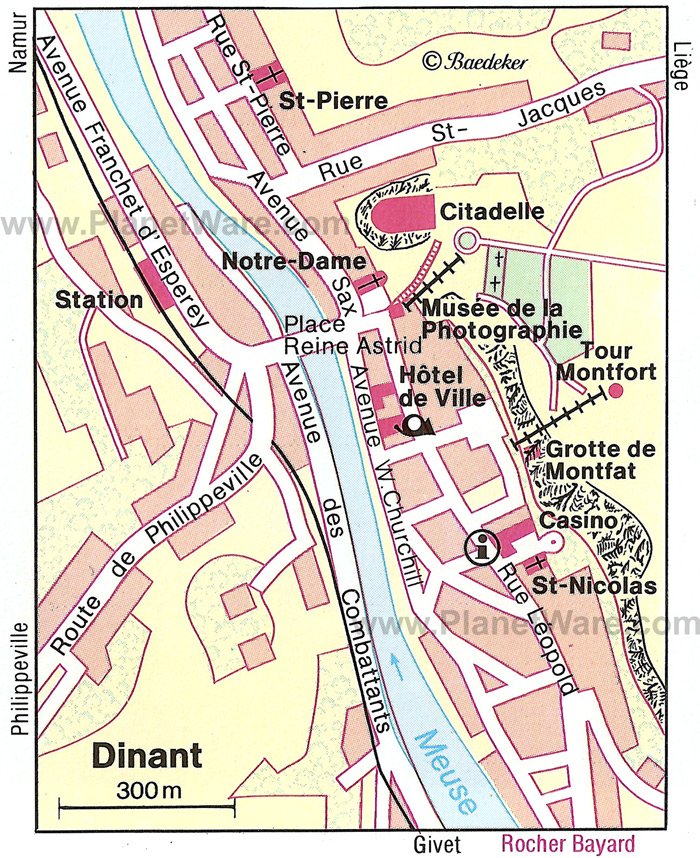
In the Place Reine Astrid at the foot of the citadel hill, the collegiate Church of Notre-Dame which stands at the end of the Meuse Bridge. It is a beautiful early Gothic building from the 13th century.
After visiting the church, stroll up to the citadel above town where you can walk along the battlements with astounding views of the town below.
The Semois Valley
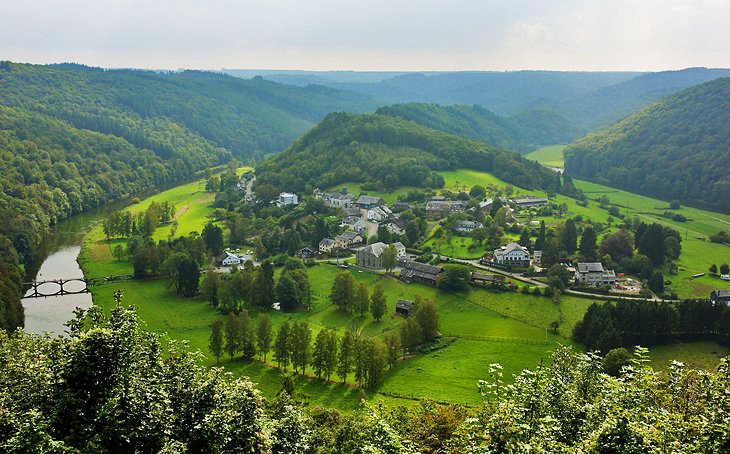
The Semois River rises in the extreme southeast corner of Belgium near Arlon. It flows first through the plain of Gaume in the Belgian part of Lorraine, and at Tintigny, it enters the Ardennes. From here onwards, it has cut a course deep into the hills and forms broad curves around forested rocks, which offer charming views.
The steep flanks of the Semois Valley, 113 kilometers south of Namur, at times approach the river so closely that the roads are often high above the edge, and a trip here is best done on foot or by boat to see the finest parts of the landscape.
Many of the larger villages are on the plateau of the Ardennes high above the windings of the river. The major places along the way are Jamoigne, which has an old castle and church, Chiny, and Florenville which sits on the upper course of the river.
Tour the Abbey of Notre Dame d'Orval
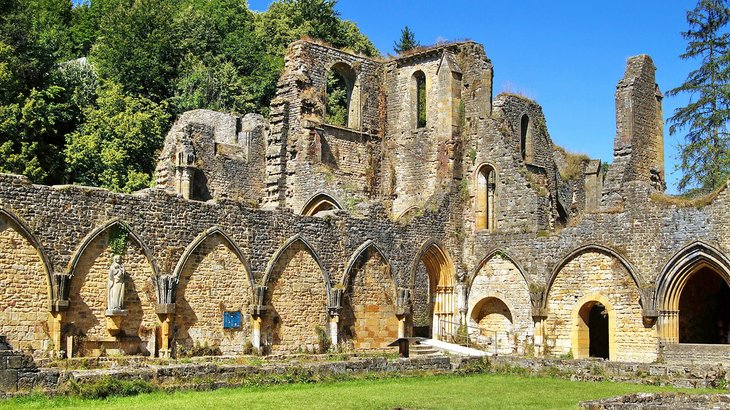
Head 122 kilometers south from Namur and amid the quiet and picturesque forest of the Gaume, right on the French border, you'll find the most extensive and most beautiful monastery in Belgium, the Trappist abbey of Notre Dame d'Orval.
The first monastery in the "golden valley" is said to have been founded in 1070 by Benedictines from Calabria in southern Italy. They were followed in 1132 by Cistercians who began building the Church of Notre-Dame.
Around 1700 the abbey, which had adopted the strict observance of the Trappist order in 1683, was one of the most prosperous monasteries in Europe.
Today, the modern monastery, sits next door to the highly atmospheric ruins of the old abbey, while the herb garden, monastery museum, and old apothecary are also well worth visiting.
Official site: https://www.orval.be/en/
Visit Floreffe
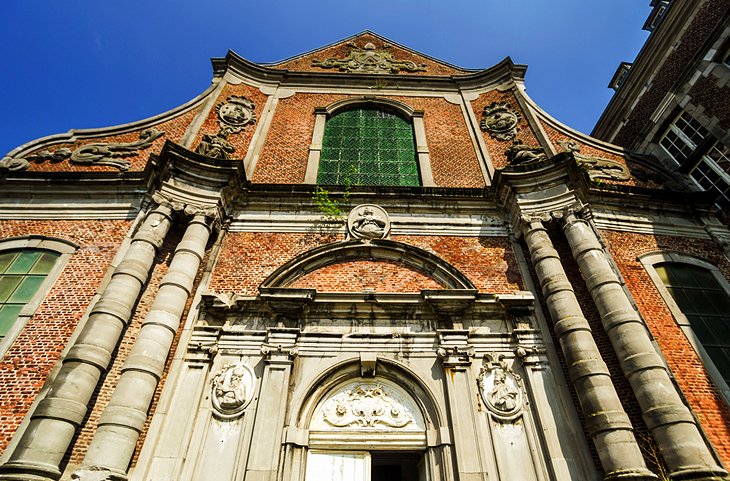
The village of Floreffe, 10 kilometers west of Namur, is the home of the great former Premonstratensian Abbey, one of the best preserved examples of this order in Belgium.
The abbey was founded in 1121 by St. Norbert and extended in the 17th and 18th centuries to its present size. The French Revolution put a stop to monastic life, but it is continued today in the form of a little seminary here.
Of the abbey church, only the transepts and sacristy still remain from the initial phase; the interior was restored at the end of the 18th century by Dewez. Of particular interest are the choir stalls by Peter Enderlin.
There are 74 seats richly carved, including some with effigies of the founders of the order.
Road Trip to Bouillon
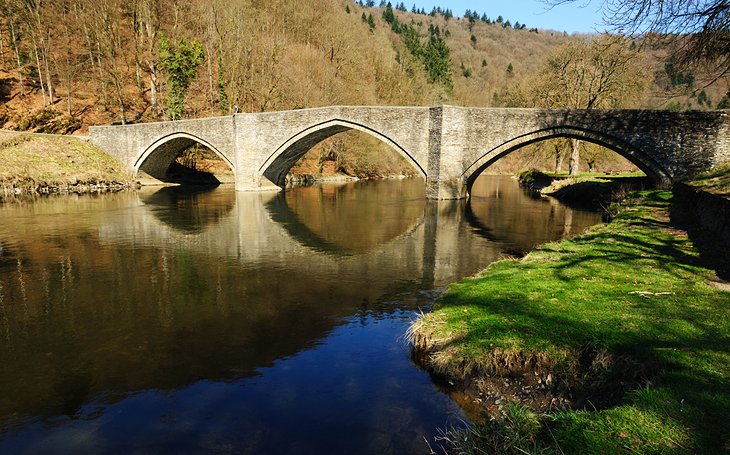
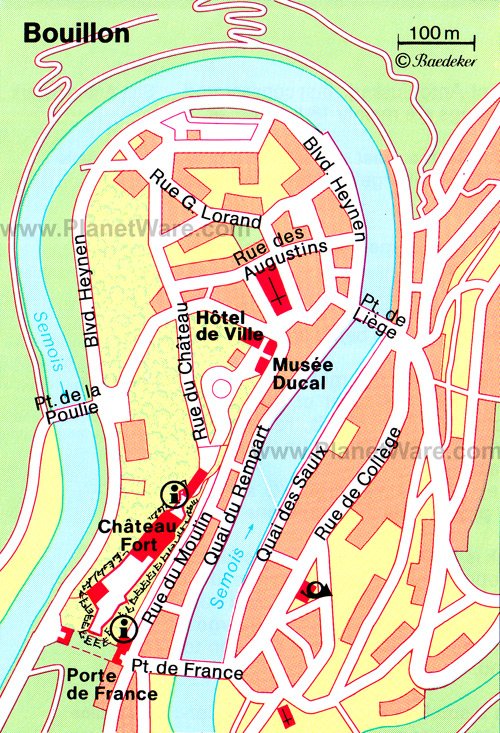
In the south of the Belgiam, close to the French border (92 kilometers south from Namur) Bouillon nestles prettily in a loop of the River Semois, encircled by the wooded heights of the southern Ardennes.
The Château Fort (Fortified Castle), enthroned on its elevated "island" of rock overlooking the looping Semois on two sides, is a highlight of a visit here. Built by Godfrey the Bearded between 1050 and 1067 on the remains of a still older fortress, the château is the earliest and best preserved example of medieval feudal architecture in Belgium.
Also well worth a look in town is the Ducal Museum (Musée Ducal) in a delightful 18th-century townhouse below the north side of the castle square.
The section on local history and folklore includes displays of craft work, old furniture, and kitchen fittings as well as memorabilia relating to Bouillon's noble families and the printer Pierre Rousseau.
Explore the Village of Fosses-la-Ville
The village of Fosses-la-Ville, 20 kilometers west of Namur, was originally settled by the Celts, and in Roman times was called "Fossa."
The Irish missionary Feuillen (or Follianus) founded a monastery here around 650, which was destroyed in the 10th century. However, in the 11th century, when the relics of St. Feuillien were brought here, a start was made with the building of a new church. Of this there remains only the tower, the choir, and the crypt, which is the oldest in Belgium.
The remainder of the Church of St. Feuillien was rebuilt in the 18th century. The oak choir stalls (1524) and the 16th-century reliquary of the saints are worth seeing.
Stroll around Arlon
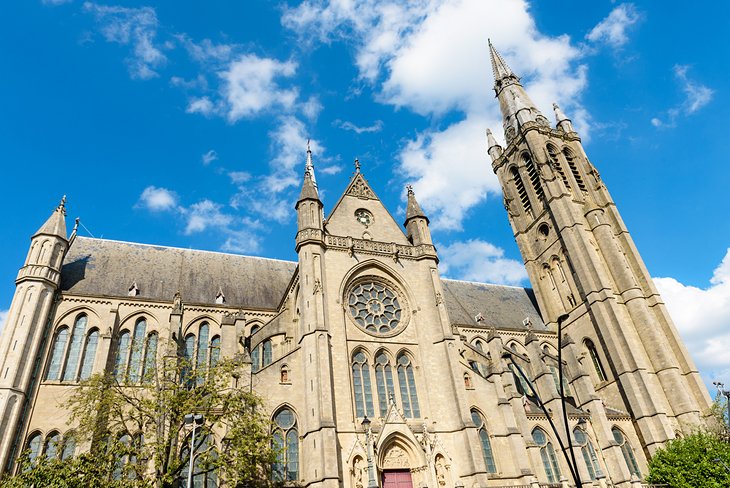
In the far southeast corner of Belgium (131 kilometers south of Namur), wedged between France and Luxembourg, Arlon (in Flemish Aarlen) is one of the country's oldest towns.
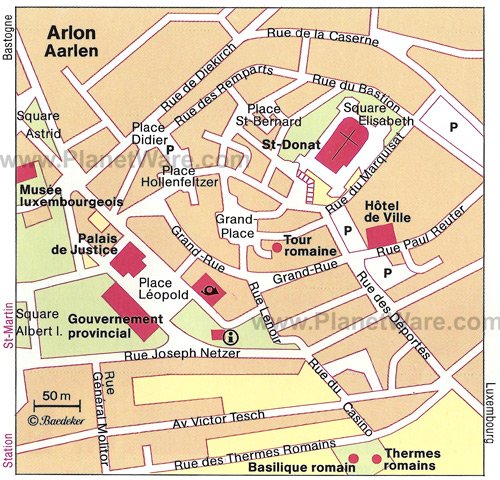
The Grand Place, with its medieval cross (a symbol of civic freedom) is the center of the old town. Reached by an alleyway leading off the southeast corner of the square, the Tour Romaine (Roman tower) is a relic of the third-century Roman ring walls and is now a museum.
From the Grand Place, the road climbs to the top of the hill, where St. Donat's Church now occupies the site of the counts of Arlon's medieval stronghold.
Also worth a look while here is the Musée Luxembourgeois, three rooms of which are taken up by a collection of Roman tombstones and sarcophagi unique in Belgium.
Take a Guided Tour of Franc-Waret Castle
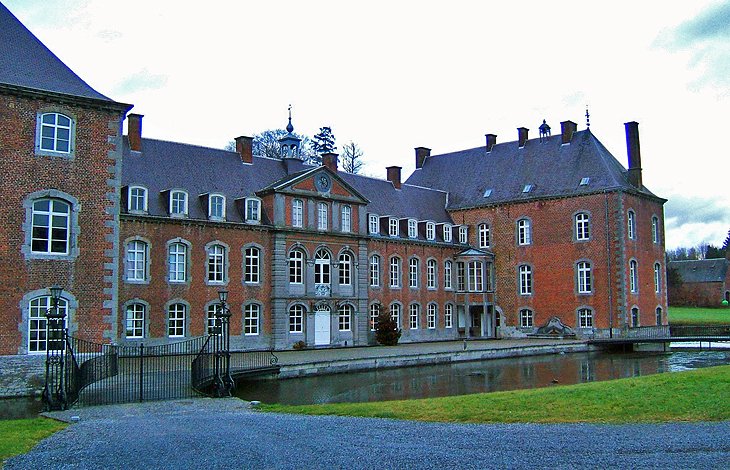
Near the town of Franc-Waret, 13 kilometers northeast of Namur, stands the imposing castle of the same name, dating from the 17th century but considerably extended in the 18th century in the style of Louis XV. The buildings are grouped around an inner courtyard reached across a drawbridge.
If you want to visit the castle, you need to pre-arrange a tour. Guided tours of the castle's interior include access to the sumptuously furnished rooms, full of beautiful Brussels tapestries, rare porcelain, and Dutch-Flemish paintings.
Outside the castle are extensive well-manicured gardens including a French garden, first set out in the 17th century and an 18th-century English garden.
See the Château de Spontin
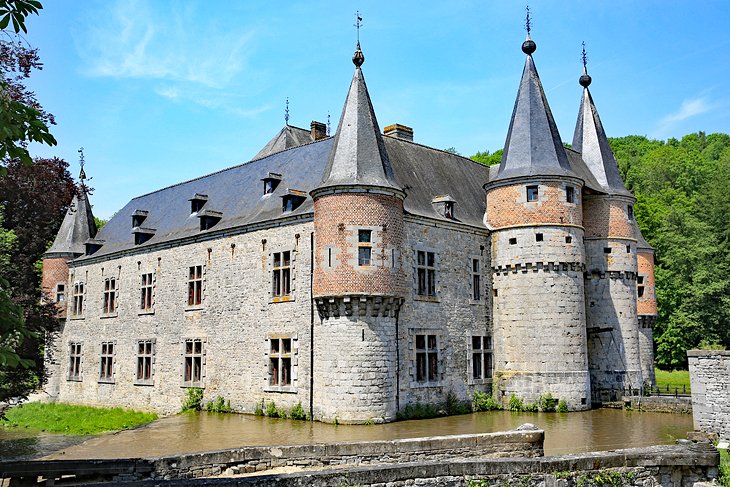
The Château de Spontin is an impressive moated castle and one of the finest in Belgium. Unfortunately it's not open to the public, but if you're in the small town of Spontin (in the Bocq Valley, 11 kilometer's north of Dinant), you can get a good view of the castle from a distance.
The château was built on the site of a 12th-century keep, which was extended into a fortified castle in the 14th century and rebuilt in Renaissance style in the 16th century.
In 1622, the working quarters were added adjoining the courtyard in which there are beautiful 19th-century wrought-iron fountains.
More Related Articles on PlanetWare.com
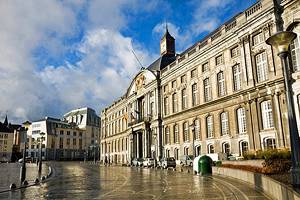
Sightseeing in Liège: Once leading to the important citadel, the steps of the Montagne de Bueren (Bueren Mountain) are among the top attractions in Liège, affording incredible views of the city below. Liège is also home to several excellent museums, historic buildings, and churches.
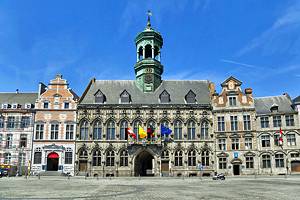
Historic Mons: Located about 70 kilometers west of Namur, near the French border, the city of Mons has been an important link between Brussels and Paris for centuries. The Grand-Place de Mons, the city's central square, is home to historic landmarks, including the old City Hall and the Belfry of Mons; there are also several fine churches and museums.
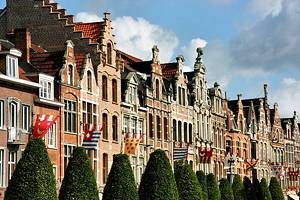
Architecture and Education: Like Namur, Leuven (Louvain) is an important university town, home to a prominent Catholic university since 1425. Despite sustaining quite a bit of damage during both world wars, Leuven still has many of its original buildings, including some fine examples of Gothic architecture.