Tourist Attractions in Israel's Dead Sea Region
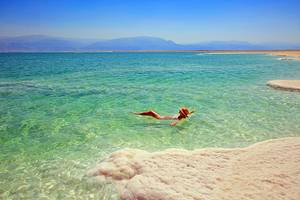
It's the sea where you can't sink. The geological wonder of the Dead Sea is one of the must-do tourist attractions in the Middle East.
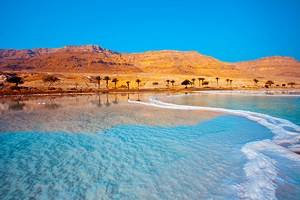
At more than 400 meters below sea level, this Great Rift Valley inland lake has an incredibly high salt content due to evaporation being the only water outlet. This is what causes the bizarre buoyancy of the water.
Taking a swim (you really can't sink) in the water is number one on the things to do list here, but the surrounding escarpment is also one of the best places to visit in the country for hiking opportunities, and there's also a handful of interesting historical monuments to visit in the area.
Combining Dead Sea sightseeing with a trip to the dramatic Jewish fort of Masada, nearby is a good idea, and the small towns of Ein Bokek (along the Dead Sea shore) and Arad (inland) are both good bases for those who want to stay overnight.
Sights below are listed north to south to aid visitor navigation. Find out all the things to do along the shore with our list of the top tourist attractions in Israel's Dead Sea region.
Qumran
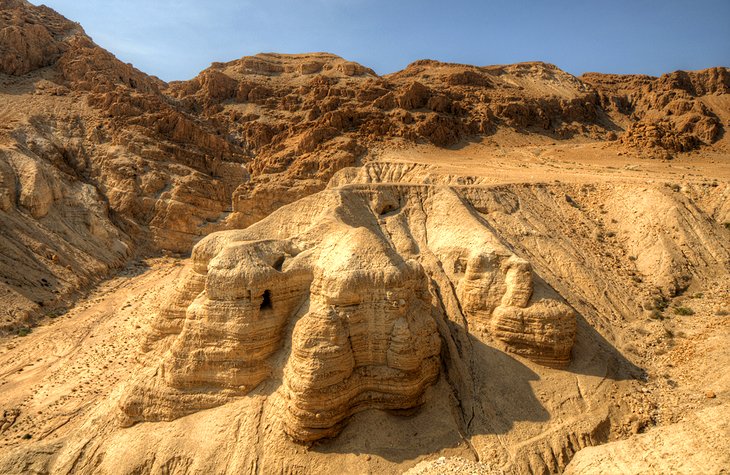
The caves of Qumran are the location of one of the greatest religious discoveries of modern times. It was here that in 1947 a Bedouin shepherd stumbled upon a cache of parchment and papyrus documents dating from the 1st century BCE and the 1st century CE.
Known as the Dead Sea Scrolls, they are the oldest surviving manuscripts of the Bible and include all the books of the Old Testament (except Esther), together with apocrypha, and various writings that describe life in the time of Jesus.
The manuscripts are believed by most scholars to all be the work of the Essene community, a strictly-observant and puritanical Jewish sect that came into being about 150 BCE after conflicts in Jerusalem over superficial temple rites and Hellenistic influences.
They established their center at Qumran, and although it was destroyed by the Romans during 68 CE, the Essenes managed to hide their library and archives in the surrounding caves where they were finally discovered.
Altogether, more than 500 Hebrew, Aramaic, and occasionally also Greek manuscripts, 10 of them almost completely preserved, have been found in 11 caves at Qumran.
Some are on display in Jerusalem's Israel Museum, and others are exhibited in the Jordan Museum, in Amman, but due to many of the scrolls disintegrating into fragments across the centuries, the work of scholars attempting to piece together and decipher the texts is ongoing.
The ruins here are not huge, but the kitchen, scriptorium, and refectory can be seen, together with two cisterns, the remains of an aqueduct, which fed the pools for ritual ablutions, and you can also visit a cave where some of the scrolls were found.
There's also an excellent audiovisual presentation that helps you make sense of the ruins.

Kalia Beach
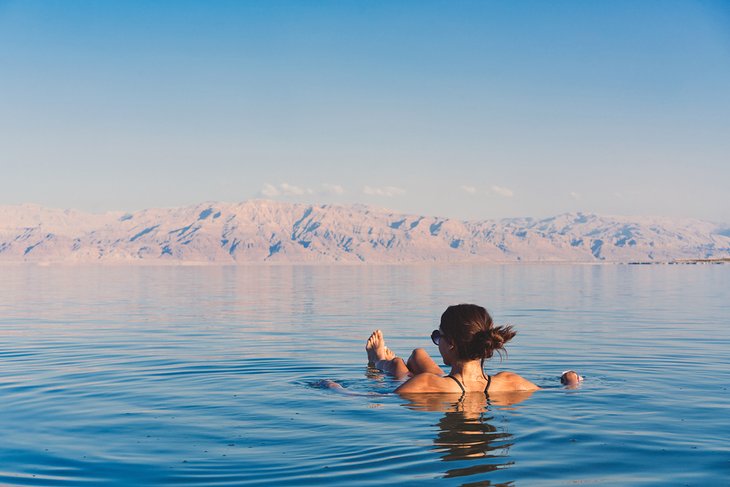
Sitting right on the northern corner of the Dead Sea, just six kilometers north of the Qumran ruins, this entrance-fee beach facility offers an easygoing Dead Sea experience with full facilities on hand. If you want to go swimming in the Dead Sea, this is a good spot.
On the beach itself, you'll find sun loungers and sunshades, changing rooms, and the all important freshwater showers to hose off the salt after your dip. All these facilities are included in the entrance fee so there aren't any extra charges.
Rimming the shore, you'll also find souvenir shops selling Dead Sea beauty products incorporating the famous, mineral-rich Dead Sea mud; a small spa offering massages; and a restaurant and cafés.
Wadi David
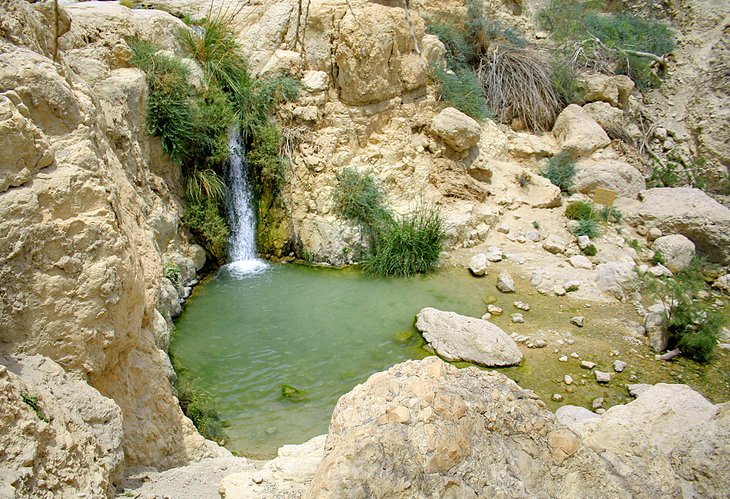
Wadi David is one of the two valleys that incorporate En Gedi Nature Park.
This area of lush vegetation — in striking contrast to the surrounding desert hills — is a haven for hikers and wilderness lovers.
The shortest hike here is an easy amble up to the waterfall, which is only 1.5 kilometers long return. For a longer circular hike, covering between six and nine kilometers, trek from the waterfall up to En Gedi Spring.
If you head northwest of this on the trail, you'll find the remains of a 4th millennium BCE Chalcolithic temple dedicated to the cult of the moon. In the center of the building is the circular "moon stone," while two gates of the sacred precinct face towards En Gedi Spring on one side and the Shulamite Spring on the other.
From the Shulamite Spring, a track continues north to the Dodim Cave above the waterfall.
From the temple, tracks run northwest to the Dry Canyon and west to a square Roman fort and a circular Israelite stronghold.
Wadi Arugot
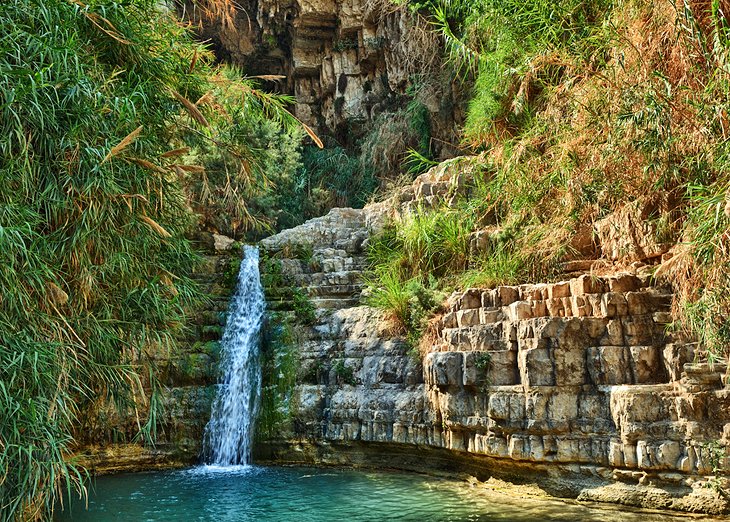
Wadi Arugot is En Gedi Nature Park's southern valley, and the trailhead is a two-kilometer walk south from Wadi David.
Like Wadi David there are a multitude of pools and waterfalls along the trails here, though some of the hiking in this wadi is more difficult than in Wadi David, so it tends to get less visitors.
Some of the trail, following the river as it winds between steep arid cliffs, is traversed by walking through water, so prepare to get wet.
Just northwest of Wadi Arugot's trailhead, accessed either from along the main Dead Sea highway or by the walking path that connects the trailheads of Wadi David and Wadi Arugot, is En Gedi's ancient synagogue ruins, officially called En Gedi Antiquities Site.
Farmers working the fields discovered the synagogue ruins by accident in the 1960s, and later excavations revealed the synagogue's intricate mosaic pavement of swirling fauna motifs, central zodiac motifs, and surviving inscriptions, which date from the late Roman era.
Even if your main aim in En Gedi is to head out hiking, it's worthwhile making a stop here to visit the synagogue.
Ein Kedim Hot Springs
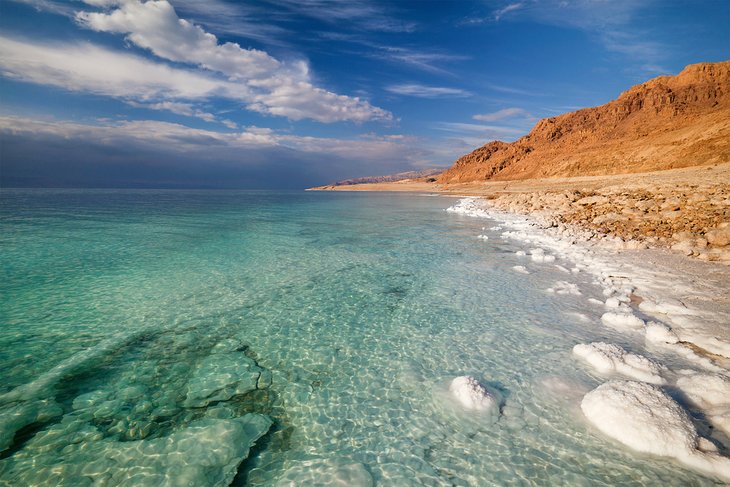
For a no-frills Dead Sea experience, head to Ein Kedim beach (10 kilometers north of En Gedi) where there are natural sulfuric hot pools along the shoreline, so you can soak in the hot water before and after floating in the Dead Sea.
If you're on a budget and don't want to pay an entrance fee to access the Dead Sea, this is one of the best options.
Be aware that there are absolutely no facilities here, and the shoreline is stony. Wear sandals or flip-flops to protect your feet.
You will also need a 4WD to navigate the dirt path down to the beach from the highway. Otherwise, leave your vehicle at the highway car park and walk down to the beach.
Ein Bokek
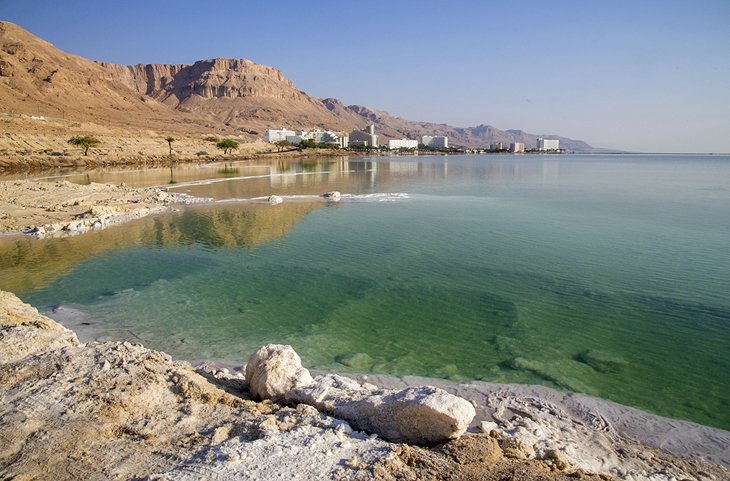
The southern end of the Dead Sea is the most built-up area on the western shore, and Ein Bokek is the largest resort area. The mineral springs here have been used for therapeutic purposes since ancient times.
The resort itself is home to several spa hotels that cater both for travelers who are seeking a luxurious Dead Sea spa experience and those who have come here specifically to seek medical treatments for skin conditions.
Ein Bokek Beach has no entrance fee and good facilities, including free freshwater showers and plenty of sun loungers and sunshades. There are plenty of cafés and restaurants nearby for refreshments.
To the north of town are the remains of the small fortress of Castle Bouqik, dating from the Roman period. The hike up to the ruins, via a mostly shaded creek, provides you with expansive views across the Dead Sea.
Wadi Bokek
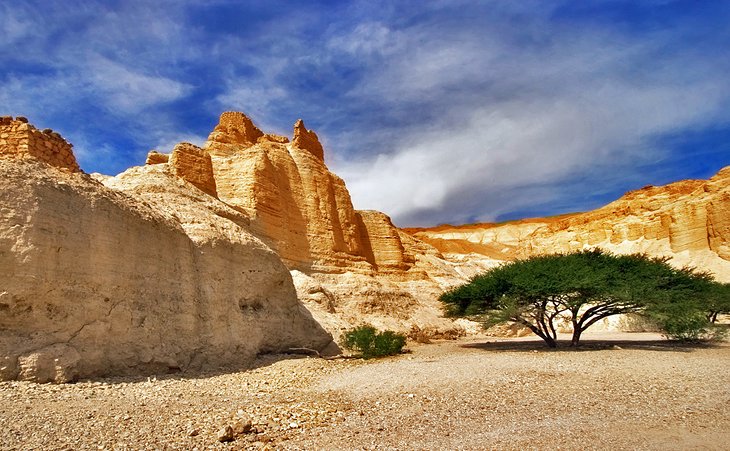
Wadi Bokek is another great Dead Sea hiking experience full of gorgeous greenery and gushing springs, which make a pleasing and rather photogenic contrast against the stark cliffs looming overhead.
The hiking here is relatively easygoing, and anyone with decent fitness levels can hit the trail through the wadi, so it makes a good stop to stretch out your legs - especially if you've spent most of the day lazing on the beach and want to break up all that bobbing about in the water with some exercise but don't want a challenging walk.
The trailhead is just off Highway 90 in Ein Bokek.
Neve Zohar
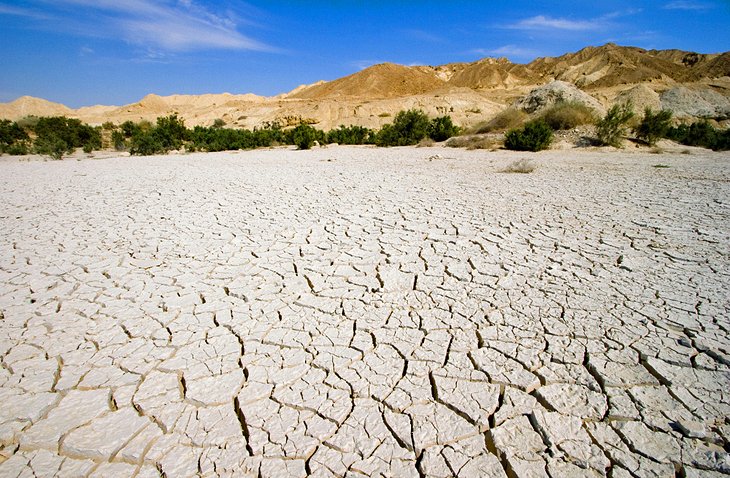
Neve Zohar, five kilometers south of Ein Bokak, has a spa, restaurant, and several hot mineral springs to soak in. The shoreline here is dangerous due to sinkholes, so there are no beach facilities.
It's worth a stop on your Dead Sea itinerary for the three-kilometer walk from here up to Mezad Zohar (Zohar Fort), a stronghold situated on a conical limestone crag amid magnificent mountain scenery.
Dating from the Roman era, the fort was built to control the trade of minerals from the Dead Sea. It was later held by the Byzantines.
On the road between Neve Zohar and Arad are two lookout points where you can enjoy excellent views across the Dead Sea.
Mount Sodom
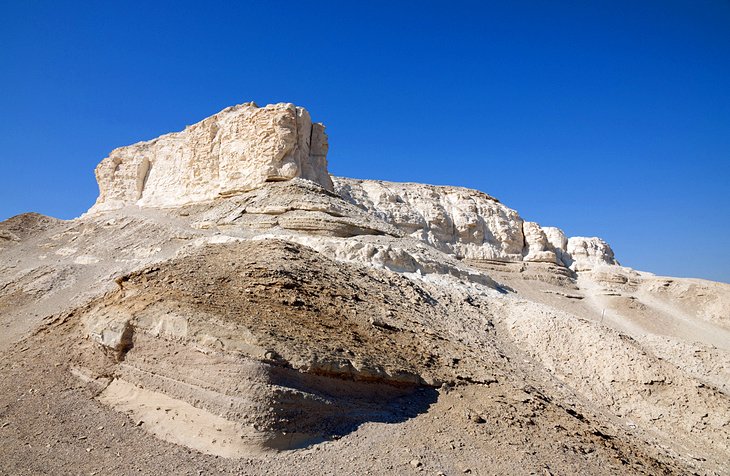
This rock-salt mountain, nine kilometers south of Neve Zohar, is a must for those who want to add a bit of adventure into their Dead Sea experience.
As you may have guessed from the name, this is one of the sites traditionally thought to be the Old Testament's Sodom.
On the eastern side of the Dead Sea, Jordan claims its own Sodom site, with much more archaeological evidence to back up its claim.
There's plenty of hiking and mountain biking trails here for the active, and since the top of the mountain is still 176 meters below sea level, it may be the lowest mountain you ever get to climb.
Arad
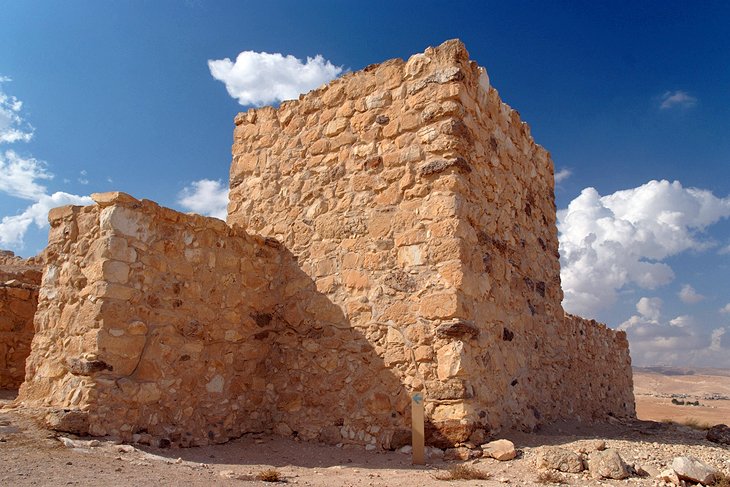
This modern town, founded in 1961, is best known for the important Tel Arad archaeological site just on its doorstep.
The Canaanite town excavated here dates back to the 2nd millennium BCE, with a palace and temple precinct to the northwest of the site, and to the southwest, residential quarters.
A line of walls, which would have been reinforced by round towers and extended up to the citadel on the acropolis, can still be traced for considerable stretches.
The structures on the acropolis that can be seen today date from the post-Canaanite period. They were built over a period of more than a thousand years, extending from early Israelite to Roman times.
The massive walls of the citadel have been rebuilt, using original material, and the complex is entered through the east gate, which is flanked by massive towers. Within the walls lie remains of various store-rooms and a Hellenistic tower.
The most important building, however, is the Jewish temple in the northwest of the citadel. The temple is the only Jewish sacred building of its kind so far brought to light by excavation.
Since excavation is not permitted on the temple platform in Jerusalem, the Arad temple, several times destroyed but each time rebuilt, is therefore of great importance to archaeology and the history of religion.
History of the Dead Sea Region & Information
The Dead Sea (Hebrew Yam Hamelach, "Salt Sea"; Arabic Bahr Lut, "Sea of Lot") lies between Israel and the Palestinian Territories and Jordan, more than 400 meters below sea level, making it the lowest point on the surface of the earth.
It is called a "dead" sea because of the high salt content (25-30 percent, compared with 3.5 percent in the Mediterranean) of its water, in which neither plants nor animals can live.
With a length of 65 kilometers and a maximum breadth of 16 kilometers, this inland lake is divided by a peninsula projecting from the eastern shore into a smaller southern section, with a depth of only four to six meters and a larger northern section up to 433 meters deep.
The main inflow of water into the Dead Sea comes from the Jordan River. It has no outlet, but in the hot climate of the area (annual mean temperature of more than 25°C) the rate of evaporation is so high, that the water level has remained almost constant.
In recent years, however, so much water has been diverted from the Sea of Galilee that the inflow of water into the Dead Sea from the Jordan River has been reduced and the water level has fallen. As a result the northern and southern sections are now completely separated by the peninsula.
The reduced inflow of fresh water means that the salt content is increasing and there are severe environmental concerns that the Dead Sea may completely disappear in coming years.