

What Does A White Buoy With An Orange Diamond Mean On A Lake?
Whether you're visiting North America's high-elevation Yellowstone Lake in Yellowstone National Park, taking a watercraft out in America's newest national park in the Appalachian Mountains of West Virginia, or hitting any other body of water, safety always comes first. That means, before you set foot in a boat of any kind, there are some things you need to know. You should be aware of the rules around life vests, know how to work your boat, and, of course, be aware of what different types of buoys mean. The latter is no different than learning the road signs before getting behind the wheel. One type of buoy you may encounter in a lake is a white buoy with an orange diamond on it, which indicates potential dangers in the waters around it.
White buoys with orange markings are regulatory buoys. They help you understand the area you're potentially entering and keep you from getting into an accident. The empty orange diamond that indicates danger may also be accompanied by words, like "danger shoal." However, you may also see a buoy with an orange diamond and a cross inside. This signals a prohibited area and may indicate something like a swimming beach. If you see an open orange circle, you're entering a controlled area where you'll likely be required to lower your speed, while buoys with an orange square or rectangle offer information, like where you can fuel up, for instance.
Dangers you might encounter on the lake, signaled by a buoy
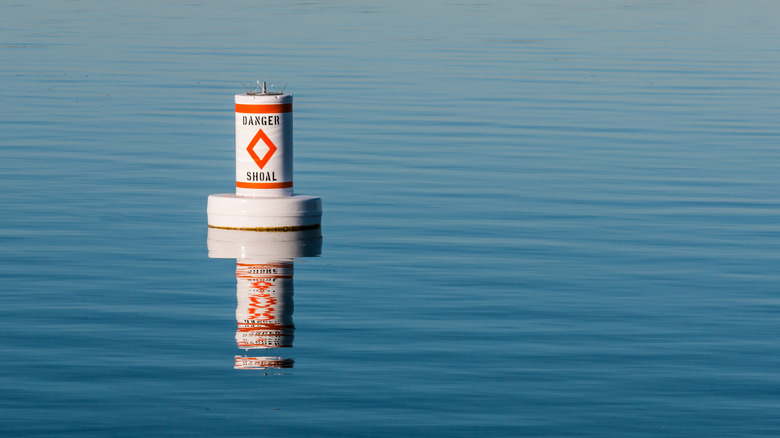
A white buoy with an orange diamond signals danger under the water, and that danger may be written on the buoy itself. Whether there's accompanying text or not, if you see an orange-diamond regulatory buoy, it's often a good idea to stay as far away as possible. Among the dangers you may find under the marker are rocks or debris (such as submerged logs), which can damage the underside of your boat. There may be sandbars or dams under the waves as well.
Sometimes, the danger may not be something that's been there long, so knowing the waterway from a past boat trip doesn't mean you can disregard these signs. There may be debris from runoff, including man-made objects, after a storm that you can't see. Additionally, if the water level is low during a drought, anything submerged deep below the surface may now be close enough to damage your watercraft. It's also important to check for these buoys if you're swimming off your boat, as there may be drop-offs or thick vegetation that can trap feet.
You should also know that it's illegal to tamper with, damage, or move regulatory buoys. You also cannot moor at one of these buoys. The only one you can tie your vessel to in public waters is a white buoy with a blue horizontal stripe. Finally, when you're ready to take a break and let someone else steer the ship, discover the cruise line that Consumer Reports ranked first for customer satisfaction in 2026.