

North America's Largest High-Elevation Lake Is A Must-Visit In Its Namesake National Park
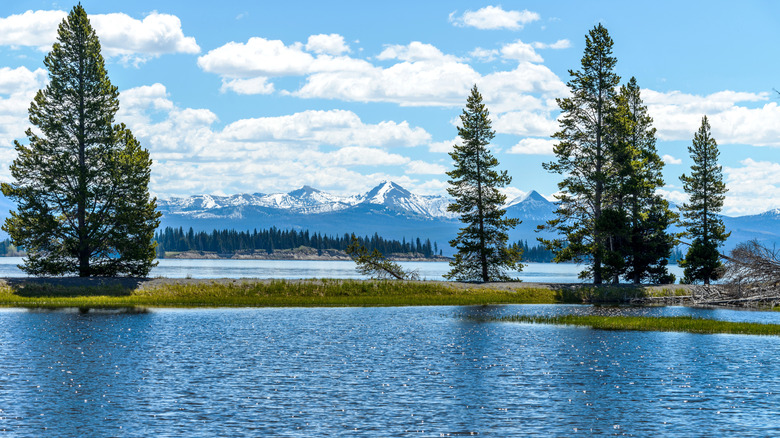
When one thinks of Yellowstone National Park, images of bison, epic steaming geysers, and mountainous terrain likely spring to mind. But a 20-mile-long lake that reaches 14 miles at its widest rests in some of the highest elevations within the world's first national park. In fact, since it rests at an elevation of 7,733 feet, Yellowstone Lake is the largest high-elevation lake in North America.
With an overall footprint of 132 square miles, the body of water that eventually became known as Yellowstone Lake is noted in numerous journals and diaries of western American explorers of the 1800s. Today the lake is especially popular among those who fish. It's home to the largest population of cutthroat trout in North America, thanks to the lake's one-time connection to the Pacific Ocean.
Yellowstone is big. The park itself covers nearly 3,500 square miles and the lake is among Yellowstone's 12 must-see attractions to explore during a visit. Even for those who do not fish, the lake is a must-visit destination. One visitor posted on Tripadvisor that the picturesque scenes of Yellowstone Lake are best appreciated by simply driving around it. "Clean and crisp with mountains overlooking this lake ... just so beautiful to describe, you must get in your car and take it in," the visitor wrote.
Yellowstone Lake is best enjoyed by boat or from the shore
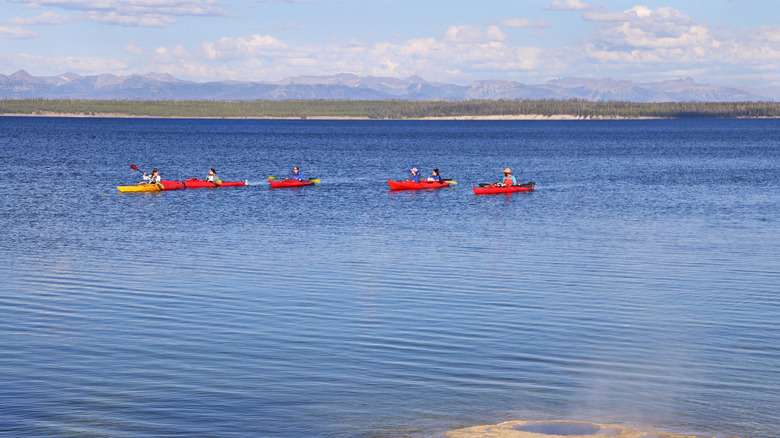
Instinct may prompt visitors to Yellowstone Lake to jump in for a swim. But be warned, swimming in these waters is not advised. That's because the lake is very cold, even on the warmest summer days. Each winter the massive lake freezes with ice nearly two-feet thick in some areas. By the time it thaws in June, the water remains a very chilly 41 degrees Fahrenheit. The National Park Service estimates humans can only survive in water this cold for about 20-30 minutes.
Interestingly, the entire lake is not always so chilly. The same thermal activity that makes tourists wonder if they should be worried about scientists' startling discovery at Yellowstone is present deep under the water of Yellowstone Lake. Underwater hot springs and geysers can make water temperatures reach 252 degrees Fahrenheit in some areas. Fortunately, however, most of those hot water springs are very deep and fuel a thriving plant and animal community similar to those found in the deepest parts of the Pacific Ocean.
Because of the dangers in and under the water, most adventurers elect to enjoy the lake from the shores or from watercraft. Multiple tour companies offer licensed rental craft that can be enjoyed out on the waters of Yellowstone Lake. Visitors planning to use their own watercraft should be aware of inspection, permitting, and other requirements before pushing off from the shores of Yellowstone.
Trails surround Lake Yellowstone, offering high-elevation views
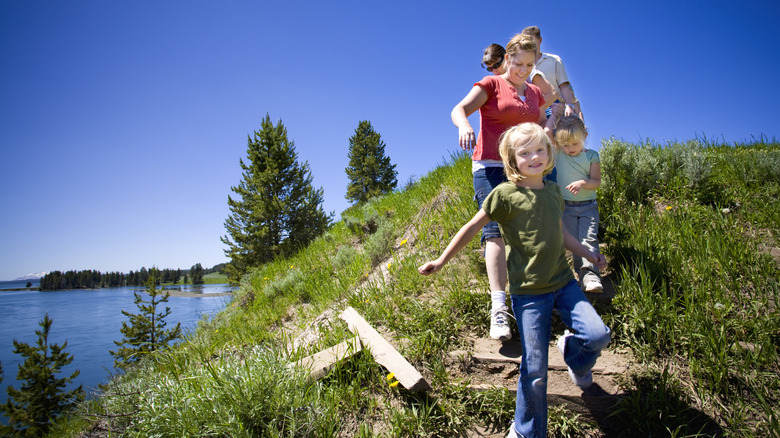
Even if you choose to avoid the waters of Lake Yellowstone all together, there are still ways to enjoy the incredible views it offers. Hiking trails are found in abundance here, and guided tours are also available for those looking for in-depth information about the area or as a safer way to explore. Tourists have died in national parks after breaking important safety rules, and hikers should be aware of their own skill and stamina levels on and around Yellowstone Lake.
Storm Point Trail is recommended for beginner hikers or those exploring with children. With a minimal elevation gain and a length of less than 2 miles, this trail gives everyone a chance to take in the views of Yellowstone Lake. According to Yellowstone Guidelines, a tour company based in the park, the most popular hiking trail near the lake is Elephant Back Trail. That's because this 4-mile loop ends where it begins and offers access to an overlook of the lake and the nearby mountains.
Yellowstone National Park has multiple entrances, so knowing where to begin can save travelers some time. The easiest way to reach Yellowstone Lake is by entering through Yellowstone National Park's East Entrance Station. The closest airport to the entrance is Yellowstone Regional Airport, 55 miles to the east in Cody, Wyoming.