

Between Indianapolis & Louisville Is An Indiana City With World-Famous Architecture, Public Art, & Scenic Gardens
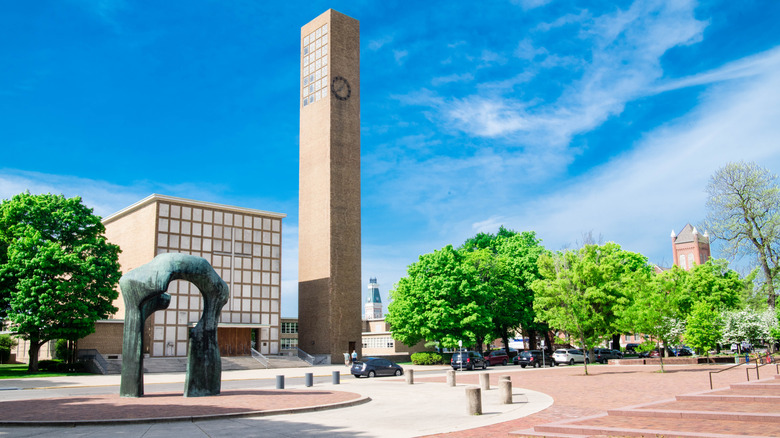
Typically, if someone mentions the city of Columbus, you may assume they're referring to the one in Ohio. However, it turns out that the name is more common than you might think, with multiple cities named after the explorer across the United States. Another Midwestern Columbus is actually located in Indiana, about an hour south of Indianapolis by car and an hour north of Louisville.
Situated along the Flatrock River, this Columbus is a notable destination, thanks to its world-famous architecture, including dozens of expertly designed buildings celebrating the vibrant local arts scene, with various pieces and lush gardens scattered throughout the city. Even better, most of the city's eye-catching buildings, public artworks, and other visit-worthy spots are clustered around the historic downtown district, so it's easy to explore many of these sites during a single visit. So, if you're interested in seeing another side of Indiana that isn't focused on its capital city or Indiana Dunes National Park, along the shores of Lake Michigan, it may be time to head south to Columbus.
Exploring the art and architecture of Columbus, Indiana
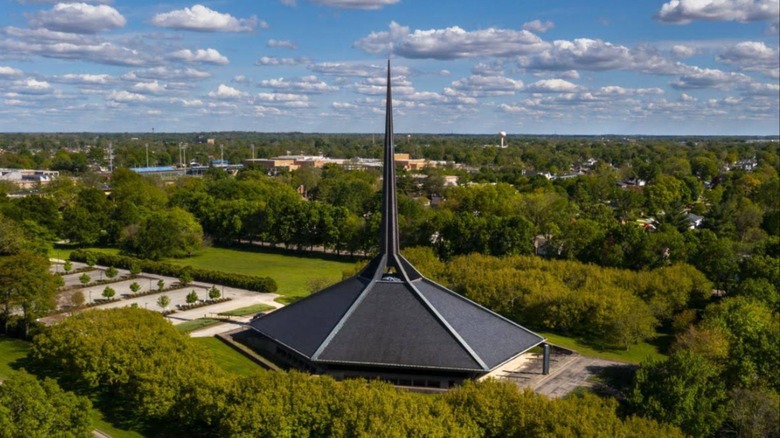
As you make your way through Columbus, you'll notice that many of the buildings here don't look like other, typical Midwestern cities. Instead, you'll see a variety of modernist architecture that almost makes you feel like you're taking a mid-century design class. And this is intentional. In the 1950s, Cummins, the largest employer in town, started the Cummins Foundation Architecture Program (CFAP) as a way to entice well-known designers to come and build in the city. At first, the CFAP would cover building costs for schools, as long as they picked from a list of modernist architects. Eventually, the program expanded to pay the costs for a variety of public buildings.
In the modern era, there are over 80 distinct buildings throughout the city, creating something of a scavenger hunt for visitors. The diversity of designs is impressive, so even if you're not an architecture connoisseur, you can still appreciate the care and attention to detail. For example, the Library of Experience (LEX), a former church, has a narrow spire jutting up from a hexagonal structure. Or, for a blend of traditional and modern, the Bartholomew County Jail features geometric patterns and a mesh dome for the inner courtyard. Even parks benefited from the program, such as Mill Race Park, which has circular ponds and raised landscaping to make the flood-prone area less susceptible to submersion.
But the artistic vibe of Columbus doesn't stop with architecture. The city is also home to dozens of public artworks. Sculptures run the gamut from fountains to abstract pieces to more industrial elements, like the "Exploded Engine" at Cummins headquarters, which has over 500 pieces of a real Cummins engine suspended on wires. Like the architecture, these artworks are hidden throughout the city, making for an engaging visual scavenger hunt.
Planning your Indiana arts vacation
As you might expect, the best way to reach Columbus is to fly into one of the most traveler-friendly airports in the Midwest, Indianapolis International (IND), which is less than an hour north of the city. As far as accommodations go, there's a large cluster of hotels conveniently located around I-65. But if you want to stay in a place inspired by the city's signature modern architectural style, the Hotel Indigo Columbus Architectural Center has you covered.
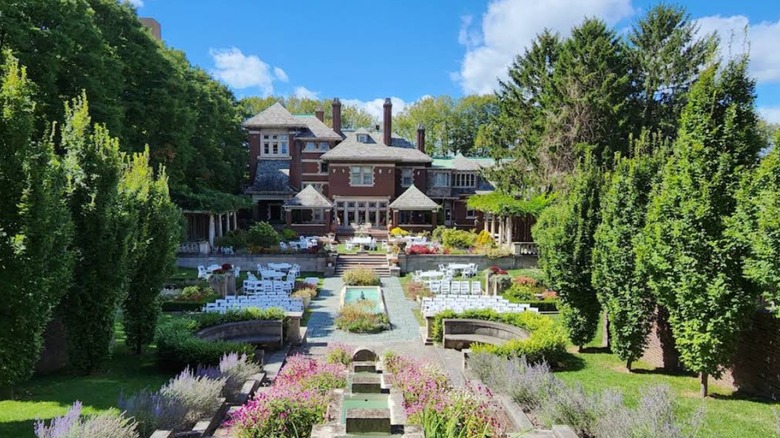
Alternatively, if you prefer more historical designs, the Inn at Irwin Gardens is a real treat. The building has remained relatively untouched since its remodel in 1910, and the surrounding gardens are a gorgeous addition to any stay. The rooms also retain much of their historical heritage, giving you a sense of what it was like for the original owners when they lived there.
Even if you don't stay at Irwin Gardens, the grounds are worth visiting, as they rival some of the most beautiful botanical gardens in the United States. However, they're only open one Tuesday and one Sunday per month from 2 p.m. to 6 p.m., so you'll need to plan accordingly. Also, the gardens are closed from late fall through spring, so you may want to time your trip for summer. Another option is the Miller House, which was built in the 1950s and blends architecture and landscaping to create a vibrant historical site. While not as impressive as the Irwin Gardens, the Miller House is open throughout most of the year for tours.