

Indiana's National Park Along The Shores Of Lake Michigan Is A Recreation Haven

Indiana doesn't quite have the reputation as a Great Lakes destination, yet the Hoosier State does have some coastline along the southern shores of Lake Michigan. As the Great Lakes are among the most iconic landmarks in the Midwest, Indiana's Lake Michigan shores are one of the state's top outdoor destinations. Much of the shoreline consists of scenic sand dunes, coastal marshes, and surprisingly biodiverse ecosystems that add to Lake Michigan's epic grandeur. These dunes and their ecosystems form the foundation for Indiana's sole national park, the underrated (and appropriately named) Indiana Dunes National Park.
Indiana Dunes National Park is not exactly located in the country's most remote wilderness — it's less than an hour southeast of Chicago. On clear days, visitors may even see Chicago's iconic skyline across the water from Indiana Dunes' beach. One of the Midwest's most extraordinary (and fragile) ecosystems is preserved within the beating heart of the urban Midwest.
And, far from a glorified Lake Michigan observation deck, Indiana Dunes National Park offers some of the Midwest's best outdoor recreation. Depending on your preference, you can explore these magnificent dunes on scenic trails, swim at a lovely Lake Michigan beach, or experience the area overnight at the park's developed campground. No matter the activity, however, Indiana Dunes National Park is an unsung jewel of the Great Lakes region, and a worthy addition to any Chicago-area travel itinerary.
A Great Lakes natural wonder just an hour from Chicago

Indiana Dunes National Park covers around 15,000 acres. While those 15,000 acres do feature 15 miles of actual Great Lake beaches, they also include a surprisingly rich buffet of biodiversity, including coastal wetlands, prairies, and even old-growth forests. The integrated Indiana Dunes State Park provides an additional 2,000 acres for a complex web of protected public lands in an otherwise vulnerable Midwestern urban corridor.
The star of the show here is undoubtedly the amazing sand dunes rising over Lake Michigan. The park contains prominent examples of two distinct types of dune: beachfront "foredunes" that are more stable and often covered in vegetation, and more ephemeral "blowout dunes" that can change and evolve with the winds. Many of the dunes protected by the park reach heights nearing 200 feet, creating miniature mountains of sand rising and falling along Lake Michigan's coastal ecosystems. Some dunes, like the 120-foot Mount Baldy, have achieved special recognition for their picturesque quality and their role in helping scientists better understand dune formation and ecology. Being so close to the shore, the dunes at Indiana Dunes National Park provide a first-hand experience of a unique Great Lakes ecosystem without the added risk of incurring the infamous $3,000 rescue fee associated with Sleeping Bear Dunes National Lakeshore elsewhere on Lake Michigan.
Indiana Dunes National Park also protects a complex ecological community powered by Lake Michigan's intricate biodiversity. With vibrant wetlands like the Great Marsh blossoming between dunes, rivers cutting through coastal forests, and preserved groves of rare black oak savannas, Indiana Dunes National Park represents one of North America's most significant ecological transition zones. The park's boundaries also include over 60 historic sites, including landmarks like the 19th-Century Bailly Homestead.
Indiana Dunes National Park is a magical lakeside recreation escape
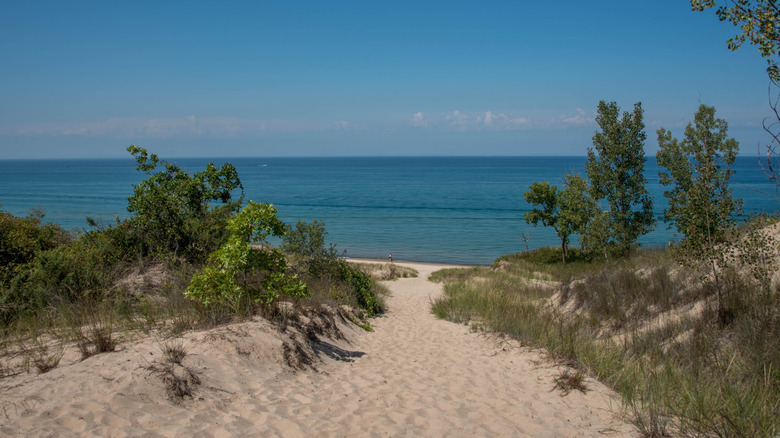
Indiana Dunes National Park is a terrific spot for outdoor recreation. The area provides plenty of infrastructure while still maintaining its pristine ecology. The park's 50+ miles of hiking trails provide the best experience for exploring Indiana Dunes in person.
For most guests, the best introduction to the park's iconic dunes is arguably the West Beach – Dune Succession Trail. Though only a mile long, the Dune Succession Trail provides extensive views of the dunes and Lake Michigan, including comprehensive visuals of the stages of dune development. The network of West Beach trails provides excellent shots of Lake Michigan, and sometimes Chicago's distant skyline. The Great Marsh Trail and the Cowles Bog Trail are longer excursions into the park's rich wetlands habitats, while the nearly seven-mile Glenwood Dunes Trail covers the park's mature forests (with some magical displays of fall colors come autumn). The Glenwood Dunes Trail is also the park's only equestrian trail. Many Indiana Dunes trails are suitable for biking too.
Indiana Dunes National Park is just as rich in water recreation. 15 miles of sandy beaches provide plenty of swimming opportunities, and the lake's open waters are prime for boating and fishing. Even if you don't want to get wet, the park's dunes offer terrific lakeview picnicking spots. Overnight camping is available at the Dunewood Campground. If you want someplace a bit more developed to stay, Indiana Dunes National Park is only a few miles from charming and fun Great Lake getaway towns like Indiana's dune-adjacent community of Chesterton.