

Southern California's Largest Reservoir Is A 4,500-Acre Escape With 28 Miles Of Trails & Ice Age Fossils
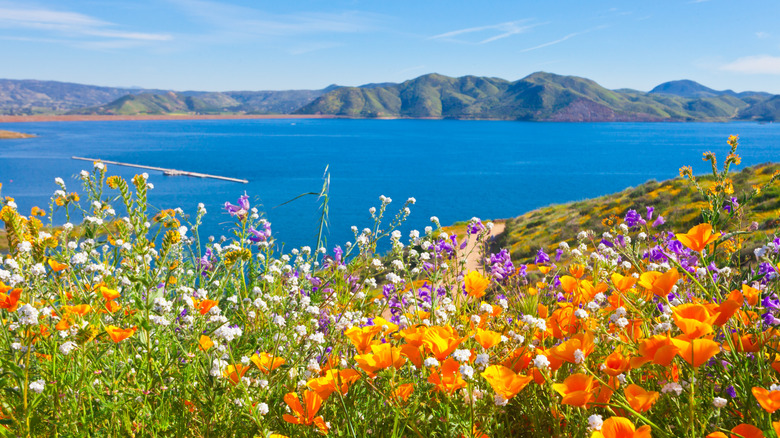
The Inland Empire's sprawling network of small towns and natural beauty is a lesser-known side of Southern California. The region boasts numerous freshwater lakes, rivers, and streams mixed in with breathtaking desert landscapes. Citrus groves, apple orchards, and vineyards are tucked into charming small towns, right alongside historic destinations, some of which have a distinct flair for 1970s retro style. Located about 90 miles southeast of downtown Los Angeles, Diamond Valley Lake is an accessible Inland Empire getaway where you can connect to nature.
Diamond Valley Lake lays claim to being Southern California's largest reservoir that was built in the 1990s as part of a statewide effort to secure the state's access to drinking water for daily and emergency uses. At the time, it was the largest earthworks project in North America. Today, its scale is no less impressive. The lake holds 264 billion gallons of water. In theory, it could serve nearly 2.4 million Southern California families for a year. For another nearby outing, consider Lake Perris, another Inland Empire destination that offers skydiving and train rides.
That water at Diamond Valley Lake isn't just good for drinking. The reservoir spans 4,500 acres of water surface area, a large expanse of freshwater set amid gentle hills. It's simply a peaceful place to feel surrounded by natural beauty, with amenities for fishers, hikers, and bikers to enjoy. It's also right next to the Western Science Center, a museum documenting millions of years of the region's natural history. Whatever your fancy, Diamond Valley Lake's sparkling waters and deep history are a rare beauty to behold.
Outdoor recreation at Diamond Valley Lake
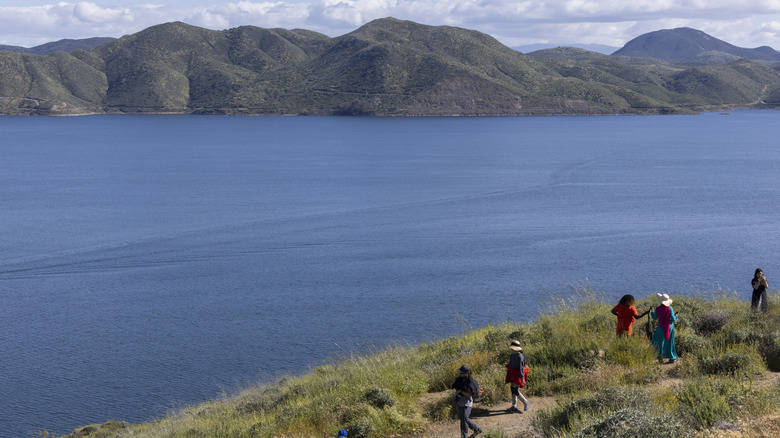
Diamond Valley Lake is teeming with fish and offers year-round fishing opportunities for licensed anglers. In fact, it's so well known for its black bass fishing that it hosts several large fishing tournaments throughout the year. The waters also carry bluegill, sunfish, rainbow trout, as well as blue and channel catfish. There are 2.5 miles designated specifically for shoreline fishing. Otherwise, you'll need to rent or bring your own boat. The marina rents bass boats for up to 4 people and 10-person pontoons, with hourly and longer rental options.
There are also several trails around Diamond Valley Lake for biking and hiking, with scenic views — but you'll have to leave Rover at home because no pets are allowed. The North Hills Trail, Lake View Trail, and Wildflower Trail each offer a different experience. The Lake View Trail is a 22-mile trek that takes you in a full loop around the lake, following the lake's shoreline. The other two trails are much shorter and cover parts of the north end of the park. In spring, the Wildflower Trail is filled with brightly colored blossoms.
The Marina is a great place to stock up on snacks before hitting the water or trails. They've got chips, candy, and jerky for sale. Although swimming isn't allowed in the lake itself, there's an aquatic center nearby with a heated 25-yard outdoor pool, but it's temporarily closed for renovations. There is a parking fee of $11 per vehicle, with another $4 trail access fee per person per day. The marina is open Wednesday through Sunday, and no pets are allowed. Nearby Hidden Falls Preserve offers a secluded nature retreat, although camping is temporarily unavailable.
Millions of years of natural history at the Western Science Center
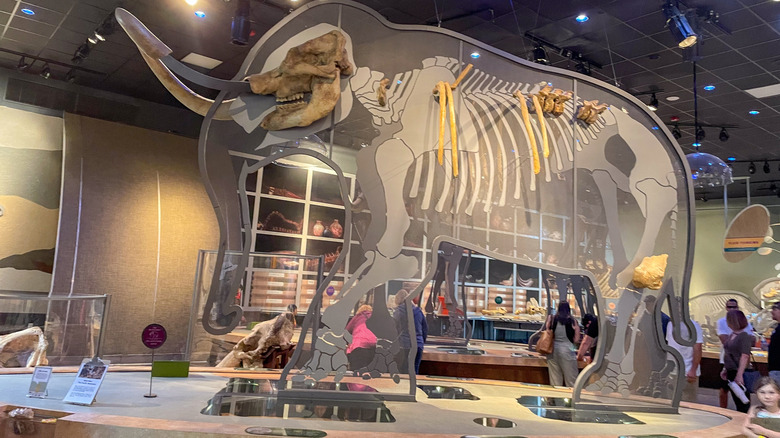
Just across the way from Diamond Valley Lake Marina is the Western Science Center, a five-minute drive. Although visitors note that the museum is relatively small, it's well worth a visit if you're into deep history — especially if you're traveling with kids. The Western Science Center is a natural history museum in the region and is home to more than 1 million specimens, including an impressive collection of Ice Age fossils found during the excavation of Diamond Valley Lake. The exhibits include bones from ancient mammoths, sloths, saber-toothed tigers, camels, and horses. However, one of the most famous specimens in the museum's collection is Max, the Pacific mastodon, whose fossils date back roughly 10,000 years.
Max's fossils were found and preserved while Diamond Valley Lake was being excavated in the 1990s. In 2014, a scientist was working on updating the display information that accompanies the exhibit. As he did so, he noticed that Max's bones differed significantly from other mastodons. He began to investigate this along with his fellow paleontologists, and in 2019, they published a landmark finding — the West Coast was home to a different species of mastodons that until then had remained unknown. Admission to the museum is $10 for adults and $7 for kids ages 5 to 12. On the first Saturday of each month from September through May, the museum hosts free science-based activities for all ages.