

Those Red And Green Lights On Airplane Wings Have A Life-Saving Purpose
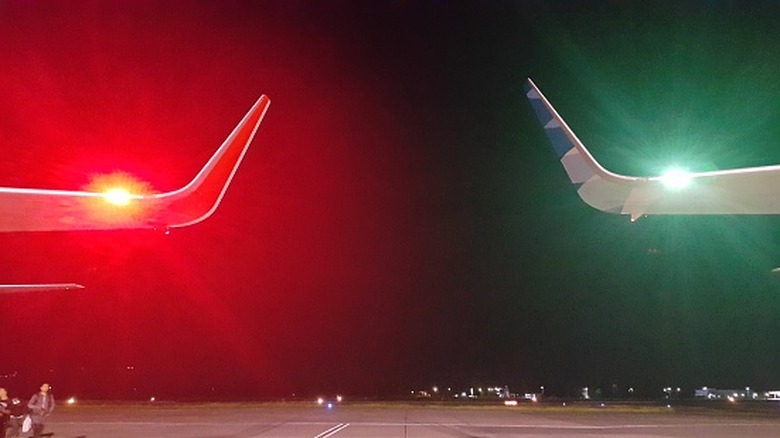
Most people pack up for a trip, board their plane, and jet off to distant locales without ever thinking about how it all works. However, while you're sitting on the tarmac or flying through the air, maybe you've wondered about things like what the giant numbers on airport runways really mean. Perhaps you've thought about how turbulence has gotten worse over the years and considered why that might be. If how planes function and why they do what they do crosses your mind when you fly, you may also have asked yourself what the red and green lights on airplane wings are there for. As it turns out, they indicate which wing is which, and that has a life-saving purpose.
According to the Federal Aviation Administration (FAA), the red light is situated on the end of the left wing of the plane, and the green light is on the right wing of the plane. This way, other pilots know which way the plane is facing, especially at night, helping pilots avoid collisions both in the air and on the ground. Additionally, there is a white light on the tail of the plane to indicate direction. The red, green, and white lights are usually on during the day as well.
More about plane lights and what they mean in aviation
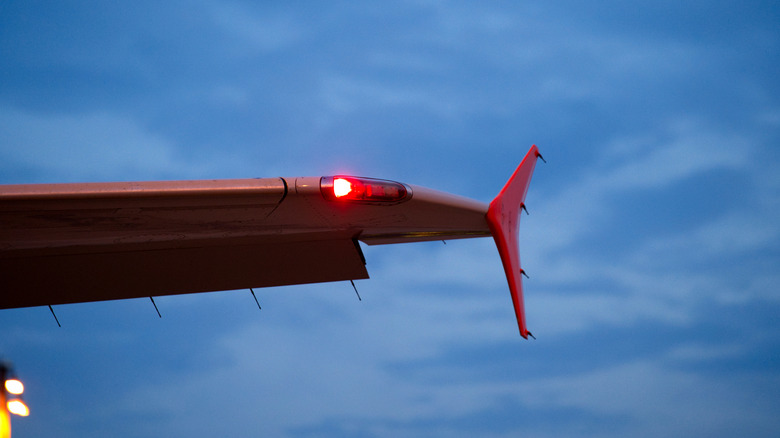
The red and green lights on airplane wings actually started on ships that would sometimes collide at night, so other sailors could see which direction the ship was going. The use of these lights then moved to aviation. However, the red and green wing lights and the white tail light are only some of the lights used for safety on a plane. You may also notice white strobe lights on the wings and tail when you're flying or when observing planes in the sky or on the runway. These are anti-collision lights used to help prevent collisions. If you see blinking red lights when a plane is in operation, those are called beacon lights, which also help prevent collisions.
When a plane is on the runway, you might see a light shining off to the side near the front of the plane. These are turnoff lights that brighten the way for a plane if they're turning on a runway. There are also landing lights on the wing, nose, and below the fuselage. The FAA recommends turning on landing lights below 10,000 feet, especially within 10 miles of an airport. Finally, if you find the inner workings of travel fascinating, here are 13 bizarre travel facts that everyone should know.