

Pennsylvania's Newest State Park Is A Geological Treasure With Underground Cave Tours
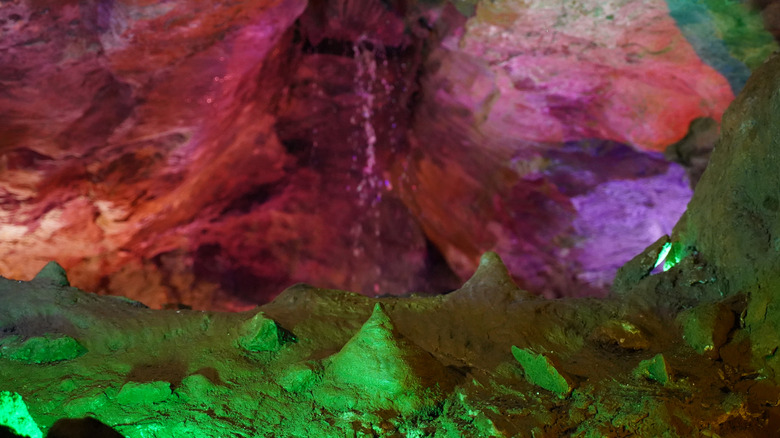
While some Pennsylvania state parks stand out for what lies in the skies above, the state's newest park stands apart for what lies below. A large network of underground caves lies just beneath the surface in western Pennsylvania's Laurel Highlands region. Until recently, the caves were privately owned. After six decades of family-run operations, the owners decided to donate the land to the state, which has now reopened it as Pennsylvania's 125th state park. Laurel Caverns officially reopened to the public in April 2026 as Laurel Caverns State Park, Pennsylvania's first underground state park.
The new state park includes 435 acres and 4 miles of underground passages. While that's nowhere near the record for the world's longest cave system, it is the largest cave in the state, and you can plan a visit through a guided underground tour. The park is a 1.5-hour drive south of Pittsburgh and a 4-hour drive northwest of Washington, D.C. The Laurel Highlands region is a destination that draws visitors seeking outdoor adventures that are steeped in the area's rich cultural heritage. For example, just a 20-minute drive from the state park is the Fort Necessity National Battlefield, the site where the French and Indian War started. A 35-minute drive away are two gorgeous homes designed by the famous American architect Frank Lloyd Wright. Laurel Caverns State Park is a perfect stop to add to any itinerary themed around nature, history, and adventure.
The caves are themselves estimated to be 320 million years old. In an area filled with limestone deposits, it's nearly a miracle the site wasn't turned into a mining quarry. Over generations, adventurous and caring people have made an effort to protect this peculiar underground ecosystem and make it available to the public for education and wonder.
What makes Laurel Caverns special
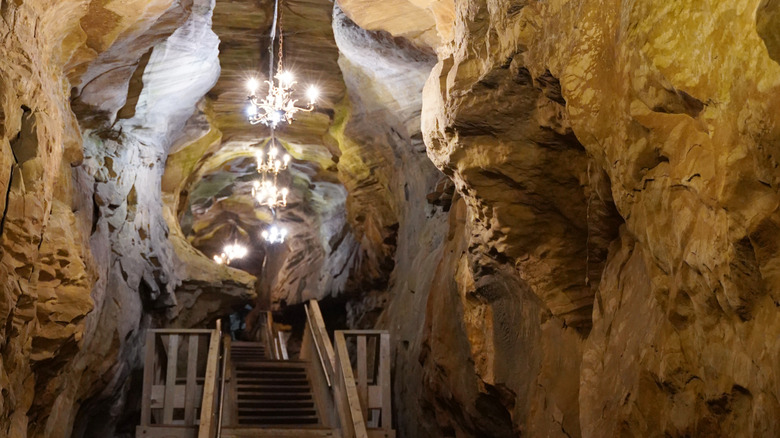
In addition to being the largest cave in the state of Pennsylvania, Laurel Caverns is one of the largest calcareous sandstone caves in the world. Sandstone caves differ from another common type of cave called limestone caves, such as those found in Montana, which have much higher concentrations of calcium. The sandstone caves at Laurel Caverns were formed by rocks, minerals, and the shells of sea creatures sedimenting over millions of years. Sandstone caves tend to not have the same stalactite and stalagmite formations that limestone caves are famous for but rather have their own gorgeous sand-swept pillar formations and textured geometric patterns.
Laurel Caverns is made up of four main sections connected through a maze of passages that average 12 feet wide and between 10 and 20 feet tall. In some areas, the caves open with ceilings that soar up to 50 feet, roughly five stories high. It's extremely deep beneath the earth's surface as well, with sections dipping 452 feet below.
"Laurel Caverns is great for the geology that you can see and learn about in the cave," says geologist Katie Schmid in an interview with Next Pittsburgh. "It provides habitat for several rare and endangered species. In Laurel Caverns, you can see some faults and folds that resulted from the construction of the Appalachian Mountains. You can also find some nice fossils in the cave."
One animal that calls these caves home is the bat. In fact, several species of bats live here, including the little brown bat (which is endangered), the big brown bat, and the tri-colored bat. Laurel Caverns is the largest natural habitat in the northeastern U.S. for bats to hibernate over winter. For this reason, the caverns are closed to visitors during the winter between the end of October and mid-April.
Underground cave tours at Laurel Caverns
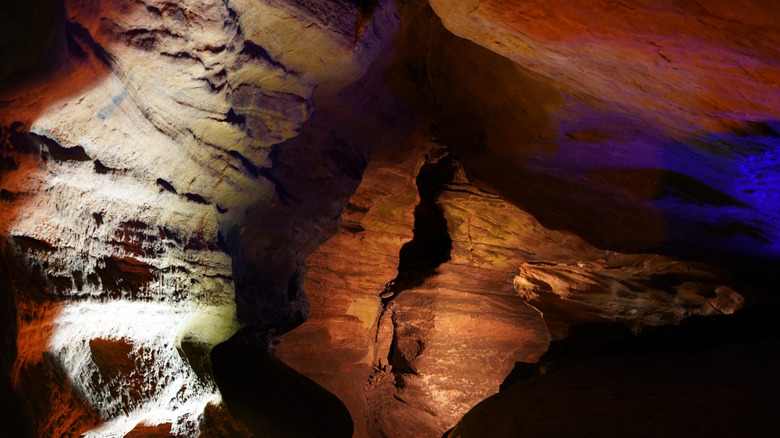
Tours are operated by the Laurel Caverns Conservancy, and there are five to choose from: the Maze Tour, the Full Lighted Tour, The Tour and Crawl, the Introduction to Caving, and Deep Depths Caving. None of these require an advance reservation unless you're coming with a group, and prices range from $18 to $60 per person. The Maze and Full Lighted tours are available every day and include a sound and light show, as well as information from a guide on the cave's geology and history. These are great options for folks who have some hesitations about going into a cave and those traveling with children. Some visitors have noted in online reviews that the light and sound show part of the tour is a bit "corny" and not particularly interesting or informative. However, the vast majority say the visit is still well worth it.
The three other programs are designed to give visitors tiered options for diving deeper into the world of caving, according to how adventurous you're feeling. The first tier is quite light in terms of physical exertion, lasts 1.5 hours, and is meant to give you a basic idea of what caving is like without the rough and tumble. The second- and third-tier options are significantly more advanced and involve a review of caving techniques and safety protocols. They expose participants to crawling and descend between 250 and 450 feet into the far depths of the caves, some parts of which are unlit.
The caves stay at a constant temperature of around 52 degrees Fahrenheit, so it's recommended to come with appropriate layers. Closed-toe shoes that are sturdy enough for walking down sandy paths are also a good idea, and boots are required for the more advanced tours. There's parking on site, as well as a visitor center.