

Montana's First State Park Has One Of The Largest Limestone Cave Systems In The Northwest
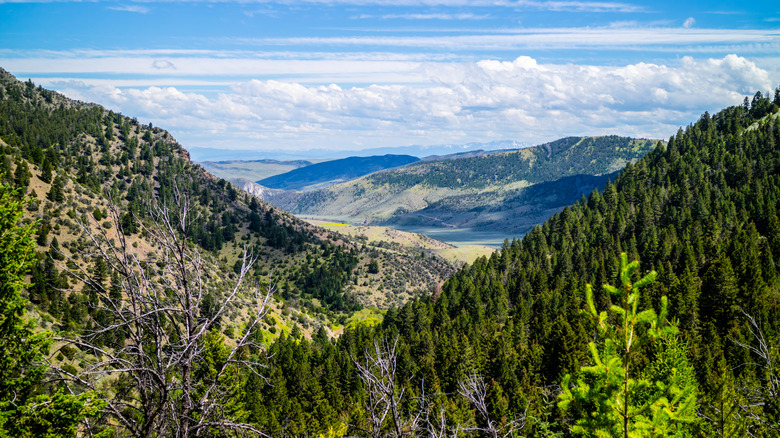
When most people think about visiting Montana, they imagine vast stretches of wilderness spanning mountains, rivers, and valleys. There's a reason Montana is called "Big Sky Country," after all, and it's one of the best places for nature lovers to get out and stretch their legs. In fact, for mountain aficionados, the community of Big Sky is a vibrant gateway to the Rocky Mountains and a coveted resort town. But if you head about 90 minutes north of there by car, you'll encounter Montana's oldest state park, which trades open vistas for rugged caves: Lewis and Clark Caverns State Park.
Although the caverns have been around for centuries, they were first discovered by hunters in 1892, and the area was officially designated as a national monument in 1908. However, in 1937, the park was transferred to the state of Montana, becoming its first state park. So, not only can you explore one of the most scenic limestone caverns in North America, but you can also experience a bit of the state's past. History buffs will also recognize that Lewis and Clark passed through the region in 1805, not 1892, so why the name? Well, President Theodore Roosevelt named the park after them when dedicating it as a national monument since it was along their route and, according to some accounts, nothing had been named after them until that point. The spot is now recognized as one of the largest limestone cave systems in the American Northwest.
Exploring the caverns of Lewis and Clark Caverns State Park
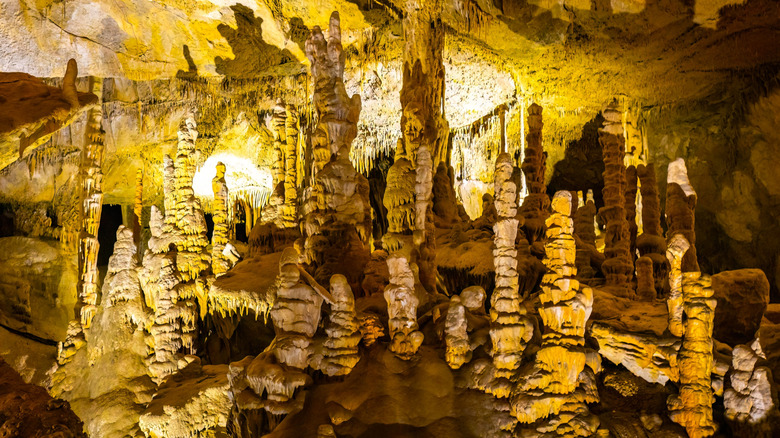
As you might expect, the caverns themselves are the main highlight of the park, but they're not open year-round, and you can't explore them yourself. Instead, you must book a guided tour, which is only available between May and September. However, there is a candlelight tour offered in December, which allows you to venture through the caves only by candlelight, similar to how explorers would have seen them in the old days. Reservations for this tour are only available online the Monday after Thanksgiving, and the sooner you can book them, the better.
Overall, the caverns tour is moderately difficult, with stairs and steep elevation changes throughout the 2 miles you'll cover. During the winter, the park is usually covered in snow and ice, making it more difficult to hike the 0.75 miles to the entrance of the cave, as well as reach the park itself. If this sounds too challenging, you can opt for the Paradise Tour, which only spans 1 mile over mostly flat terrain and is even ADA-accessible.
Inside the caverns, the walls are mostly illuminated, allowing you to see the intricate details of the rock formations. Some of the rooms and features even have descriptive names, like the Garden of the Gods, the Decision Rock, the Cathedral Room, and the Pit. Throughout the standard two-hour tour, the route requires you to shimmy, bend, duck, and even slide, so be prepared to flex your body. There are also over 600 stairs within the cave, although you'll descend most of them.
Making the most of your Montana state park adventure
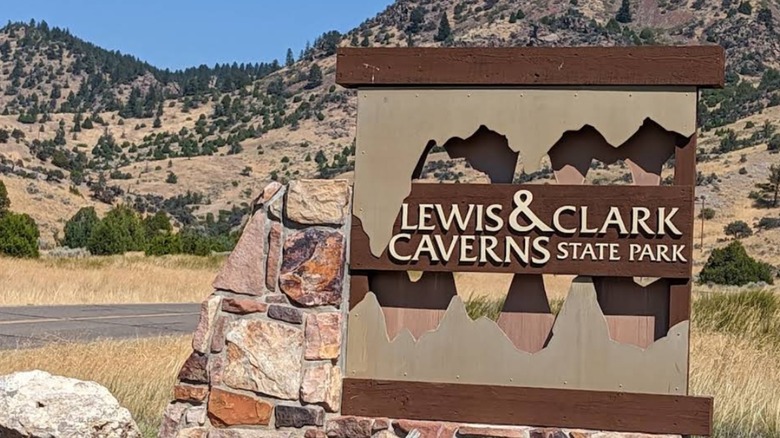
To reach Lewis and Clark Caverns State Park, the best option is to fly into the Bozeman Yellowstone International Airport (BZN), which is only about 45 minutes east by car. Plus, as the name implies, this airport is a gateway to the world's first national park, the mesmerizing destination of Yellowstone National Park. So, if you want to see both, you can drive about three hours south of Lewis and Clark Caverns. Alternatively, Montana's picturesque Glacier National Park is a hiking paradise to add to your bucket list, located roughly four hours north.
When it comes to nearby accommodations, there aren't many choices. If you prefer to sleep in a hotel bed, your best bet is to stay in Three Forks, a small town about 20 minutes east with a few options, such as a Travelodge or the Lewis and Clark Motel. Or, if you don't mind sleeping under the stars, the park has a campground. You can reserve your spot online, and 18 sites include electricity, just in case you're traveling in a motorhome. There are also three cabins available if you prefer to have better shelter from the elements. As with the cave tours, most of the amenities offered at the campground, such as water and showers, are only available between May and September.
Outside of exploring the caves, the park is great for hiking and birdwatching, as well as fishing and canoeing along the Jefferson River, which borders the park. Hunting is also allowed, but you must do so in the western half of the park and have a valid Montana hunting license. The primary game in the area is mule deer, but you may discover some white-tailed deer or elk, depending on the season.