

America's Highest Named Lake Is A Beautiful Colorado Gem Surrounded By The Rocky Mountains
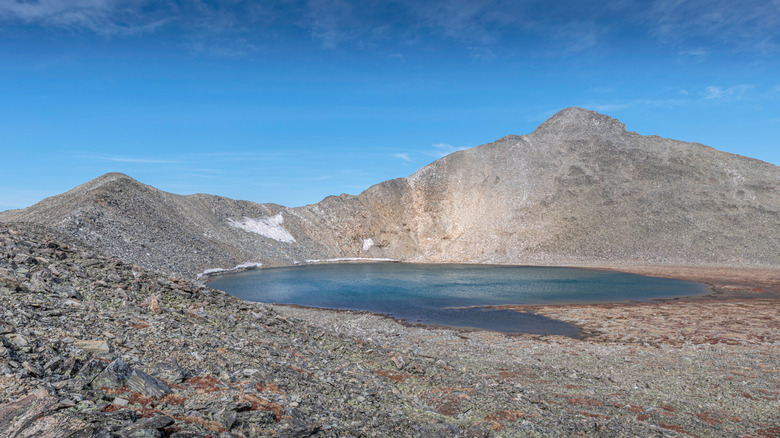
The name "Pacific Tarn" may seem a bit too vague for any clear description, but the reference to the Pacific should, at the very least, conjure images of the world's largest ocean and its vast collection of shores, islands, and attractions. The actual Pacific Tarn, however, occupies a much smaller scale than the Pacific Ocean, but it is nonetheless an impressive natural feature for very different reasons. In this case, Pacific Tarn is not a feature of the Pacific Ocean, but rather a standalone lake. And despite its name, Pacific Tarn is quite small compared to the average lake, let alone an actual ocean. Yet its superlative qualities come not from its size but from its location — specifically, its elevation.
Pacific Tarn holds the record for America's highest-elevation named lake. (Other lakes atop Mount Rainier and elsewhere may be even higher, but they do not have official names recognized by the United States Board on Geographic Names.) With its location being close to a prominent summit in the Rocky Mountains, Pacific Tarn's shores offer breathtaking mountain scenery that rivals the vast grandeur of the Pacific Ocean in spirit, if not in content. Accessing Pacific Tarn and its views is no small feat, of course. Getting there requires a challenging, high-altitude trek up the side of rugged Colorado mountain terrain. Still, the Pacific Tarn trailhead is located a mere 10 miles from the popular Colorado mountain resort town of Breckenridge. So if you do manage the difficult mountaineering journey to see America's highest-elevation named lake in person, you can easily enjoy Breckenridge's more relaxing amenities as a reward.
A high-altitude lake gem perched on a mountain summit
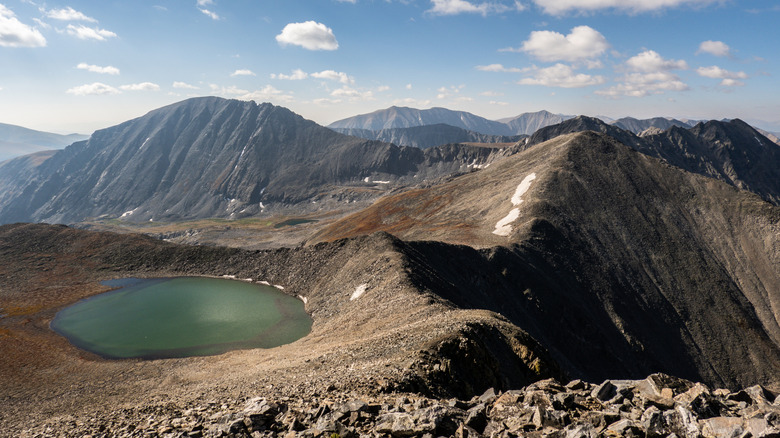
If any American lake were to earn a comparison to the Pacific Ocean, an obvious candidate would be a stunning Great Lake like Lake Superior and its crystal-clear water. Pacific Tarn may not be as mighty, but it does preside over one of the most expansive views of any named lake in the United States, sitting at an elevation of a whopping 13,420 feet up in Colorado's Rocky Mountains.
True to its name, Pacific Tarn is one of the Colorado Rockies' most prominent examples of a tarn formation. Tarns are a type of small lake that forms in a glacially carved basin called a cirque and is usually dammed by glacial moraines. To put it in simpler terms, tarns form when glaciers punch a groove into a mountainside, which then fills with rainwater or snowmelt to form a lake. In short, Pacific Tarn owes its existence to the powerful glaciers that frequently move over the summits of the Colorado Rockies. The lake covers an area of only about 4.7 acres, though it reaches a (relatively) impressive depth of 28 feet. Pacific Tarn also consistently embodies its glacial origins with a frequent covering of snow and ice even well into the summer.
Ocean comparisons aside, Pacific Tarn actually gets its name from the mountain that serves as its home: the 13,957-foot Pacific Peak. Though it just barely misses out on making Colorado's famous "14er" club (peaks that surpass 14,000 feet), Pacific Peak's higher-elevation areas (including Pacific Tarn) provide awe-inspiring views of Colorado's Tenmile range, including extraordinary shots of the nearby Quandary Peak, Crystal Peak, and the similarly ocean-named Atlantic Peak.
The ultimate lake destination for daring mountaineers
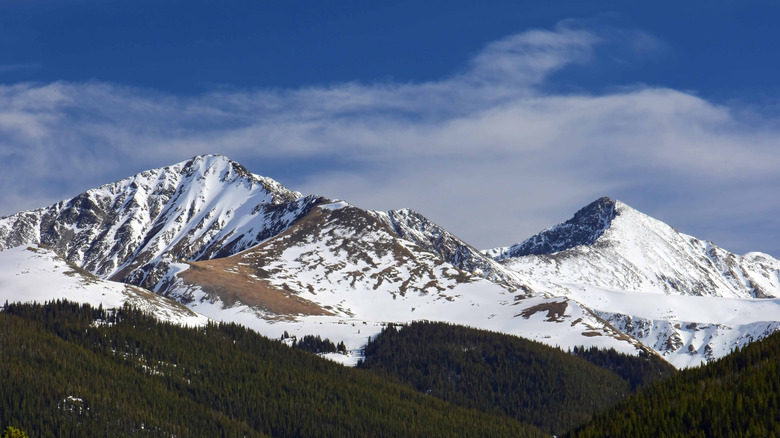
Pacific Tarn is located on the East Ridge of Pacific Peak, which offers a premier Colorado mountaineering challenge for anyone who wants to see America's highest named lake in person. The lake itself sits on a plateau about 500 feet below Pacific Peak's summit. The nearly 7-mile Pacific Tarn Trail is certainly not an easy route for the average hiker. Even if the terrain were perfectly flat, the lake's 13,400-foot elevation is well above the lower limits for altitude sickness becoming a potential hazard.
Hikers who do make the trip up to Pacific Tarn will use the McCullough Gulch Trail to access the main ascent to Pacific Tarn. The McCullough Gulch Trail is a stunning hike in and of itself, covering magnificent mountain vistas. Though the trailhead is located near Breckenridge, the McCullough Gulch Trail and the main route to Pacific Tarn are part of Colorado's White River National Forest, a vast Rocky Mountain haven that's also home to the iconic Colorado landmark of the Maroon Bells Scenic Area.
Hikers on the McCullough Gulch Trail can terminate their journey at Pacific Tarn, but they can also continue onward to the Pacific Peak summit, or even hit both ocean-themed mountains on the strenuous, 7.6-mile round-trip trek from the Mayflower Gulch trailhead to Pacific Peak and Atlantic Peak. If you're willing (and able) to carry a kayak up the side of Pacific Peak, you can enjoy the novelty of kayaking on America's highest named lake. Afterward, reward yourself with a scenic skiing adventure at the gorgeous Colorado mountain town of Breckenridge just a short drive away.