

The Top 5 Most Iconic Landmarks To Visit In Colorado
Colorado's landscape is defined by extremes. Within a relatively compact region, the state contains high alpine peaks, arid plateaus, dense forests, and deep canyons. At the core of this incredible diversity are a few landmarks that truly stand out. Their stunning features have been shaped over long geological timelines and are, in many cases, layered with cultural or historical meaning.
This list brings together five of the most recognizable destinations across the state. Each offers a distinct point of entry into Colorado's terrain. Some, like Pikes Peak, are known for their elevation and accessibility, drawing visitors who want to experience high-altitude conditions without extensive backcountry travel. Others, such as Red Rocks Park and Amphitheatre, combine natural formations with built infrastructure, creating spaces that function both as landscapes and as more formal venues for entertainment. Together, the landmarks below illustrate the range of attractions and experiences that Colorado is best known for.
Mesa Verde National Park
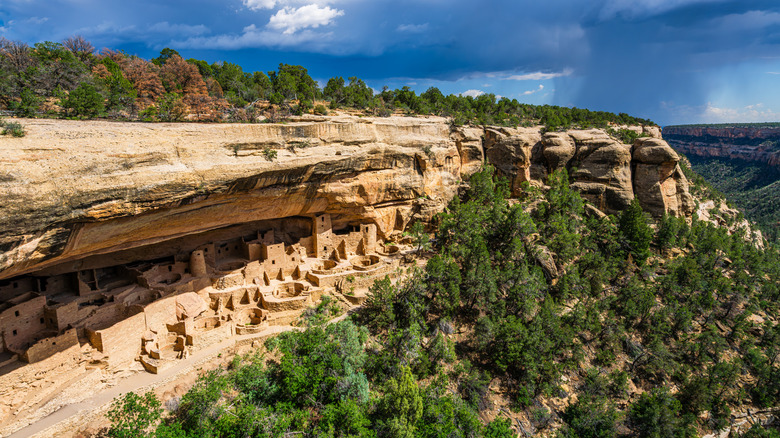
Located in southwestern Colorado, Mesa Verde National Park offers scenic hikes amid sweeping high desert landscapes and incredible stargazing opportunities at night. Most notably, the park is known for its scenic and well-preserved historic sites, lived in by the Ancestral Pueblo people for roughly 700 years, until around 1200 A.D. There are more than 4,500 archeological sites in the park, and 600 of them are cliff dwellings that the Pueblo people built into the surrounding cliffs. These preserved relics of ancient history contribute to the park's status as a UNESCO World Heritage Site.
There are 30 miles of hiking trails at the park, and some trails feature unique artifacts. For example, the Far View Sites hike, less than 1 mile in length, takes visitors through the heart of a former Pueblo village and farming area. The Long House Loop is a 5-mile paved trail that leads to an overlook with views of cliff dwellings. The park offers ranger-led tours of the ancient dwellings to give visitors an up-close perspective of the Pueblo people's incredible engineering abilities. Tours must be reserved in advance — in 2026, they will run from May 4 to October 21. Visitors can also download the Mesa Top Loop Drive Audio Tour, narrated by park ranger TJ Atsye, who is Laguna Pueblo and a direct descendant of the people who used to live there.
As an International Dark Sky Park, Mesa Verde is one of the best U.S. national parks for stargazing, and offers a ranger-led Night Sky program every Wednesday at 9 p.m. in 2026. For overnight visits, Morefield Campground is located 4 miles from the park's entrance. The park is roughly 40 minutes from the city of Durango by car, and a 7-hour drive from Denver. The closest major airport is Albuquerque International Sunport (ABQ), which is a 4-hour drive away.
Maroon Bells Scenic Area
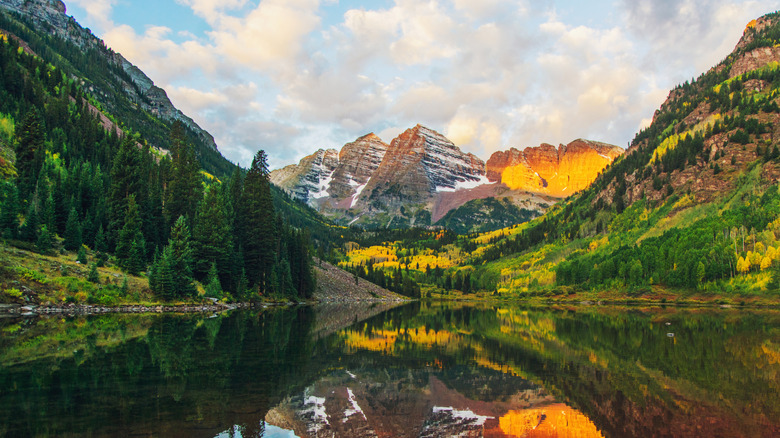
Located around 30 minutes from Aspen by car, the Maroon Bells are "the most photographed place in Colorado," according to the state's tourism website. The 14,000-foot peaks are bell-shaped, and their unique maroon color, from which their name is derived, arises from oxidized iron within the mountain's sediments, a geological process dating back millions of years. The Maroon Bells Scenic Area features several hiking trails, ranging from the 1.9-mile Scenic Loop Trail, ideal for photography, to the 26-mile Four Pass Loop, a gorgeous backpacking route.
The park offers a shuttle that departs from the Maroon Bells Welcome Center, located at Aspen Highlands Ski Area. This is the most convenient way to enjoy the park, as private vehicles are required to arrive prior to 8 a.m. or after 5 p.m., depending on the type of reservation. Those traveling by shuttle must purchase a ticket in advance and can find parking at the Welcome Center, while those driving directly to Maroon Bells Scenic Area must get a Trailhead Parking Reservation. Permits are required for camping in the Maroon Bells-Snowmass Wilderness Overnight Permit Zones. Vehicles are permitted between May 15 and October 31, and shuttle buses run from May 22 to October 18.
Red Rocks Park and Amphitheatre
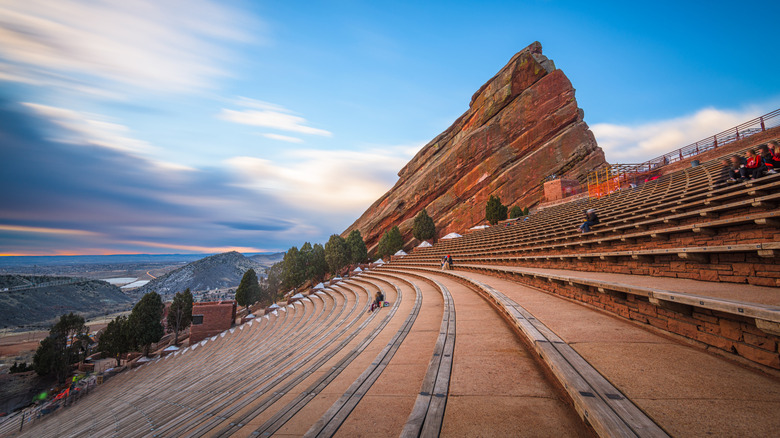
Red Rocks Park and Amphitheatre is an acoustic marvel shaped by nature and a popular destination for visitors and concert-goers alike. It's described as "the only naturally-occurring, acoustically perfect amphitheatre in the world," according to the venue's website. Ancient sandstone rocks form a natural bowl that amplifies sound. It sits on the traditional land of the Arapahoe, Ute, and Cheyenne people, and the Ute were the first to take note of its acoustic quality, reports National Geographic. In 1941, the the city of Denver transformed it into a performance venue that has since hosted a sweeping range of artists, from Jimi Hendrix to Kendrick Lamar. Red Rocks also hosts film screenings, fitness events like "Yoga on the Rocks," and cultural festivals. The amphitheatre is as much about Colorado's culture and sound as it is about natural beauty.
The seating area rises steeply, reaching a capacity of 9,525 spectators. Each section offers a different vantage point – of the stage, certainly, but also of the surrounding plains stretching east toward Denver. During the day, the site doubles as a recreational space. Visitors can explore the network of relatively short trails that wind through the park's rock formations. For example, the Trading Post Trail, a 1.4-mile route, is a popular option with views of the rocks and valleys. The Visitor Center and Red Rocks Hall of Fame are also worth checking out for more about the rich history of the site.
Access to the amphitheatre is free during non-event hours. The venue operates seasonally, with most events and performances scheduled between March and November. Located about 15 miles west of downtown Denver, Red Rocks is easily reached by car, and shuttle services are often available from the city on event nights.
Manitou Incline
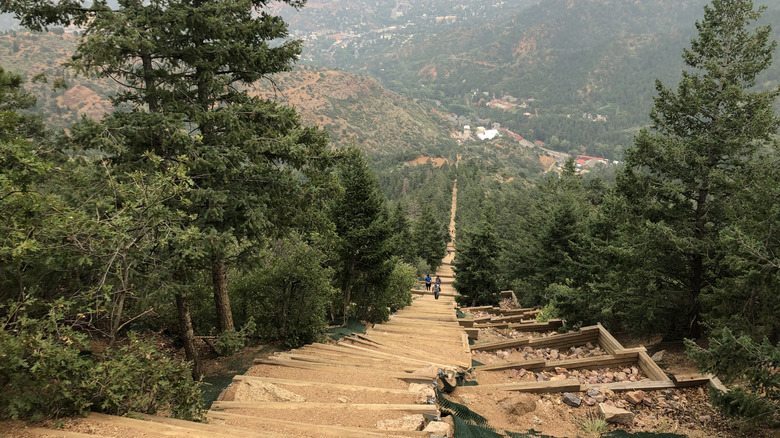
Along the eastern side of the Rocky Mountains, the Manitou Incline is a steep ascent with a stunning payoff. Originally built as a cable railway track in the early 1900s, it is now a staircase that climbs more than 2,000 feet in under a mile. The grade is relentless, averaging around 45%, with sections that feel steeper still. The climb takes about one to two hours. What draws people here most is the physical challenge — a test of strength, stamina, and grit. At the summit, hikers are rewarded with sweeping views across the plains and down into the foothills below.
The descent, importantly, follows a different route. The Barr Trail, a 3-mile, more gradual path, travels back down toward the base. Reservations are required to hike the Incline, a measure introduced to improve safety and manage environmental impact. Timed entry slots help stagger the steady flow of climbers, especially during peak months. Bookings open on the 1st of each month for the following month, and the incline is closed on select dates throughout the year for special events.
The Manitou Incline is located near Manitou Springs, one of Colorado's best underrated mountain towns for outdoor adventures, around 75 miles south of Denver. There's no entry fee for Manitou Incline, and visitors can take the free 33 shuttle bus to get there from downtown Manitou Springs. The historic downtown area also has a cluster of amenities, including cafes and drinkable mineral springs for post-hike recovery.
Pikes Peak
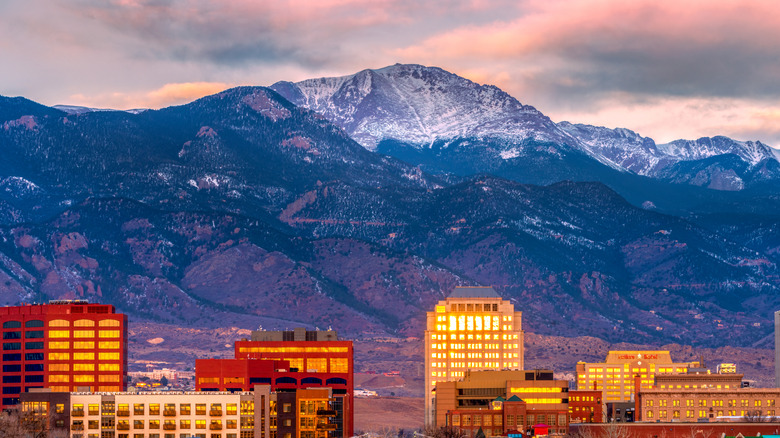
Standing at 14,115 feet, Pikes Peak is one of Colorado's most accessible "fourteeners," a category of mountains exceeding 14,000 feet in elevation. Located around 30 miles west of Colorado Springs, it has long held cultural and historical significance. For example, it inspired Katharine Lee Bates to write "America the Beautiful" after a visit to the summit. That may be part of why the mountain is often affectionately referred to as "America's Mountain." The mountain's prominence, both visually and geographically, has made it a go-to landmark for travelers and residents alike.
Unlike many peaks at similar elevations, Pikes Peak can be reached by multiple methods. The Pikes Peak Highway is a 19-mile paved road that allows visitors to drive to the summit, weather permitting. Alternatively, the Pikes Peak Cog Railway provides year-round train journeys from the base to the top. Traveling by foot is best suited for experienced hikers — it's a 27-mile round trip trek that requires tackling steep inclines. Beginning in Manitou Springs, the trail stretches roughly 13.5 miles one way, with an elevation gain of nearly 8,000 feet. Hikers can split the journey up into two days by spending the night at Barr Camp.
Conditions on Pikes Peak can vary significantly depending on elevation and time of day. While the base may be warm, the summit frequently experiences much colder temperatures — a difference of roughly 30 to 40 degrees Fahrenheit. It's a good idea to bring layers and drink plenty of water to prevent altitude sickness. The Summit Visitor Center has some amenities, food service — the donuts are legendary — and educational exhibits about the mountain's geology, climate, and history. Pikes Peak is open year-round, but reservations are required to drive on Pikes Peak Highway between May 26 and September 30.