

Washington's Stunning Beaches Where You're Most Likely To See Glowing Bioluminescence
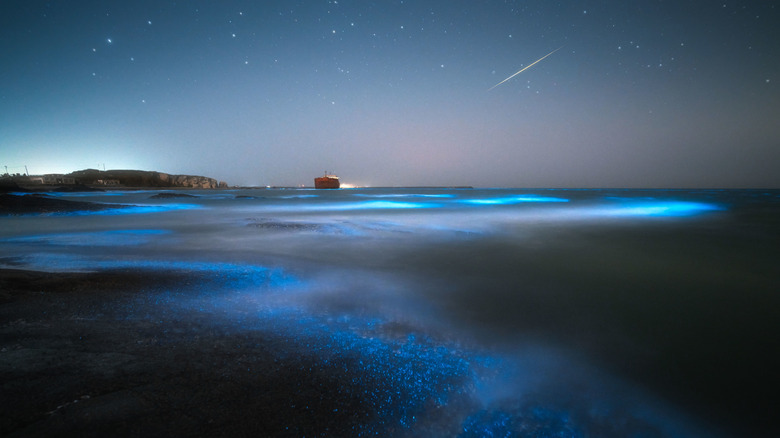
In the warm months between May and September, parts of the Pacific Ocean and the waters connected to it light up in a special way: Microscopic organisms that live in the sea emit light, called bioluminescence, when they're disturbed by movement. A fish, a wave, or a paddle moving through the water can all cause a shimmer of light that is nothing short of magical. At night, under the right conditions, these lights become visible to the human eye. Washington, like California, is home to many beautiful beaches where visitors can experience bioluminescence.
It can be tricky to know how to see this incredible phenomenon up close. Among the relatively few local public spaces that have waterfront access, most parks, beaches, and marinas close at dusk. In addition, bioluminescence is actually quite difficult to see from shore and becomes more visible the farther out into the water, away from light pollution, you are. So, paddling is hands down the best way to get an up-close experience. Just keep in mind that the water is filled with living creatures that must be treated with care. Repeatedly forcing bioluminescence by swooshing a paddle or your hand around in the water can actually harm them.
Even once you've found a good spot for viewing bioluminescence, visibility fluctuates day to day and is dependent on a number of environmental factors. For example, cloudy skies can reflect light pollution onto the water. Those factors aside, here is a list of beaches where there are strong odds of seeing glowing bioluminescence across Washington state.
San Juan Island National Historical Park
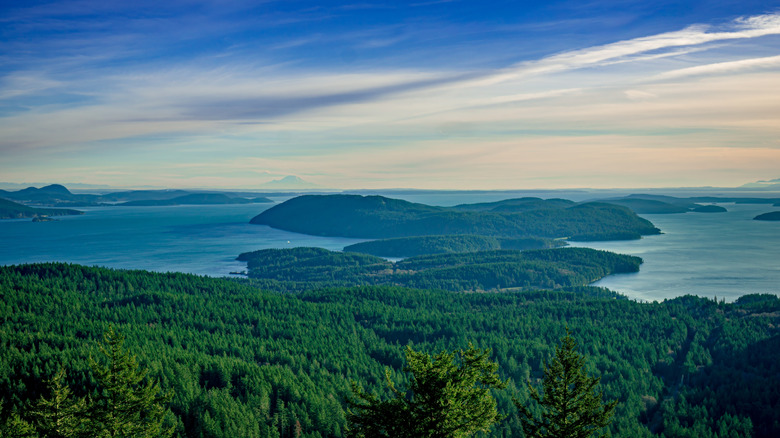
San Juan Island is part of a large cluster of 172 islands and reefs that sit off the northwest coast of Washington state, collectively called the San Juan Islands. This cluster of islands is considered one of the best areas in the entire world to see bioluminescence. Specifically, Garrison Bay and Westcott Bay have been identified as excellent sites for viewing the microorganisms lighting up. The water is accessible via sites and trails located within the San Juan Island National Historic Park. The Bell Point Loop Trail, which is located in the park's English Camp area, takes you right along the bays' shorelines, and the connecting Westcott Bay Trail takes you farther along the shoreline of Westcott Bay. Unlike many parks, these grounds stay open 24 hours a day, seven days a week. In addition, they're tucked away from major city lights, giving you a better chance of catching a glimpse of this magical phenomenon.
There are several kayak tour operators on San Juan Island with bioluminescence tours. For example, San Juan Outfitters offers a 2.5-hour guided kayak tour between May and September, starting at $150 per person (as of this writing). These tours start at sunset on the northwest corner of the island and go right through Garrison and Westcott bays. With only 12 people allowed per tour, this is an accessible, personalized experience.
On the eastern side of the island, there are some folks who report seeing bioluminescence on Jackson Beach near Friday Harbor, the island's biggest town. However, it's not an ideal viewing site, given that there's light pollution and there can be a lot of driftwood on the beach. That said, many kayaks launch from Jackson Beach, and if you go farther out toward Dinner Island in Griffin Bay, you're in a much better position to see the sea sparkle.
Spencer Spit State Park on Lopez Island
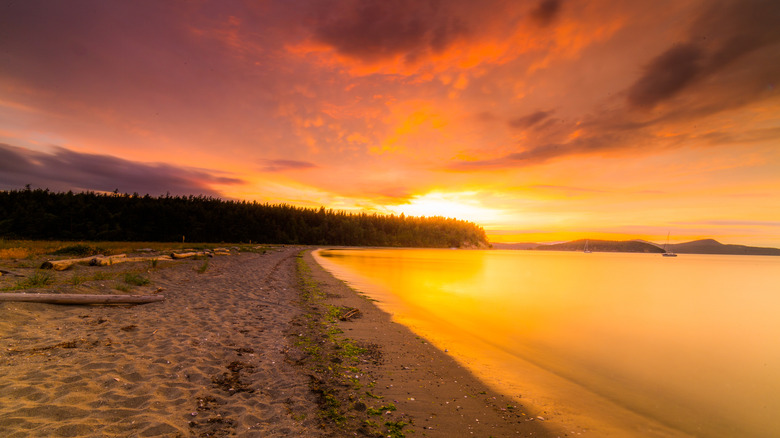
Also known as "The Friendly Isle," Lopez Island is another one of the San Juan Islands that's most accessible to visitors, including by ferry from the mainland. It boasts 63 miles of shoreline located along the nutrient-rich Salish Sea. In the northeast corner of the island is Spencer Spit State Park, a 138-acre gem of a park that gets its name from a land formation called a sand spit, a thin strip that stretches out into a saltwater lagoon. The park's campgrounds include beachfront sites, and you can rent sea kayaks and stand-up paddleboards on the beach, making the park an ideal destination for seeing the bioluminescent glow.
One visitor on Facebook reported seeing bioluminescence after paddling out on the water no more than 50 feet. They noted: "If you were willing to wade in waist deep, you could probably see and play around in the bioluminescence too." That is, if you don't mind the cold water. Average water temperatures in the summer hover in the low 50 degrees Fahrenheit – and that's the warmest it gets all year.
In addition to the light show at night, there are plenty of daytime activities to enjoy. Spencer Spit State Park is a great place to see all kinds of wildlife. Some visitors have reported seeing jellyfish, starfish, and seals in the water, and a wide variety of bird species. The 2 miles of trails in the park offer gorgeous views along the lagoon. Even when the campsites are full, the park tends to remain relatively quiet. With the popularity of bioluminescence, such a peaceful, uncrowded setting to experience the glow up close is rare and precious.
Golden Gardens Park in Seattle
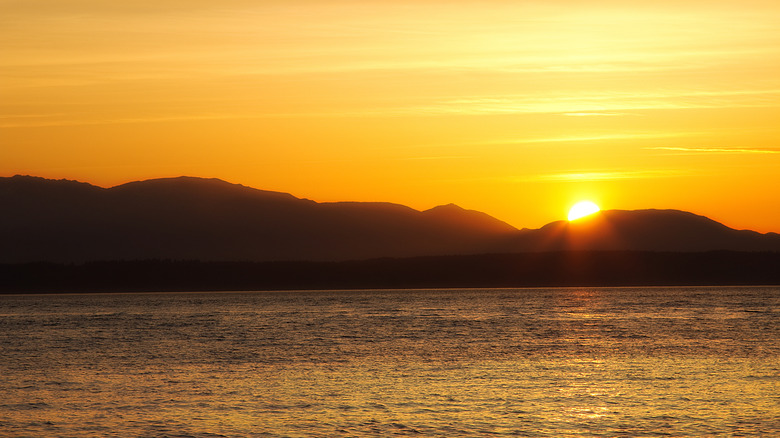
It's hard to believe you can see the natural beauty of bioluminescence without leaving a major city. In the north end of Seattle, Golden Gardens Park offers such an experience just a 30-minute drive from downtown. It's a popular park that preserves wetland habitats on the Puget Sound and offers direct access to a rugged beach where visitors have reported seeing that magical glow.
It's possible to view a bit of sparkle from the beach itself, especially when the sand is disturbed by waves. The beach is separated from streets and city buildings that would emit light pollution by a thick treeline. However, there are fire pits at this beach that are allowed to burn until 10 p.m., so the light from the fires may interfere with viewing. As one visitor commented on Facebook, "The real show is in the water." So, grab a board or a kayak and paddle out.
The park closes at 10:30 p.m. during the summer, leaving a small but decent enough window after sunset to spot some glowing organisms. There are two parking lots at the park, one of which is closer to the beach area. It gets crowded on summer weekends, and there is additional parking at the nearby marina to the south. Golden Gardens is a great option for anyone who'd rather not leave the city and wants an introduction to what all the bioluminescent buzz is about.
Teddy Bear Cove near Bellingham
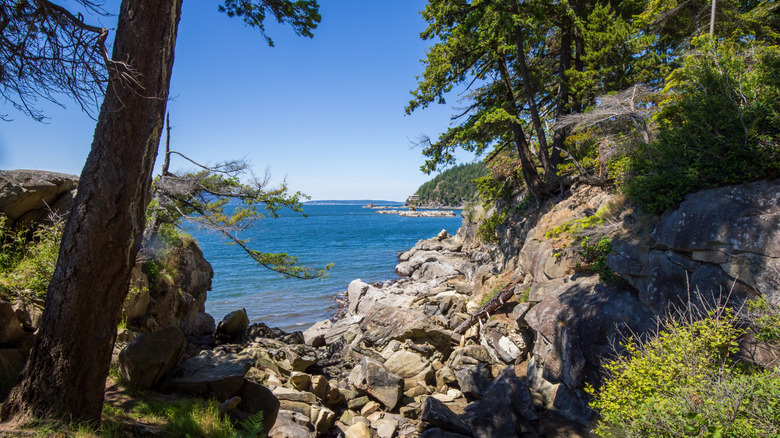
Near the Canadian border is the coastal town of Bellingham, known as a hub for outdoor recreation with its proximity to both mountains and sea. A 15-minute drive south of the city, away from the big lights, is a cozy little beach where bioluminescent plankton are plentiful. Teddy Bear Cove offers nearly 1,500 feet of sandy beach, with stunning, south-facing views over Chuckanut Bay and islands in the distance. Teddy Bear Cove gets some additional protection from nearby light pollution because it sits at the bottom of a series of relatively steep cliffs. At night, the park is closed, but its waters remain accessible by boats and paddle board.
There are several boat rentals and tour operators in the Bellingham area. Bellingham's Community Boating Center offers kayak and paddle boat rentals, along with three-hour bioluminescence tours in Bellingham Bay. For the tours, you have the option to choose from outings in kayaks or what's called a "Mega SUP" that can seat roughly six guests. The tours emphasize science and marine health, emerging from the Community Boating Center's ongoing ecology research in partnership with Western Washington University. Moondance Sea Kayak Adventures operates bioluminescence tours that depart from the beach at Larrabee State Park, just south of Teddy Bear Cove.
Olympic National Park
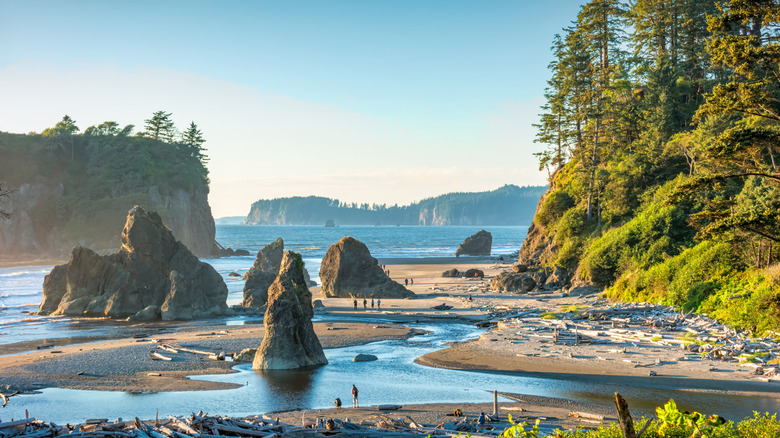
If you want to experience bioluminescence in a more rugged natural landscape, Olympic National Park is the place to go. This park is home to more than one breathtaking natural wonder, so it's no surprise it's one of the most popular national parks in the U.S. The glacier-capped Mount Olympus towers over the 1 million acres preserved in this park, containing old-growth rainforests, more than 1,100 species of plants, and 300 species of birds. Its 70 miles of coastline are known for their dramatic rocky cliffs, as well as offering visitors an up-close encounter with Pacific wildlife.
The park's Kalaloch and Ruby beaches are great locations to search for signs of that alluring sapphire glow, located on the southwest coast of the Olympic Peninsula. The setting is quite majestic, with massive rock formations in the waters creating natural objects against which the waves crash and glow. Camping is possible all year round at Kalaloch Beach and at the nearby South Beach during the summer months. The tides at these beaches can be quite dangerous, so entering the water is not recommended here. Check tide charts to see where the tide will be during your visit — these are available at the Kalaloch Ranger Station.
Olympic National Park is an ideal location for nighttime activities and ranks right alongside other parks that have very little light pollution. It's as good a place for seeing sparkles in the vast ocean below as it is for seeing sparkles in the skies above. In fact, the park has its own ranger-led telescope program, with free access to a powerful telescope at Hurricane Ridge during the summer.