

The California Beaches Where You're Most Likely To Find Glowing Bioluminescence
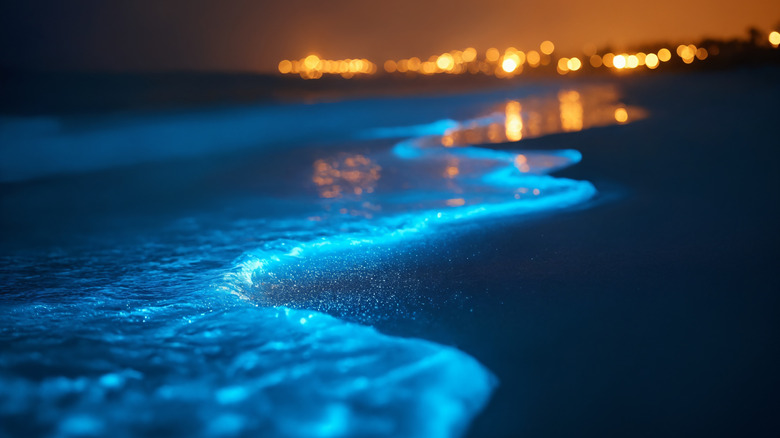
Some things in nature feel like straight fantasy, and one of these is bioluminescence. Bioluminescence is a unique, natural phenomenon that occurs when specific species of phytoplankton, dinoflagellates, respond to water conditions to create algae blooms (or "red tides"). During the night, movement in the water triggers millions of these tiny organisms to emit light in order to deter predators, creating bioluminescence. One such place where bioluminescence occurs is the California coast, that storied land full of some of the USA's most iconic destinations and some of its picturesque national parks, including the Redwood National and State Parks.
California is seeing an increasing number of bioluminescence incidents, generally caused by Lingulaulax polyedra (L. polyedra) organisms. This is especially true in the warmer southern waters, where the ideal conditions for red tides are more common. However, there are spots along the central and northern coasts where you can spot the dazzling waves, too. To find these beaches, we sourced information from experts such as the Scripps Oceanography Institute and local websites like Visit California. We also took it to the people, gathering data from social media and travel blogs.
Wherever you decide to go, know that timing is everything. According to Scripps, ocean conditions best for these algae blooms occur from spring through fall, but they are far from guaranteed. Timing also must be considered on the night you head to the beach: Scripps recommends heading to the beach about two hours after sunset. As even experts cannot predict when bioluminescence will occur, keep abreast of local news sources, including social media pages like the Southern California Bioluminescence Facebook group.
La Jolla Shores
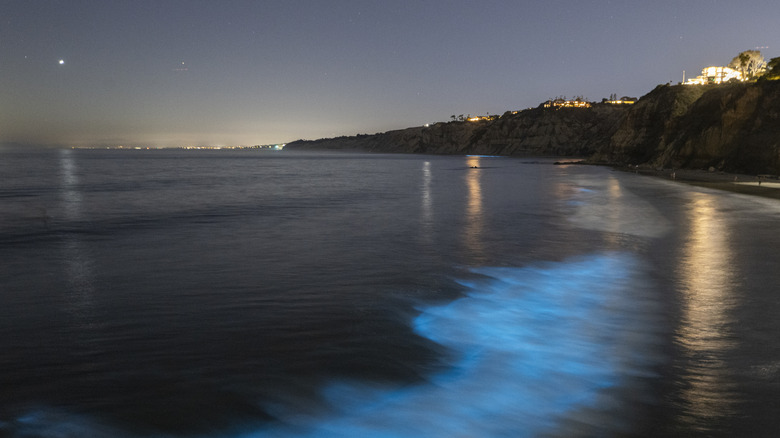
California is full of hidden beaches for a coastal escape, and San Diego is one of its stars. Even better? San Diego is by far one of the best places in the state to see bioluminescence, thanks to its warm waters and sheer variety of beaches. The beach at La Jolla Shores is known by tourists and locals alike for its barking seals and sea caves – and also for its sparkling tides. As a bonus, La Jolla also happens to be the center of bioluminescence research in California, specifically at Scripps Pier. The Scripps Oceanography Institute has been conducting research during algae blooms since the early 1900s around the pier, which is a hub for bioluminescent activity in the area. The nearby deep-sea canyons and the melding of warm water and cooler, nutrient-heavy waters make this a particularly good spot for the red tides. La Jolla is also ideal for viewing the phenomenon due to its calm waves and long shoreline, making it easy (and safe) to see the water up close.
La Jolla Shores is the main beach in the greater neighborhood of La Jolla in northwest San Diego, approximately 20 minutes from downtown. The best time to view bioluminescence off La Jolla Shores is between spring and fall, from 10 p.m. to midnight during the new moon (darker skies are prime viewing opportunities). Additionally, bioluminescence is most common at La Jolla after a red tide event; keep abreast of local bioluminescence sightings on websites like the Southern California Coastal Observing System or the Scripps Institute Pier Cams.
Torrey Pines State Beach
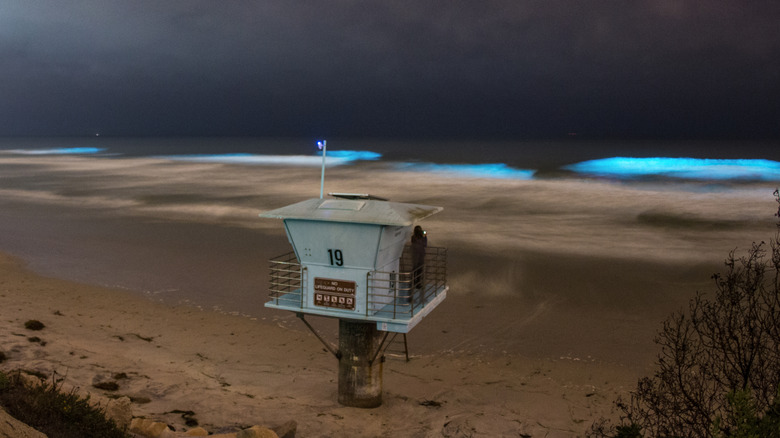
San Diego is one of California's top-tier surf towns with beautiful beaches, so it's no surprise that more than one beach in this iconic city is a hotbed for bioluminescent activity. North of La Jolla and south of Del Mar is the gorgeous Torrey Pines State Reserve, adjacent to picturesque Torrey Pines State Beach. Although just 25 minutes from downtown, Torrey Pines is considered one of the best places in San Diego to see the bioluminescent waves, as it's one of the darkest corners of the metropolis. It's best to escape those city lights to truly experience what's called the "northern lights of the sea."
The reserve does close at sunset, so access is trickier. Parking is still permitted along North Torrey Pines Road, outside of the North Beach parking lot. From here, you'll be able to take the trails down to the beach. Torrey Pines is also a favorite spot for surfers — even during a bioluminescent bloom! Do note, though, that most experts caution against swimming during a bioluminescence event, as there is a small chance of skin reactions, eye irritation, and even respiratory issues for those who are sensitive, including asthma sufferers. To keep track of bioluminescence at Torrey Pines, follow local news on the subreddit r/sandiego, where locals sometimes discuss red tide activity. It's mostly likely to happen in the summer, with California.com noting that Torrey Pines "witnesses the bioluminescent charm, particularly during warmer months when plankton blooms are more prevalent."
Tomales Bay
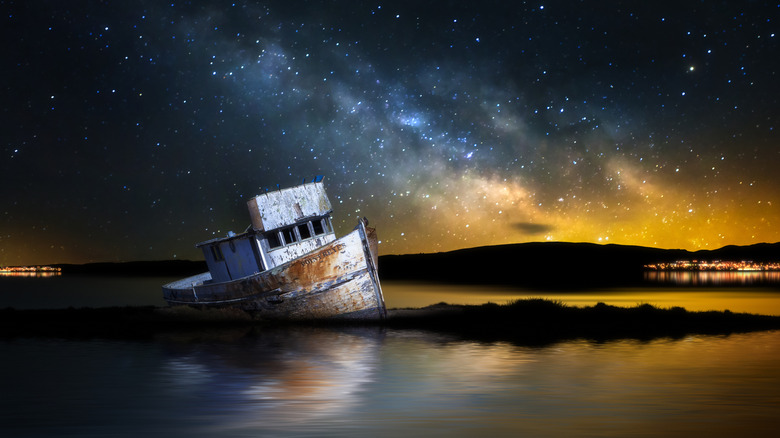
Although Southern California is known more for bioluminescence than the state's northern shores, there are a few key spots up the coast that regularly feature this unique phenomenon. One such place is Tomales Bay in Marin County, which Visit California calls "a dependable spot for bioluminescence."
Tomales Bay lies about 30 minutes outside of Bodega Bay, one of California's most beautiful small towns, and about 1.5 hours northwest of San Francisco. It's also adjacent to the treasured Point Reyes National Seashore, a protected coastline and marine sanctuary known for whales, birds, and dramatic views. The reserve means that Tomales Bay has very little light pollution, ideal for bioluminescence.
Unlike the other beaches on this list, the bioluminescence at Tomales Bay is not best seen from the shore, but rather from the water — primarily via kayak. The paddles ignite the sparkling mini-organisms, and you'll leave a glowing trail in your wake — there's truly nothing like it. There are several companies that lead regular bioluminescence kayak tours in Tomales Bay; a guide will know where to go and how to avoid the potential dangers of paddling along a dark, rocky, and occasionally windy shoreline. Companies like Blue Waters Kayaking or Napa Valley Paddle also keep their fingers on the pulse of bioluminescence and are able to recommend the best time to hit the waves during their tours.
Crescent Bay Beach
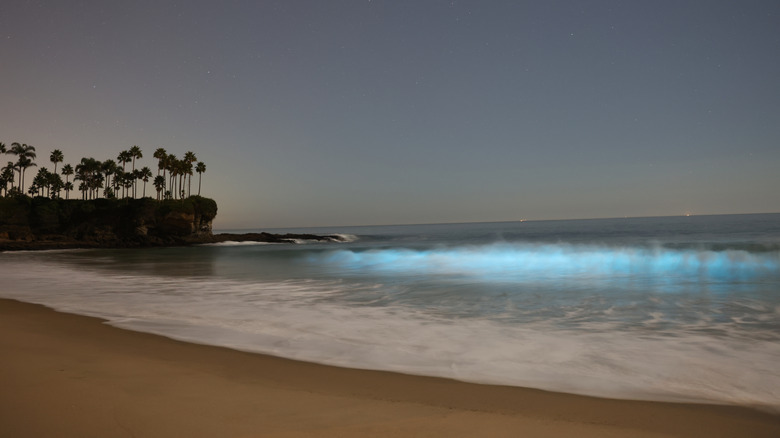
Laguna Beach, approximately 50 miles south of Los Angeles in Orange County, is one of the most beautiful stops along the Pacific Coast Highway. And while it's known as a wealthy coastal enclave and as the setting of the (in)famous 2000s reality TV show of the same name, it's also one of the best places in California to catch bioluminescence. The many coves congregate the glowing plankton near the shoreline, and relatively low light pollution makes them even more visible. While the city features many of these coves, there's one in particular that's a favorite for bioluminescent hunters: Crescent Bay.
Crescent Bay, shielded by cliffs, is known for its calm, pristine water. The water is so calm, in fact, that the gentle waves don't necessarily spark the dinoflagellates into bioluminescence — but a gentle hand sweep through the waters may do the trick. Your footsteps through the wet sand may even glow, as one local reports on the Reddit thread r/itookapicture: "The best part is stomping around on the wet beach as the tide pulls back and watching the glowing shockwave of your footsteps ripple through the sand." As the bioluminescence can be hard to spot at first, experts also recommend reducing artificial light (read: your phone) and letting your eyes adjust for better viewing.
To reach Crescent Bay, head north of Laguna Beach's Main Beach on the North Coast Highway for about 1 mile; beach access and parking is near Cliff Drive. For reports on sightings in Laguna Beach, follow Orange County Outdoors on Instagram.
Pismo Beach
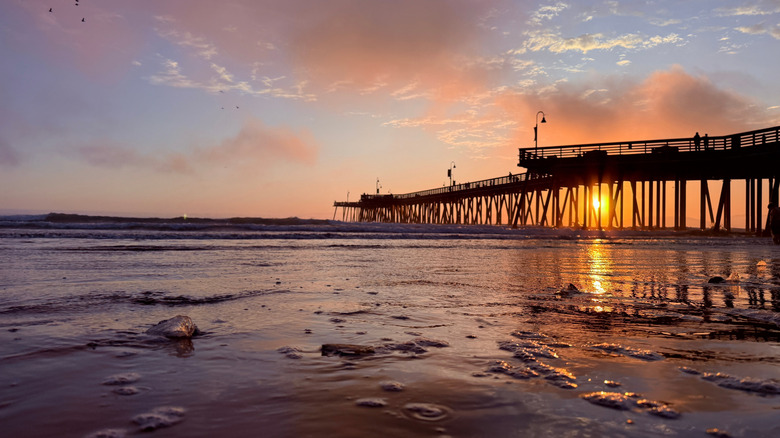
If you find yourself on California's picturesque Central Coast, there's still a chance for bioluminescence, and that's in Pismo Beach. Pismo Beach is approximately halfway between San Francisco and Los Angeles — four hours south and three hours north, respectively. While Pismo Beach is known as the land where wine country meets the sea, it's also "one of the most memorable Central Coast glowing beaches," according to Beachory.
Like many of the spots on this list, the months between June and September tend to have the most bioluminescent sightings in Pismo Beach, with warmer waters creating more key blooms. As the light show is notoriously unpredictable in Pismo Beach (just like it is everywhere else), track ocean conditions before you visit. The Pismo Beach Tides website provides up-to-date information for optimal viewing conditions — it's recommended to visit at low tide for the best glow opportunities. Pismo Beach can get crowded, so be a good environmental steward when you visit: Head to lesser-crowded sections of the beach, pick up your trash, and be gentle to the delicate organisms that are providing you this once-in-a-lifetime show (they're an important part of the sea!).