

Utah's Newest State Park Is A Paleontological Treasure With Thousands Of Dinosaur Bones
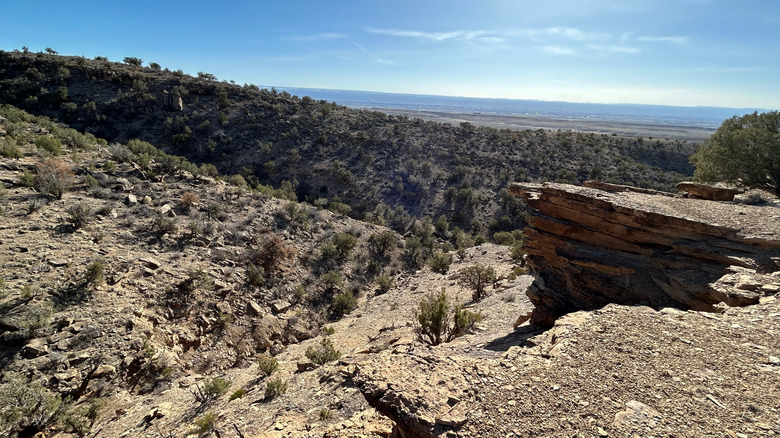
Utah's one-of-a-kind landscape is responsible for some of America's most intriguing outdoor destinations, from the iconic features of Utah's "Mighty Five" national parks to premier ski resorts at Park City and elsewhere. But the wonders of Utah's unique geology do not end at the surface. On top of (or, rather, below) its acclaimed topography, Utah has many of the nation's richest fossil beds, with well-preserved remains of all sorts of prehistoric life. This notable wealth of fossils is the foundation of Utah's newest state park. Though it's only a few years old on paper, Utahraptor State Park protects a paleontological heritage dating back to the age of the dinosaurs.
The park's name comes from its most famous dinosaur resident, yet Utahraptor State Park's Mesozoic denizens are far more extensive than just one dinosaur species. Sitting above one of the state's top paleontological bone beds, Utahraptor State Park gives visitors a chance to explore tens of millions of years of Earth's history for the cost of one $15 day-use entry fee. Even if you're not a dinosaur enthusiast, Utahraptor State Park offers superb off-road areas and scenic hikes for more classic Utah adventures. Though it's nearly a four-hour drive from Salt Lake City International Airport (SLC), Utahraptor State Park is just 15 miles outside of Utah's famed national park gateway of Moab. As a result, Utahraptor State Park is both a paleontological treasure and a worthy entry on a timeless Utah sightseeing adventure.
Utah's hidden treasure above and below ground
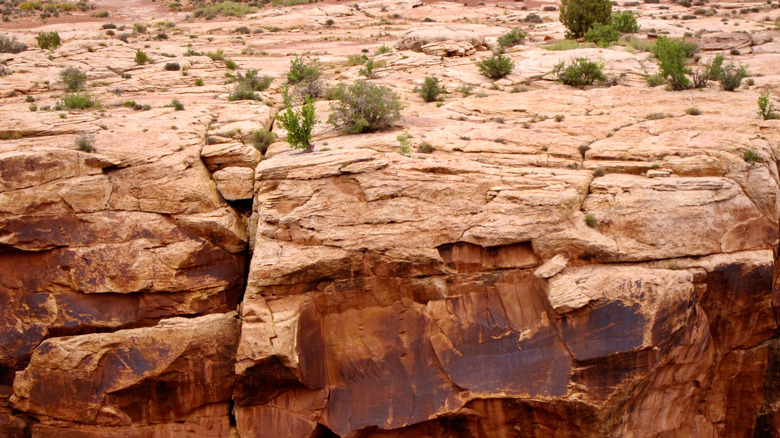
Even without its paleontological features, Utahraptor State Park sits in some prestigious real estate in Utah's parklands. Being so close to Moab, Utahraptor State Park is just 11 miles from the spectacular scenery and unique hikes of Arches National Park. But while Arches is famous for its distinctive rock arches and other geological formations, Utahraptor State Park represents a different, but no less compelling, aspect of the region's natural history. Ironically, a state park that only opened in 2025 protects resources that date back more than 100 million years. The park's current boundaries sit on one of North America's most fertile dinosaur fossil beds, with about 5,500 bones from over 10 different dinosaur species recovered from the site to date (and an estimated 100,000 more bones possibly waiting to be discovered).
The most famous of these dinosaur residents is the park's namesake Utahraptor ostrommaysorum, a carnivorous raptor-type dinosaur that lived during the Early Cretaceous, about 125 million years ago. Other dinosaurs found underneath the park are the armor-plated Gastonia and the long-necked Moabosaurus (named for the nearby town).
Utahraptor State Park's impressive dinosaur legacy comes from its location atop the Dalton Wells Quarry, which has been one of the nation's richest fossil beds since at least the 1960s. Today, dinosaur lovers can explore the park's nearly 7,500 acres with the knowledge that they are likely walking mere feet above the remains of actual dinosaur specimens. (Note, however, that actually taking any fossil bones you may find is illegal). The park visitor center has a life-size replica of a Utahraptor skeleton and informative exhibits on the area's paleontological heritage. Dinosaur fans can also access the nearby Willow Springs Dinosaur Tracks and see authentic fossilized dinosaur footprints.
How to experience Utahraptor State Park in person
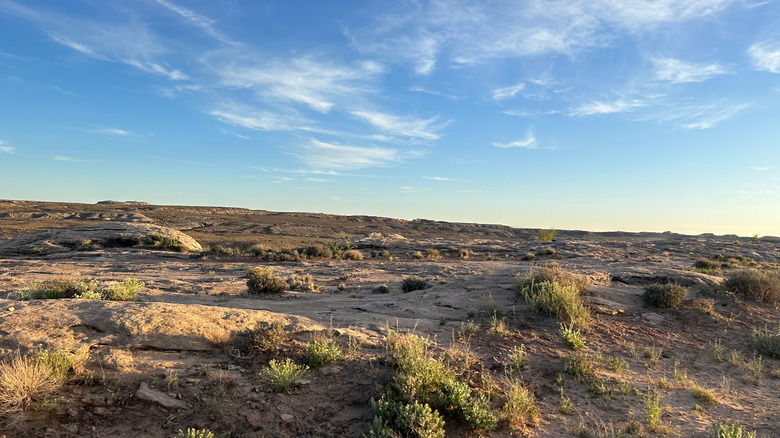
With Arches National Park getting rid of its timed entry reservation system — and often suffering from overcrowding and heavy traffic — Utahraptor State Park is a great alternative for an uncrowded Moab-area outdoor escape. Though the park is still not as developed as other Utah parks, visitors can find plenty of ways to explore Utah's formidable landscape in a single day. The 0.8-mile Dalton Wells Quarry Trail takes hikers on a scenic walking tour to the actual quarry where the Utahraptor was first discovered. Alternatively, the half-mile Utahraptor Historic Trail showcases the park's (relatively) recent history, including the site of the Dalton Wells Civilian Conservation Corps Camp from the 1930s, and (more somberly) the Moab Citizen Isolation Center where Japanese Americans were interned during World War II.
While hiking is a great way to explore the park, Utahraptor State Park's main recreational option is arguably off-roading. The attached Sovereign Trail System has about 50 miles of single- and double-track trails designated for motorized recreation. Riders can try the 10.5-mile Sovereign OHV Loop around the state park's stunning desert scenery, or the roughly 8-mile Willow Springs 4x4 Road connecting Utahraptor State Park to Arches National Park.
Utahraptor State Park offers two options for overnight guests: a developed campground equipped with various amenities and hookups and a more basic primitive campground for true wilderness immersion. Of course, nearby Moab has more modern lodging options for any dinosaur aficionado who's not keen on actually sleeping like the dinosaurs. Since Moab is also a terminus for the scenic Canyon Spirit train route through the Southwest's Rocky Mountains and national parks, Utahraptor State Park visitors can get their dinosaur fix and their train fix in one vacation!