

This Spectacular National Park In Utah Offers Unique Hikes For Adventurous Travelers
Utah's Mighty Five national parks — Arches, Bryce Canyon, Canyonlands, Capitol Reef, and Zion — beckon hikers from all over the globe. While beautiful hikes along the scenic cliffs and canyons of Zion National Park are worth every step, adventurous travelers looking for a different type of challenge should consider Arches National Park. With trails through a natural maze and a parkour-esque scramble through red rock landscapes, it boasts some of the most unique trails in Utah.
Over millions of years, geologic forces transformed a dry seabed that geologists call the Paradox Formation into magnificent sandstone spires, fins, and arches in the area now known as Arches National Park, per National Parks Traveler. As part of this natural process, the once-buried sandstone began to rise until it stood thousands of feet above sea level. Shaped by countless years of erosion, the landscape currently features over 2,000 majestic arches, including the longest arch in North America, Devils Garden. The park gets about 8 to 10 inches of precipitation annually, which allows erosion to occur year-round. Today, it boasts the densest concentration of natural arches on the planet.
You have several options for how to reach Arches National Park, but you will ultimately need a vehicle, as it is not accessible by public transportation. Alternatively, some local companies like Moab Adventure Center offer private tours with transportation included. The closest airport to the park, Canyonlands Field Airport, is about 20 minutes north without traffic, and has rental car facilities. However, the airport has just a handful of commercial flights from Phoenix, Salt Lake City, and Denver. Other options are to fly into Grand Junction Regional Airport in Colorado, which offers more flights and is approximately 90 minutes away by car, or Salt Lake City International Airport, about four hours away. If you're planning to drive directly to the park from the airport, keep in mind that Arches is among the U.S. national parks that got rid of reservations in 2026, and frequently has more visitors than parking spots between spring and fall. The National Park Service recommends arriving in the late afternoon or early morning to find one.
Unique hikes in Arches National Park
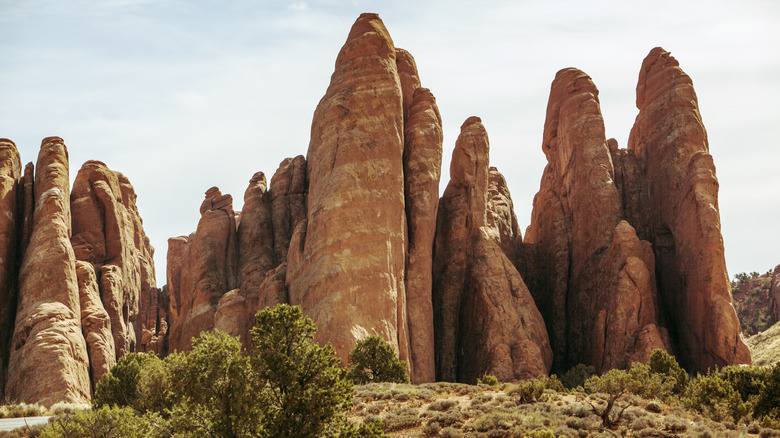
Arches National Park is full of one-of-a-kind trails, and while these treks will likely appeal to travelers with a sense of adventure, that doesn't mean they are all strenuous. Active families may enjoy the Sand Dune Arch to Broken Arch Loop trail, a 2.6-mile hike encompassing beautiful views of the park's picturesque sandstone arches. The route is rated moderately challenging on AllTrails, and it takes hikers past two famous formations — Sand Dune Arch and Broken Arch — as well as the bonus Tapestry Arch. The trail runs through a sea of desert grasses and wildflowers, the latter of which sport vibrant blooms in April and May. While exploring, keep your feet firmly grounded and avoid climbing on the rocks or the canyon walls.
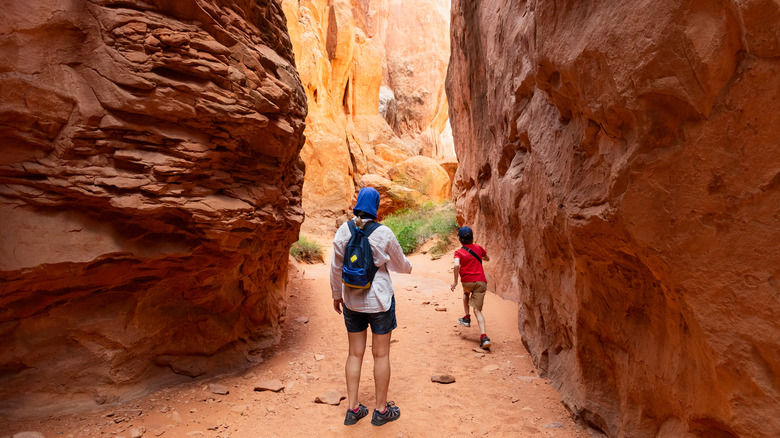
For a truly unique adventure at Arches — and perhaps across all national parks in the United States — traverse the Fiery Furnace, a natural labyrinth unlike anything else. The trail meanders between spires and towering canyon walls, at times getting so narrow that you'll have to squeeze and scramble your way through. Ranger-led tours of Fiery Furnace are offered from spring to fall at $16 per person, and are recommended for those who prefer to explore with an expert. The bloggers at Walk My World says the hike is largely family friendly, but children under the age of 5 are not permitted. Each hiker should have a good level of physical fitness, proper footwear, and at least one liter of water to stay hydrated in the desert, per NPS. If you go alone, follow the small arrows along the way to stay on track.
The challenging hikes of Arches National Park for the truly adventurous
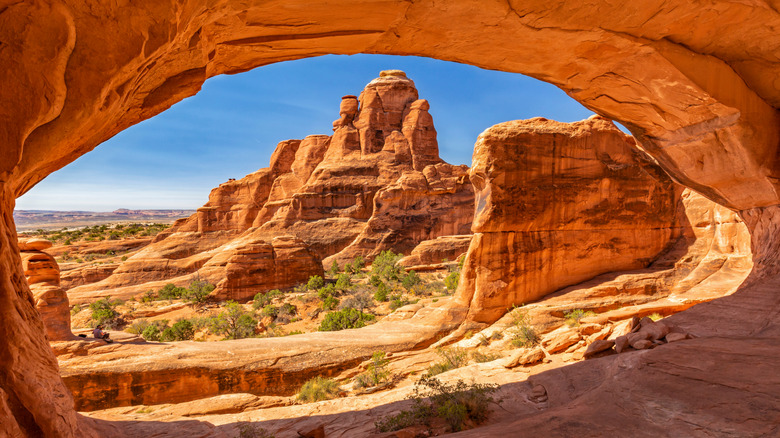
Despite welcoming over 1.5 million people in 2025, Arches National Park's more rugged Klondike Bluffs section remains far less visited. In this quiet northwestern corner of the park, intrepid hikers shouldn't miss the trek to Tower Arch. The journey begins with an 8-mile drive on a dirt road to the trailhead, followed by a challenging rock face navigated on foot. The trail is 2.6 miles roundtrip, with expansive views of some of the park's best under-the-radar scenery, including the Marching Men stone towers, Parallel Arch, and Tower Arch. Plan to be self-sufficient and prepare for little to no phone service or shade in this part of Arches, per NPS.
The 7.9-mile-long Devils Garden Trail can be tailored to your adventure, with various routes that range from beginner friendly to advanced. It features eight arches, with the magnificent Landscape Arch – the longest in North America – serving as the first major highlight on the loop if walked counterclockwise. In addition to hiking, you will have to do some scrambling to enjoy all of the landmarks. You will also have to traverse a primitive trail to reach Double O Arch, which can be challenging due to steep inclines and ledges. Don't forget to fill your water bottle at the Devils Garden Campground, or at the trailhead in the warmer months.
After sundown, Arches National Park transforms into one of the best U.S. national parks for stargazing. As an International Dark Sky Park, it has several great spots to view the cosmos, including the Balanced Rock Picnic Area, Panorama Point, The Windows Section, and the viewpoint at Garden of Eden. Adventurous travelers looking to extend their trip should consider an overnight camping experience in the backcountry. Permits are required and can be picked up at the Backcountry Permit Office located 2 miles south of Moab, as there are only four official backpacking campsites available.