

This Popular Beach In California Wasn't Always In The 'Best Of' Lists
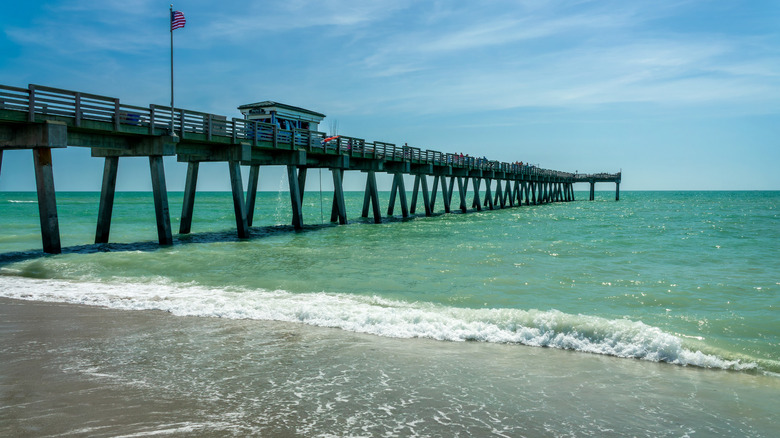
Beaches are nearly synonymous with California. To so many, California represents the land of sun, sand, and surf. And it's true, there are all kinds of beaches there — the popular sunbathing spots, the secret hidden coves, and even beaches where you can find sparkling bioluminescence. Beaches are so ingrained in the culture and mythology of the state, it's hard to believe that, in fact, most in California were artificially constructed. That is true of even one of the state's most beloved and popular beaches, Venice Beach near Santa Monica, roughly 15 miles west of Downtown Los Angeles.
Venice Beach has graced numerous "best of" lists, from Tripadvisor's ranking of the best beaches in California to lists compiled by travel bloggers. However, in early America, the areas where the (not yet fully charted) oceans met the land were actually kind of scary places. It wasn't until the 19th century that beaches in Europe and North America were constructed with the intention of making them safer and more inviting, and specifically as sites for upper-class leisure. Prior to colonization, the area now called Venice Beach was part of a vast wetland ecosystem and home to the Tongva Nation, a people who had been living there for thousands of years. After the area was conquered by Spanish settlers, a magnate arrived with a vision: turning the place into a replica of Italy's city of canals. In the late 1920s and early 1930s, oil mania ensued, littering the area with drilling rigs.
Venice Beach has undergone several major transformations before it became what it is today — a destination you absolutely can't miss if you're traveling to Southern California. The Venice Beach retro-modern boardwalk in particular adds an old-school flair, making the city feel stuck in the 1980s in the best way possible.
Venice Beach and its many lives
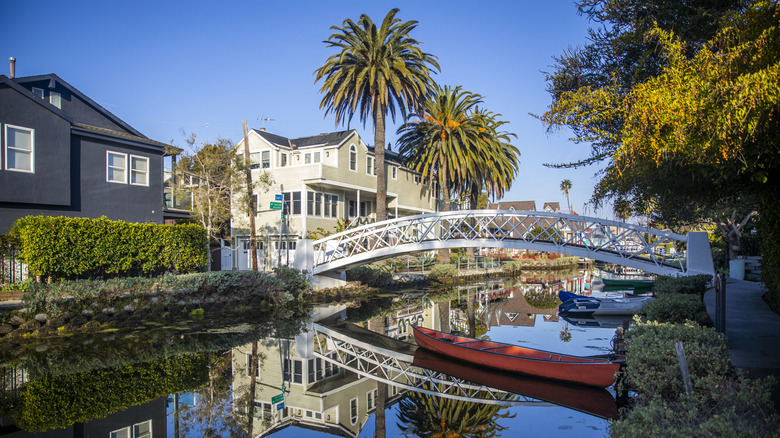
At the turn of the 20th century, millionaire Abbot Kinney set his sights on Southern California and saw the "Venice of America." He dredged the marshlands and constructed a residential community connected by a canal system, complete with gondolas and footbridges. A massive pleasure pier was part of this construction. While Kinney's investment was successful at first, it soon gave way to another major transformation.
Few people realize that Los Angeles is oozing with oil. Today, the county is home to more than 4,000 active oil wells. Oil was discovered in this area in the late 1920s, and investors rushed in. A 1930 article published in the Los Angeles Times (via The Journal of American History) captured this moment in Venice Beach history: "Today oil derricks stand like trees in a forest. ... If this fever continues, as it gives every indication of doing, one reasonably may expect to see virtually the entire water-front line of private properties from Washington street to Sixty-sixth avenue or Playa del Rey dotted with a line of oil derricks."
The drilling transformed the area so much that residential property values went down and beaches became polluted. Oil production only increased during the Second World War. It wasn't until after the war that Venice Beach reclaimed its identity as a tourist attraction. In 1990, a resident wrote in the Los Angeles Times about their memories of Venice Beach just after the war, before it rose in popularity: "In those postwar days the Venice canals were scummy and afloat with trash. But there was something romantic about them, with their arched Venetian bridges, and the rent was only $45 a month." In the 1950s, Venice was called the "Slum by the Sea." The low prices ended up attracting artists, including the Beatniks, who would eventually play a major role in making the area cool again.
Venice Beach, a highly ranked destination for tourists today
Traces of the past remain in Venice Beach. Some visitors have reported stepping in tar patties while taking walks along the beach. These are more often than not a product of natural processes of oil seeping from deposits below the surface, and they're a reminder of why the area was once such a major site of extraction. There are ongoing local efforts to protect and restore some of the wetland ecosystems that have been so badly damaged and destroyed over decades of development and extraction. Meanwhile, a few blocks inland, some of the old canals remain. They're accessible to visitors and provide a glimpse into the area's early history.
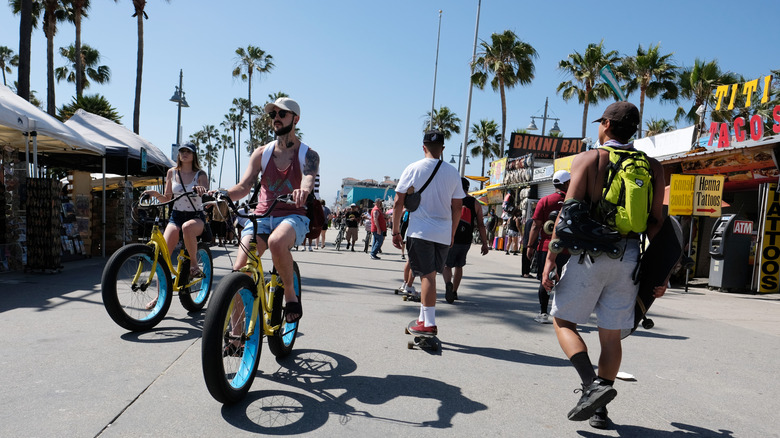
Today, the 1.5-mile Venice Beach Boardwalk stands out as a people-watcher's paradise. Street performers, art vendors, skaters, musicians, and open-air tattoo parlors create a colorful mix that makes the beach so unique and entertaining. A fun way to explore the area is on a rental bike, while the beach itself is naturally an ideal spot for swimming, sunbathing, surfing, or simply walking along the shoreline.
Visitors can also explore Abbot Kinney Boulevard, known for its independent shops, bars, restaurants, and art galleries. Sports enthusiasts can visit Muscle Beach, the famous outdoor gym where bodybuilders and athletes train. Well-known figures such as Jack LaLanne, Franco Columbu, and Arnold Schwarzenegger all worked out at Muscle Beach. There's also a 16,000-square-foot skate park, a concrete mecca that has contributed to the legendary local skating community. This abundance of deep history, culture, and fun is why, today, Venice Beach ranks among the best beaches in Los Angeles and in California. How long that will last before another major transformation takes over, we have yet to see.